

We use cookies to ensure our website works properly and to personalise your experience. Cookies policy
School of Pharmacy, G H Raisoni University, Saikheda, Dist.-Pandhurna, Madhya Pradesh, India-480337
The peptic ulcer patients pose a problem to the global healthcare since the oral treatment regimens such as fast gastric emptying and unpredictable drug in vivo absorption have been restricted. Floating Drug Delivery System (FDDS) has entered the scene as an effective technique of enhancing the gastric retention, long aging effect of drugs as well as enhancement of therapeutic effects. Liquorice (Glycyrrhiza glabra) is a well-characterised medicinal plant which is typified by a well-defined phytochemical profile of constituent compounds namely glycyrrhizin, liquiritigenin and flavonoids that are related to its anti-inflammatory, antioxidative, mucoprotective, and anti-Helicobacter pylori phenomenon. Different new approaches have addressed integration of liquorice in FDDS through mucoadhesive microspheres, guar gum based hydrogels, deglycyrrhizinated liquorice gastroretentive systems and excellent solubility of their spray-dried extracts. Improvements made in the liquorice loaded nanoparticles and core shell nanohybrids also in the area of nanotechnology further increased the bioavailability and site specific delivery. Greater synergy potential of therapeutic action also exists in polyherbal FDDS formulations that will contain liquorice and modern polymers. Despite promising preclinical data, not all barriers to implementing a liquorice-based FDDS in a clinical situation have been overcome, including potential stability issues, the harmonisation of herbal actives, regulatory challenges and the challenges of cost-effectiveness in the large scale manufacture. Translation will be done in the market to fill out these gaps with stringent writing on formulation optimization, in vivo studies as well as optimally planned clinical trials. This review will collate the current body of knowledge of liquorice against the background of demonstrating the treatment potential of liquorice as well as the developments that could be the tipping point in the application of liquorice to the treatment of gastroretentive ulcers in the future.
Peptic ulcer disease (PUD) refers to a chronic gastro intestinal condition that manifests through development of open sores or erosions at the lining of the stomach, lower esophagus or duodenum. It is mainly due to the disproportion between the protective agents of the gastrointestinal mucosa, namely, the secretion of mucus and bicarbonate, and the aggressive ones, namely, gastric acid, pepsin secretion, the presence of Helicobacter pylori, and taking of ulcerogenic medication that include non-steroidal anti-inflammatory drugs (NSAIDs) (Mukherjee et al., 2010; Prajapati et al., n.d.). PDU continues to pose a serious health issue in many parts of the world and millions of people are affected by it and the disease has a huge economic and social loss. The prevalence of the disease differs in different locations but it has always been reported among the main causative factors of gastrointestinal morbidity most especially in the developing countries, where the risk to infection is higher due to poor sanitation and accessibility of health care (Prajapati et al., n.d.). This is further worsened by complications like gastrointestinal bleeding, perforation, and gastric outlet obstruction that also severally increase the mortality and medical expenditure (Mukherjee et al., 2010).The majority of PUDs are managed through traditional oral pharmacotherapy, including proton pump inhibitors (PPIs), H 2 -receptor blockers, and cytoprotectants such as the use of sucralfate, and triple or quadruple antibiotic regimens to eradicate Helicobacter pylori infection (Asl & Hosseinzadeh, 2008; Harwansh & Deshmukh, 2021). Although they are effective in relieving symptoms and ulcer healing, these treatments are related to a number of limitations. Conventional drugs through the oral administration pathway may have a short gastric residence time because of the speed of gastric emptying and may result in inappropriate drugs in absorption and availability when it comes to drugs with a narrow absorption window at the upper gastrointestinal tract (Harwansh & Deshmukh, 2021). Additionally, there has been a correlation between the prolonged use of PPI with poor absorption of nutrients, high chances of fractures, and gut microbiota changes. Moreover, there is a growing number of cases of antibiotic resistant H. pylori (Asl & Hosseinzadeh, 2008). These drawbacks have raised the necessity of using alternative drug delivery methodologies capable of offering extended duration of gastric retention and in-situ of the action medication liberation.A solution to such therapeutic issues has come in the form of gastroretentive drug delivery systems (GRDDS). Floating drug delivery systems (FDDS) are among them, and because they are lighter than gastric fluids, they create opportunities to spend many hours in the stomach (Butt et al., 2019; Manna et al., 2024). FDDS can stimulate the local accumulation of drugs directly on ulcer site, increase bioavailability, and be given with a sustained and controlled release pattern by slowing down the gastric transit time. This method is especially beneficial when the drug in question is unstable at the alkaline conditions of the intestine or is mainly absorbed in the stomach and proximal small intestine. Moreover, FDDS has the ability to minimize dose frequency, the variation of plasma drug concentration, and therefore, enhance patient adherence during long-term use of ulcer therapy (Manna et al., 2024).During the last few years, herbal medicines have attracted a lot of attention concerning the treatment of gastrointestinal disorders, such as PUD, because of their outstanding safety levels, multiple pharmacological effects, and reduced probability of inducing fatal side effects in relation to synthetic medicines (Asl & Hosseinzadeh, 2008). One of the most investigated and traditionally used medicinal plants used as herbal anti-ulcer drugs is the Glycyrrhiza glabra L. usually referred to as liquorice. Liquorice is a good source of bioactive phytochemicals such as triterpenoid saponins (e. g., glycyrrhizin), flavonoids (e. g., liquiritin, isoliquiritigenin, liquiritigenin), and chalcones with high potency in anti-inflammatory, antioxidant, mucoprotective, and anti-H. pylori effects (Asl & Hosseinzadeh, 2008; Fukai et al., 2002).The use of the pharmacological effects of liquorice as well as the shear controlled gastric retention that have FDDS has to offer is an intelligent formula in dealing with effective treatment of PUD in an effective manner. Alternatively, incorporation of liquorice in a floating dose form may not only enhance the stay of the active substances in the stomach, but also have a sustained local release and subsequently produce better therapeutic effects. Also, the intake of such a delivery system can decrease the dose required, lessen systemic exposure and the number of side effects that might occur because of long-term use of liquorice, including hypokalemia and hypertension due to overdosage of glycyrrhizin (Asl & Hosseinzadeh, 2008). Thus, the current research will lay out to formulate and test a floating drug delivery system of liquorice extract in the treatment of PUD. Such a method can succeed on factors that traditional therapy has failed to accomplish, enhance work of drugs locally in the stomach, and make management of ulcers safer and more efficient.
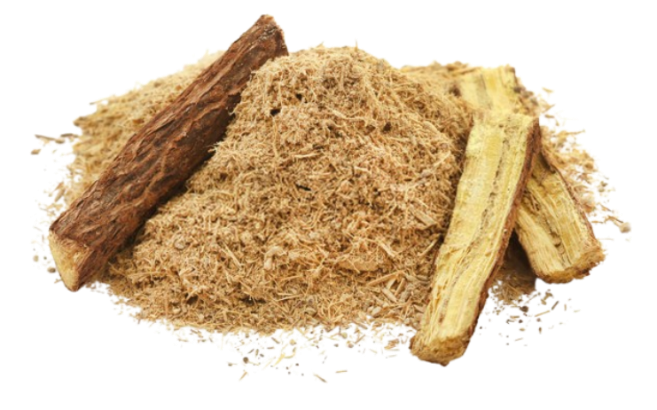
Figure No.1: Liquorice (Glycyrrhiza glabra)
2. Phytochemistry of Glycyrrhiza glabra
Liquorice (Glycyrrhiza glabra L.) is a perennial legume plant that has been widely investigated as a result of its wealth and intricate phytochemical composition, which forms the premise of such pharmacological properties at gastroretentive drug delivery systems (Asl & Hosseinzadeh, 2008; Sharma et al., 2018). The main synergetic effect of triterpenoid saponins, flavonoids, isoflavonoids, chalcones, coumarins, and polysaccharides make it possess medicinal properties of gastroprotectants, anti-inflammatory and antioxidants (Fukai et al., 2002; Cai et al., 2019).
2.1 Major Active Constituents
The key active agent mostly found in liquorice is glycyrrhizin (glycyrrhizic acid) that is a triterpenoid saponin with composition level of approximately, 2-9 % of the dry weight roots of the plant (Asl & Hosseinzadeh, 2008). Glycyrrhizin gives liquorice its sweet taste about 50 times sweeter than sucrose and exhibits potent anti-ulceration, anti-inflammatory, and antiviral actions towards gestation processes by modulating the amount of prostaglandins, inhibiting oxidative stress, and prophylaxis of the activity of Helicobacter pylori (Sharma et al., 2018). The second significant group of compounds is flavonoids (flavanoids liquiritigenin, isoliquiritignin, and glabridin) which contribute to the development of antioxidant capacity, that is, they scavenge free radicals and generate mucosal immune responses (Asl & Hosseinzadeh, 2008; Fukai et al., 2002). It has been demonstrated that one of the flavanones, liquiritigenin, has the properties of an adjuvant and can inhibit the production of pro-inflammatory cytokines, modulate nuclear factor-kappa B (NF-kappa B) activation (Sharma et al., 2018). Additionally, liquorice roots possess isoflavonoids, chalcones, which synergistically inhibit gastric acid secretions and mucus secretion, which is very important in the defense against peptic ulcers (Asl & Hosseinzadeh, 2008).
2.2 Pharmacologically Active Metabolites
After oral intake, glycyrrhizin is converted by intestinal bacteria to the main active metabolite glycyrrhetinic acid with increased lipophilicity and increased membrane permeability (Cai et al., 2019). Both liquiritigenin and isoliquiritigenin get metabolized into conjugated glucuronides and sulfates which have a certain level of bioactivity and can experience enterohepatic circulations, extending the life of these chemicals throughout the entire system (Cai et al., 2019). Such metabolism favors floating drug delivery systems wherein increased local absorption and activity of these metabolites may be developed by making them stay longer in the gastric tract.
2.3 Methods of Extraction and Purification
Liquorice phytochemicals have also been optimised in their extraction, through different methods to provide maximum yields and bioactivity. The most frequent processes of glycyrrhizin and flavonoids separation are the hot water decoction and aqueous alcoholic extraction because of their solubility in the polar solvents (Karaaslan & Dalgic, 2014). The certain range of temperature and proportion of ethanol and water (5060 to 70) may be especially useful when trying to extract some polar saponins along with moderately polar flavonoids (Liu et al., 2021). To increase the purity, glycyrrhizin may also be abstracted through a liquidliquid partition and further isolated through column chromatography adopting either resins or silica gel (Karaaslan & Dalg, 2014). There are also advanced techniques of standardization like high-performance liquid chromatography (HPLC) and ultrafiltration where the active constituent present in pharmaceutical formulation is kept at a definite level (Liu et al., 2021). In gastroretentive dosage forms, these standardized extracts help in the reproducibility of therapeutic effect.
3. Pharmacological Profile & Anti-Ulcer Mechanisms of Liquorice
Liquorice (Glycyrrhiza glabra) has previously been well established in both the traditional and modern systems of medicine, because of its various pharmacological actions, especially in gastrointestinal illnesses like peptic ulcer disease (Mukherjee et al., 2010). Its complex blend of bioactive compounds that have been identified via its anti-inflammatory, mucoprotective, antioxidant, antimicrobial, and cytoprotective activities account as the possible therapeutic effects (Asl & Hosseinzadeh, 2008; Fukai et al., 2002).
3.1 Anti-inflammatory, Mucoprotective, and Antioxidant Properties
Moreover, liquiritigenin and is liquiritigenin, flavonoids, have a strong free radical scavenging activity, achieving similar effects in how they protect the gastric mucosal cells as a result of oxidative stress caused by reactive oxygen species (Fukai et al., 2002; Sharma et al., 2018). These antioxidant activities are therefore responsible in keeping the mucosa sound by inhibiting peroxidation of the lipids and taking care of endogenous security solutions such as prostaglandins and nitric oxide (Mukherjee et al., 2010). Additionally, it increases secretions of mucus and gives mucoprotective liner against acid and pepsin damage in the gastric epithelium (Asl & Hosseinzadeh, 2008).
3.2 Anti-Helicobacter pylori Activity
Among most significant etiologic agents of peptic ulcer pathogenesis there is persistent infection with Helicobacter pylori. The liquid flavonoids have exhibited an antagonist effect in H. pylori particularly glabridin and licochalcone A, properties that interfere with both the growth and sticking of the bacteria (Fukai et al., 2002; Cai et al., 2019). Additionally, the inflammatory cascade that is triggered by infection of H. pylori can be controlled using liquorice extracts leading to the reduction of the injury to gastric mucosal as well as its acceleration (Fukai et al., 2002).
3.3 Cytoprotective Effects on Gastric Mucosa
The gastroprotective effect of liquorice also resides in the types of stimulating the regeneration process of the epithelial cell, and angiogenesis of the mucosa of the ulcer (Harwansh & Deshmukh, 2021). The herb enhances the synthesis of cytoprotective proteins such as the heat shock proteins (HSPs) and upregulates the occurrence of epidermal growth factor (EGF) which encourage the healing processes (Rani et al., 2018). Conclusively, the anti inflammatory, antioxidant, antimicrobial together with the cytoprotective effects all make the liquorice an aspiration that should be released to be incorporated in the floating drug delivery systems (FDDS) where they can prolong gastric staying periods and hence maximize the local drug concentration and consequently lead to maximum healing of ulcers.
4. Overview of Floating Drug Delivery Systems (FDDS)
GRDDS developed to prolong retention of dosage form in the stomach, and consequently, bioavailability of drug and local therapy effect. GRDDS Floating Drug Delivery Systems (FDDS) is a technology that already demonstrates its potential to deliver drugs to the upper gastrointestinal tract and is currently showing promise in the treatment of gastrointestinal conditions like peptic ulcers (Manna et al., 2015; Prajapati et al., 2013).
4.1 Principles of Buoyancy and Gastric Retention
FDDS operates based on the principle of buoyancy, or the ability of the dosage form to float on gastric fluid since the dosage form has a lower bulk density than gastric fluid (Prajapati et al., 2013). This is because the drug is released slowly and in cases where it remains in the stomach, therapeutic concentrations in the gastric region are prolonged (Manna et al., 2015). This is particularly useful with locally acting drugs in the stomach (e.g., anti-ulcer agents) or that have an absorption window at some point in the upper gastrointestinal tract. The physiological variables that define the prevalence of gastric retention are fed/fasted condition, motor activity, and sitting position of a patient (Butt et al., 2022).
4.2 Types of FDDS – Effervescent & Non-effervescent Systems
The FDDS and the dry soap may be effusive or noneffusive (Butt et al., 2022; Harwansh and Deshmukh, 2021) Bouncy system A system in which the generating agent is gaseous (tartaric acid, citric acid, sodium bicarbonate, etc.), is called bouncy system. The re-saltation between the acid and the base will then react with the gastric fluid to form carbon dioxide which will be trapped by the polymer gel network and will decrease the density, the polymer will then take the descending direction (Prajapati et al., 2013). Non-effusive systems: In these systems, the polymers or hydrostatically balanced system will be presented as a lump in the gastrointestinal fluid. Hydrocolloids are also used in other systems (polyethylene oxide, hydroxypropyl methylcellulose (HPMC)). Specifically, as the analogous liquorice herbal extracts could be directly transformed into floating form and additionally, the active phytoconstituents could be slowly released, bouncy FDDS combined with analogous extracts could be applied (Harwansh and Deshmukh, 2021).
4.3 Role of Polymers in Herbal FDDS
Polymer is one of the most important factors for drug release rate, mechanical strength of the FDDS and floatation time. Guar gum (GG) and sodium alginate (SA) are the most preferred gums for the herbal formulation because of their biocompatibility, swelling and gelling properties (Manna et al., 2015; Butt et al., 2022). When these polymers are hydrated, they form a viscous gel in the middle of the drug, which not only slows down the diffusion rate of the drug, but captures the gas bubbles for buoyancy. The polymers used in the formulation of liquorice-based FDDS are responsible for the release profile of glycyrrhizin and flavonoid contents and showed the best anti-ulcer activity along with gastric retention (Harwansh & Deshmukh, 2021). In conclusion, FDDS could synergistically combine the characteristics of long gastric retention, drug-controlled release, and local enhancement of antiulcer effect, and seems to be the suitable drug delivery system for herbal antiulcer drug such as liquorice.
5. Liquorice-Based FDDS Formulations
Liquiritinization of Floating Drug Delivery Systems (FDDS) is a potential methodology for enhancing the therapeutic index of the bioactive constituents of liquorice for peptic ulcer. Many formulation strategies have been explored to improve the gastric retention, solubility and release profile of glycyrrhizin and related flavonoids.
5.1 Glycyrrhizin-Loaded Mucoadhesive Microspheres
Harwansh and Deshmukh (2021) have prepared mucosa adhesion microspheres of glycyrrhizin for gastric retention and target release. The formulation was prepared using natural polymers i.e., sodium alginate, chitosan to ensure dual action-buoyancy and mucoadhesion for prolonged contact time with gastric mucosa. This method increased local drug concentration, enhanced mucosal healing and decreased dosing frequency, and was therefore ideal for anti-ulcer therapy.
5.2 Guar Gum-Based Hydrogels for Liquorice Delivery
Butt et al. (2022) noted that the guar gum hydrogels can encapsulate the liquorice aqueous extract while allowing some controlled swelling and a sustained release in gastric fluid. Due to the high viscosity and gelling ability of guar gum, the devices remain buoyant for a longer period of time and no quick leaching of the drug occurs. This hydrogel system based on natural polymers also meets the current demand for environmentally friendly and biocompatible excipients in herbal drug delivery.
5.3 Deglycyrrhizinated Liquorice in Gastroretentive Microspheres
Seetha Devi et al. (2019) have prepared the gastroretentive microspheres of deglycyrrhizinated liquorice (DGL) because of its processed form having less glycyrrhizin content in order to decrease the side effects like hypertension. These microspheres showed floatation in simulated gastric fluid and prolonged release of flavonoids and polysaccharides, ensuring mucosal protection without mineralocorticoid-related adverse effects which are seen with raw liquorice extract.
5.4 Spray-Dried Liquorice Extract for Better Solubility
Karaaslan and Dalgic (2014) have studied spray drying method for improving solubility and stability of liquorice extract. Spray-dried powders showed reduced particle size and improved dispersibility in aqueous media and, therefore, would be suitable for inclusion in effervescent FDDS formulations. This formulation technique results in improved dissolution and therefore, release homogeneity and bioavailability of the drug in floating dosage form.
6. Innovations in Herbal Gastroretentive Therapy
In recent years, the development of herbal gastroretentive systems has advanced rapidly with the application of nanotechnology, state-of-the-art polymer science and polyherbal concepts aiding in the therapeutic potential of plant-derived bioactives such as liquorice. These advancements are being pursued in order to achieve improved solubility, gastric retention, targeted delivery and patient compliance whilst preserving the safety and holistic character of the herbal medicines.
6.1 Nanoformulations: Silver Nanoparticles & Liquorice-Decorated Particles
Nanoformulation techniques can provide better surface area, dissolution rates and cellular uptake of herbal actives. Recently, the combined therapeutic antibacterial and gastroprotective activity of silver nanoparticles (AgNPs) against Helicobacter pylori along with the associated mucosal healing against Helicobacter pylori was studied in the presence of liquorice root extract (Khandelwal et al., 2010). The phytochemicals in liquorice act as reducing and stabilizing agents during the synthesis of nanoparticles, making this preparation technique green and eco-friendly. The nanoparticles were decorated with liquorice to increase the therapeutic resident time and reduce the systemic side effects (Mohammed et al., 2020) and to achieve an enhanced mucoadhesion and local release of drug to the stomach wall.
6.2 Core–Shell Nanohybrids for Liquorice Delivery
Liu et al. (2013) prepared and design core shell nanohybrids of liquorice flavonoids in biodegradable polymeric matrix. The centre is a sustained release preparation of glycyrrhizin and the shell is a mucoadhesion float. This dosage form increases gastric retention and controlled release, and is especially suitable for the treatment of chronic ulcers, where a prolonged local availability of the drug is important.
Synergistic therapeutic effects may be obtained by combining liquorice with other herbal extract in FDDS.
Modern hydrophilic and hydrophobic polymers can be used in conjunction with herbal actives to enable close control of the drug release kinetics.
7. Challenges & Future Perspectives
Despite all the progress in liquorice-based FDDS (Floating Drug Delivery Systems), there are still some issues that need to be addressed for their translation into the clinic and large-scale commercialization. These problems must be solved if laboratory findings are to be translated into usable forms of therapy.
7.1 Stability & Degradation of Herbal Actives
The stability of phytoconstituents (glycyrrhizin, flavonoids) is of major concern during formulation and storage.
7.2 Regulatory & Standardization Hurdles
The herbal pharmaceutical industry is strictly regulated, particularly in terms of quality, safety and efficacy.
7.3 Patient Compliance and Large-Scale Manufacturing Challenges
While the use of FDDS can result in improved therapeutic outcomes, issues remain with respect to patient acceptability and industrial scalability.
7.4 Potential Research Gaps
Several areas that are unexplored or under-explored may be important in determining the next generation of herbal gastroretentive systems:
CONCLUSION
Glycyrrhiza glabra (Glycyrrhiza) shows great promise as therapeutic agent in Floating Drug Delivery Systems (FDDS) for the treatment of gastric disorders especially peptic ulcers. Additionally, the phytoconstituents of this plant, glycyrrhizin and flavonoids, have anti-inflammatory, antioxidant and gastroprotective effects that fit quite well with the goals of prolonged gastric retention (Asl & Hosseinzadeh, 2008). In the recent years, mucoadhesive microspheres, hydrogels, and delivery systems based on nanotechnology have increased the solubility, bioavailability, and local action in the stomach of liquorice (Harwansh and Deshmukh, 2021). These novel approaches have demonstrated feasibility in vitro and in vivo pre-clinical efficacy with the hope that improved therapeutic effects will follow. However, irrespective of the promising results from the laboratory, this method requires further robust clinical validation before products containing liquorice could be transferred to commercial products (FDDS). As noted by Mukherjee et al. (2010), one of the unique factors which is challenging for the standardization, regulatory approval and large scale manufacturing of herbal formulations will have to be addressed in terms of the safety, efficacy, and acceptability to the market. In conclusion, liquorice-based FDDS is a promising interface between traditional herbal and modern pharmaceutical technologies, but will require well-designed human clinical trials, regulatory harmonization and optimized formulation approaches for translation.
REFERENCES


Divya Padlak, Pragati Thakre, Pooja Waware, Liquorice (Glycyrrhiza glabra) in Floating Drug Delivery Systems: Innovations in Herbal Gastroretentive Therapy for Peptic Ulcer, Int. J. of Pharm. Sci., 2026, Vol 4, Issue 2, 2513-2522. https://doi.org/10.5281/zenodo.18667771
 10.5281/zenodo.18667771