

We use cookies to ensure our website works properly and to personalise your experience. Cookies policy
Department of Homoeopathic Pharmacy, Hamsa Homeopathy Medical College, Hospital & Research Centre, Siddipet, Telangana 502279.
Homoeopathic pharmacy forms the backbone of homoeopathic therapeutics, as the quality and efficacy of medicines are largely dependent on the methods employed during drug preparation. Among the various pharmaceutical processes, extraction of medicinal principles from crude drug substances is of primary importance, particularly in the preparation of mother tinctures. Maceration and percolation are classical extraction techniques widely accepted and standardized in homoeopathic pharmacy. Despite their long-standing use, these methods continue to hold relevance in modern homoeopathic pharmaceutical practice due to their simplicity, reproducibility, and compliance with pharmacopoeial standards. The present article provides a comprehensive descriptive and comparative review of maceration and percolation, including their principles, procedures, types, pharmaceutical significance, advantages, limitations, and contemporary adaptations. Emphasis is placed on method differentiation to enhance academic understanding and support homoeopathic pharmacy education. A thorough understanding of these extraction techniques contributes significantly to standardization, quality control, and therapeutic reliability of homoeopathic medicines.
Background
Since the foundation of homoeopathy by Samuel Hahnemann, great importance has been placed on the precise and careful preparation of medicines. Hahnemann emphasized that the medicinal power of a substance could be preserved only when pharmaceutical processes were carried out gently and systematically ( 3 ). Homoeopathic pharmacy, therefore, occupies a central position in ensuring the safety, quality, and effectiveness of homoeopathic treatment.
The preparation of mother tinctures represents the initial and most crucial stage in the manufacturing of many homoeopathic medicines. Any error or inconsistency at this stage may adversely affect the quality of the final potentized remedy. Extraction methods must therefore ensure effective transfer of medicinal constituents from crude drug substances into suitable vehicles without causing deterioration of the drug material.
Maceration and percolation are two classical extraction methods that have been practiced since the early development of homoeopathic pharmacy. With increasing emphasis on standardization, good manufacturing practices, and academic rigor, these methods have been refined and adapted while retaining their original principles ( 1 ).
Aims
To present a detailed descriptive and comparative review of maceration and percolation methods used in homoeopathic pharmacy.
Objectives
METHODS
This article is a narrative and descriptive review based on classical homoeopathic pharmacy textbooks, the Homoeopathic Pharmacopoeia of India, and standard regulatory literature. Relevant information related to maceration, percolation, and their variations was compiled, analyzed, and organized to enhance conceptual clarity and academic usefulness ( 1 ) ( 5 ).
REVIEW OF LITERATURE
Hahnemann laid the philosophical and practical foundation of homoeopathic pharmacy by advocating gentle methods of drug preparation aimed at preserving medicinal efficacy ( 3 ). Early homoeopathic pharmacists recognized the importance of extraction methods in determining the quality of mother tinctures.
Cook described maceration and percolation in detail, emphasizing their suitability for homoeopathic medicines due to minimal application of heat and pressure ( 2 ). Mandal and Mandal further elaborated on the practical aspects of extraction methods and their pharmaceutical implications ( 5 ). D.D. Banerjee highlighted the need for standardization, documentation, and regulatory compliance in homoeopathic pharmacy, reinforcing the relevance of these classical extraction techniques in contemporary practice ( 1 ).
INTRODUCTION
Homoeopathic pharmacy involves the scientific preparation of medicines according to well-defined principles that ensure their quality, safety, and therapeutic value. Among various pharmaceutical operations, extraction of medicinal constituents from crude drug substances plays a decisive role in mother tincture preparation.
The choice of extraction method depends on the physical nature of the drug material, solubility of active constituents, and scale of manufacture. Maceration and percolation are widely accepted methods due to their pharmacopoeial recognition and practical feasibility. Although both aim to achieve effective extraction, they differ in their operational mechanisms, efficiency, and applicability.
Classification of Extraction Methods in Homoeopathic Pharmacy:
The selection of an appropriate extraction method in homoeopathic pharmacy is influenced by several pharmaceutical and practical factors. One of the most important considerations is the nature of the crude drug substance. Soft, succulent plant materials containing readily soluble constituents are more suitable for maceration, whereas hard, fibrous, or woody drugs often require percolation to ensure effective extraction (1 ).
Another important factor is the solubility of active constituents in the menstruum. Drugs containing constituents that dissolve slowly benefit from prolonged solvent contact, making percolation a more effective method. In contrast, drugs with highly soluble principles can be adequately extracted through maceration.
The scale of preparation also plays a significant role. Maceration is commonly employed in small-scale preparations and academic settings due to its simplicity and minimal equipment requirements. Percolation, on the other hand, is preferred in large-scale manufacturing units where consistency, uniformity, and higher extraction efficiency are essential ( 5 ).
Additionally, time constraints and economic considerations influence method selection. Maceration requires longer extraction periods, which may not be suitable for industrial settings with high production demands. Percolation, despite requiring initial technical expertise, offers faster processing once standardized.
Thus, the choice between maceration and percolation is not arbitrary but is based on a rational assessment of pharmaceutical, practical, and regulatory considerations.
Extraction methods in homoeopathic pharmacy may be broadly classified based on the nature of solvent–drug interaction:
Among these, maceration and percolation remain the most commonly employed and standardized methods for the preparation of mother tinctures (1).
MACERATION: Principle, Types, and Practice
Maceration is a static extraction method in which the crude drug substance is allowed to remain in contact with a suitable menstruum for a specified period. The principle of maceration is based on diffusion, whereby soluble constituents gradually pass from the drug material into the solvent ( 2 ).
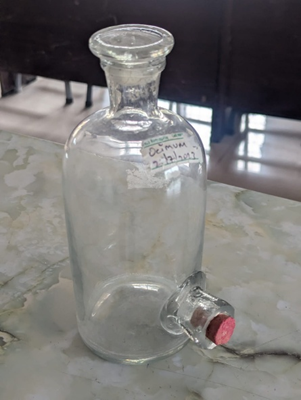
Types of Maceration
Simple Maceration:
The powdered crude drug is soaked in alcohol with occasional agitation. This method is suitable for soft plant materials and drugs containing readily soluble constituents.
Double Maceration:
After the first maceration, the residual drug material is subjected to a second extraction with fresh menstruum to improve exhaustion ( 5 ) .
Fractional or Multiple Maceration:
The menstruum is added in fractions at different intervals, allowing better control over extraction efficiency.
Contemporary Practice of Maceration
In modern homoeopathic pharmaceutical units, maceration is conducted under controlled environmental conditions. Factors such as temperature, duration, alcohol concentration, and agitation are standardized to ensure reproducibility and compliance with good manufacturing practices ( 1 ).
PERCOLATION: Principle, Types, and Modern Adaptations
Percolation is a dynamic extraction method characterized by continuous movement of the menstruum through a column of powdered crude drug. The principle of percolation lies in maintaining prolonged solvent–drug contact to facilitate efficient extraction ( 5 ).
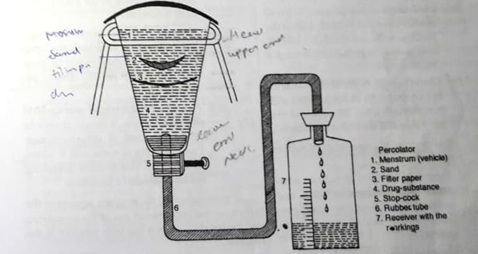
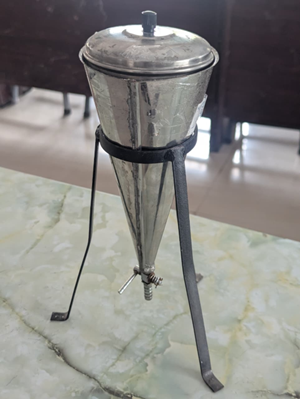

Types of Percolation –
Simple Percolation:
The menstruum is allowed to pass slowly through the drug column packed in a percolator.
Modified or Reserved Percolation:
A portion of the percolate is reserved initially to ensure uniformity and complete extraction ( 2 ).
Re-percolation:
The initial percolate is passed through fresh drug material to enhance extraction efficiency.
Modern Adaptations of Percolation
Although the fundamental principle remains unchanged, modern homoeopathic pharmacy employs improved percolator designs, regulated flow rates, and standardized packing techniques. Enhanced documentation and batch-wise monitoring have increased the reliability of percolation in contemporary practice ( 1 ).
Instruments and appliances used :
HOMOEOPATHIC APPROACH
Homoeopathy emphasizes the preparation of medicines through gentle and non-destructive pharmaceutical processes in order to preserve the qualitative and dynamic properties of medicinal substances. Samuel Hahnemann stressed that the method of drug preparation should neither alter the inherent nature of the substance nor compromise its therapeutic potential. Extraction techniques employed in homoeopathic pharmacy are therefore designed to maintain the integrity of the medicinal principles present in crude drug materials.
Maceration and percolation align closely with this homoeopathic philosophy. Both methods avoid the application of excessive heat, pressure, or aggressive mechanical force, which could otherwise lead to degradation or loss of medicinal properties. The slow and controlled interaction between the drug substance and the menstruum allows for effective extraction while respecting the natural characteristics of the drug.
The mother tinctures obtained through maceration and percolation serve as the primary source material for subsequent potentization. Any variation or compromise at the extraction stage may influence the quality of the final potentized remedy. Therefore, careful selection and execution of the extraction method are considered essential from a homoeopathic standpoint.
From a therapeutic perspective, homoeopathy recognizes that pharmaceutical precision directly impacts clinical reliability. Proper extraction ensures that the medicinal substance is adequately represented in the mother tincture, thereby forming a sound basis for further dynamization. Thus, maceration and percolation are not merely technical procedures but are integral to maintaining the philosophical and therapeutic principles of homoeopathy.
QUALITY CONTROL AND STANDARDIZATION ASPECTS:
Quality control is an essential component of homoeopathic pharmacy, particularly during the preparation of mother tinctures. Extraction methods such as maceration and percolation directly influence the consistency and reliability of the final product. Variations in extraction time, alcohol strength, and drug–solvent ratio can significantly affect the quality of the extract ( 1 ).
Standardization of maceration involves maintaining uniform conditions such as controlled temperature, fixed duration of extraction, and periodic agitation. Proper filtration and storage further ensure the stability of the prepared mother tincture. Documentation of each step has become an integral part of modern homoeopathic pharmaceutical practice.
In percolation, quality control focuses on factors such as particle size of the drug, uniform packing of the percolator, controlled flow rate of the menstruum, and prevention of channeling. Improper packing may lead to incomplete extraction, whereas excessively fine powder may obstruct solvent flow ( 2 ).
The Homoeopathic Pharmacopoeia of India provides standardized directions for both maceration and percolation to minimize batch-to-batch variation. Adherence to these guidelines ensures reproducibility and compliance with regulatory standards.
Understanding quality control measures helps students correlate pharmaceutical procedures with therapeutic reliability. Thus, maceration and percolation are not merely extraction techniques but critical determinants of drug quality in homoeopathic pharmacy.
DISCUSSION
Maceration and percolation differ significantly in their pharmaceutical characteristics. Maceration is simple, economical, and suitable for small-scale and academic settings but requires longer extraction time and may result in incomplete exhaustion. Percolation provides better extraction efficiency, uniformity, and scalability but demands technical expertise and controlled conditions ( 5 ).
Relevance of Extraction Methods in Contemporary Homoeopathic Education
In contemporary homoeopathic education, extraction methods form a core component of pharmacy curriculum. Maceration and percolation serve as foundational concepts that introduce students to the relationship between pharmaceutical processes and therapeutic outcomes. Practical demonstrations of these methods enhance conceptual clarity and encourage rational thinking in drug preparation.
Modern academic discussions emphasize not only the procedures but also the rationale behind selecting a particular method. Understanding method differentiation enables students to appreciate the scientific basis of homoeopathic pharmacy rather than viewing it as a purely traditional discipline ( 1 ).
Furthermore, these extraction techniques provide a bridge between classical homoeopathic principles and present-day pharmaceutical expectations such as standardization and quality assurance. Their continued inclusion in academic literature ensures that homoeopathic pharmacy remains relevant, structured, and aligned with contemporary educational standards.
CONCLUSION
Maceration and percolation remain fundamental extraction techniques in homoeopathic pharmacy. While maceration offers simplicity and economy, percolation provides superior efficiency and reproducibility. An informed selection of extraction method based on pharmaceutical requirements contributes to improved standardization, quality control, and therapeutic reliability of homoeopathic medicines.
ACKNOWLEDGEMENT
The authors express their sincere gratitude to Director. Dr. Umesh Akkaladevi, Principal Prof. Dr. Nurus Saher Khan Hamsa Homoeopathy Medical College, Hospital & Research Centre, Siddipet District, Telangana, for their valuable suggestions and continuous support.
CONFLICT OF INTEREST
The author declares no conflict of interest.
REFERENCES


Dr. Malladi Srinath Aditya, Dr. Srinivas Babu Kathi, Dr. Kavya Boini, Dr. Deshpande Shreya, Dr. Shinde Ankitha, Dr. Krishnapuram Bhumireddy Grace Nissy, Maceration and Percolation in Homoeopathic Pharmacy: A Descriptive Comparative Review, Int. J. of Pharm. Sci., 2026, Vol 4, Issue 2, 1402-1408. https://doi.org/10.5281/zenodo.18559008
 10.5281/zenodo.18559008