

We use cookies to ensure our website works properly and to personalise your experience. Cookies policy
B. R. Nahata College of Pharmacy, Mandsaur University, Mandsaur (M. P.), 458001
Gouty arthritis is a chronic inflammatory disorder resulting from monosodium urate crystal deposition, necessitating long-term management with uric acid-lowering and anti-inflammatory drugs. Conventional therapies, including allopurinol and febuxostat, face limitations such as poor bioavailability, gastrointestinal side effects, and rapid clearance, which reduce therapeutic efficacy. Nanoparticle-based transdermal drug delivery systems have emerged as a promising alternative, offering controlled and targeted drug release while minimizing systemic toxicity. Lipid-based nanocarriers, polymeric nanoparticles, carbon nanotubes, and nanocellulose derivatives have been extensively investigated for enhancing drug solubility, permeability, and sustained release. Functionalized multi-walled carbon nanotubes, CNT-gold nanoparticle composites, and CNT-hydrogel hybrids have demonstrated improved skin penetration, biocompatibility, and electro-responsive drug release profiles. Similarly, nanocellulose-based carriers, including bacterial nanocellulose, cellulose nanofibers, and cellulose nanocrystals, exhibit high mechanical strength, biocompatibility, and effective sustained release, making them suitable for transdermal applications. Despite these advantages, challenges remain in clinical translation, including nanoparticle stability, fusion, lipid polymorphism, sterilization difficulties, and regulatory hurdles related to safety and cytotoxicity. Strategies such as lyophilization, stabilizing agents, and careful material selection are being explored to overcome these limitations. Preclinical and early clinical studies indicate that nanoparticle-loaded transdermal patches can enhance therapeutic outcomes, reduce adverse effects, and provide patient-friendly administration, highlighting their potential as next-generation platforms for gout management. Continued research and rigorous clinical evaluation are required to optimize formulation design, ensure safety, and facilitate regulatory approval for widespread clinical application.
Hyperuricemia is a metabolic disorder characterized by abnormally high serum uric acid (UA) levels, resulting from excessive purine metabolism or impaired renal excretion. Persistently elevated UA is a major risk factor for gout, nephrolithiasis, hypertension, chronic kidney disease, and cardiovascular complications. The growing prevalence of hyperuricemia worldwide has intensified the need for more effective and patient-friendly therapeutic strategies. Currently, xanthine oxidase inhibitors such as allopurinol and febuxostat are widely used to suppress UA synthesis. Although clinically effective, these agents are associated with several limitations, including low oral bioavailability, short half-life, gastrointestinal irritation, and dose-dependent toxicity. Moreover, frequent dosing and first-pass hepatic metabolism reduce therapeutic efficiency and patient compliance, particularly during long-term treatment.
Recent advances in nanotechnology have opened new avenues for improving drug delivery. Nanoparticle-based carriers enhance solubility, stability, controlled release, and tissue targeting of poorly soluble drugs. However, oral nanoformulations still face biological barriers such as enzymatic degradation and hepatic metabolism. These challenges have encouraged researchers to explore alternative routes of administration.
Transdermal drug delivery has emerged as a promising non-invasive approach that avoids first-pass metabolism, provides sustained plasma drug levels, minimizes systemic side effects, and improves adherence. When integrated with nanocarriers, transdermal patches exhibit superior skin penetration, prolonged release, and enhanced therapeutic efficacy. Nanoparticle-loaded transdermal patches therefore represent an innovative platform capable of addressing the pharmacokinetic and safety limitations of conventional hyperuricemia therapies.[1]
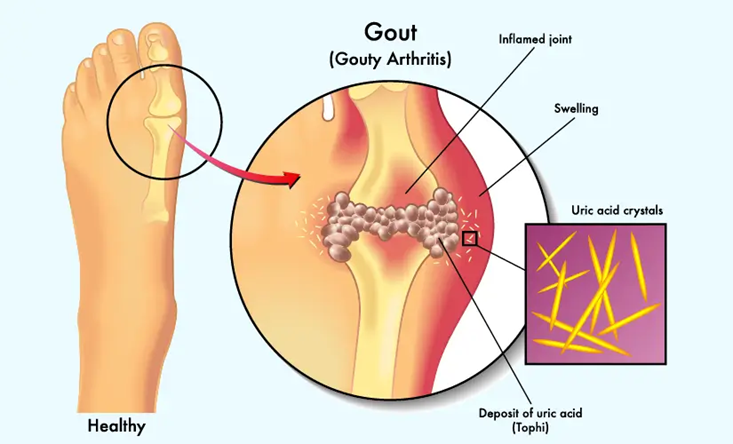
Figure 1: Hyperuricemia [2]
This emerging strategy holds significant potential for long-term urate control, offering a safer, more convenient, and more effective alternative for managing hyperuricemia and its associated complications.
EPIDEMIOLOGY AND PATHOPHYSIOLOGY OF HYPERURICEMIA
Epidemiology
The prevalence of uric acid calculi shows considerable geographic variation, with global estimates ranging between 5% and 40%. In the United States, the annual incidence of nephrolithiasis is approximately 0.5%, and epidemiological data suggest a rising trend. Findings from the U.S. National Health and Nutrition Examination Surveys (NHANES II and III) demonstrated that the prevalence of stone disease increased from 3.8% in 1976 to 5.2% during the period between 1980 and 1994, particularly in developed nations. Parallel to this rise in prevalence, the economic burden associated with nephrolithiasis has also escalated significantly, increasing from approximately $1.3 billion in 1994 to nearly $2 billion by 2000. This growth occurred despite improvements in clinical management, including minimally invasive surgical techniques, reduced hospital stays, and expanded outpatient care services.
Uric acid stones constitute nearly 7–10% of all urinary calculi. Data from the Veterans Administration healthcare system indicated that around 9.7% of analyzed stones were composed purely of uric acid, while other large studies have reported a prevalence of about 7%. Although some researchers suggest that these figures may underestimate the true incidence, they nonetheless highlight the clinical importance of uric acid nephrolithiasis. The occurrence of uric acid stones varies according to age, sex, ethnicity, and environmental exposure. Individuals older than 65 years exhibit nearly double the prevalence compared to younger populations. Males are affected approximately three times more frequently than females. Ethnic differences are also notable; for example, a significantly higher proportion of Hmong patients with kidney stones present with uric acid calculi compared to non-Hmong individuals. Environmental factors, particularly prolonged exposure to high temperatures, have been associated with increased stone formation, likely due to dehydration and concentrated urine.
Pathophysiology
Stone formation is a multifactorial process involving complex biochemical alterations in urine that promote crystal nucleation, aggregation, and retention within the urinary tract. Unlike calcium oxalate stones, which are often associated with Randall’s plaques, uric acid calculi primarily develop due to metabolic and urinary abnormalities. The most critical factor is persistently acidic urine (low urinary pH), which markedly reduces uric acid solubility and facilitates crystal precipitation. Additional contributing factors include reduced urine volume due to hypovolemia and increased urinary uric acid excretion (hyperuricosuria), defined as daily urinary uric acid levels exceeding 750 mg in females and 800 mg in males. Together, these disturbances create a favorable environment for uric acid crystallization and subsequent stone formation.[3]
NANOPARTICLES IN GOUT TREATMENT
Nanotechnology focuses on engineering materials at the nanoscale (1–100 nm), where particles exhibit unique physicochemical properties such as high surface area, enhanced reactivity, and improved functional performance (Figure 2). These characteristics have enabled broad applications across medicine, pharmaceuticals, electronics, agriculture, and environmental sciences. In the context of gout management, nanotechnology has emerged as a promising strategy to enhance therapeutic precision and minimize systemic toxicity. Nanoparticle-based drug delivery systems provide several advantages in gout therapy. They improve drug solubility and stability, prolong circulation time, enhance bioavailability, and allow targeted accumulation at inflamed joints or kidneys. Unlike conventional agents such as allopurinol, nanoparticle formulations have demonstrated reduced renal and hepatic toxicity in experimental studies while effectively lowering uric acid (UA) levels and controlling inflammation.
Preclinical investigations highlight multiple nanoparticle platforms including metal nanoparticles, polymeric nanoparticles, carbon dots, lipid-based systems, and bio-nanoparticles that significantly reduce joint swelling, oxidative stress, and serum biomarkers such as UA and creatinine. Certain formulations, such as turmeric nanoparticles and gold nanoparticles, exhibit strong anti-inflammatory and antioxidant properties. Additionally, kidney-targeted nanosystems (e.g., PEGylated gold nanoparticles and chitosan-based carriers) show enhanced renal accumulation, improving therapeutic precision and reducing off-target toxicity.
Nanoparticles also offer multifunctional capabilities:
Despite these advantages, challenges remain, including large-scale manufacturing, control of particle size and shape, long-term safety, immune compatibility, and regulatory standardization. Greater emphasis on well-designed preclinical and clinical trials is necessary to validate efficacy and establish optimal dosing strategies.[4]
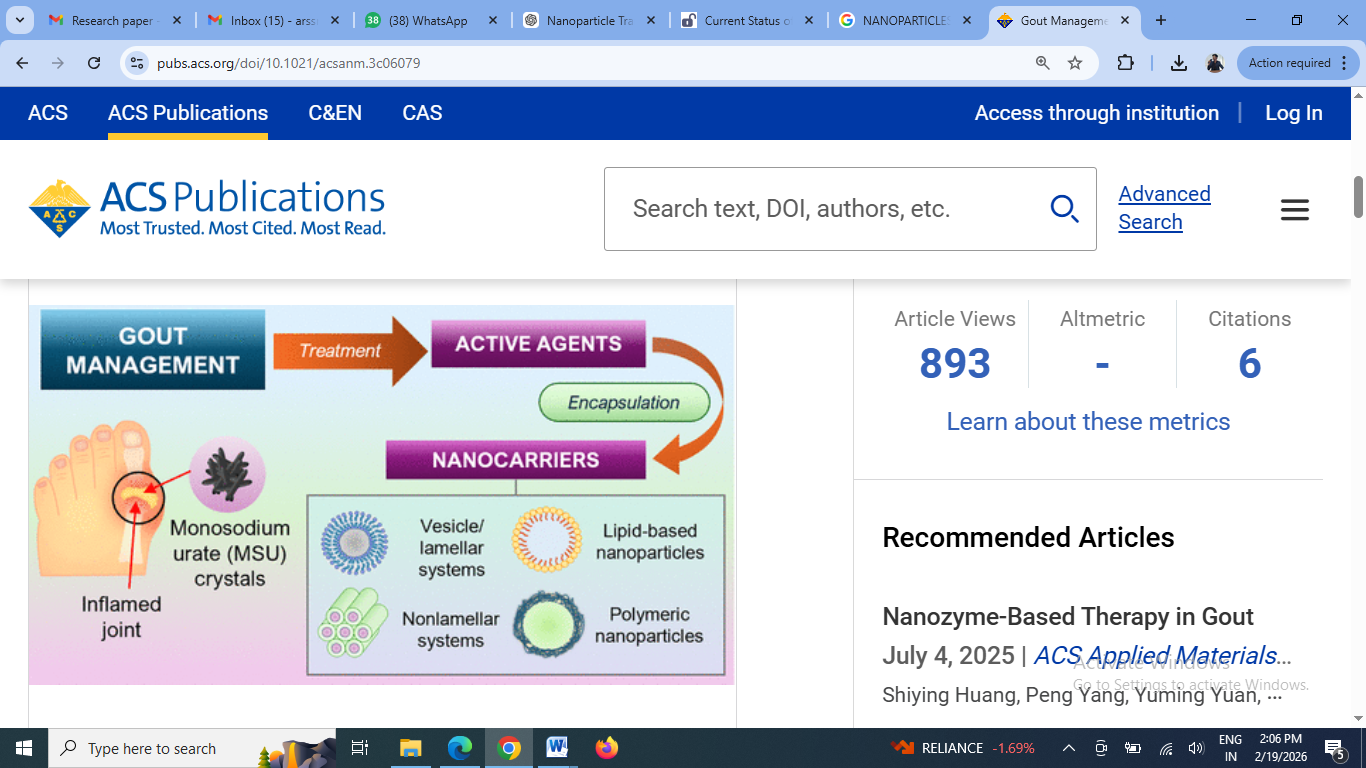
Figure 2: Nanoparticles in Gout Treatment [5]
Overall, nanoparticle-based systems represent a transformative approach in gout therapy, offering safer, more targeted, and more effective treatment options compared to traditional pharmacological interventions.
Transdermal Delivery of Allopurinol-Loaded Nanostructured Lipid Carrier
Allopurinol (ALP), a widely prescribed xanthine oxidase inhibitor, is considered a first-line therapy for gout and hyperuricemia. However, its clinical performance is limited by poor aqueous solubility, as it belongs to the Biopharmaceutics Classification System (BCS) Class II category. This low solubility contributes to reduced oral bioavailability. Additionally, ALP possesses a relatively short biological half-life and is frequently associated with gastrointestinal adverse effects following oral administration. To overcome these challenges, nanostructured lipid carriers (NLCs) were developed as an advanced delivery platform to enhance drug solubility, prolong systemic availability, and improve therapeutic safety. In this approach, ALP was incorporated into NLCs using a microemulsion-based preparation method. The formulation was optimized with respect to particle size, surface charge, and drug entrapment efficiency. Physicochemical characterization confirmed nanoscale particle dimensions, uniform size distribution, adequate stability, and high drug loading capacity. Analytical studies demonstrated the absence of chemical incompatibility between formulation components and indicated the transformation of ALP into an amorphous state within the lipid matrix. Morphological examination revealed spherical nanoparticles. The optimized NLCs were subsequently incorporated into a hydrogel system composed of HPMC and poloxamer-407 to facilitate transdermal application. In vitro and ex vivo diffusion studies demonstrated sustained drug release and significantly enhanced skin permeation compared with conventional formulations. Safety evaluation indicated minimal skin irritation. Furthermore, transdermal administration of the ALP-loaded NLC gel showed superior anti-gout activity in experimental animal models compared with oral ALP suspension. Overall, this strategy highlights the potential of nanostructured lipid carriers as an effective transdermal system for improving the therapeutic performance of allopurinol while minimizing gastrointestinal side effects.[6]
Microneedle (MN) Patch for the Co-Delivery of Febuxostat and Lornoxicam
Gouty arthritis (GA) is an inflammatory joint disorder triggered by the accumulation of monosodium urate (MSU) crystals within synovial tissues. Effective management requires both uric acid reduction and inflammation control over prolonged periods. Febuxostat, a selective xanthine oxidase inhibitor, is widely used to suppress uric acid production, although its moderate bioavailability limits optimal therapeutic outcomes. Lornoxicam, a potent nonsteroidal anti-inflammatory drug (NSAID), is frequently prescribed to relieve pain and inflammation. However, both agents fall under BCS Class II, characterized by poor aqueous solubility despite high membrane permeability, which restricts their clinical efficiency when administered orally.
To address these limitations, a microneedle (MN) patch was developed for the simultaneous transdermal delivery of febuxostat and lornoxicam. The optimized system consisted of biodegradable polymers including polyvinyl alcohol (PVA), polyvinylpyrrolidone (PVP), polyethylene glycol (PEG 400), and a chitosan backing layer. The microneedles exhibited sufficient mechanical strength to penetrate the skin while rapidly dissolving upon contact. In vitro studies demonstrated nearly complete drug release within 48 hours. In vivo evaluation in hyperuricemic rat models revealed significant reductions in serum uric acid levels and xanthine oxidase activity, along with marked suppression of inflammatory biomarkers. Histological findings indicated improved joint and liver tissue recovery. Overall, this microneedle-based approach enhanced therapeutic efficacy, bioavailability, and safety compared to conventional oral or topical formulations, suggesting its promise as an advanced treatment strategy for gouty arthritis.[7]
Carbon Nanotubes (CNTs)
Carbon nanotubes (CNTs) have attracted substantial scientific interest for drug delivery applications due to their unique mechanical strength, electrical conductivity, and high surface area. However, their application in transdermal delivery has been comparatively limited, mainly because pristine CNTs exhibit poor skin penetration unless assisted by external mechanical or electrical stimuli. To overcome this limitation, functionalized CNTs (f-CNTs) have been developed to enhance biocompatibility, dispersibility, and skin permeation efficiency.
1. Functionalized Multi-Walled Carbon Nanotubes
Functionalized multi-walled CNTs (f-MWCNTs) have demonstrated improved drug loading capacity, encapsulation efficiency, and stability compared with unmodified CNTs. Studies report enhanced skin permeation and prolonged in vivo drug release without causing dermal toxicity. Such nanocomposites show promise in sustaining therapeutic levels while maintaining skin safety.
2. Controllable CNT Membranes
CNT-based membrane devices have been engineered to regulate transdermal drug delivery using electrical modulation. These systems allow controlled ON–OFF drug flux, as demonstrated in nicotine delivery studies. Despite effective permeation control, limitations such as low flexibility and reduced skin conformity require supportive gels to improve contact and performance.
3. “Bucky Paper”
“Bucky paper,” a thin film composed of single- or multi-walled CNT networks, has been explored for electrically controlled drug delivery. Drug release can be modulated by applying electrical bias, influencing release rate and direction based on drug charge. This system enables both passive and electromodulated release, offering tunable transdermal performance.
4. CNT Gold NPs
CNTs integrated with gold nanoparticles (GNPs) have been incorporated into polymeric transdermal patches to enhance drug permeation via electro-permeabilization. Optimized formulations demonstrate high encapsulation efficiency, controlled release without burst effect, and good cellular compatibility, indicating suitability for dermal application.
5. CNT Hydrogel Hybrid
Embedding CNTs within hydrogel matrices improves electrical conductivity and may enhance skin permeability under applied electric fields. Although conductivity improvements have been demonstrated, further in vitro and in vivo validation is required.
Nanocellulose NPs
Nanocellulose (NC) is a biodegradable, lightweight, and biocompatible polysaccharide widely investigated for biomedical and transdermal applications. Its high surface area and mechanical strength enable formulation into drug carriers, wound dressings, and composite systems. NC-based systems provide painless application, sustained release, high moisture permeability, and improved therapeutic efficiency at low doses.
1. Bacteria Nanocellulose
Bacterial nanocellulose (BNC) possesses high purity, low toxicity, and a nano-porous architecture. It has been approved for biomedical use and effectively loaded with various drugs, demonstrating stable, sustained transdermal release and good storage stability.
2. Cellulose Nanofibers
Cellulose nanofibers (CNFs) enhance mechanical stability and drug interaction due to their large surface area. Electrospun CNF-based films and nanocomposites have shown controlled and prolonged drug release with minimal cytotoxicity.
3. Cellulose Nanocrystal
Cellulose nanocrystals (CNCs) offer excellent mechanical strength, biocompatibility, and sustained drug delivery potential. CNC-based hydrogels and nanocomposites improve permeability, stability, and controlled release, supporting their role in advanced transdermal therapeutic systems.[8]
TYPES OF NANOCARRIERS
Nanocarriers are advanced drug delivery systems designed to improve solubility, stability, bioavailability, and targeted transport of therapeutic agents. Among the most widely studied systems are liposomes, niosomes, ethosomes, transferosomes, solid lipid nanoparticles (SLNs), and nanoemulsions, each possessing unique structural and functional characteristics.
1 Liposomes
Liposomes are spherical vesicular systems composed of one or more phospholipid bilayers enclosing an aqueous core. Their unique bilayer architecture enables the incorporation of hydrophilic drugs within the internal aqueous compartment and lipophilic drugs within the lipid membrane, making them highly versatile carriers. Typically ranging from nanometer to micrometer size, liposomes enhance drug loading capacity and therapeutic performance. They improve solubility, stability, and bioavailability while reducing systemic toxicity. Surface modification with hydrophilic polymers such as polyethylene glycol (PEG) produces stealth liposomes, which evade immune recognition and prolong circulation time. Their stability is influenced by lipid composition, vesicle size, and storage conditions, and they are commonly prepared using methods such as thin-film hydration and solvent injection.
2 Niosomes
Niosomes are vesicular carriers formed from non-ionic surfactants that self-assemble into closed bilayer structures in aqueous environments. Like liposomes, they can encapsulate both hydrophilic and lipophilic drugs. They enhance drug permeation across biological membranes, particularly the stratum corneum, and serve as efficient transport systems. Components such as cholesterol improve membrane rigidity and stability. Compared to liposomes, niosomes offer greater chemical stability and lower production cost, making them attractive alternatives for pharmaceutical applications.
3 Ethosomes
Ethosomes are flexible lipid vesicles composed mainly of phospholipids, high concentrations of ethanol, and water. The elevated ethanol content increases membrane fluidity and enhances skin permeability, allowing deeper drug penetration. They are particularly effective for transdermal delivery of drugs with poor oral bioavailability. Ethosomes provide controlled release, improved entrapment efficiency, and superior penetration compared to conventional liposomal systems.
4 Transferosomes
Transferosomes are ultra-deformable vesicles consisting of phospholipids combined with edge activators that enhance membrane flexibility. Their elastic structure enables them to pass through narrow skin pores, improving transdermal drug delivery. They can carry hydrophilic, lipophilic, and amphiphilic drugs while offering enhanced bioavailability, sustained release, and minimal toxicity compared to traditional vesicular systems.
5 Solid Lipid Nanoparticles
Solid lipid nanoparticles (SLNs) are submicron carriers composed of solid lipids stabilized by surfactants. With particle sizes typically between 50 and 1000 nm, SLNs provide controlled drug release, improved stability, and reduced toxicity. They enhance drug absorption and protect encapsulated compounds from degradation. Although they may have limitations in drug loading capacity, advancements such as nanostructured lipid carriers have addressed these challenges.
6 Nanoemulsion
Nanoemulsions are fine oil-in-water or water-in-oil dispersions stabilized by surfactants, with droplet sizes generally in the nanometer range. Their small droplet size increases surface area, enhances solubility of poorly water-soluble drugs, and improves dermal and oral bioavailability. They protect active ingredients from degradation and are widely used in pharmaceutical and topical formulations due to their stability and efficient drug release characteristics.[9]
CHALLENGES OF NANOPARTICLE-LOADED TRANSDERMAL PATCHES IN CLINICAL APPLICATIONS
Nanoparticle-integrated transdermal patches, particularly those utilizing lipid-based nanocarriers, present significant therapeutic promise but encounter multiple barriers that limit their clinical translation. One of the primary challenges involves large-scale manufacturing and economic feasibility. Lipid nanoparticles (LNPs), especially those below 100 nm in size, are susceptible to particle fusion, which can compromise vesicular integrity and cause premature drug leakage. Although formulations stabilized with surfactants such as poloxamer 188 and polysorbate 80 demonstrate acceptable biocompatibility and reduced toxicity, combining surfactants to enhance stability may inadvertently elevate toxicological risks. Similarly, cationic surfactants like cetyltrimethylammonium bromide may improve cellular interaction but raise concerns regarding long-term safety. Stability during production and storage remains another critical limitation. Lipid polymorphism, particularly the transformation of triglycerides from the α to β crystalline form, can reduce the amorphous regions within the carrier matrix, resulting in drug expulsion. Sterilization processes further complicate formulation stability, as commonly employed methods such as gamma irradiation may induce lipid oxidation and structural degradation. Oxidative reactions during storage can alter surface charge, drug release kinetics, and overall therapeutic performance, while potentially generating harmful byproducts. Interactions with packaging materials, including ion leaching and surfactant adsorption, may also destabilize formulations, often restricting shelf life to less than one year. Approaches such as lyophilization, incorporation of antioxidants or chelating agents, use of buffering excipients, and specialized packaging systems have been explored to mitigate these concerns. Beyond formulation challenges, regulatory approval presents a substantial obstacle. Comprehensive toxicological evaluation is mandatory, as nanoparticle accumulation in non-target tissues may induce cytotoxic or genotoxic effects, particularly when cationic lipids are involved. Rigorous preclinical and clinical assessments across multiple trial phases are required to establish safety, efficacy, optimal dosing, and long-term tolerability before commercialization can be achieved.[10]
REFERENCES


Neelam Patel Aahire, Dr. Ashish Agrawal, Nanoparticle-Loaded Transdermal Patches: An Emerging Strategy for the Management of Hyperuricemia, Int. J. of Pharm. Sci., 2026, Vol 4, Issue 2, 4220-4228. https://doi.org/10.5281/zenodo.18784153
 10.5281/zenodo.18784153