We use cookies to make sure that our website works properly, as well as some ‘optional’ cookies to personalise content and advertising, provide social media features and analyse how people use our site. Further information can be found in our Cookies policy
Diabetes mellitus is a chronic metabolic disorder characterized by impaired insulin secretion, insulin resistance, or both, leading to persistent hyperglycemia and associated long-term complications. Recent advancements in science and biomedical engineering have led to the development of innovative targeted drug-delivery strategies that enhance the management and treatment of both Type 1 and Type 2 diabetes. This review highlights emerging technologies that aim to improve glycemic control, reduce treatment burden, and minimize complications. Novel approaches include automated insulin delivery (AID) systems, continuous glucose monitoring (CGM), smart insulin and smart insulin patches, cell- and gene-based regenerative therapies, and 3D bio-printing of functional islet cells. Advanced computational tools such as artificial intelligence (AI) and digital twin models enable precise, predictive, and personalized diabetes management. Additional breakthroughs such as regenerative and gut-based therapies, nanotechnology-based insulin carriers, ingestible smart biosensors, and closed-loop dual-hormone systems further enhance accuracy, reduce hypoglycemia risk, and improve patient quality of life. Collectively, these innovations underscore a paradigm shift toward minimally invasive, highly adaptive, and patient-centric diabetes care. Continued research, clinical validation, and integration of these novel delivery systems offer significant potential to transform diabetes management and achieve better therapeutic outcomes worldwide.
Diabetes mellitus commonly known as diabetes, is a chronic metabolic disorder characterized by high blood glucose levels (hyperglycemia) due to defects in insulin secretion, insulin action or both. Insulin a hormone produced by the pancreas, regulates blood glucose levels [1].
CLASSIFICATION OF DIABETES:
Based on the presence of glucose in the urine, they are classified into 2 types, namely:
DIABETES MELLITUS:
It can be defined as an increase in the formation of glucose content in urine.
DIABETES INSIPIDUS: It can be defined as the excess formation of non-glucose urine.
DIABETES MELLITUS IS CLASSIFIED INTO TWO TYPES:
Type-1 diabetes mellitus
Type-2 diabetes mellitus
TYPE-1 DIABETES MELLITUS:
Type 1 diabetes mellitus is an autoimmune condition where the body doesn't produce insulin, requiring lifelong external insulin to manage blood glucose levels and prevent severe complications like diabetic ketoacidosis.[2]
TYPE-2 DIABETES MELLITUS:
Type 2 diabetes happens when your body can’t use insulin properly. Without treatment, Type 2 diabetes can cause various health problems, like heart disease, kidney disease and stroke. You can manage this disease by making lifestyle change.[3]
NOVEL EMERGING TECHNOLOGIES USED TO MANAGE DIABETES
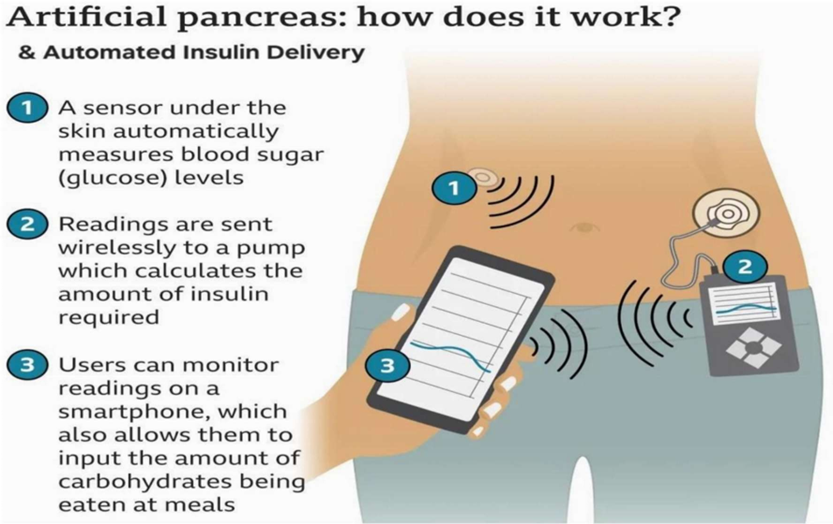
The Artificial Pancreas Device System is a system of devices that closely mimics the glucose regulating function of a healthy pancreas.
It senses the blood glucose level, determining the amount of insulin needed, and then delivering the appropriate amount of insulin.
Automated insulin delivery refers to a system that automatically adjusts and administers insulin to maintain blood glucose levels by using a combination of wearable devices and control algorithms.[4]
Pump uses rapid acting insulin delivering it in two distinct ways:
CONTINUOUS BASAL DELIVERY:
The pump infuses rapid acting insulin through a subcutaneous cannula, providing a steady basal rate throughout the day and night to maintain blood sugar between meals and during sleep.
BOLUS DOSE:
Additional doses programmed by the use at meal times or to correct high blood sugar. Insulin is delivered subcutaneously via a small catheter inserted under the skin, mostly in the abdomen.[6]
CLINICAL BENEFITS:
Decreased risk of hypoglycaemia and hyperglycaemia, especially overnight and during exercise.
Quality of life: Reduced mental burden, better sleep and emotional well-being. o Long term health: lower risk of diabetes complications.
LIMITATIONS:
Still requires patient education and ongoing clinical monitoring. o Difficult for athletic diabetics who play contact sports to maintain a connected device.
CONTINUOUS GLUCOSE MONITORING (CGM) DEVICE
A continuous glucose monitoring (CGM) device is a wearable medical system that continuously measures & tracks glucose levels in the fluid under the skin, helping people to manage diabetes more precisely.
It is an Implantable device that is a medical device surgically placed inside or surface of the body.
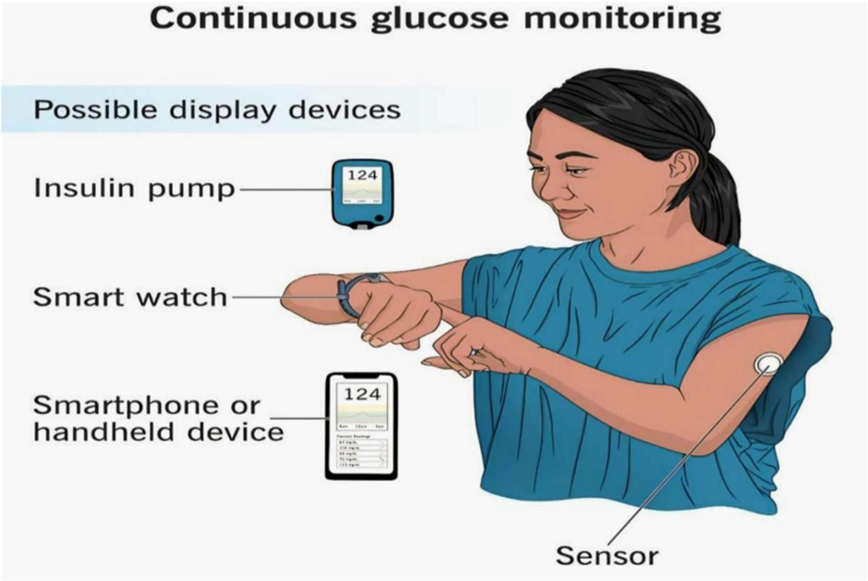
Continuous glucose monitoring (CGM) devices help you manage diabetes with fewer finger stick checks. A sensor just under your skin measures your glucose levels 24 hours a day. A transmitter sends results to a wearable device or cell phone so you can track changes to your glucose level in real time. Learning how to use a CGM takes time, but it can help you more easily manage your diabetes.[7]
MECHANISM OF ACTION:
CGMP devices consist of 3 main components: a small sensor inserted under the skin, a transmitter attached to the sensor, and a receiver that displaces data.
Sensor: The sensor is a tiny piece of material that measures real-time glucose levels in your interstitial fluid. You’ll insert the sensor under your skin with an applicator. It uses a needle to pierce your skin. You remove the needle, and it leaves the sensor in place. Sensors typically last seven to 15 days, depending on the brand. The implantable CGM system lasts for months. It’s a small pellet (about 18 millimeters long) that a healthcare provider inserts under the skin of your upper arm.
Transmitter: All CGM systems use a transmitter to wirelessly send the glucose data from the sensor to a device where you can view it. For some CGM systems, the transmitter is reusable and attached to each new sensor. For other CGM systems, the transmitter is part of the disposable sensor.
Receiver: This technology displays your real-time glucose level and shows a graph of the history of your levels. It can also show whether your glucose level is trending up or down and how drastically. Most CGMs offer smartphone apps for viewing data. [8,9].
CLINICAL BENEFITS:
CGM is primarily used in patients who need intensive insulin therapy, such as those with type 1 or advanced type 2 diabetes.
Fig-2 Continuous glucose monitoring device [10]
LIMITATIONS:
There can be discomfort, skin reactions, or adhesion problems at the insertion site.
Dependence on compatible devices, software glitches may present for some patients and healthcare professionals.
3. SMART INSULIN AND SMART INSULIN PATCHES
SMART INSULIN:
Smart insulin refers to insulin formulations or delivery systems that are designed to respond to changes in blood glucose levels.
These systems often incorporate glucose-sensing materials or algorithms that trigger insulin release when blood sugar rises.
The goal is to provide a more physiological insulin response, reducing the risk of hypoglycemia (low blood sugar) and hyperglycemia (high blood sugar).[11]
SMART INSULIN PATCHES:
Smart insulin patches are a type of wearable technology that uses micro needles to deliver insulin.
The patches are designed to potentially replace the need for frequent injections.
Research is ongoing to develop smart insulin patches that can last for extended periods (e.g., several days) and provide continuous glucose monitoring.
MECHANISM OF ACTION:
Smart insulin, also called glucose-responsive insulin (GRI), is specially engineered to mimic pancreatic beta cells.
It stays inactive when blood sugar is low and becomes active to release insulin when blood glucose rises.
The mechanism involves a “molecular switch”: the insulin molecule changes conformation in response to high blood glucose, triggering insulin release, and stops releasing insulin when levels return to normal, reducing the risk of hypoglycemia.
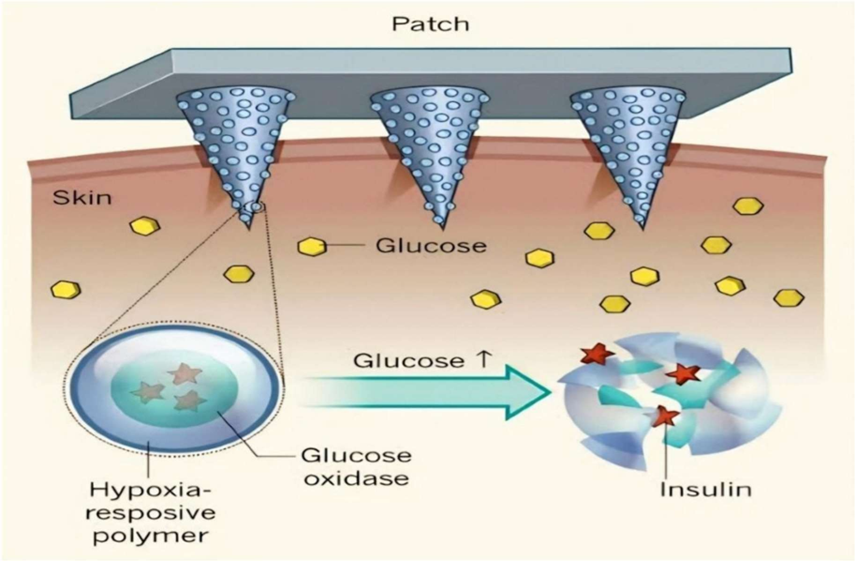
Smart insulin patches use micro needles coated with glucose-sensing polymers; these needles painlessly penetrate the skin and release insulin in response to increased glucose detected in the interstitial fluid.[12]
CLINICAL BENEFITS:
Insulin patches minimize injection pain and improve patient comfort.
Reduces the risk of hypoglycemia (low blood sugar) by preventing insulin release when not needed.
Potential to improve quality of life and blood glucose stability for patients, especially those with type 1 diabetes.
Fig-3 Smart insulin and Smart insulin patches [13]
LIMITATIONS:
Production is complex and currently expensive
CELL & GENE THERAPY APPROACHES
Cell and gene therapy approaches are highly promising for diabetes treatment, applying regenerative and molecular techniques to restore insulin production and improve metabolic control. These therapies primarily target Type 1 diabetes mellitus, but innovations are expanding their scope to Type 2 diabetes as well.[14]
MECHANISM OF ACTION:
Cell-Based Approaches:
Islet Transplantation:
Involves transplanting healthy pancreatic islet cells that can produce insulin.
Stem Cell Therapy:
Genetically modifying stem cells or other cell types to differentiate into insulin-producing beta cells and then transplanting them.
Gene-Based Approaches:
Restoring Insulin Production:
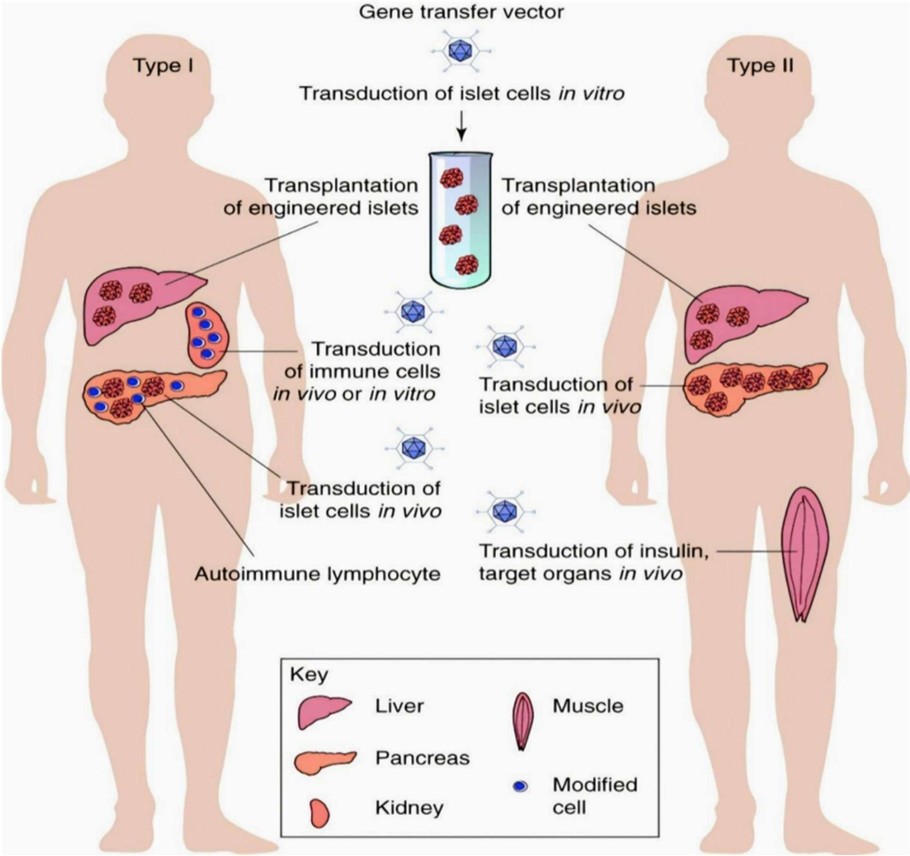
Inserting genes into cells to produce insulin, often using viral vectors like AdenoAssociated Virus (AAV) to deliver PDX1 gene to liver cells, enabling them to secrete insulin.
Inducing Tolerance:
Adding genes to protect existing beta cells from the autoimmune attack characteristic of type 1 Diabetes.[15]
Fig – 4 Gene Therapy of Diabetes Mellitus [16]
CLINICAL BENEFITS:
Cell therapies such as stemcell & autologous cell therapies can directly repair or regenerate damaged tissues.
Gene therapies modify or correct defective genes, addressing the root causes of many genetic and acquired diseases.
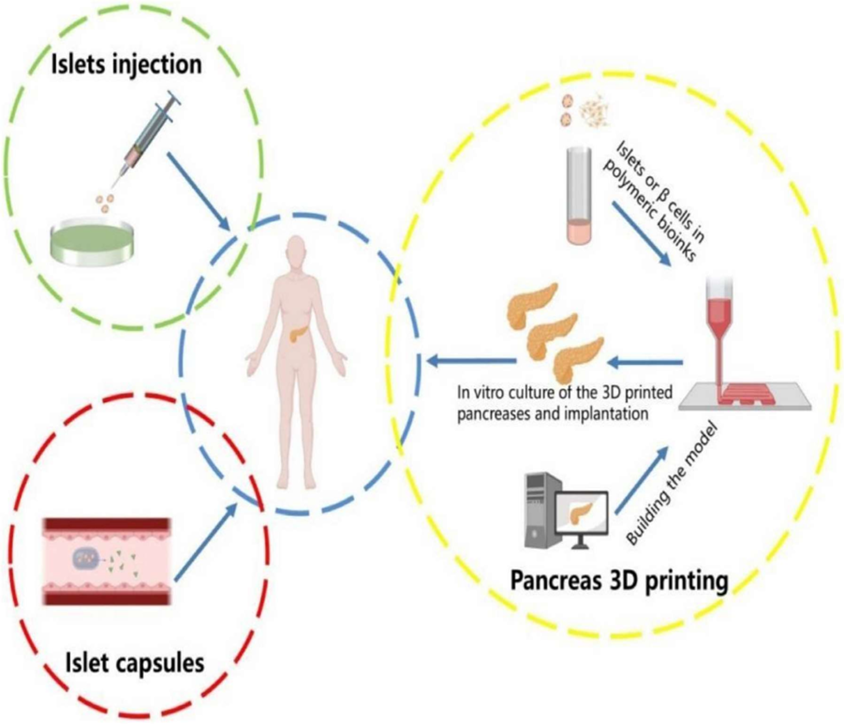
3D BIO - PRINTING OF ISLET CELLS
3D bio - printing of islet cells is a promising advanced technology for diabetes management, aiming to restore physiological insulin secretion by generating functional, transplantable pancreatic tissue. This approach is particularly relevant to patients with type 1 diabetes, where autoimmune destruction of β-cells impairs endogenous insulin production.
3D bio - printed islet technology is being developed specifically as a replacement therapy for patients with type 1 diabetes mellitus (T1DM).
3D bio - printing of islets is therefore most suited for patients with type 1 diabetes and is not widely used for type 2 diabetes except in rare, advanced cases involving critical β-cell loss.[17]
MECHANISM OF ACTION:
3D bio printing fabricates pancreatic islet-like structures by precisely layering bio inks mixtures of living cells, such as β-cells or islet cell aggregates, with supportive biomaterials and bioactive molecules—into architectures that mimic native pancreatic tissue.
These printed constructs are designed to maintain or restore the ability to sense blood glucose and secrete insulin in response, closely resembling the physiological regulation that occurs in normal islets of Langerhans.
Optimized bio inks, often composed of alginate and decellularized pancreatic extracellular matrix, help create an environment conducive to islet viability and function.
Specialized printers deposit bio link containing stem cell- derived β-cells or primary islet cells, supportive cells (like endothelial or stromal cells), and hydrogel scaffolds in a defined 3D pattern that promotes cellular organization and vascularization.[18]
Fig – 5 showing 3D Bio- printing of Islet Cells [19]
CLINICAL BENEFITS:
Bioprinting enables the creating of islet cunstructs using bioinks that closely mimic the human pancreas extracellular matrix & high insulin secretion as seen in natural pancreatic islets.
Transplanted bioprinted islets have demonstrated improved glucose sensing and regulations, potensially eliminating or reducing the need for exsogenous insuln in type 1 diabetes.
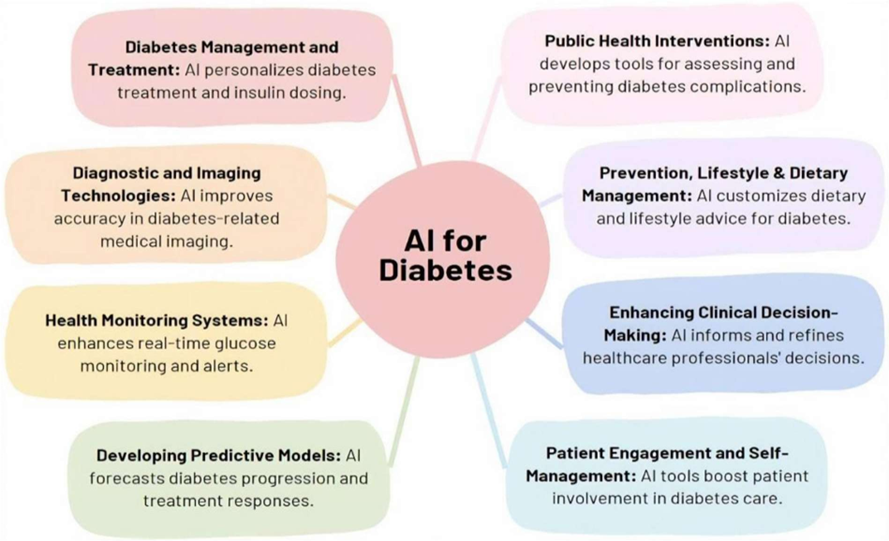
AI & DIGITAL TWIN TECHNOLOGIES
AI and digital twin technologies are innovative solutions now used in diabetes management, providing patient-specific, adaptive, and predictive care.
These systems predict outcomes, optimize medication and lifestyle interventions, and improve glycemic control, potentially reversing type 2 diabetes. While promising, challenges like model accuracy and data trustworthiness need ongoing attention for effective clinical implementation.
AI and digital twin technologies are primarily helpful for both type 1 and type 2 diabetes patients, but the strongest clinical impact is currently seen in type 2 diabetes management due to the ability to integrate complex lifestyle, metabolic, and medication data to drive remission and optimal glycemic control.[20]
AI and Digital Twins Working:
Data Collection:
Wearable sensors, continuous glucose monitors (CGMs), and mobile apps collect real-time data on blood glucose, diet, physical activity, and other physiological factors.
Digital Twin Creation:
AI algorithms analyze this data to build a dynamic, patient-specific digital twin, which serves as virtual model of the individual’s metabolic processes.
Personalized Interventions:
The digital twin simulates health states and predicts responses to various interventions.
AI-Powered Optimization:
AI, especially machine learning and deep learning, is used to analyze the integrated datasets, identify patterns, and generate precise forecasts for blood glucose levels.[21]
Fig-6 Showing Artificial Intelligence for Diabetes Management [22]
CLINICAL BENEFITS:
Digital platforms allow doctors to monitor patients’ glucose data remotely.
Patients in rural or distant areas can receive specialist advice without visisting hospitals frequently.
LIMITATIONS:
Patient Privacy:
AI systems require access to sensitive health data, necessitating robust data protection and privacy measures.
REGENERATIVE &GUT BASED THERAPIES (ReCET)
Regenerative Therapies:
Regenerative therapies primarily focus on restoring insulin-producing β-cells within the pancreas and repairing tissue damage caused by diabetes. Stem cell therapy is the leading strategy,utilizing embryonic stem cells (ESCs), induced pluripotent stem cells (iPSCs), and mesenchymal stem cells (MSCs) to replenish β-cell mass, reverse immune-mediated damage, and promote endogenous insulin secretion.
Clinical trials have shown that stem cell–derived islet transplantation can lead to restored insulin production and substantial reductions in exogenous insulin dependence, with some patients achieving prolonged periods of insulin independence. MSCs additionally provide benefit by mitigating inflammation.
Gut-Based Therapies:
Gut-based therapies target the intestinal microbiota, aiming to improve glucose metabolism and reduce inflammatory responses. Randomized controlled trials have demonstrated that interventions—such as probiotics (e.g., Lactobacillus), prebiotics, dietary fiber, and engineered beneficial bacteria—lead to significant decreases in fasting plasma glucose, HbA1c, and insulin resistance.
Mechanistic studies suggest these therapies modulate the presence of beneficial gut microbes, reduce pro-inflammatory cytokines, and enhance anti-inflammatory mediators including interleukin-10.[23]
MECHANISM OF ACTIONS
Below is a concise table comparing the mechanism of action for regenerative and gut-based therapies in the treatment of diabetes mellitus.[24]
R & G THERAPIES MECHANISM OF ACTION
Therapy
Mechanism of action
Regenerative (Stem Cells, β-cell regeneration)
Differentiation into insulin-producing β- cells Paracrine-mediated islet regeneration via growth factor secretion (e.g., IGF-1, HGF, VEGF)Immunomodulation: reduction of harmful immune responses, promotion of regulatory T cells, shifting Th1/Th2 cytokine balance.
Gut-Based Therapies
Modulation of gut microbiota to restore eubiosis, decrease inflammation, and improve barrier integrity Promotion of short-chain fatty acid (SCFA) production and enhancement of incretin (GLP-1) secretion- Reduction of endotoxemia and systemic inflammation,
improving insulin sensitivity.
CLINICAL BENEFITS:
Reduced Pain and Inflammation: By promoting natural repair, regenerative treatments reduce inflammation and pain without side effects.
Support for Chronic Diseases: A healthy gut can positively affect other body parts like the liver, brain, and immune system, making these therapies helpful in diseases like liver conditions.
NANOTECHNOLOGY- BASED INSULIN CARRIERS
An existence allows diabetic patients to avoid the requirement of needles for treatment while obtaining medications with longer-lasting effects that target specific areas. Nanotechnology creates small transport systems for medications to lead the development of novel therapeutic methods for diabetes treatment.
Nanotechnology-based insulin carriers are an emerging and promising approach in diabetes treatment that aim to improve the delivery, efficacy, and patient compliance of insulin therapy.These nano carriers protect insulin molecules, enable controlled release.
Enhance absorption, and reduce side effects such as hypoglycemia associated with conventional insulin injections. Nanotechnology-based insulin carriers represent a significant advancement that could transform diabetes management by offering safer, patient-friendly, and more effective insulin delivery options.[25]
MECHANISM OF ACTION:
Encapsulation and Protection:
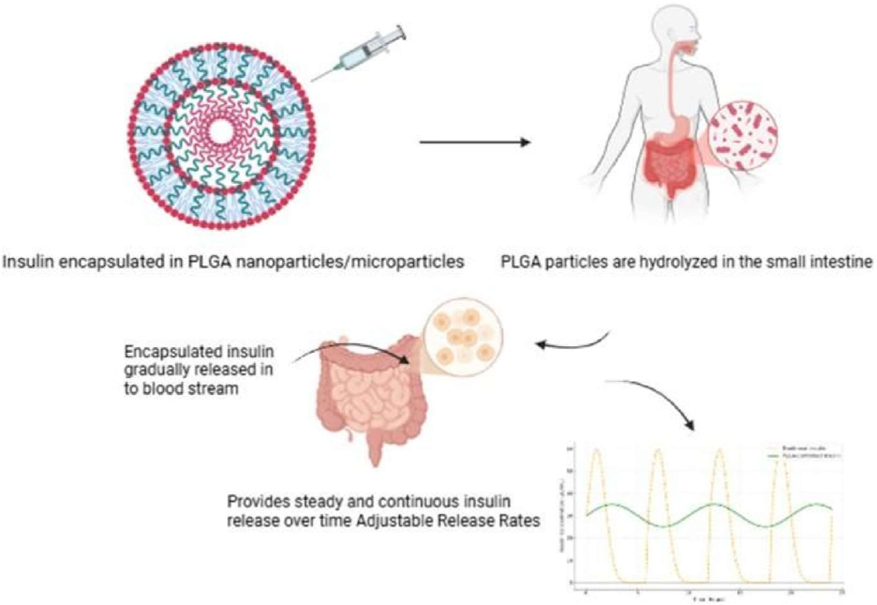
Insulin molecules are encapsulated within nanoparticles made from materials such as polymers (e.g., PLGA, chitosan) & lipids. This protects insulin from enzymatic degradation in the gastrointestinal tract when administered orally or through other non-invasive routes.
Enhanced Absorption and Permeation:
Nanoparticles are designed to enhance the transport of insulin across the intestinal mucosa by various means. Some coatings and modifications improve mucoadhesion or facilitate uptake via transcellular (endocytosis) and paracellular (tight junction modulation) pathways. Improve nanoparticle penetration through the mucus barrier and increase absorption into the systemic circulation.
Controlled and Sustained Release:
Nanocarriers allow sustained release of insulin in response to environmental triggers such as pH, temperature, or blood glucose levels. This helps maintain glucose levels close to normal for extended periods, avoiding rapid insulin bursts and thereby minimizing side effects like hypoglycemia.
Targeted Delivery:
Some nanoparticles are coated or functionalized with ligands for receptor-mediated targeting, enhancing insulin delivery efficiency and reducing the required dose. This targeted approach can also reduce side effects and improve therapeutic outcomes by focusing the insulin delivery to desired sites.[26]
Fig-7 Showing Insulin carrier nanotechnology [27]
9. INGESTIBLE SMART PILLS FOR GLUCOSE MONITORING
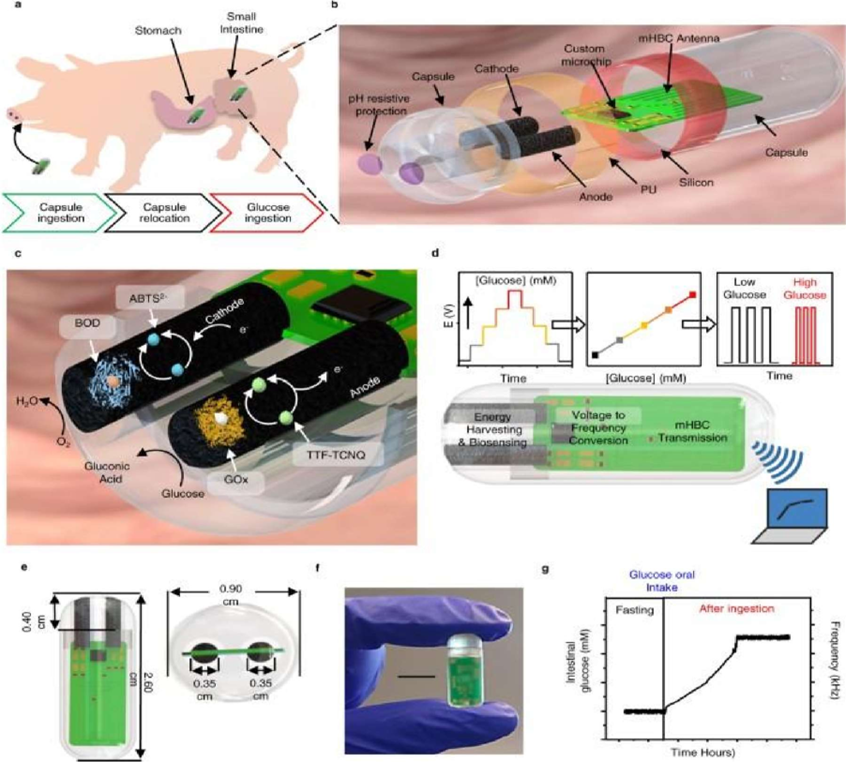
Ingestible smart pills for glucose monitoring are an emerging technology designed to moniter glucose levels in the small intestine in real-time. These pills are battery-free biosensors powered by glucose present in the intestines, which act as a biofuel for the device. The pills contain ultra-low-power electronics integrated with glucose biofuel cells that perform energy harvesting, biosensing, and wireless telemetry to transmit glucose reading continuously.
The modern healthcare landscape is intricately linked to the advancement of digital health tools, with digital pills integrated with ingestible sensors representing a transformative innovation. Systems like MyTMed, which include a digital pill with a radiofrequency emitter, a relay hub, demonstrate the potential of digital pills to enhance treatment outcomes by patient compliance, reducing hospital admissions, facilitating mobile clinical monitoring, and lowering treatment costs.[28]
MECHANISM OF ACTION:
The mechanism of action of ingestible smart pills for glucose monitoring is based on a battery free glucose biofuel cell that uses the glucose present in the small intestine as a biofuel to generate electricity.
This electrical power drives ultra-low-power electronics that continuously sense glucose levels through an integrated glucose biosensor.
The sensed glucose data is then wirelessly transmitted via magnetic human body communication to an external receiver in real time.
This enables continuous, non-invasive glucose monitoring inside the small intestine without the need for a battery, providing frequent data points over hours to study gut metabolism and health.
The pill is designed to be small and safe to swallow, with initial prototypes tested successfully in pigs.
Here is a tabular summary of ingestible smart pills for glucose monitoring based on the gathered information. [29]
FEATURE
DESCRIPTION
Mechanism
Battery-free biofuel cell powered by intestinal glucose; oxidizes glucose to generate electricity
Sensor
Glucose biosensor integrated with ultra- low-power electronics
Power source
Glucose in small intestine as biofuel for powering electronics
Data transmission
Wireless telemetry via magnetic human body communication
Target site
Small intestine
Capsule size
Approximately 2.6 cm length, 0.9 cm diameter (subject to miniaturization)
Specificity
High specificity to glucose with minimal interference from other intestinal
compounds.
Advantages
Non-invasive, battery free, continuous monitoring without endoscopy.
Current Status
Prototypes tested in animal models (pigs); clinical human use under development.
Fig-8 Ingestable smart pill for glucose monitoring [30]
CLINICAL BENEFITS:
Remote Patient Monitoring: Wireless transmission of data facilitates remote monitoring by healthcare providers, enabling proactive management of chronic conditions like diabetes.
Reduced Healthcare Burden: By providing continuous data outside clinical settings, these smart pills can reduce hospital visits, invasive tests, and healthcare costs.
10. CLOSED-LOOP DUAL HORMONE SYSTEM [INSULIN+GLUCAGON]
? Closed-loop insulin delivery systems have shown promise in improving glucose control for people with type 1 diabetes. These systems deliver insulin automatically based on glucose values from a continuous glucose monitor (CGM). Despite this adaptive delivery of insulin, hypoglycemia can still occur in part due to both the slow onset and offset of short-acting insulin formulations and the dysregulation and loss of glucagon secretion that occurs early in the course of type 1 diabetes.
? Closed-loop dual hormone systems administering both insulin and glucagon in diabetes mellitus treatment improve glucose control by reducing hypoglycemia risk and increasing time spent in the target glucose range compared to insulin-only systems. These systems use glucose sensor feedback to deliver insulin to lower glucose and glucagon to prevent or correct hypoglycemia, mimicking physiological blood glucose regulation. Studies show dual- hormone closed-loop systems increase the percentage of time glucose is in the target range and reduce hypoglycemia episodes in type 1 diabetes patients, including during challenging conditions like exercise and overnight. Dual hormone delivery allows more aggressive insulin dosing without increasing hypoglycemia risk by administering glucagon to raise blood sugar if it falls too low.[31]
MECHANISM OF ACTION:
? MONITORING: A continuous glucose monitor (CGM) inserted under the skin measures glucose level in the intestinal fluid in real-time and sends this data wirelessly to a control algorithm device.
? CONTROLLING THE ALGORITHM: The control algorithm (or "dosing algorithm") receives the real time glucose data and uses pre-programmed logic to determine the correct insulin or glucagon dose.
? INSULIN DELIVERY: If the algorithm detects high blood glucose (hyperglycemia), it signals an insulin pump to deliver insulin subcutaneously to lower blood sugar levels.
GLUCAGON DELIVERY: If the algorithm detects low blood glucose (hypoglycemia), it signals a separate pump to deliver glugagon. Glucagon acts on the liver to break down stored glycogen into glucose, which is then released into the bloodstream, raising blood glucose levels.
PREVENTING HYPOGLYCEMIA: The primary goal of adding glucagon is to prevent or treat hypoglycemia, particularly in situations like exercise when glucose can drop rapidly. This dual-hormone system mimics the body's natural balance between insulin and glucagon more closely than single-hormone systems.[32]
Fig-9 Closed loop dual hormone system [33]
CLINICAL BENEFITS:
? Improved Glucose Control: They increase time in target glucose range and reduce time above range, contributing to better overall glycemic control.
? Quality of Life: Users report less emotional distress related to diabetes, improved wellbeing, and better sleep quality during long- term use.
CONCLUSION
New therapies, monitoring, and revolutionary-enabling technologies applied to healthcare represent an historic oppurtinity to improve the lives of people with diabetes. New medications and methods for their delivery are quickly becoming more effective. More meaningful monitoring of blood glucose values will occur with newer more useful devices more likely to be worm with more actionable information. Diabetes data need to be shared among patients, clinicals, devices, and other electronic systems.
Ubiquitous mobile devices with modular and interoperable software coupled with new technology, such as machine learning and blockchains, will power connected health diabetes. Connected care will replace more expensives, less convenient face-to-face clinic visits by enabling new models of care that increase velocity-to-control with more aggressive and frequent interactions that speed the achievement of glycemic goals. These new models of care must be effective, ethical, convenient and financially sustainable.[34]
REFERENCES
Harsh Mohan-Textbook of Pathology
A Book of Clinical Biochemisrty – Jay pee Brothers Medical Publishers
K.D. Tripathi- Essentials of Medical Pharmacology
Heile M, Hollstegge B, Broxterman L. et al. Automated insulin delivery: Easy enough to use in primary care? Clin Diabetes. 2020;38:474–85. Doi: 10.2337/cd20-0050.
Smart Drug Delivery Systems: Controlled Release and Site-Specific Targeting.
Medically reviewed by Marina Basina, MD — Written by Carolyn Farnsworth — Updated on April 25, 2024.
Hirsch IB.Role of Continuos Glucose Monitoring in Diabetes Treatment. Arlington, VA: American Diabetes Association; Aug 1, 2018. Introduction: history of glucose monitoring.
ClinicalTrials.gov. Home use of MD-logic automated insulin delivery system: Safety and efficacy. ClinicalTrails.gov Identifier:NCT03040414.
Danne T, Nimri R, Battelino T, et al. International consensus on use of continuous glucose monitoring. Diabetes Care 2017;40:1631–1640 [PMC free article] [PubMed]
American Diabetes Association. Continuous Glucose Monitors (https://diabetes.org/advocacy/cgm-continuous-glucose-monitors). Accessed 5/24/2024.
"Smart" Matrix Microneedle Patch Made of Self-Crosslinkable and Multifunctional Polymers for Delivering Insulin On-Demand Jackie Fule Liu, Amin GhavamiNejad, Brian Lu, Sako Mirzaie, Melisa Samarikhalaj, Adria Giacca, Xiao Yu Wu https://doi.org/10.1002/advs.202303665
Jina, A. et al. Design, development, and evaluation of a novel microneedle array-based continuous glucose monitor. J Diabetes Sci Technol 8, 483–487(2014)
Shaw, J. E., Sicree, R. A. & Zimmet, P. Z. Diabetes Res. Clin. Pract. 87, 4–14 (2010).Handorf AM, Sollinger HW, Alam T. Insulin gene therapy for type 1 diabetes mellitus. Exp Clin Transplant. 2015;13:37?45. [PubMed] [Google Scholar]
Nilay KA, Damke S. A review on gene therapy. J Pharm Res Int. 2021;33(60B):635?645. [Google Scholar]
Gene therapy for diabetes: strategies for beta-cell modification and replacement Diabetes Metab. Rev. 1997; 13:209-246
Rosser, J.M.; Olmos-Calvo, I.; Schlager, M.; Purtscher, M.; Jenner, F. Recent Advances of Biologically Inspired 3D Microfluidic Hydrogel Cell Culture Systems. J. Cell Biol. Cell Metab. 2015, 2, 5. [Google Scholar]
Pierre Robin Sequence and 3D Printed Personalized Composite Appliances in Interdisciplinary Approach
Nair, K.; Gandhi, M.; Khalil, S.; Yan, K.C.; Marcolongo, M.; Barbee, K.; Sun, W. Characterization of cell viability during bioprinting processes. Biotechnol. J. 2009, 4, 1168- 1177.
A Review on Digital Twins Technology: A New Frontier in Agriculture.
Artificial intelligence for diabetes management and decision support: literature review J. Med. Internet Res., 20 (5) (2018), p. e10775 Google Scholar
Cunningham AL, Stephens JW, Harris DA. Gut microbiota influence in type 2diabetes mellitus (T2DM) Gut Pathog. 2021;13:50. doi: 10.1186/s13099-021-00446-0. [DOI] [PMCfree article] [PubMed] [Google Scholar]
Li H, Zhu H, Ge T, Wang Z, Zhang C. Mesenchymal Stem Cell-Based Therapy for Diabetes Mellitus: Enhancement Strategies and Future Perspectives. Stem Cell Rev Rep.2021;17:1552–1569. doi: 10.1007/s12015-021-10139-5. [DOI] [PubMed] [GoogleScholar]
Nanotechnology-Enabled Closed Loop Insulin Delivery Device-Claudia R.Gordijo, Khajag Koulajian, Adam J. Shuhendler, Leonardo D. Bonifacio, Hui YuHuang, Simon Chiang, Geoffrey A. Ozin, Adria Giacca, Xiao Yu Wuhttps://doi.org/10.1002/adfm.201001762
Wang, H. Li, A. Rasool, H. Wang, R. Manzoor, G. Zhang, Polymeric nanoparticles (PNPs) for oral delivery of insulin. J. Nanobiotechnol.Nanobiotechnol. 22(1), 1 (2024)
Roger E, Lagarce F, Garcion E, Benoit JP. Biopharmaceutical parametersto consider in order to alter the fate of nanocarriers after oral delivery. Nanomedicine (Lond) 2010;5(2):287–306. doi: 10.2217/nnm.09.110. [DOI] [PubMed] [Google Scholar]
R Yasmin,Sarkar, S Bhattacharyya, A Majumder… - researchgate.netSmart Pills and Ingestible Sensors for Real-Time Health Monitoring:A Patient Landscape and Over View Shaffer DW, Kigin CM, Kaput JJ, 2002. What is digital. medicine? Stud Health Technol Inform. 80, Pages 195–204. Doihttps://doi.org/10.3233/978-1-60750-924-0-195.
Theil, P. K., Jørgensen, H., Larsen, T., Serena, A. & Bach Knudsen, K. E. Comparison of glucose concentration and glucose absorption from the GI-tract in pigs in whole blood and in plasma. Livest. Sci. 133, 30–33 (2010).
De la Paz E, Maganti NH, Trifonov A, et al. A self-powered ingestible wireless biosensing system for real-time in situ monitoring of gastrointestinal tract metabolites. Nat Comms. 2022;13(1):7405. doi: 10.1038/s41467-022- 35074-y.
Closed-loop insulin delivery: current status of diabetes technologies andfuture prospectsWaseem Majeed &Hood ThabitPages 579-590 | Received 01 Jun 2018, Accepted 19 Jul 2018, Accepted author version posted online: 20 Jul 2018, Published online: 30 Jul 2018Cite this article https://doi.org/10.1080/17434440.2018.1503530.Dual-hormone artificial pancreas for management of type 1 diabetes: Recent progress and future directions Marco Infante, David A. Baidal, Michael R. Rickels, Andrea Fabbri, Jay
S. Skyler, Rodolfo Alejandro, Camillo Ricordi First published: 15 July 2021 https://doi.org/10.1111/aor.14023.
Acciaroli G, Vettoretti M, Facchinetti A, et al. Calibration of minimally invasive continuous glucose monitoring sensors: state-of-the-art and current perspectives. Biosensors. 2018;8:1–17.(Open in a new window) [Google Scholar]
Emerging Technologies for Diabetes Care Authors: Timothy S. Bailey, John Walsh, and Jenine Y. Stone Authors Info & Affiliations Publication: Diabetes Technology & Therapeuticshttps://doi.org/10.1089/dia.2018.0115
Reference
Harsh Mohan-Textbook of Pathology
A Book of Clinical Biochemisrty – Jay pee Brothers Medical Publishers
K.D. Tripathi- Essentials of Medical Pharmacology
Heile M, Hollstegge B, Broxterman L. et al. Automated insulin delivery: Easy enough to use in primary care? Clin Diabetes. 2020;38:474–85. Doi: 10.2337/cd20-0050.
Smart Drug Delivery Systems: Controlled Release and Site-Specific Targeting.
Medically reviewed by Marina Basina, MD — Written by Carolyn Farnsworth — Updated on April 25, 2024.
Hirsch IB.Role of Continuos Glucose Monitoring in Diabetes Treatment. Arlington, VA: American Diabetes Association; Aug 1, 2018. Introduction: history of glucose monitoring.
ClinicalTrials.gov. Home use of MD-logic automated insulin delivery system: Safety and efficacy. ClinicalTrails.gov Identifier:NCT03040414.
Danne T, Nimri R, Battelino T, et al. International consensus on use of continuous glucose monitoring. Diabetes Care 2017;40:1631–1640 [PMC free article] [PubMed]
American Diabetes Association. Continuous Glucose Monitors (https://diabetes.org/advocacy/cgm-continuous-glucose-monitors). Accessed 5/24/2024.
"Smart" Matrix Microneedle Patch Made of Self-Crosslinkable and Multifunctional Polymers for Delivering Insulin On-Demand Jackie Fule Liu, Amin GhavamiNejad, Brian Lu, Sako Mirzaie, Melisa Samarikhalaj, Adria Giacca, Xiao Yu Wu https://doi.org/10.1002/advs.202303665
Jina, A. et al. Design, development, and evaluation of a novel microneedle array-based continuous glucose monitor. J Diabetes Sci Technol 8, 483–487(2014)
Shaw, J. E., Sicree, R. A. & Zimmet, P. Z. Diabetes Res. Clin. Pract. 87, 4–14 (2010).Handorf AM, Sollinger HW, Alam T. Insulin gene therapy for type 1 diabetes mellitus. Exp Clin Transplant. 2015;13:37?45. [PubMed] [Google Scholar]
Nilay KA, Damke S. A review on gene therapy. J Pharm Res Int. 2021;33(60B):635?645. [Google Scholar]
Gene therapy for diabetes: strategies for beta-cell modification and replacement Diabetes Metab. Rev. 1997; 13:209-246
Rosser, J.M.; Olmos-Calvo, I.; Schlager, M.; Purtscher, M.; Jenner, F. Recent Advances of Biologically Inspired 3D Microfluidic Hydrogel Cell Culture Systems. J. Cell Biol. Cell Metab. 2015, 2, 5. [Google Scholar]
Pierre Robin Sequence and 3D Printed Personalized Composite Appliances in Interdisciplinary Approach
Nair, K.; Gandhi, M.; Khalil, S.; Yan, K.C.; Marcolongo, M.; Barbee, K.; Sun, W. Characterization of cell viability during bioprinting processes. Biotechnol. J. 2009, 4, 1168- 1177.
A Review on Digital Twins Technology: A New Frontier in Agriculture.
Artificial intelligence for diabetes management and decision support: literature review J. Med. Internet Res., 20 (5) (2018), p. e10775 Google Scholar
Cunningham AL, Stephens JW, Harris DA. Gut microbiota influence in type 2diabetes mellitus (T2DM) Gut Pathog. 2021;13:50. doi: 10.1186/s13099-021-00446-0. [DOI] [PMCfree article] [PubMed] [Google Scholar]
Li H, Zhu H, Ge T, Wang Z, Zhang C. Mesenchymal Stem Cell-Based Therapy for Diabetes Mellitus: Enhancement Strategies and Future Perspectives. Stem Cell Rev Rep.2021;17:1552–1569. doi: 10.1007/s12015-021-10139-5. [DOI] [PubMed] [GoogleScholar]
Nanotechnology-Enabled Closed Loop Insulin Delivery Device-Claudia R.Gordijo, Khajag Koulajian, Adam J. Shuhendler, Leonardo D. Bonifacio, Hui YuHuang, Simon Chiang, Geoffrey A. Ozin, Adria Giacca, Xiao Yu Wuhttps://doi.org/10.1002/adfm.201001762
Wang, H. Li, A. Rasool, H. Wang, R. Manzoor, G. Zhang, Polymeric nanoparticles (PNPs) for oral delivery of insulin. J. Nanobiotechnol.Nanobiotechnol. 22(1), 1 (2024)
Roger E, Lagarce F, Garcion E, Benoit JP. Biopharmaceutical parametersto consider in order to alter the fate of nanocarriers after oral delivery. Nanomedicine (Lond) 2010;5(2):287–306. doi: 10.2217/nnm.09.110. [DOI] [PubMed] [Google Scholar]
R Yasmin,Sarkar, S Bhattacharyya, A Majumder… - researchgate.netSmart Pills and Ingestible Sensors for Real-Time Health Monitoring:A Patient Landscape and Over View Shaffer DW, Kigin CM, Kaput JJ, 2002. What is digital. medicine? Stud Health Technol Inform. 80, Pages 195–204. Doihttps://doi.org/10.3233/978-1-60750-924-0-195.
Theil, P. K., Jørgensen, H., Larsen, T., Serena, A. & Bach Knudsen, K. E. Comparison of glucose concentration and glucose absorption from the GI-tract in pigs in whole blood and in plasma. Livest. Sci. 133, 30–33 (2010).
De la Paz E, Maganti NH, Trifonov A, et al. A self-powered ingestible wireless biosensing system for real-time in situ monitoring of gastrointestinal tract metabolites. Nat Comms. 2022;13(1):7405. doi: 10.1038/s41467-022- 35074-y.
Closed-loop insulin delivery: current status of diabetes technologies andfuture prospectsWaseem Majeed &Hood ThabitPages 579-590 | Received 01 Jun 2018, Accepted 19 Jul 2018, Accepted author version posted online: 20 Jul 2018, Published online: 30 Jul 2018Cite this article https://doi.org/10.1080/17434440.2018.1503530.Dual-hormone artificial pancreas for management of type 1 diabetes: Recent progress and future directions Marco Infante, David A. Baidal, Michael R. Rickels, Andrea Fabbri, Jay
S. Skyler, Rodolfo Alejandro, Camillo Ricordi First published: 15 July 2021 https://doi.org/10.1111/aor.14023.
Acciaroli G, Vettoretti M, Facchinetti A, et al. Calibration of minimally invasive continuous glucose monitoring sensors: state-of-the-art and current perspectives. Biosensors. 2018;8:1–17.(Open in a new window) [Google Scholar]
Emerging Technologies for Diabetes Care Authors: Timothy S. Bailey, John Walsh, and Jenine Y. Stone Authors Info & Affiliations Publication: Diabetes Technology & Therapeuticshttps://doi.org/10.1089/dia.2018.0115







 10.5281/zenodo.17854405
