

We use cookies to ensure our website works properly and to personalise your experience. Cookies policy
Sun College of Pharmacy and Research Centre.
Potash alum, chemically known as potassium aluminum sulfate (Kal(SO?)?·12H?O), is a naturally occurring double salt widely recognized for its multifunctional applications in pharmaceutical, cosmetic, and traditional medicinal systems. Owing to its unique physicochemical properties, potash alum functions as an astringent, antiseptic, hemostatic, antimicrobial, and anti-inflammatory agent. It has played a crucial role in both ancient and modern medical practices, particularly in the Siddha, Ayurveda, and Unani systems of medicine, where it is commonly referred to as Padikaram. The compound’s remarkable solubility, crystalline stability, and biocompatibility make it a valuable excipient in several dosage forms such as lotions, gels, creams, sprays, and toners. In pharmaceutical formulations, alum serves as a coagulant, preservative, and stabilizing agent while exhibiting notable pharmacological actions such as anti-obesity, antifungal, antineoplastic, antimicrobial, and haemostatic activities. Its use in topical preparations has been proven to accelerate wound healing, minimize infections, and promote tissue regeneration. Moreover, its traditional applications extend to dental care, deodorants, water purification, and dermatological treatments. Despite its extensive therapeutic advantages, excessive or unprocessed alum can cause irritation or toxicity; therefore, controlled processing and dosage standardization are essential for safety. Recent research has emphasized the need for deeper clinical evaluation and formulation optimization to fully harness the biomedical potential of potash alum. Thus, this study aims to highlight the chemical nature, pharmacological profile, preparation methods, and versatile applications of potash alum, emphasizing its continued relevance and promising future as an excipient in modern pharmaceutical formulations.
Introduction Of Potash Alum
Potassium alum, alternatively known as potash alum, encompasses numerous intricate species, including aluminum polymers, that affect the resulting product characteristics. These characteristics are governed by multiple parameters including concentration, pH levels, hydroxide addition rates, and agitation conditions. The versatility of alum renders it highly adaptable, enabling the control of various coagulation processes. The conventional and scholarly importance of Padikaram (Potash Alum) as a mineral therapeutic agent is extensively acknowledged across Siddha, Ayurveda, Unani, and traditional medicine systems for its varied therapeutic applications. Throughout history, it has served as an astringent, antiseptic, hemostatic, anti-inflammatory, antimicrobial, and wound-healing compound. Beyond its function in hemorrhage control and infection prevention, it has found application in treating oral lesions, dermatological conditions, conjunctivitis, leucorrhoea, and digestive disorders. Contemporary pharmacological research validates its efficacy in antimicrobial treatment, weight management, vaccine enhancement, and thermal injury recovery. Potassium alum, also referred to as potash alum or potassium aluminum sulfate, represents a chemical entity characterized as the dual sulfate of potassium and aluminum, bearing the molecular formula KAL(SO?)?. It frequently appears as the dodecahydrate form, KAL(SO?)?·12H?O. The substance crystallizes in an octahedral configuration under neutral conditions and assumes a cubic arrangement in alkaline environments, exhibiting space group pa3? and lattice parameter of 12.18Å. This compound constitutes the primary constituent of the broader category of substances designated as alums and is frequently referenced simply as alum. Potash alum represents a crucial component within the alum family of compounds and finds application as an astringent, antiseptic, water treatment agent, flame retardant, and in leather processing. The FDA (Food and Drug Administration) recognizes potash alum as safe and approves its utilization in manufacturing diverse products for tanning, dyeing, textile processing, and baking powder production.Additionally, it serves cosmetic purposes as a deodorant, post-shave treatment, and hemostatic agent for minor shaving-related bleeding.
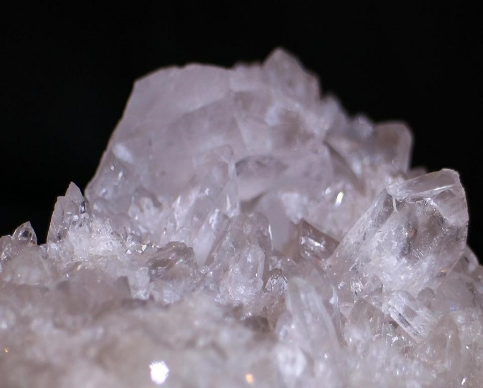
Fig: 1.1 Potash Alum
1.1 General Description:
Common Name: Potassium Alum
Chemical Formula: KAl (S04)2.12????2O
Chemical Name: Potassium aluminum sulfate
Molar mass: 258.192g/mol
Appearance: White crystal or powder form
1.2 Habitat and Distribution:
Egypt, Italy, England, Germany, and India all have it. Primarily found in Punjab, Bihar, and Assam, India. In silajit, alum earths in Nepal, or alum shales in Punjab, Rajputana, Bihar, and cutch states, alum is primarily found with iron peroxide. With an annual capacity of 36,000 tonnes of ferric alum and 16,000 millions tons of non-ferric alum, ken-sun Enterprises, located in Mumbai, India, is significant producer of common alum, which is made as aluminum sulphate. In Nepal , Rajputana, Punjab, cutch states, and Bihar, it is primarily found as shilajeet, or alum earth. After processing, it transforms into salt and an active form.
Characteristics:
Chemical characteristics:
Potassium alum crystallizes in regular octahedra with flattened corners and is very soluble in water. The solution is slightly acidic and is astringent to the taste. Neutralizing a solution of alum with potassium hydroxide will begin to cause the separation of alumina When heated to nearly a red heat, it gives a porous, friable mass, which is known as “burnt alum”. It fuses at 92°C (198?) in its own water of crystallization.
1.3 Structure Of Potash Alum:
Potash alum has an octahedral structure in its hydrated form and a cubic structure in an alkali solution. The structure of a potash alum is given below;
Some key features of potash alum structure include:
Potash alum crystals are octahedral, with each molecules surrounded by six water molecules.
Potash alum is commonly encountered as the dodecahydrate, meaning that each of the compound is associated with twelve molecules of water.
Potash alum is almost color less and highly soluble in water
The compounds turns red when heated to a certain degree
IUPAC Name:
1.4 Properties of alum:
Chemical Formula: KAl(s????4)2.12????2O
Molecular Mass: 258.192g/mol (anhydrous) 474.37g/mol(dodecahydrate)
Appearance: White crystals
Odour: Watery Metallic
Density:1.725g/c????
Melting point: 92 to 95? (198 to 203?; 365 to 368K)
Boiling Point: Decomposes at 200?
Solubility in water: 6.01g/100g 109g/100g
Solubility in other solvents: Insoluble in acetone.
Refractive Index (ND): 1.4564
Physical Properties:
Cleavage: Indistinct
Color: Colorless, White
Density: 1.76
Diaphaneity: Transparent
Fracture: Conchoidal-fractures developed in brittle materials characterized by smoothly curving surfaces,
Habit: Water soluble Material
Hardness: 2-Gypsum
Luminescence: Non- Fluorescent
Luster: Vitreous(Glassy)
Streak: White
Molecular weight Of Potash Alum:
The molecular weight of potash alum or potassium aluminium sulfate is 948 grams per mole.
Equivalent Weight of Potash Alum:
The equivalent weight of potash alum is 118.59 grams.
Potash Alum in Water:
Potash Alum is highly soluble in water and forms an octahedral structure. In water treatment, potash alum is used as a coagulant to precipitate contaminants and impurities.
Potash Alum Dissociation:
When potash alum is dissolved in water, it undergoes a process called dissociation, where it breaks down into its simplest ion. In the dissociated state, potash alum has the following ions:
Potassium Ions:
Carry a positive charge and are attracted to negatively charged particles.
Sulfate Ions:
Carry a negative charge and are attracted towards positive charged particles.
Aluminum Ions:
Carry a positive charge and are attracted towards negatively charged particles. These ions move around in the water solution and interact with other ions and molecules, depending on the conditions and the presence of other solutes.
Side Effect of Potash Alum:
Several side effects associated with alum uses are listed below;
3. Isolation Of Potash Alum
Potash alum also known as potassium aluminium sulfate is commonly isolated in the lab via crystallization from a solution containing aluminium sulfate and potassium sulfate in water.
Materials Required:
Theory:
Potash alum is a double salt formed by the combination of aluminium sulfate and potassium sulfate in the presence of water. If crystallizes as hydrated crystals with 12 water molecules.
Reaction:
1.Dissolution and reaction:
AL2(so4)3.K2s04.24H2O→2KAl(so4)2.12H2O
(crystals)Al-2(SO4)2.12H_2O
2.Sometimes dilute H2SO4 is added to increase solubility and Prevent hydrolysis of Al3+ ions.
Procedure:
1. Potash:
Dissolve 10g of aluminium sulfate in 50ml of hot distilled water. Add a few drops of dilute sulphuric acid to help dissolution. In a separate beaker. dissolve 3.5g of potassium sulfate in 20 ml of hot distilled water.
Mixing:
Combine both hot solutions and stir well.
3. Crystallization:
Allow the solution to cool slowly at room temperature. Then place the solution in an ice bath for better crystal formulation
4. Isolation:
Filter the cold solution to collect the potash alum crystals. Wash the crystals with a small amount of cold distilled water.
5. Drying:
Lets the crystals dry in air or press them between filter papers.
3.1 Preparation of Potash Alum:
Chemicals Required:
Potassium sulfate, Ammonium sulfate, Sodium sulfate, concentrated sulphutic acid, and distilled water.
Apparatus Required:
Beaker, china dish, glass rod, tripod stand, and funnel.
Equipment Required:
Hot plate.
Procedure:
A quantity of 15 grams of potassium sulfate was measured and placed into a beaker. Subsequently, 60ml of distilled water was incorporated and the mixture was agitated continuously. The solution was subjected to gentle heating before being set aside (Beaker1). In a second vessel (Beaker 2), 60g of aluminium sulfate was combined with 90ml of distilled water, followed by the addition of 6ml of concentrated sulphuric acid. The mixture was stirred continuously until a transparent solution was obtained. The contents of both beakers were combined and transferred to a china dish after filtration through filter paper. Continuous heating was applied to the solution until the crystallization threshold was achieved. The crystallization endpoint was determined by withdrawing the stirring rod from the china dish and subjecting it to air flow.
The appearance of a crystalline layer on the glass rod following air exposure indicated the attainment of crystallization conditions. Subsequently, the china dish was withdrawn from the heat source and placed in an ice bath, covered with a watch glass, and left undisturbed overnight. Following crystal formation, the crystals were separated from the mother liquor through filtration and desiccated using filter paper. The final product was measured and the percentage yield was determined and documented.
3.2. Purification Process of Potash Alum(Recrystallization of Potash Alum):
Principle:
Potash alum does not undergo a chemical change during purification. The process depends on differential solubility of the salt and impurities in hot and cold water.
Methods:
Impure potash alum is dissolved in a minimum amount of hot distilled water. Solubility of potash alum increase with temperature, so impurities either remain undissolved or are soluble differently.
The hot solution is filtered through filter paper to remove insoluble impurities (like dust and dirt)
A hot funnel is often used to prevent premature crystallization during filtration.
The clear filtrate is cooled slowly at room temperature, then in an ice bath.
Pure potash alum crystallizes out because its solubility decreases sharply on cooling.
The crystals are collected by filtration.
Crystals are dried by pressing between filter papers or in a desiccator Reaction.
4. Different Types of Formulation of Potash Alum
4. Formulation of Potash Alum as deodorant lotion:
4.1 Lotion preparation as deodorant:
The excipients and active pharmaceutical ingredients (API) were weighed accurately by calibrated analytical balance. Required quantity of xanthan gum (0.5gm) was agitated in water until uniformly dispersed. Agitation was continued further for about 20 minutes. Then preservatives (0.18gm of methyl paraben sodium and 0.029m of propyl paraben sodium) were added to the lotion. Finally the lotion was neutralized by adding buffer components (1gm of citric acid monohydrate and 1.96gm of tri-sodium citrate) in water. 2gm of potash alum was dispersed in small amount of water and mixed with the lotion.
4.2. Gel preparation as astringent:
The excipients and API were weighed accurately by calibrated analytical balance. Required quantity of Carbopol 974 (2.5gm) was agitated in water until uniformly dispersed. Agitation was continued further fir about 20 minutes. Preservatives (0.18gm of methyl paraben sodium and 0.02gm of propyl paraben sodium) were added to the gel. Finally the gel was neutralized by adding buffer components (0.1gm of citric acid monohydrate and 4gm of tri-spodium citrate) in water. 2gm of potash alum was dispersed in small amount of water and mixed with the gel.
4.3. Cream (o/w) preparation as astringent:
Cream base was prepared by using emulsification technique (USP pharmacopoeia, 2007 and forster et al., 1995). First, all excipients and API were weighed accurately by calibrated analytical balance. The oil phase was prepared where 30mg of emulsifying wax was heated until molten in water bath then 50gm of white soft paraffin was added to it and heated until molten after that 20ml of liquid paraffin was added to them with stirring, 3ogm of oily phase was taken in flask and heated to (60-70? ). The aqueous phase was prepared by dissolving the preservative (0.18gm of methyl paraben sodium and 0.02gm of propyl paraben sodium) and 2gm of the API ( potash alum) in 60ml D.W. then 0.5ml of tween 80 and 10ml of glycerin were added. Both phase was added in to the oily phase gradually with stirring.
Finally, 0.5ml of rose oil was added into the mixture with continuous stirring until congeal.
4.4. Formulation of alum spray toner for anti-acne effect:
Take ½ teaspoon of alum powder and dissolve in it 2-3 tablespoon of warm rose water. Stir well until fully dissolved. You can let it sit for a few minutes if needed.
Use a muslin cloth or fine strainer to remove any undissolved particles. This helps avoid residue in the spray.
Pour the filtered alum solution into a spray bottle. Add the remaining rose water to fill up to 100ml. Add 1 teaspoon of glycerin to the mixture. Shake the bottle well to combine.
4.5. Formulation of Alum Toner:
Alum +Honey +Water:
Procedure:
Water is boiled on a low flame and is added with given amount of alum powder in it. Stir properly to form homogenous solution. When uniform mixture is formed solution kept for cooling. After cooling add given amount of honey. Stir uniformly and add water till quantity sufficient. When formation formed, strain the mixture into spritzer bottle.
Alum +Orange oil+ Rose Water:
Procedure
Water is boiled on a low flame and is added with given amount of alum powder in it. Stir properly to form homogenous solution. When uniform mixture is formed solution kept for cooling. After cooling add given amount of orange oil. Stir uniformly and add rose water till quantity sufficient. When formation formed, strain the mixture into spritzer bottle.
5. Evaluation Test For Alum
Solubility:
Add 0.5g of solid sample to 1ml of distilled water in a test tube. Stir gently with a glass rod.
Record the observation
pH:
Before the determination of PH, the PH meter was calibrated. 1g of prepared alum was dissolved in 100ml of distilled water in a beaker. PH was measured using the PH mater.
C. Identification Test:
1. Flame test (Test for potassium):
To the small amount of alum was taken in a spatula and ignited in the direct flame.
Observation: Lavender colour
2. Flame test (sodium test):
Take a small amount of alum in a spatula and ignited it under a direct flame.
Observation: Yellow colour
10mg of ammonium alum was heated with sodium hydroxide solution; ammonia is evolved, which is recognizable by its odour and by its action on moist red litmus paper, which turns blue.
Observation: Red litmus turns to blue
Inference: presence of ammonium
When 20mg of potash alum was dissolved in 2ml of water and treated with 0.5 ml of 2M hydrochloric acid and 0.5 ml of thioacetamide reagent, no precipitate formed. Upon the dropwise addition of 2M sodium hydroxide, a gelatinous white precipitate appeared, which dissolved with further addition of sodium hydroxide. The subsequent addition of ammonium chloride solution resulted in the reformation of a gelatinous white precipitate, confirming the presence of sulphate.
D. Analytical Thin Layer Chromatography (TLC):
To find the right solvent solution to create the chromatogram, analytical TLC was used. To generate the chromatogram, different solvent systems were applied to the pre-coated TLC plates (Merck, silica gel 60 f254 plate, 0.25mm). The most effective solvent system among all of them was chloroform: methanol; distilled water (50:40:10), which was employed for both TLC analysis and TLC bioautography analysis. Rf values were calculated after the TLC plates were examined under visible light to determine which compounds had been separated.
6. Pharmacological Action
Anti-Hemorrhagic:
The treatment for cyclophosphamide-induced hemorrhagic cystitis in patients with malignant hemopathies involved continuously irrigating the bladder with potassium alum. Aluminum potassium sulphate (99% pure) was used as a hemostatic agent and gauze pack on the opposite side in the tonsillar fossae in a trial of 45 tonsillectomy patients. After being administered to mine patients with severe and ongoing urinary bladder hemorrhage, the effectiveness of alum in intravesical irritation was examined. Four patients had radiation cystitis, three had bladder cancer, one had cyclophosphamide induced cystitis, and three had vesicle invasion from cervical cancer as the cause of the hemorrhage. Alum therapy was effective in controlling significant bladder hemorrhage in all patients at first, but in two patients, it was unable to stop the bleeding (78% success rate).
Antifungal Activity:
Alum’s antifungal action on yeast isolated from oral lesions led to the conclusion that it might likely be utilized to control fungal isolates and stop infections like mouth ulcers and oral thrush. A naturally occurring substance having antibacterial and antifungal qualities is potash alum.
In Wistar rats given a high -fat diet that caused obesity, oral administration of potash alum resulted in a considerable decrease in body weight, food intake, blood triglycerides, total cholesterol, and high density lipo proteins. The majority of the medication used to treat obesity is organic in nature, while behavioral therapy is used to change eating-related behaviors.
Potash alum, also known as CF-CpG-alum has been utilized to treat neoplasms in vivo as a combination conjugate vaccine. CF-CpG-alum suppressed the growth of tumors and strengthened the antigen-specific immune response.
The process by which new vascular networks are formed from preexisting vessels is known as angiogenesis.
In addition to being essential for many physiological processes, this process also takes place in pathological circumstances such diabetic retinopathy, rheumatoid arthritis, wound healing, and embryonic development. Therefore, angiogenesis or neovascularization plays a role in tumor growth. Therefore, by preventing tumor growth, anti angio genesis may be a useful anticancer therapeutic approach.
Larviciding mosquitoes may be a useful technique to include in integrated vector management plans to lessen the spread of malaria.
The potential of potash alum, a salt that has long been used in Chinese medicine and Indian Ayurveda, in controlling malaria vectors. WHO criteria were used to evaluate mosquitoes in their immature stages.
The range of 50 and 90% fatal values across different larvae was 15.78 to 93.11 ppm and 2.1 to 48.74 ppm, respectively.
The findings showed that potash alum’s larvicidal effects were on par with those of other chemical and biological pesticides.
Aluminum has demonstrated activity against oral bacteria. Early investigations revealed that certain aluminum sulfate (alum), limit the growth of salivary bacteria.
More recently, aluminum showed antimicrobial activity against cariogenic streptococci as well as the normal oral flora and periodontal pathogens by significantly reducing the ability of streptococci to colonize on enamel surface and decreasing the colloidal stability of oral bacteria.
Alum (aluminum potassium sulfate) is a traditional treatment and food addition used to halt superficial bleeding from small wounds or abrasions.
It is effective in treating intravesical hemorrhage brought on by hemorrhagic cystitis or prostate and bladder cancer because of its astringent qualities.
Alum is still the recommended medication for persistent vesical haematuria because it has been shown to be both safe and effective. Furthermore, alum-containing mouthwashes have been demonstrated to lessen dental plaque, making them beneficial for preventive dentistry.
Spermicides, which function as vaginal contraceptives, chemically immobilize or destroy sperm and reduce their motility.
Homemade vaginal contraceptives are utilized as easy and safe spermicides in many regions of the world.
The creation of chemical spermicides for general use began when it was discovered that variations in the concentration of the inorganic salts in the medium were the cause of spermicidal actions, reported using salt jelly containing sodium chloride as an intravaginal contraception.
The potash alum was chosen, and an in vitro study on human semen ejaculates was conducted in order to evaluate the spermicidal effects of chemicals.
7. Uses Of Potash Alum
Traditional uses of potash alum:
As a gargle, alum is used to treatment mouth ulcer.
Halitosis and stomatitis can be effectively treated by applying alum with honey or vinegar, or by gargling with alum in honey water.
Alum is used to treat keratitis and conjunctivitis; it is also used as a tooth powder to ease toothaches.
Asthma attacks can be avoided by using ten grains of powdered alum over the tongue.
Powdered alum is applied topically to treat infected wounds and bleeding from cuts or abrasions; it is also acts as a stomach and liver tonic and elimination nausea and vomiting when taken orally.
Medicinal uses:
Astringent action:
Alum causes contraction of body tissues and blood vessels.
Reduces secretion, inflammation, and irritation in mucous membranes.
Commonly used in;
Styptic (Anti-bleeding agent):
Alum has haemostatic (blood-clotting) action.
Styptic pencils are rods composed of potassium alum or aluminum sulfate, used topically to reduce bleeding in minor cuts (especially from shaving) and abrasions, nosebleeds, and hemorrhoids, and to relieve pain from stings and bites.
Potassium alum block are rubbed over the wet skin after shaving.
Potash alum is also used topically to remove pimples and acne, and to cauterize aphthous ulcers in the mouth and canker sores, as it has a significant drying effect to the area and reduces the irritation felt at the site.
It has been used to stop bleeding in cases of hemorrhagic cystitis and is used in some countries as a cure for hyperhidrosis.
Antimicrobial activity:
Alum exhibits antibacterial and antifungal properties.
Used in; Oral ulcers treatment (alum solution applied locally) Wound cleansing to prevent infections.
Traditional medicine as a disinfectant for skin diseases.
Dental uses:
Alum is included in dental formulations due to its astringent effect on gums.
Benefits; Strengthens gums and reduces bleeding. Controls gingivitis (gum inflammation). Used in tooth powders, gargles, and mouth rinses.
Culinary:
Potash alum may be an acidic ingredient of baking powder to provide a second leavening phase at high temperature (although sodium alum is more commonly used for that purpose).
Alum was used by bakers in England during the 1800s to make bread whiter. This was theorized by some, including John Snow, to cause rickets. The Sale of Food and Drug Act 1875 prevented this and other adulterations.
Potassium alum, under the name “alum powder”, is found in the spice section of many grocery stores in the US. Its chief culinary use is in pickling recipes, to preserve and add crispness to fruit and vegetable.
Flame retardant:
Potash alum is used as a fire retardant to render cloth, wood and paper materials less flammable.
Tanning:
Potash alum is used in leather tanning, in order to remove moisture from the hide and prevent rotting.
Unlike tannic acid, alum doesn’t bind to the hide and can be washed out of it.
Dyeing:
Alum has been used since antiquity as mordant to form a permanent bond between dye and natural textile fibers like wool.
It is also used for this purpose in paper marbling.
Chemical flocculant:
Potash alum has been since remote antiquity for purification of turbid liquids. It is still widely used in purification of water for drinking and industrial processes water, treatment of effluents and post-storm treatment of lakes to precipitate contaminants.
Between 30 and 40 ppm of alum for household wastewater, often more for industrial wastewater, is added to the water so that the negatively charged colloidal particles clump together into “flocs”, which then float to the top of the liquid, settle to the bottom of the liquid, or can be more easily filtered from the liquid, prior to further filtration and disinfection of the water. Like other similar salts, it works by neutralizing the electrical double layer surrounding very fine suspended particles, allowing them to join into flocs.
The same principle is exploited when using alum to increase the viscosity of a ceramic glaze suspension; this makes the glaze more readily adherent and slows its rate of sedimentation.
Lake pigments:
Aluminum hydroxide from potassium alum serves as a base for the majority of lake pigments.
Dissolving iron and steel:
Alum solution has the property of dissolving steels while not affecting aluminum or base metals.
Alum solution can be used to dissolve steel tool bits that have become lodged in machined castings.
Anti-obesity and Lipid-lowering (Experimental)
Animal studies show decrease in cholesterol and triglycerides.
Anti-venom Property
Folk medicine: Alum applied on scorpion and insect stings.
Believed to neutralize toxins and reduce pain.
Dermatological Uses
Anti-acne property by killing acne-causing bacteria.
Used in skin tightening (cosmetic astringent).
Anti-dandruff action in shampoos.
Wound Healing Properties
Speeds up healing by promoting granulation tissue.
Increases wound contraction and epithelialization.
CONCLUSION
Padikaram (Alum) represents an extensively utilized mineral therapeutic agent that has garnered substantial recognition within Siddha, Ayurveda, and traditional folk medicine systems due to its hemostatic, contractile, antimicrobial, deodorizing, and tissue repair capabilities. Scientific literature substantiates its efficacy in managing minor hemorrhages, diminishing pathogenic microorganisms, contracting dermal tissues, and addressing prevalent ailments including acne vulgaris, fissured heels, and periodontal disorders. Contemporary pharmacological investigations have corroborated several of these therapeutic actions, particularly its antimicrobial and blood-clotting properties.
Nevertheless, although external application proves generally safe and efficacious, internal consumption requires prudent consideration, as excessive quantities or unrefined alum preparations may induce adverse effects attributed to aluminum constituents. Conventional formulations typically incorporate alum in minimal, refined, or specially treated forms to mitigate potential hazards.
Therefore, Padikaram continues to serve as a significant therapeutic mineral offering varied medicinal advantages, especially for topical applications, while internal usage necessitates meticulous preparation, precise dosimetry, and clinical substantiation. Subsequent research endeavors should emphasize standardization protocols, controlled clinical investigations, and comprehensive toxicological assessments to establish alum as a scientifically validated therapeutic compound.
REFERENCES



V. Ashlin Viji*, Dr. J. Jaslin Edward, T. Jaghatha, Satheeswaran P., Thenkarai Maharajan K., Nandhana. W., Aiswariya. R., Dhanya. D. M., Jenisha S., Pharmaceutical and Therapeutic Potential of Potash Alum: A Comprehensive Review, Int. J. of Pharm. Sci., 2025, Vol 3, Issue 11, 2318-2330 https://doi.org/10.5281/zenodo.17617442
 10.5281/zenodo.17617442