

We use cookies to ensure our website works properly and to personalise your experience. Cookies policy
1,2,6,7Department of Pharmacy, PK university, Dinara Shivpuri (M.P.) India
4Advance college of Pharmacy, Datia (M.P.) India
3,5ITM University Gwalior (M.P.) India
9,10,11Department of Chemistry, PMCoE Govt. P. G. (Auto.) College, Datia (M.P.) India
8USF Center for Microbiome Research, Institute for Microbiomes
In this study the methanol and water extract of Azadirachta indica (A. Indica) leaves were first evaluated for phytochemical study. The present study was conducted to evaluate antimicrobial and antioxidant efficiency and phytochemical screening of A. Indica leaf extract using methanol and water as a solvent. A qualitative phytochemical screening was performed for the detection of various phytochemicals. As well as, the quantitative determination of total phenols, tannins, saponins, flavonoids and Alkaloid was done and expressed. The A. Indica leaf extract was shown to possess an antioxidant activity using DPPH radical, ABST assay and TBARS assay. Also, the antibacterial activity was performed using six different bacterial strains: Escherichia coli, Staphylococcus aureus, Salmonella typhi, Klebsiella pneumoniae, Pseudomonas aeruginosa and Proteus vulgaris. The study shows the extracts of neem leaf own respectable bioactive negotiators, antioxidant and antibacterial activity, and therefore they could be efficiently used as a natural source of antioxidants and to be perceived in contradiction of gram-positive bacteria..
Pharmacology is a branch of pharmaceutical sciences that deals with the study of natural substances, particularly those derived from plants, which possess therapeutic properties. This discipline integrates aspects of botany, chemistry, biology and medicine to explore the medicinal potential of bioactive compounds exist in plants. The importance of Pharmaceutical has grown as the world turns to nature for treatments, especially with the increasing concern over synthetic drugs & their side effects along with the sustainability of chemical-based therapies. Through the biochemical assessment of medicinal plants, scientists evaluate the chemical composition, therapeutic effects, and safety profiles of plant-based compounds. This comprehensive approach helps identify new drugs, understand the mechanisms of their action and ensure their efficacy and safety for human use. Too much medicinal plants have been currently used in the Bhutanese Traditional Medicine (BTM) as a chief ingredient of polyherbal formulations and these plants have been individually indicated for treating various types of infections including malaria, tumour and microbial (Phurpa Wangchuk et al., (2011). Extensive phytochemical analysis has led to the characterization and identification of major components of essential oils, which are of wide interest, especially to cosmetic and pharmaceutical industries (Raut et al., 2014). Performing pharmacological and toxicological studies, many features inherent in herbal medicinal products need to be considered in order to guarantee valid results: concerning in vitro studies, difficulties are often related to lacking knowledge of ADME (Absorption Distribution Metabolism and Excretion) characteristics of the bioactive constituents, nuisance compounds producing false positive and false negative results, and solubility problems (Eva-Maria Pferschy-Wenzig & amp; Rudolf Bauer 2015).
However, the leaf extracts of Azadirachta indica were screened for antifungal accomplishment along with various dermatophytes, Trichophyton, and Epidermophyton floccosum, and they indicated high capability in hindering these organisms (Natrajan et al., 2002). Thus, in the study the presence of flavonoids and phenolic compounds in the A indica leaves extract could be considered responsible for conferring antioxidant ability (Ramesh kumar et al., 2018). The crude methanolic extracts of A. indica and M. azedarach have significant phytochemical properties assessed to other extracts and hence the phytochemicals of M. azedarach and A. indica can be exploited for plant based anticancer and antimicrobial agents soon (T.R.J. Jeba Malaret al., 2019). It is suggested that A indica plays pivotal role in the prevention and treatment of cancer via its hepatic antioxidant activity. Indeed, application of neem extract can decrease tumor growth via restore of the antioxidant disturbances close to the control ones in the liver. (Maryam Imran et al.,2022). This study helps in identifying plant species with therapeutic efficacy, determining the active ingredients responsible for their medicinal properties, and assessing their safety and effectiveness. By investigating the biochemical composition of medicinal plants, the study provides valuable insights into their mechanisms of action, potential side effects, and their role in traditional and modern healthcare.
MATERIALS AND METHODS
Sample collection
The fresh leaves of A. indica were collected from Gwalior district, MP India in the month of July 2025. The healthy leaves of A. indica were then taken, washed with distilled water and shade dried for 4 weeks.
Preparation of extract
Dried leaves of plant were ground in a sterile blender to fine powder. 30-gram powder was soaked in 300 ml of methanol and water in conical flask and stored at room temperature for 72h separately. The extract was filtered through Whatman No.1 filter paper, and the fine power product was obtained finally after evaporation to dryness using a rotary evaporator.
Preliminary phytochemical screening
Test of alkaloids was done to determine its presence or absence, according to the method described by Anjanal et al., 2012. Test of glycosides was done to determine its presence or absence according to the method described by (Sharma V, Singh M 2012). Test of phenol and tannins was determined by the method described by Slinkdard et al., 1977. Test of steroids was done to determine its presence or absence as described by (Sharma V, Singh M 2012). Test was done to determine the presence or absence of flavonoids according to the method described by Piyanete et al., 2009. Presence or absence of volatile oil was determined as described by. Presence or absence of carotenoids was determined according to the method described by Kikuzaki et al., 1993. Test of saponins was done to determine its presence or absence according to the method described by Kikuzaki and Nakatani (Pardeshi et al., 2019).
Quantitative determinations of leaves extract of A. Indica
Estimation of Tannins
Estimation of Tannins was carried out using Folin-Denis reagent according to the method of (AOAC, 1980) with some modifications. To 0.20 g of the fine power product was added in 20 ml of 50% methanol. This was shaken thoroughly and placed in a water bath at 80°C for 1 h to ensure uniform mixing. The extract was filtered into a 100-ml volumetric flask, followed by the addition of 20 ml of distilled water, 2.5 ml of Folin-Denis reagent and 10 ml of 17% aq. Na2CO3 and was thoroughly mixed. The mixture was made up to 100 ml with distilled water; it was then mixed and allowed to stand for 20 min. The bluish-green colour developed at the end of the reaction mixture of different concentrations ranges from 0 to 10 ppm. The absorbance of the tannic acid standard solutions as well as sample was measured after colour development at 760 nm using the Lab Tronics model LT 2203 UV-VIS Spectrophotometer. Results were expressed as mg/g of tannic acid equivalent using calibration.
Alkaloid estimation
Alkaloids are basic nitrogenous compounds with certain biological and pharmacological activity. Alkaloid solution produces white yellowish precipitate when a few drops of Mayer’s reagents are added (Siddiqui et al.,1997). Most alkaloids are precipitated from neutral or slightly acidic solution by Mayer’s reagent (Evans, W.C, Trease,2002). The alcoholic extract was dispersed to dryness, and the residue was heated on a boiling water bath with 2% hydrochloric acid. After cooling, the mixture was filtered and treated with a few drops of mayer’s reagents. The sample were then observed for the presence of turbidity or yellow precipitation.
Determination of flavonoids according to the Christ-Müllers method
Total flavonoid content was measured according to the Christ-Müller's method (Christ and Müller, 1960; Polish Pharmacopoeia, 2002) using a Lab Tronics model LT 2203 UV-VIS Spectrophotometer. Content of flavonoids in all sources was calculated as quercetin and hyperoxide and samples for the analysis were prepared according to the Polish Pharmacopoeia VI.
Saponins determination
A 40-gram fine power product was kept with 100 mL of 20% aqueous ethanol contained in a conical flask. The mixture was slept in a water bath and heat up at a temperature of 55 °C for 4 h with incessant stirring. The mixture was filtered and re-extracted with 300 mL of 20% ethanol. The filtrates were combined and the volume was reduced to 60 mL using a water bath at a temperature of 95 °C. The concentrated filtrate was transferred into a 500 mL separating funnel and 25 mL of diethyl ether was added to it. This was shaken actively and allowed to separate into two layers. This extraction was carried out three times, and the aqueous layer was recovered. The aqueous layer was extracted three times with 60 mL of n-butanol. The n-butanol extract was washed three times with 10 mL of 5% NaCl. The washed n-butanol extract was heated in a water bath to evaporate the n-butanol. The n-butanol extract was dried in the oven at a temperature of 50 °C to a constant weight to give the saponins (Theresa Ibibia Edewor et al., 2016).
Determination of total phenols by spectrophotometer
The total phenolic content was decided by the spectrophotometric method (Kim et al., 2003). In brief, a 1 ml of the fine power product (1 mg/ml) was mixed with 1 ml of Folin-Ciocalteu’s phenol reagent. After 5 min, 10 ml of a 7% Na2CO3 solution was added to the mixture followed by the addition of 13 ml of deionized distilled water and mixed methodically. The mixture was kept in the dark for 90 min at 23°C, after which the absorbance was read at 750 nm. The Total Phenol Contain was determined from extrapolation of calibration curve which was made by preparing gallic acid solution. The estimation of the phenolic compounds was carried out in triplicate. The Total Phenolic Contants was stated as milligrams of gallic acid equivalents per g of dried sample.
Determination of invitro antioxidant activity
1,1-Diphenyl-2-picryl hydrazyl (DPPH) radical scavenging activity
DPPH radical scavenging activity was measured according to the method of (Shimada et al. 1992). The antioxidant activity of the plant leaves methanol and water extract was prepared in 95% ethanol. A stock solution of methanolic and water extracts and ascorbic acid were prepared in the concentration of 10mg/1ml (100µg/ml) from stock solution. The plant leaves extract in methanol and water at several concentrations (20, 30, 40, 50 and 60μl) were mixed with an aliquot of 2 ml of 600 μM DPPH solution in ethanol and incubated at 25°C for 30 min and absorbance of the test mixture was read at 517 nm using a spectrophotometer against a DPPH control containing only 1 ml of ethanol in place of the extracts. All experimentations were determined thrice, and the results were. Ascorbic acid was used as a standard. Percent inhibition was computed using the following expression:
Inhibition (%) =[(A control-A sample)(A control)
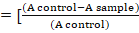
Where, A control and A sample stand for absorbance of the control and absorbance of tested extract solution, respectively.
ABTS 2,2′-azinobis-(3-ethylbenzothiazoline-6-sulphonate) Assay
Free radical scavenging activity of plant fine power product was determined by ABTS radical cation decolorization assay (Re et al., 1999). ABTS + cation radical was produced by the reaction between 7mM. ABTS in water 2.45 mM potassium persulphate (1:1) stored in the dark at room temperature for 12-16h before use. ABTS + solution was then dilutated with methanol to obtain an absorbance of 700 at 733nm. After the addition of 5 µl of plant extract to 3.995 ml of diluted ABTS solution the absorbance was measured at 30 ml after the initial mixing. An appropriate solvent blank was run in each assay. All the measurements were carried out at least three times. Percent inhibition of absorbance at 733 nm was calculated using the formula,
ABTS·+ scavenging effect (%)=(AB-AA)(AB) ×100

where AB is absorbance of ABTS radical + methanol; AA is absorbance of ABTS radical + sample extract/standard. Trolox was used as standard substance.
Thio barbituric acid-reactive species
The Thiobarbituric acid-reactive species (TBARS) assay as described by previous methods Kikuzaki and Nakatani 1993 was used to measure the lipid peroxide formed, using mixture containing 4mg of the methanolic and water leaves extract in 4 ml of 99.5% ethanol (final conc 0.02%) 4.1 ml of 2.52 linoleic acid in 99% ethanol 8ml of 0.05M phosphate buffer (PH-7.0) and 3.9 ml water was placed in a test tube and then placed in incubator at 40C in the dark separately. To 2ml of this mixture. 2ml of 20% trichloroacetic acid and 2ml of 67% TBA solutions were added. This mixture was kept in water bath (100?C) for 15 minutes and after cooling at room temperature it was centrifuged at 3000rpm for 30 minutes. Antioxidant activity was based and the absorbance of the supernatant at 534nm. The percentage of antioxidant was calculated by following formular for TBA by (Demirtas et al., 2013 and Toth et al., 2018).
Percentage of Activity=A of Control-A of TestA of Control ×100

Antimicrobial screening of the plant extract
The antimicrobial activity of plant extract was evaluated by well diffusion methods given by Boyle et al., (1973). The microbial strains of six bacterial samples which were used for the test were taken, the six different strains employed were Gram positive Staphylococcus aureus and Gram-negative Escherichia coli, Salmonella typhi, Klebsiella pneumoniae, Pseudomonas aeruginosa and Proteus vulgaris. They were taken and cultured on broth containing nutrient agar. A McFarland 0.5 standard was prepared, and the bacterial suspension was compared with the 0.5 McFarland standards to adjust the turbidity of the inoculums for the susceptibility test. The inoculums of bacteria were transferred into Muller-Hinton agar plates using sanitary cotton swab. Wells were prepared by striking the agar plate already inoculated with a pure culture of the test organism with the help of sterile glass pipe. Then 20, 30, 40, 50 μl of samples were added in wells from the stock solution of 10 mg/ml. In the two wells, 30 μl of methanol (as negative control) and 30 μl of reference antibiotic solution (as positive control) were added. Gentamycin (1%) and vancomycin (1%) were used as reference antibiotic for Gram-negative bacteria and Gram-positive bacteria, correspondingly. Dissemination of extracts, antibiotics and methanol and water were allowed at room temperature for 1.5h. All the plates were then covered with tops and incubated at 35- 37°C for 18-24h and zone of inhibitions were measured.
Results
Primary Phytochemical Screening
The preliminary phytochemical screening of methanolic and water extracts of A. indica leaves showed the presence of various secondary metabolites. Alkaloids, phenol, tannin, flavonoids, saponins were the most prominent. Flavonoids, alkaloids and phenolic compounds are a major group of compounds that act as primary antioxidants or free radical scavenger. Successively, it may be used for the preparation of drug in a competent way which may command to the remedy of many diseases in the future. So, due to the existence of such secondary metabolites, A. indica may have higher therapeutic value. Primary phytochemical exhibiting of the water and methanolic leaves extract is presented in Table 1. The following results exhibited the appropriate amount of alkaloid, flavonoids, tannins, saponins and phenols are present in both extracts.
Table 1. Quantitative estimation of phytoconstituents in leaves extracts of A Indica.
|
Phytoconstituents |
Water extracts |
Methanol extracts |
|
Alkaloids |
0.66±0.02 |
4.92±0.30 |
|
Flavonoids |
4.76±0.40 |
4.13±0.21 |
|
Saponins |
35.81±0.20 |
13.90±0.30 |
|
Tannins |
13.71±0.31 |
14.17±0.30 |
|
Phenols |
19.95±0.08 |
26.16±0.24 |
Values are expressed Mean ± SEM (n = 3)
Antioxidant activity
The antioxidant activity of both water and methanolic leaves extract of A. Indica were determined by spectrophotometric analysis of DPPH (2,2’ –diphenyl-1- picrylhydrazyl) Scavenging activity, ABTS 2,2′-azinobis-(3-ethylbenzothiazoline-6 sulphonate) assay and TBARS (Thiobarbituric reactive substance) assay.
DPPH Radical Scavenging Activity
In this method, when antioxidant reacts with the free radical DPPH (1,1-diphenyl-2-picrylhydrazyl deep violet colour) convert it to faint colour 1, 1-diphenyl-2-picrylhydrazine. The degree of fain colour indicates the free radical scavenging potentials of the sample. The DPPH radical Scavenging activity was recorded in terms of % inhibition as shown in Figure1. IC50 values were interpolated from linear regression equation (D. Yang et al., 2007). The higher radical scavenging activity of the extract showed by lower IC50 value. The results showed that water extract, methanolic extract and ascorbic acid (standard drug) has an IC50 of (62.00, 78.00 and 12.00 mg/ml). The results showed that water and methanolic leaves extract of A. Indica possessed antioxidants. The values are presented in Mean ± SEM, (n=3).
ABTS Assay
The methanolic and water leave extract of A indica examined for radicals scavenging and antioxidant activities using three different assay methods. The percentage inhibitions of the methanolic and water leave extract of A indica were concentration dependent. The percentage inhibitions for DPPH assay are given in Figure 1. At all concentrations (20 – 50 mg/mL), the methanol and water extracts showed stronger DPPH radicals scavenging activity than the Standard. Interestingly, the methanol extract at 20 mg/mL and 40 mg/mL were far above average and demonstrated comparable scavenging activity to Ascorbic acid. Unlike in DPPH assay, the ascorbic acid was less active in scavenging ABTS radicals, while ascorbic acid activities were superior to all the concentrations of methanol and water extract. However, the methanol and water extracts scavenging activity at 40 mg/mL was exceeding average (Figure 2).
Thiobarbituric Acid Reactive Substances (TBARS)
In TBARS, the total antioxidant activity exhibited by the extracts and standard were shown in Figure 3. The results showed that both extracts possessed antioxidant activity compared to ascorbic acid. The values are presented in Mean ± SEM, (n=3).
Antibacterial activity
The result for antibacterial activity of methanolic and water leave extract of A indica is shown in Table 2,3. The antibacterial potential may be due to various phytochemicals like phenols and flavanols. A. indica methanol extract was the most effective against S. aureus and S. typhi, whereas it was less effective against E. coli and K. pneumoniae and was moderately effective against Proteus vulgaris and Pseudomonas aeruginosa. The zone of inhibition (ZOI) diameter was measured, and it was found that A. indica leaves methanol showed maximum zone of inhibition against Gram positive S. aureus and minimum zone of inhibition against Gram negative E. coli. The zone of inhibition was further increased on increasing concentration with maximum inhibition of 20±3 mm on S. aureus when 300μg extract was used. Result of the antibacterial activity of A. indica leaves methanol extract.
Table 2. Result of the antibacterial activity of A. indica leaves water extract.
|
E. Coli |
K. Pneumoniae |
S. Typhi |
P. Aeruginosa |
P. Vulgaris |
S. Aureus |
|
|
200 |
8±2 |
9±2 |
14±1 |
10±1 |
11±1 |
12±2 |
|
250 |
8±2 |
11±1 |
15±2 |
12±2 |
13±2 |
16±2 |
|
300 |
9±1 |
11±1 |
15±2 |
13±2 |
15±2 |
17±3 |
|
350 |
11±2 |
14±2 |
17±3 |
15±2 |
17±3 |
20±3 |
|
Gentamycin (1%) |
15±3 |
23±3 |
18±2 |
18±3 |
16±2 |
- |
|
Vancomycin |
- |
- |
- |
- |
- |
17±3 |
Table 3. Result of the antibacterial activity of A. indica leaves methanol extract.
|
Amount of Sample (µg) |
E. Coli |
K. Pneumoniae |
S. Typhi |
P. Aeruginosa |
P. Vulgaris |
S. Aureus |
|
200 |
6±2 |
7±2 |
11±1 |
8±1 |
9±1 |
10±2 |
|
250 |
6±2 |
9±1 |
12±2 |
9±2 |
9±2 |
12±2 |
|
300 |
7±1 |
9±1 |
12±2 |
10±2 |
11±2 |
13±3 |
|
350 |
9±2 |
11±2 |
13±3 |
11±2 |
13±3 |
15±3 |
|
Gentamycin (1%) |
15±3 |
23±3 |
18±2 |
18±3 |
16±2 |
- |
|
Vancomycin |
- |
- |
- |
- |
- |
17±3 |
DISCUSSION
Medicinal value of plant has presumed a significant measurement in the ancient eras. Plants produce a very miscellaneous collection of subordinate metabolites with antioxidant potential. Plants have been expected for their respective lifesaving and therapeutic possessions. Approximately 70% of the world’s people maximum specifically in the developing countries trusts frequently on traditional treatment remedies as their rudimentary method of healthiness upkeep (Wang, Wu, Zu & Fu, 2008). Even currently republic motionless persons replicate herbal drugs as the furthermost favoured satisfying reason. In current centuries, shrubs ingredients before with strange medicinal happenings have been expansively calculated as therapeutic representatives. These phytochemicals contrast as of plant to shrub and specimens comprise: Anthraquinones, flavonoids, glycoside, tannins, Saponins, phenols, steroid etc. Antioxidants portion the act of free radicals which have been concerned in the pathogenesis of limitless illnesses and in the aging process (Karimi et al., 2010; Prochazkova et al., 2011).). A significant part is being played by free radicals in leading the numerous biological progressions which are essential for the figure. They have their position in incriminating cell-signally mechanism happening in the body. These confirmations that free radicals are essential but at the equivalent time injurious to the body. Hence it has various mechanisms to minimalize free radical induced damage. In this study, chemical composition and some antioxidant keys of leaves extracts of A. indica were assessed. Based upon the initially phytochemical test, powdered plant extracts material were carried out for the quantitative determination of phytoconstituents by various standard method and found that alkaloid (4.92 ± 0.3 and 0.66 ± 0.02), total phenols (26.16 ± 0.24 and 9.95 ± 0.08), tannin (14.17 ± 0.3 and 13.71 ± 0.37), flavonoids (4.13 ± 0.21 and 4.76 ± 0.40), and Saponins (13.90 ± 0.30 and 35.81 ± 0.20) were present in both methanolic and water leaves extracts correspondingly as show in table 1. On the basis phytochemical investigation water and methanolic extract were chosen for the antioxidant studies. DPPH radical scavenging activity of water and methanolic leaves extracts of A. indica in comparative to ascorbic acid (which served as standard control) are presented in the figure1. The half maximal inhibitory concentration (IC50) of water, methanolic leaves extract and ascorbic acid were found to be (64.00, 80.00 and 10.00) respectively. The methanolic extract has profound reducing action in contradiction of stable free radicals.In ABST assay a linear rise in reducing control was experiential over the concentration range (20-50mg/ml) sample and ascorbic acid (Figure 2). The methanolic extracts have potent reducing power and equivalent to ascorbic acid. In TBARS the total antioxidant and standard were shown in figure 3. The results show that both extracts have antioxidant activity, but water extract presented moderate as standard (ascorbic acid). The antioxidant activity has been attributed to various mechanisms such as inhibition of chain reaction, decomposition of peroxide, the prevention of restricted hydrogen abstraction, the binding of transition metal ion catalyst, the reductive capacity, radical scavenging and the reducing capacity of a compound may assist as a significant indicator (indices) of its potential antioxidant activity. (Archana et al., 2013; Mina Kumari et al., 2006). Significant reducing power may be caused by the existence of flavonoids, phenols and high concentration of tannins in this leaves extracts confirm from phytochemical examination. The appropriate quantity of tannins confirms its astringent property. These compounds can be effective in protecting the kidney (Bajaj, 1988). Tannins have also shown potential antibacterial and antiviral effects (Akinmoladun et al., 2007).Medicinal plants constitute an effective source of both traditional as well as recent remedies. With increasing numeral of multidrug anti bacteria, there is essential of potent and active antimicrobial representatives. Plant can be the greatest source for such bioactive composites. Since the methanolic extract was used, this antibacterial activity was mostly the provenance of polar compounds existing in leaf extract (Pokhrel et al., 2023). The antimicrobial activities of methanol extracts seemed to be broad spectrum subsequently both the Gram-positive and Gram-negative bacteria were sensitive to their inhibitory effects.
CONCLUSION
The presumed medicinal properties of A. Indica plant leaves have been acknowledged for centuries in different humanities including India, and there are many herbal species that have been traditionally used for antioxidant and antimicrobial properties. The methanolic and water extract of A. indica leaves confirmed alkaloids, flavonoids and phenolic contents in great quantities, as well as antioxidant activity of these extracts represents prevention to the aggravation of DPPH, ABTS and TBARS assays. The antibacterial potential may be due to various phytochemicals like phenols and flavanols, the methanolic extract of A. indica plant leaves be considered as a greatest source for such bioactive composites, its antibacterial activity was studied against E. coli, K. pneumoniae, Proteus vulgaris, Pseudomonas aeruginosa, S. aureus and S. typhi and found most effective against S. aureus and S. typhi, whereas it was less effective against E. coli and K. pneumoniae and was moderately effective against Proteus vulgaris and Pseudomonas aeruginosa. The results confirmed the prominent antioxidant, and antimicrobial properties exist in the A. Indica Leaves extracts along with provenance of polar compounds existing in leaf extract mostly.
Funding
No funding was received
Authors Contribution
Rani Yadav, Jyoti Yadav, Deepu Yadav, Neelam Yadav and Neha Yadav were involved in investigation and data collection. Vivek Gupta and K S Dadoriya were involved in methodology and supervision. Shalini Jain, Arvind Prakash, Mukesh Yadav were involved in conceptualization, data analysis, manuscript writing, editing and supervision.
Conflict of Interests
The authors declared no conflict of interest.
REFERENCE



Rani Yadav, Jyoti Yadav, Deepu Yadav, Neelam Yadav, Neha Yadav, Jay Prakash Gupta, Vivek Gupta, Shalini Jain, Arvind Prakash, K. S. Dadoriya, Mukesh Yadav, Phytochemical, Antioxidant and Antimicrobial Potential of Azadirachta Indica leaves, Int. J. of Pharm. Sci., 2026, Vol 4, Issue 2, 2089-2099. https://doi.org/10.5281/zenodo.18628748
 10.5281/zenodo.18628748