
Yash Institute of Pharmacy, Chh. Sambhajinagar, Maharashtra, India 431134
Bamboo (Bambusa vulgaris), known as the “plant of a thousand uses,” is an ancient yet scientifically relevant medicinal plant that has gained renewed attention for its pharmacological and therapeutic potential. Rich in flavonoids, phenolic acids, silica, amino acids, and essential minerals, bamboo exhibits remarkable antioxidant, anti-inflammatory, antibacterial, antidiabetic, and wound-healing activities. Recent studies highlight its role in enhancing collagen synthesis, stimulating fibroblast proliferation, and accelerating epithelial regeneration, making it an excellent natural ingredient for herbal wound-healing and cosmetic formulations. The formulation of bamboo-based herbal creams demonstrates significant improvements in skin repair, hydration, and elasticity, with stable physicochemical properties and no irritation. Bamboo’s sustainability and biodegradability further align with modern eco-friendly cosmetic trends, promoting it as a natural alternative to synthetic formulations. This review consolidates phytochemical, pharmacological, and formulation insights on Bambusa vulgaris, emphasizing its therapeutic significance and potential in modern herbal pharmaceutics and cosmeceuticals.
Physical injuries that compromise the integrity of the skin are called wounds. Synthetic antiseptics and antibiotics, which can irritate skin, delay healing, or cause resistance, are frequently used in conventional treatments. In contrast, herbal creams are natural substitutes that encourage quicker tissue healing and lower the risk of infection.
Known as the "plant of thousand uses," bamboo is a fast-growing grass species that has long been utilised in Asia for therapeutic purposes. Bambusa vulgaris's leaves, shoots, and extracts are abundant in bioactive substances that promote skin regeneration.India ranks first in this category and is the second-richest nation in terms of bamboo genetic resources, after China.1Blood cells parenchymal cells, soluble mediators, and extracellular matrix are all involved.2B. vulgaris provides a lot of health benefits and is a strong source of vitamins, proteins, amino acids, beta-carotene, and other phenol.3 According to research reports, bamboo has anti-inflammatory, anti-ulcer, hypoglycemic, anti-cancer, anti-diabetic, and anti-microbial properties. However, it is also utilised in food additives and cosmetics in addition to medicinal preparation. It plays a significant part in heart disease. Bamboo plays an important part in human civilisation.4 Cells in unhealed wounds constantly produce inflammatory mediators in an uncoordinated and self-sustaining phase of inflammation that impairs the restoration of anatomic and functional integrity in the normal period of time.5As a result, delayed wound healing results from an extended inflammatory phase. As a result, a number of wound-healing techniques are being developed that focus on the three main stages of cutaneous wound healing: tissue remodelling, proliferation, and inflammation. In this sense, numerous initiatives have traditionally focused on medicinal plants in an effort to find chemicals that may have anti-inflammatory and wound-healing qualities.6The antioxidant, antibacterial, and anti-inflammatory properties of bamboo extract are attributed to the presence of bioactive components like flavonoids, phenolic acids, silica, and amino acids.7lowering oxidative stress, avoiding infection, and encouraging collagen formation, these qualities are essential for regulating the various phases of wound healing. In excisional and incisonal wound healing models, topical administration of Bambusa vulgaris leaf or shoot extracts has been shown in numerous experimental investigations to improve epithelialisation, speed up wound contraction, and boost tensile strength.8
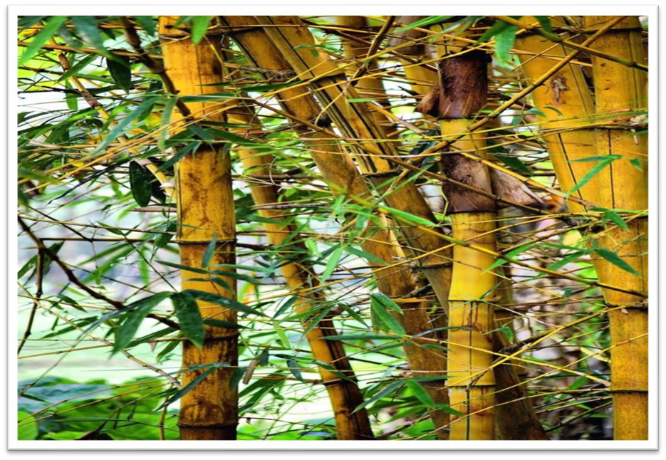
Fig 1.Bamboo tree
Botanical Description
Bamboo’s phytochemical components
Bamboo’s medicinal properties are attributed to bioactive substances found in its leaves, shoots, and stems.
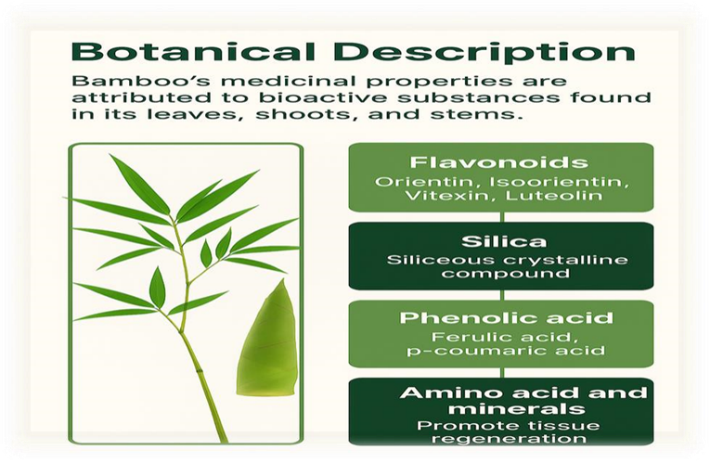
Fig.2 Botanical description of Bamboo
Key phytochemicals9
Table .1 Key phytochemicals
|
Constituents |
Constituents |
Pharmacological role |
|
Falvnoids |
Orientin, Isoorientin, Vitexin, Luteolin |
Antioxidant, anti-inflammatory |
|
Sillica |
Siliceous crystalline compound |
Enhances collagen synthesis |
|
Phenolic acid |
Ferulic acid, p-coumaric acid, Chlorogenic acid |
Antioxidant, antimicrobial |
|
Amino acid and minerals |
Essential nutrients |
Promote tissue regeneration |
Literature survey :
|
Author/ year |
Plant part/ extract |
Study type/ model |
Phytochemical finding (wound healing related) |
Pharmacological finding (wound healing related) |
Key outcomes/ conclusion |
|
Singh, singh and rajput 2019 |
Bambusa vulgaris leave shoot |
Review |
Rich in flavonoids, phenolic acid, amino acid |
Summarises antioxidant, antimicrobial, anti-inflammatory properties |
Supports traditional medicinal use in skin healing |
|
Frtri et al,2020 |
Bambusa vulgaris general |
Review |
Flavonoids, silica, phenols, minerals |
Summarizes healing, anti-inflammatory , anti-infective properties |
Supports therapeutic relevance in topical products |
|
Singhal et al., 2013 |
Shoots and leaves |
Antioxidant assays |
Phenolic acid, flavonoids |
DPPH antioxidant activity |
Antioxidant potential support wound healing via reduced oxidative stress |
|
Akin-moladum et al 2017 |
Leaf extract |
In vivo rats |
High flavonoids and phenolic content |
Reduced inflammation, antioxidant activity |
Confirms B. Vulgaris leaves promote wound closure |
|
CSIR- IHBT,2017 |
Bamboo nanocomposites |
Biomaterial study |
High silica |
Stimulates collagen production |
Stimulates collagen remolding in wound healing |
Location in a space
At least 37 million hectares of bamboo are grown worldwide, accounting for 3.2% of host country forest acreage and almost 1% of the world’s total forest area. Approximately 80% of Asia’s land surface is covered by bamboo in the southern tropical region. In South America and Africa, bamboo is not extremely common. Madagascar is the richest country in Africa in terms of bamboo species variety. Eleven countries provided data on the scale of their bamboo forests to the Global Forest Resources Assessment 2000 (FRA 2000), including two from Central and South America, eight from Asia, and one from Africa.10 world’s total bamboo forest area are found in the monsoon zone of Southeast Asia, which includes southern China, Indochina, and the Indian subcontinent.
Both America and South Africa are home to a wide variety of bamboo species. It has to do with some of these countries’ histories, architecture, and cultures.
In Latin America, namely in the Amazon Basin close to the area situated south of the Tropic of Cancer—covering Mexico, Guatemala, Costa Rica, Nicaragua, Honduras, Colombia, Venezuela, and Brazil—serves as an important hub for bamboo growth.
Additionally, the distribution of African bamboo is concentrated on Madagascar’s east coast.11
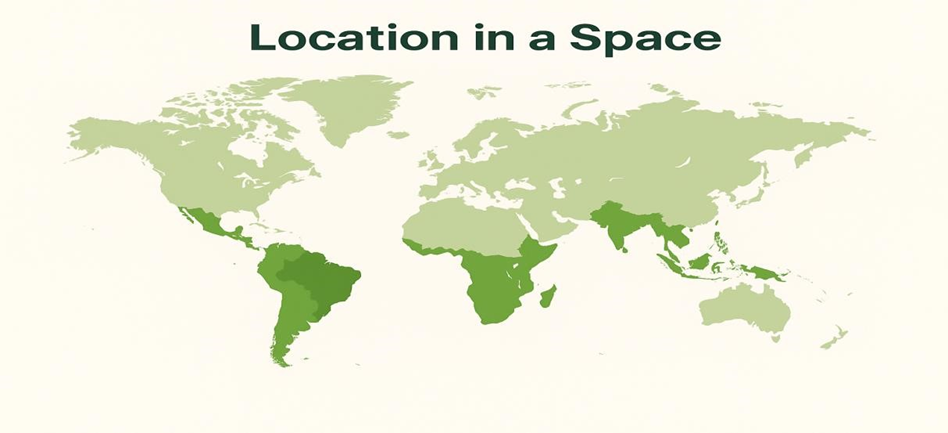
Fig.3 Location in space of bamboo tree
Pharmacological Activity of Bamboo
Anti-inflammatory:
Carey, W. M. et al. (2009) planned a study to look at the Bambusa vulgaris possesses properties that help reduce inflammation methanol extract (MEBV) in mice. Anti-inflammatory effects were examined using both acute inflammatory models, such as acetic acid-induced vascular permeability and formaldehyde induced paw oedema, and subacute models, such as cotton pellet granuloma, plasma MDA measurement, and carrageenan-induced peritonitis. When compared to the control in the formaldehyde-induced paw oedema method, oral treatment of MEBV at graded dosages (100, 200, and 400 mg/kg) caused a dose-dependent decrease in paw volume. When compared to the control, the oral dosage of 400 mg/kg exhibited significant effects, causing a 46% increase in paw volume (P <0.01). At this dosage, the anti-inflammatory effects were similar to those of diclofenac (10 mg/kg, p.o.). Within three hours, the test medication’s maximum anti-inflammatory effect was seen at all dosages.In the carrageenan-induced peritonitis model, indomethacin (10 mg/kg) prevented peritoneal leukocyte migration at a rate of 60.7%, while MEBV reduced it at rates of 38, 55.8%, and 77.6% at dosages of 100, 200, and 400 mg/kg, respectively. While indomethacin decreased neutrophil infiltration by 65.1%, MEBV inhibited it at 32.7%, 54.3%, and 64.9%, respectively.13
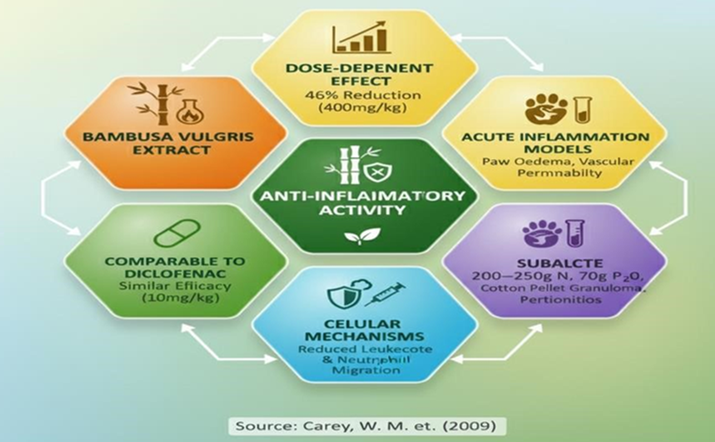
Fig.4.1 Anti-inflaimatory activity
Antioxidant activity:
Aqueous and methanolic extracts (1:100 w/v) of Leaves of Bambusa vulgaris were employed for further research. The extracts’ antioxidant properties were examined in vitro, along with their ability to prevent cisplatin, FeSO4, and nephrotoxicity brought on by a single nucleotide polymorphism in rats. By significantly raising the kidney’s malondialdehyde (MDA) concentration, cisplatin and other pro-oxidants in kidney homogenate produced nephrotoxicity in rats. This damage was observed to be lessened by aqueous and methanolic extracts of leaves of b vulgaris suggesting that the plant may have medicinal and antioxidant properties.13 Free radicals can induce oxidative stress, which antioxidants can protect organisms against.14 recent study by Satya et al. (2009) found that when fresh B. vulgaris shoots are evaluated using the DPPH method to determine their capacity to scavenge free radicals, they exhibit 28.21% antioxidant activity (36). According to the IC50 values for the radical scavenging activity of the DPPH test B. vulgaris leaf extracts in methanol, acetone, and chloroform are 262.90 µg/ml, 300.55 µg/ml, and 389.23 µg/ml, respectively.15
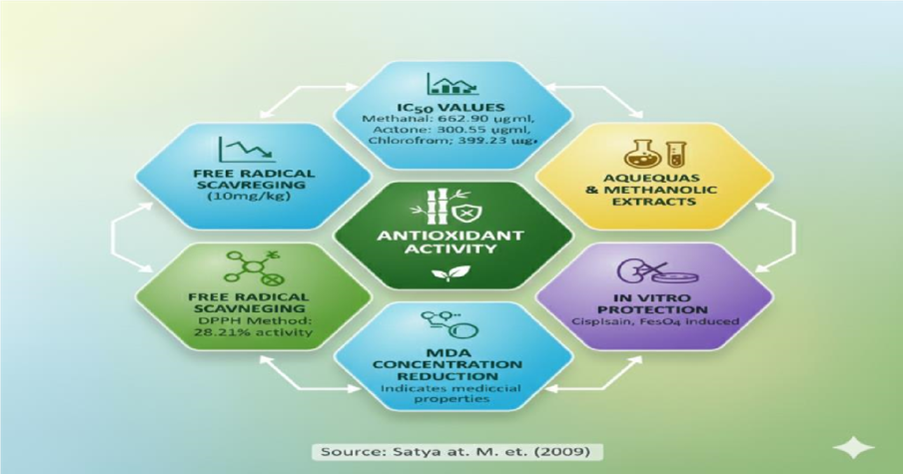
Fig.4.2 Antioxidant activity
Antibacterial activity:
antibacterial action Using an agar disc diffusion experiment in nutritional agar and Czapek Dox Agar media, the antibacterial activity of a WEBS (water-phase extract of bamboo shavings) obtained by supercritical CO2 extraction was evaluated against a range of foodborne and food spoilage pathogens. Staphylococcus aureus, Escherichia coli, Bacillus subtilis, Saccharomyces cerevisiae, Aspergillus niger, and Penicillium citrinum were all susceptible to the concentration-dependent antibacterial activity of the WEBS. The WEBS’s minimum inhibitory concentrations (MICs) against the bacterial strains were found to be between 4.9 to 32 mg/ml using the two-fold dilution method.The various heat treatment parameters have no effect on the antibacterial activity. Emodin was utilised as the standard sample to determine the amount of the total anthraquinone component and to confirm its antibacterial properties in a preliminary manner, establishing the theoretical foundation for the creation of natural preservatives.16
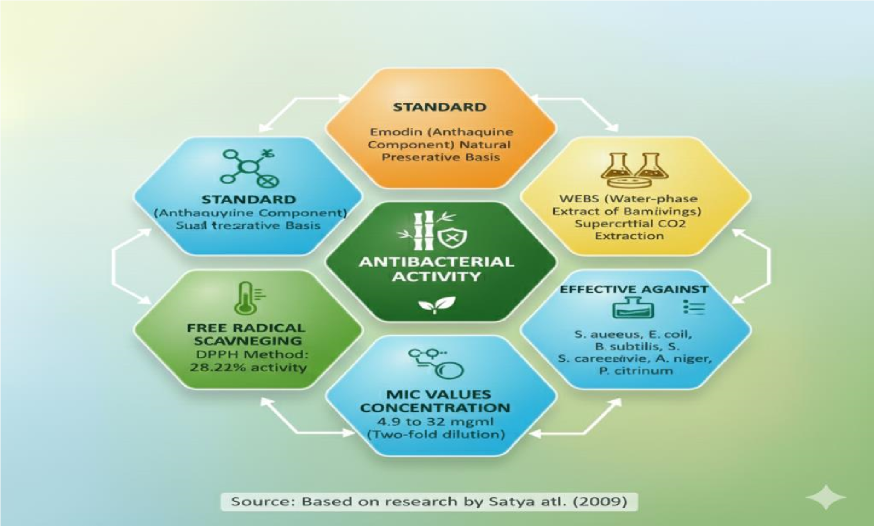
Fig4.3 Anti-bacterial activity
Antimicrobial activity:
B. vulgaris extracts in methanol, ethyl acetate, and n-hexane can stop the growth of both grampositive and gram-negative bacteria and fungi.These extracts exhibit potent antibacterial action against Aspergillus niger, E. Coli, S. Aureus, and Staphylococcus epidermidis.17
Gram-positive, gram-negative, and fungal species were evaluated in vitro for the antibacterial activity of B. Vulgaris methanol extract. The most activity is shown against B. Subtilis among gram-positive bacteria. However, among gram-negative bacteria, E. Coli exhibited the highest activity. It has been reported that inhibition zones, especially in kanamycin resistance, measure 25 to 35 mm. The methanol extract’s zone of inhibition was found to be closer to the standard kanamycin than the standard.18
This study shows that B. Vulgaris var. Striata methanol extracts are efficient against E. Coli and S. Aureus. At 12 and 24 hours of incubation, it shows the biggest zone of inhibition against S. Aureus (average 13.75 mm and 12.54 mm) and E. Coli (average 8.64 mm and 8.86 12.54 mm). The antibacterial activity of all B. Vulgaris var. Striata preparations can be ascribed to the presence of different phytochemicals.19
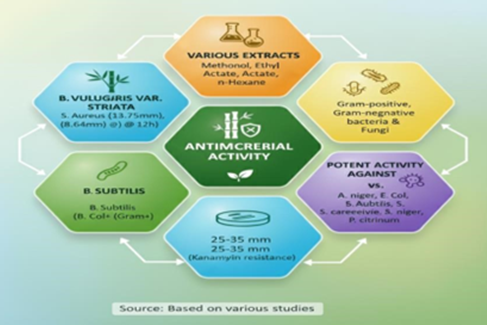
Fig.4.4 Antimicrobial activity
Anti-ulcer activity:
Anti-Ulcer properties A hot-water extract of bamboo grass (Sasa albomarginata) called Folin significantly reduced the incidence of water immersion and restraint stress in rats, as well as stomach ulcers brought on by ethanol and indomethacin.20
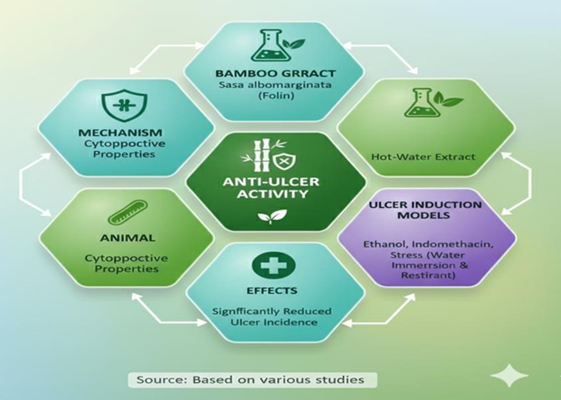
Fig. 4.5 Anti-ulcer activity
Analgesic activity:
Activity of Analgesics In Swiss albino model mice, acetic acidinduced writhing was reduced by 25.9 percent, 29.6 percent, 37.0 percent, and 44.4 percent, respectively, by methanolic extract of the aerial part of Bambusa vulgaris at doses of 50 mg, 100 mg, 200 mg, and 400 mg per kg. This was in contrast to reductions of 40.7 percent and 51.9 percent achieved with 200 mg and 400 mg per kg of aspirin, the standard analgesic medication. Studies generally indicate that this plant’s aerial component has ua strong analgesic effect; this may be because the extract contains alkaloids and saponins.21
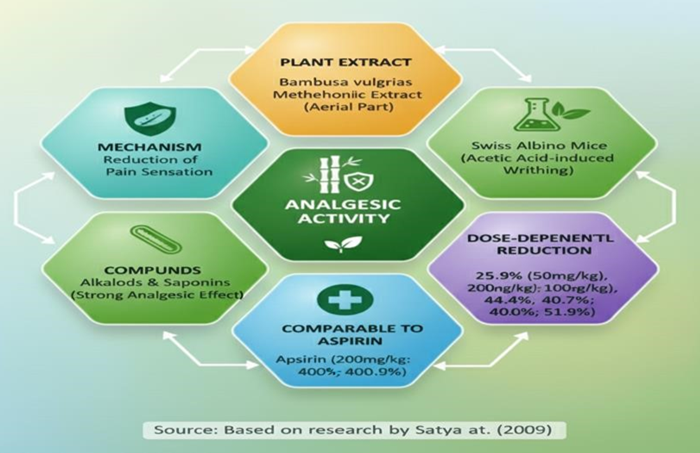
Fig.4.6 Analgesic activity
Anti diabetic activity
Bambusa vulgaris methanol extract reduced blood glucose levels in mice by 32.8%, 45.8%, and 55.3% when given at dosages of 100 mg, 200 mg, and 400 mg per kg. respectively, in comparison to control mice. Glibenclamide, a common antihyperglycemic drug, lowers blood glucose levels by 50.8 percent when taken at a dose of 10 mg per kg. Overall, the results show that the aerial portion of the plant has strong antihyperglycemic potential, which may be related to the extract’s saponins and alkaloids. In antidiabetic studies, the methanolic extract of Bambusa vulgaris has been investigated for its enhanced glucose absorption properties in vitro in the L-6 cell line.22
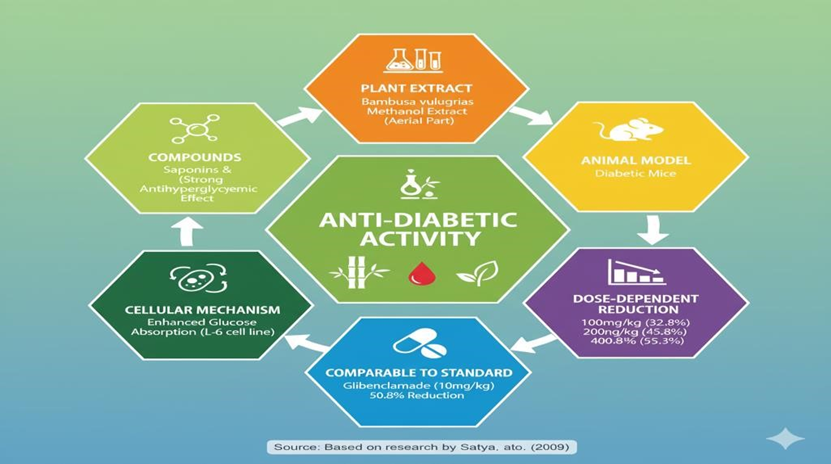
Fig.4.7 Anti-Diabetic activity
Antipyretic activity:
Methanol extract from Bambusa vulgaris has been studied for its antipyretic properties. Eighteen hours after the brewer’s yeast infusion, the experimental mice’s rectal temperature significantly increased. In this study, the methanol extract of Bambusa vulgaris was found to have a variable antipyretic activity. Taking 1000 mg/kg BW of Bambusa vulgaris has antipyretic properties. At the conclusion of the fifth hour, the temperatures of both groups have recovered to normal after both dosages of the Babusa vulgaris test caused a drop in temperature starting at two hours.23
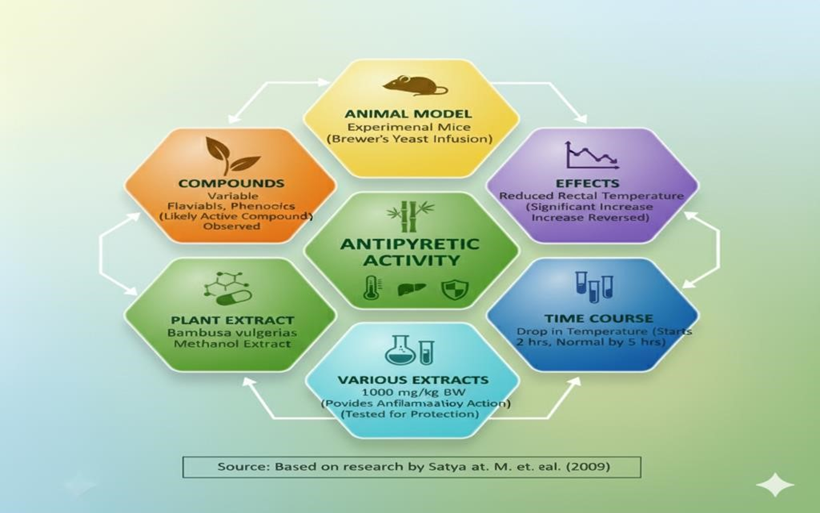
Fig.4.8 Anti-pyretic activity
Hepatoprotective activity:
This study sought to see whether different extracts from Bambusa vulgaris could shield mice whose lives had been harmed by carbon tetrachloride (CCl4).
The enzymes serum glutamate oxytransaminase (SGOT), alkaline phosphatase. (ALP), and serum glutamate pyruvate transaminase (SGPT) are used to identify liver damage.24
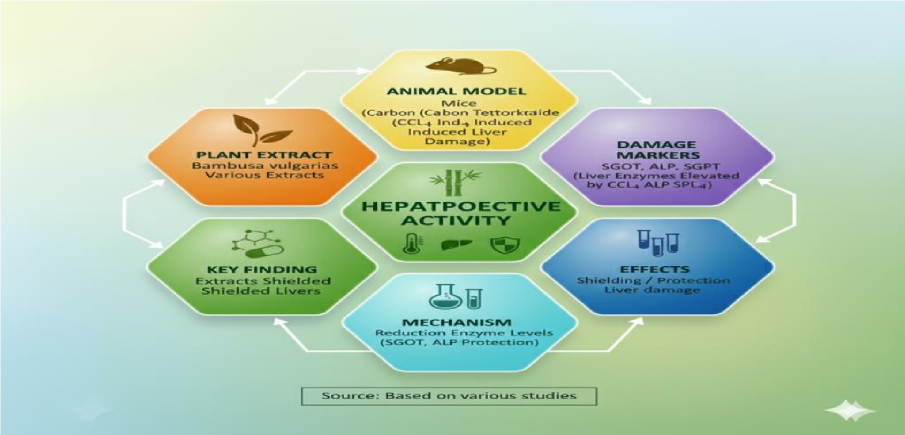
Fig.4.9 Hepatoprotective activity
Method and Development of herbal cream containing bamboo extract:
Composition of a bamboo cream:25
Table.2 composition of bamboo cream
|
Ingredients |
Concentration % |
Function |
|
Bambusa vulgaris |
2-5 |
Healing agent |
|
Beeswax |
8 |
Emulsifier and consistency agent |
|
Aloe vera gel |
5 |
Moisturizer and Anti-inflammatory agent |
|
Steric acid |
3 |
Thickening agent |
|
Liquid paraffin |
10 |
Emollient |
|
Glycerine |
5 |
Humectant |
|
Methyl paraben |
0.2 |
Preservatives |
|
Rose water |
0.2 |
Fragrance mild |
|
Distilled water |
q.s |
Solvent |
Different Preparation Technique
Evaluation parameters:28
Table 3: evaluation parameters
|
Parameters |
Observation / result |
|
PH |
5-6 |
|
Appearances |
Smooth/ uniform |
|
Spreadability |
Excellent |
|
Viscosity |
Stable |
|
Stability |
No phase separation for 30 days |
|
No irritation |
|
|
Wound healing |
Faster wound healing |
Activity of bamboo cream
Avoid irritating ingredients), and retain an adequate concentration of active bamboo extract. Indications/cautions: The majority of the study is pre-clinical (in vitro, animals). Consequently: A bamboo-extract cream may be useful as part of wound treatment (cleaning, antimicrobial, dressing) for mild wounds (abrasions, small cuts). It does not take the place of scientifically recommended therapies for diabetic ulcers, deep wounds, surgical wounds, infected wounds, etc. It is necessary to confirm if the product is intended for cosmetic or medical/dermal wound treatment. Certain lotions containing bamboo extract may be sold for “skin repair” rather than specifically for wound healing.29 Regulatory and evidence status: For instance, Drug Bank lists the Bambusa vulgaris extract as “used in some OTC products,” although it is not an approved medication.
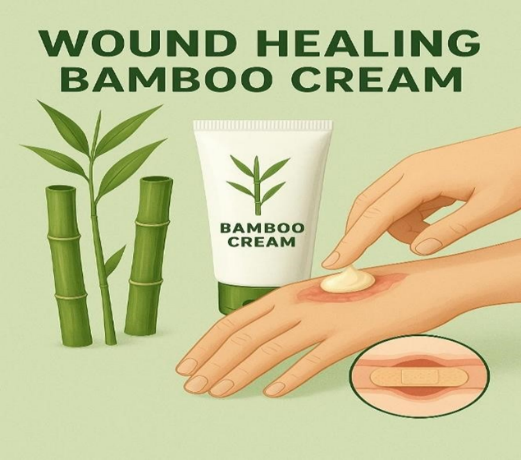
Fig 5.0 bamboo cream
Safety and dosage: Studies demonstrate positive effects at specific concentrations; higher dosages may yield different results (for instance, some bamboo leaf extracts at higher dose prevented migration in wound-gap experiments).30,31
Increased Production of Collagen (Silica) One of nature’s most abundant sources of silica (sometimes more than 70%), a mineral necessary for connective tissue structural integrity, is bamboo. Mechanism: Hydroxylation enzyme activation, a critical biochemical step in the creation of collagen and elastin, depends on silica. Bamboo helps mend the extracellular matrix by promoting collagen synthesis, which boosts the healed wound’s tensile strength.32
Modern effect of bamboo
According to recent research, bamboo extract promotes collagen synthesis, fibroblast proliferation, and epithelial regeneration, which speeds up tissue repair and wound healing.33 Bamboo’s high silica concentration enhances skin hydration and suppleness, making it a useful natural component of moisturising and anti-aging treatments.34
Additionally, its antioxidant and anti-inflammatory properties protect skin cells from oxidative stress and inflammation, reducing signs of aging and irritation.35 Bamboo cream is used in eco-friendly cosmetic formulations that emphasise skin compatibility, sustainability, and biodegradability.36 Therefore, in contemporary skincare, bamboo cream offers comprehensive skin protection and regeneration as a safe, natural, and sustainable substitute for synthetic ingredients.37
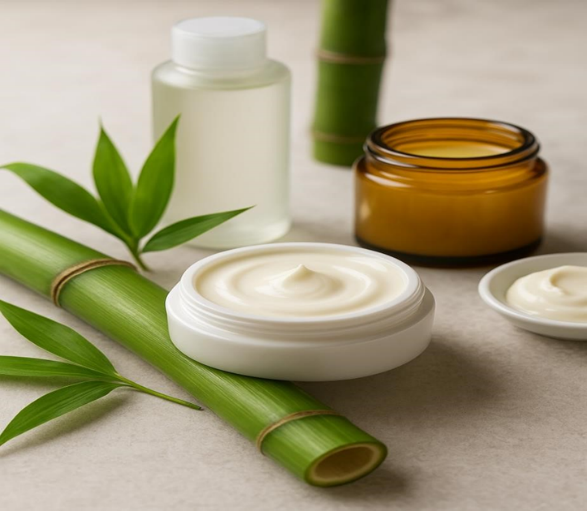
Fig.6 modern effect of bamboo
DISCUSSION
The body of evidence reviewed indicates that Bambusa vulgaris is a promising natural ingredient for topical wound-care and cosmeceutical applications. Phytochemical analyses consistently identify flavonoids, phenolic acids, silica, amino acids and other micronutrients—the combination of which explains the plant’s multi-modal activity: antioxidant scavenging reduces oxidative stress at wound sites, antimicrobial constituents lower bioburden risk, and anti-inflammatory compounds help shorten the prolonged inflammatory phase that delays healing. Importantly, bamboo’s high silica content provides a plausible mechanistic link to improved collagen synthesis and extracellular matrix remodelling, which translates into greater tensile strength and faster epithelialisation observed in several preclinical models.
Most pharmacological studies to date are preclinical (in vitro assays and animal wound models). These studies repeatedly report faster wound contraction, enhanced re-epithelialisation, improved tensile strength and reduced markers of oxidative damage or inflammation when bamboo extracts (leaf/shoot) are applied topically or administered systemically. Formulation work shows that bamboo can be incorporated into stable cream bases (2–5% extract in common oil-in-water systems) with acceptable pH, spreadability and short-term stability, supporting practical product development. Practical implications: bamboo extract is well suited for cosmetic or adjunctive topical products aimed at minor wounds, abrasions and skin-repair (hydration/anti-aging) where a natural, sustainable ingredient is valued. For medical claims (diabetic ulcers, infected/deep wounds), controlled clinical trials and rigorous safety testing are required before bamboo formulations can replace standard care. In short, Bambusa vulgaris shows multi-mechanistic promise for wound healing and skin repair, with strong preclinical support and good formulation feasibility; advancing to standardized extracts and human studies is the critical next step to convert promise into approved, evidence-based products.
CONCLUSION:
A significant medicinal plant with a wide range of pharmacological and therapeutic benefits is bamboo (Bambusa vulgaris). Bamboo extract has antioxidant, anti-inflammatory, antibacterial, and wound-healing qualities, according to recent study, which makes it a promising component of herbal and cosmetic compositions. Its capacity to boost collagen production, stimulate fibroblast activity, and quicken epithelial regeneration—all of which speed wound healing—is facilitated by the presence of bioactive substances such flavonoids, phenolic acids, silica, and amino acids.
Furthermore, because bamboo cream is moisturising, anti-aging, and environmentally friendly, it is becoming more and more popular in contemporary skincare. Its natural nature guarantees biocompatibility and sustainability, and its high silica concentration enhances skin hydration and suppleness, supporting the growing global trend towards eco-friendly cosmetics. In conclusion, bamboo cream offers extensive advantages for skin repair, protection, and renewal while promoting environmental preservation, making it a safe, natural, and sustainable substitute for synthetic formulations.
REFERENCES


Bhagwat Gholve, Suwarna Kale, Pallavi Dhage, Sanika Giri, Chandrakant Done, Phytochemical and Pharmacological Assessment of Bamboo Extract for Wound Healing, Int. J. of Pharm. Sci., 2026, Vol 4, Issue 2, 2342-2355. https://doi.org/10.5281/zenodo.18651228
 10.5281/zenodo.18651228
