

We use cookies to ensure our website works properly and to personalise your experience. Cookies policy
Smt. Sharadhchandrika Suresh Patil College of Pharmacy, Chopda, Jalgaon 425107
High-Performance Liquid Chromatography (HPLC) is a cornerstone analytical technique in the pharmaceutical industry, playing a critical role in ensuring product quality, safety, and regulatory compliance. This study examines the significance of HPLC within the framework of global regulatory standards established by agencies such as the U.S. Food and Drug Administration (FDA), the European Medicines Agency (EMA), and the International Council for Harmonisation (ICH). Emphasis is placed on the application of HPLC for assessing the purity, potency, identity, and stability of active pharmaceutical ingredients (APIs) and finished dosage forms. The abstract also underscores the essential method validation parameters—including accuracy, precision, specificity, linearity, limit of detection (LOD), limit of quantification (LOQ), and robustness—that are required to meet regulatory expectations. A comparative evaluation of international guidelines and selected case studies further demonstrates how HPLC facilitates robust quality control strategies throughout the drug development and manufacturing lifecycle. As regulatory frameworks evolve toward more stringent quality standards, HPLC continues to serve as a dependable, versatile, and indispensable analytical tool in pharmaceutical quality assurance.
Why These Matters from a Regulatory Perspective:
Regulatory Significance:
A range of analytical techniques is available for the evaluation of pharmaceutical compounds; however, High-Performance Liquid Chromatography (HPLC) is currently regarded as the preferred method. This technique is also referred to as High-Pressure Liquid Chromatography, emphasizing the elevated pressure applied during the process. While there is some debate over the term "high-performance," its usage in this context is widely accepted. [2]
In the pharmaceutical industry, HPLC serves a broad range of applications. It is routinely used to evaluate the purity of new drug candidates, to monitor changes during synthetic processes, to support in-process testing during formulation development, and to conduct quality control and assurance of the final drug products.[3]
OBJECTIVE:
This paper aims to present a comprehensive review of the role of High-Performance Liquid Chromatography (HPLC) in the quality control testing of pharmaceutical products, with particular emphasis on regulatory requirements and compliance. It explores the diverse applications of HPLC in pharmaceutical analysis, including method validation, impurity profiling, and content uniformity assessment. Additionally, the paper examines relevant regulatory guidelines and expectations set forth by major regulatory bodies, including the U.S. Food and Drug Administration (FDA), the European Medicines Agency (EMA), and the International Council for Harmonization of Technical Requirements for Pharmaceuticals for Human Use (ICH).[4]
SCOPE:
This paper focuses on the critical role of High-Performance Liquid Chromatography (HPLC) in pharmaceutical quality control, with an emphasis on regulatory compliance and analytical reliability. The scope is defined across the following key areas[5]
1. Pharmaceuticals
The review examines the application of HPLC in the quality control of small-molecule pharmaceuticals, including both active pharmaceutical ingredients (APIs) and finished dosage forms. Particular attention is given to HPLC-based assessment of identity, purity, potency, dissolution behavior, impurity profiling, and stability-testing parameters that are essential for ensuring product quality throughout the drug lifecycle.[6]
2. Regulatory Agencies
This paper evaluates the regulatory expectations and analytical requirements set forth by major global health authorities, including:
Emphasis is placed on guidelines related to analytical method development, validation, and lifecycle management, such as ICH Q2(R2), Q14, and FDA/EMA quality systems guidance. The discussion integrates how these regulatory frameworks guide the adoption and implementation of HPLC in routine and advanced pharmaceutical quality control.[8]
3. HPLC Techniques
The paper explores a comprehensive range of HPLC techniques used in pharmaceutical analysis, including:
In addition, it covers method development strategies such as mobile phase selection, column optimization, detection choices (UV, PDA, MS), and system suitability criteria. Method validation parameters—accuracy, precision, specificity, linearity, range, LOD, LOQ, robustness, and ruggedness—are also discussed in alignment with regulatory standards.[10]
HIGH-PERFORMANCE LIQUID CHROMATOGRAPHY (HPLC)
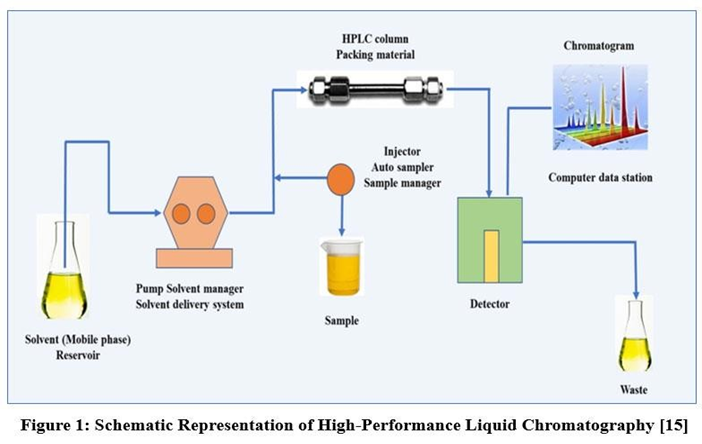
HPLC is an advanced analytical technique that employs liquid chromatography and specialized columns to separate, identify, quantify, and analyze active components within complex mixtures. Compared to traditional chromatographic methods, HPLC offers significantly enhanced performance in terms of efficiency and resolution. This improvement is largely attributed to the use of stationary phases composed of uniformly sized spherical particles, typically ranging from 2 to 5 µm in diameter. The small particle size results in increased resistance to flow, thereby requiring the mobile phase to be pushed through the column under high pressure. Consequently, the technique is referred to as high-pressure or high-performance liquid chromatography. [11]
Importance of HPLC in Pharmaceutical Quality Control
High-Performance Liquid Chromatography (HPLC) is a vital analytical tool in pharmaceutical quality control. It ensures the accuracy, purity, and consistency of drug products by detecting and quantifying active ingredients and impurities. HPLC is essential in stability studies, batch consistency checks, and validation of manufacturing processes. Due to its precision and reliability, it is widely accepted by global regulatory agencies for routine QC testing across various dosage forms.[12]
Regulatory Compliance: Guidelines for Pharmaceutical HPLC
High-Performance Liquid Chromatography (HPLC) is a cornerstone analytical method in the pharmaceutical sector, which is governed by stringent regulatory standards. Compliance with these regulations is essential to ensure product safety, efficacy, and quality. [13]
The International Council for Harmonisation of Technical Requirements for Pharmaceuticals for Human Use (ICH) provides comprehensive directives for validating HPLC methods. These standards cover critical parameters such as accuracy, precision, specificity, linearity, and robustness. Additionally, ICH guidelines set forth permissible impurity levels in active pharmaceutical ingredients (APIs) and finished drug products. [14]
Regulatory bodies like the U.S. Food and Drug Administration (FDA) and the European Medicines Agency (EMA) recognize HPLC as a fundamental tool for drug analysis. Any regulatory submission must include well-validated HPLC methods to substantiate claims regarding the drug's identity, purity, potency, and stability. [15]
HPLC instruments used in pharmaceutical analysis must comply with Good Manufacturing Practice (GMP) protocols. This includes routine equipment calibration, conducting system suitability tests, and maintaining comprehensive and accurate records of all analytical procedures.[16]
METHODOLOGY
Fundamentals of HPLC (High-Performance Liquid Chromatography)
Principles of Chromatography and HPLC
Chromatography is an analytical technique used to separate, identify, and quantify components within a mixture. High-Performance Liquid Chromatography (HPLC) is a specialized form of chromatography that utilizes a liquid mobile phase to carry the sample through a column packed with a stationary phase. The separation occurs based on the differing interactions of each component with the stationary and mobile phases. [17]
In HPLC, components that have a stronger affinity for the stationary phase are retained longer in the column, while those with weaker interactions elute more quickly. This difference in retention time allows for the effective separation of mixture components, which is governed by their distribution coefficients between the two phases. [18]
Key Components of an HPLC System:
Solvent Reservoir: Stores the mobile phase (liquid solvent).
Pump: Delivers the mobile phase at high pressure through the column.
Injector: Introduces the sample into the flowing mobile phase.
Column: Contains the stationary phase and performs the actual separation.
Detector: Identifies and measures the separated compounds as they elute from the column.[19]
Types of HPLC Modes and Their Applications
HPLC can be operated in various modes, depending on the nature of the sample and the required separation:
Stationary Phase: Non-polar
Mobile Phase: Polar
Application: Widely used for separating non-polar to moderately polar compounds such as pharmaceuticals, pesticides, and peptides.
Stationary Phase: Polar
Mobile Phase: Non-polar
Application: Suitable for the separation of polar compounds such as sugars, small polar molecules, and certain drugs.
Stationary Phase: Ion-exchange resin (charged surface)
Application: Used for the analysis of charged or ionic substances like amino acids, nucleotides, and inorganic ions.
Stationary Phase: Porous material
Application: Separates molecules based on size; commonly used for analyzing polymers, proteins, and other macromolecules. [20]
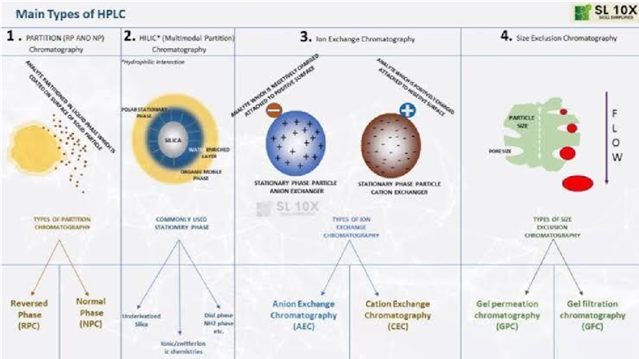
Table 1. Overview of HPLC Types, Principles, and Key Applications in Pharmaceutical Quality Assurance[21]
|
HPLC Types |
Principle of HPLC |
Key applications in Pharma QA |
|
Reverse Phase (RP) |
Hydrophobic (non-polar) interactions |
API quantification, impurity profiling, dissolution |
|
Normal Phase (NP) |
Polarity differences |
Seperation of polar compounds and isomers |
|
Ion exchange |
Charge differences (cation, anion interactions) |
Analysis of ions, amino acids and charged impurities |
|
Size Exclusion (SEC) |
Molecular Size |
Protein/ Aggregate analysis, polymer characterization |
|
Affinity |
Specific affinity interactions (biomolecules) |
Bioanalysis, antibody captures, Biopharmaceuticals |
|
Chiral |
Chirality (enantiomer separation) |
Stereoisomer analysis in chiral drugs |
HOW HPLC WORKS:
High-Performance Liquid Chromatography (HPLC) operates through a sequence of well-defined analytical steps that collectively enable the separation, detection, and quantification of chemical components in a mixture. The working principle of HPLC can be explained through the following stages[22]
1. Sample Introduction
The analytical sample is introduced into the flowing mobile phase, typically using an autosampler or manual injection via a microsyringe. This step ensures accurate, precise, and reproducible sample volumes, which are critical for quantitative reliability. The injected sample is carried toward the chromatographic column by the mobile phase.[23]
2. Chromatographic Separation
Inside the column, the sample components interact with the stationary phase to different extents based on their physicochemical properties.
This differential partitioning forms the basis of separation and depends on factors such as polarity, hydrophobicity, charge, and molecular size, depending on the type of HPLC technique used (RP-HPLC, NP-HPLC, Ion-exchange, etc.).[25]
3. Detection
After separation, analytes exit the column and enter the detector. The detector measures specific physical or chemical properties of each analyte, such as:
The detector converts these measurements into electrical signals proportional to the concentration of the analytes.[26]
4. Data Processing and Analysis
The electrical signals from the detector are converted into a chromatogram, which plots detector response (y-axis) versus retention time (x-axis).
Data evaluation software integrates peaks, calculates concentrations using calibration curves, and generates quantitative reports essential for pharmaceutical quality control.[27]
Table 2. Key Applications of HPLC in Pharmaceutical Analysis and Their Primary Objectives[28]
|
HPLC Application |
Main Objective |
|
Drug substance and product purity |
Confirm API and excipient quality |
|
Impurity Profiling |
Safety via detection/quantification of impurities |
|
Content Uniformity |
Consistent Dosage delivery |
|
Drug Stability Studies |
Assess shelf life and degradation |
|
Dissolution profile analysis |
Ensures therapeutic efficacy |
|
Bioanalysis/ pharmacokinetics |
Support clinical, bioequivalence studies |
Case Study: HPLC Implementation in Pharmaceutical Quality Control Impurity
Profiling in Active Pharmaceutical Ingredients (APIs)
Scenario: An API manufacturer adopted HPLC with gradient elution to separate and quantify multiple impurities present in a single run.
Outcome: Streamlined QC process, reducing analysis time by 30%.
Successfully met regulatory requirements for impurity profiling and method validation.
Green HPLC Method for Multi-Drug Analysis
Description: A pharmaceutical QC lab developed a novel, eco-friendly RP-HPLC method to simultaneously separate and quantify a mixture of piracetam, ketoprofen, and omeprazole in various dosage forms (tablets, capsules). The method used a gradient elution (methanol-water) that significantly minimized solvent use, reduced time, and lowered costs. [31]
Regulatory Impact: Achieved robust method validation (accuracy, linearity, precision, specificity).
Fulfilled regulatory guidelines (FDA, ICH, and USP) for simultaneous multi-component analysis.
Enhanced sustainability in the QC workflow while satisfying compliance requirements.
Additional Example: Enhancing Pharmaceutical QC with HPLC.
Context: A pharmaceutical lab applied HPLC assays for impurity profiling, dissolution testing, and assay validation of drug samples, demonstrating compliance with all relevant regulatory standards. Extensive validation and routine system suitability tests ensured audit readiness and regulatory acceptance. [29,30]
CONCLUSION:
HPLC stands at the core of quality assurance and regulatory compliance in pharmaceuticals. Its regulatory-mandated use:
Enables precise impurity detection and quantification, Assures content uniformity and dosage accuracy, Monitors drug stability and product shelf life, Fulfills validation and audit requirements critical to product approvals and patient safety.
Effectively implemented HPLC methods streamline compliance, mitigate regulatory risks, and uphold the highest standards of pharmaceutical quality.
REFERENCES

Bhagyashree Bhalerao, Role of HPLC in Quality Control Testing of Pharmaceuticals: A Regulatory Perspective, Int. J. of Pharm. Sci., 2025, Vol 3, Issue 12, 2608-2616. https://doi.org/10.5281/zenodo.17952125
 10.5281/zenodo.17952125