
School of Pharmacy, Al-karim University, Katiha, India
Heterocyclic compounds and their analogues have been extensively studied for their diverse pharmacological properties, including antimicrobial, anti-malarial, anti-inflammatory, anti-tubercular, anti-diabetic, and anti-neoplastic activities. The benzothiazole nucleus, despite its simple and compact structure, serves as a privileged scaffold in medicinal chemistry, demonstrating a remarkable spectrum of biological activities. This review consolidates recent advancements in the chemistry of benzothiazoles, focusing on the synthesis, structural modifications, and the resultant Structure-Activity Relationship (SAR) that underpin their biological efficacy. Significant structural modifications have revealed the potent activity of benzothiazole derivatives against various microbial strains and cancer cell lines. This summary primarily focuses on the benzothiazole core and its substituted analogues, elucidating their diverse biological profiles and potential as leads for future therapeutic agents.
A heterocyclic compound is characterized by a ring structure containing at least two different types of atoms, with nitrogen, oxygen, and sulfur being the most common heteroatoms. These compounds are fundamental to life processes and are ubiquitously found in nature. Beyond the common heteroatoms, recent research has expanded to include elements like silicon, phosphorus, and boron. While heterocycles with 3-6 membered rings exist, five and six-membered rings are the most significant. Heterocyclic rings form the core of numerous vital biomolecules, including vitamins (e.g., pyridoxine, Vitamin B6), alkaloids, antibiotics, chlorophyll, amino acids, and genetic material [1]. The 2-aminobenzothiazole scaffold is particularly notable in medicinal chemistry [2,3] and has demonstrated cytotoxicity against cancer cells [4]. Since the 1950s, benzothiazole derivatives have been extensively researched, revealing a wide array of pharmacological properties such as anti-neoplastic [5], anticonvulsant [6], antimicrobial [7], anthelmintic [8], antileishmanial [9], anti-tubercular [10], schistosomicidal [11], anti-fungal [12], anti-inflammatory [13], anti-psychotic [14], and anti-diabetic activities [15]. The simplicity, ease of synthesis, and profound biological impact of the benzothiazole moiety make it a pivotal structure for developing novel bioactive compounds [16,17]. Specific derivatives, such as 2-substituted amidino benzothiazoles, have shown anti-HIV potential [19], while substituted 6-nitro and 6-aminobenzothiazoles exhibit antimicrobial activity [20]. Anti-viral activity has also been reported for condensed pyrimido-benzothiazoles and benzothiazole-containing quinolones [18].
Text (Fig .41) Screen Mechanisms of action of benzothiazole derivatives. In showed (Table 4) Compared effectiveness of benzothiazole compounds versus recognized anti-cancer treatments
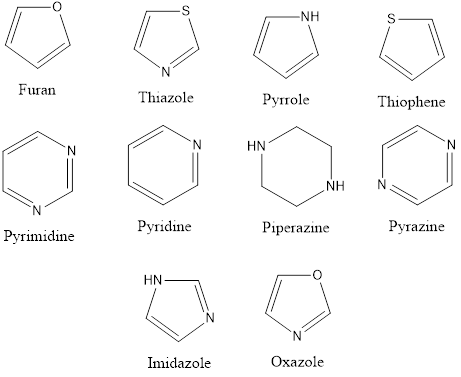
Fig.1. Variou types of heterocyclic components
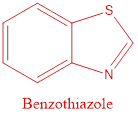
Fig 2
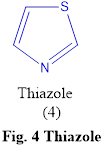
Benzothiazole is a fused heterocyclic aromatic compound, comprising a benzene ring fused with a thiazole ring at the 4 and 5 positions, forming the 1,3-benzothiazole nucleus. It is considered a "privileged scaffold" in drug discovery due to its diverse pharmacological profile [21-23]. Thiazole itself, first described by Hantzsch and Waber in 1887, shares properties with pyridine and thiophene [24].
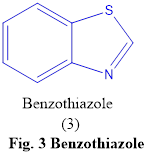
IUPAC Name: 1,3-benzothiazole
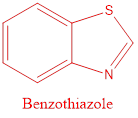
Fig. 5
Molecular Formula: C?H?NS
Molecular Weight: 135.19 g/mol
Physical Properties: Pale yellow crystalline solid; Melting point: ~48-50°C; Boiling point: ~230-232°C; Slightly soluble in water, soluble in organic solvents like ethanol and chloroform.
Chemical Properties: Aromatic in nature; the nitrogen in the thiazole ring is weakly basic. It can react with aldehydes/ ketones and is also known by synonyms like Benzosulfonazole.
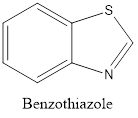
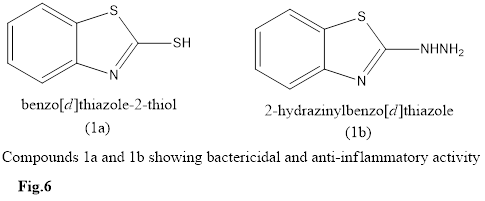
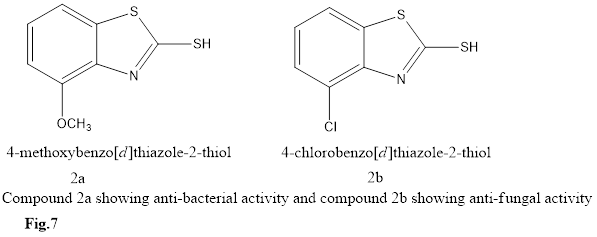
Table 1- Structure activity relationship of benzothiazole analogues [33]
|
Substitution Position/ Type |
Effect on Activity |
Probable Mode of Influence |
|
Alkyl groups (-R) |
Moderate increase |
Enhances lipophilicity, improving membrane permeability. |
|
Halogens (Cl, Br, F) |
Variable (Often Low) |
Can reduce binding affinity due to steric or electronic effects. |
|
Electron-Donating Groups (e.g., -OH, -NH?) |
Very Significant |
Enhance interaction with target enzymes via hydrogen bonding or charge transfer. |
|
Aryl groups |
Significant |
Increase planarity and π-π stacking interactions, aiding cell penetration and target binding. |
The benzothiazole nucleus is versatile, conferring a wide range of biological activities, as summarized below.
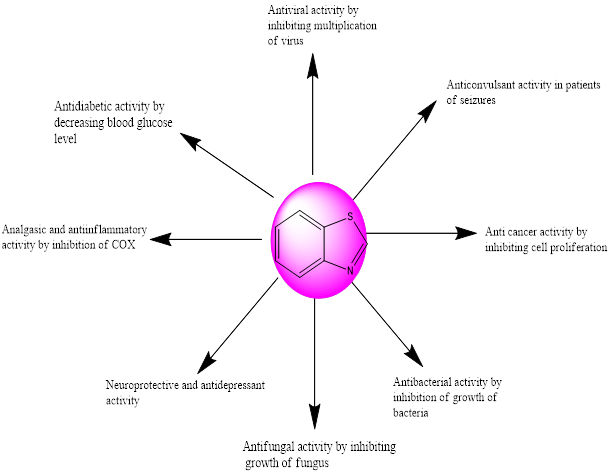
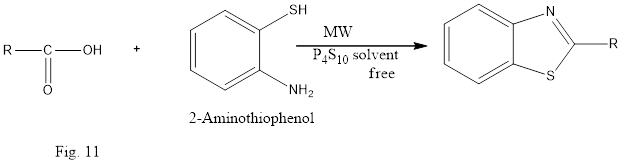
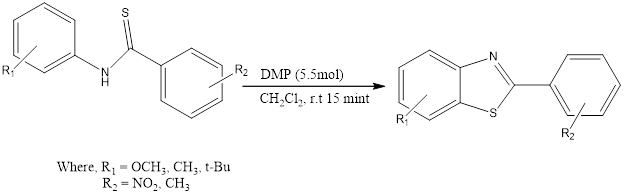
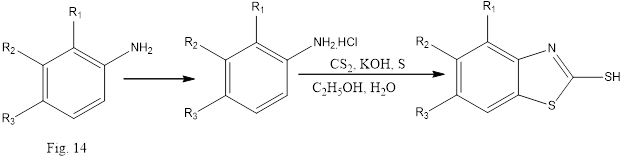
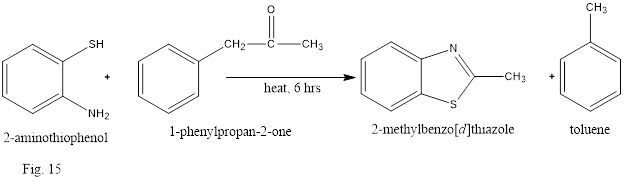
Various synthetic methodologies have been developed for benzothiazoles, ranging from classical condensation to modern green chemistry approaches.
Table 2: Synthetic procedures for benzothiazole derivatives: an overview [35]
|
Synthesis Technique |
Key Reagents/ Conditions |
Yield (%) |
Advantages |
Limitations |
|
Catalyst-driven Methods |
Transition metal complexes (Pd, Cu), specific solvents/ temps. |
60-90 |
High selectivity, functional group tolerance. |
Costly catalysts, complex setups. |
|
Classical Cyclization |
*o*-Aminothiophenol + Carboxylic acid/ aldehyde. |
60-85 |
Simple, direct access to core structure. |
Harsh conditions, longer times. |
|
Microwave-Assisted |
*o*-Aminothiophenol + aldehydes, solvent, MW irradiation. |
80-95 |
Rapid reactions, high efficiency, less solvent. |
Requires specialized equipment. |
|
Oxidative Cyclization |
*o*-Aminothiophenol + ketones, oxidant (e.g., I?, O?). |
50-90 |
Metal-free conditions, good functional group compatibility. |
Can require stoichiometric oxidants. |
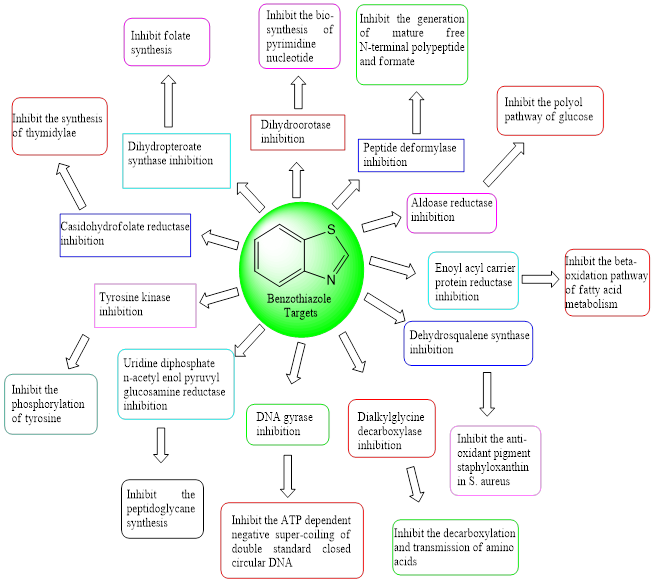
Figure 9. Benzothiazole derivatives' effectiveness in vitro and in vivo [36]
1.6.1. Selected Synthetic Pathways
2.1. Anti-neoplastic (Anticancer) Activity: Benzothiazole derivatives have emerged as potent anticancer agents with diverse mechanisms. Stanton et al. evaluated phthalimide-benzothiazole hybrids against human cancer cells [49]. Fluorinated 2-aryl benzothiazoles demonstrated submicromolar GI?? values against breast cancer cell lines (MCF-7, MDA-MB-468) [52]. QSAR studies by Chen et al. further support the rational design of potent benzothiazole-based anticancer agents [51].
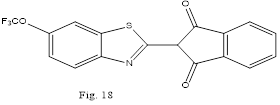
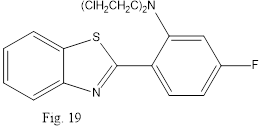
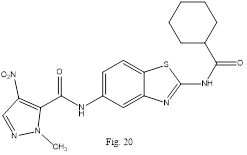
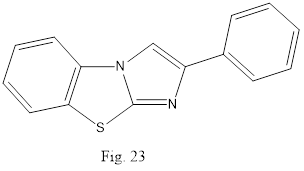
Table 3: Modes of anti-neoplastic action for benzothiazole derivatives [54]
|
Mechanism of Action |
Impact on Cancer Cells |
|
DNA Topoisomerase Inhibition |
Interferes with DNA replication, causing DNA damage and cell death. |
|
Apoptosis Induction |
Triggers mitochondrial dysfunction, caspase activation, and DNA fragmentation. |
|
Tubulin Polymerization Inhibition |
Disrupts microtubule dynamics, leading to mitotic arrest. |
|
Angiogenesis Inhibition |
Reduces VEGF expression, starving tumors of nutrients. |
|
Cell Cycle Arrest |
Induces arrest at specific phases (e.g., G1/S) by modulating cyclins/ CDKs. |
|
Modulation of Signaling Pathways |
Inhibits key pathways like EGFR, JAK/STAT, impairing growth/ survival signals. |
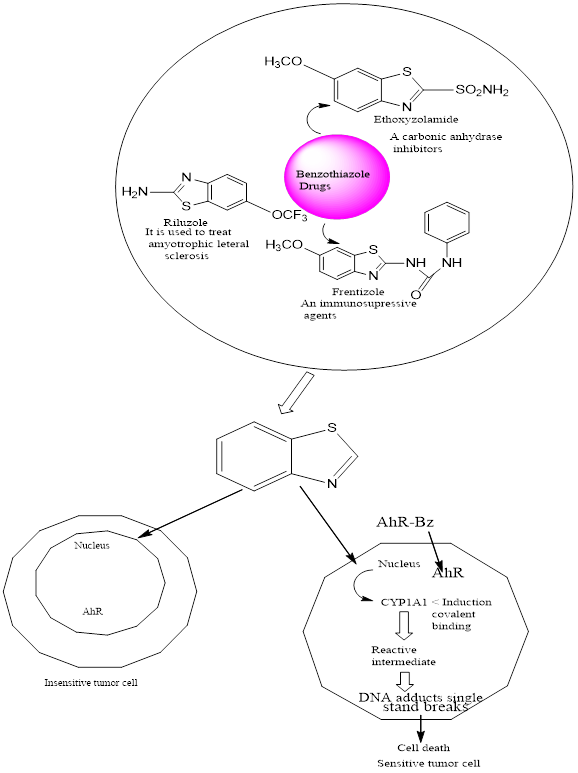
Table 4: Comparative effectiveness of benzothiazole compounds versus recognized anti-cancer treatments [56]
|
Compound / Class |
Target Cancer Type |
IC?? (µM) Range |
Primary Mode of Action |
Key Observation |
|
C-Benzothiazole Analogues |
Colorectal |
0.7 - 0.8 |
Angiogenesis Inhibition |
Potentially more effective than Bevacizumab. |
|
Benzothiazole Derivative A |
Breast |
~1.2 |
Apoptosis Induction |
More potent than Doxorubicin in models. |
|
D-Benzothiazole Derivative |
Melanoma |
1.4 - 1.5 |
Topoisomerase Inhibition |
Shows better efficacy than Dacarbazine. |
|
Paclitaxel (Standard) |
Lung |
1.7 - 1.8 |
Microtubule Stabilization |
Established drug with resistance issues. |
|
Doxorubicin (Standard) |
Breast |
3.4 - 3.5 |
Topo-II Inhibition & Intercalation |
Broad-spectrum but with cardiotoxicity. |
2.2. Anti-microbial Activity Benzothiazoles exhibit significant activity against a range of pathogens. Kumbhare et al. reported antimicrobial activity for 1-(2-aminobenzothiazole-6-oxy) derivatives [57]. Corbo et al. found 2-aminobenzothiazole analogues to be active against Candida species [58]. Derivatives like 2-(5-substituted-1,3,4-oxadiazole-2-yl)-1,3-benzothiazoles and benzothiazole-linked thiazolidinones have shown promising results against Gram-positive and Gram-negative bacteria [61,62].
2.3. Anti-inflammatory Activity: Electron-donating groups (Cl, OCH?) at the 4/5 positions of 2-aminobenzothiazole enhance anti-inflammatory activity [63]. Shafi et al. synthesized bis-heterocycles incorporating 2-mercaptobenzothiazole via click chemistry, which showed potent activity in carrageenan-induced paw edema models and COX inhibition assays [64]. 2-Benzylbenzo[d]thiazole-6-sulfonamides also demonstrated significant anti-inflammatory effects [65].
2.4. Anti-tubercular Activity: Benzothiazole derivatives are promising agents against Mycobacterium tuberculosis, including multidrug-resistant strains. Shaik et al. reported potent in-vitro activity for 3-(4-(6-methylbenzo[d]thiazol-2-yl)phenyl)quinazolin-4(3H)-ones against H37Rv [67]. Dinakaran et al. identified 3-nitro-2-substituted-5,12-dihydro-5-oxobenzothiazolo[3,2-a][1,8]naphthyridine-6-carboxylic acids with excellent MIC values [70].
2.5. Anti-malarial Activity: Benzothiazole-pyridine hybrids based on the amodiaquine scaffold have shown potent antiplasmodial activity against chloroquine-resistant (W2) and sensitive (3D7) strains of Plasmodium falciparum [71]. 2-Substituted-6-nitro and 6-aminobenzothiazoles also demonstrated significant potential as anti-malarial leads [72].
2.6. Anti-diabetic Activity: Targeting diabetes, N-(6-substituted-1,3-benzothiazol-2-yl) benzenesulfonamides showed in vivo antidiabetic effects and inhibition of 11β-HSD1 and PTP-1B enzymes [73]. Ethyl 2-(6-substituted benzo[d]thiazol-2-ylamino)-2-oxoacetates were identified as PTP-1B inhibitors, reducing plasma glucose levels in normoglycemic and oral glucose tolerance tests [75].
3. RESULTS AND DISCUSSION
This review synthesizes data demonstrating that the benzothiazole nucleus is a cornerstone in medicinal chemistry due to its structural simplicity and profound biological versatility. The SAR studies conclusively show that strategic substitutions at the 2-, 5-, and 6-positions of the benzothiazole ring drastically modulate activity, potency, and selectivity across different therapeutic areas. For instance, hydrophobic and electron-donating groups enhance anticancer and antimicrobial activities, respectively. Synthetic advancements, particularly microwave-assisted and metal-free oxidative methods, have provided efficient, greener routes to diverse libraries of benzothiazole derivatives. Mechanistic insights reveal that these compounds act through targeted pathways, including enzyme inhibition (topoisomerase, PTP-1B), apoptosis induction, and disruption of cellular structures (tubulin). While the promise is significant, challenges remain in optimizing pharmacokinetic properties and selectivity to minimize off-target effects. Future research integrating computational modeling, pharmacogenomics, and nanoparticle-based delivery systems could unlock the full therapeutic potential of benzothiazole derivatives, transforming them from potent in-vitro agents into effective clinical drugs.
4. CONCLUSION
Benzothiazoles represent a versatile and indispensable heterocyclic system in drug discovery. As evidenced by the extensive literature, subtle structural modifications yield derivatives with significant and diverse biological activities, including anticancer, antimicrobial, anti-inflammatory, antitubercular, antimalarial, and antidiabetic effects. The continuous evolution of synthetic strategies facilitates the exploration of novel chemical space around this core. The clear structure-activity relationships provide a robust framework for the rational design of next-generation therapeutic agents. Therefore, the benzothiazole scaffold undoubtedly remains a highly promising and fertile ground for developing new lead compounds to address various unmet medical needs.
REFERENCES

Md Afaque, Abdullah, Md Sabir Hussain Siddiquee, Md Shamsir Alam, Md Quamar Niyaz, Md Saddam Hussain, Md Rahat Raza, Md Iftekhar Alam, Recent Advancement and Structure Activity Paradigm of Benzothiazoles: A Classical Review for Biological Screening of Different Diseases, Int. J. of Pharm. Sci., 2026, Vol 4, Issue 2, 1287-1298. https://doi.org/10.5281/zenodo.18547082
 10.5281/zenodo.18547082
