
Shantiniketan College of Pharmacy Dhotre (B.K.) Parner 414 302, Ahilyanagar, Maharashtra
Moringa oleifera, commonly referred to as the “Drumstick Tree” or “Miracle Tree,” is a fastgrowing, drought-resistant plant native to the sub-Himalayan regions of India and Pakistan, now widely cultivated in tropical and subtropical areas. Rich in essential nutrients, including proteins, amino acids, vitamins, minerals, flavonoids, and phenolic compounds, moringa has gained global recognition for its exceptional nutritional and therapeutic potential. The leaves, seeds, pods, and roots of the plant are known to exhibit a wide range of pharmacological properties, such as antioxidant, anti-inflammatory, antidiabetic, antimicrobial, anticancer, and hepatoprotective activities. These benefits are attributed to its diverse bioactive compounds like isothiocyanates, saponins, alkaloids, and glucosinolates. Moringa also plays a vital role in sustainable agriculture and food security, particularly in regions affected by malnutrition. Despite being widely considered safe, moringa may interact with medications or other herbs, necessitating cautious usage. This review provides an in-depth overview of M. oleifera's botanical characteristics, phytochemical composition, pharmacological actions, mechanisms of activity, nutritional value, and its future prospects as a nutraceutical and medicinal agent.
A traditional medicinal Indian herb known as moringa (Moringa oleifera Lam) is growing widely popular in tropical and subtropical nations.[1] Horseradish tree, Mulangay, Longe, Benzolive, Drumstick tree, Sajna, Kelor, Saijihan and Marango are more specific terms for Moringa. [2] Moringa oleifera VKRZQ~LQ~ VFLHQWLÀF {LV~ From Kingdom: Plantae, Division: Magnoliphyta, Class: Magnoliopsida, Order: Brassicales, Family: Moringaceae, Genus: Moringa, Species: M. oleifera, division to become Because of the numerous essential substances found in its leaves, pods, and seeds, moringa is particularly rich in micronutrients. Moringa is actually claimed to have 25 times more iron than spinach, 17 times higher calcium levels than milk, 9 times more protein than yoghurt, 15 times more potassium than bananas, 7 times more vitamin C than oranges, and 10 times more vitamin A than carrots. [3]15 times more potassium than bananas, 25 times more iron than spinach, 9 times more protein than dairy products, and 17 times more calcium than milk.[4] Moringa is a sustainable therapy for malnutrition and because it is easy to grow. Children are treated with moringa in countries like Senegal and Benin.[5] Several regional names, involving drumstick tree, sajiwan, kelor, murungai, marango, mlonge, mulangay, saijhan, ben oil tree, and sajna, are used to refer to this crop considering it is cultivated by many groups of people.[6] Moringa is highly regarded for its valuable phytochemicals and high nutrient content.[7] Proteins, essential and non-essential amino acids, vitamins, minerals, antioxidants, and other phenolic compounds are one of the vital nutritional elements found in the plant's edible sections. [8] They have been used in the indigenous medical system for generations to treat a variety of illnesses and conditions before being consumed. [9] The antioxidant, antidiabetic, antibacterial, antifungal, antitumor, antiinflammatory, antiulcer, antispasmodic, diuretic, antihypertensive, hepatoprotective, antipyretic, antiepileptic, cardiac, and cholesterol-lowering medicinal properties of Moringa's leaves, roots, seed, bark, fruit, flowers, and immature pods have been found. The herb Moringa oleifera Lam., which are also referred to as the drumstick tree, is among the members of the Moringaceae family and develops in tropical and subtropical regions like Indonesia. [10] The environment has long been conscious of the use of oringa, that requires little effort to grow and acquire.[11] Because it has a variety of highly nutritious substances and diverse nutritional attributes, moringa has numerous uses in the community involving as a food and herb. [12] Considering the fact that Moringa herbs are generally considered to be safer than synthetic supplements, they can actually have adverse reactions. [13] These effects can arise from using Moringa directly or from interactions with other herbs or synthetic medications.[14] In actuality, moringa herbs can have adverse effects, either as a result of using the herb itself or as a result of associations with other herbs or synthetic medications, even though they are generally considered to be safer than synthetic medicinal products. While Moringa herbs are frequently thought to be safer than synthetic medications, in practice, they can have adverse affects. [15] These effects might arise from using Moringa directly or from interacting with other herbs or synthetic drugs. [16] According to current reports, M. oleifera improves a wide range of biological processes, such as hepatoprotective, neuroprotective, anti-inflammatory, and anti-cancer effects.[17] According to these documented roles, M. oleifera's bioactivity has triggered a lot of interest in the past 10 years, which has led to increased research and comprehension of its pharmacological roles and underlying mechanisms.[18] In this study, we provide an overview of the state of the research on its pharmacological or nutraceutical properties, associated mechanism of action, and possible benefits for health[19].
Botanical description
Taxonomy of moringa plant: [20]
|
Kingdom |
plantae |
|
Sub-kingdom |
Tracheobionta |
|
Supper division |
Spermatophyta |
|
Division |
Magnoliophyta |
|
Class |
Magnoliopsida |
|
Sub class |
Dilleniidae |
|
Order |
Brassicale |
|
Family |
Moringaceae |
|
Genus |
Moringa |
|
Species |
Oleifer |
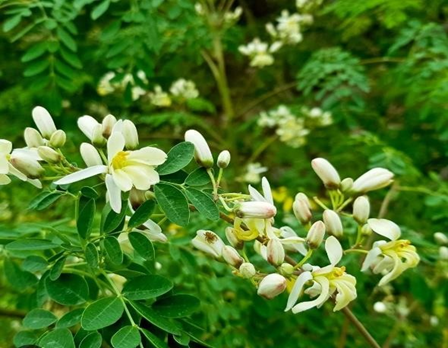
Fig.1: flowers of moringa plant
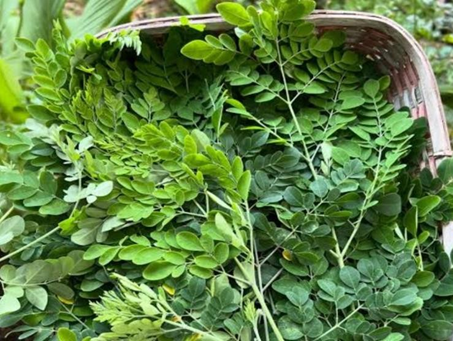
Fig.2: leaves of moringa plant
Morphology of Moringa:
The Moringa oleifera plant has a spreading crown, delicate branches, feathery tripinnate leaves, and a rapidly growing tree that reaches a height of 10 to 12 meters. [21] It features fragrant, bisexual flowers that grow in bunches and thick, corky, whitish-gray bark.
The fruit is a tall, woody pod that releases seeds when it splits into three valves. Bark and tree Reachs a height of 10–12 meters (33–39 feet).[22]
Crown: Open, spreading, having branches that droop. Bark: thick, corky, and whitish-gray in color. The bark of young shoots is greenish-white or purplish. The arrangement of the leaves on the twigs is spiral and alternate. [23]
Structure: Typically tripinnate (complex leaf with three tiers of leaflets).
Leaflets: oblong to elliptic, 1.2–2.0 cm long, with whole (non-toothed) edges.
Color: Green and nearly hairless on top, lighter and hairless underneath, frequently with reddish-tinged midribs. Whole margin (not toothed).
Fruits and Flowers Blooms: About 1 to 1.5 cm in length and 2 cm in width. White to cream in color, occasionally speckled with crimson. Fragrant and hermaphrodite in structure.
Arrangement: Spread out or droop in thin, hairy clusters 10–25 cm long. Fruits in pod form: Pods are long and woody. When ripe, the opening will split into three valves.
Seeds: Several globular seeds, each about 1 cm in diameter, are present.
Geographic distribution:
Geographically, moringa leaves are found in essentially any tropical and subtropical region, especially in Africa, Asia, Latin America, the Caribbean, and parts of the United States. [24] They originate originally from the sub-Himalayan regions of India and Pakistan. The largest producer is India. [25] Due to its nutritional and therapeutic qualities, the plant has been natura lized in many nations and is currently grown extensively worldwide.
Naturalized and native areas :
Native: Northern India and Pakistan's sub-Himalayan areas.
Naturalized and extensively grown:
Asia: Widely grown in India and the Philippines.
Africa: South Africa, West Africa, Ethiopia, and Sudan
Americas: Florida, the Caribbean, and Latin America.
Other areas: The Pacific Islands and other places where the climate is right.
Harvesting and preparation method of leave:
Trim branches and remove leaves from stems to collect and prepare moringa leaves.[26] In order to protect nutrients, properly wash them to assist in getting rid of dirt and debris, and then dry them in a well-ventilated, shaded area.[27] After drying, the leaves can be added straight to prepared food, pounded into a powder for storing, or used to make fresh juice.[28]
Harvesting:
Getting together Prune branches:
Trim branches to promote bushier growth and make harvesting simpler. Because leaves lose nutrition when the gets chilly, harvest before the weather turns frigid [29]
Remove leaves: when cutting the branches, removing the leaves from the stems[30]. Hand washing should be done before harvesting. To keep things clean, handle leaves with care, especially if you're making powder for other people. [31]
Getting ready for powdering and drying
Wash: To get rid of dirt, submerge the leaves in clean water and swish them around.
Additional bacteria can be eliminated with a second rinse or soak in saline solution.[32] The leaves can be hung in bundles in a cool, dark, and well-ventilated area, or they can be spread out in a single layer on a cleaned surface. [33]
Steer clear of the sun: Direct sunlight can destroy vitamins, so avoid drying the leaves there.
Grind: Using a mortar or grinder, grind the leaves into a fine powder after they are totally dry.
Store: Keep the powder out of direct sunlight and moisture in an airtight container.
Getting ready for new use
Juice: Use a mortar and a little water to crush fresh leaves, then strain the resulting slurry. A hammer mill can be used for bigger volumes.
Add to food: You can add fresh leaves to sauces, soups, and other recipes.
Physiochemical composition:
Flavonoids: Moringa's anti-inflammatory and antioxidant capabilities are attributed to the abundance of compounds such as kaempferol and quercetin.[34]
Phenolic Acids: These are substances that function as radicals and may have other health advantages, such as caffeic acid and chlorogenic acid.[35]
Isothiocyanates and glucosinolates: Now abundant substances that have been connected to anticancer effects.
Alkaloids: The therapeutic qualities of alkaloids, such as their antibacterial, antiviral, and anthelmintic actions, have been investigated.[36]
Saponins:- These substances have been connected to a number of health advantages and can help reduce cholesterol.
Tannins: These possess a variety of therapeutic qualities, such as antibacterial and antioxidant abilities.
Terpenoids and steroids: are also found in the plant and add to its overall medicinal potential.
Proteins and Amino Acids: Moringa leaves are a great source of fundamental amino acids and protein.[37]
Nutritional value:
The macronutrients:
Protein: Packed with a full spectrum of necessary amino acids and protein, with dried leaves usually containing 19–29% protein.[38]
Fiber: Has a substantial amount of dietary fiber.
Fat: Rich in beneficial polyunsaturated fatty acids, such as omega-3 alpha-linolenic acid, but low in fat.
Vitamins:
Vitamins A: great source of vitamin A, which is essential for defenses and visual health.
Vitamin C: Rich in vitamin C, which boosts immunity and functions as an antioxidant. [39] Vitamin B: B vitamins, such as B1 (thiamin), B2 (riboflavin), B3 (niacin), and B6, are abundant in this food.
Vitamin E: High concentrations of the antioxidant vitamin E are present.
Minerals:
Calcium: It is an outstanding cuisine source for bone health because it contains more calcium than milk
Iron: An excellent source of iron that can aid in the fight against iron-deficiency anemia.
Potassium: Packed contains potassium, which is essential for blood pressure and fluid balance.
Magnesium: A good amount of magnesium is present, which is essential for numerous body processes.
Zinc: A zinc source.
Antioxidants
Numerous antioxidants found in moringa leaves, including vitamin C and polyphenols, aid in safeguarding the body from oxidative damage.
Pharmacological Activity:
Antimicrobial Activity:
Antimicrobial Action Numerous studies have been carried out to assess the antimicrobial activity of Moringa species, and the results indicate that extracts from various plant parts, such as seeds, stem bark, leaves, and root bark, can have antibacterial properties.
For example, several species of pathogenic bacteria are inhibited in their growth, survival, and cell permeability by the water-soluble lectin that was separated from the extract of M. oleifera seeds.
Anti-Inflammatory: The body uses inflammation as an organic barrier against infection and to repair damaged tissue. Diabetes, cancer, autoimmune illnesses, cardiovascular diseases, sepsis, colitis, and arthritis are among the conditions that can arise as a result of persistent, chronic inflammation.
Anti-diabetic: Research indicates that moringa could improve insulin sensitivity and lower blood glucose
Hepatoprotective: Research have shown that the leaves can help prevent liver damage from diseases such as non-alcoholic fatty liver disease (NAFLD) and toxins.
Antimicrobial: Moringa leaf extracts have shown antifungal and antibacterial qualities.
Cardiovascular: Studies show that reducing blood pressure and plasma lipids may have positive effects on ttfheart health.
Anti-cancer: In lab tests, extracts from moringa leaves have demonstrated specific anti-proliferative actions against a range of cancer cell lines.
Other pursuits: Diuretic, antipyretic (fever-lowering), and central nervous system (CNS) depressive qualities are additional pharmacological activities.
Mechanism of Action:
Compounds like polyphenols, flavonoids, and tannins in moringa leaves give them their anti-inflammatory, antidiabetic, and antioxidant qualities, among other mechanisms of action.[40] While their antimicrobial properties fight off infections like E. coli, they also act by neutralizing free radicals, modifying important genes involved in insulin signaling, which and blocking enzymes that cause inflammation. Benefits including increased metabolic health, defense against oxidative stress and support for cardiovascular and digestive health are brought about by these impacts.
Mechanism of Antioxidants and Anti- inflammatory:
Free radical scavenging:
Moringa leaves’ polyphenols and flavonoids function as antioxidants by scavenging free radicals and guarding against oxidative stress-induced cellular damage.
Changing immune-mediated pathways: They have the ability to manage pathways such as the Nrf2/Keap1 pathway, which is a crucial regulator of the body’s antioxidant response, and decrease pro-inflammatory cytokines.
Enzyme inhibition: Certain substances have the ability to block the JNK pathways and caspase-3, two enzymes that fuel inflammation.
Cytoprotective action: The leaves’ tannins give the mucosal membrane a coating of protection that increases its resistance to harm.
Antidiabetic and Metabolic mechanism:
Increasing insulin sensitivity: Moringa leaves can improve insulin resistance by regulating liver genes involved in insulin signaling. In addition to stimulating the production of insulin and the uptake of glucose by cells, they can also enhance lipid metabolism.
FUTURE PROSPECTIVE
Because of their high nutritional content, possible health advantages, and contribution to sustainable agriculture, moringa leaves have a promising future. In addition to continuing study into their potential use in medicine for ailments including diabetes and neurological diseases, they are anticipated to have a bigger impact on controlling hunger and advancing food security. It is also anticipated that their use would increase in other areas, such as cosmetics, as a source for innovative culinary products, and as a dietary supplement.
CONCLUSION:
Considered by many as the "Miracle Tree" or "Drumstick Tree," Moringa oleifera has become one of the most valuable medicinal and nutritional plants that are acknowledged in both traditional and contemporary healthcare systems. Particularly, the leaves are a remarkable supply of vital amino acids, vitamins, minerals, and bioactive phytochemicals that support their diverse array of pharmacological actions. Moringa leaves have great promise as a nutraceutical and nutritional foods ingredient in addition to their medicinal value. They are a sustainable way to fight oxidative diseases associated with stress, micronutrient deficiencies, and malnutrition, especially in nations with limited resources, because of their high nutrient profile.
REFERENCES


Shweta Kothimbire, Bhagwan Khedkar, Puja Kate, C. V. N. Rao, Review on Pharmacological and Pharmacognostic Study of Moringa Plant, Int. J. of Pharm. Sci., 2025, Vol 3, Issue 12, 2780-2788. https://doi.org/10.5281/zenodo.17966934
 10.5281/zenodo.17966934
