Artificial intelligence (AI) has emerged as a transformative technology in pharmaceutical research, offering innovative solutions to long-standing challenges in drug discovery, development, formulation, and clinical decision-making. The pharmaceutical industry faces increasing pressure to reduce research timelines, minimize expenditure, and enhance success rates of new molecular entities, all while maintaining safety and efficacy standards. AI-driven computational models, including machine learning (ML), deep learning (DL), natural language processing (NLP), and generative algorithms, have revolutionized the identification of drug targets, prediction of molecular interactions, and optimization of drug candidates. These technologies enable the rapid screening of large chemical libraries, prediction of ADMET properties, virtual clinical trial simulations, and personalized medicine strategies using real-world datasets. In addition, AI supports formulation development by modeling excipient compatibility, optimizing process parameters, and ensuring consistent product quality through predictive quality-by-design (QbD) tools. The integration of AI in pharmacovigilance enhances adverse event detection, signal identification, and risk assessment through automated data mining of medical reports, social media, and electronic health records. Despite its promising potential, the application of AI faces challenges such as data privacy concerns, algorithmic transparency, regulatory acceptance, and the need for high-quality datasets. This review comprehensively discusses the current applications, technological advancements, opportunities, and limitations of AI in pharmaceutical research, highlighting its growing role as a catalyst for innovation and future global healthcare improvement.
Keywords
Artificial Intelligence (AI), Machine Learning (ML), Deep Learning (DL), Drug Discovery, Drug Development, Virtual Screening, QSAR Modeling, ADMET Prediction, Pharmaceutical Formulation, Quality by Design (QbD), Predictive Analytics,.
Introduction
×
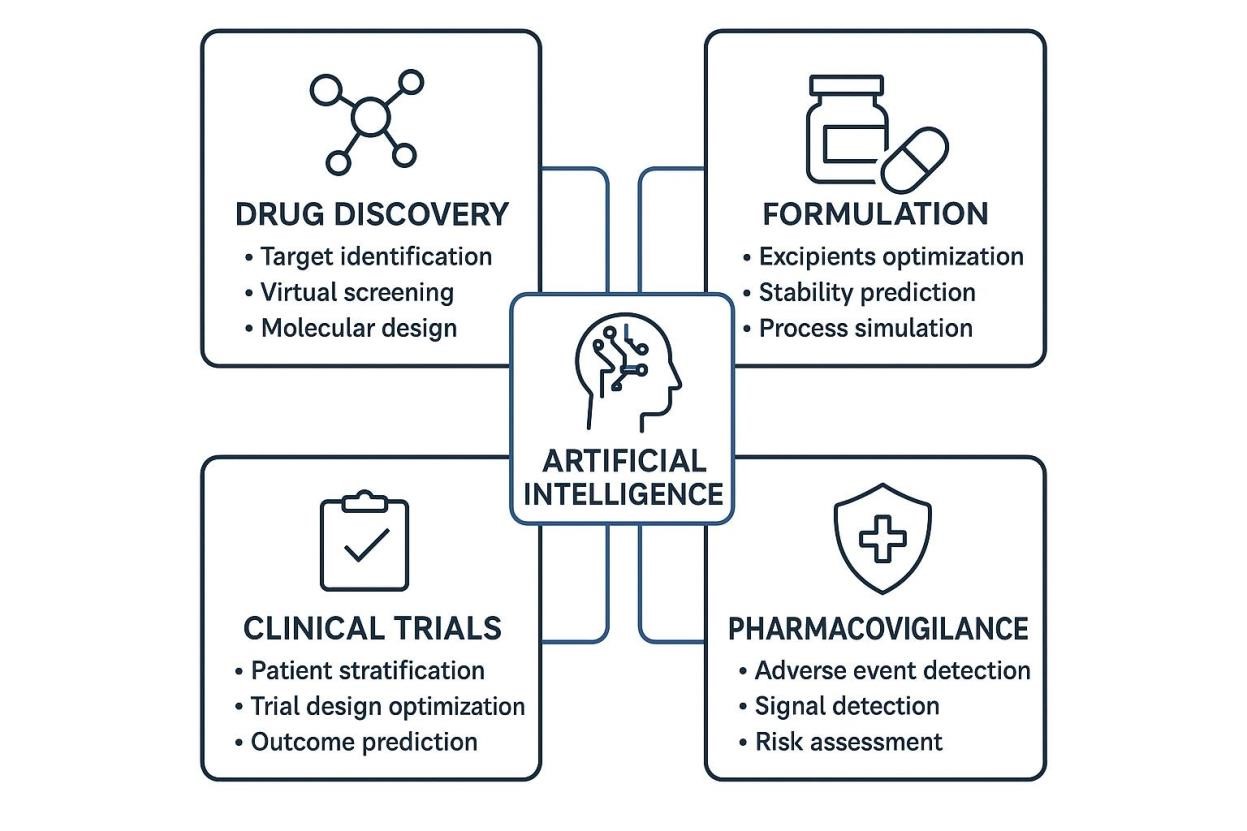
The pharmaceutical industry is undergoing a major technological transformation driven by advancements in Artificial Intelligence (AI). For decades, drug discovery and development have relied on experimental screening, trial-and-error methods, and lengthy preclinical and clinical testing. These conventional approaches often require over 10–15 years and billions of dollars, yet only a small percentage of drug candidates successfully reach the market. The increasing complexity of diseases, demand for personalized therapies, and the need to reduce research costs have further intensified the need for more efficient and intelligent systems. In this context, AI has emerged as a revolutionary tool capable of accelerating each stage of pharmaceutical research through data-driven predictions, automation, and advanced computational modeling. Artificial Intelligence refers to computational systems designed to imitate human intelligence in tasks such as learning, reasoning, pattern recognition, and decision-making. In pharmaceutical research, AI technologies— particularly machine learning (ML), deep learning (DL), natural language processing (NLP), neural networks, and generative algorithms—play a vital role in analyzing large datasets derived from genomics, proteomics, chemical libraries, clinical trials, and real-world evidence. These models can identify hidden patterns, predict molecular properties, and assist researchers in designing safer, more effective therapeutic agents. One of the most transformative applications of AI is in drug discovery, where it enables virtual screening of millions of compounds, prediction of biological activity, molecular docking simulations, de novo drug design, and target identification. AIpowered algorithms significantly reduce the time required to identify lead molecules and optimize their structure, thereby shortening the early stages of drug development. Furthermore, AI enhances ADMET (Absorption, Distribution, Metabolism, Excretion, and Toxicity) prediction, reducing the likelihood of failure during clinical trials. AI also plays a significant role in formulation development, where it is used to optimize excipient selection, predict formulation stability, and simulate process parameters under Quality by Design (QbD) frameworks. The integration of AI in pharmaceutical manufacturing supports real-time monitoring, predictive maintenance, and process optimization, contributing to the rise of Industry 4.0 in the healthcare sector. In the domain of clinical research, AI helps in patient recruitment, trial design, risk monitoring, outcome prediction, and adaptive trial management. The ability of AI systems to process large electronic health records (EHRs) and clinical datasets allows for more accurate identification of biomarkers, patient stratification, and personalized treatment strategies. Another critical area is pharmacovigilance, where AI-driven text mining, NLP, and automated signal detection improve the monitoring of adverse drug reactions (ADRs). AI enhances post-marketing surveillance by analyzing scientific literature, social media posts, medical reports, and global safety databases in real time. Despite its significant potential, the adoption of AI in pharmaceutical research is challenged by issues related to data quality, algorithm transparency, regulatory acceptance, ethical concerns, and the need for skilled professionals capable of integrating AI tools with traditional pharmaceutical science. Ensuring robust and validated datasets is essential for generating reliable models. Moreover, global regulatory bodies such as the FDA and EMA are still evolving guidelines for AIbased drug development tools. Overall, the integration of Artificial Intelligence in pharmaceutical research marks a paradigm shift toward faster, more accurate, and more cost-effective drug development. As AI technologies continue to evolve, they are expected to reshape the future of personalized medicine, disease modeling, drug safety assessment, and therapeutic innovation. This review aims to explore the current advancements, applications, challenges, and future prospects of AI in the pharmaceutical sector, highlighting its transformative potential in global healthcare. The integration of Artificial Intelligence (AI) into pharmaceutical research represents one of the most significant technological advancements of the 21st century. As global healthcare demands continue to rise, pharmaceutical companies face increasing pressure to innovate faster, reduce the cost of drug development, and improve the success rate of new therapeutic agents. Traditional research approaches depend heavily on laboratory experiments, manual data interpretation, and extended trial-and-error cycles. These methods, although scientifically strong, are often slow, resource-intensive, and limited by human capacity to analyze complex datasets. AI offers a transformative solution by enabling high-speed data processing, intelligent prediction, and automated decision-making across every stage of pharmaceutical development AI systems are capable of analyzing vast amounts of chemical, biological, and clinical data generated from modern technologies such as genomics, proteomics, metabolomics, high-throughput screening, and electronic health records. These datasets are often too large and complex for conventional analytical techniques. AI algorithms—especially machine learning, deep learning, neural networks, and generative models—can uncover patterns, correlations, and molecular behaviors that remain hidden using traditional methods. This capability allows researchers to explore chemical space more efficiently, predict drug-target interactions with greater accuracy, and design better drug candidates in significantly shorter timeframes.
Fig 1: Artificial intelligence
A major shift brought by AI Is seen in predictive and computational drug discovery, where AI models estimate biological activity, chemical feasibility, toxicity, solubility, and pharmacokinetic behavior before laboratory testing begins. This reduces the number of experimental trials, eliminates unsuitable molecules earlier, and accelerates the identification of promising drug candidates. Moreover, AI plays a growing role in precision medicine, helping identify patient-specific variations, genetic markers, and personalized therapeutic responses that enhance treatment effectiveness and minimize adverse effects. Within pharmaceutical formulation science, AI supports the optimization of excipient selection, prediction of stability profiles, and simulation of manufacturing conditions. Predictive AI tools help researchers design formulations that are more stable, patient-friendly, and costeffective. Similarly, in manufacturing, AI-driven automation improves process control, reduces variability, and ensures compliance with quality standards through real-time monitoring and predictive maintenance. AI also enhances clinical trial operations by improving patient recruitment, monitoring trial progression, identifying deviations, predicting outcomes, and analyzing real-world evidence. These capabilities help reduce trial failures and improve the reliability of clinical data. In pharmacovigilance, AI tools such as natural language processing (NLP) assist in early detection of adverse drug reactions by analyzing medical literature, safety databases, and patient reports with higher accuracy than manual review. Although AI presents numerous advantages, its widespread adoption faces challenges such as regulatory acceptance, data privacy concerns, the need for high-quality datasets, and ethical considerations. Additionally, interdisciplinary collaboration between computer scientists, pharmacists, clinicians, and regulatory experts is essential to maximize the benefits of AI in this sector.
CORE AI METHODOLOGIES IN PHARMACEUTICAL
RESEARCH:
Machine Learning (ML) : Machine learning is the backbone of AI in pharma. It enables computers to learn from experimental, chemical, and clinical data without explicit programming.
Applications: Predicting drug–target interactions , Screening large chemical libraries ,Predicting ADMET properties , Identifying biomarkers, Disease classification
Common ML Techniques:, Random Forest,Support Vector Machines (SVM),Gradient Boosting,K-Nearest Neighbors
Deep Learning (DL) : Deep learning uses artificial neural networks with multiple layers to analyze extremely complex datasets.
Applications: De novo drug design,Image analysis in pathology,Predicting protein–ligand interactions,Toxicity prediction,Processing molecular structures
Natural Language Processing (NLP) : NLP allows AI to understand and analyze text-based data such as scientific literature, medical records, and clinical reports.
Applications: Pharmacovigilance (ADR detection),Literature mining for drug discovery,Clinical trial report analysis,Extracting drug–disease relationships
Generative AI (GenAI) : Generative models create new molecular structures with desired biological or physicochemical properties.
Applications:,Designing novel drug molecules,Optimizing lead compounds,Predicting chemical reactions
Predictive Modeling & QSAR : Quantitative Structure–Activity Relationship (QSAR) models use AI algorithms to predict biological activity or toxicity based on chemical structure.
Graph-based AI Models : Many pharmaceutical datasets (molecules, proteins, pathways) have a natural graph structure. Graph AI learns from such connections.
Faster Drug Discovery and Development : AI analyzes huge datasets quickly, reducing the time required for identifying targets and potential drug candidates. Virtual screening and predictive modeling replace lengthy laboratory experiments.
Reduced Research and Development Cost : AI minimizes trial-and-error experiments.Reduces cost of failed candidates by predicting toxicity and efficacy early.
Improved Accuracy and Predictive Power : Machine learning models detect patterns not visible to humans.Provides accurate predictions of drug–target interactions, ADMET properties, and toxicity.
Enhanced Formulation Development : AI optimizes polymer concentrations, excipient compatibility, and dissolution profiles.Predicts stability and shelflife more efficiently.
Increased Success Rate of Clinical Trials : AI improves patient recruitment and trial design.Identifies right patient groups and predicts outcomes earlier.
Automated Pharmacovigilance : Detects adverse drug reactions using realworld data (HER, social media).Faster and more accurate than manual monitoring.
Personalized and Precision Medicine : AI analyzes genomics and patient data to create individualized treatment plans.Helps personalize dosing and predict patient-specific drug responses.
Better Manufacturing and Quality Control: AI ensures real-time monitoring of production processes. Uses predictive maintenance to prevent equipment failure.Reduces defects and ensures consistent product quality.
Speed in Decision-Making : AI provides real-time insights for formulation scientists, clinicians, and researchers.Helps in faster decision-making during development and regulatory stages.
Improved Data Management and Analysis : AI efficiently handles massive biomedical, chemical, and clinical datasets.Extracts meaningful insights from unstructured data like scientific papers and reports.
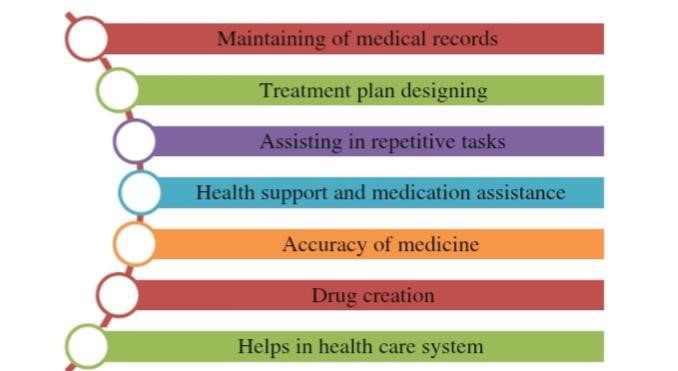
ROLES OF AI IN PHARMACEUTICAL RESEARCH:
Fig 2: Role of AI in pharmaceutical research
Maintaining Medical Records: AI efficiently stores, organizes, and analyzes patient data and medical histories. Helps researchers access accurate clinical information for drug development.
Designing Treatment Plans : AI analyzes patient-specific data to formulate personalized treatment plans.Predicts the most effective therapy based on patient genetics and disease profile.
Assisting in Repetitive Tasks : Automates routine tasks such as data entry, report generation, and laboratory workflows.Reduces human error and improves efficiency in pharmaceutical research.
Health Support and Medication Assistance : AI tools help track medication adherence, offer reminders, and assist in monitoring patient health.Supports clinical trials by collecting real-time patient data.
Improving Accuracy of Medicines : AI enhances drug formulation accuracy by predicting stability, compatibility, and dosage.Helps minimize errors in drug design and ensures high-quality pharmaceutical products.
Drug Creation and Discovery : AI identifies new drug molecules, predicts drug–target interactions, and accelerates lead optimization.Reduces time and cost in discovering safe and effective drugs.
Strengthening the Healthcare System : AI improves decision-making, diagnostics, and disease prediction.Enhances coordination between pharmaceutical research, hospitals, and public health systems.
REGULATORY, ETHICAL, AND PRACTICAL CONSIDERATIONS
Regulatory Considerations : Regulatory bodies like FDA, EMA, and ICH are creating frameworks for AI use in pharmaceuticals.
Algorithm transparency: Developers must explain how the AI model works.
Data integrity: Input datasets must be complete, accurate, and validated.
Model validation: AI predictions must be reproducible and scientifically justified.
Continuous monitoring: AI systems require post-approval monitoring.
GxP (Good Practice) compliance: AI tools used in manufacturing must comply with GMP.
Important Regulatory Documents
FDA’s “Good Machine Learning Practice (GMLP)”
EMA’s AI Reflection Paper (2021)
ICH Q8–Q10 for QbD alignment
ISO/IEC standards for AI model risk assessment
Ethical Considerations : Ethics play a major role in AI adoption due to patient data and automated decisions.
Data privacy and confidentiality : Sensitive patient and genomic data must be protected.
Bias in AI model : Uneven datasets may lead to incorrect clinical predictions.
Algorithm accountability : Who is responsible if AI makes an incorrect decision
Informed consent : Patients must know their data is used for AI-driven research.
Transparency and explainability : Clinicians must understand how AI reaches conclusions.
Practical Considerations : While AI provides major benefits, practical challenges exist in real-world implementation.
High-quality data availability : AI models need clean, diverse, and large datasets.
Interdisciplinary skill gap : Pharma scientists need training in data science and AI tools.
Integration with existing systems : AI must work with laboratory information systems (LIMS), EHRs, and manufacturing systems.
Cost of technology adoption : High initial investment in computing power and software.
Model updating and maintenance : AI models must be retrained as new data becomes available.
Risk of over-reliance on algorithms : Human validation remains essential in critical decisions.
CHALLENGES AND LIMITATIONS OF AI IN PHARMACEUTICAL RESEARCH
Requires large and high-quality datasets
Data privacy and security concerns
Lack of transparency in AI models (black-box issue)
Limited regulatory guidelines and standards
High cost of implementation and maintenance
Need for skilled and trained AI professionals
Risk of algorithmic bias in datasets and predictions
Difficulty integrating AI with existing laboratory systems
Ethical concerns regarding patient data usage
Limited generalization of AI models across different populations
Reproducibility issues in AI predictions
Overdependence on technology reducing human validation
Incomplete biological knowledge limiting AI accuracy
High computational power required
Resistance to adoption within the pharmaceutical industry
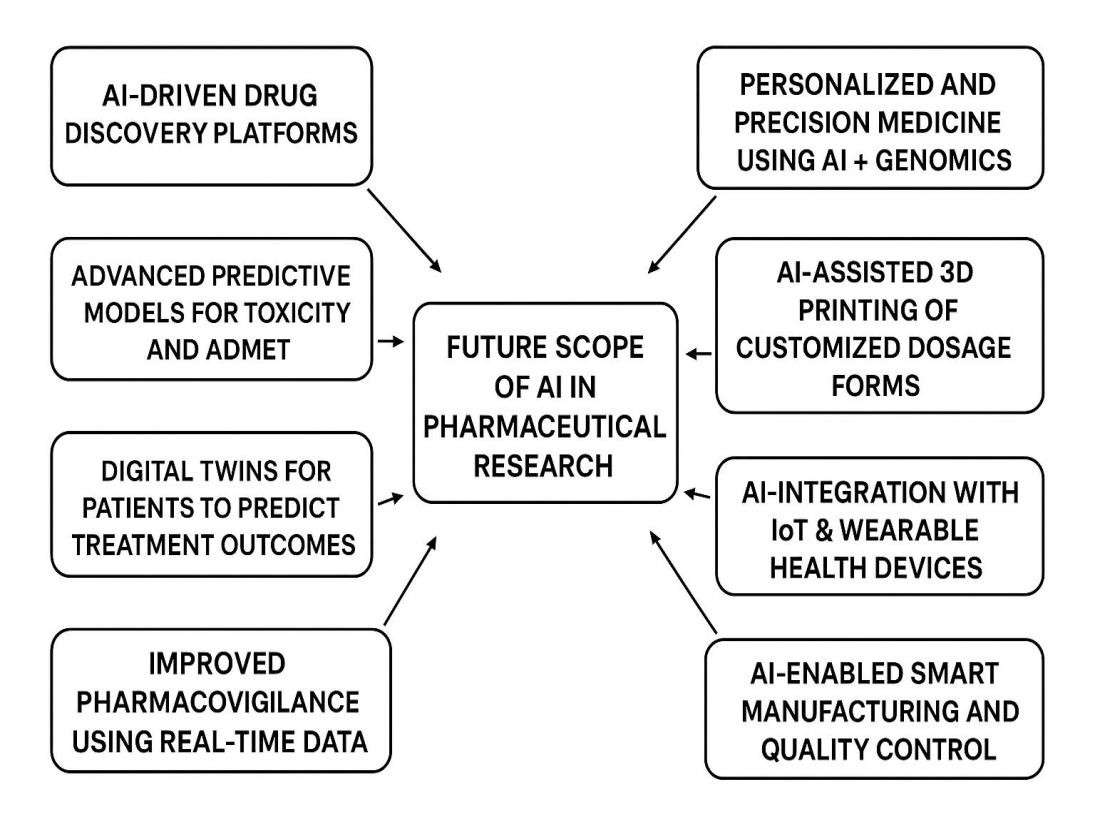
FUTURE SCOPE OF AI IN PHARMACEUTICAL RESEARCH
Fig 3: Future Scopus of AI in pharmaceutical Research
CONCLUSION
Artificial intelligence is transforming pharmaceutical research by enabling faster, smarter, and more accurate scientific decision-making across the entire drug development pipeline. From target identification and virtual screening to formulation design, clinical trials, and pharmacovigilance, AI significantly reduces time, cost, and failure rates. Its ability to analyze large datasets, predict outcomes, and automate complex processes has made it an essential tool for modern drug discovery and development. Although challenges such as data privacy, algorithmic bias, and regulatory limitations still exist, ongoing advancements in machine learning, deep learning, and big data analytics continue to strengthen AI’s role. With continuous improvements, AI will pave the way for personalized medicine, autonomous laboratories, and highly efficient pharmaceutical systems. Overall, AI holds immense potential to revolutionize the pharmaceutical industry, making drug development more precise, faster, and more cost-effective than ever before.
REFERENCES
Vamathevan, J., et al. “Applications of machine learning in drug discovery and development.” Nature Reviews Drug Discovery (2019).
Chen, H., et al. “The rise of deep learning in drug discovery.” Drug Discovery Today (2018)
Mak, K.-K., & Pichika, M.R. “Artificial intelligence in drug development:
Present status and future prospects.” Drug Discovery Today (2019).
Schneider, G. “Automating drug discovery.” Nature Reviews Drug Discovery (2018).
Segler, M.H.S., et al. “Planning chemical syntheses with deep neural networks.” Nature (2018).
Ekins, S. “The next era: Deep learning in pharmaceutical research.” Clinical Pharmacology & Therapeutics (2016).
Jiménez-Luna, J., et al. “Artificial intelligence in drug discovery: recent advances and future perspectives.” Nature Machine Intelligence (2021).
Zhavoronkov, A., et al. “Deep learning enables rapid identification of potent DDR1 kinase inhibitors.” Nature Biotechnology (2019).
Mullard, A. “Machine learning brings drug discovery into the age of AI.” Nature Reviews Drug Discovery (2018).
Yang, X., et al. “Review on artificial intelligence in drug discovery.” Frontiers in Pharmacology (2019).
Brown, N., et al. “Artificial intelligence in medicinal chemistry.” Journal of Medicinal Chemistry (2020).
Hughes, J.P., et al. “Principles of early drug discovery.” British Journal of Pharmacology (2011).
Paul, S.M., et al. “How to improve R&D productivity: the pharmaceutical industry’s challenge.” Drug Discovery Today (2010).
Bender, A., & Cortés-Ciriano, I. “Artificial intelligence in drug discovery:
what is realistic, what are illusions?” EMBO Reports (2021).
Topol, E.J. “High-performance medicine: the convergence of human and artificial intelligence.” Nature Medicine (2019).
Goh, G.B., et al. “Deep learning for computational chemistry.” Journal of Chemical Information and Modeling (2017).
Walters, W.P., & Murcko, M.A. “Assessing the impact of generative AI on medicinal chemistry.” Journal of Chemical Information and Modeling (2020).
Rayan, A. “Computational modeling and machine learning in drug discovery.” Pharmaceutical Research (2020).
Gupta, R., & Srivastava, D. “Artificial intelligence-based approaches for drug discovery.” Biomedicine & Pharmacotherapy (2021).
FDA. “Artificial Intelligence and Machine Learning in Drug Development.”
U.S. Food and Drug Administration Guidelines (2023).
Chen, H., Engkvist, O., Wang, Y., Olivecrona, M., & Blaschke, T. (2018). The rise of deep learning in drug discovery. Drug Discovery Today, 23(6), 1241– 1250.
Vamathevan, J., Clark, D., Czodrowski, P., et al. (2019). Applications of machine learning in drug discovery and development. Nature Reviews Drug Discovery, 18(6), 463–477.
Swainston, N., Baici, A., et al. (2020). Deep learning for predicting drugtarget interactions. Bioinformatics, 36(3), 817–824.
Jiménez-Luna, J., Grisoni, F., & Schneider, G. (2021). Drug discovery with explainable AI. Nature Machine Intelligence, 3(4), 252–260.
Ekins, S., Minton, D., & Clark, A. (2019). AI in clinical pharmacology.
Zhavoronkov, A. (2020). AI for drug discovery, biomarker development, and clinical trials. Trends in Pharmacological Sciences, 41(6), 308–318.
Schneider, P., Walters, W.P., & Plowright, A.T. (2020). Rethinking drug design in the era of artificial intelligence. Nature Reviews Drug Discovery, 19(5), 353–364.
Choi, E., Schuetz, A., Stewart, W.F., & Sun, J. (2016). Using recurrent neural networks for early detection of heart failure. Journal of the American Medical Informatics Association, 24(2), 361–370.
Mak, K.-K., & Pichika, M.R. (2019). Artificial intelligence in drug development: present and future. AAPS PharmSciTech, 20(3), 1–12.
Waring, M.J., Arrowsmith, J., et al. (2015). Industry survey of challenges and opportunities in drug discovery. Nature Reviews Drug Discovery, 14(7), 475– 486.
Reference
Vamathevan, J., et al. “Applications of machine learning in drug discovery and development.” Nature Reviews Drug Discovery (2019).
Chen, H., et al. “The rise of deep learning in drug discovery.” Drug Discovery Today (2018)
Mak, K.-K., & Pichika, M.R. “Artificial intelligence in drug development:
Present status and future prospects.” Drug Discovery Today (2019).
Schneider, G. “Automating drug discovery.” Nature Reviews Drug Discovery (2018).
Segler, M.H.S., et al. “Planning chemical syntheses with deep neural networks.” Nature (2018).
Ekins, S. “The next era: Deep learning in pharmaceutical research.” Clinical Pharmacology & Therapeutics (2016).
Jiménez-Luna, J., et al. “Artificial intelligence in drug discovery: recent advances and future perspectives.” Nature Machine Intelligence (2021).
Zhavoronkov, A., et al. “Deep learning enables rapid identification of potent DDR1 kinase inhibitors.” Nature Biotechnology (2019).
Mullard, A. “Machine learning brings drug discovery into the age of AI.” Nature Reviews Drug Discovery (2018).
Yang, X., et al. “Review on artificial intelligence in drug discovery.” Frontiers in Pharmacology (2019).
Brown, N., et al. “Artificial intelligence in medicinal chemistry.” Journal of Medicinal Chemistry (2020).
Hughes, J.P., et al. “Principles of early drug discovery.” British Journal of Pharmacology (2011).
Paul, S.M., et al. “How to improve R&D productivity: the pharmaceutical industry’s challenge.” Drug Discovery Today (2010).
Bender, A., & Cortés-Ciriano, I. “Artificial intelligence in drug discovery:
what is realistic, what are illusions?” EMBO Reports (2021).
Topol, E.J. “High-performance medicine: the convergence of human and artificial intelligence.” Nature Medicine (2019).
Goh, G.B., et al. “Deep learning for computational chemistry.” Journal of Chemical Information and Modeling (2017).
Walters, W.P., & Murcko, M.A. “Assessing the impact of generative AI on medicinal chemistry.” Journal of Chemical Information and Modeling (2020).
Rayan, A. “Computational modeling and machine learning in drug discovery.” Pharmaceutical Research (2020).
Gupta, R., & Srivastava, D. “Artificial intelligence-based approaches for drug discovery.” Biomedicine & Pharmacotherapy (2021).
FDA. “Artificial Intelligence and Machine Learning in Drug Development.”
U.S. Food and Drug Administration Guidelines (2023).
Chen, H., Engkvist, O., Wang, Y., Olivecrona, M., & Blaschke, T. (2018). The rise of deep learning in drug discovery. Drug Discovery Today, 23(6), 1241– 1250.
Vamathevan, J., Clark, D., Czodrowski, P., et al. (2019). Applications of machine learning in drug discovery and development. Nature Reviews Drug Discovery, 18(6), 463–477.
Swainston, N., Baici, A., et al. (2020). Deep learning for predicting drugtarget interactions. Bioinformatics, 36(3), 817–824.
Jiménez-Luna, J., Grisoni, F., & Schneider, G. (2021). Drug discovery with explainable AI. Nature Machine Intelligence, 3(4), 252–260.
Ekins, S., Minton, D., & Clark, A. (2019). AI in clinical pharmacology.
Zhavoronkov, A. (2020). AI for drug discovery, biomarker development, and clinical trials. Trends in Pharmacological Sciences, 41(6), 308–318.
Schneider, P., Walters, W.P., & Plowright, A.T. (2020). Rethinking drug design in the era of artificial intelligence. Nature Reviews Drug Discovery, 19(5), 353–364.
Choi, E., Schuetz, A., Stewart, W.F., & Sun, J. (2016). Using recurrent neural networks for early detection of heart failure. Journal of the American Medical Informatics Association, 24(2), 361–370.
Mak, K.-K., & Pichika, M.R. (2019). Artificial intelligence in drug development: present and future. AAPS PharmSciTech, 20(3), 1–12.
Waring, M.J., Arrowsmith, J., et al. (2015). Industry survey of challenges and opportunities in drug discovery. Nature Reviews Drug Discovery, 14(7), 475– 486.
Yash Borse*, Ayush sawant, Dr. Moreshwar Patil, Dr. Sanjay Kshirsagar, Role of Artificial Intelligence in Pharmaceutical Research, Int. J. of Pharm. Sci., 2026, Vol 4, Issue 2, 913-923. https://doi.org/ 10.5281/zenodo.18508856



 10.5281/zenodo.18508856