

We use cookies to ensure our website works properly and to personalise your experience. Cookies policy
1CRAV scholar, Sitaram Ayurveda P Ltd, Thrissur.
2Research officer, R&D department, Sitaram Ayurveda P Ltd, Thrissur.
3,4Botanist, Sitaram Ayurveda P Ltd, Thrissur.
5CRAV Guru, Sitaram Ayurveda P Ltd, Thrissur.
Ayurveda, derived from Ayu (life) and Veda (knowledge), emphasizes holistic well-being through balancing the three do?as—Vata, Pitta, and Kapha—using formulations like Kashayas (herbal decoctions), which are rapidly absorbed and therapeutically potent. Among them, Pathyakshadhatryadi Kashaya, a classical formulation indicated in headaches, eye, and dental disorders, demonstrates significant potential, highlighting the importance of standardization to ensure consistent quality, safety, and efficacy. Materials and Methods: Pathyakshadhatryadi Kashaya was prepared as per classical guidelines using authenticated raw materials, and evaluated through organoleptic, physicochemical, phytochemical, and TLC fingerprinting analyses to ensure quality, purity, and standardization. Result and Discussion: Organoleptic, physicochemical, phytochemical, and TLC analyses confirmed the quality, purity, and stability of Pathyakshadhatryadi Kashaya, revealing a rich profile of bioactive compounds like flavonoids, tannins, alkaloids, and saponins that support its therapeutic actions. The formulation demonstrated properties aligned with classical Ayurvedic attributes, balancing Kapha and Pitta while alleviating pain, inflammation, and ocular or dental disorders. These findings validate its traditional use and highlight its clinical potential in managing headaches and related conditions. Conclusion: Pathyakshadhatryadi Kashaya is a standardized, polyherbal Ayurvedic formulation rich in bioactive metabolites that collectively provide analgesic, anti-inflammatory, antioxidant, and antimicrobial effects, validating its traditional use in managing headaches, ocular disorders, and dental pain.
Ayurveda the word derived from the two words such as Ayu and veda which means the study of Ayus. Ayurveda deals with not only the diseases and its treatments but also it deals with the things that we have to observe to live a healthy life. In the realm of Ayurveda, health and disease are understood through the balance or imbalance of the three doshas—Vata, Pitta, and Kapha.1 Treatments are rooted in harmonizing these three doshas using various herbal formulations, among which Kashayas (herbal decoctions) have a special role. Kashayas are known for their rapid absorption and potent therapeutic action, these are traditionally used to manage a wide range of acute and chronic ailments.2 Pathyakshadhathryadi Kashaya, a classical Ayurvedic decoction widely used in the treatment of head, eye, and dental disorders especially in case of inflammatory and degenerative conditions. Kashaya is the Ayurvedic concept of a medicinal decoction prepared by boiling herbs in water and reducing the liquid to a specific concentration. By gently heating herbs in water, it effectively isolates water-soluble active constituents, delivering them in highly bioavailable form for rapid onset and strong therapeutic action. Chronic headaches—typically defined as experiencing headache on 15 or more days per month—affect approximately 4 – 5% of the global population, encompassing chronic forms of tension-type headache and migraine. These conditions contribute significantly to disability worldwide. One comprehensive review covering data up to 2020 reported that 4.6% of individuals globally suffer from headaches on at least 15 days per months.3 In India, a population-based study in Karnataka State found similar patterns: 3.0% of adults experienced headaches on 15 or more days per month, and 1.2% had probable medication-overuse headache—both associated with substantial impairment and loss of productivity4. Pathyakshadhatryadi kashaya, a classical Ayurvedic decoction cited in the S?ra?gadhara Sa?hit?,5 is traditionally recommended for alleviating headaches—especially migraines, tension headaches, sinus headaches, and pain in the temporal and occipital regions. It is renowned for balancing the three do?as (Vata, Pitta and Kapha) in the head (Uttam??ga), particularly by soothing the deranged V?ta (Pr??a, Ud?na, Vy?na, Sam?na, and Ap?nav?tas) and pacifying Pitta, contributing to a calming and cooling effect. Additionally, the formula supports the health and function of sensory organs—eyes, ears, nose, and throat—enhancing vision and protecting against Kapha- and Pitta-induced disorders. Its ingredients are known for their cooling nature, anti-inflammatory, and antioxidant properties, which help reduce oxidative stress and impede inflammatory pathways. This herbal formulation is particularly beneficial in managing conditions such as headaches of varied aetiologies, pain in the forehead and temples, migraines, post-tooth-extraction pain and eye diseases like night blindness, Pannus, corneal ulcers and pain in the eyes are the indications. Standardization of classical Kashayas is vital to ensure their quality, safety, and therapeutic consistency. Without standardization, different batches—or the same formulation produced by different manufacturers—often display marked variations in sensorial, physicochemical, chromatographic, and biological properties, undermining efficacy and eroding user trust6. Establishing robust standards for raw materials, processing methods, and finished products—drawing upon tools like chemical and bio-active markers, chromatographic fingerprints (TLC), and stringent quality control protocols—is critical for preserving the pharmacological integrity of Kashayas and maintaining consistent therapeutic outcomes. Additionally, standardized formulations help mitigate risks such as contamination, adulteration, improper purification, or deviations from classical procedures—concerns amplified by commercial-scale production and variability in classical textual instructions. Through standardization, classical Kashayas can achieve reproducible efficacy, global credibility, and secure a stronger position in both traditional practice and modern healthcare environments.
1. MATERIALS AND METHODS:
1.1 Collection of Raw material
The ingredients of Pathyakshadatrayadi Kashaya were identified and authenticated by the Pharmacognosy Division at Sitaram Ayurveda Pvt. Ltd., Thrissur. Based on their respective specimen numbers, the raw materials were subsequently stored in the Quality Control Division of the same institution for future reference. A detailed list of the ingredients and the specific parts used in the preparation of the Kashayais provided in Table 1.
1.2 Preparation of Kashayam:
Pathyakshadatrayadi Kashaya was prepared in accordance with the ratio specified in Table 1 at the manufacturing unit of Sitaram Ayurveda Pvt. Ltd. All herbal ingredients were thoroughly cleaned, dried, and cut into small pieces. A total of 48 grams (equivalent to one pala) of the crushed herbs was combined with 768 ml of water (16 parts) and placed in an earthen vessel over a low flame. The mixture was simmered until the volume reduced to 96 ml, which is one-eighth of the original amount.
Table 1: Ingredients of Pathyakshadhatryadi Kashayam
|
Sl.No |
Sanskrit Name |
Botanical Name |
Part Used |
Quantity |
|
1 |
Vibheethaki |
Terminalia bellerica |
Fruit rind |
1 part |
|
2 |
Hareethaki |
Terminalia chebula |
Fruit rind |
1 part |
|
3 |
Amalaki |
Emblicaofficinalis |
Fruit rind |
1 part |
|
4 |
Bhunimba |
Andrographispaniculata |
Whole plant |
1 part |
|
5 |
Nisa |
Curcuma longa |
Rhizome |
1 part |
|
6 |
Nimba |
Azadirachtaindica |
Stem bark |
1 part |
|
7 |
Amritha |
Tinosporacordifolia |
Stem |
1 part |
Organoleptic assessment provided preliminary insight into the authenticity of the Kashaya, focusing on Ayurvedic criteria like colour, smell, and taste and the physicochemical tests such as PH, Specific gravity and Total soluble solids were evaluated. Physicochemical analysis of each raw materials including Total Ash and extractive value tests, was performed as per the Ayurvedic Pharmacopoeia of India to ensure quality and purity. These evaluations help confirm the safety and efficacy of the formulation.7
1.4. Preliminary Phytochemical Analysis
Pathyakshadatryadi Kashaya was screened for the presence or absence of various primary phytochemical components such as carbohydrates, sugars, reducing sugars, ketoses, amino acids, proteins, starch, quinones, glycosides, flavonoids, phenols, saponins, alkaloids, tannins, and coumarins.8
1.5. Thin Layer Chromatography (TLC) Fingerprint Analysis9
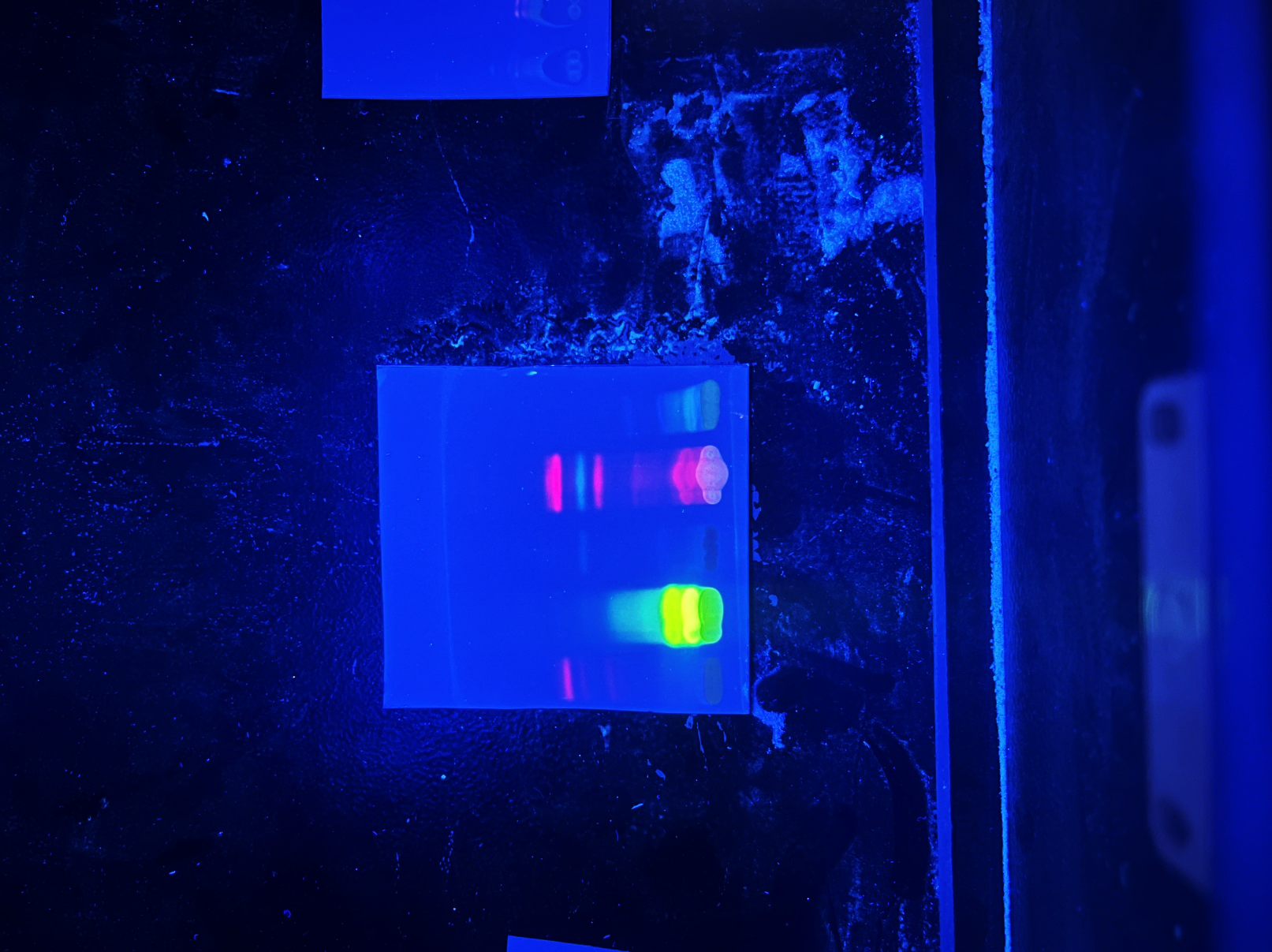
Thin Layer Chromatography (TLC) fingerprinting was performed to isolate and identify the active constituents of Pathyakshadatrayadi Kashaya. For this, 20 ml of the Kashaya was refluxed with 40 ml of methanol for one hour, then filtered and evaporated. The resulting residue was re-dissolved in 1 ml of methanol and applied to silica gel-coated glass plates. Similarly, methanolic extracts of each individual raw ingredient were prepared using the same method. The TLC plate was developed using a mobile phase of Toluene and Ethyl Acetate in a 9:1 ratio, and the chemical profiles were visualized and compared under UV light at wavelengths of 254 nm and 366 nm.
2.RESULTS AND DISCUSSION
2.1 Organoleptic and Physicochemical Assessment of Kashaya and Raw materials
The organoleptic and physicochemical characteristics of Pathyakshadhatryadi Kashaya provide insights into its quality and therapeutic potential which is presented in table no 2.
Table 2: Organoleptic analysis of Pathyakshadatryadi Kashaya.
|
Parameter |
Result |
|
Colour |
Dark Brown |
|
Odour |
Characteristic |
|
Taste |
Bitter, Astringent |
Table 3: Physicochemical analysis of Raw materials
|
Sl. No |
Botanical Name |
Total Ash (%) |
Acid insoluble Ash (%) |
Water soluble extractive (%) |
Alcohol soluble extractive (%) |
|
1 |
Terminalia bellirica |
3.21 |
1.23 |
52.64 |
10.32 |
|
2 |
Terminalia chebula |
2.62 |
0.91 |
53.60 |
42.32 |
|
3 |
Emblica officinalis |
3.23 |
1.96 |
54.25 |
43.21 |
|
4 |
Andrographis paniculata |
8.23 |
0.5 |
12.36 |
24.25 |
|
5 |
Curcuma longa |
7.21 |
1.25 |
14.21 |
2.24 |
|
6 |
Azadirachta indica |
5.36 |
1.62 |
10.25 |
6.39 |
|
7 |
Tinospora cordifolia |
10.23 |
2.26 |
14.56 |
4.23 |
Physicochemical analysis is essential for ensuring the quality, purity, and identity of raw materials used in Ayurvedic formulations. In this study, the parameters evaluated were Total Ash, Acid Insoluble Ash, Water Soluble Extractive, and Alcohol Soluble Extractive for each ingredient used in Pathyakshadhatryadi Kashaya. Table no 3 shows the values were found to be within in-house specification limits, confirming the acceptable quality of the raw drugs. The total ash content ranged from 2.62% (Terminalia chebula) to 10.23% (Tinospora cordifolia), reflecting the varying levels of inorganic content or natural mineral residues. The acid insoluble ash values, which indicate the presence of siliceous matter like sand or soil, were lowest in Andrographis paniculata (0.5%) and highest in Tinospora cordifolia (2.26%), yet remained within acceptable limits, indicating minimal contamination. The water extractive values reflect the presence of polar compounds like glycosides, sugars, and tannins. The highest values were seen in Emblica officinalis (54.25%), Terminalia chebula (53.60%), and Terminalia bellirica (52.64%), aligning with their known richness in hydrophilic constituents like tannins and vitamin C derivatives. This also supports their strong contribution to the therapeutic potency of the formulation in aqueous preparations like kashayas. Alcohol Soluble Extractives indicate the presence of moderately polar to non-polar compounds such as alkaloids, flavonoids, and essential oils. Emblica officinalis (43.21%) and Terminalia chebula (42.32%) showed high alcohol solubility, reflecting their abundance in bioactive secondary metabolites. Conversely, Curcuma longa (2.24%) and Tinospora cordifolia (4.23%) had lower values, possibly due to a lower concentration of alcohol-soluble constituents.
Table 4: Results of Physicochemical Analysis of Pathyakshadatryadi Kashaya.
|
Parameter |
Result |
|
pH |
3.6 |
|
TSS |
5.6 |
|
SG |
1.018 |
The physicochemical analysis of Pathyakshadatrayadi Kashaya offers key insights into its stability, potency, and therapeutic value. The acidic pH of 3.6 indicates the presence of phenolic compounds, tannins, and organic acids, which contribute antioxidant, anti-inflammatory, and antimicrobial properties. This low pH also supports microbial stability, enhancing shelf life. The bitter-astringent taste aligns with Ayurvedic descriptions and is attributed to tannins and alkaloids, known for their hepatoprotective, anti-diarrheal, and anti-inflammatory effects.10 A specific gravity of 1.018 suggests a concentrated extract with a high content of active plant constituents, ensuring dosage consistency and potency. The total soluble solids (TSS) value of 5.6 indicates a substantial amount of extractable, water-soluble phytochemicals like glycosides and organic acids, aiding in effective systemic absorption. Together, these parameters confirm that Pathyakshadatrayadi Kashaya is a well-standardized formulation with significant therapeutic potential, supporting both its traditional use and its relevance in modern Ayurvedic clinical practice.Overall, the analysis confirms that all the raw materials used comply with in-house quality standards. The variation in extractive values and ash contents across ingredients reflects their unique phytochemical profiles and contributes to the polyherbal synergy in Pathyakshadhatryadi Kashayam. This baseline quality assessment ensures that the formulation is composed of pharmacologically potent and uncontaminated herbal ingredients, aligning with classical Ayurvedic standards.
2.2 Phytochemical Profile
The phytochemical analysis reveals a rich presence of secondary metabolites, which helps the formulation’s pharmacological actions.
Table 4: Phytochemical Constituents of Pathyakshadatryadi Kashaya
|
Sl. No |
Constituent |
Present/Absent |
|
1 |
Carbohydrate |
+ |
|
2 |
Sugar |
+ |
|
3 |
Reducing Sugar |
+ |
|
4 |
Ketose |
+ |
|
5 |
Coumarin |
+ |
|
6 |
Tannins |
+ |
|
7 |
Flavonoids |
+ |
|
8 |
Saponins |
+ |
|
9 |
Glycosides |
+ |
|
10 |
Alkaloids |
+ |
|
11 |
Starch |
+ |
|
12 |
Amino Acid |
- |
|
13 |
Protein |
- |
|
14 |
Phenol |
- |
|
15 |
Quinone |
- |
|
16 |
Steroid |
- |
|
17 |
Terpenoid |
- |
The phytochemical analysis of Pathyakshadatrayadi Kashaya reveals a rich profile of bioactive compounds that support its traditional use in managing disorders of the head, eyes, and oral cavity. The formulation contains flavonoids, saponins, alkaloids, tannins, coumarins, glycosides, carbohydrates, reducing sugars, ketoses, and starch, while amino acids, proteins, phenols, quinones, steroids, and terpenoids were absent. Flavonoids, tannins, and coumarins contribute significantly to the formulation’s analgesic, anti-inflammatory, and antioxidant activities. These compounds help reduce oxidative stress and inflammation, which are key factors in headaches and ocular conditions11. Saponins and alkaloids offer antimicrobial, immune-modulatory, and anti-inflammatory effects, with alkaloids also aiding in pain relief, particularly in dental and neuralgic disorders.12. The presence of glycosides indicates potential adaptogenic and cardiotonic properties, while coumarins support microcirculation and help alleviate vascular-related headaches13. Reducing sugars and starch may enhance the bioavailability of these active constituents. The absence of primary metabolites like proteins and amino acids suggests that the formulation’s therapeutic efficacy is primarily due to secondary plant metabolites. In summary, the identified phytochemicals validate the traditional claims of Pathyakshadatrayadi Kashaya in treating inflammation, pain, infections, and degenerative issues of the sensory organs, aligning with classical Ayurvedic principles.
2.3 Thin layer Chromatography
|

|
|
Under 366nm |
Figure 1: TLC of Pathyakshadatryadi kashayam; A, B, C, D, T: Pathyakshadatrayadi kashayam
|
No |
Samples |
Rf Values (366 nm) |
|
1 |
A |
0.26,0.38,0.43 |
|
2 |
B |
0.08,0.13,0.25 |
|
3 |
C |
0.28,0.4 |
|
4 |
D |
0.13,0.27,0.35,0.46,05 |
|
6 |
T |
0.08,0.13,0.28 |
Thin Layer Chromatography (TLC) analysis at 366 nm was performed to compare the phytochemical profiles of Pathyakshadhatryadi Kashaya (T) and its constituent such as Triphala, Haridra, Nimbhatwak, and Kiratathiktha. The Rf values observed provide insights into the contribution of each ingredient and the potential transformations during the decoction process. The formulation exhibited Rf values at 0.08, 0.13, and 0.28. Haridra showed bands at 0.08, 0.13, and 0.25, of which 0.08 and 0.13 are also present in T, indicating a clear phytochemical contribution and good stability of its fluorescent compounds, likely curcuminoids. Kairathathiktha showed multiple bands: 0.13, 0.27, 0.35, 0.46, and 0.50. The 0.13 band overlaps with T, suggesting a contribution of Kairathathiktha-derived constituents. Other bands unique to D may have been altered, degraded, or masked in the complex matrix of the formulation. Nimbha twak had bands at 0.28 and 0.40, with 0.28 also present in T. This confirms the presence of phytochemicals of the Nimbha twak in the final formulation. Triphala showed Rf values at 0.26, 0.38, and 0.43, none of which appear in T. The shared bands in PathyakshadatryadiKashaya0.08 ,0.13 and 0.28 reflect a combined contribution of Haridra, Nimbha twak, and Kiratathiktha to the final formulation. The absence of bands from Triphala suggests potential chemical changes or limitations in TLC detection at this wavelength. Overall, the TLC profile highlights a synergistic integration of phytochemicals, with clear input from B, C, and D. The process of decoction appears to influence phytochemical stability and visibility, aligning with traditional Ayurvedic views that therapeutic efficacy arises not only from the herbs themselves but also from their preparation method.
2.4 Mode of Action in ayurveda
Pathyakshadhatryadi Kashaya predominantly possesses laghu (light) and rooksha (dry) gunas, ushna veerya (hot potency), and madhuravipaka (sweet post-digestive effect). These attributes align with Agni (fire) and Vayu (air) elements, facilitating its Oordhwagama (upward movement) to target the head (Uthamanga). According to the Ayurvedic principle, “Dravya moordhwagamam thathraprayo agni pavanothkatam,” the formulation effectively reaches the head to address Kapha-Pitta predominant disorders. Table no 6 gives the overall rasadi panchaka of the Pathyakshadhatryadi kashaya. The most of the ingredients are having the Thiktha kashaya in rasa, Laghu ruksha guna, Ushna veerya and Madhura vipaka in general. The laghu and rooksha gunas of kashaya reduce, while Madhur vipaka mitigates Pitta, making it ideal for Kapha-Pitta predominant conditions like headaches, ocular, and dental disorders. Triphala supports Vata balance, enhancing the formulation’s efficacy in pain management. The herbs collectively harmonize Kapha and Pitta, addressing the root causes of Sirasoola, Nethraroga, and Dantharoga.
Table no: 6 Rasadi panchaka of the Pathyakshadhatryadi kashaya ingredients
|
Sl. No. |
Name of the ingredient |
Rasa |
Guna |
Veerya |
Vipaka |
Doshakarma |
|
|
Vibheethaki |
Kashaya |
Ruksha, laghu |
Ushna
|
Madhura
|
Tridoshashamana |
|
|
Hareethaki |
Kashaya, madhura, amla, katu, thikta |
Laghu,ruksha
|
Ushna
|
Madhura
|
Tridoshashamana
|
|
|
Amalaki |
Amlapradhana, madhura, thikta, katu, kashaya |
Ruksha, Laghu, Sara
|
Seetha
|
Madhura
|
Vatapittakapha hara
|
|
|
Bhunimba |
Tikta, |
Laghu, Ruksha, |
Ushna, |
Katu, |
Kaphapitta shamaka |
|
|
Nisa |
Thiktakatu |
Laghu, ruksha |
Ushna
|
Katu
|
Kaphapitta shamaka |
|
|
Nimba |
Thikta, kashaya |
Laghu, ruksha |
Seeta
|
Katu
|
Pittakapha shamana |
|
|
Amritha |
Thikta, kashaya |
Snigdhs,guru
|
Ushna
|
Madhura
|
Tridosha shamaka |
2.5 Clinical Applications
Pathyakshadhatryadi Kashaya is indicated for alleviates pain in the forehead, temporal region, and migraines due to its analgesic and anti-inflammatory properties.Improves eyesight and manages eye diseases by reducing Pitta aggravation and inflammation.Effective in pain associated with tooth extraction or infections, leveraging its antimicrobial and analgesic effects.The formulation is ideally consumed at night, adhering to Oushadha kala (therapeutic timing) for oordhwajathrugatharoga (disorders above the neck).14
CONCLUSION
Pathyakshadhatryadi Kashaya is a scientifically validated Ayurvedic formulation for managing headaches, ocular disorders, and dental pain. Its seven herbal ingredients, characterized by laghu rooksha guna, ushna veerya, and madhura vipaka, effectively balance Kapha and Pitta doshas. The presence of flavonoids, saponins, alkaloids, tannins, and coumarins underpins its analgesic, anti-inflammatory, antioxidant, and antimicrobial properties. As a polyherbal decoction, it offers a holistic approach to treating pain and inflammation in the head, eyes, and teeth. From a pharmacological perspective, Pathyakshadhathryadi Kashaya is rich in secondary metabolites such as flavonoids, saponins, alkaloids, tannins, and coumarins, each contributing to its analgesic, anti-inflammatory, antioxidant, antimicrobial, and immunomodulatory properties. These compounds enhance the formulation’s effectiveness in relieving pain—whether due to inflammation, degeneration, or infection—making it a holistic solution for managing pain and dysfunction in the head and sensory organs.
ACKNOWLEDGMENTS
Dr. Vignesh Devaraj (Technical Director), and Smt. Janani Ramanathan (Director) of Sitaram Ayurveda Pvt. Ltd. for their unwavering support and encouragement. We also extend our gratitude to Mr. Sandeep V. R. (Chief General Manager – Unit Head) for the supports and Dr. Adithya Panicker (AGM- Marketing and Innovations) for his continuous motivations and suggestions.
REFERENCES

Devisree C., Anu Joy*, Smitha Francis, Greeshma K. M., D. Ramanathan, Standardization and Pharmacological Insights of Pathyakshadhatryadi Kashaya: An Ayurvedic Polyherbal Formulation for Headache and Associated Disorders, Int. J. of Pharm. Sci., 2025, Vol 3, Issue 9, 2587-2595 https://doi.org/10.5281/zenodo.17182148
 10.5281/zenodo.17182148