
Smt. B.N.B. Swaminarayan Pharmacy College, Salvav-Vapi
Counterfeit medicines are a serious problem in many developing countries, including India. These fake drugs can harm patients, reduce the effectiveness of treatment, and create big risks for public health and the economy. Detecting counterfeit drugs quickly and accurately is very important. Fourier Transform Infrared (FTIR) spectroscopy is a scientific method that helps in this process. It works by shining infrared light on a drug sample and measuring how the light is absorbed. Each genuine medicine has its own “molecular fingerprint,” which helps identify it easily. FTIR is a fast, simple, and non-destructive technique that needs little or no sample preparation. It can analyze both the chemical makeup of a drug and its packaging. When combined with data analysis methods (chemometrics), FTIR becomes even more powerful, making it possible to tell genuine and fake medicines apart with high accuracy. This method has been successfully used in studies to detect counterfeit paracetamol and other drugs. The main benefit of FTIR spectroscopy is that it allows on-the-spot testing without sending samples to big laboratories, which is especially useful in low-resource areas. It helps government agencies, pharmacists, and forensic experts to identify fake drugs quickly and take action. Overall, FTIR is a cost-effective, reliable, and eco-friendly technique that supports drug quality control and protects public health. Increasing its use in India could significantly reduce the spread of counterfeit medicines and improve patient safety.
Medicines are vital for curing, managing, and preventing diseases, yet counterfeit drugs present a major global health threat. Such fake medicines are deliberately manufactured, packaged, or labelled to imitate genuine ones, often missing the actual active pharmaceutical ingredients (APIs) or containing harmful substances. Their circulation is more common in developing nations, where weak regulation, high profits, and online sales fuel their spread sometimes making up 10–50% of available drugs. (1-10)
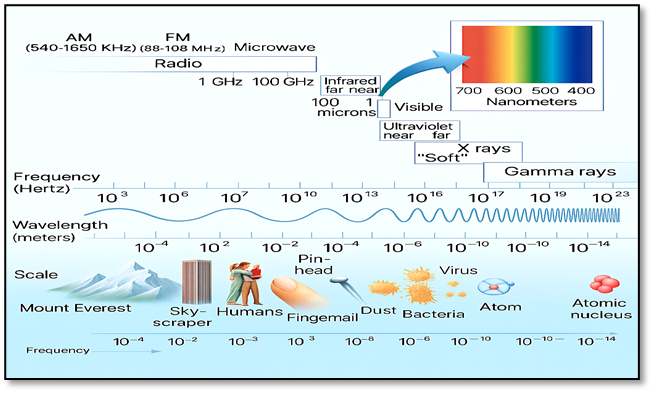
Figure 1: Electromagnetic Spectrum
The Central Drugs Standard Control Organization (CDSCO), under the Drugs and Cosmetics Act, provides definitions and enforcement mechanisms against “spurious” and “not of standard quality” medicines, along with practical guidance for their detection. Within this framework, portable, cost-effective, and non-destructive screening techniques such as Fourier Transform Infrared (FTIR) spectroscopy are especially valuable. These methods enable efficient on-site inspections and preliminary triage, ensuring that only suspect products are forwarded for comprehensive laboratory confirmation. (11)
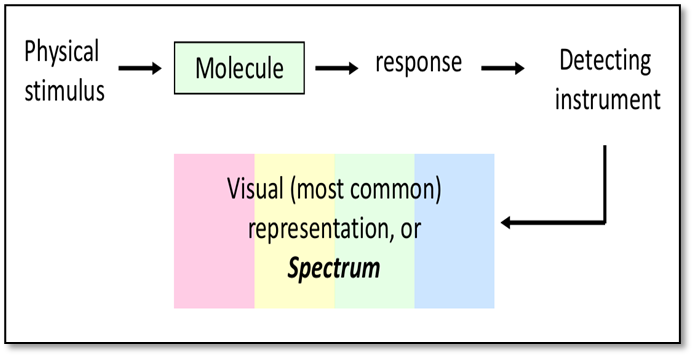
Figure 2: Spectroscopy Process
The figure demonstrates the fundamental working principle of spectroscopy. When a physical stimulus, such as electromagnetic radiation or another form of energy, interacts with a molecule, it produces a measurable response. This response is detected and processed by an analytical instrument, which then translates the interaction into usable data. (12) The outcome of this process is typically presented in the form of a spectrum, which is the most common and informative visual representation. A spectrum provides detailed insight into the molecular properties, including structure, composition, and functional groups. (13) Such analysis forms the basis for both qualitative and quantitative studies and is widely applied across pharmaceutical, chemical, and forensic sciences. (14)
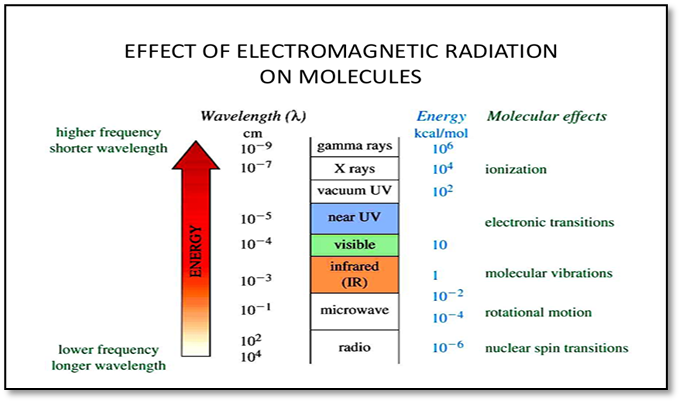
Figure 3: Electromagnetic Radiation on Molecules
2. Principle of FTIR Spectroscopy
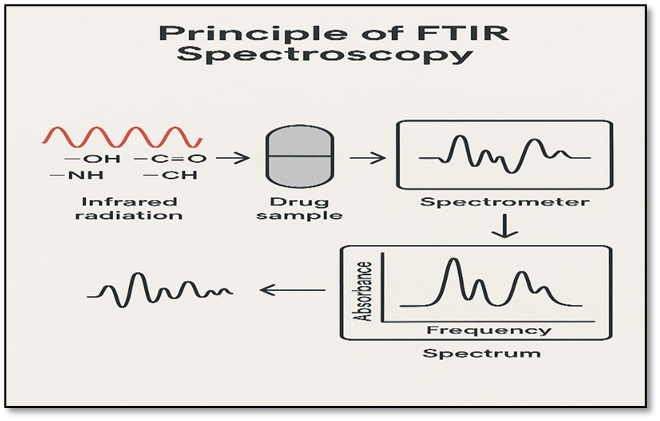
Figure 4: FTIR Spectroscopy
Fourier Transform Infrared (FTIR) spectroscopy works by measuring how molecules absorb infrared radiation, which induces characteristic vibrations in their chemical bonds. Because each functional group absorbs IR radiation at specific frequencies, the resulting absorption pattern reflects the molecular structure of the sample. The instrument records this information as an interferogram and converts it into an infrared spectrum using a Fourier Transform. This spectrum acts as a distinctive molecular fingerprint, enabling reliable identification of pharmaceutical compounds. Owing to its speed, non-destructive nature, and minimal sample preparation, FTIR spectroscopy is widely applied in drug identification, purity assessment, polymorphic analysis, and verification of chemical integrity. (6)
3. Methodology Overview FTIR Studies for Counterfeit (15)
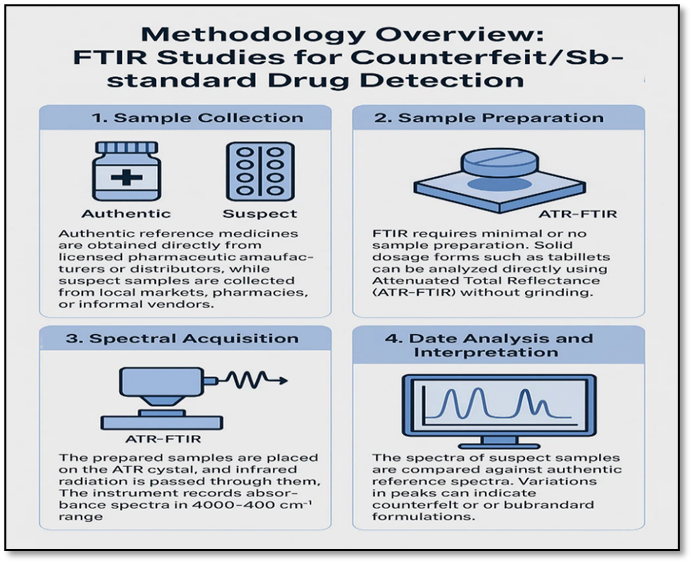
Figure 5: FTIR studies for counterfeit
1. Sample Collection
2. Sample Preparation
3. Spectral Acquisition
4. Data Analysis and Interpretation
4. Problem Statement
Counterfeit medicines pose serious health risks because they may contain inadequate or harmful ingredients, leading to treatment failure, drug resistance, and fatal outcomes. Their widespread availability in rural and low-resource settings, combined with low cost and deceptive packaging, makes them difficult to detect. As visual examination alone is often insufficient, advanced analytical techniques such as FTIR spectroscopy are essential for accurate identification and forensic investigation of counterfeit drugs. (18-19)
5. Objectives of the Study
FTIR analysis is employed to compare genuine and counterfeit drugs by generating characteristic infrared spectra that enable compound identification. The technique allows detection of functional groups, estimation of component concentrations, and evaluation of material properties across pharmaceutical and related substances. It is widely applied in quality control to confirm the authenticity of raw materials and finished products, as well as in identifying impurities, degradation products, and adulteration. In addition, FTIR contributes to structural elucidation by providing complementary molecular information alongside other spectroscopic methods. (20)
6. Significance of the Study
Pharmaceuticals can serve as important forensic evidence for linking criminal activities to counterfeit drug distribution, although their forensic potential has been insufficiently explored. FTIR spectroscopy enables reliable differentiation between genuine and falsified medicines by generating unique chemical fingerprints that can assist in source identification. Compared with other spectroscopic methods, FTIR offers a faster, simpler, and non-destructive approach, making it highly effective for both forensic investigations and regulatory efforts aimed at controlling counterfeit drug circulation. (21-23)
7. History of Counterfeit Drugs
Counterfeit medicines have existed since ancient times, with early efforts to distinguish genuine from falsified drugs recorded in classical history. Global recognition of counterfeit pharmaceuticals as a public health threat emerged in the late twentieth century, leading to international definitions, policy discussions, and coordinated action through organizations such as the WHO and IMPACT. Continued political and regulatory initiatives have strengthened global commitment to combating counterfeit drugs. In recent years, technological and legislative measures, including serialization, track-and-trace systems, and regulatory frameworks in regions such as the European Union and the United States, have significantly improved pharmaceutical supply chain security and medicine authentication worldwide. (24-26)
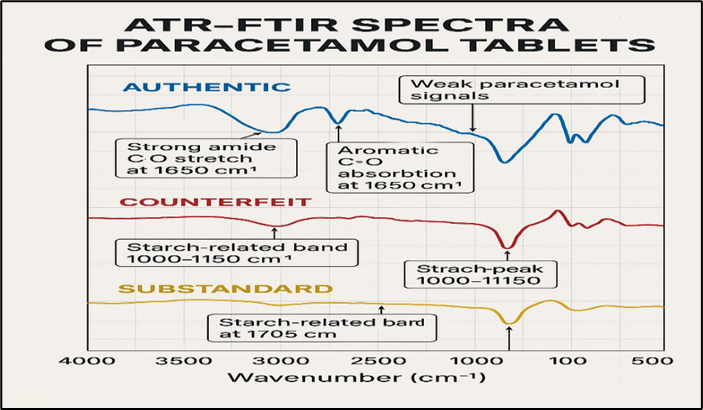
Figure 6: ATR- FTIR Spectra of Paracetamol Tablets
8. Prevalence
The occurrence of counterfeit and substandard medicines is significantly higher in developing countries compared to developed nations. Determining the exact prevalence of such drugs is difficult due to various influencing factors, and accurate global data remain limited. (27)
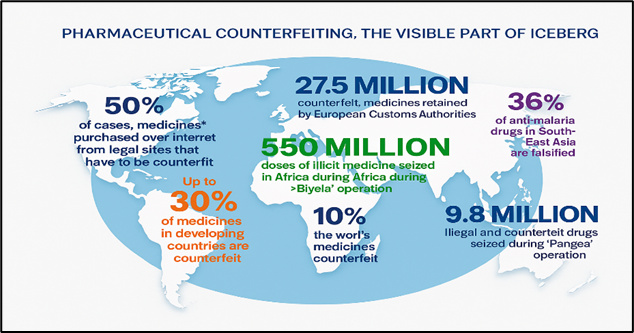
Figure 7: Global reported incidents of counterfeit pharmaceuticals
However, existing literature indicates that counterfeit pharmaceuticals account for approximately 10% of the global drug market, with the proportion rising to nearly 60% in certain developing regions. This disparity highlights the vulnerability of healthcare systems in low- and middle-income countries, where weaker regulatory frameworks and limited monitoring mechanisms facilitate the circulation of falsified medicines. (27)
9. Types, Factors, and Risks of Counterfeit Medicines
Counterfeit medicines affect almost all therapeutic categories, including antibiotics, antimalarials, anticancer agents, chronic disease treatments, vaccines, and herbal products. Their widespread circulation is driven by weak regulatory systems, poor law enforcement, manufacturing deficiencies, organized crime, high medicine costs, limited consumer awareness, and the rapid growth of illegal online pharmacies. These falsified products pose serious risks to public health and economies by increasing treatment failure, drug resistance, adverse reactions, and mortality, while also undermining confidence in healthcare systems. In addition to health hazards, counterfeit medicines cause significant financial losses and place a heavy burden on regulatory authorities and law enforcement agencies. The high prevalence of illegal online pharmacies and the presence of toxic substances in counterfeit drugs further emphasize the need for strict regulation and informed purchasing practices. (28)
10. Overview of the Counterfeit Medicines Market
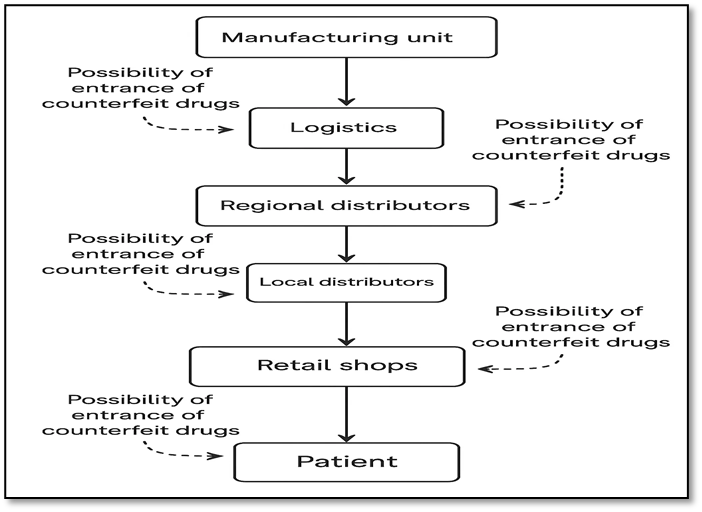
Figure 10: Blockchain framework for counterfeit medicines detection
The counterfeit medicines trade has developed into a well-organized network involving multiple actors across the pharmaceutical supply chain. Counterfeiters often replicate authentic packaging and security features, allowing falsified products to pass initial inspections. Weak regulatory oversight and corruption further enable the diversion of medicines from legitimate channels into illegal markets, where hospitals, pharmacies, and vendors may unknowingly or deliberately distribute them. Complex international trafficking routes, relabelling of expired products, and reuse of genuine packaging help conceal the origin of counterfeit drugs and allow them to bypass verification systems, posing serious challenges to detection and regulation. (29)
11. Forensic Science and Counterfeit Drugs
11.1 Role of forensic scientist
Addressing the threat of counterfeit medicines requires the identification and prosecution of those involved in their manufacture and distribution using reliable forensic science approaches. Court-acceptable analytical techniques are essential for confirming authenticity and generating intelligence on the origin and networks behind counterfeit products. Because these medicines often cross international borders, rapid and accurate on-site verification tools are crucial for customs and regulatory authorities to intercept falsified drugs before they enter legitimate supply chains. (30)
11.2 Forensic intelligence for medicine anti-counterfeiting
A significant proportion of medicines worldwide are falsified, posing serious risks to patient safety due to absent or toxic ingredients and poor manufacturing practices, while also causing substantial economic harm. Weak regulatory systems, definitional challenges, and the growth of online markets have enabled criminal and organized networks to expand counterfeit drug operations. Recent research highlights the importance of integrating packaging assessment with chemical analysis for effective counterfeit detection. Rapid screening methods, followed by detailed compositional analysis using advanced analytical techniques, support risk evaluation and forensic intelligence. Systematic collection and analysis of such data enable authorities to identify trafficking patterns, strengthen regulatory responses, and implement intelligence-driven strategies against counterfeit medicine supply chains. (30)
12. Drug Abuse
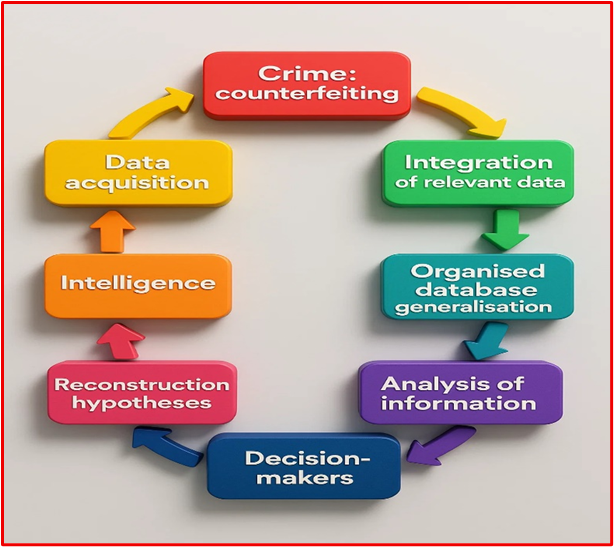
Figure 3: Key steps of iterative process of intelligence applied to counterfeit analysis
Drug addiction is a major global problem involving the misuse of both illicit substances and legally approved medicines, with the highest prevalence among young individuals. It has wide-ranging personal, social, and economic consequences, including increased crime, social exclusion, and a higher risk of overdose and death. The economic burden is substantial due to long-term treatment costs and the management of infections associated with drug abuse. Because of their harmful potential, drugs of abuse are subject to strict legal controls and include illicit drugs, misused pharmaceuticals, and certain psychoactive natural substances. (31)
13. Antidiabetic drugs
Hypoglycemia is a frequent complication of diabetes treatment, particularly in patients receiving insulin or sulfonylureas, which stimulate insulin release from pancreatic β-cells. While several classes of oral antidiabetic drugs are available, most severe hypoglycemic events are linked to insulin and sulfonylurea therapy, including cases of overdose or poisoning. Assessment of such events often requires biochemical evaluation in addition to chemical detection, especially in forensic settings where postmortem glucose measurement relies on stable markers such as vitreous humour glucose and glycated hemoglobin. Although sulfonylureas are effective in glycaemic control, they carry a significant risk of hypoglycemia and potential cardiovascular complications, with long-acting agents posing a higher risk than short-acting formulations. (31)
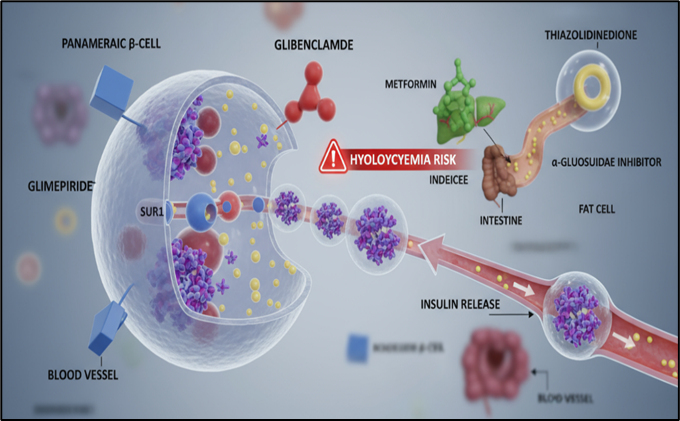
Figure 4: Mechanism of antidiabetic drugs
CONCLUSION
Counterfeit and substandard medicines continue to threaten health systems, particularly in countries like India. The study confirms that FTIR spectroscopy serves as a quick, reliable, and non-invasive approach to differentiate authentic pharmaceuticals from counterfeit ones effectively. By generating unique chemical signatures of both drugs and packaging materials, this technique supports regulatory authorities, forensic analysts, and healthcare providers in identifying illicit products promptly. Although FTIR is not a substitute for comprehensive laboratory analyses, its role as an initial screening tool is vital for early detection. Broader implementation of FTIR technology, alongside enhanced regulatory frameworks, can significantly reduce the prevalence of counterfeit medicines, thereby safeguard patients and improve drug safety standards.
REFERENCES





Aayushi Desai, Dr. Shailesh Luhar, Dr. Neha Desai, Dr. Sachin Narkhede, Kajal Mishra, Study on the Application of FTIR Spectroscopy in Identifying Counterfeit Drugs in the Indian Market, Int. J. of Pharm. Sci., 2026, Vol 4, Issue 2, 4041-4050. https://doi.org/10.5281/zenodo.18767711
 10.5281/zenodo.18767711
