

We use cookies to ensure our website works properly and to personalise your experience. Cookies policy
Pravara Rural College of Pharmacy, Loni, Ahilyanagar, Maharashtra, India-413736.
Pomegranates are widely identified for their numerous medical benefits, which include antiviral, antibacterial, anti-inflammatory, and antioxidant qualities. Due to their efficacy against a number of viral and bacterial infections, research shows pomegranates and its extracts can be used as natural alternative. Pomegranate description and effects have been studied using multiple compounds, including water, ethanol, methanol, acetic acid, and petroleum ether. Because pomegranates produce putative active molecules like gallic acid, ellagic acid, punicalin, punicalagin, anthocyanins, and flavanol compounds, they carry a critical role in preventing cancer, viral diseases, diabetes, bacterial infections, UV radiation-induced skin damage, and infant brain haemorrhage Due to their effectiveness against a number of viral and bacterial infections, research indicates that pomegranates and their juices can be used as natural substitutes. The antibacterial properties of almost all parts of the pomegranate plant, especially the fruit juice, peel, arils, blossoms, and bark, have been evaluated. Pomegranate peel has been successfully used for many studies. While pomegranates contain a variety of phytochemical compounds with antibacterial properties, the majority of research has proven that the most potent substances are ellagic acid and bigger soluble tannins like punicalagin.
1.Pomegranate and their effects on bacteria:
Since ancient times, pomegranates (Punica granatum L.) have been used as antimicrobial agents. Pomegranates have been used by the Egyptians to cure a variety of diseases [1]. For thousands of years, it was used as a traditional treatment in the Ayurvedic system of medicine. Extracts from the fruit's peel and the tree's bark were found to be useful in treating dysentery and diarrhoea [2]. Numerous minor searches on the bactericidal effects of pomegranates on a variety of highly infectious and drug-resistant bacteria have been performed over the years in various parts of the world. These studies often use minimum inhibitory concentration (MIC) or disc diffusion experiments to assess the bactericidal efficacy of various pomegranate plant extracts against a variety of microorganism. Pomegranate produces oligomeric ellagitannin with an amount of polymerisation of up to five central glucose units, according to mass spectrometry data [11].
2.evidence of bacteria in controlling bacteria that affects human body:
Gram-negative bacteria can either be potentially hazardous and result in serious infections and diseases, or they can be probiotic and have beneficial effects on the microbiota in the intestines. Probiotics and infectious microorganisms have been beneficially affected by pomegranates. By preventing against harmful microorganisms that can result in food poisoning, it also shows interest in food preservation. [12]. Pomegranate aqueous extract had an important level of effectiveness against E. coli O157:H7, at a low antibacterial concentration (MBC) and minimum inhibitory concentration (MIC) values of 0.39 and 0.19 mg/mL, respectively. [13] Pomegranate extract made from ethanol show MICs of 0.49 to 1.95 mg/mL and MBCs of 1.95 to 3.91 mg/mL against E. coli O157:H7 in another Thai research [13]. Other nutritious food and water-based pathogenic bacteria, such as Salmonella Typhi (S. Typhi) [14, 15], Vibrio cholerae [16, 17], Yersinia enterocolitica [7], Shigella spp. [16, 18], and Listeria monocytogenes (L. monocytogenes) [7, 19, 20], have also been shown to be susceptible to pomegranate's bactericidal action. eating food or drinking water contaminated with an infected person's waste products can spread a possible severe enteric infection known as typhoid fever (caused by S. typhi). It is more common in less developed nations. Pomegranate fruit pericarp preparations were tested using agar well diffusion and shown high activity in comparison with a reference ampicillin concentration-response curve [14]. A number of studies examined pomegranate extract's effectiveness to preserve food quality and clean animal products surface. Salmonella Typhimurium (S. Typhimurium) and Staphylococcus aureus (S. aureus) organisms sensitive to antibiotics were most effectively blocked on meat production surfaces by a pomegranate peel extract at 250 ???? g/mL, which also improved sensory measurements of quality [21]. The extracts from pomegranate flowers have the ability to improve wound healing as well. In alloxan-induced rats with diabetes wounds have been treated with a diethyl ether flower extract at a daily dosage of 200 mg/kg [28] A popular fruit that is grown both at home and commercially, pomegranate seeds are planted all across the nation . This species of pomegranate is one of the oldest fruit plants that can be used and has been used as a medicinal herb, according to the South African Pomegranate Industry (SAPI) [2]. Along with various pharmacological chemicals, the pomegranate plant and its fruit juice have nutritional, therapeutic, and health benefits [5]. The pomegranate plant can be identified by its sharp leaves that encircle it and grow up to 4–5 meters in length [8]. The plant includes shiny rolled petal leaves within its brittle bark [9]. Plants are commonly grown and in high demand worldwide due to their unique qualities [10].
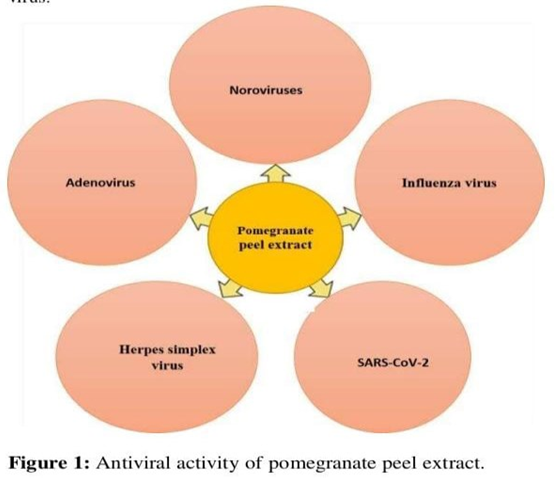
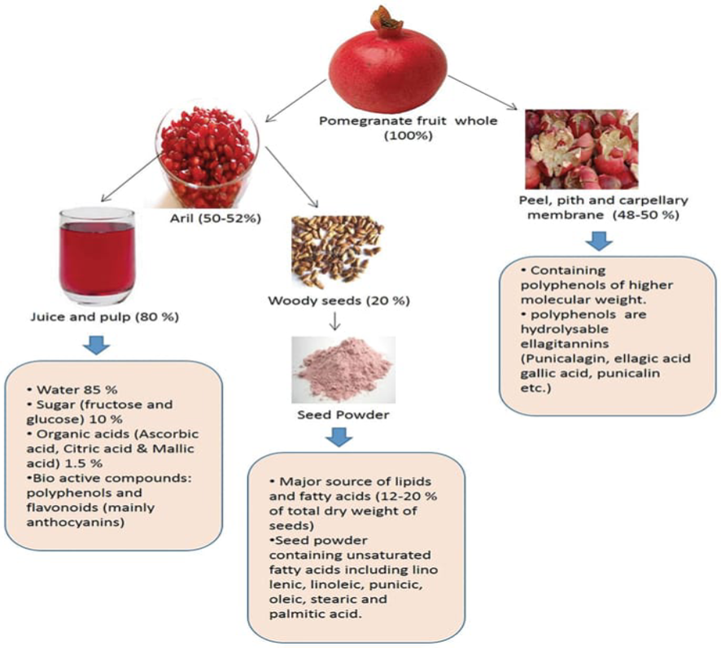
Diagrammatic Representation:
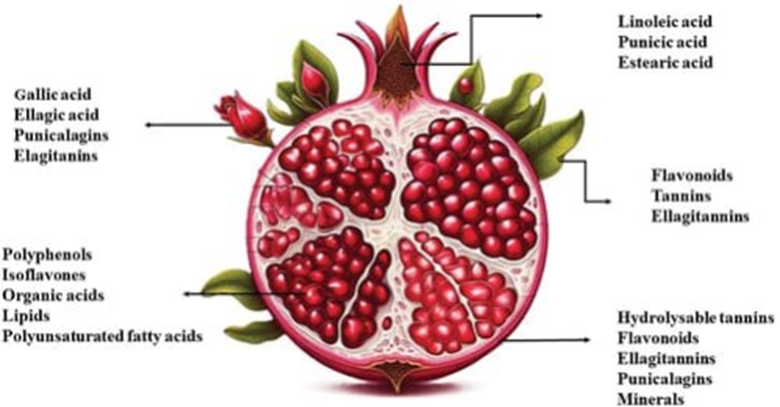
1. Antioxidants property: Chemical constituents present in the different parts of pomegranates may have a variety of pharmacological and toxicological activities (6). The characteristics of antioxidants Toxic metabolite seven is produced by oxidative stress (OS) having the ability to generate and spread cancer. By reducing oxidative stress, that leads to the degradation of lipids in arterial macrophages and lipoproteins, polyphenoles and flavonoids may help prevent heart disease, inflammable, and other disorders (10, 11).
2. Anti-inflammatory property: Pomegranate significantly inhibits osteoarthritis (OA) by limiting collagen degradation and suppressing the development of matrix metalloproteinases (MMPs) in Osteoarthritis chondrocyte cultures. Additionally, it may protect Osteoarthritis patients' joints from getting damaged (33). Additionally, in a rat experiment with colitis, pomegranate (pg) showed anti-inflammatory effects (35). However, research has proven that pomegranates reduce the production of pro-inflammatory cytokines (34–36). These results show that pomegranate inhibits the transcription factor NFkB (nuclear factor kappa-light-chain-enhancer of activated B cells) and the p38-mitogen-activated protein kinase (p38-MAPK) pathway.
3. Carcinogenic property: Pomegranate have suppressive effects on many different kinds of cancer types, including lung cancer (44), breast cancer (41), colon cancer (42, 43), and prostate cancer (39, 40). In these studies, various mechanisms for the anti-cancer properties of pomegranates have been mentioned. In the LAPC4 xenograft model, Pomegranate selectively inhibits NF-kB and the cell growth of prostate cancer cell lines in vitro (45). There may be anti-cancer characteristics that belong to specific pomegranate metabolites, such as 3,8-dihydroxy-6H-dibenzo [b, d]pyran-6-one (urolithin A, UA), which is produced by ellagannins (ETs) (46).
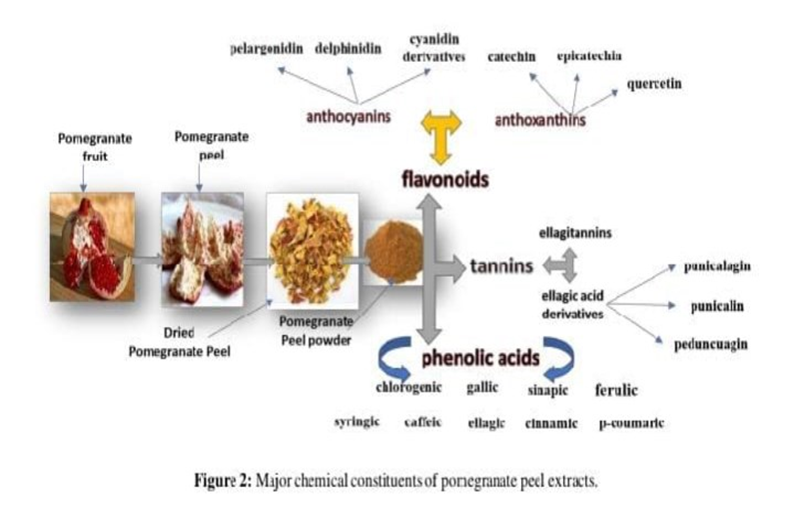
Clinical Applications:
1.Pomegranate is able to be used in many different kinds of therapeutic uses provided the qualities mentioned above. Pomegranate inhibits penetration of PC-3 cells, produces apoptosis in PC-3 cells (very aggressive prostate cancer cells), decreases the growth of prostate cancer cells, and lowers the proliferation of DU-145 prostate cancer cells in vitro, in relation to studies (52).
2. Pomegranate juice has been provided to treat HT-29 colon cancer cells by reducing COX-2 expression and blocking inflammatory cell signalling pathways that may result in the growth and reproduction of cancer. (92)
3.By inhibiting angiogenesis, tumour growth, discomfort, proliferation, and the induction of apoptosis, pomegranate has been established to inhibit the breast cancer cell lines MCF-7 and MB-MDA-231 (53, 95-97).
4. Pomegranate has also been shown to hold anti-hypertension properties; in hypertensive people, a decrease in systolic blood pressure and inhibition of the serum angiotensin converting enzyme (ACE) was observed (103). Pomegranate also resulted in decreased cardiac ischaemia and increased myocardial perfusion (104).
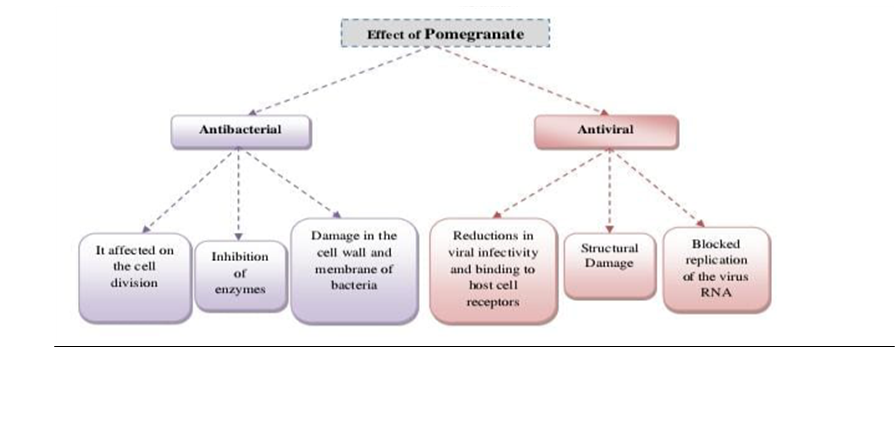
Characteristics of pomegranate:
A. Bark Characters:
The thick, woody brown bark of Punica granatum, which is capable of reaching a height of 5 meters, truly defines it. The bark component of P. granatum has always been used to cure fatigue, sore throats, ulcers, nasal bleeding, inflammation, and diarrhoea [21]. Additionally, the bark portion can be used to treat parasitic diseases like malaria [3]. Because of their high heat and acidity, P. granatum bark extracts have other related benefits, such as preventing iron corrosion [22]. In addition, the bark is rich in terpenoids, proanthocyanidins, anthocyanins, and tannins [23–25]. The bark portion acts as a natural green corrosion inhibitor due to the presence of these substances [22].
B. Flower Characters:
Pomegranate trees bring a variety of birds when their fruits grow in the summer [2]. The pomegranate flowers are distinguished by their light pink, stacked oval petals [9]. Pomegranate flowers have been utilised for years to treat diabetes, cardiovascular diseases, and obesity [24]. Pomegranate flowers have been identified for their antibacterial qualities and to be useful in treating common bacteria that cause intestinal infections, including Kentucky and Salmonella entteriditis [26]. Additionally, a variety of bioactive compounds, including flavonoids, terpenes, terpenoids, tannins, and organic oils, are rich in flowers [3,26,24]. Garlic acid, punicatannin C, and ellagic acids are common tannins in flowers [25].
C. Seeds Characters:
The most investigated and documented part of the Punica granatum plant is its seeds. There are hundreds of pomegranate seeds, which are enclosed in the fruit and covered by red-looking arils [9]. Pomegranate seeds are frequently used to treat urinary tract disorders [25] and prevent miscarriages [31:25]. Pomegranate seeds also have antibacterial [26,32], anti-cancerous, and antioxidant [33] qualities, as well as pharmacological qualities. Anthocyanins, tannins, fatty acids, flavonoids, ligands, and sterols, such as some organic volatile oils, are included in the many phytochemical substances present in pomegranate
D. Peel Characters:
Peels of pomegranates can be identified by their hard pericarp cover, which, when ripe, maintains its orange and greenish colour. A thin membrane inside the peel separates the arils, which are enclosed by the peel. Pomegranate peels contain 43 percent of the fruit [12]. Peel extracts are widely utilised as feed for animals [36], to treat diarrhoea and ulcers [31], and to prevent the replication of ribonucleic acid (RNA) [23]. Pomegranate peels was discovered to possess a variety of medicinal properties, such as anti-inflammatory, anti-proliferative, and anti-cancer actions [33,37,25]. Antioxidant properties against breast cancer have been investigated in fruit peels [31].
CONCLUSION:
We collected every published study on Pomegranate without date removal for our review. However, efforts have been made to provide an explanation for the fresh results. It is believed that Iran is the main source of pomegranate(pg). Ancient cultures' folk medicine established major use of PG fruit, juice, and extracts for a variety of health benefits (118). It has been proved that pg contains phytochemicals with potential pharmacological and toxicological effects (6). However, it is still unclear what the exact mechanisms and effects of many of these compounds' pharmacological and toxicological effects are. Due to its effectiveness and safety in preventing and/or treating a number of chronic illnesses, the use of medicinal plants or herbal preparations is currently the subject of intensive research worldwide.
REFERENCES




Shubham Mhaske, Rutuja Jamdhade*, Kedar Pratiksha, Kanade Satwik, A Comprehensive Review Article On: Antimicrobial and Antiviralpotential of Pomegranate As A Herbal Medicine, Int. J. of Pharm. Sci., 2025, Vol 3, Issue 5, 2556-2562. https://doi.org/10.5281/zenodo.15425503
 10.5281/zenodo.15425503