

We use cookies to ensure our website works properly and to personalise your experience. Cookies policy
Department of Pharmaceutics, Eklavya College of Pharmacy, Tasgaon.
Clerodendrum serratum Linn. (Family: Verbenaceae) is very widely distributaed in tropical and subtropical regions of the world. Ethno-medicinal importance of the plant has been reported in various indigenous systems of medicines like Ayurveda, Siddha and Unani for the treatment of various life-threatening diseases such as syphilis, typhoid, cancer, jaundice and hypertension. Somw of the chief constituents found in the plant are D-mannitol, hispidulin, cleroflavone, apigenin, scutellarein, sarratagenic acid, acteoside, verbascoside, oleanolic acid, clerodermic acid, ?-sitosterol, ?-sitosterol, cholestanol, clerosterol, campesterol and 24-ethyl cholesterol. Traditionally, it has been also used as anti-rheumatic, anti-asthmatic, febrifuge, in cephalagia and ophthalmia. The roots of C. serratum are also used as anti-oxidant, anti-bacterial, and anti-fungal. Besides these the anti-microbial value of this herbal plant have been reported in its stems and leaves.The plant use as a vegetable in most of regions of India because of wide range of pharmacological activities. This review is deals with identification, medicinal values, phytochemical and pharmacological action of different part of Clerodendrum Serratum.
According to the World Health Organization (WHO), medicinal plants are the largest source of a variety of drugs. Nearly 80% of people in affluent nations use traditional medicine, which contains substances derived from medicinal plants. To find out more about these plants' traits, efficacy, and safety, more research should be conducted. In India, people have been using plants for medicinal purposes for almost 5000 years. The over 8000 herbal remedies that Ayurveda has specified are still used in many stores. Clerodendrum serratum Linn., belonging to the family Verbenaceae, represents a taxonomically diverse genus comprising approximately 560–580 species of small trees, shrubs, and occasionally perennial herbs, predominantly distributed across tropical and subtropical regions of the Old World. Traditional Ayurvedic literature and the Ayurvedic Pharmacopoeia of India document around 18 formulations containing C. serratum roots for the management of various pathological conditions. Medicinally, the roots and leaves constitute the principal therapeutic parts of the plant. The roots exhibit multiple pharmacological properties, including bitterness, acridity, thermogenicity, anti-inflammatory, digestive, carminative, stomachic, anthelmintic, depurative, expectorant, sudorific, antispasmodic, stimulant, and febrifuge activities. They are traditionally employed in the treatment of inflammatory disorders, dyspepsia, anorexia, colic, flatulence, helminthiasis, cough, asthma, bronchitis, hiccough, tumors, tubercular glands, dropsy, phthisis, chronic rhinitis, dermatological conditions, leucoderma, leprosy, and febrile illnesses. The leaves are externally applied in the management of cephalalgia and ophthalmia. Additionally, the roots are reported to enhance appetite and reduce expectoration, while the seeds, when macerated and boiled in buttermilk, function as an aperient and are prescribed in cases of dropsy.[1]
Plant Profile :
1) Padma - flowers resemble lotus flowers
2) Bharangi - it destroys disease, it is having power equivalent to sun
3) Kasaghni - relieves kasa
4) Vatari - useful in Vata disorders
5) Kharashakha – leaf is rough in texture
Table No. 1 – Taxonomical Classification of Clerodendrum Serratum
|
Kingdom |
Plantae |
|
Subkingdom |
Viridaeplantae |
|
Division |
Angiospermae |
|
Class |
Magnoliopsida |
|
Subclass |
Lamiidae |
|
Order |
Lamiales |
|
Family |
Verbenaceae |
Vernacular Names [4] –
Table No. 2 Vernacular Names of Clerodendrum Serratum
|
Language |
Name |
|
Bengali |
Bamunhatee,Bhuijam |
|
English |
Blue glory, Beetle killer |
|
Gujarati |
Bharangee |
|
Hindi |
Bharangi |
|
Kannada |
Gantubarangee |
|
Malayalam |
Cheruthekku |
|
Marathi |
Bharangee, Bharang |
|
Oriya |
Chinds |
|
Punjabi |
Bhadangee |
|
Sanskrit |
Angaravalli, Padma |
|
Tamil |
Cheruteku |
|
Telugu |
Ganttubrarangee |
|
Urdu |
Bharangi, Baharangi |
Geographical indication -
The family Verbenaceae is predominantly found in tropical regions. The genus Clerodendrum exhibits significant species diversity in Southeast Asia and the Malayan Archipelago. Most species, however, are distributed across tropical Africa and southern Asia, while a few occur in tropical America and northern Australasia, extending into the temperate regions of eastern Asia. In India, the number of Clerodendrum species has been variously reported.[5]
Clerodendrum Serratum is a slightly woody shrub with blunty stems and branches. This tree are about 2-8 ft high. It is annual or perennial, usyally aromatic.
Root : Mature root hard, woody, cylindrical; upto 5 cm thick; external surface light brown having elongated lenticles.
Stem : Usually quadrangular (four-angled).
Bark : Thin and easily separated from a broad wood which shows marked medullary rays and concentric growth rings in a transversely cut surface; short fractures; acrid taste.
Leaf : Leaves usually three at a node, sometimes opposite oblong or elliptic, serrate, alternate without stipules.
Flower : Blue, many in long cylindrical thyrsus. They are bisexual, zygomorphic, rarely sub-actinomorphic, bracteolate or not. Corolla with a slender tube, lobe-5, spreading; stamens epipetalous; disc persistent. Ovary superior, 2-celled and each cell 2-ovuled; and style sub-terminal and gynobasic.
Fruit : Four lobed purple dutpe.
Seed : With or without endosperm.[6]
C. serratum (commonly known as Bharangi) is extensively utilized in traditional systems of medicine for the management of respiratory disorders, particularly asthma, as well as various other ailments. It is often administered in crude formulations in combination with other medicinal plants such as Sat (Hedychium spicatum Sm., Zingiberaceae) and Pushkarmoola (Inula racemosa Hook.f., Asteraceae), and is also available in capsule and tablet forms of varying potencies. According to Aryabhishek, the plant is beneficial in the treatment of cough, edema, dyspnea, wounds, fever, rheumatism, and tuberculosis. Furthermore, the Ayurvedic Pharmacopoeia of India recommends the use of the dried roots of C. serratum for the treatment of cough, bronchitis, dyspnea, chest disorders, and sinusitis.[7]
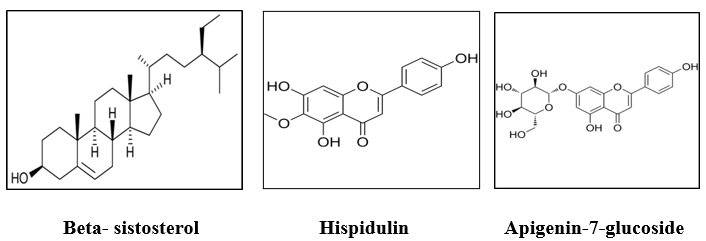
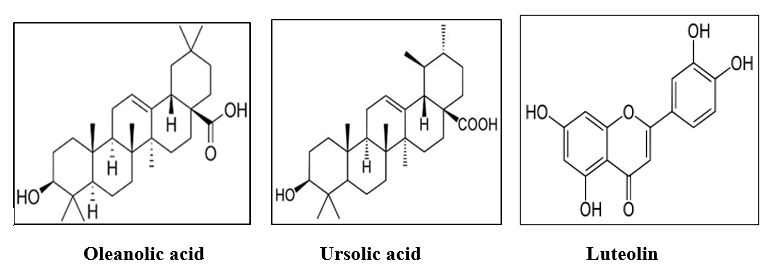
In root : Saponins, D - mannitol, Stigmasterol, oleanolic acid, Queretaroic acid, Serratagenic acid, β -Sitosterol, γ-sitosterol Clerosterol identified as 5, 25- stimastadien 3βo, Clerodone as 3β- hydroxyl- lupan 12- one, Β- sitosterol, Lupeol, A steroidal glycoside, Phytosterols, Ferulic acid, Arabinose, Scutellarcin, Baicalein, Serratin and Ursolic acid.
In leaf : Catchin, α-spinosterol, Luteoline, Polyphonolics, Diterpin – clerodin, Ethycholesta – 5, 24,25- trine 3β- o hispidulin and 7-o-gluconoids of hispidulin and Cruteuarein.
The minerals reported in the plant were: Na, Mg, Al, K, Ca,V, Cr, Mn, Fe, Co, Ni.
The major groups of chemical constituents present in the Clerodendrum genus are carbohydrates, phenolics, flavonoids, terpenoids and steroids.
Table No. 3 Phytoconstituents of Differents Parts [8]
|
Part |
Chemical Constituents |
|
Root |
Carbohydrates : D- mannitol Terpenoids : Serratagenic acid, Oleanolic acid, Queretaratic acid Ursolic acid, Serratin. Flavonoids : Aspigenin-7-glucoside Steroids : γ-sitosterol Saponins |
|
Leaves |
Terpenoids : Serratin,Lupeol Flavonoids: Catchin, Hispidulin, Cleroflavone, Luteolin. Steroids : alpha- spinosterols
|
|
Stem |
Carbohydrates : Sugar Terpenoids : Ursolic acid Steroids : β-sistosterol, Spinasterol Flavonoids : 5-hydroxy-7, 4-dimethoxy flavone
|
The hydroalcoholic extract of Clerodendrum serratum has demonstrated significant efficacy against asthmatic conditions. The extract was found to decrease both total and differential white blood cell counts in bronchoalveolar lavage fluid (BALF), reduce retained protein content and malondialdehyde (MDA) levels in lung tissue, and increase the number of intact mast cells, thereby inhibiting their degranulation and subsequent release of inflammatory mediators. These findings suggest that the hydroalcoholic extract of C. serratum may represent a promising therapeutic candidate for the management of clinical asthma.[9]
The ethanolic extract of Clerodendrum serratum was evaluated for its anti-inflammatory potential in both acute and chronic models of inflammation in rats. Acute inflammation was induced using the carrageenan-induced paw edema method, wherein administration of the extract at doses of 100 and 200 mg/kg resulted in a significant reduction in paw edema volume. For assessing activity against chronic inflammation, the cotton pellet implantation method was employed. The results indicated a significant decrease in the dry weight of the cotton pellets in extract-treated groups compared to the control group. These findings confirm that the ethanolic extract of C. serratum possesses significant anti-inflammatory activity.[10]
The anti-allergic activity of Clerodendrum serratum was evaluated using the milk-induced leukocytosis model in mice. Aqueous extracts of the plant’s stem and roots were administered orally at low (130 mg/kg, p.o.) and high (260 mg/kg, p.o.) doses for 14 consecutive days. Blood samples were collected and analyzed for total leukocyte and eosinophil counts. The results demonstrated that the higher dose of the extract produced a significant reduction in both leukocyte and eosinophil counts, indicating that C. serratum possesses notable anti-allergic activity.[11]
The aqueous extract of Clerodendrum serratum demonstrated significant antioxidant activity in DPPH radical scavenging, superoxide scavenging, and FRAP assays. Various concentrations of the extract (20–100 µg/mL) were tested. The plant exhibited antioxidant potential through effective free radical scavenging, and the FRAP assay revealed a strong reducing power that increased with higher extract concentrations. Therefore, the aqueous extract of Clerodendrum serratum shows notable antioxidant activity.[12]
The ethanolic root extract of the plant was evaluated for its antibacterial activity. The extract (7.5 mg/disc) exhibited broad-spectrum antibacterial effects against both Gram-positive and Gram-negative bacteria. Its activity was compared with the standard antibiotic streptomycin (10 µg/disc). The zone of inhibition increased with rising extract concentrations, indicating a concentration-dependent antibacterial effect.[13]
The aqueous and methanolic root extracts of Clerodendrum serratum were evaluated for their in vivo anticancer activity using the Dalton’s Lymphoma Ascites (DLA) cell model at doses of 100 mg/kg and 200 mg/kg body weight. The study assessed parameters such as mean survival time, percentage increase in life span, body weight, hematological, and biochemical profiles. Results indicated that the methanolic extract showed significantly higher anticancer activity compared to the aqueous extract. Additionally, the plant is traditionally used in the treatment of fever, rheumatism, and dyspepsia.[14]
The ethanolic extract of Clerodendrum serratum was evaluated for its antipyretic activity in rabbits. The extract was administered orally at doses of 50, 100, and 200 mg/kg, while paracetamol (100 mg/kg, orally) served as the standard reference drug. Rectal temperature was recorded every 30 minutes for 3 hours. A significant reduction in fever following the administration of Clerodendrum serratum extract confirmed its antipyretic potential, with higher doses (100 and 200 mg/kg) showing greater activity.[15]
The ethanolic root extract of Clerodendrum serratum and its isolated compound, ursolic acid, were evaluated for hepatoprotective activity against carbon tetrachloride (CCl?)-induced liver toxicity in male Wistar rats. The rats received oral doses of 20 mg/kg/day of the ethanolic extract and 10 mg/kg/day of ursolic acid for 14 consecutive days. The results revealed that ursolic acid exhibited significant hepatoprotective effects, comparable to the standard drug, and showed greater liver-protective activity than the crude extract.[16]
The aqueous extract of Clerodendrum serratum was tested for its anthelmintic activity using earthworms as the experimental model. Earthworms were exposed to different concentrations of the extract (100, 200, 300, and 400 mg/mL). At the highest concentration (400 mg/mL), the extract caused paralysis more rapidly, and the time required for death was shorter compared to the standard drug. These findings confirm the anthelmintic potential of Clerodendrum serratum leaves, as the root extracts also demonstrated significant activity against earthworms.[17]
Ethanolic extracts of the roots and leaves of Clerodendrum serratum were prepared and evaluated for their wound-healing potential in albino rats. The results indicated that the root extract exhibited greater wound-healing activity compared to the leaf extract.[18]
11. Analgesic activity -
This study examined the analgesic effects of an ethanolic extract prepared from the leaves of Clerodendrum serratum. Wistar rats were administered oral diclofenac sodium (10 mg/kg, p.o.) one hour prior to the seventh day of the trial. The ethanolic extract of C. serratum (200 mg/kg and 500 mg/kg) was given to Wistar rats for seven days, and the analgesic activity was evaluated using the tail-flick method and the acetic acid-induced writhing test.[19]
12. Anti-histaminic activity -
Histamine was released from lung tissue by both the alcoholic extract and the saponin isolated from the root bark of Clerodendrum serratum, an indigenous plant traditionally used to treat bronchial asthma. Rats that received 20 mg/kg doses of the saponin over an extended period showed a significant decrease in lung amine content. In sensitized guinea pigs exposed to egg albumin (antigen) micro-aerosols, the saponin fraction—like other histamine-releasing agents—did not demonstrate any antihistaminic activity or protect against anaphylactic shock. However, when the drug was administered intramuscularly at a daily dose of 20 mg/kg (one-fifteenth of its LD?? value, 307.7 mg/kg) for 20 days, a gradual development of resistance to anaphylaxis was observed in the sensitized guinea pigs.[20]
13. Antinociceptive activity –
The antinociceptive effect of an alcoholic extract of Clerodendrum serratum roots was evaluated in albino mice at oral doses of 50, 100, and 200 mg/kg using the hot plate and acetic acid-induced writhing methods. For comparison, morphine sulphate (5 mg/kg, administered subcutaneously) was used. The hot plate test showed a significant increase in the area under the time–response curve (AUC), supporting the finding of a marked reduction in acetic acid-induced writhing, indicating and maintaining a strong antinociceptive effect. However, the response was considerably weaker than that of morphine sulphate.[21]
14. Antifungal activity -
The mycelial growth of the keratinophilic fungi, namely Nannizia gypsea (strain −), N. gypsea (strain +), N. incurvata (strain +), N. fulva (strain −), and N. fulva (strain +), was not significantly affected by the aqueous leaf extract (8–38.2% inhibition). Nonetheless, it exhibited antifungal activity against Pestalotiopsis mangiferae, the pathogen responsible for leaf spot disease, and Curvularia tuberculata, the fungus that causes die-back disease.[22]
15. Anti-fertility activity -
The plant’s 50% ethanolic extract (excluding the root) demonstrated spermicidal efficacy in rats during preliminary testing, and the fractionated extract confirmed this finding. In vitro, the extract at a 2% concentration exhibited spermicidal activity in both human and rat semen. Another study reported that the n-butanol–soluble fraction of the plant’s 50% ethanolic extract (excluding the root) also demonstrated in vitro spermicidal activity in human semen at a 2% concentration. At an oral dose of 150 mg/kg, the acetone and methanolic extracts of the root showed no anti-implantation effect in rats. Both spermatogenesis and cauda epididymal spermatozoa were affected by the plant treatment, and the observed reduction in epididymal sperm motility and sperm count may be attributed to decreased testosterone levels. The study suggests that the herb induced infertility in male rats.[23]
CONCLUSION –
This review paper describes the study of the plant Clerodendruem serratum. The study focussed on the botany, phytochemistry, ethnomedicinal and pharmacological activities of the plant. The chemical constituents such as carbohydrates, flavonoids, phenolics, steroids and terpenes were found. The plant was found to be useful as anti-inflammatory, anti-cancer, hepatoprotective, anti-asthmatic anti-bacterial properties. It has various pharmacological activies and so on which has further scope in field of medicine and therapeutic significance.
REFERENCES




Anuradha Pailwan*, Sakshi Mhetre, Manorama Khumbar, Shrirang Kharmate, A Comprehensive Review on Clerodendrum Serratum: Phytochemistry, Pharmacological Activities and Therapeutic Potential, Int. J. of Pharm. Sci., 2025, Vol 3, Issue 11, 1528-1536 https://doi.org/10.5281/zenodo.17577943
 10.5281/zenodo.17577943