

We use cookies to ensure our website works properly and to personalise your experience. Cookies policy
Genesis Institute of Pharmacy, Radhanagari, Kolhapur, Maharashtra, India 416212
Quinolones represent a significant group of synthetic heterocyclic compounds that are extensively utilized in medicinal chemistry due to their wide range of biological activities. Heterocyclic compounds consist of at least one heteroatom, like nitrogen, oxygen, or sulphur, integrated within their cyclic ring structure and are frequently present in numerous natural products, pharmaceuticals, enzymes, and biological molecules. Among these compounds, quinolones have attracted considerable interest because of their strong pharmacological properties and therapeutic uses.The discovery of nalidixic acid, which was first used to treat urinary tract infections, marked the beginning of the development of quinolones in the early 1960s. Since then, a number of generations of quinolone derivatives have been created to enhance their range of action, pharmacokinetic characteristics, and antibacterial effectiveness. Fluoroquinolones with increased activity against both Gram-positive and Gram-negative bacteria were created as a result of structural changes such the addition of fluorine atoms and piperazine rings. The main way quinolones work against bacteria is by blocking bacterial enzymes like DNA gyrase and topoisomerase IV, which are necessary for transcription and DNA replication. When these enzymes are inhibited, bacterial DNA pathways are disrupted, which eventually results in bacterial cell death. Quinolone derivatives have shown a variety of biological actions in addition to antibacterial activity, such as antimalarial, anti-tubercular, anticancer, anti-inflammatory, and antifungal properties. Quinolone derivatives continue to be a major area of study in medicinal chemistry and drug discovery for the creation of novel therapeutic agents because of their varied pharmacological characteristics and structural adaptability.
Organic molecules with a ring structure made up of at least one atom other than carbon, such as nitrogen, oxygen, or sulphur, are known as heterocyclic compounds. These heteroatoms are one of the most significant families in organic chemistry because they give the molecules special chemical and biological characteristics. Heterocyclic compounds, which are present in materials, medicines, agrochemicals, and natural products, are essential for both basic research and industrial uses. Because of the stability of their ring systems and the reactivity that heteroatoms provide, they can interact with biological and chemical systems in a wide range of ways. (1)
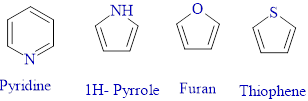
Aliphatic and aromatic heterocyclic are two categories of heterocyclic compounds. Aliphatic heterocycles, like morpholine and tetrahydrofuran, typically exhibit chemical characteristics that are comparable to those of open-chain analogs, but depending on the size of the ring, they may also exhibit additional ring strain or stability. Because they adhere to Huckel's rule of aromaticity, aromatic heterocycles such as pyridine, furan, thiophene, and imidazole have exceptional stability and unique reactivity patterns. They are extremely important to biological systems. Nucleic acids (DNA and RNA), which contain purine and pyrimidine bases like adenine, guanine, cytosine, thymine, and uracil, are among the many biomolecules that are heterocycles. Heterocyclic structures can also be found in natural alkaloids like nicotine and caffeine, as well as vitamins like riboflavin (B2) and thiamine (B1). These compounds demonstrate how crucial heterocycles are to maintaining life and controlling physiological functions. (2)
History of Quinolone:
Quinolones are synthetic products that were first synthesized by George Lesher in 1949 Thereafter, a high number of derivatives and related substances were developed, some of which showed antibacterial properties. Although some quinolone derivative molecules were patented in the late 1950s, it is largely considered that the quinolone era began in 1962, with the synthesis of nalidixic acid. The first clinical trial reports on the use of nalidixic acid are from 1963 subsequently, nalidixic acid was introduced into clinical practice as early as 1964 albeit limited to the treatment of urinary tract infections. Cinoxacin, pyrido-pyrimidine (pipemidic acid; piromidic acid), naphthyridine (nalidixic acid), and quinolones (oxalinic acid, miloxacin, tioxacin, etc.) are some of the successors of the dominant components that were created in the succeeding period. (3)
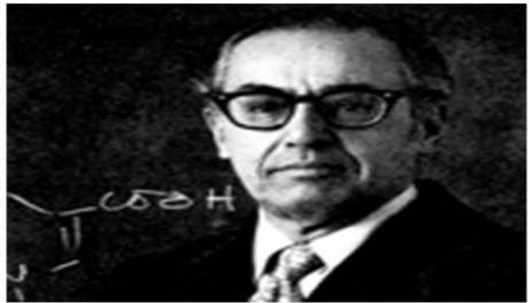
George Lesher
The first quinolone derivative, nalidixic acid (1-ethyl-1,4-dihydro-7-methyl-4-oxo-1,8-naphthyridine-3-carboxylic acid), was imported in 1962 by G. Y. Lasher and his associates (1962) that was used second-hand to treat urine contamination and had moderate activity against grandmother-negative structures. The two universal pharmacological characteristics of these derivatives, along with their altered forms, were acknowledged by the ruling class as the first physiologically active derivatives produced in conjunction with quinolone manufacture.
Chemistry of Quinolone:
Carbonyl (C=O) groups are present at particular locations in quinolones, which are fused benzene and pyridine ring complexes known as the quinoline nucleus. The location of the keto (=O) group or groups on the quinoline ring is indicated by the designations 2-quinolone, 2, 4-quinolone, and 4-quinolone. The nitrogen (N-1) is where the numbering begins, and it continues around the ring. (5)
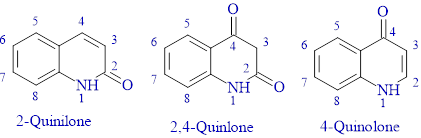
Features of the structure:
At position 1, nitrogen (N-1)
At C-2, the keto group
The ring exhibit lactum (cyclic amide) behavior.
Qualities:
Exhibit in the keto-enol from of lactum-lactum tautomerism.
The primary antibacterial quinolone nucleous is less frequently utilized.
Structural chracterstics:
Nitrogen at position 1, C=O at position 2 and 4. The molecule is now a quinolone 2, 4-dione as a result.
Qualities:
Due to the two keto group, the ring structure is more electron- deficient. A crucial heterocyclic chemistry intermediate. Demonstrates a strong hydrogen bond because it has two carbonyl group.
Structural features:
Nitrogen at position 1 keto group at C4 often contains a carboxylic acid at C3 in drug molecules.
Qualities:
This structure from the core of most antibacterial quinolone drugs, such as: m-Nalidixic acid , Ciprofloxacin, Norfloxacin.(6)
Tab. No.01: Comparison of Quinolone (6)
|
Type |
Carbonyl position |
No. of Chiral carbon |
|
2-Quinolone |
C-2 |
1 |
|
2,4-Quinolone |
C-2 and C-4 |
2 |
|
4-Quinolone |
C-4 |
1 |
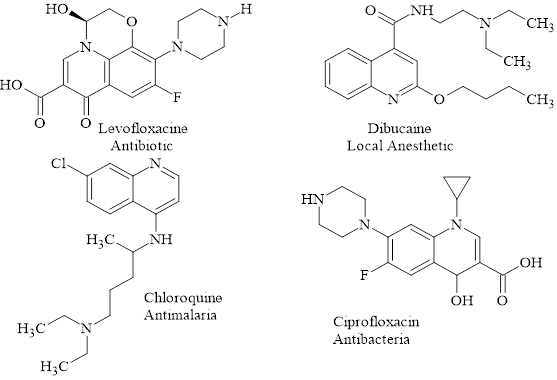
Marketed medicinal compounds containing quinolone moiety:
Physiological properties of Quinolone:
Tab. No. 02: Physiological Properties (7)
|
Molecular Formula |
C9H7NO |
|
Formula Weight |
145.16 g/mol |
|
Composition |
C (74.47%), H (4.86%), N (9.65%), O (11.02%) |
|
Molar Refractivity |
43.51+0.3 |
|
Molar Volume |
119.5+3.0cm3 |
|
Parachor |
316.5+4,0cm3 |
|
Index of Refraction |
1.643+0.02 |
|
Surface Tension |
51.0+3.0dyne/cm |
|
Density |
1.214+0.06g/cm3 |
|
Monoisotopic Mass |
145.0552764Da |
|
Nominal Mass |
145Da |
|
Average Mass |
145.1581Da |
|
M+ |
145.05533 |
|
M- |
145.0533 |
|
[M+H]+ |
146.0606 |
|
[M-H]+ |
144.0455 |
Mechanism of Action:
The quinolones target topoisomerase IV and bacterial DNA gyrase. The main action that the quinolones block in many gram-positive bacteria, including S. aureus, is topoisomerase IV. On the other hand, DNA gyrase is the main quinolone target for many gram-negative bacteria (including E. coli). To enable DNA transcription or replication, the individual double-helical DNA strands must be split. The constant insertion of negative supercoils into DNA is caused by the bacterial enzyme DNA gyrase. This is an ATP-dependent process that necessitates cutting both DNA strands in order to allow a DNA segment to travel through the break before the split is sealed again. (8)
Mechanism of action of quinolones DNA is bound by gyrase or topoisomerase IV (a). When quinolone binds to the complex, the enzyme introduces DNA breaks, resulting in the formation of a cleaved complex (b). DNA replication, transcription, and bacterial growth are all reversibly inhibited by the cleaved complex. MIC is correlated with quinolone concentrations that produce cleaved complexes. The quinolone structure determines which of the two deadly pathways are activated by the DNA breaks that are produced from the cleaved complexes. The ROS-dependent mechanism needs aerobic conditions to enable a cascade of ROS (d) and continuous protein synthesis to release DNA breaks. Antioxidants can prevent cell death by interfering with the ROS cascade (e). Because cell death happens before ROS can act (quinolones that kill by the ROS-independent pathway induce buildup of ROS), some highly active fluoroquinolones are resistant to drugs that impede protein synthesis or the generation of ROS (f). (9)
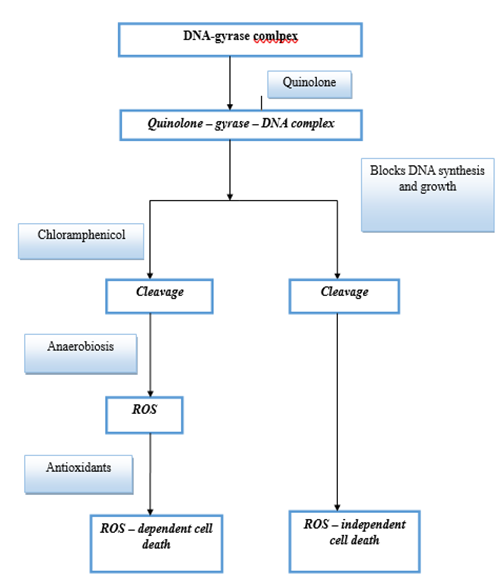
Fig. No. 01: Mechanism of Action of Quinolone
Tab.No.03: Mechanism of Action (10)
|
Sr. No |
Activity |
Example Of Quinolones |
Target /site of Action |
Mechanism of Action |
|
1. |
Anti - malarial |
Endochin,ELQ-300 (Endochin-like quinolones) |
Plasmodium's mitochondrial cytochrom bc1 complex |
Inhibit the parasite's mitochondria's electron transport chain to prevent ATP synthesis, which leads to the parasite's demise. |
|
2. |
Anti- Tubercular |
DNA gyrase of Mycobacterium tuberculosis |
Mycobacterium tuberculosis DNA gyrase
|
Inhibit DNA supercoiling and replication by blocking mycobacterial DNA gyrase, which has a bactericidal effect on tuberculosis germs. |
|
3. |
Anti-cancer |
Vosaroxin, Quinolone-based topoisomerase inhibitors |
Topoisomerase II in Eukaryotes |
Inhibit topoisomerase II to cause DNA double-strand breaks, which will cause cancer cells to undergo cell cycle arrest and apoptosis. |
|
4. |
Anti- Inflammatory |
Rebamipide-like quinolone derivatives (experimental) Inflammatory mediators (TNF-α, IL-1β) |
Inflammatory mediators (TNF-α, IL-1β)
|
Inhibit oxidative stress pathways and reduce the generation of inflammatory cytokines.
|
|
5. |
Anti- Fungal |
Experimental quinolone derivatives (e.g., Endochin analogs) |
The respiratory chain of fungal mitochondria
|
Inhibit fungal growth by interfering with fungal energy metabolism and disrupting mitochondrial electron transport. |
Development of Quinolones:
As a by-product of the manufacture of anti-malarial quinine compounds in the 1960s, nalidixic acid technically a naphthyridonewas identified as the archetypal quinolone. It was quickly discovered that it inhibited bacterial replication by blocking the action of bacterial topoisomerase type II enzymes. Nalidixic acid was authorized for the therapeutic treatment of Gram-negative bacteria urinary tract infections (UTIs) in 1967. However, due to its limited range of action, low serum concentrations attained, high inhibitory concentration needed, and a number of negative effects, its usage was restricted. Better counterparts weren't created until the 1980s, when the necessity for novel therapies for UTIs and diarrhea brought on by resistant Shigella and Escherichia coli prompted researchers to enhance the action. (11)
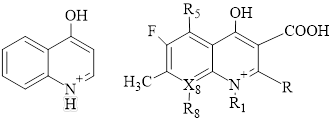
The structure activity correlations of quinolone antibiotics have been the subject of numerous studies. Quinolones and naphthyridones, which are distinguished by the "X" position, are the two main groups derived from the core structure of the basic quinolones shown in Quinolones are defined by a carbon atom at the X position, whereas naphthyridones are defined by a nitrogen atom at the X position. Quinolones are divided into four generations according to their range of activity. The addition of various substituents to various positions on the pharmacophore has advanced the development of quinolones from generation to generation in order to achieve broader spectrum activity. (12)
Biological Activity of Quinolones:
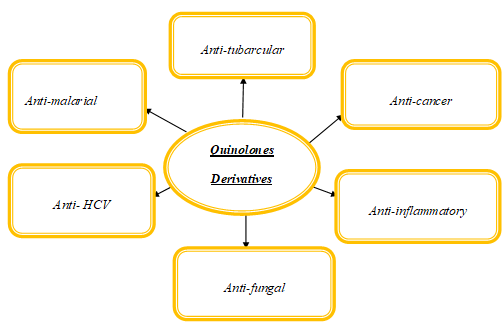
Fig. No. 02: Biological Activity of Quinolones
Anti-malarial Activity:
Sullivan DJ et al were reported in medical chemistry, quinolones, often known as quinolines, are a significant family of heterocyclic chemicals. Infections brought on by Plasmodium species including P. falciparum and P. vivax have been treated with a number of quinoline compounds that have potent antimalarial action. Quinoline antimalarials primarily affect the malaria parasite's blood stage. A benzene ring makes up quinoline, a bicyclic aromatic heterocycle. A ring of pyridine two nearby carbon atoms are shared by both rings. This structure permits replacement at several locations, resulting in compounds having antimalarial qualities. (13)
Anti-tubercular Activity:
Yan W et al were reported the way quinolone antibiotics work against Mycobacterium tuberculosis, the bacteria that causes tuberculosis, is referred to as the biological activity of anti-tubercular quinolones. These medications, which primarily fall under the fluoroquinolone class, are frequently used to treat drug-resistant tuberculosis (MDR-TB and XDR-TB. (14)
Anti-cancer Activity:
Bhalmode MK et al were reported the most well-known use of quinolones, a class of heterocyclic chemicals, is in antibacterial medications (such as fluoroquinolone). Numerous quinolone compounds, however, also exhibit encouraging anticancer potential. Their capacity to obstruct DNA replication, cell cycle advancement, and tumour cell survival is the primary source of their biological action. (15)
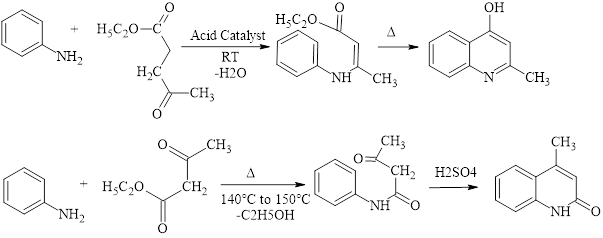
Anti-inflammatory Activity:
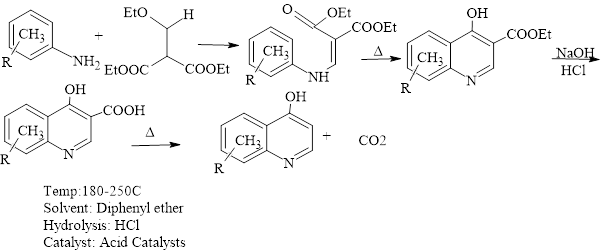
Sultana N et al were reported although quinolones are heterocyclic compounds that are well-known for their antibacterial activities, certain of its derivatives also have anti-inflammatory qualities. Through the regulation of inflammatory mediators, enzymes, and immunological responses, they have anti-inflammatory properties. (16)
Anti-fungal Activity:
Senerovic L et al were reported quinolones are heterocyclic molecules that include nitrogen. Several quinolone derivatives have demonstrated antifungal action against fungi like Candida, Aspergillus, and Cryptococcus, despite their primary antibacterial activity. Through many metabolic processes, they have an antifungal impact. (17)
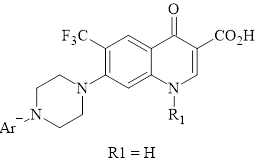
Anti-HCV Activity:
Furuta A et al were reported hepatitis C is an infection caused by the Hepatitis C virus, which is an RNA virus belonging to the Flaviviridae family. This virus mainly targets the liver and can result in chronic liver conditions, cirrhosis, and liver cancer. Scientists have investigated quinolone derivatives as potential inhibitors of the viral enzymes that play a role in HCV replication. (18)
REFERENCES





Sakshi Patil, Rameshwari Ingavale, Siddhesh Desai, Shreyas Jadhav, Shobharaj Malavi, Kousalya Patil, A Review: Development, Mechanism of Action and Biological Applications of Quinolones, Int. J. of Pharm. Sci., 2026, Vol 4, Issue 3, 4104-4113. https://doi.org/10.5281/zenodo.19354351
 10.5281/zenodo.19354351