
NRI College of Pharmacy, Pothavrappadu, Agiripalli, Eluru, 521212.
3D printing technology has emerged as a revolutionary approach in the pharmaceutical industry, offering significant advancements in drug development and patient-centered therapy. Unlike conventional mass manufacturing, 3D printing allows the design and fabrication of personalized dosage forms with tailored drug release profiles, multiple active ingredients, and flexible formulations. Techniques such as inkjet printing, fused deposition modelling, extrusion-based methods, hot melt extrusion, powder bed printing, and stereo lithography enable the precise layer-by-layer construction of complex drug delivery systems. The technology supports the “polypill” concept, improving patient compliance by combining multiple drugs into a single dosage unit. Additionally, 3D printing reduces development timelines, facilitates on-demand production, minimizes waste, and enhances bioavailability of poorly soluble drugs. Despite challenges such as material limitations, regulatory concerns, and scalability issues, 3D printing holds vast potential to transform personalized medicine and pharmaceutical manufacturing.
The 3D Printing technology has caught the attention of medical devices industry and pharmaceutical industry due to its application on various platform in health care industry. 3D printing technology promises a future of drugs & medicine printed on demand, personalized with customized doses. The potential of 3D printing is about being able to deliver what you want, how much & when you want.This technology will definitely help Doctors & pharmacists to provide “Tailor made” medicine for each patient.(1,13)
3D printing in pharmaceutical drug delivery would excel greatly in the domain of personalized medicine, where the medication could be customized as per the need of treatment, & not “one fits all” approach. 3D printing can play a significant role in multiple active ingredients dosage forms, where the formulations can be as a single blend or multilayer printed tablets with sustained release properties. This reduces the frequency and no. of dosage forms units consumed by the patient on a daily routine. 3D printing technology has high potential in individualized dosage forms concept called the polypill concept. This brings about the possibility of all the drugs required for the therapy into a single dosage form unit.(1,11)
Three dimensional printing technology is a novel rapid prototyping technique in which solid objects are constructed by depositing several layers in sequence. The rapid prototyping involves the construction of physical models using computer – aided design in three dimension. It is also known as additive manufacturing and solid free form fabrication.3D printing relies on computer aided designs to achieve almost flexibility, time saving, & exceptional manufacturing capability of pharmaceutical medicines which can be utilized in personalized and programmed medicine.(1)
Challenges in the mass production of dosage forms and limitations in the availability of different types of dosage forms have all restricted the traditional pharmaceutical manufacturing process. However, a game-changing technology that can get beyond these restrictions is 3D printing. 3D printing holds enormous potential for personalized medicine, complex medication formulations, and customized dosages by utilizing computer-aided design (CAD) models and exact layer-by-layer deposition of active pharmaceutical ingredients (APIs).(2)
Long-standing mass production techniques have been used in the pharmaceutical manufacturing process, which has limited dosage forms and delayed medication delivery. But a ground-breaking innovation called 3D printing has arisen as a disruptive force that can get through these restrictions.(2,4)
The potential for 3D printing to revolutionize the pharmaceutical business is enormous because it allows for precise layer-by layer deposition of active pharmaceutical ingredients and the use of computer-aided design models. This novel strategy gives up fresh possibilities for complex pharmacological formulations, personalized dosing, and personalized therapy.(5)
Furthermore, 3D printing technology makes it easier to produce complicated medicine compositions that were previously difficult to make using traditional techniques. Since several pharmaceuticals can be combined into a single dosage form by the layer-by-layer deposition of APIs, complex diseases or disorders that call for a cocktail of treatments can be treated more successfully. Additionally, 3D printing’s fine control enables the creation of drug delivery systems with unique release profiles, guaranteeing precise dosing and lasting therapeutic benefits.(2)
HISTORY
The concept of three-dimensional printing (or 3DP) originated in the early 1970s when Pierre A. L. Giraud described applying powdered material and then solidifying each layer using a high-intensity beam. In this scenario, melting materials like plastic or metal might hypothetically be utilized to prepare the object. Early in the 1980s, Ross Householder described the idea of binding sand with various materials in a patent entitled “A molding process for forming a three-dimensional article in layers”, and Carl Deckard created a technique for solidifying powdered beds with laser beams known as selective laser sintering (SLS). Stereo lithography (SLA) was the first technique that Chuck Hull developed and marketed .This technique was based on the UV light-induced photo polymerization of liquid resin .For fused deposition modelling (FDM), a process that utilized thermoplastic material for object preparation, Scott Crump submitted a patent at the end of the 1980s. Emanuel Sachs, an MIT scientist, developed “Three-dimensional printing techniques” in the 1990s based on combining the chosen powder regions with a binding substance.(4,6)
The Advantages of 3D Printing Technology in Pharmaceuticals
The health and safety of medication for special populations such as the elderly and children has long been an issue of concern. Children are in a period of growth and development and have a particular reactivity and sensitivity to medication; the elderly have a reduced absorption and metabolism capacity, and the coexistence of multiple diseases and combined medication is very common. Where as current drug dosages are standardized, there are few specialized drugs for special populations, and children’s medication is often administered by manually breaking tablets, which is not only inaccurate but may also damage the particular structure of the preparation and cause adverse reactions. Three-dimensional printing technology is highly flexible and can be used to print targeted medicines by adjusting model parameters such as size, shape, or fill rate. For pediatric patients, 3D printing technology can be used to produce low-dose personalized medicines suitable for children, and can also be used to improve the appearance and taste of the medicines to increase the compliance of pediatric patients ; for elderly patients who have difficulty swallowing, 3D printing technology can prepare loose and porous preparations, thus, helping them to take medication; for patients who take multiple drugs at the same time, different drugs can be partitioned and combined into a single tablet to avoid errors or missed drugs, which can increase the safety and effectiveness of medication; in addition, specially shaped preparations can be printed or special symbols can be printed on the surface of the preparation to provide convenience for patients with visual impairment . The advantages of 3D printing technology for personalized drug delivery provide technical support for people to achieve personalized medicine, and some 3Dprinted drug companies are moving towards the goal of personalized medicine, such as Fab Rx in the UK, which prepares personalized drugs for children with maple diabetes, and has placed SSE printers in the pharmacy of a Spanish hospital and conducted clinical trials on the subject. (3,7)
As the most widely used solid oral dosage form, tablets account for 70% of all dosage form production. Traditional manufacturing processes enable tablets to be produced at a lower cost, but they have been less creative in preparation development, with long development times and less ability to manufacture personalized preparations on demand. Compared to conventional tablets, controlled-release preparations allow for precise control of drug release, avoiding side effects and improving efficacy. However, traditional manufacturing processes pose greater challenges in the development and manufacture of controlled-release preparations due to their limitations. Three-dimensional printing technology is highly flexible and is well suited to the development and manufacture of complex preparations through the combination of different drugs, the design of complex models, and the adjustment of printing parameters.
For example, Tri astek’s 3D printed product, T19, which received IND approval from the FDA in January 2021, is a controlled release preparation designed for the circadian rhythm of rheumatoid arthritis, where patients take it at bedtime and blood concentration peaks in the morning with the most severe symptoms of pain, joint stiffness, and dysfunction, and maintains daytime blood concentration for optimal therapeutic effect, providing better medication options for patients.(3)
AIM AND OBJECTIVE
Aim
To explore and develop 3D printing technologies for pharmaceutical applications, focusing on creating personalized drug delivery systems that improve patient compliance, therapeutic efficacy, and manufacturing efficiency in the pharmaceutical industry.
Objectives
DESIGN OF 3D PRINTING TECHNOLOGY
WORKING OF 3D PRINTER
The basic process involves 3D prototyping of layer by layer fabrication to drug excipients to formulate into the desired dosage form. It begins with making a virtual design is for instance a CAD (Computer aided Design) file. This CAD file is created using a 3D modelling application or with a 3D scanner (to copy an existing object). A 3D scanner can make a 3D digital copy of an object.
Steps involved in 3D printing:
Design : The intended product design is digitally rendered. Design can be rendered in 3 dimensional with Computer Aided Design Software (CAD)
Conversion of the design to a machine readable:
3D design are typically converted to the STL file format, which describe the external surface of a 3D model.
Raw material processing: Raw material may be proceed into granules filaments, or binder solution to facilitate the printing process.
Printing: Raw materials are added and solidified in an automatic, layer –by-layer manner to produce the desired product.
Removable & post processing: After printing products may require drying, sintering, polishing or other post processing steps.
Techniques in 3D Printing
3D printing includes a wide variety of manufacturing techniques, which are based on digitally – controlled depositing of material (layer- by – layer) to create freeform geometries.
The widely used 3D printing technologies are as follows:-
1. THERMAL INKJET PRINTING
In thermal inkjet printing, the aqueous ink fluid is converted to vapour form through heat and expands to push the ink drops out of a nozzle. It is used in the preparation of drug loaded biodegradable microspheres, drug loaded liposomes, pattering microelectrode arrays coating and loading drug eluting stents. It is also an efficient and practical method of producing films of biologics without compressing activity.
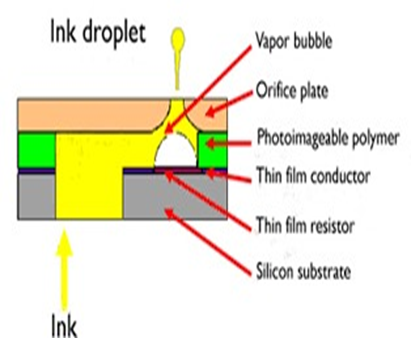
Fig. 1: Thermal Inkjet Printing
Table 1- Some of the drug prepared by Thermal Inkjet Printing
|
Sr. No. |
Drug |
Dosage form |
Application |
|
1 |
Prednisolone |
Tablet |
Anti-inflammatory Immunosuppressant |
|
2 |
Folic acid |
Nano suspension |
Anaemia |
|
3 |
Salbutamol sulphate |
Solution |
Bronchodilators |
|
4 |
Carbamazepine |
Co-crystals |
Antipiletic drug |
|
5 |
Felodiine |
Solid dispersion |
Antihypertensive |
2. INKJET PRINTING
Inkjet printing is also called as ‘mask-less’ or ‘tool-less’ approach because the formation of desired structure mainly depends upon the movement of inkjet nozzles or movement of the substrate for an accurate & reproducible formation. In this technique, the ink is deposited onto a substrate either in the form of Continuous Inkjet Printing (CIJ) or Drop on Demand (DOD) printing, hence it provides a high resolution printing capability. Advantages of inkjet printing is that it has low processing cost, rapid processing rates, generation of minimal waste, it gives CAD information in a ‘ direct write’ manner & it process material over large areas with minimal contamination.
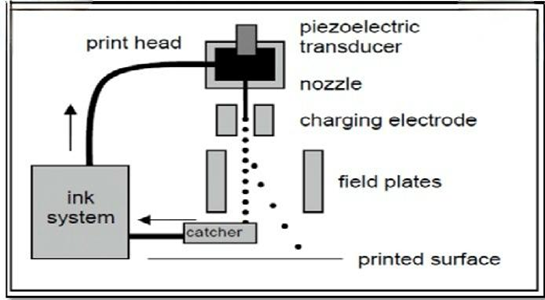
Fig. 2: Inkjet printer
Table 2 –Some of the drug prepared by Inkjet Printing
|
Sr. No. |
Drug |
Dosage Form |
Application |
|
1 |
Polyvinyl-pyrrolidone (PVP) |
Micro needle |
Excipients |
|
2 |
Insulin |
Micro needle |
Antihyperglycemia |
|
3 |
5-flurouracil, curcumin, cisplastin |
Micro needle |
Anticancer |
|
4 |
Paclitaxel |
Micro needle |
Anticancer |
|
5 |
Caffine |
Tablet/capsule |
CNS stimulants |
|
6 |
Lysozyme & Rionuclease-A |
Film |
NSAIDS |
|
7 |
Rifampicin |
Implant/ Nanoparticles |
Antibiotic |
3. FUSED DEPOSITION MODELLING
It is an commonly used technique in 3D printing, in which the materials are soften or melt by heat to create objects during printing. There are several dosage forms available by using FDM. FDM 3D printing helps in manufacturing delayed release print lets without an outer enteric coating, & also provides personalised dosed medicines.
Limitations –
FDM 3D printing indicates several limitations of the system,
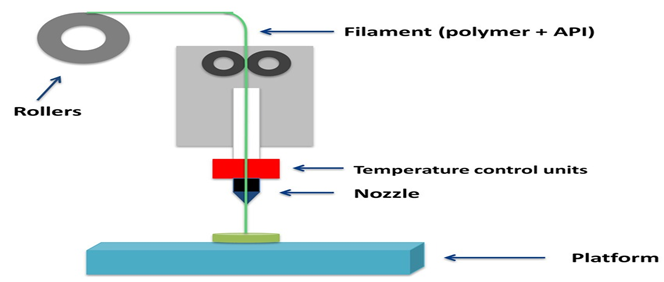
Fig .3: Fused Deposition Modelling (FDM)
Table 3 – Some of the drug prepared by Fused Deposition Modelling (FDM).
|
Sr. No. |
Drug |
Dosage form |
Application |
|
1 |
Metformin, Glimepiride |
Tablet |
Anti diabetic |
|
2 |
Theophylline |
Tablet/ Capsule |
Lung disease |
|
3 |
Diclophylline |
Controlled release tablet |
Ulcerative colitis |
|
4 |
Prednisolone |
Extended release tablet |
Immunosuppressant |
|
5 |
Gentamicin sulphate, Methotrexate |
General device |
Antibiotic & Anticancer |
4. EXTRUSION 3D PRINTING
Extrusion is the most widely used 3D printing technology. In an extrusion process, material is extruded from robotically –actuated nozzles. Unlike binder deposition, which requires a powder bed, extrusion methods can print on any substrate. A variety of materials can be extruded for 3D printing, including molten polymers, pastes & colloidal suspension, silicones, & other semisolids. A particularly common type of extrusion printing is fused filament fabrication (FFF). It is only used to fabricate tablet containing Guaifenesin as expectorant.
Table 4- Some of the drug prepared by Extrusion 3D printing
|
Sr. No. |
Drug |
Dosage form |
Application |
|
1 |
Captopril |
Tablet |
Antihypertensive |
|
2 |
Dexamethasone |
Drug encapsulated film of PLGA &PVA |
Arthritis |
|
3 |
Atenolol |
Polypill(multi active solid dosage form) |
Angina |
|
4 |
Pravastatin |
Polypill |
Cardio-Vascular disease |
5. 3D PRINTER :
3D printer is a valuable tool which is used to create customized medication with tailored release profiles & the medication is changed as per the patient comfort.
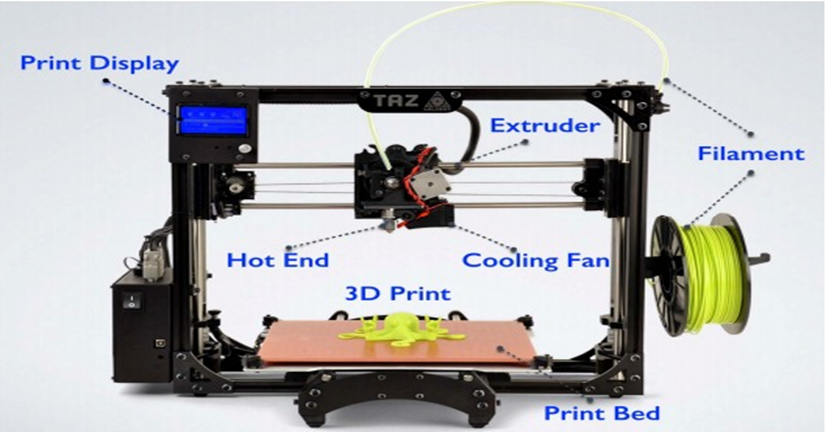
Fig.4: 3D Printer.
Table5- Some of the drug prepared by 3D printer technology
|
Sr. No |
Drug |
Dosage form |
Application |
|
1 |
Paracetmol |
Fast disintegrating tablet |
Analgesic |
|
2 |
Polycaproactone |
Biodegradable |
Manufacture specially of polyurethans |
|
3 |
Nitrofurantoin |
Biofilm disk |
Urinary tract infections |
|
4 |
Chlorpheniramine |
Tablet |
Antihistamine |
6. HOT MELT EXTRUSION(HME):
Hot melt extrusion is the process of melting polymer & drug at high temperature & the pressure is applied in the instrument continuously for blending. It is a continuous manufacturing process that includes several operations such as feeding, heating, mixing, & shaping. In recent years, it has proved that HME has the ability to improve the solubility& BA of poorly soluble drugs.
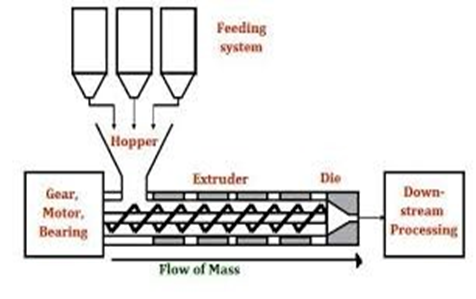
Fig.5 – Hot Melt Extrusion
Table 6 - some of the drug prepared by HME
|
Sr. No |
Drug |
Dosage form |
Applications |
|
1 |
Isoniazid |
Compartmentalized shells |
Tuberculosis infection |
|
2 |
Indometacin |
Subcutaneous rods |
NSAIDs |
|
3 |
Ethylene vinyl acetate (EVA) coploymers |
T-shaped prototype of intrauterine system |
Hot melt adhesion |
7. POWDER BED 3D PRINTING:
Hot melt adhesion In that technique powder jetting or power bed is used to spread thin layer of power and simultaneously applying liquid binder drops with the help of inkjet printers. The ink (binders & APIs binder solution) is sprinkled over a powder bed in 2D fashion to make the final product in a layer-by-layer fashion. The adaption of this technique into pharmaceutical manufacturing is easier than other techniques as powder and binder solution are widely used in the pharmaceutical industry. This method is has its own disadvantages as follows-
Polypill concept
The polypill is also known as “zip dose”. It refers to a single tablet that includes the combination of several drugs. This concept is highly beneficial for geriatric population, as patient of this age category are prone to multiple disorders and hence multiple therapy.
The technology has been realised through the research of Khalid et al, where 5 different active pharmaceutical ingredients (APIs) with different release profiles have been formulated in a single 3D dosage from. Three drugs (pravastatin, atenolol, & ramipril) were printed in the extended release compartment. The drugs were physically separated by a permeable membrane of hydrophobic cellulose acetate.
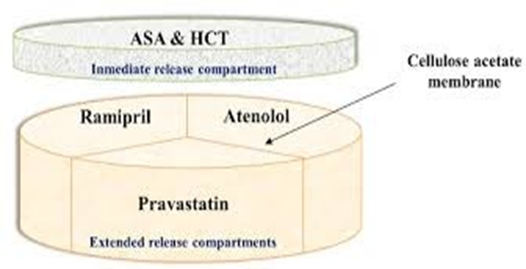
Fig.6: 3D printed polypill
An immediate release compartment containing aspirin and hydrochlorothiazide was deposited on top of the extended release compartment.
8. STEREO-LITHOGRAPHIC 3D PRINTING
This technique involves the curing of photosensitive materials (photo polymerization to produce a 3D object. Scanning a focused UV laser over the top of a photopolymerisable liquid is a layer-by-layer fashion, SLA employs a digital mirroring device to initiate a chemical reaction in the photopolymer which causes the gelation of the exposed area. This process is repeated layer after layer to build the entire part of the object. This occurs as unreacted functional groups on the solidified structure in the first layer polymerises with the illuminated resin in the next layer insuring adhesion & therefore, layer formation is done. Post printing processing is usually required to further curve the final product, to improve its mechanical integrity & to polish or remove the attached supports to the fabricated objects. This technique however possesses a health hazard in the form of potential carcinogenic resins. This is also a very slow process.
SLA printers are composed of an UV light beam, in the form of a laser, which transfer the energy into a liquid photo polymerisable resin. The UV light beam is aided by baffles, axis X&Y, to transverse the surface of the liquid resin, in order to accurately represent the 3D model, previously designed. When a layer solidifies, the lifting platform descends its position to the night of a new layer of a liquid resin, again beginning the procedure, until the manufacturing of the 3D product is finished in a layer –by-layer way. Here thickness of the cured layers depends upon the energy of the UV light to which resin exposed. The resin should be FDA approved for human use with the ability to solidify upon exposure to laser beam.(1,4,5)
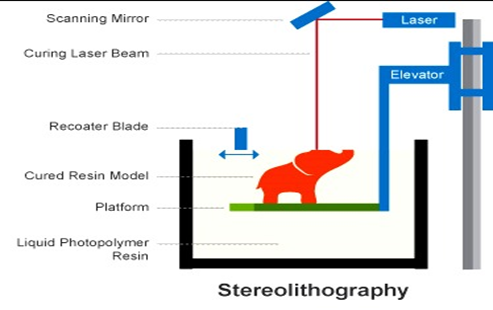
Fig.7: Stereo lithographic 3D printing
APPLICATIONS AND FUTURE SCOPE
APPLICATIONS:
Application of 3D printing technology in pharmaceutical manufacturing could have following potential benefits.(2,10)
FUTURE SCOPE
The potential application of 3D printing in the pharmaceutical industry is intriguing and looks promising. The following are some fields where 3D printing is anticipated to make a major impact:
1. Customized dosage forms
3D printing enables the development of dosage forms suited to each patient’s requirements. Medication dosages can be tailored to the individual patient to enhance therapeutic results and boost compliance. Such modifications can be made to drug concentration, release rate, and dosage form geometry.
2. Complex medication formulations
3D printing makes it possible to create complex medication formulations, which are challenging to do with conventional production techniques. Incorporating several medications, controlled release mechanisms, and combination therapy into a single dose form are examples of this. Such formulations can improve the effectiveness of treatment and streamline pharmaceutical regimes.
3. Patient-specific medication delivery systems
3D printing enables the creation of medication delivery systems for individual patients that are adapted to their unique anatomical and physiological characteristics. This includes creating implants, transdermal patches, and inhalation devices specifically for each patient in order to better distribute drugs and achieve therapeutic goals.
4. Drug development and rapid prototyping
3D printing makes it possible to produce drug prototypes quickly, accelerating development times and cutting costs. With the use of this technology, pharmaceutical firms may more quickly iterate and test drug formulations, expediting the creation of brand-new drugs and improving the entire drug discovery process.
5. On-demand manufacture and the drug supply chain
3D printing presents the possibility of decentralized and on-demand pharmaceutical manufacture, eliminating the need for massive production and intricate supply systems. Generating pharmaceuticals as needed helps reduce medication shortages and improve drug accessibility, particularly in rural places or during emergencies.
6. Combination drug products
3D printing allows the combining many medications or therapeutic agents into a single dosage form, which facilitates the creation of combination drug products. In particular, treating complex disorders can improve treatment outcomes through synergistic effects, enhanced drug compatibility, and easier administration.
7. Advanced drug delivery systems
Using 3D printing, advanced drug delivery systems can be produced, such as microneedle arrays, microfluidic devices, and custom drug-eluting implants. These devices allow precise drug release control, target certain tissues or cells, and improve therapeutic effectiveness.
8. Pharmacogenomics and personalized treatment
The combination of pharmacogenomic information and 3D printing can lead to personalized treatment. Medication formulations can be customized to a patient’s genetic profile, improving treatment success and reducing side effects. This is accomplished by adding genetic information into the design and formulation process Regenerative medicine and tissue engineering By enabling the creation of intricate scaffolds, bioactive implants, and patient-specific tissue constructions, 3D printing plays a significant role in regenerative medicine and tissue engineering. This innovation has the potential to eliminate the need for organ donors by producing useful tissues and organs for transplantation.23 The future scope of 3D printing of pharmaceuticals is projected to broaden as research and development in this area continue, resulting in creative approaches to drug manufacture, personalized treatment, and enhanced patient care.(2,6,7)
DISCUSSION
Discussion
CONCLUSION
3D printing is poised to play a key role in personalized medicine, patient-centered drug delivery, and novel dosage forms in the near future.
REFERENCES


R. Tejaswaroop, P. Gayatri Devi, Dr. Y. Ankamma Chowdary, A Review and Experimental Study on 3D Printed Pharmaceutical Tablets, Int. J. of Pharm. Sci., 2026, Vol 4, Issue 3, 788-801. https://doi.org/10.5281/zenodo.18920348
 10.5281/zenodo.18920348
