
1,2 Rungta Institute of Pharmaceutical Sciences and Reseach ,
3,4,5 Rungta Institute of Pharmaceutical Sciences, Kohka Kurud, Bhilai
Polyherbal shampoos(trio pack), formulated with a blend of diverse botanical extracts, have gained prominence in the realm of hair care. Shampoos are mostly used as cosmetic products; they are hair care products that are used for cleaning, beautifying, and managing hair in our daily lives. There are many plants or herbal ingredients utilized for shampoo, like Neem leaves, ritha, shikakai, amla, lauryl glucoside, aloevera, lemon juice, rice water and gelatin etc. Shampoos are classified according to their activities, such as based on appearance, which includes powder shampoo, liquid shampoo, etc., and based on function, which includes conditioning shampoo, anti-dandruff shampoo, etc. Shampoos are viscous solutions of detergents containing suitable additives, preservatives, and active ingredients. Some plants show their activities, such as Salvia hispanica, which is used to reduce hair fall and enhance new hair growth; Prunusdulcis, which provides strength to hair and stimulates follicles; and Centella Asiatiea L., which boosts hair growth. The purpose of this study is to formulate and evaluate a trio pack of shampoo which consist shampoo, conditioner and serum because this kind of formulation is currently not present in market which should maintain and growth the hair and scalp. The benefits of herbal cosmetics, which have negligible side effects, reduce allergic reactions, and have no more chemicals added.
Shampoos are most probably used as cosmetics. It is a hair care product that is used for cleaning scalp and hair in our daily life. Shampoos are most likely utilized as beautifying agents and are a viscous solution of detergents containing suitable additives, preservatives and active ingredients. It is usually applied on wet hair, massaging into the hair, and cleansed by rinsing with water. The purpose of using shampoo is to remove dirt that is build up on the hair without stripping out much of the sebum. Many synthetic shampoos are present in the current market both medicated and non-medicated, however, herbal shampoo popularized due to natural. origin which is safer, increases consumer demand and free from side effects.(4)
In synthetic shampoos, surfactants (synthetic) are added mainly for their cleansing and foaming property, but the continuous use of these surfactants leads to serious effects such as eye irritation, scalp irritation, loss of hair, and dryness of hairs. Alternative to synthetic shampoo we can use shampoos containing natural herbals. However, formulating cosmetic products containing only natural substances are very difficult. There are a number of medicinal plants with potential effects on hair used traditionally over years around the world and are incorporated in shampoo formulation These medicinal plants may be used in extracts form, their powdered form, crude form, or their derivatives. To develop a shampoo containing an only one natural substance which would be safer with milder effect, then the synthetic shampoo is difficult and also it should possess good foaming, detergency, and solid content as such synthetic shampoo. Hence, we considered in detailing an unadulterated natural cleanser utilizing conventional technique using regularly utilized plant material for hair washing. (9)A shampoo is basically a solution of a detergent containing suitable additives for other benefits such as hair conditioning enhancement, lubrication, medication etc. Now-a-days many synthetic, herbal, medicated and non-medicated shampoos are available in the market but popularity of herbal shampoo among consumers is on rise because of their belief that these products being of natural origin are safe and free from side effects. Synthetic surfactants are added to shampoo primarily for the foaming and cleansing action but their regular use leads to dryness of hairs, hair loss, irritation to scalp and eyes Herbal formulations are considered as alternative to synthetic shampoo but formulating cosmetics using completely natural raw material is a difficult task. There are large numbers of medicinal plants which are reported to have beneficial effects on hair and are commonly used in formulation of shampoo. These plant products may be used in their powdered form, crude form, purified extracts, or derivative form. It is extremely difficult to prepare a herbal shampoo using a single natural material that would be milder and safer than the synthetic ones, and at the same time would compete favorably with its foaming, detergency and solid content We, therefore, considered to formulate a pure herbal shampoo using traditionally and commonly used plant materials for hair washing in India and gulf region especially.(11) The Greek word cosmetics, meaning “cosmesis” or “beautifying substance,” is where the word cosmetic originates Chemicals called cosmetics are applied to the human body to improve its look. Both developed and developing nations have high demand for cosmetics, which include skin-care creams, lotions, powders, perfumes, lipsticks, fingernail and toe nail polish, eye and facial makeup, permanent waves, colored contact lenses, hair colors, hair sprays and gels, deodorants, baby products, bath oils, bubble baths, bath salts, varieties of butter, and many other products. The global market for herbal cosmetics is expanding, and these products are a priceless gift from nature. You can fulfill your beauty regimen with a variety of herbal cosmetic products, and using herbal cosmetics is extremely safe for your skin and hair. The use of natural resources, including plants, has decreased with the advancement of science and technology, with the exception of food; vegetarians consume only plants. Humans have long used herbs for a variety of purposes, including food, medicine, and beatification. Nonetheless, the use of herbs as medications and cosmetics is on the rise. The current study's goal is to create and assess a multipurpose herbal shampoo by removing all conventionally added synthetic components and using a variety of herbs. This shampoo strengthens, darkens, and encourages hair growth while getting rid of dandruff, sebum, and impurities. Additionally, it serves as a conditioning agent. All of these functions are carried out by this herbal shampoo powder without harming or compromising hair.(1) Herbal shampoos meet the consistency requirements and can be classified as nourishing, antimicrobial, or plain shampoo based on the makeup of the components. Including hydrolyzed proteins, vitamins, and amino acids. The potential of an ingredient to cleanse, nourish, and protect the skin while preventing damage to it is taken into consideration when choosing active ingredients for hair care powders. To improve the stability and safety of a shampoo’s composition, some of these compounds must be added.(3)
CONDITIONER:
Hair conditioner is often a viscous liquid that is applied and massaged into the hair. Conditioner contain a variety of conditioning and moisturizing ingredients that are left behind on the hair after rinsing and affect the hair characteristics. The primary conditioning agents include quaternized surfactants (quats), cationic polymers, silicones, emollients, and humectants. Hair conditioners may contain moisturizers, oils and sunscreen, among other ingredients. Conditioners are frequently acidic, as low pH protonates the keratins amino acids. The hydrogen ions give the hair a positive charge and creates more hydrogen bonds among the keratin scales, giving the hair more compact structure. Organic acids such as citric acid are usually used to maintain acidity. They will act basically on shaft of the hair. The conditioner functions to impart manageability, gloss and antistatic properties to hair.(15)
CLASSES OF CONDITIONER:
BENEFITS OF HAIR CONDITIONER:
SERUM:
Serum is one of the cosmetic products with very high concentration of active ingredient in their formula for providing intensive nutrition to the deeper skin layer and non-greasy finish product which suitable for skin. Hair serum is the styling product that coats the surface of the hair known as hair serum. It is basically a hair care product in liquid form, its consistency thicker than water. Hair serum is not just meant for hair styling. They are also for treating multiple hair concerns like dry hair, dull hair, and unmanageable hair. There are different types of hair serums for different hair goals. Depending on the products formula, a hair serum might reduce frizz, add shine, or straighten the hair. This is silicone based styling product that is designed to coat the surface of hair to help impart added shine, smoothness hydration, humidity and pollution protection.(27)
MATERIALS AND METHODS
Ingredient Table
|
SR.NO |
INGRIDENT |
PROPERTIES |
|
1 |
Reetha |
Foaming agent |
|
2 |
Neem |
Anti Bacterial |
|
3 |
Aloevera |
Conditioning agent |
|
4 |
Aamla |
Nourishement |
|
5 |
Lemon Juice |
Preservative |
|
6 |
Shikakai |
Clean the scalp |
|
7 |
Gelatin |
Smooth & Shine the hair |
|
8 |
Fenugreek |
Nourish hair |
|
9 |
Vitamin E |
For Hair growth |
|
10 |
Distilled Water |
Vehicle |
|
11 |
Hibiscus |
Natural Conditioner |
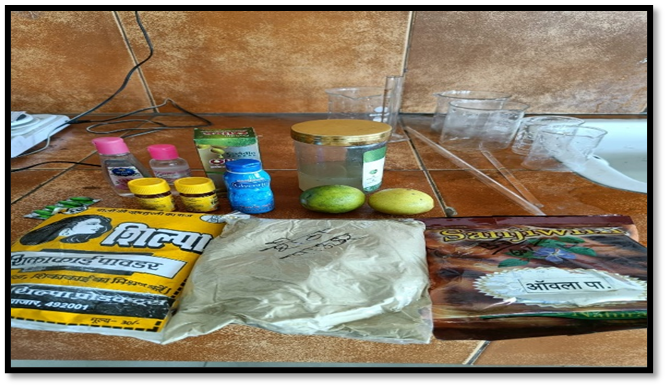
PROCEDURE:
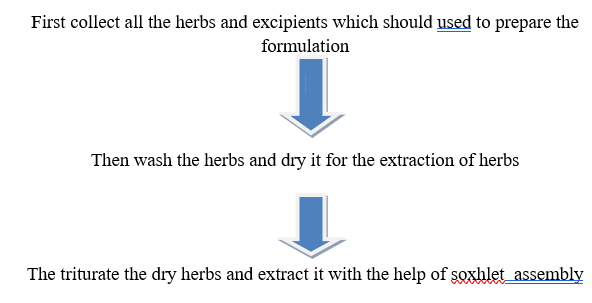
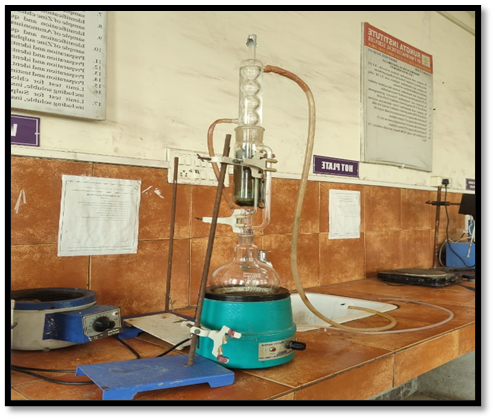
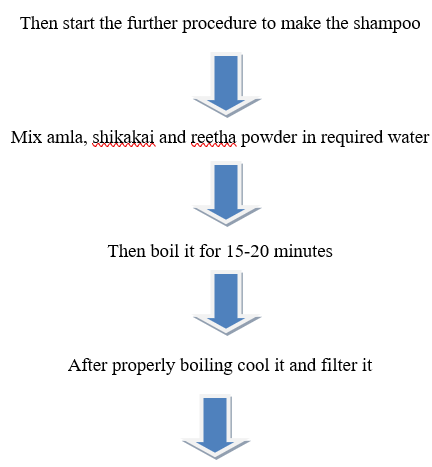
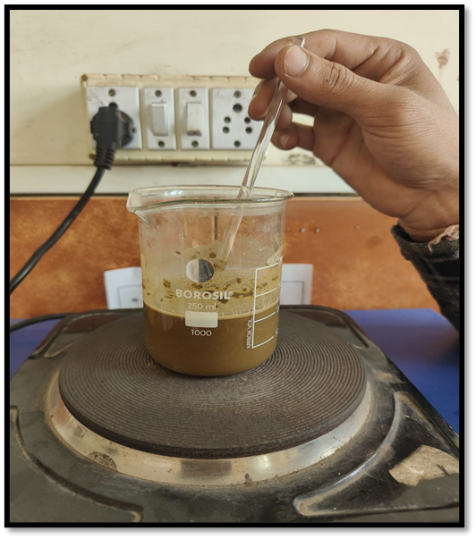
Preparation of Shampoo-
EVALUATION OF FORMULATION
1) Determination of pH: - At 27 degree temperature combine 01g of shampoo with 9 ml of water, then use a ph meter to measure the ph. It evaluated by means of ph analyzer at room temperature.
2) Physical appearance: The prepared formulations were assessed for fluidity, clarity, and capacity to produce foam.
3) Determination Percentage of solid content: Weighing an evaporating dish that was dry and clean, we added 4g of shampoo to it. Weighed were the dish and shampoo. Once the precise weight of the shampoo was determined, the liquid portion was allowed to evaporate by placing the evaporating dish containing the shampoo on a hot plate. After drying weight of the shampoo alone was determined.
4) Rheological Evaluation: A Brookfield viscometer was used to measure the shampoos viscosity. After dipping a spindle for approximately five minutes in a beaker containing ten millimeters of shampoo, readings are taken.
5) Dirt Dispersion: 10 ml of distilled water were placed in a large test tube, and two drops of shampoo were added. After adding one drop of India ink, the test tube was stopped and shaken ten times None, light moderate, or heavy were the estimated amounts of ink in the foam.(25)
6) Cleansing action: Crease was applied to 5gm of albino mouse, which was then submerged in 200 millimeters of water in a flask containing 1 gram of soap. The water’s temperature was kept at 350 degree. For four minutes, the flask was shaken fifty times per minute. After removing the solution, the sample was removed, dried and weighed. The following formula was used to determine the amount of grease removed DP is equal to 100(1/T/C). Where, T is the weight of sebum in the test sample, is the weight of sebum in the control sample, and DP is the percentage of detergency power.
7) Surface tension measurement: A stalagmomter was used at room temperature to measure the surface tension of the shampoo that had been prepared in 10% w/v distilled water.
8) Foaming ability and stability: The cylinder shake method was employed to assess foaming capacity. A 250ml graduated cylinder was filled with 50ml of the 1% shampoo solution, covered with a hand, and shaken ten times. Following a minute of shaking the total volumes of the foam contents were noted. Only the foam volume was computed. The volume of foam was shaken for four minutes, recording each minute after that.(17)
9) Stability studies: The cylinder shake method was utilized to ascertain the stability of the foam. A graduated 250ml cylinder was filled with approximately 50ml of the 1% solution for shampoo, and it was vigorously shaken ten times. By measuring the foam volume of the shake test after one minute and four minutes, respectively, foam stability was determined. The entire volume of foam was measured following a minute of shaking.
10) Wetting time: By keeping track of how long it took the canvas paper to fully sink, the wetting time was computed. An inch diameter disc made of 0.42 g of canvas paper was cut into pieces. The canvas paper disc was placed over the shampoo surface, and the stopwatch was used to time how long it took the paper to sink.(15)
11) Skin irritation test: Arranged natural cleanser was applied on skin for 5 minutes after that was washed and tried for bothering or aggravation to the skin.
12) Conditioning performance: An artificial hair tress of Indian women was received from a salon and divided into two swatches of length 10cm approximately, weighing 5g. The control swatch was the one without washing and the test swatch using the formulated shampoo was washed with. Each tress was added fro 2 min to the combination of shampoo in water in the proportion 10:15 taken in a conical flask and washed using 50 ml of distilled water. Each tress was air dried at room temperature and the procedure was repeated for maximum of 10 times. The conditioning effected of the prepared shampoo in terms of softness and smoothness as determined using a blind touch test using volunteers of student 20 numbers selected randomly. All the students were blind folded and asked to touch and rate the four tresses for conditioning performance from score 1 to 4.(5)
13) Detergency ability: The Thompson method was used to evaluate the detergency ability of the samples. Briefly, a crumple of hair was washed with a 5% laurel glucoside solution, then dried and divided into 3g weight groups. The samples were suspended in a hexane solution containing 10% artificial sebum and the mixture was shaken for 15 min at room temperature. Then samples were removed, the solvent was evaporated at room temperature and their sebum content determined. Finally, the percentage of detergency power was calculated using following equation DP=100 (1T/C) in which DP is the percentage of detergency power, C is the weight of sebum of the control sample and T is the weight of sebum in the test sample.(9)
14) Anti-Microbial Assay: Values are mean for four imitates Microbiological appraisal of Cleanser Assessment of the nature of the cleanser at microbiological level was finished to affirm the sufficiency of the non-expansion of additive to the cleanser to decide how long the cleanser tests would be really great for use according to a microbiological perspective, Francis and Boniface, (2017). Toward the finish of every week after week time span accomplished for quite some time, there was no proof of microorganisms or parasites development on the way of life packs from the two examples. It very well may be inferred that the cleanser isn’t auspicious to the development of growths and microorganisms.(2)
RESULT & DISCUSSION
The current research aims to effectively create an trio pack of hair shampoo using traditional herbal extracts known for their hair cleansing properties in India. All the components utilized in crafting this herbal shampoo are demmed safer in comparison to commercially available products. (1)Hair conditioner is one of the cosmetics which is widely used in daily life. They will act basically on shaft of the hair. The conditioner functions to impart manageability, gloss and antistatic properties to hair. Conditioners also attempt to recondition hair that has been damaged by chemical/mechanical trauma common sources of trauma. Include excessive brushing, hot blowing,(2) The herbal hair serum was kept for three months at two separate temperatures of 4± 2°C and 30± 2°C, with 65% RH. Compared with the original pH and viscosity, the pH and viscosity of the herbal hair serum were determined after three months. Numerous tests were conducted to assess the effectiveness of the prepared shampoo. The outcomes of the evaluation of the newly formulated shampoo indicated similar in terms of quality control assessment. However, additional scientific confirmation is required to verify its overall quality.(6)
CONCLUSION
Preparation and evaluation of trio pack of hair shampoo is a complex process that requires careful consideration of various factors, such as the selection of plant or herbal ingredients required for formulation, their extraction method, and the evaluation of the end or final product for its safety and efficacy.(21) The use of herbal ingredients or plants in shampoo formulation offers potential benefits such as improved hair health, reduced environmental impact, inhibited hair fall, and a boost to new hair growth. However, it is important to conduct testing and evaluation to ensure the safety and effectiveness of the product. Overall, the estimation and assessment of herbal shampoo is an important area for research that has the potential to offer consumers a more natural and sustainable hair care option.(12) The aim of the current study was to develop a trio pack of hair shampoo contain shampoo, conditioner and serum that improves the growth of hair while minimizing hair loss and combing it is safer than chemical conditioning agents. In addition to being safer than chemical conditioning agents, the shampoo formulation also significantly reduced hair loss during combing and strengthened hair growth. The pH of the shampoo was adjusted to maintained the acidic mental of the scalp, and a physiochemical approach was used for formulation preservation to avoid the risk posed by chemical preservatives.
REFERENCES

Sagar Verma, Dushyant Patel, Shweta Ram, Dr. Gyanesh Kumar Sahu, Suchita Wamankr, A Review On Multipurpose Hair Shampoo, Serum and Conditioner in Sigle Trio Pack., Int. J. of Pharm. Sci., 2026, Vol 4, Issue 3, 553-561. https://doi.org/10.5281/zenodo.18891389
 10.5281/zenodo.18891389
