
Department of Pharmaceutics, P.S.G.V.P. Mandal’s College Of Pharmacy, Shahada Maharashtra.
Solid lipid nanoparticles (SLNs) are nanoscale drug delivery systems formulated from biocompatible lipids that remain solid under physiological conditions. They have emerged as an effective alternative to traditional carriers by enhancing drug stability, controlling release profiles, and improving bioavailability. Owing to their biodegradable nature and low systemic toxicity, SLNs are suitable for the delivery of a wide range of therapeutic agents, including poorly water-soluble and sensitive drugs. The physicochemical characteristics of SLNs are strongly influenced by lipid composition and manufacturing techniques such as high-pressure homogenization and emulsification-based methods. However, issues such as limited drug incorporation, lipid crystallization behaviour, and storage instability pose challenges to their widespread application. Current research emphasizes formulation optimization and surface engineering to address these limitations. Overall, SLNs represent a versatile and promising nanocarrier system with considerable potential in advanced drug applications delivery..
Solid Lipid Nanoparticles:
Solid lipid nanoparticles (SLNs), first developed in 1991, were created as a new type of carrier to overcome the limitations of traditional colloidal delivery systems like emulsions, liposomes, and polymer?based micro?/nanoparticles. These nanoparticles consist of tiny solid lipid particles (typically ranging from about 50?nm to 1000?nm) dispersed in water or an aqueous solution containing surfactants. Their lipid core remains solid under physiological conditions, and drugs can be either dissolved or dispersed within this matrix. Because SLNs are made from lipids that are generally biocompatible, they have attracted considerable interest as potential intravenous drug delivery systems. They also offer benefits such as a very small size, a large surface area, good capacity to carry a variety of drugs, and strong interactions at the interface of phases, making them promising for enhancing drug performance.(1)
Solid lipid nanoparticles (SLN) represent an important platform within Nanomedicine, aiming to provide more precise diagnosis and therapy with improved efficiency and fewer side effects. SLN function as colloidal nanocarriers with particle sizes generally below 1000 nm and typically within the submicron range. Their high surface area to volume ratio allows SLN to modify the physicochemical properties and biological activity of incorporated drugs. Moreover, they offer protection against environmental stresses such as moisture, pH variations, and enzymatic degradation. SLN also enhance the pharmacokinetic behaviour and biodistribution of therapeutic agents and can achieve passive or active targeting, thereby reducing systemic toxicity and improving overall therapeutic performance. Additional advantages of SLN include enhanced bioavailability, controlled or sustained drug release, prolonged circulation time in the bloodstream, increased cellular uptake, and the ability to direct drugs to specific tissues and organs.(2,3)
Solid lipid nanoparticles (SLN) are a second-generation advanced drug delivery system with a solid lipid matrix at ambient temperature. This carrier system consists of biocompatible, biodegradable, and physiological lipid materials and surfactants and is approved by regulatory agencies for use in various drug delivery systems. The quick availability of numerous products in the market demonstrates the success of this delivery platform. Since the launch of the initial product, approximately 30 SLN formulations have been introduced to the market. SLN demonstrate distinct advantages compared to other colloidal carriers such as nanoemulsions, polymeric nanoparticles, liposomes, and other lipid-based systems, and therefore have been extensively investigated in pharmaceutical technology. Their array of benefits including improved drug loading, controlled or sustained drug release, and flexibility in modifying release profiles establishes SLN as a versatile drug delivery system suitable for different administration routes. This review provides insights into the definitions and characterization of SLN as colloidal carriers, encompassing production methods and appropriate formulations. It also underscores the significance of SLN in pharmaceutical applications across multiple drug delivery routes such as topical, oral, pulmonary, ocular, and parenteral administration, along with their future potential as advanced pharmaceutical carriers.(4)
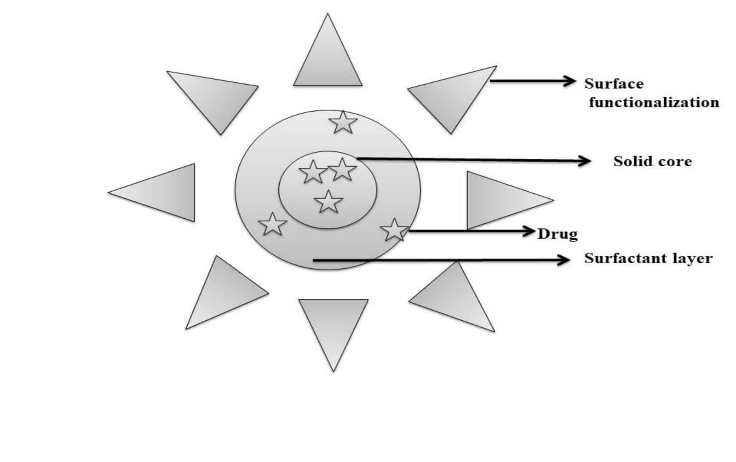
Figure 1: Structure of solid lipid nanoparticles
Types of lipid nanoparticles
Types of Solid lipid nanoparticles (SLNs) are the first generation of lipid-based nanocarriers composed of lipids that remain solid at physiological temperature and are stabilized using appropriate emulsifying agents. These carriers typically exhibit submicron particle sizes, generally below 1000 nm. SLNs offer several advantages, including protection of encapsulated drugs from adverse environmental conditions, suitability for large-scale production particularly via high-pressure homogenization and excellent biocompatibility and biodegradability.
Despite these benefits, SLNs also present certain limitations. Their highly ordered crystalline structure often results in low drug loading capacity and may cause drug expulsion during storage due to lipid recrystallization. Another common drawback is the occurrence of an initial burst release. Within SLNs, drug molecules are generally located between fatty acid chains or glyceride structures; however, polymorphic transitions in the solid lipid matrix during storage can promote the expulsion of previously incorporated drug. Figure 2 schematically illustrates the localization of drug molecules within SLNs and nanostructured lipid carriers.
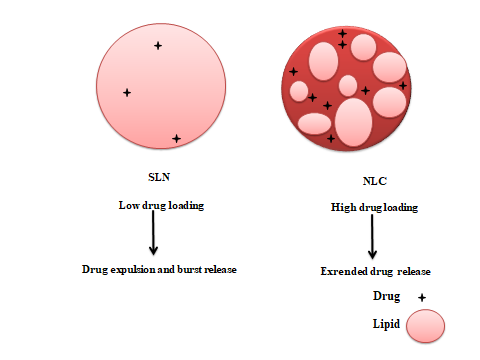
Figure 2
Nanostructure lipid carriers (NLCs) represent the second generation of lipid-based nanocarriers and are composed of a blend of solid and liquid lipids, resulting in a less ordered and more imperfect lipid matrix due to the structural diversity of their constituents. NLCs were developed specifically to address the limitations associated with solid lipid nanoparticles. Owing to their imperfect crystalline structure, NLCs exhibit higher drug loading capacity and reduced risk of drug expulsion by minimizing lipid crystallization during both formulation and storage.
The inclusion of liquid lipids in the NLC matrix enhances drug solubility and significantly decreases the likelihood of drug leakage after preparation and during storage. In comparison to SLNs, NLCs are capable of providing more controlled drug release profiles. Although NLCs remain solid at physiological temperature, they possess lower melting points than SLNs. Their disordered lipid arrangement and crystalline imperfections create additional space for drug incorporation, particularly within the liquid lipid domains, thereby improving drug payload capacity.
Furthermore, NLCs demonstrate lower susceptibility to gelation during preparation and storage, which represents an additional advantage over SLNs. This characteristic also facilitates nanoparticle separation from the dispersion medium and supports dosage form development, including formulations intended for parenteral administration.(5)
2. Advantages and disadvantages Solid Lipid Nanoparticles
2.1. Advantages of Solid Lipid Nanoparticles
2.2. Limitations with solid lipid nanoparticles:
3. Methods of Preparation of SLNs
Common lipids include glyceryl monostearate, Compritol 888 ATO, stearic acid, and Precirol. Surfactants often include Poloxamer 188, Tween 80, or lecithin.
Methods of preparation of SLNs: SLNs are prepared from lipid, emulsifier and water solvent by using different methods and are
3.1. Solid lipid nanoparticles (SLNs) are commonly prepared using several established techniques, among which high-pressure homogenization (HPH) is the most widely employed. Each method differs in terms of processing conditions, lipid content, scalability, and suitability for thermolabile drugs.
3.1. High-Pressure Homogenization (HPH)
High-pressure homogenization is a robust and scalable technique for producing SLNs and is extensively used in pharmaceutical and industrial applications. In this method, a liquid formulation is forced through a narrow homogenization gap under extremely high pressures, typically ranging from 100 to 2000 bar. As the formulation passes through this micron-sized orifice, intense shear stress, turbulence, and cavitation forces are generated, leading to effective particle size reduction into the nanometer range.
SLN formulations prepared by HPH generally contain lipid concentrations between 5% and 10%; however, formulations with lipid contents as high as 40% have also been reported. Depending on processing temperature, HPH can be performed using either hot or cold homogenization techniques.
3.1.1. Hot Homogenization
Hot homogenization is conducted at temperatures above the melting point of the lipid matrix and essentially involves the homogenization of a nanoemulsion. Initially, the drug is dissolved or uniformly dispersed in the molten lipid phase. This lipid melt is then mixed with an aqueous surfactant solution maintained at the same temperature, forming a coarse pre-emulsion using high-speed stirring or high-shear mixing.
The resulting pre-emulsion is subsequently processed through a high-pressure homogenizer while maintaining temperatures above the lipid’s melting point. Upon cooling to room temperature, the lipid recrystallizes, resulting in the formation of solid lipid nanoparticles. Elevated processing temperatures reduce lipid viscosity, which generally facilitates the formation of smaller particles. However, excessively high temperatures may promote drug degradation, lipid oxidation, or drug partitioning into the aqueous phase. Additionally, increasing homogenization pressure or the number of homogenization cycles does not always lead to smaller particles; in some cases, excessive kinetic energy may cause particle aggregation and an increase in particle size.
3.1.2. Cold Homogenization
Cold homogenization was introduced to overcome the limitations associated with hot homogenization, particularly issues related to thermal degradation of sensitive drugs, drug diffusion into the aqueous phase, and polymorphic transitions during lipid crystallization.In this approach, the drug-loaded molten lipid is rapidly cooled, typically using liquid nitrogen or ice baths, to solidify the lipid matrix. The solidified mass is then mechanically ground or milled to produce lipid microparticles. These microparticles are dispersed in a cold aqueous surfactant solution, forming a pre-suspension that is homogenized at or below room temperature.Unlike hot homogenization, cold homogenization directly reduces solid lipid microparticles into nanoparticles through mechanical forces rather than emulsion droplet breakup. This method generally results in broader particle size distributions but offers improved drug retention and stability, particularly for heat-sensitive compounds.
3.2. Ultrasonication and High-Speed Homogenization
Ultrasonication and high-speed homogenization are frequently employed as alternative or complementary techniques for SLN production. Ultrasonication utilizes high-frequency sound waves to generate cavitation forces that break down lipid droplets into nanoparticles. High-speed homogenization, on the other hand, relies on mechanical shear forces to reduce particle size.When used individually, these methods may result in relatively larger particle sizes and wider size distributions. Therefore, combining high-speed homogenization with ultrasonication is often necessary to achieve smaller, more uniform SLNs. Despite their simplicity and low cost, these methods may introduce metal contamination from probe erosion and are less suitable for large-scale manufacturing.
3.3. Solvent Evaporation Method
The solvent evaporation technique is another widely used method for SLN preparation. In this method, the lipid is dissolved in a water-immiscible organic solvent such as cyclohexane or chloroform. This organic phase is emulsified into an aqueous phase containing surfactants, forming an oil-in-water emulsion.
Following emulsification, the organic solvent is removed under reduced pressure, typically at 40–60 mbar, leading to lipid precipitation and nanoparticle formation. High-pressure homogenization may be applied to improve emulsion stability and reduce particle size. Using this technique, SLNs with mean particle sizes as small as 25 nm can be obtained. However, concerns regarding residual solvents and environmental safety limit the industrial applicability of this method.
3.4. Microemulsion-Based Method
The microemulsion-based technique involves the formation of a thermodynamically stable oil-in-water microemulsion at elevated temperatures, usually between 65 and 70 °C. The microemulsion typically consists of a low-melting lipid (such as stearic acid), an emulsifier (e.g., polysorbate 20), a co-emulsifier (such as butanol), and water.Once the hot microemulsion is formed, it is rapidly dispersed into cold water (2–3 °C) under continuous stirring. This sudden temperature reduction induces rapid lipid crystallization, leading to the formation of SLNs while minimizing particle aggregation. The resulting SLN dispersion can be directly utilized as a granulation fluid for the manufacture of solid dosage forms such as tablets and pellets. However, the extensive dilution required during this process significantly limits the achievable lipid concentration compared to HPH-based methods.
3.5. Spray Drying
Spray drying is an alternative to lyophilization for converting SLN dispersions into dry powder form. This technique is particularly suitable for lipids with melting points above 70 °C to prevent particle fusion during drying. Optimal results are typically achieved using SLN dispersions with lipid concentrations of 1–3% in aqueous trehalose solutions or in hydroalcoholic mixtures containing approximately 20% trehalose.
Spray drying offers advantages such as reduced processing time, lower cost, and improved scalability. However, careful optimization of inlet temperature and excipient composition is necessary to preserve nanoparticle integrity.
3.6. Double Emulsion (W/O/W) Method
The double emulsion method is especially useful for encapsulating hydrophilic drugs within SLNs. This technique involves the formation of a primary water-in-oil (W/O) emulsion, in which the drug is dissolved in an internal aqueous phase stabilized by suitable emulsifiers. This primary emulsion is then dispersed into an external aqueous phase, forming a water-in-oil-in-water (W/O/W) system.Solvent evaporation subsequently leads to lipid solidification and nanoparticle formation. The use of stabilizers minimizes drug diffusion into the external aqueous phase, thereby enhancing drug encapsulation efficiency.
3.7. Precipitation Method
In the precipitation method, glycerides or other lipid materials are dissolved in an organic solvent such as chloroform. This lipid solution is emulsified into an aqueous phase containing surfactants. As the organic solvent evaporates, the lipid precipitates, forming solid lipid nanoparticles.This method is relatively simple and does not require high-energy equipment; however, particle size control and solvent residue removal remain significant challenges.
3.8. Film–Ultrasound Dispersion Method
The film–ultrasound dispersion technique involves dissolving both the lipid and the drug in a suitable organic solvent. The solvent is removed by rotary evaporation under reduced pressure, resulting in the formation of a thin lipid film on the walls of the container. An aqueous phase containing emulsifiers is then added to hydrate the film.
Subsequent ultrasonic treatment disperses the lipid film into nanosized particles, producing SLNs with relatively uniform size distribution. This method is particularly useful for laboratory-scale formulation development and offers good control over particle size.(7)
4. Characterization of SLNs
Accurate characterization of SLNs is essential for quality control but remains challenging due to their colloidal size and dynamic structural behaviour. Key evaluation parameters include particle size, size-distribution kinetics (zeta potential), Crystallinity and lipid polymorphism, presence of additional colloidal structures, distribution dynamics, drug loading, in-vitro release, and surface morphology.
4.1. Particle Size and Zeta Potential
The physical stability of SLNs is strongly influenced by their particle size. Photon correlation spectroscopy (PCS) and laser diffraction (LD) are commonly used for size analysis. PCS measures fluctuations in scattered light caused by particle motion and detects sizes from 3 nm to 3 µm, while LD analyses diffraction angles to measure particles from 100 nm to 180 µm. Although PCS is ideal for nanoparticles, it can also detect larger microparticles.
Zeta potential is measured using a zeta analyzer after diluting SLN dispersions 50-fold. Higher zeta potential values generally indicate reduced particle aggregation and better storage stability provided no other stabilizing factors interfere.
4.2. Electron Microscopy (SEM and TEM)
SEM and TEM enable direct imaging of nanoparticles. SEM is mainly used for studying surface morphology, whereas TEM provides higher-resolution visualization of fine structural details. Atomic Force Microscopy (AFM) further offers ultra-high-resolution surface mapping through contact or non-contact probe scanning.
4.3. Dynamic Light Scattering (DLS)
DLS measures variations in scattered light caused by Brownian motion, providing fast, calibration-free particle-size assessment in the submicron range. Static Light Scattering (SLS), including diffraction, interprets scattering patterns using optical models but requires cleaner samples and prior knowledge of optical properties.
4.4. DSC and PXRD
Differential scanning calorimetry (DSC) and powder X-ray diffractometry (PXRD) are used to determine Crystallinity by comparing melting enthalpies of bulk materials with those of dispersions.
4.5. Acoustic Spectroscopy
This method estimates particle size by analysing sound wave attenuation and can also provide insights into surface charge characteristics.
4.6. Nuclear Magnetic Resonance (NMR)
NMR offers details on nanoparticle size and internal physicochemical properties through analysis of chemical shifts and molecular mobility.(8)
5. Applications of Solid Lipid Nanoparticles (SLNs)
Solid lipid nanoparticles have gained significant attention as versatile drug delivery systems due to their biocompatibility, ability to encapsulate diverse therapeutic agents, and potential for controlled and targeted delivery. Their applications span pharmaceutical, genetic, and cosmetic fields.
4.1. Oral Drug Delivery
SLNs are extensively explored for oral drug delivery, particularly for poorly water-soluble drugs. By incorporating drugs into a solid lipid matrix, SLNs enhance drug solubility, protect active compounds from enzymatic and chemical degradation in the gastrointestinal tract, and improve overall bioavailability. The lipid nature of SLNs promotes lymphatic uptake, thereby reducing first-pass hepatic metabolism. SLNs intended for oral administration can be formulated as liquid dispersions or converted into solid dosage forms such as tablets, capsules, pellets, or powders, offering flexibility in formulation and improved patient compliance.
4.2. Parenteral Drug Delivery
SLNs are suitable for parenteral administration through intravenous, intramuscular, or subcutaneous routes. Due to their nanoscale size and lipid composition, SLNs exhibit prolonged circulation time and favorable biodistribution profiles. Following systemic administration, SLNs have been shown to achieve higher drug accumulation in organs such as the lungs, spleen, liver, and brain compared to conventional drug solutions. This enhanced tissue distribution makes SLNs particularly advantageous for delivering drugs that require systemic exposure or targeting of specific organs.
4.3. Topical and Dermal Delivery
SLNs are highly effective carriers for topical and dermal applications. When applied to the skin, they form a lipid film that enhances skin hydration and provides an occlusive effect, thereby improving drug penetration. SLNs also offer controlled and sustained release of active compounds, making them suitable for dermatological and cosmetic formulations. Additionally, SLNs enhance skin protection, UV-blocking capacity, and stability of photosensitive compounds. They can be incorporated into various topical dosage forms, including creams, gels, lotions, and sprays.
4.4. Gene and Nucleic Acid Delivery
SLNs have emerged as promising non-viral carriers for gene delivery applications. They can encapsulate or complex with nucleic acids such as DNA, or mRNA, protecting them from enzymatic degradation and enhancing cellular uptake. Surface modification of SLNs with targeting ligands, peptides, or polymer conjugates further improves intracellular delivery and transfection efficiency. Due to their relatively low toxicity and immunogenicity compared to viral vectors, SLNs represent a safer alternative for gene therapy applications.
4.5. Applications in Cosmeceuticals
In cosmeceutical formulations, SLNs are widely used to improve the stability, penetration, and controlled release of active ingredients. They enhance the performance of sunscreens by improving UV-filter stability and increasing skin adherence, leading to prolonged photoprotection. SLNs also enable the sustained release of antioxidants, vitamins, and anti-aging agents, thereby improving product efficacy and shelf life. Their biocompatibility and ability to mask unpleasant odors or irritation further contribute to their popularity in cosmetic products.
4.6. Targeted Cancer Therapy
SLNs play a crucial role in cancer therapy by enabling targeted and controlled delivery of anticancer agents. Encapsulation within SLNs enhances drug stability, improves tumor penetration, and allows sustained drug release at the tumor site, thereby reducing systemic toxicity. SLNs have been successfully investigated for the delivery of chemotherapeutic agents such as tamoxifen, methotrexate, and camptothecin. They have also shown potential in the treatment of breast cancer and lymph node metastases by improving therapeutic efficacy and minimizing adverse effects associated with conventional chemotherapy.
4.7. Stealth and Targeted SLNs
Stealth SLNs are specifically designed to evade rapid clearance by the reticuloendothelial system, thereby prolonging systemic circulation time. This is typically achieved through surface modification with hydrophilic polymers or natural polysaccharides. Further functionalization with antibodies, ligands, or peptides enables active targeting to specific tissues or disease sites. Such surface-engineered SLNs exhibit improved biocompatibility, enhanced targeting efficiency, and superior therapeutic outcomes, making them highly attractive for advanced drug delivery applications.(9)
CONCLUSION
Solid lipid nanoparticles (SLNs) represent a well-established and promising lipid-based nanocarrier system for effective drug delivery. Their solid lipid matrix, biocompatibility, and capacity to enhance drug stability, bioavailability, and controlled release make them advantageous over conventional delivery systems. SLNs can be prepared using scalable and reproducible techniques such as high-pressure homogenization and emulsification methods, allowing flexibility in formulation development for various routes of administration.
However, challenges such as limited drug loading, lipid polymorphic transitions, and long-term stability issues continue to restrict their broader clinical translation. Recent research efforts focusing on lipid selection, surfactant optimization, and surface modification strategies have shown potential in overcoming these limitations. Overall, SLNs offer significant opportunities for targeted and controlled drug delivery, and continued advancements in formulation design and characterization are expected to expand their pharmaceutical and clinical applications in the near future.
REFERENCES


Gaikwad Jaya, Dhankani Mansi, Dr. S. Pawar, A Review on Solid Lipid Nanoparticles, Int. J. of Pharm. Sci., 2026, Vol 4, Issue 4, 2203-2212, https://doi.org/10.5281/zenodo.19567647
 10.5281/zenodo.19567647
