
Dr D. Y. Patil College of Pharmacy, Akurdi, Pune, Dr. D.Y. Patil Educational Complex, Sector No. 29, Pradhikaran, Akurdi, Pune, Maharashtra, India 411044..
Use of artificial intelligence (AI) is proliferating in society and in pharmacy practice. Artificial Intelligence has developed as a way to deal with data and number-based problems, as well as other challenges in different areas, helping to reduce the amount of workload on man. This advancement has led to numerous technological developments in almost every industry including engineering, architecture, education, business, health and accountancy and more have resulted from it. AI has come a long way in healthcare having made significant contributions to the storage and management of data and information in the healthcare industry, including patient medical histories, medication stocks, and more. Software and computer applications such as diagnostic tools like CT diagnosis and MRI radiation technology and more have been developed to support and streamline healthcare procedures. Inarguably, AI has revolutionized healthcare to be more effective and efficient and pharmacy sector is no exception. Given the increasing significance of AI, we aimed to produce a thorough report on the Ethical and Regulatory considerations due to AI. This review paper elaborates a thorough examination of how artificial intelligence and regulatory frameworks interrelate along with the suggestions for solving ethical and legal matters to advance the generation of safe and effective pharmaceuticals..
Artificial intelligence technology represents a paradigm shift in health care, offering numerous opportunities to improve patient care, revolutionize medical research and optimize clinical workflows. As it can improve therapeutic outcomes and reduce side effects, personalised healthcare- which is defined by customised treatment regimens based on patient characteristics and outputs has grown in popularity. AI technologies have significantly accelerated the drug development process since they have enabled researchers to analyse huge amounts of information, predict drug-target interactions, and create novel therapeutic molecules. These technologies include machine learning, deep learning, and natural language processing. By automating administrative tasks, forecasting patient admissions and discharges, these can improve efficiency, lower costs and charges, and alleviate the shortage of healthcare workers. Furthermore, based on real time data analysis, AI-driven prediction models can assist healthcare organisations in anticipating disease outbreaks, allocating resources during public health emergencies, and optimising treatment protocols. The integration of AI and machine learning into healthcare systems represents important ethical issues that need to be carefully addressed to secure responsible and equitable deployment, notwithstanding its transformative promise. A careful analysis of the ethical implications of AI in pharmacy is necessary due to the intricate interactions between clinical practice, technical progress and ethical standards. Every facet of the creation, application, and use of AI is influenced after keeping ethical considerations in mind . Ethical standards are the basis of responsible behaviour, from protecting patient privacy and data security to reducing algorithmic biases and fostering openness. The adoption of AI in pharmacy focuses and rationalizes a careful stasis between technological effectiveness and the essential ethical responsibilities of patient care. Pharmacists need to stay alert to the ethical consequences of automated systems, making certain that AI tools serve to enhance, rather than substitute, human professional judgment. International health guidelines highlight the need for AI governance in healthcare to focus on equity, aiming to avoid the expansion of healthcare disparities caused by technological biases. Although AI can analyze extensive data sets, the pharmacist's role is transforming into an ethical guardian who guarantees that these tools are employed with professional integrity.
Deep learning, AI, Machine learning and Developing Drugs
Artificial Intelligence is the use of techniques to mimic human behaviour in computers. AI also includes a subject called Machine Learning (ML), which uses statistical methods to learn both unconsciously and actively. The three types of machine learning are supervised, unsupervised and reinforcement learning. Data from input and output sources are used in supervised learning, are employed in the construction of predictive models for methods of regression and classification. Supervised machine learning diagnoses diseases using subgroup classification. Artificial neural networks (ANNs) are used in deep learning (DL), a subfield of machine learning to learn from and adjust to vast volumes of experimental data. The process of developing drugs or Drug development data from accessible sources, including computer modelling, literature- based information, and high throughput screening of compounds and fragments, is the first step in the feedback driven drug development process. Automating some cycle steps reduces errors and randomness and improves the efficiency of drug discovery. Understanding organic chemistry is necessary for De Novo design techniques because virtual screening models and silicon compound synthesis serve as substitutes for biological evaluations of toxicity and efficacy. The medications, efficacy, safety and course of the illness. However in similarity to any drug research, the discovery of a lead chemical does not ensure the creation of a secure and efficient cure.
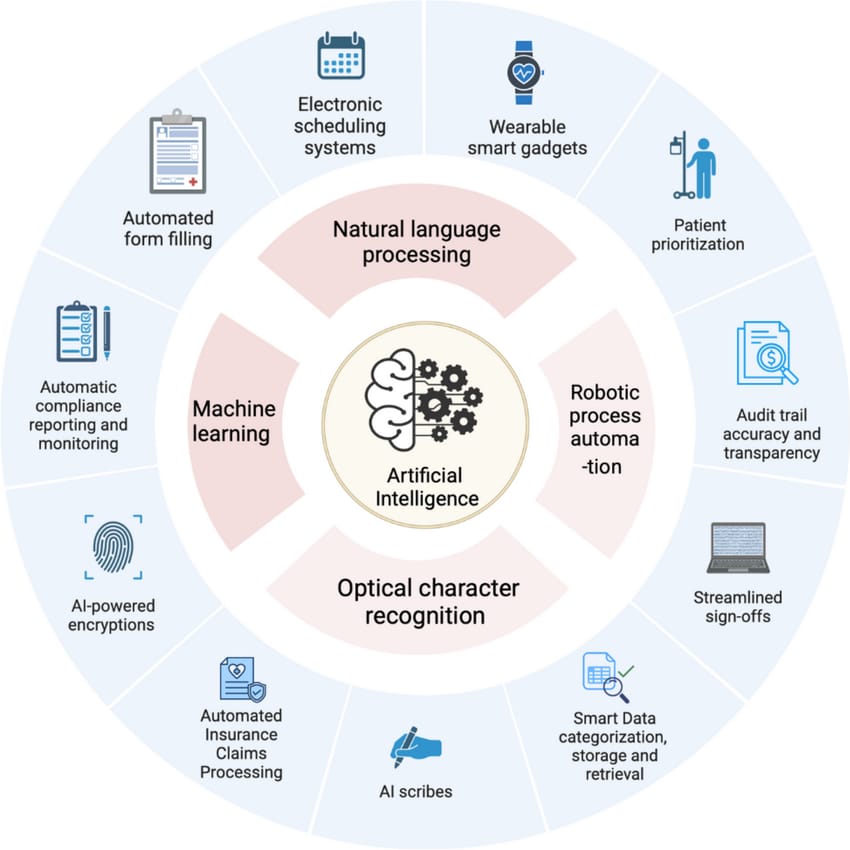
Ethical Aspects
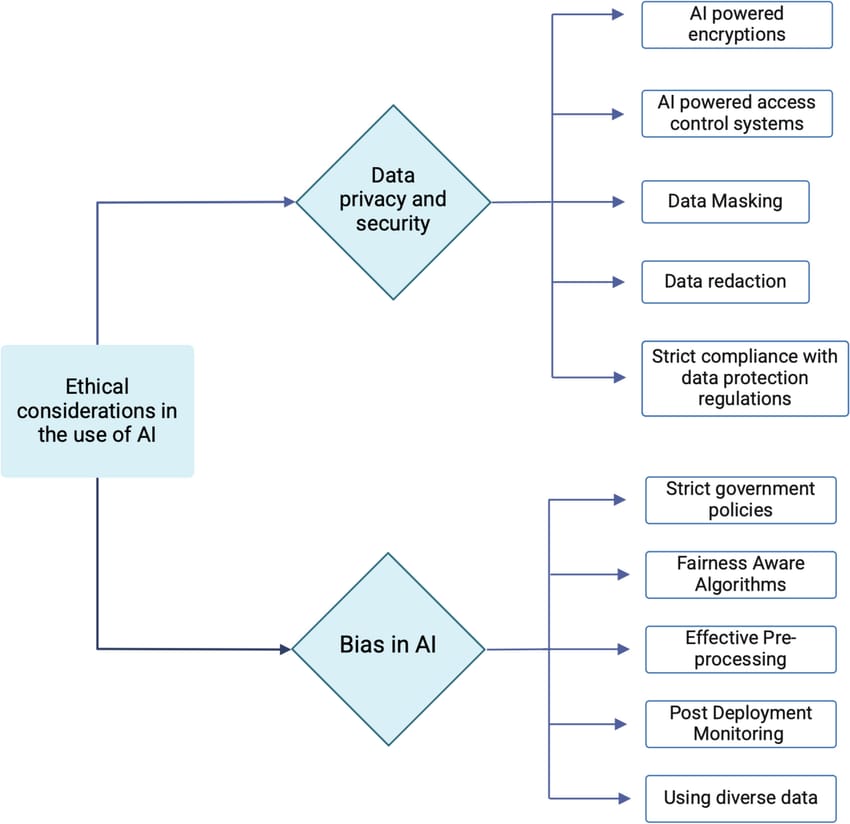
Artificial Intelligence has emerged as a disruptive force in the pharmaceutical industry in recent years, with the potential to drastically change how medications are researched, identified, and administered. At the heart of these challenges are the need to uphold patient safety and welfare, balance innovation with morality, and navigate a complex regulatory system that frequently keeps up with rapidly advancing technology. Data Security and Privacy concerns are raised because most AI algorithms rely on access to confidential medical data. Strong data randomisation techniques and rigorous adherence to data privacy rules are necessary to preserve patient trust and safeguard personal information, such as the General Data Privacy Regulation (GDPR) in Europe and the Health Insurance Portablility and Accountability Act (HIPAA) in the United States. Ethical issues are essential when handling the complexity that AI brings to the pharmaceutical industry. Ethical considerations are vital while negotiating the complexity that AI has brought to the table in the pharmaceutical industry. Establishing a cohesive global regulatory system is crucial to guarantee that AI-driven clinical research is conducted safely and transparently across various countries. National health agencies are placing more emphasis on how regional regulations can evolve to keep pace with the swift advancements in machine learning related to drug dispensing software. The entire lifecycle of a medicinal product, from its development in the lab to its use by patients, now necessitates an updated oversight approach that considers the impact of generative AI.
Major Ethical considerations:
AI in drug design requires sensitive data (personal information, generic data). The problem is large amounts of data can be misused or cause security breaches. There is a lack of sufficient privacy and consent. The solution can be that data must be carefully kept private and secure. Data sharing should be encrypted. Stress the significance of privacy and permission in here.
Complex AI models (such as DL) make judgements, although it is unclear how or why they do so. Unborn pharmaceutical development will probably depend on AI models that can be checked and explained, moving down from" black box" systems toward further responsible wisdom. The issue is that if AI claims that a drug works or is hazardous , not understanding the underlying parameters is dangerous. Regulatory bodies must grasp AI’s reasoning for drug approval. Doctors and patients struggle to trust AI’s choices without explanation. The effort made to reduce this can be by highlighting and explaining the use of AI and its significance. Pose and clarify the question “Why do we need to understand how AI makes decisions?”
If an AI-designed medicine produces issues, it is unclear who is to blame (AI developer, pharmaceutical business, data source, etc.). There is no defined duty for detecting and resolving problems produced by AI errors (for example, incorrect drug prediction). The solution can be to highlight the legal and ethical issues surrounding AI adoption. Declare that this is a “evolving” area with no definitive answers yet.
Challenges associated with Data as data is necessary for AI. Obtaining high quality data is challenging. Data is difficult to integrate and frequently comes from multiple labs in different forms. Predictions made by AI are flawed due to biased data. Limited availability of late-stage outcomes (example- human drug performance). To make more accurate predictions, more data is required. The issue of “Black Box” persists. Uncertainty about AI’s decision-making process breed’s mistrust. There are conventional approaches to drug discovery. AI’s forecasts novel medications and chemicals. It’s difficult to demonstrate how AI predictions function in the actual world because they frequently rely on simulations or historical data not real time.
It is frequently difficult or impossible to conduct appropriate control studies for novel chemicals anticipated by AI. Huge chemical space: it is difficult to locate effective medications due to the size of the chemical space AI investigates. Issues with data sharing and confidentiality- for AI models to train efficiently, a lot of data is required. Businesses are reluctant to divulge private information, which restricts AI’s capacity for training. Ai has the potential to improve drug safety and efficacy forecasts, which will lower the number of failures in the subsequent phase of development.
Concerns related to AI integration
Autonomy
One of the most primary ethical problems about AI in pharmacy practice is the preservation of patient autonomy and informed consent. Many participants voiced concern about patient’s reservations about AI’s ability to design appropriate treatment recommendations. This study also emphasises on patient’s safety, autonomy and higher costs as factors influencing patient acceptance. This raises concerns regarding people’s ability to make informed healthcare decisions when it comes to AI systems. Patients should be able to determine whether they are comfortable with AI-driven advice and understand the implications. Its an obligation to give patients precise information about the use of AI in order to foster confidence and enable them to make knowledgeable decisions about their treatment regimes. Furthermore, almost two-thirds of participants voiced worries about doctor’s resistance to adopting AI, which is consistent with the general sentiment seen in a systematic review where more than 60% doctors and medical students showed favourable but cautious attitudes toward clinical AI, indicating a cautious approach despite growing awareness of AI and its clinical applications. However, the results of a more recent qualitative study showed that physicians using AI in UK healthcare had limited awareness and involvement. These issues highlight how crucial it is to build patient and healthcare provider trust and adoption of AI technologies. These issues can be resolved and trust in AI – assisted healthcare increased with ethical communication and openness in AI implementation. Concerns about confidentiality must be addressed in addition to the ethical difficulties pertaining to patient autonomy. However, more information is covered below that follows because of the grave consequences of possible confidentiality violations.
Beneficence and non-maleficence
Healthcare workers must behave in their patients’ best interests and prevent harm according to the ethical precepts of beneficence and non-maleficence. Concerns regarding beneficence and potential maleficence were raised by the fact that more than half of the participants (56.5%) were worried that AI systems would oversell patients’ needless drugs and cosmetics. A biased algorithmic system in the pharmaceutical industry could be the cause of such an act, and consumers would suffer if there were no legally binding laws in place. The welfare of patients should come first when using AI in pharmacy practice, and recommendations should be grounded in evidence rather than financial gain. To make sure AI-driven recommendations are in the best interests of patients, pharmacy professionals must rigorously assess them. The study also raised questions about how AI’s poor communication abilities and lack of body language will affect patient counselling. Given that it touches on the possible damage to the patient-provider relationship, this is an important ethical question. Our results are consistent with the concerns expressed in the literature on AI’s potential advantages in illness diagnosis during the Covid -19 pandemic and the necessity of ensuring a beneficial influence on person-centred care, particularly when it comes to the use of chatbots for mental health. Professionals in pharmacy must make sure that AI does not lower the standard of patient care. They must strike a balance between preserving the human element in patient contacts and the efficiency improvements AI provides. The danger to patient privacy is one of the main issues in pharmacy practice. Nearly 60% of participants expressed concern about AI’s potential to compromise data privacy. Unlike, other kinds of data, health data is extremely private and private and may have and impact on people’s personal lives, health, and well-being. It is sensitive to the possibility of prejudice, shame or stigma, which is a problem that is especially common in poor nations. These worries are legitimate since AI systems frequently gather, store, and analyse private patient data. This emphasizes the necessity of strong data security protocols and compliance with privacy laws like the US’s Health Insurance Portability and Accountability Act (HIPPA). The report also brought attention to concerns over AI systems in pharmacies being susceptible to cybersecurity risks including hacking. This fear was shared by more than 58% of participants. Securing AI infrastructure is crucial given the increase in cyberattacks on healthcare systems, as shown in a recent study. Pharmacy stakeholders should give data security and privacy priority when deploying AI technology since potential patient confidentiality violations are a major ethical concern. Investing in these cybersecurity solutions is crucial for protecting data and upholding provider confidence. Additionally, a sizable percentage of responders (62.9%) thought that non-specialized chemists might be replaced by AI systems. The impact of this on employment in the pharmacy industry, which resulted in labour relocation, raises ethical concern. Automation- related job displacement is a concern that affects many industries, not only the pharmacy industry. In a prior survey, most participants denied that chemists could be replaced, indicating a different pattern. We may have enquired about “non-specialized pharmacists” (those who are not certified by the Board of Pharmacy Specialities) rather than the pharmacy profession. It is important to understand that although AI can automate certain processes, it can also improve chemists’ skills so they can concentrate on more intricate, patient-centred aspects of their jobs. Therefore, rather than replacing pharmacy professionals’ skills, the incorporation of AI should be viewed as a tool to enhance and complement them. Likewise, in accordance with Arab Muslim communities, the conviction that God is the only provider coexists with the knowledge that people must take initiative and make morally justifiable efforts to obtain their provision. Strategies for retraining and reskilling pharmacy personnel most impacted by these changes must be included in ethical considerations to ensure they continue to be useful and relevant in the changing field of pharmacy practice. Translucency in how algorithms reach specific remedial conclusions is vital for erecting trust between the case, the druggist, and the technology. Developers must laboriously review drugstore algorithms for retired impulses to insure that treatment recommendations are fair for different case populations.
Limitations of AI:
Regulatory Consideration
Sometimes the current regulatory frameworks are not keeping up with the rapid advancement of AI technology in the healthcare sector. Cooperation between regulatory bodies and industry participants is essential to developing clear norms and regulations specific to AI applications in drug development. One such framework is FDA’s based Software as a Medical device
(SAMD) approach, which aims to provide regulatory clarity as well as the safety ad effectiveness of AI-driven medical technology. Continuous post-marketing monitoring is necessary to sustain long-term effects and ongoing compliance with safety requirements. By addressing these legislative barriers, stakeholders may foster innovation, safeguard public health, and maintain trust in AI- assisted drug development. As a global authority, the WHO emphasizes the necessity of international standards and ethical guidelines in AI integration. Since AI has the potential to enhance patient outcomes and expedite drug development, WHO advocates for legislation that ensures AI systems are safe, effective and egalitarian. Findings from current sources, including computer modelling, literature- based data, and high throughput screening of compound and fragments, are the first step in the feedback driven medicine development process. Findings from existing sources, such as high-throughput screening of compounds and fragments, are the first step in the feedback-driven drug development process. Maintaining high Norms of trustability in pharmaceutical manufacturing now involves enforcing AI protocols that rigorously cleave to being quality compliance criteria . As AI takes on more complex places in the drugstore, legal systems must easily define where the liability shifts between the software inventor and the healthcare provider.Regulatory pathways are shifting toward a lifecycle approach, where AI software is covered continuously for safety indeed after it has entered the request.
Future Aspiration
With a focus on real-world deployment, interdisciplinary collaboration, and the integration of developing technology, the landscape of potential future approaches for AI-driven clinical decision support is appealing. Furthermore, in order to provide a seamless integration into clinical workflows, AI has still to focus increasingly on enhancing its robustness and interoperability. To overcome the enduring challenges of data heterogeneity, scalability, novel approaches to federated learning and decentralised architectures are needed. AI can completely disrupt data management systems for security needs in patient-centred care delivery when combined with other transformative technologies. Blockchains and the Internet of Medical Things are two instances of these technologies. Emerging technologies are expected to contribute significantly to the development of new chemical entities and increase the structural diversity of synthetic libraries during the next 10 years. Artificial intelligence will greatly accelerate drug research and reduce the risk of late-stage failure by providing early predictions on novel, chemical and biological targets. Such predictions would also have a significant impact on medicine repurposing due to the discovery of new therapeutic indications. It is recommended to create a customised treatment plan based on each patient’s distinct genetic and medical characteristics. Responsibility for AI issues in a clinical setting must be participated, involving rigorous oversight from both the multidisciplinary health platoon and the technology designers. Protecting case confidentiality in the digital age requires AI systems that are erected with sequestration- by- design principles to satisfy strict data protection laws.
CONCLUSION
This study has highlighted important issues and possible advantages while illuminating the complex terrain of AI integration in pharmacy practice. The study highlights the critical need for moral norms and legal frameworks that safeguard patient privacy, guarantee cybersecurity, and advance fair access to AI systems. Future research studies should explore on creative results, educational tactics, and collaborative models that optimise the benefits of AI while conserving patient welfare and the moral precepts inherent in biomedical practice as the pharmacy profession negotiates the transformative power of AI. Given the industry’s rapid expansion in this field, it is imperative to consider the ethical ramifications of using artificial intelligence technology in the drug and medicine development process. The findings emphasize the significance of ethical guidelines, education, and patient autonomy in confirming. (Hisham E Hasan, n.d.) AI has significant advantages, but ethical and legal issues must be precisely considered. Ensuring accountability, transparency, translucency,equity and privacy protection will be necessary to maintain public trust and benefit from AI-assisted medical research. There is a need for innovation ,exploration and ethics to coexist together, and it is very crucial to safeguard and guarantee patient privacy and make sure that medical data is secure and all should follow ethical principles so that AI and humans can coexist and create a holistic balance among them.
REFERENCES



Dhanraj Kande, Anisha Nagar, Kalyani Chande, AI In Pharmacy: Navigating The Ethics and Regulations, Int. J. of Pharm. Sci., 2026, Vol 4, Issue 4, 2582-2590, https://doi.org/10.5281/zenodo.19606730
 10.5281/zenodo.19606730
