

We use cookies to ensure our website works properly and to personalise your experience. Cookies policy
MABD Institute of Pharmaceutical Education And Research, Babhulgaon bk.
Azadirachta indica, commonly known as neem or margosa, is a tree native to the Indian subcontinent, particularly thriving in dry regions of South Asia including India, Nepal, Sri Lanka, Bangladesh, Pakistan, and the Maldives. Traditionally, neem has played an important role in Ayurvedic and folk medicine and is now widely utilized in cosmetics and organic farming. The crude extracts of A. indica have demonstrated a variety of pharmacological properties, drawing considerable scientific interest. This review focuses on the extensive potential of neem in exhibiting antibacterial and antifungal activities. It also examines how different solvents and various parts of the neem plant influence microbial growth inhibition, assessed through the disc diffusion method—one of the most commonly employed techniques to evaluate bacterial and fungal suppression.
Azadirachta indica A. Juss., commonly known as neem, is a well-known medicinal tree from the Meliaceae family. Originating from the Indian subcontinent, neem has been valued for centuries in Ayurvedic and traditional medicine because of its wide range of therapeutic properties (Subapriya & Nagini, 2005). In recent years, the plant has gained renewed scientific interest, particularly for its antimicrobial and antifungal potential, as resistance to conventional antifungal drugs continues to rise (Islas et al., 2020).Neem is rich in biologically active compounds such as azadirachtin, nimbin, nimbidin, and quercetin, which are responsible for many of its pharmacological effects (Biswas et al., 2002). Different parts of the plant—including its leaves, bark, seeds, and oil—have shown notable antifungal activity against various fungal pathogens, suggesting neem as a promising natural alternative to synthetic antifungal agents (Boeke et al., 2004).This review provides an in-depth discussion on the antifungal potential of A. indica. It highlights its key phytochemical components, possible mechanisms of antifungal action, and the effects of different plant parts and extraction solvents on antifungal efficiency. Additionally, the review explores recent developments in neem-based formulations and their applications in the pharmaceutical and agricultural sectors.[1]
Fungal Infection :
Fungal infections, also known as mycoses, are diseases caused by fungi that invade and grow on or inside the body. Although most fungi are harmless and play important roles in the environment by decomposing organic matter, some species can cause infections in humans. These infections range from mild skin problems to serious systemic illnesses, especially in individuals with weak immune systems.Fungi differ from bacteria and viruses because they are complex eukaryotic organisms with a defined nucleus and cell wall made of chitin. They can exist as yeasts (single cells), molds (filamentous forms), or dimorphic fungi (organisms that can switch between both forms depending on environmental conditions). [2]
Types Of Fungal Infection :
Superficial fungal infections involve only the outermost layers of the skin, hair, or nails. These infections are generally mild and non-invasive, meaning they do not penetrate deep tissues or cause serious health issues. However, they can lead to cosmetic discomfort and mild irritation.
Symptom :
2. Cutaneous Fungal Infections (Dermatophytosis) :
Cutaneous fungal infections are caused by fungi that feed on keratin, a protein found in the outer skin layer, hair, and nails. These infections are more common than superficial ones and are often referred to as ringworm or tinea infections depending on the area affected.
Symptoms :
3. Subcutaneous Fungal Infections :
Subcutaneous fungal infections occur when fungal spores enter the deeper layers of the skin through cuts, punctures, or wounds—usually after contact with contaminated soil, plants, or thorns. These infections progress slowly and can lead to chronic conditions if left untreated.
Symptoms :
4. Systemic (Deep) Fungal Infections :
Systemic fungal infections are the most severe type, as they affect internal organs such as the lungs, liver, brain, or kidneys. These infections typically begin when fungal spores are inhaled into the lungs, from where they can spread to other parts of the body through the bloodstream. They are more common in individuals with weakened immune systems.
Symptoms :
PLANT PROFILE :
Neem (Azadirachta indica)
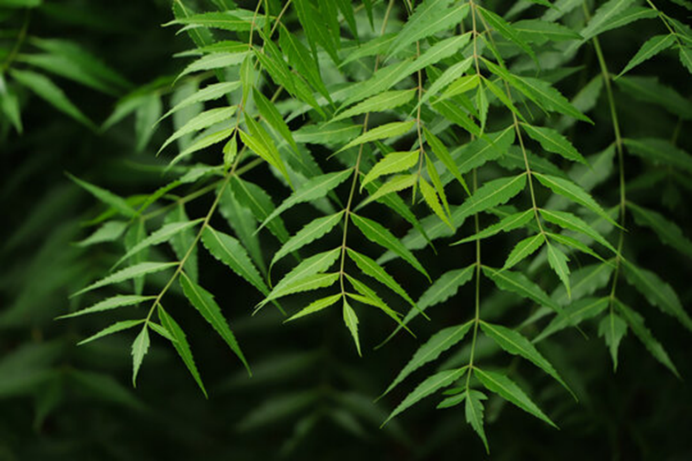
Fig. 1 : Neem
Classification and Nomenclature
Table 1 : Classification and Nomenclature of Neem
|
Category |
Details |
|
Kingdom |
Plantae |
|
Order |
Sapindales |
|
Family |
Meliaceae (commonly known as the Mahogany family) |
|
Genus |
Azadirachta |
|
Species |
Azadirachta indica A. Juss. |
|
Common Names |
Neem, Nimba (from Sanskrit “Arishta”, meaning perfect, complete, or imperishable), Indian Lilac, Margosa Tree |
Neem Leaf Active Compounds :
The leaves of Azadirachta indica (neem) are a rich source of diverse bioactive phytochemicals that contribute to its wide range of medicinal and therapeutic applications. These compounds primarily belong to groups such as limonoids, flavonoids, tannins, steroids, saponins, and glycosides, many of which demonstrate significant antimicrobial, antifungal, antioxidant, and anti-inflammatory properties.
Nimbin is one of the earliest tetranortriterpenoids identified from neem leaves. It possesses strong antiseptic, antiviral, and antifungal properties and contributes to the plant’s characteristic bitter taste. In addition, nimbin supports wound healing and immune modulation, enhancing the plant’s therapeutic value .
Nimbidin is a major bioactive constituent found in both neem leaves and seed oil. It exhibits anti-inflammatory, antibacterial, antifungal, and antiulcer properties. Experimental studies have shown that nimbidin effectively suppresses the growth of several pathogenic fungi, making it a key compound responsible for neem’s antifungal potential .
Azadirachtin, a limonoid compound, is one of the most extensively studied constituents of neem. Although it is predominantly found in seeds, small amounts also occur in the leaves. It shows potent antifungal, insecticidal, and antifeedant activities. Azadirachtin disrupts fungal cell wall synthesis and inhibits spore germination, thereby preventing fungal growth and spread
Quercetin is a flavonoid present in high concentrations in neem leaves. It has demonstrated strong antioxidant, antifungal, and anti-inflammatory effects. Its mechanism of action includes the neutralization of free radicals and disruption of fungal cell membrane integrity, leading to inhibited fungal growth .
Gedunin, another important limonoid, exhibits notable antifungal and antiparasitic activities. It functions by inhibiting heat shock proteins, which are crucial for fungal cell survival and proliferation. Additionally, gedunin has shown promising anticancer and anti-inflammatory effects in various biological studies.
Salannin, a structural analogue of azadirachtin, displays moderate antifungal and insecticidal properties. It contributes to the plant’s natural defense system by protecting it from fungal pathogens and insect attacks, which also makes it valuable in agricultural pest management .
Besides limonoids and flavonoids, neem leaves also contain tannins, saponins, and alkaloids, which possess strong antioxidant and antimicrobial properties. These secondary metabolites play an essential role in safeguarding the plant against microbial infection and oxidative stress, enhancing its resilience and therapeutic potential. [5]
Antifungal Activity of Neem (Azadirachta indica) :
Neem (Azadirachta indica A. Juss.) is well known for its broad-spectrum antimicrobial properties, particularly its antifungal activity. Various parts of the neem plant — including the leaves, bark, seeds, and oil — possess potent compounds that inhibit the growth of several pathogenic fungi. These antifungal effects are primarily attributed to the presence of bioactive phytochemicals such as azadirachtin, nimbin, nimbidin, quercetin, and gedunin, which interfere with fungal cell wall synthesis, spore germination, and enzyme activity .Neem extracts have shown significant activity against a wide range of fungal species, including Aspergillus niger, Candida albicans, Fusarium oxysporum, Trichophyton rubrum, and Microsporum gypseum . These effects are often evaluated using methods such as the diffusion assay or agar well diffusion test, which demonstrate clear zones of inhibition, indicating fungal growth suppression .The antifungal action of neem is also linked to its ability to disrupt fungal membrane permeability, inhibit ergosterol synthesis, and generate oxidative stress within fungal cells. Furthermore, neem-based formulations have been explored as eco-friendly alternatives to synthetic fungicides in agriculture, effectively controlling plant fungal diseases such as leaf spot, mildew, and rust. [6]
Mechanism of Antifungal Activity of Neem (Azadirachta indica) :
The antifungal mechanism of Azadirachta indica (neem) is primarily attributed to its rich composition of bioactive compounds, including azadirachtin, nimbin, nimbidin, gedunin, and quercetin. These phytochemicals act through multiple pathways to inhibit fungal growth and reproduction.
Neem extracts interfere with the synthesis of fungal cell wall components such as chitin and glucan, weakening the structural integrity of the cell wall (Biswas et al., 2002). Compounds like azadirachtin and nimbidin also alter cell membrane permeability, leading to leakage of essential cellular contents and eventual cell death.
Neem bioactives suppress spore germination and hyphal elongation, preventing fungal colonization. This effect has been observed against species like Aspergillus niger, Candida albicans, and Fusarium oxysporum .
Phytochemicals such as quercetin and gedunin inhibit key fungal metabolic enzymes, including those involved in ergosterol biosynthesis — an essential component of fungal cell membranes. The inhibition of ergosterol formation disrupts membrane function, causing growth retardation.
Neem extracts can induce reactive oxygen species (ROS) production in fungal cells, leading to oxidative damage of lipids, proteins, and DNA. This oxidative stress ultimately results in fungal cell apoptosis.
Some neem compounds interfere with DNA replication and protein synthesis, thereby supressing fungal growth and reproduction at the molecular level. [7]
Formulation Approaches of Neem-Based Antifungal Products :
Neem (Azadirachta indica) has been widely explored for its antifungal properties, and various formulation approaches have been developed to maximize its efficacy, stability, and usability in both medical and agricultural applications. These approaches focus on extracting and delivering the bioactive compounds—such as azadirachtin, nimbin, nimbidin, and gedunin—effectively to target fungal pathogens.
One of the simplest approaches involves preparing aqueous or ethanol extracts of neem leaves, bark, or seeds. These extracts retain a range of bioactive phytochemicals and can be applied directly as sprays or incorporated into creams and gels for topical antifungal use. Extraction solvents can influence the yield and potency of antifungal compounds.
Neem oil is rich in limonoids and other antifungal compounds. It can be formulated as emulsions, ointments, or lotions for medical applications or as biopesticide sprays in agriculture. Oil-based formulations improve stability, shelf-life, and penetration of active compounds.
Recent advances involve encapsulating neem bioactives in nanoparticles, nanoemulsions, or liposomes. These nanoformulations enhance solubility, protect phytochemicals from degradation, and improve targeted antifungal activity against resistant strains.
Neem extracts are often combined with other plant-derived antifungal agents or conventional antifungal drugs to achieve synergistic effects, improve efficacy, and reduce required dosages.
In crop protection, neem is formulated as aqueous sprays, powders, or granules to control fungal infections like leaf spot, powdery mildew, and rust. These formulations offer eco-friendly and biodegradable alternatives to chemical fungicides.
For clinical antifungal applications, neem extracts are incorporated into creams, gels, or ointments for treating fungal skin infections such as ringworm, candidiasis, and athlete’s foot. Formulation strategies aim to enhance skin penetration and sustained release of active compounds.[8]
Future Perspectives of Neem (Azadirachta indica) in Antifungal Applications :
Neem (Azadirachta indica) has long been recognized for its potent antifungal properties, and its potential continues to expand with advances in biotechnology, pharmacology, and sustainable agriculture. Future research and applications of neem-based antifungal agents are likely to focus on the following areas:
Developing nanoformulations, encapsulations, and sustained-release systems can enhance the stability, solubility, and bioavailability of neem’s bioactive compounds. Such approaches may improve targeted antifungal activity, reduce required dosages, and minimize side effects, making neem extracts more effective in clinical and agricultural settings.
Combining neem extracts with other plant-derived antifungals or conventional antifungal drugs can create synergistic effects, helping to overcome drug resistance in pathogenic fungi. This strategy may also reduce toxicity while improving efficacy.
Further exploration into topical and systemic neem-based antifungal formulations can provide natural alternatives for treating dermatophytic, candidal, and opportunistic fungal infections. Standardization of extracts and clinical trials will be crucial for wider medical acceptance.
Neem’s antifungal properties offer eco-friendly alternatives to chemical fungicides. Future applications may focus on bio-pesticide development, integrated pest management, and organic farming practices, providing environmentally safe solutions for fungal plant diseases.
Research into the molecular mechanisms of neem’s antifungal action can lead to the identification of novel bioactive compounds. Genetic and metabolomic studies may uncover new pathways for developing highly specific antifungal agents.
Future work will also emphasize quality control, standardization, and large-scale production of neem-based antifungal formulations to ensure consistency, potency, and regulatory compliance for both pharmaceutical and agricultural products.
In conclusion, neem represents a promising natural antifungal agent with potential for sustainable healthcare and agriculture. Advances in extraction, formulation, and clinical evaluation will likely expand its application and impact in the coming years.[9]
Pharmacological Action Of Neem :
Antimicrobial and Antifungal Action :
Neem is well known for its broad-spectrum antimicrobial properties. Compounds such as azadirachtin and nimbidin disrupt microbial cell membranes, interfere with energy metabolism, and inhibit the synthesis of vital cell wall components. These effects make neem highly effective against bacteria, fungi, and even certain viruses.
Its antifungal activity, in particular, is attributed to the inhibition of ergosterol synthesis in fungal cell membranes and suppression of spore germination, preventing fungal growth and reproduction.
Anti-inflammatory and Analgesic Action :
Neem contains several anti-inflammatory agents such as nimbidin and nimbin, which help reduce pain and swelling. These compounds inhibit the activity of cyclooxygenase (COX) and lipoxygenase (LOX) enzymes, thereby reducing the production of inflammatory mediators like prostaglandins and leukotrienes.
This mechanism helps relieve inflammation in conditions such as arthritis, skin infections, and wound healing. Neem oil and leaf extracts are often used topically to soothe irritation, redness, and pain.
Antioxidant and Free Radical Scavenging Activity:
Free radicals and oxidative stress play a key role in the development of chronic diseases. Neem is rich in flavonoids and polyphenols, which act as strong antioxidants. They neutralize reactive oxygen species (ROS) and protect cells from oxidative damage.
This antioxidant property also supports liver function, boosts immunity, and slows down cellular aging.
Antidiabetic and Hypoglycemic Activity :
Neem has demonstrated significant potential in controlling blood glucose levels. The tannins, flavonoids, and saponins in neem improve insulin sensitivity, enhance glucose uptake, and inhibit α-glucosidase enzymes that break down carbohydrates.
Regular use of neem extracts has been shown to lower fasting blood sugar and improve lipid profiles, making it beneficial for managing Type 2 diabetes mellitus.
Anticancer and Antitumor Properties :
Several studies have shown that neem extracts can inhibit the growth of cancer cells and induce apoptosis (programmed cell death). Compounds such as gedunin and azadirachtin interfere with signaling pathways that regulate cell division and metastasis.
Additionally, neem’s antioxidant and immune-enhancing effects contribute to its protective role against various types of cancers, including those of the skin, breast, and liver.
Immunomodulatory Activity :
Neem enhances the body’s natural defense mechanisms by stimulating both cell-mediated and humoral immunity. It increases the activity of macrophages, lymphocytes, and natural killer cells, helping the body respond effectively to infections.
This immune-boosting property is one reason neem is widely used in traditional medicine for treating skin disorders, allergies, and chronic infections.
Antimalarial and Antiparasitic Activity :
Neem has been used for centuries to treat malaria and parasitic diseases. Gedunin and related limonoids in neem interfere with the growth and survival of Plasmodium species, the parasite responsible for malaria.
Neem extracts can also reduce parasite load and help the body recover from infection more rapidly when used alongside conventional treatments.
Wound Healing and Skin Protection :
Neem accelerates wound healing due to its antimicrobial, anti-inflammatory, and collagen-promoting effects. Topical application of neem oil or paste supports tissue repair, minimizes scarring, and prevents secondary infections.
Its cooling and cleansing properties also make neem an effective remedy for acne, eczema, and psoriasis.[10]
Future Scope :
The future of neem (Azadirachta indica) as an antifungal agent looks highly promising due to its natural origin, broad-spectrum activity, and low toxicity compared to synthetic drugs. With the growing problem of antifungal resistance and side effects associated with conventional medications, neem offers an eco-friendly and sustainable alternative for both medical and agricultural use. Future research can focus on isolating and characterizing specific bioactive compounds such as azadirachtin, nimbidin, and quercetin to better understand their exact mechanisms of antifungal action. Advances in nanotechnology and formulation science also open new opportunities to develop neem-based nanogels, sprays, and ointments with improved stability, controlled release, and higher bioavailability. Moreover, integrating neem extracts with other herbal or synthetic antifungal agents could enhance synergistic effects, leading to more effective combination therapies. There is also a need for clinical trials and standardized formulations to ensure safety, consistency, and regulatory acceptance. Beyond human health, neem’s antifungal potential can be harnessed in crop protection and food preservation, reducing dependence on chemical fungicides. Overall, with continued scientific exploration and innovation, neem could emerge as a next-generation, green antifungal solution that bridges traditional wisdom with modern pharmacology.[11]
CONCLUSION :
Neem (Azadirachta indica) is a potent natural antifungal source that offers a safe and eco-friendly alternative to chemical agents. Its key bioactive compounds—such as azadirachtin, nimbidin, nimbin, and quercetin—act through various mechanisms to inhibit fungal growth. Because neem formulations are biodegradable and less likely to cause resistance, they hold great promise for sustainable healthcare. However, more research and clinical validation are needed to standardize formulations and confirm their effectiveness. With continued innovation, neem could become a modern, plant-based antifungal solution for future therapeutic use.[12]
REFERENCE




Shubham Bhalerao, R. S. Garad, V. A. Kashid, Akash Gangurde, Antifungal Potential of Azadirachta indica (Neem), Int. J. of Pharm. Sci., 2025, Vol 3, Issue 11, 3872-3880. https://doi.org/10.5281/zenodo.17700301
 10.5281/zenodo.17700301