

We use cookies to ensure our website works properly and to personalise your experience. Cookies policy
Ideal Institute of Pharmacy, Posheri, Wada
Saussurea obvallata is the scientific name for Brahma Kamal. Brahma Kamal is the most promising flowering species in the Himalayas. It is renowned for its beautiful flowers and remarkable use in customary medicine. Brahma Kamal flowers appear in the middle of the monsoon season. Steroids, flavonoids, glycosides, alkaloids and phenols are the major secondary metabolites present in the Brahma Kamal. Traditionally, the whole plant is used for the management of arthritis, spasms, and sores. The present review aims to summarize all the investigations performed by various researchers on its pharmacological activity, phytochemistry, and traditional uses of the plant. There are various foreclore claims indicating its use such as antibacterial and antioxidant. The plant is claimed to contain Phenol, Proteins, and Saponins. It is used in the treatment of Burns and Bruises. It has great impact on the Wound healing process.
The most abundant bioresource of pharmaceuticals is found in medicinal plants, which are essential to current and traditional medical systems, as well as to nutraceuticals, nutritional supplements, Vedic medicines, folk medicines, pharmaceutical intermediates, and chemical entities for synthetic drugs. (1) The Himalayan Mountains are abundant in a wide variety of plants, with numerous mythological and old plants. Brahma Kamal, also known as Saussurea obvallata (S. obvallata), is well-known. The name of it has to do with Brahma, the highest being in Hinduism. Crowned head over head, this flower every Himalayan flower. Typically, S. obvallata grows in the snow-capped Himalayan region, at the mountain pinnacle's upper prominence is between 4600 and 5600 meters. (2) Wounds are the primary cause of physical limitations. Treatment options for various types of wounds have been fully characterized by contemporary science. A series of events take place in a systematic manner as the wound recovers. If A chronic wound may develop if the healing process is not carried out in the usual methodical manner. Even in this day and age, or surgeons, healing a wound is a challenging task. Our bodies fight disease by using healing as a defence mechanism. (3) In the upper Himalayan region of Garhwal, the plant has significant religious significance. Thus, the flowers of the plant are employed to honour the goddess Nanda Devi and in addition to Lord Vishnu in Kedarnath and Lord Shiva in Badrinath. (4) They have been used to treat colds, coughs, stomach-related illnesses, wounds, mental health conditions, and bone pain. One of the most crucial and endangered types of this type is Brahma Kamal, which is used for conventional, rigorous, and decorative purposes. The aim of this study is to examine and obtain the consistent research on Saussurea obvallata that has been done thus far, considering its significant purposes. The aim of this study is to examine and obtain the the consistent phytochemistry, pharmacology, ethnomedical applications, pharmacogenetics, and protective point. example, as well as reduced proliferation. (5) Typically, it can be found in various states in the Himalayan region of India (Himachal Pradesh, Uttarakhand, Sikkim, and Kashmir) and Arunachal Pradesh) as well as other nations (China, Pakistan, Bhutan, Myanmar, and Nepal. (6) The purpose of Brahma Kamal is to prepare Tibetan locals' use of traditional medicines and other locations, such as the Garhwal Himalayas. The rhizomes, leaves, and flowers are utilized for the therapy for intestinal disorders, bone aches, cold or a cough, as well as urinary tract issues. Rhizomes especially effective as an antiseptic, a wound healer, and bruises. Additionally, it is utilized to treat cuts, boils (from dried leaves), wounds, and cardiac illness (roots and leaves), as well as mental illness (seeds). Within the Tibetan medical system, it is utilized in the management of limb paralysis and cerebral ischemia. (7) For the plant to thrive, the soil needs to be nutrient-rich and healthy. creation, growth, and reproduction. Soil is a representation of both organic and inorganic materials. on the surface of the earth, which is the primary habitat for plant growth. It is essential that determine the rhizosphere's (the soil's) nutritional condition, which affects the growth of all plant species. aside from non-rhizosphere soil. Saussurea obvallata (DC.) Edgew. (Brahma Kamal) is the state. The Uttarakhand flower of India. (8)
BOTANICAL DESCRIPTION
Saussurea obvallata is a transient aromatic perennial. Hermaphrodite herb that can reach a height of 15–80, robust, frequently unbranched caudex. The Stems are ribbed, upright, and hollow. Lower stem leaves and the leaf blade's base is petiolate. The leaf blade is either oblong, elliptic-oblong, or ovate, with a measurement of 7-32 x 1-6.5 cm. The leaves on the middle and upper stems are sessile, possessing an elliptic and a semiamplexical base. to ovate form, with dimensions of 5-16 × 1.5-8 cm. with light yellow surfaces from both directions. The purple flowers are shielded from the bitterly cold alpine environment by the layers of papery, yellowish-green bracts. The foliage is both cauline and basal in form. The three basic types are lanceolate, elliptical, and petiolate in shape, base sheathing, and expanded dimensions with frightening margins that are serrated. The apexes of the leaves are as acute, obtuse, and cuspidate forms. White foliage may be lanceolate or elliptic-spathulate, and flowers are bisexual in nature, having a tubular corolla and a violet hue. A massive cluster of flowers shields the flower's head. The entire plant of Braham Kamal is odorless. (9)
TAXONOMICAL CLASSFICATION
|
Kingdom |
Plantae |
|
Subkingdom |
Viridaeplantae |
|
Infrakingdom |
Strotophyta |
|
Division |
Tracheophyta |
|
Subdivision |
Spermatophytina |
|
Infradivision |
Angiosperms |
|
Class |
Magnoliopsida |
|
Superorder |
Asteranae |
|
Order |
Asterales |
|
Family |
Asteraceae |
|
Genus |
Saussurea DC |
|
Subgenus |
Amphilaena |
The Asteraceae family includes the genus Saussurea, which is found in the area of the Himalayas. This genus's plants are There are about 400 species of what are commonly called snow lotuses. In India, there are sixty-two of them. Concerning taxonomy, it belongs to the Kingdom of Plantae, Class Magnoliopsida, Asteraceae Family, Saussurea Genus the Edgew, S. obvallata (DC.) species. (10)
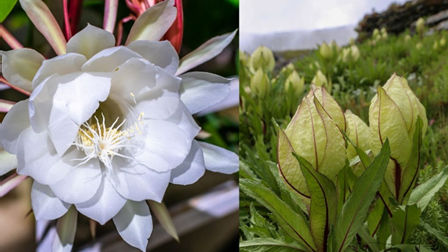
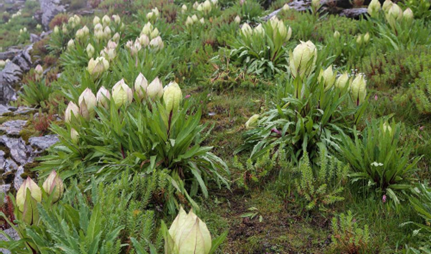
Fig. 1 Brahma Kamal Flower (10)
ORGANOLEPTIC DESCRIPTION
The results of the plant's organoleptic analysis showed that Saussurea obvallata plant has no smell. The most remarkable aspect is the flower, which is extremely aromatic. The bracts are typically astringent and sweet. The stem tastes astringent and bitter, while the rhizome and leaf taste astringent. The entire plant is coarse, of course. (11)
VERNACULAR NAMES
A common name for the plant is "Brahma Kamal." represents the flower of Lord Brahma everywhere in the world known as "sacred lotus" due to its auspiciousness.
|
Hindi name |
????????? |
|
English name |
Brahma’s lotus King of Himalayan flowers Sacred Saussurea Sacred Lotus Glasshouse plants |
MORPHOLOGICAL FEATURES
The Swedish plant taxonomist Horace Benedict de Saussure is honored by the generic name "Saussurea," while the specific epithet "obvallata" is derived from "obvallatus," which means "surrounded by wall" and refers to involucriform bracts. This perennial herb is small and hermaphroditic, growing up to 60 cm in height. The upright, ribbed, hollow stems are typically purple to reddish brown in color. Acute to obtuse or cuspidate at the apex, denticulate cuspidate and scarious at the margins, rosulate, petiolate, elliptic-spathulate, or lanceolate, 10 to 25, 1 to 5.5 cm, and somewhat expanded and sheathed at the base are the characteristics of basal leaves it is possible for cauline leaves to be lanceolate or elliptic-spathulate. terminal inflorescences with two or more discoid capitula encircled by pale yellow or creamy white involucriform bracts. There are two types of flowers. The tubular corolla's linear-lanceolate lobes can be violet or bluish purple in color. Cypselae are oblong or obovoid, pale creamy, brown, or grayish, and have a white pappus. Seed germination is the plant's natural method of reproduction. (12)
ECOLOGICAL DESCRIPTION
Habitat and Distribution (13)
Saussurea obvallata, DC Edgew, commonly known as Brahma Kamal, is a flowering plant that thrives at high elevations in the Himalayan region. It is found at altitudes ranging from 3,000 to 5,000 meters (9,800 to 16,400 feet) above sea level. This species primarily inhabits alpine meadows, rocky slopes, and subnival zones of the Himalayas, particularly in India (Uttarakhand, Himachal Pradesh, Sikkim, and Arunachal Pradesh), as well as in Nepal, Bhutan, and Tibet (China).
Climatic Condition (14)
This species has also evolved to thrive in challenging alpine environments characterized by low oxygen levels, strong winds, high ultraviolet (UV) radiation, and extremely low temperatures. It is capable of enduring prolonged freezing winters and experiences a brief growing season that lasts from June to September.
Conservation Status
It is protected under Indian conservation initiatives, particularly within biosphere reserves such as the Nanda Devi and Valley of Flowers National Parks, both of which are recognized as UNESCO World Heritage Sites.
TRADITIONAL USES
Brahma Kamal plays an important role in traditional medicine. But the therapeutic Brahma Kamal's effects have not been scientifically examined, but such actions could be evaluated for therapeutic goals. (15) The entire plant of Brahma Kamal can be used to cure a variety of illnesses portrayed by people native to Tibet and other regions, including the Garhwal region of the upper Himalayas, use Brahma Kamal will make herbal remedies. The foliage, Brahma kamal's flowers and rhizomes are used in the treatment of colds, urinary tract infections, coughs and pain in the bones. (16) The foliage and seeds and roots that are used to treat heart disease for conditions of the nervous system, and dry leaves are used to cure boils and promote wound healing. (17) Plants are also used to treat cerebral ischemia. in addition to paralysis. (18)
|
Parts used |
Traditional Uses |
|
Whole aerial herbal plants |
Bone ache, digestive and liver problems, appetizer, asthma, and bronchitis, Cerebral ischemia, Headache, Body pain, Bruises and Cuts. (19) |
|
Roots |
Plague, painful periods, snake bite, Antiseptic Boils, Leucoderma, Fever, Cough, Cardiac disorders, Bruises, Cuts. (20) |
|
Leaves |
Cough and cold, cardiac disorder, Boils, Wounds, Bruises, Cuts, Fractures (21,22) |
|
Seeds |
Mental Disorder (23) |
|
Seed oil |
Seed oil is applied on the head twice a day for headache (24) |
|
Flowers |
Antipyretic, Antiseptic, sexually transmitted disease, irregular menstruation cycle: The flower is cooked with taga misri and taken against urine tract infection. (20) |
MEDICINAL USES
There are several medical applications for this plant. In order to treat cuts and wounds, the roots in the ground. Leukoderma, problems with the urinary tract, and bone injuries, colds, coughing, fractures, and bone pain, Hydrocele, digestive problems, and reproductive disorders are all given roots and flower buds. (25)
WOUND HEALING MECHANISM
Wound healing is typically categorized into three distinct phases. These phases are Inflammation, Proliferation, and Remodelling. The process involves intricate reactions and interactions among cells and mediators. Wounds are defined as physical injuries that lead to the disruption of the skin. The extract from the plant Saussurea obvallata is utilized for wound healing. The mechanisms associated with the wound healing properties of Saussurea obvallata include the inhibition of Inflammation and the stimulation of Fibroblasts. In vitro testing of these processes is a crucial component in assessing the wound healing efficacy of the plant. The most commonly employed in vitro wound healing assays include the in vitro scratch assay, Electric Cell-substrate Impedance Sensing, microfluidic chambers, and Boyden chamber-based transmembrane assays. The mechanism that is essential for wound healing is Cell migration and proliferation. (26)
WOUND HEALING ACTIVITY
Wound healing is a multifaceted and dynamic biological process within the body, during which damaged and dead cells are substituted with newly generated cells or tissue. Inflammation, tissue repair, and remodeling constitute the preliminary stages of the wound- healing process. The ethanol extract of Brahma kamal leaf exhibited remarkable wound healing effectiveness in experimental animals when compared to the standard 10% w/w Povidone-iodine ointment. (27)
TYPES OF WOUNDS (28)
A wound refers to an injury that disrupts the skin or other bodily tissues. Wounds may be classified as open, where the skin is broken and underlying tissue is exposed, or closed, where there is damage to the tissue beneath unbroken skin. Penetrating wounds
MAJOR TYPES OF CLOSER WOUNDS INCLUDE
SYMPTOMS OF WOUNDS
CAUSES OF WOUND (30)
The primary reasons for cuts and puncture wounds are external injuries that either break or tear the skin. These causes include :
The most common causes for puncture wounds include:
PHARMACOLOGICAL ACTIVITY
Antioxidant activity
Reactive oxygen species (ROS) molecules exhibit a very brief half-life and are extremely reactive due to their incomplete valences. An excessive production of free radicals results in oxidative stress. (27) This oxidative stress is believed to contribute to various age-related illnesses, including Alzheimer's disease, Parkinson's disease, arthritis, and cancer. Antioxidants are designed to neutralize free radicals and mitigate oxidative damage. (31,32)
Anticancer activity
When evaluated using MCF-7 breast cancer cell lines, the anticancer properties of S. obvallata leaf and flower extracts exhibited considerable effectiveness in comparison to a positive control. (33,34)
Anticancer and radioprotective activity
Liang-wen and his team investigated the radioprotective properties of S. obvallata, proposing that it would demonstrate a dose-dependent radioprotective effect on mice subjected to radiation. Nevertheless, as reported by Ying et al. (2015), the aqueous extract of S. obvallata shows only moderate radioprotective activity. (35) When extracts from S. obvallata leaves and flowers were evaluated for their anticancer properties against MCF-7 breast cancer cell lines, a review article also disclosed that the findings suggested the extracts exhibited considerable anticancer anticancer activity in comparison to the positive control. (36)
Antibacterial and antifungal activity
Mishra conducted a study on the antibacterial properties of S. obvallata leaves in relation to gram-positive and gram-negative bacteria. The petroleum ether extract demonstrated significant antibacterial activity, with measurements of 87.2 ± 1.6, 98.4 ± 1.1, and 90.2 ± 1.8 µg/ml. (37,38) It also contains Cinnamaldehyde, which exhibits antimicrobial properties. (39
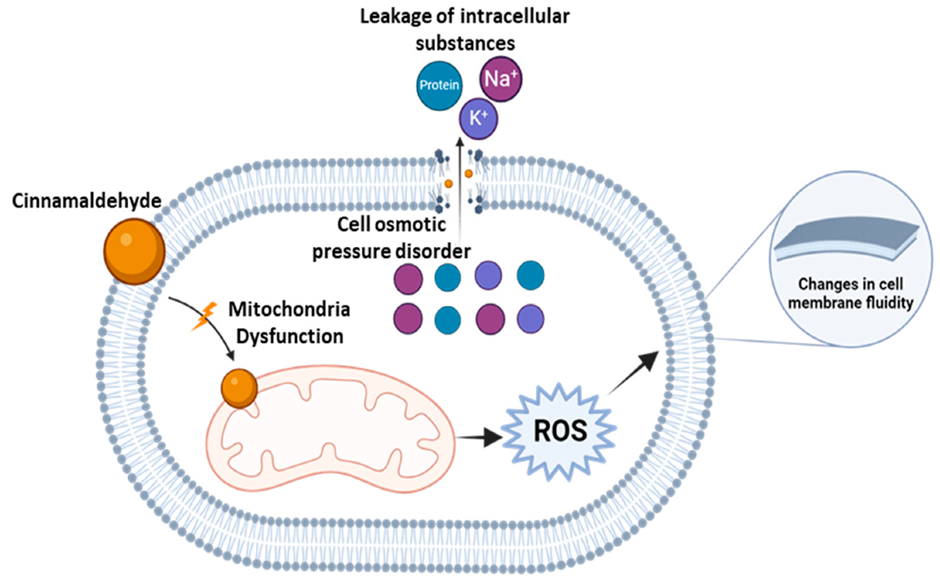
Fig 2: Mechanism of action of Cinnamaldehyde as antimicrobial (40)
LIMITATION
Brahma Kamal (Saussurea obvallata) has been utilized in Ayurveda and local medicinal practices to treat a variety of health concerns, such as wounds, paralysis, fever, and heart ailments. This is due to its characteristics that alleviate inflammation, counteract oxidative stress, and regulate immune responses. However, there are numerous limitations regarding its application for medical purposes. Additionally, while preliminary studies indicate potential beneficial effects of the plant, there is a scarcity of comprehensive clinical trials involving human subjects. This results in insufficient scientific evidence concerning the appropriate dosage, efficacy, and safety. Moreover, variations in phytochemical composition due to environmental influences can affect the consistency and effectiveness of medicinal extracts. Collectively, these factors restrict the effective medical application of Brahma Kamal, underscoring the necessity for regulated cultivation, standardization, and extensive pharmacological research to safely harness its healing properties. (41,42)
FUTURE PROSPECTIVE
The future prospective of the Brahma Kamal (Saussurea obvallata) lies primarily in its significant medicinal potential and its growing popularity as a cultivated ornamental plant, though its future in the wild is threatened by over-harvesting and habitat loss. (43)
CONCLUSION
Brahma Kamal, also known as Saussurea Obvallata, DC Edgew, is a rare Himalayan medicinal plant celebrated for its therapeutic and phytochemical properties. Its traditional uses are backed by scientific research, which confirms its antibacterial, anticancer, and antioxidant effects. However, its overexploitation and habitat loss pose significant threats to its survival. To ensure its long-term preservation, sustainable conservation strategies are essential. Future research should focus on developing biotechnology-based propagation methods and isolating bioactive compounds to assess their clinical significance. For this species to effectively contribute to the challenges of drug development and herbal therapy, which combine scientific medical practices with traditional herbal medicine, it must be conserved.
REFERENCES



Pracheta Khot, Lokesh Vyash, Dr. Sonali Uppalwar, Brahma Kamal used in Wound Healing, Int. J. of Pharm. Sci., 2025, Vol 3, Issue 12, 3349-3358. https://doi.org/10.5281/zenodo.18016412
 10.5281/zenodo.18016412