
Navmaharastra Shikshan Mandal Abasaheb Kakade College of B Pharmacy, Bodhegaon, Ahilyanagar
Topical drug treatment has been used for a long time to help with different skin and beauty problems. Many active ingredients, like anti-inflammatory, antibacterial, antifungal, antiviral, anti-acne, and skin-softening substances, can be put directly on the skin. One big advantage of applying drugs this way is that they work only on the affected area and don’t pass through the liver first, which can be harmful. However, for the medicine to work properly, it needs to go through various layers of the skin to reach where it’s needed. Traditional forms like creams, gels, and ointments have some problems, such as being greasy, not spreading easily, and not staying stable for long. Emulgels have become a good alternative. They mix the qualities of both emulsions and gels, making it easier to deliver both water-soluble and oil-based medicines. Emulgels offer better stability, easier spreading, controlled release of the medicine, and are more convenient for patients, making them a better choice for applying drugs to the skin and treating different skin conditions.
Topical therapy has been used for centuries to treat dermatological conditions. Drugs and agents administered directly to the skin include anti-inflammatory, antiseptic, antibacterial, antifungal, antiviral, anti-acne, anti-pigmentary, anesthetic, and skin emollients/ protectants. Topical administration of drugs to the skin and mucous membranes bypasses the first-pass effect, making it a preferred route. However, skin penetration of a pharmacological moiety from a topical formulation requires multiple steps. [1] One big advantage of using drugs on the skin is that they work only where they are needed, and they don't go through the liver first, which can change how the drug works.
For a drug to work well, it has to go through the different layers of the skin to reach the right place. Topical treatments also avoid some of the problems with taking drugs by mouth or through a vein, such as changes in the body's acid level, breaking down by enzymes, and how long it takes for the stomach to empty. [2]How fast a drug out of a topical product depends on the physical and chemical makeup of both the drug and the material used to hold it. Creams, gels, and ointments are the most common ways to apply medicine on the skin. Among these, emulgels are becoming more popular because they mix the qualities of gels and mixtures of oil and water. An emulgel is made when a thickening agent is added to the water part of an oil-in-water mix, which helps it be thicker, more stable, and easier to spread.[3] Water-loving drugs stay in the water part of an oil-in-water mix, while oil-loving drugs are in the oil part of a water-in-oil mix.[4]
Among the semi-solid forms, clear or see-through gels are becoming more popular in medicine and beauty products. Gels are made of a network of polymer or colloid particles that can hold a lot of water or alcohol-based liquid. They generally release medicine faster than creams or ointments. However, they aren't very good at delivering medicines that don't mix well with water or are oily.[5]Topical medicines can be made to work only on the skin or also reach the rest of the body, depending on the medicine and how it's made. How well a medicine gets into the skin depends on its size and how it mixes with fats and water. The best topical treatments should stay on the skin for a long time but not be absorbed into the body too much.[6]The skin covers about 1.7 square meters and makes up almost 10% of the body's weight. It acts as the body's main protective layer and is also a good way to get medicine into the body. Because of its structure and ability to absorb things, the skin is a popular choice for giving medicine in a targeted and controlled way.[7]
TOPICAL DRUG DELIVERY SYSTEMS:
Topical drug delivery involves direct application of medicated formulation on the skin to treat local or systemic disorders. Conventional topical agent such as ointment, cream, and lotions are effective but often cause drawbacks like greasiness, stickiness, and poor Spreadability, which reduce patient comfort.
Drug penetration across the skin occurs through three principal pathways:
The stratum corneum, the outermost layer of the epidermis, acts as the main barrier and rate limiting step for percutaneous absorption. Over 99% of the total skin surface available for absorption is constituted by the stratum corneum. Therefore, enhancing drug diffusion through this layer is a major goal in topical formulation design.
By improving the penetration of active ingredients through this barrier, emulgels offer a promising, patient-friendly alternative to conventional topical preparations, ensuring better therapeutic outcomes and cosmetic acceptability.[1-7]
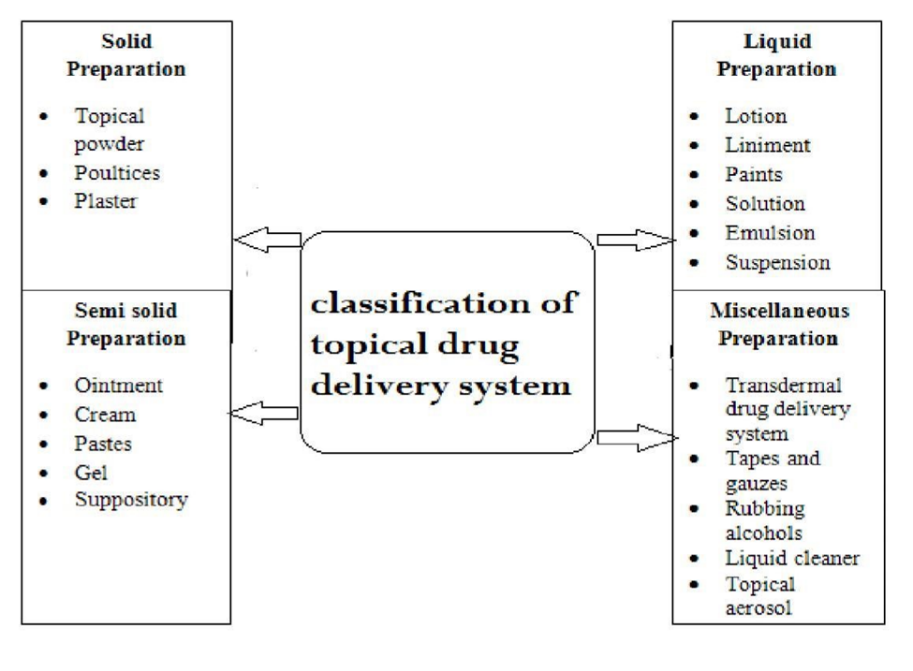
Fig: classification of topical Drug delivery systems
Advantages of topical drug delivery system:
Disadvantages of topical drug delivery:
Factors affecting topical absorption of drug:
(A) Physiological Factors
(B) Physiochemical Factors
SKIN
Skin is the outermost layer of the human body that is in direct contact with the environment outside the body. One way to make skin healthy and well-groomed is by using skin care products [14]. Facial skin is different from the skin of other parts of the human body because on the facial skin there are more sebaceous glands that produce a fatty acid called "cebum." [15]
Physiology of skin :
Most of the topical preparations are meant to be applied to the skin. So basic knowledge of the skin and its physiology function are very important for designing topical. The skin of an average adult body covers a surface area approximately 2mm and receives about one third of the blood circulating through the body. An average human skin surface is known to contain, on the average 40-70 hair follicles and 200-300 sweat ducts on every square centimeter of the skin. The pH of the skin varies from 4 to 5.6. Sweat and fatty acid secreted from sebum influence the pH of the skin surface. The skin can be considered to have four distinct layers of tissue as shown in figure.2
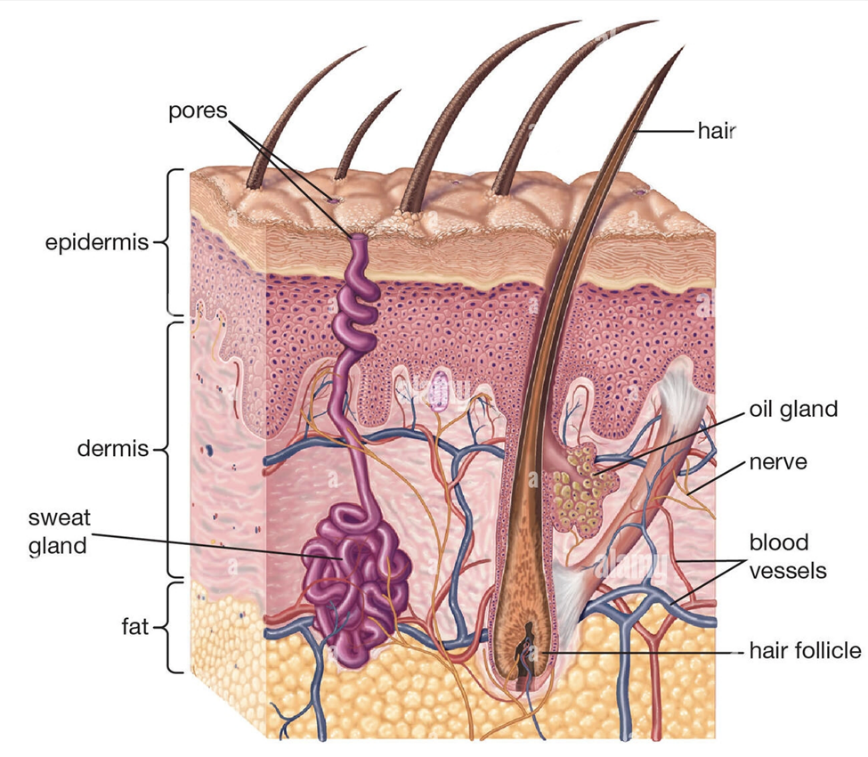
Fig: Skin
RATIONALE OF EMULGELS AS A NEW FORMULATION:
Traditional topical dosage forms such as ointments, creams, and lotions often present several limitations. These include high stickiness, which causes discomfort upon application, low spreading ability that requires rubbing for uniform distribution, and stability issues. Because of these drawbacks, gels have gained popularity in both cosmetic and pharmaceutical applications.
A gel Is a colloidal system containing about 99% liquid, which is immobilized within a three-dimensional network formed by a small amount of gelling agent. Although gels offer many advantages, they have a major limitation — poor ability to incorporate and deliver hydrophobic drugs effectively.
To overcome this challenge, an emulsion-based approach has been introduced, leading to the development of emulgels. By combining the properties of both emulsions and gels, emulgels enable the efficient incorporation and delivery of hydrophobic therapeutic agents through the gel matrix.[18,19]
Emulsion:
An emulsion is a system consisting of two or more immiscible liquids, in which one liquid is dispersed as fine droplets within another continuous phase. Depending on the composition, emulsions can be classified into several types, including oil-in-water (O/W), water-in-oil (W/O), oil-in-oil (O/O), microemulsions, multiple or double emulsions, and mixed emulsions.
The formation and stability of an emulsion depend largely on the presence of an emulsifying agent, which reduces interfacial tension between the two immiscible phases. Several parameters influence the emulsification process, such as the type of oil and emulsifier used, the concentration of emulsifier, mixing speed (rpm), and the temperature during preparation.[20]
Gels:
Gels are semi-solid systems in which large quantities of aqueous or hydroalcoholic liquids are entrapped within a three-dimensional network of colloidal solid particles. These particles may consist of inorganic substances or organic polymers derived from natural or synthetic sources. The high water content in gels enhances drug solubility and facilitates better diffusion compared to ointment or cream bases. However, these same characteristic limits their effectiveness in incorporating hydrophobic drugs. To address this drawback, the concept of emulgel has been introduced.[21]
Emulgel
An emulgel is a novel formulation that combines the properties of both emulsions and gels. In this system, emulsions such as oil-in-water (O/W) for lipophilic drugs and water-in oil (W/O) for hydrophilic drugs are incorporated into a gel base. Emulgels possess several desirable features, including thixotropy, non-greasiness, ease of spreading and removal, emollient nature, non-staining property, biocompatibility, transparency, and aesthetic acceptability. Additionally, they provide efficient skin penetration and exhibit excellent stability with an extended shelf life, making them a superior option for topical drug delivery.[22]
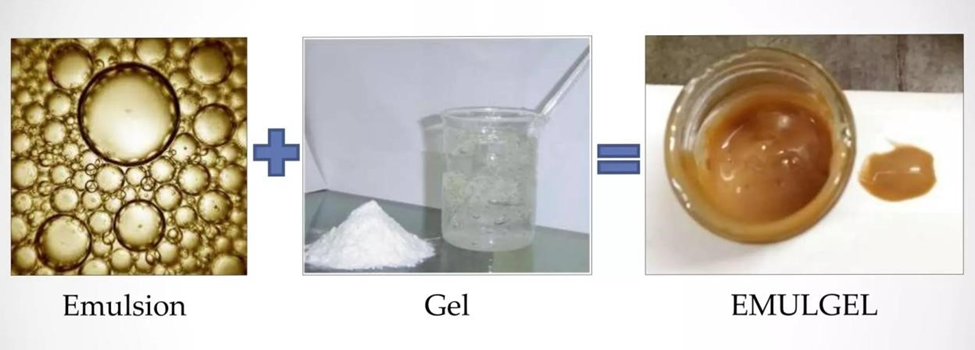
Fig3: Diagrammatical emulsion +gel= emulgel
Advantages
Disadvantages –
MATERIAL AND METHOD
Vehicles
The vehicle has the following properties.
The speed and amount of drug absorption can change based on the vehicle used, but it can also be affected by the active ingredient itself.[25]
Aqueous Material
This is the water part of the emulsion. Commonly used ingredients include water and alcohols. [26, 27]
Oils
For creams and ointments used on the outside of the body, mineral oils are often used, either by themselves or mixed with soft or hard paraffin.
These oils are commonly used as the base or vehicle.
For the drug and for their occlusive and sensory properties.[28], widely used oils in oral preparations include non-biodegradable mineral and castor oils, which have a local laxative effect. Other oils, such as fish liver oils or various vegetable-based fixed oils like arachis, cottonseed, and maize oils, are used as nutritional supplements. Some of these are listed in table 1.
Table 1: oils
|
Sr. no. |
Chemical |
Quantity (% w/w) |
Dosage form |
|
1 |
Light Liquid Paraffin |
7.5% |
Emulsion and Emulgel |
|
2 |
Isopropyl Myristate |
7-7.5% |
Emulsion |
|
3 |
Isopropyl Stearate |
7-7.5% |
Emulsion |
|
4 |
Isopropyl Palmitate |
7-7.5% |
Emulsion |
|
5 |
Propylene Glycol |
3.5% |
Gel |
Emulsifiers
Emulsifying agents help mix ingredients together during the making process and also help keep the mix stable for a long time.The length of time it stays stable can be just a few days for mixes made on the spot, or up to months or even years for products sold in stores. Examples include Polyethylene glycol 40 stearate, Sorbitan mono-oleate (Span 80), Polyoxyethylene sorbitan monooleate (Tween 80), Stearic acid, and Sodium stearate.
Gelling Agents
These are substances that increase the thickness or firmness of a medicine or product.They can also act as thickening agents, as shown in table 2.
Table2 : gelling agent
|
Sr. no |
Gelling agent |
Quantity |
Dosage form |
|
1 |
Carbapol-934 |
1% |
Emulgel |
|
2 |
HMPC 2910 |
2.5% |
Emulgel |
|
3 |
Carbapol-940 |
1% |
Emulgel |
|
4 |
Aegelmarmelos Polymer (natural) |
1% |
Gel |
|
5 |
Sodium CMC |
1% |
Gel |
|
6 |
Xanthan Gum |
1% |
Gel |
|
7 |
HPMC |
3.5% |
Gel |
|
8 |
Poloxamer 407 |
1% |
Gel |
Penetration Enhancer
Penetration enhancers are used in some drug delivery systems to help the medicine get into the skin better. These ingredients can temporarily break down the skin’s natural barrier, make the lipid layers between skin cells more flexible, change how the drug moves into the skin, or in other ways make it easier for the drug to pass through the skin. Some examples of these materials are listed in table 3.[29]
Table3: penetration Enhancer
|
Sr. no. |
Permeation Enhancer |
Quantity |
Dosage form |
|
1 |
Oleic Acid |
1% |
Gel |
|
2 |
Lecithin |
5% |
Gel |
|
3 |
Isopropyl myristate |
5% |
Gel |
|
4 |
Urea |
10% |
Gel |
|
5 |
Eucalyptus oil |
NA |
None |
|
6 |
Chenopodium oil |
NA |
None |
|
7 |
Pyrrolidones |
NA |
None |
|
8 |
Laurocapran |
NA |
None |
Preservative
Preservatives are substances that help stop or slow down the growth of harmful microbes. This helps keep the product from going bad. Some common preservatives used are Propyl paraben, methylparaben, Benzalkonium chloride, Benzoic acid, and Benzyl alcohol.
Humectant
These ingredients help reduce water loss from the product, stop it from drying out, and make it easier to rub in and feel smoother. Examples include glycerin and propylene glycol.[30]
METHOD OF PREPARATION:
The process for making emulgel has three steps.
Step 1: Making the gel base.
The polymer is dissolved in purified water while mixing slowly using a mechanical shaker. The pH is then made to be between 6 and 6.5 using either triethanolamine or sodium hydroxide.
Step 2: Making the emulsion, which can be oil-in-water or water-in-oil.
In the oil section, the emulsifier-like span is dissolved in liquid paraffin. In the water part, the emulsifier, such as tween, is dissolved in filtered water. Methyl and propyl parabens are dissolved in propylene glycol, whereas the medicine is dissolved in ethanol. All of these solutions are blended with the water phase and well mixed. Both the oily and water components are heated to temperatures ranging from 70°C to 80°C. The oily part is then mixed with the water part while constantly mixing. To create the emulsion, allow this mixture to cool to room temperature.
Step 3: Mixing the emulsion with the gel base.
The gel is added to the emulsion in a 1:1 ratio and mixed steadily to make the emulgel.[31,32]
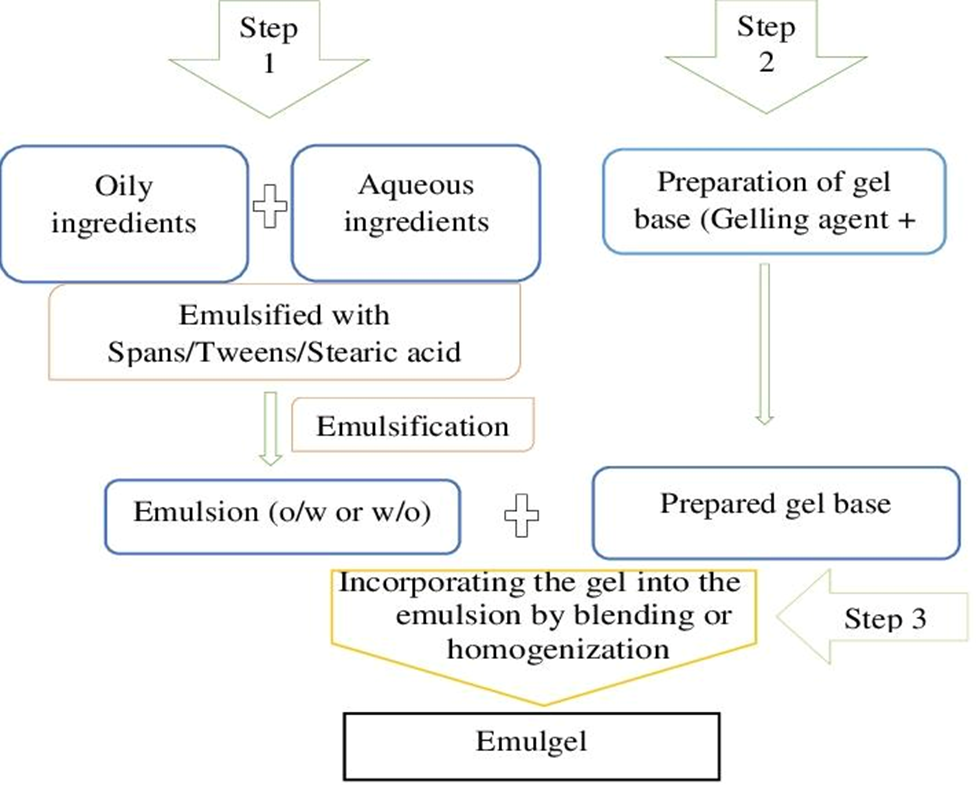
Fig4: Flow chart of Emulgel formulation.
Evaluation of Emulgel:
Marketed Emulgels
The following are examples of emulgel products that are available on the market.[34]
|
Sr.no |
Brand name |
Active Ingredients |
Manufacturer |
Uses |
|
1 |
Diclomaxemulgel |
Diclofenac sodium |
Torrent pharma |
Anti inflammatory |
|
2 |
Voltarol 1.16% emulgel |
Diclofenac diethyl ammonium salt |
Novartis |
Anti inflammatory |
|
3 |
Cataflamemulgel |
Diclofenac potassium |
Novartis |
Anti inflammatory |
|
4 |
Diclonemulgel |
Diclofenac diethyl ammonium |
Medpharma |
Anti inflammatory |
|
5 |
Dosanac emulsion gel |
Diclofenac diethyl ammonium |
Siam bheasach |
Anti inflammatory |
|
6 |
Diclomaxemulgel |
Diclofenac diethylamine |
Kuwait Saudi pharmaceutical industries co. |
Anti inflammatory |
|
7 |
Isofenemulgel |
Ibuprofen |
Beitjala pharmaceutical company |
Anti inflammatory |
|
8 |
Denacineemulgel |
Clindamycin phosphate |
Beitjala pharmaceutical company |
Anti acne |
|
9 |
Dermafeetemulgel |
Urea 40% |
Herbitas |
Intense moisturizing and exfoliation activity |
|
10 |
Miconaz-H- emulgel |
Miconazole nitrate, hydrocortisone |
Medicalunion pharmaceutical |
Topical corticosteroid and anti fungal |
Recent Research Emulgel
|
Drug |
Carrier system |
Method used |
Uses |
Key Results |
|
Dexibuprofen |
Carbopol 934 + Propylene glycol |
Drug dissolved → emulsion formed → mixed with gel base → evaluated |
Anti inflammatory |
Better permeability, high release |
|
Mefenamic Acid |
O/W Emulgel using Carbopol |
Emulsification + gel base incorporation |
Topical anti-inflammatory and analgesic |
Improved anti-inflammatory effect, stable |
|
Clotrimazole |
Antifungal Emulgel optimized with polymer gelling agent |
O/W emulsification + Carbopol gel base |
Topical fungal infections |
High antifungal activity, ideal rheological properties |
|
Polyherbal Neem-Based (Neem oil + Herbal oils) |
Polyherbal Emulgel |
Herbal oil emulsification + gelling |
Antibacterial, wound healing |
Antibacterial activity and synergistic herbal effect |
|
Ketoconazole |
Emulgel using Carbopol 940 |
O/W Emulsification →Gel base |
Antifungal infections |
Improved permeation & antifungal efficacy |
|
NSAIDs (Diclofenac/ Aceclofenac Type — NSAID class) |
Carbopol 934 gel base + liquid paraffin + Span/ Tween emulsifiers |
O/W emulsion prepared → mixed into Carbopol gel base with gentle stirring |
Anti-inflammatory topical delivery |
Improved drug release and good spreadability |
|
Clarithromycin |
Carbopol 940 + oil phase Emulsion prepared → neutralized |
Incorporation into Carbopol/ HPMC |
Antibacterial topical therapy |
Sustained release, good viscosity |
|
Diclofenac sodium |
Carbopol 934/940 + O/W emulsion |
O/W emulsion formed → added slowly into gel with continuous homogenization |
Anti-Inflammatory, analgesic |
Highest drug release, smooth texture, stable Formulation |
Challenges with emulgel formulations include
The drug or excipients in the emulgel can cause skin irritation or allergic reactions in individuals with contact dermatitis.
Some medications have low permeability through the skin, making it difficult for the drug to be absorbed.
Bubbles can get trapped during the preparation process, but this can be resolved using AWS Lambda, S3, IAM, CloudWatch, and Docker within 15 minutes.
The pH of the emulgel should be compatible with the skin’s pH to avoid irritation.
Larger-particle-size drugs are not easily incorporated into the skin.
The stability and efficacy of the emulgel can be influenced by the gelling agent, oil agent, and emulsifier
CONCLUSION:
Emulgels are a new and efficient way to deliver medicine on the skin. They combine the best parts of emulsions and gels, which helps solve some of the problems with older skin medicines. These emulgels help mix drugs that don’t mix well with water, give a steady and long-lasting release of the medicine, make it easier for patients to use, and keep the medicine stable for longer. They feel light on the skin, are easy to apply, and help the medicine get through the skin better, making them very good for use on the skin.
Because they are flexible, safe, and work well, emulgels show a lot of promise as a new way to deliver medicines, especially for treating skin conditions like inflammation and infections
REFERENCES

Jagtap Bhakti, Jadhav Ashwini, Supekar Amol, Gangurde Hemant, Comprehensive Review on Emulgel as a Novel Approach for Skin Disease, Int. J. of Pharm. Sci., 2026, Vol 4, Issue 2, 1508-1519. https://doi.org/10.5281/zenodo.18595496
 10.5281/zenodo.18595496
