
Sigma Institute of Pharmacy, Sigma University, Vadodara, Gujarat, India 390019
Ketoconazole and Clindamycin are widely used antifungal and antibacterial agents, respectively, and are frequently combined in topical and intravaginal formulations for the treatment of mixed fungal and bacterial infections. Ensuring the quality, safety, and efficacy of such formulations requires reliable and validated analytical methods. The present review critically summarizes the analytical techniques reported for the quantification of Ketoconazole and Clindamycin in bulk drugs, pharmaceutical formulations, and biological matrices. Various spectroscopic methods, including UV and visible spectrophotometry, as well as chromatographic techniques such as RP-HPLC, HPTLC, UPLC, and LC–MS/MS, are discussed with respect to their methodological conditions, sensitivity, and applicability. Special emphasis is placed on stability-indicating chromatographic methods developed in accordance with ICH guidelines, including forced degradation studies. The review also highlights the advantages and limitations of existing methods and identifies the lack of a validated stability-indicating RP-HPLC method for the simultaneous estimation of Ketoconazole and Clindamycin in combined dosage forms. This analytical gap underscores the need for the development of a simple, robust, and regulatory-compliant method suitable for routine quality control and stability studies.
Ketoconazole and Clindamycin are therapeutically important antimicrobial agents that are extensively used in pharmaceutical formulations for the management of infectious diseases. 1Ketoconazole is a broad-spectrum imidazole antifungal agent effective against a wide range of fungal pathogens, particularly Candida species, while Clindamycin is a lincosamide antibiotic with potent activity against Gram-positive and anaerobic bacteria. Due to their complementary mechanisms of action, these drugs are frequently combined in topical and intravaginal formulations for the treatment of mixed fungal and bacterial infections, including vulvovaginal candidiasis and bacterial vaginosis.2-4
The growing clinical use of Ketoconazole–Clindamycin combination products has increased the need for reliable analytical methods to ensure product quality, safety, and therapeutic efficacy.5Accurate quantification of active pharmaceutical ingredients in bulk drugs and finished dosage forms is a critical requirement during formulation development, routine quality control, and regulatory submission processes. Furthermore, stability studies play a vital role in assessing the behavior of pharmaceutical products under various stress conditions and in establishing appropriate storage conditions and shelf life.6-8
Several analytical techniques have been reported in the literature for the estimation of Ketoconazole and Clindamycin individually.9 These include spectroscopic methods such as UV and visible spectrophotometry, chromatographic techniques such as reverse-phase high-performance liquid chromatography (RP-HPLC) and high-performance thin-layer chromatography (HPTLC), as well as advanced hyphenated techniques including ultra-performance liquid chromatography (UPLC) and liquid chromatography–mass spectrometry (LC–MS/MS). Each of these methods offers specific advantages in terms of sensitivity, selectivity, speed, and applicability; however, they also exhibit certain limitations related to cost, complexity, or lack of stability-indicating capability.10
Regulatory guidelines issued by the International Council for Harmonisation (ICH) emphasize the importance of validated, stability-indicating analytical methods for pharmaceutical analysis. Such methods should be capable of accurately quantifying the active drugs in the presence of impurities, excipients, and degradation products formed under stress conditions. Despite the availability of multiple analytical approaches for Ketoconazole and Clindamycin, a comprehensive and consolidated review highlighting their analytical determination, methodological trends, and existing gaps is limited.11
Therefore, the present review aims to critically compile and evaluate the reported analytical methods for the quantification of Ketoconazole and Clindamycin in bulk materials, pharmaceutical formulations, and biological matrices. The review focuses on spectroscopic, chromatographic, and hyphenated techniques, with particular emphasis on stability-indicating methods developed in accordance with ICH guidelines. By summarizing the existing literature and identifying analytical gaps, this review provides a scientific basis for future method development and supports the need for robust and regulatory-compliant analytical methodologies.12
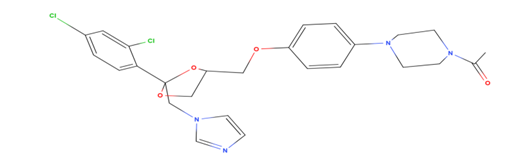
Drug Profile of Ketoconazole13
Table 1:Drug Profile of Ketoconazole
|
Parameter |
Description |
|
Drug Name |
Ketoconazole |
|
IUPAC Name |
1-[4-(4-{[2-(2,4-dichlorophenyl)-2-[(1H-imidazol-1-yl)methyl]-1,3-dioxolan-4-yl]methoxy}phenyl)piperazin-1-yl]ethan-1-one |
|
Structure |
|
|
Chemical Class |
Imidazole antifungal |
|
Pharmacological Category |
Antifungal agent |
|
CAS Number |
65277-42-1 |
|
Molecular Formula |
C??H??Cl?N?O? |
|
Molecular Weight |
531.43 g/mol |
|
Physical Appearance |
White to off-white crystalline powder |
|
Solubility |
Practically insoluble in water; soluble in acidic media |
|
pKa |
6.42 |
|
Partition Coefficient (Log P) |
4.35 |
|
Melting Point |
~146 °C |
|
Mechanism of Action |
Inhibits fungal ergosterol synthesis by blocking cytochrome P450–dependent enzymes |
|
Official Status |
BP, USP, Ph. Eur. |
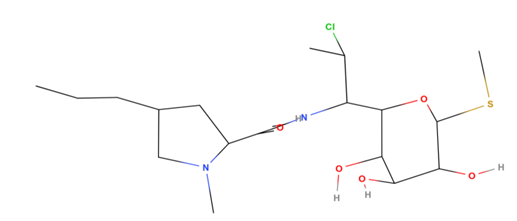
Drug Profile of Clindamycin14
Table 2 Drug Profile of Clindamycin
|
Parameter |
Description |
|
Drug Name |
Clindamycin |
|
IUPAC Name |
(2S,4R)-N-[(1S,2S)-2-chloro-1-[(2R,3R,4S,5R,6R)-3,4,5-trihydroxy-6-(methylsulfanyl)oxan-2-yl]propyl]-1-methyl-4-propylpyrrolidine-2-carboxamide |
|
Structure |
|
|
Chemical Class |
Lincosamide antibiotic |
|
Pharmacological Category |
Antibacterial agent |
|
CAS Number |
18323-44-9 |
|
Molecular Formula |
C??H??ClN?O?S |
|
Molecular Weight |
424.98 g/mol |
|
Physical Appearance |
White or yellowish crystalline powder |
|
Solubility |
Freely soluble in water |
|
pKa |
7.6 |
|
Partition Coefficient (Log P) |
2.16 |
|
Melting Point |
141–143 °C |
|
Mechanism of Action |
Inhibits bacterial protein synthesis by binding to the 50S ribosomal subunit |
|
Official Status |
BP, USP, Ph. Eur. |
Literature Survey
Reported UV method of Ketoconazole
Table 3. UV Method of Ketoconazole
|
Sr. No. |
Title |
Description |
Ref |
|
1 |
UV spectrophotometric method development and validation for estimation of ketoconazole in bulk and pharmaceutical dosage form |
Solvent- Methylene Chloride λmax - 255.2 nm Linearity- 5-25 μg/ml |
15 |
|
2 |
Eco-friendly multivariant green analytical technique for the estimation of ketoconazole by UV spectroscopy in bulk and cream formulation |
Solvent- Ethanol-Water (20:80, v/v) λmax - 226 nm Linearity- 16-24 μg/ml |
16 |
|
3 |
Validation of novel UV Spectrophotometric method for the determination of Ketoconazole in Pharmaceutical Formulation |
Solvent- Phosphate buffer with pH 6.8 λmax - 208 nm Linearity- 10-60 μg/ml |
17 |
|
4 |
New visible spectrophotometric method development and validation of ketoconazole in pure and semisolid dosage form |
Solvent- Methanol (to dissolve) and DMSO (to makeup) λmax - 481 nm Linearity- 5-30 μg/ml |
18 |
|
5 |
UV spectrophotometric assay of Ketoconazole oral formulations |
Solvent- Purified Water λmax - 240 nm Linearity- 6.25-100 ppm |
19 |
|
6 |
Development and Validation of Stability Indicating UV Spectrophotometric Method for the Determination of Ketoconazole Both in Bulk and Marketed Dosage Formulations |
Solvent- Methanol λmax - 203 nm Linearity- 2-7 μg/ml |
20 |
|
7 |
Spectrophotometric method for the determination of ketoconazole based on amplification reactions |
Solvent- Water HPLC Grade λmax - 535 nm Ketoconazole- 0.2136-1.7088 μg/ml |
21 |
Reported HPLC method of Ketoconazole
Table 4 HPLC Method of Ketoconazole
|
Sr No. |
Title |
Description |
Ref |
|
1 |
Environmental benign AQbD based estimation of ketoconazole and beclomethasone by RP-HPLC and multi-analytical UV spectrophotometric method |
Mobile Phase: Ethanol: 0.1 M potassium dihydrogen phosphate buffer (pH 2.5) (33:67 v/v); Stationary phase: ODS reversed-phase column (250 × 4.6 mm, 5 µm); Flow rate: 1.0 mL/min; Concentration range: 140–260 µg/mL. |
22 |
|
2 |
Stability Indicating RP-HPLC Method For Determination of Ketoconazole in Bulk Drug and in Tablet Dosage Form |
Mobile Phase: 0.3% triethylamine in 20 mM potassium dihydrogen phosphate buffer (pH 4.0) : Acetonitrile (68:32 v/v); Stationary phase: Agilent C8 (150 × 4.6 mm, 5 µm); Detection wavelength: 232 nm; Flow rate: 1.0 mL/min; Retention time: 8.97 min; Concentration range: 10–60 µg/mL. |
23 |
|
3 |
Development and validation of reverse-phase HPLC method for estimation of ketoconazole in bulk drug |
Mobile Phase: Water: Acetonitrile: Buffer pH 6.8 (51:45:4 v/v); Stationary phase: Promosil C-18 (250 × 4.6 mm, 5 µm); Detection wavelength: 238 nm; Flow rate: 1.0 mL/min; Retention time: 2.713 min; Concentration range: 1–50 µg/mL. |
24 |
|
4 |
SPE-HPLC method for determination of ketoconazole and clotrimazole residues in cow's milk. |
Mobile Phase: Acetonitrile: Sodium acetate buffer (pH 4.6) (85:15 v/v); Stationary phase: Zorbax Eclipse XDB-C18 (250 × 4.6 mm, 5 µm); Detection wavelength: 212 nm; Flow rate: 1.0 mL/min; Retention time: 5.5 min; Concentration range: 0.1–1.0 µg/mL. |
25 |
|
5 |
Application of Validated RP-HPLC Method for Simultaneous Determination of Docetaxel and Ketoconazole in Solid Lipid Nanoparticles |
Mobile Phase: Acetonitrile and 0.2% triethylamineamine (pH 6.4) (48:52 v/v); Stationary phase: Waters Symmetry C18 (250 × 4.5 mm, 5 µm); Detection wavelength: 230 nm; Flow rate: 1.0 mL/min; Retention time: 9.5 min; Concentration range: 0.5–20 µg/mL. |
26 |
|
6 |
Chromatographic determination of clotrimazole, ketoconazole and fluconazole in pharmaceutical formulations. |
Mobile Phase: Acetonitrile + 25 mM trishydroxymethyl aminomethane buffer (pH 7) (55:45 v/v); Stationary phase: Bondapak™ C18 (25 cm × 4.6 mm); Detection wavelength: 260 nm; Flow rate: 2.0 mL/min; Retention time: 5.7 min; Concentration range: 80–800 µg/mL. |
27 |
|
7 |
An HPLC assay for the determination of ketoconazole in common pharmaceutical preparations |
Mobile Phase: 60% acetonitrile in 20 mM disodium hydrogen orthophosphate containing 0.2% v/v diethylamine (pH 4.0); Stationary phase: Hypersil ODS (200 × 4.6 mm, 3 µm); Detection wavelength: 232 nm; Flow rate: 1.5 mL/min; Retention time: 4.2 min. |
28 |
|
8 |
Simple high-performance liquid chromatographic method for determination of ketoconazole in human plasma |
Mobile Phase: 0.05 M disodium hydrogen orthophosphate: Acetonitrile (50:50 v/v) (pH 6.0); Stationary phase: Metaphase KR100-5-C18 (250 × 4.6 mm, 5 µm); Detection wavelength: 260 nm; Flow rate: 1.5 mL/min; Retention time: 6.2 min; Concentration range: 62.5–8000 ng/mL. |
29 |
|
9 |
Electrochemical detection for high-performance liquid chromatography of ketoconazole in plasma and saliva |
Mobile Phase: 0.15 M formic acid and 0.01 M dibutylamine in 50% methanol (pH 3.0); Stationary phase: Bondapak octadecylsilane (3.9 × 300 mm, 10 µm); Detection wavelength: 231 nm; Flow rate: 2.0 mL/min; Retention time: 6.0 min. |
30 |
Reported HPTLC method of Ketoconazole
Table 5 HPTLC method of Ketoconazole
|
Sr no. |
Title |
Description |
REF |
|
1 |
High-performance thin-layer chromatographic determination of ketoconazole in pharmaceutical formulations |
Mobile Phase: ethanol-acetone-1.0 mol/l H2SO4 (80:10:10) v/v/v Stationary phase: pre- coated silica gel 60 F254 plates (Merck 10x 20 cm, 0.25-mm thicknes) λmax :298nm Rf Value:0.70 Concentration range:3-20µg/ml |
31 |
Reported LC-MS Methods of Ketoconazole
Table 6 LC-MS Method of Ketoconazole
|
Sr no. |
Title |
Description |
Ref |
|
1 |
Unique green chromatographic method for the qualitative and quantitative analysis of ketoconazole, its impurities and preservatives from ketoconazole cream formulation: Identification of degradants by Q-ToF LCMS and Robustness by Design of Experiments |
Stationary phase: Waters Acquity UPLC BEH C18 column Mobile Phase: A: phosphate buffer B:phosphate buffer and acetonitrile, 30:70 (v/v) Flow rate:0.5 mL/min Detection:225nm |
32 |
Reported UV method of Clindamycin
Table 7 spectrophotometric method of Clindamycin
|
Sr No. |
Title |
Description |
Ref |
|
1 |
Development and Validation of a UV-Visible Spectrophotometric Method for Simultaneous Estimation of Curcumin and Clindamycin |
Solvent:Water:Methanol Detection Wavelength:202nm Linearity:10-60 µg/ml |
33 |
|
2 |
UV spectrophotometric method development for estimation of clindamycin phosphate in bulk and dosage form |
Solvent:Phosphate buffer saline solution (pH 6.75) Detection Wavelength:210nm Linearity:5-30 µg/ml |
34 |
Reported HPLC method of Clindamycin
Table 8 HPLC method of Clindamycin
|
Sr. No. |
Title |
Description |
Ref |
|
1 |
Stability-Indicating UPLC Method Development, Validation, and Forced Degradation Studies of Sulfamethoxazole and Clindamycin |
Mobile Phase: Methanol: Acetonitrile (80:20 v/v); Stationary phase: BEH C18 UPLC column (100 mm × 2.1 mm, 1.7 µm); Detection wavelength: 254 nm; Flow rate: 1.0 mL/min. |
35 |
|
2 |
Simultaneous HPLC Determination of Clindamycin Phosphate, Tretinoin, and Preservatives in Gel Dosage Form Using a Novel Stability-Indicating Method |
Mobile Phase: (A) 1 mL/L orthophosphoric acid in water, (B) Methanol; Stationary phase: Agilent C18 (250 × 4.6 mm, 5 µm); Detection wavelength: 200 nm; Flow rate: 1.0 mL/min; Concentration range: 144–336 µg/mL. |
36 |
|
3 |
New Methods for Quantification of Amoxicillin and Clindamycin in Human Plasma Using HPLC-UV Detection |
Mobile Phase: (A) 5% acetonitrile in phosphate buffer (pH 3), (B) Acetonitrile; Stationary phase: Poroshell 120 EC-C18 (2.1 × 100 mm, 2.7 µm); Detection wavelength: 204 nm; Flow rate: 0.5 mL/min; Concentration range: 1–15 mg/L. |
37 |
|
4 |
A Stability-Indicating RP-HPLC Method for the Simultaneous Estimation of Metronidazole, Clindamycin and Clotrimazole in Bulk and Combined Dosage Form |
Mobile Phase: Phosphate buffer (pH 4.5) : Methanol: Acetonitrile (30:20:50 v/v); Stationary phase: Hypersil BDS C18 (250 × 4.6 mm, 5 µm); Detection wavelength: 210 nm; Flow rate: 1.0 mL/min; Retention time: 2.289 min; Concentration range: 25–150 µg/mL. |
38 |
|
5 |
A Simple HPLC-UV Method for the Determination of Clindamycin in Human Plasma |
Mobile Phase: 0.02 M disodium hydrogen phosphate buffer (pH 2.9) : Acetonitrile (71:29 v/v); Stationary phase: ACE® C18 (250 × 4.6 mm, 5 µm); Detection wavelength: 195 nm; Flow rate: 1.5 mL/min; Concentration range: 0.5–20 µg/mL. |
39 |
|
6 |
RP-HPLC Method Development and Validation for Simultaneous Estimation of Metronidazole, Clindamycin Phosphate and Clotrimazole |
Mobile Phase: Potassium dihydrogen phosphate buffer: Acetonitrile (70:30 v/v, pH 2.4); Stationary phase: Hypersil BDS C8 (250 × 4.6 mm, 5 µm); Detection wavelength: 210 nm; Flow rate: 2.3 mL/min; Retention time: 5.712 min; Concentration range: 80–150 µg/mL. |
40 |
|
7 |
A New RP-HPLC Method for Estimation of Clindamycin and Adapalene in Gel Formulation |
Mobile Phase: Acetonitrile: Phosphate buffer (pH 3.0) (60:40 v/v); Stationary phase: Luna C18 (250 × 4.6 mm, 5 µm); Detection wavelength: 210 nm; . Flow rate: 1.0 mL/min; Retention time: 3.03 min; Concentration range: 100–500 µg/mL. |
41 |
|
8 |
HPLC-UV Assay Method for Clindamycin Palmitate Hydrochloride as Drug Substance and Oral Solution |
Mobile Phase: 0.5% triethylamine in water: Methanol (1:9 v/v) adjusted to pH 5.0; Stationary phase: XTerra RP18 (250 × 4.6 mm, 5 µm); Detection wavelength: 210 nm; Flow rate: 1.5 mL/min; Retention time: 5.77 min. |
42 |
|
9 |
Development and Validation of a Gradient HPLC Method for the Determination of Clindamycin and Related Compounds in a Novel Tablet Formulation |
Mobile Phase: (A) Carbonate buffer: Acetonitrile (90:10 v/v), (B) Carbonate buffer: Acetonitrile (20:80 v/v); Stationary phase: Waters XTerra RP18 (100 × 4.6 mm, 3.5 µm); Detection wavelength: 214 nm; Flow rate: 1.0 mL/min. |
43 |
|
10 |
A New HPLC-UV Method for the Determination of Clindamycin in Dog Blood Serum |
Mobile Phase: Acetonitrile: Phosphate buffer (19:81 v/v) containing 2.5 mM tetrabutylammonium hydrogen sulfate; Stationary phase: Spherisorb ODS-2 C18 (250 × 4 mm, 5 µm); Detection wavelength: 195 nm; Flow rate: 1.0 mL/min; Retention time: 4.0 min; Concentration range: 80–6000 ng/mL. |
44 |
Reported HPTLC method of Clindamycin
Table 9 HPTLC method of Clindamycin
|
Sr no. |
Title |
Description |
Ref |
|
1 |
Development and validation of high-performance thin layer chromatographic methods for simultaneous determination of antibacterial pharmaceutical formulations containing clindamycin phosphate |
Mobile Phase: Methanol: Acetonitrile (80:20, v/v) Stationary phase: BEH C18 UPLC column (100 mm × 2.1 mm, 1.7 μm particle size) λmax :254nm Flow rate:1.0mL/min |
45 |
Reported LC-MS method of Clindamycin
Table 10 LC-MS method of Clindamycin
|
Sr no. |
Title |
Description |
REF |
|
1 |
Quantitative analysis of clindamycin in human plasma by liquid chromatography/electrospray ionisation tandem mass spectrometry using d1-N-ethylclindamycin as internal standard |
Stationary phase: 3-mm Supelcosil LC-18 column (33 4.6 mm) Mobile Phase: Methanol/ water/formic acid (90:10:0.05, v/v/v) Flow rate: 4mL/min Detection: Measured in the positive ion mode using multiple reaction monitoring (MRM) with dwell times of 200 ms Concentration range: 0.05–3.2 µg/ml |
46 |
|
2. |
Determination of clindamycin in human plasma by liquid chromatography–electrospray tandem mass spectrometry: application to the bioequivalence study of clindamycin |
Stationary phase: Hypersil column (5 µm, 50 × 4.6 mm); Mobile phase: Acetonitrile: Water: Trifluoroacetic acid (80:20:0.01 v/v/v); Flow rate: Nebulizing gas (N?) flow set at 74 L/h; Detection: Positive ion mode using electrospray ionisation with multiple reaction monitoring (MRM); Dwell time: 200 ms; Concentration range: 0.0500–20.0 µg/mL. |
47 |
Solvent Usage Pattern in Reported Analytical Methods
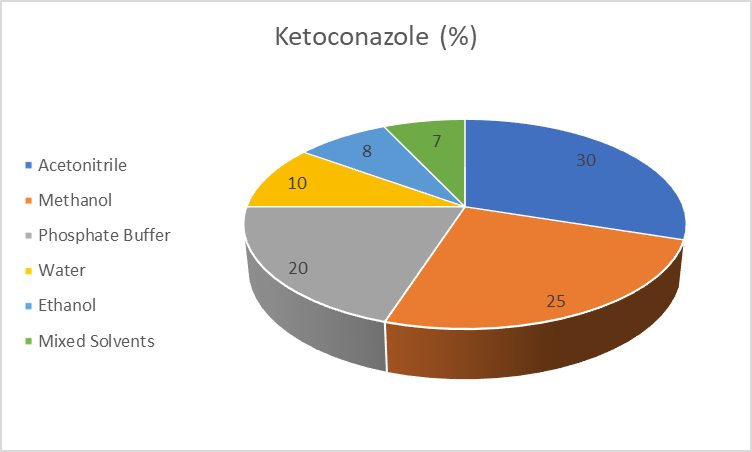
Figure 1: Solvent usage pattern in reported analytical methods for Ketoconazole
Caption: The figure illustrates the relative distribution of solvents employed in UV spectrophotometric, chromatographic, and hyphenated analytical methods reported for Ketoconazole.
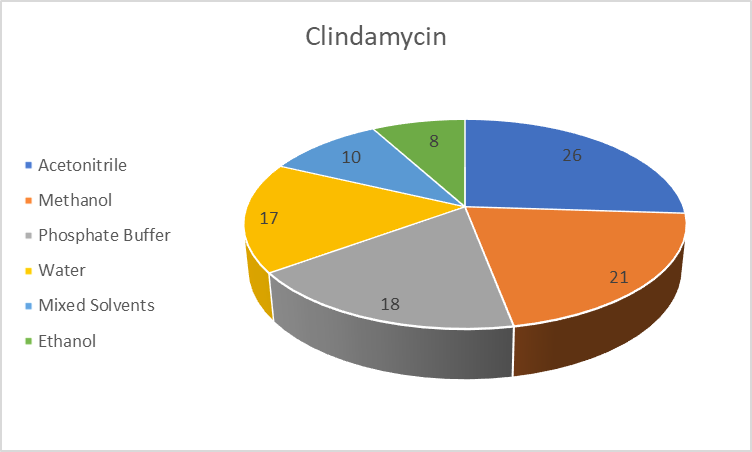
Figure 2: Solvent usage pattern in reported analytical methods for Clindamycin
Caption: The figure represents the proportion of solvents utilized in various analytical techniques, including UV, RP-HPLC, HPTLC, and LC–MS methods, for the analysis of Clindamycin
Current Research on the Ketoconazole–Clindamycin Combination
Recent research indicates growing clinical and pharmaceutical interest in the Ketoconazole–Clindamycin combination, particularly for the treatment of mixed fungal and bacterial infections such as vulvovaginal candidiasis and bacterial vaginosis. Clinical studies and trials have evaluated intravaginal formulations containing both drugs and reported favorable therapeutic outcomes, supporting their complementary antifungal and antibacterial activity. Patent literature further demonstrates active formulation research on this combination in topical and intravaginal dosage forms, confirming pharmaceutical compatibility and commercial relevance.
However, despite clinical use and formulation development, limited attention has been given to analytical method development for this combination. Most reported analytical studies focus on individual estimation of Ketoconazole or Clindamycin, while validated, stability-indicating methods for their simultaneous quantification in combined formulations remain scarce. This highlights a clear need for robust analytical research to support quality control and regulatory requirements for combination products.
CONCLUSION
This review critically summarized the reported analytical methods employed for the quantification of Ketoconazole and Clindamycin using spectroscopic, chromatographic, and hyphenated techniques. UV spectrophotometric methods were found to be simple and cost-effective but limited by poor selectivity and unsuitability for stability assessment. RP-HPLC emerged as the most widely applied technique, offering superior accuracy, precision, and applicability across bulk drugs, pharmaceutical formulations, and biological matrices. HPTLC methods provided rapid and economical alternatives for routine analysis, while advanced techniques such as UPLC and LC–MS/MS demonstrated high sensitivity and specificity, particularly for bioanalytical applications, though their routine use remains restricted due to high cost and operational complexity.
Despite the availability of numerous analytical approaches for individual drugs, a significant research gap exists in the form of a lack of a validated, stability-indicating RP-HPLC method for the simultaneous estimation of Ketoconazole and Clindamycin in combined dosage forms. Many reported methods either do not address forced degradation behavior comprehensively or fail to comply fully with ICH guidelines. Addressing this gap is critical to ensure regulatory compliance, reliable quality control, and accurate stability evaluation of combination formulations. Therefore, the development of a simple, robust, and stability-indicating RP-HPLC method capable of resolving both drugs and their degradation products remains an important and necessary direction for future analytical research.
REFERENCES



Disha Sharma, Dr. Mitali Dalwadi, Dr. Priyanka Patil, Critical Evaluation of Spectroscopic and Chromatographic Methods for the Quantitative Determination of Ketoconazole and Clindamycin, Int. J. of Pharm. Sci., 2026, Vol 4, Issue 1, 2124-2137. https://doi.org/10.5281/zenodo.18327340
 10.5281/zenodo.18327340
