

We use cookies to ensure our website works properly and to personalise your experience. Cookies policy
Visveswarapura Institute of Pharmaceutical Sciences, Bengaluru- 560070, Karnataka
This project focuses on developing mucoadhesive buccal films of Rizatriptan Benzoate a fast-acting antimigraine drug using jackfruit seed starch as a natural, cost-effective polymer. Jackfruit seeds, which are usually discarded as waste, were processed to extract starch, which was then evaluated for its moisture content, hydration behaviour, and other physicochemical properties. The results showed that the extracted starch has good film-forming ability and can serve as a stable natural polymer. Seven film formulations (F1–F7) were prepared using the solvent-casting method by varying the ratios of starch, pectin, citric acid, and glycerin. These films were then tested for their appearance, thickness, folding endurance, pH, moisture content, swelling, mucoadhesion, drug release, and permeation. All formulations were smooth, flexible, and showed pH values close to that of the buccal cavity, ensuring comfort during application. Among the developed batches, Formulation F4 performed the best. Overall, this study shows that jackfruit seed starch is a promising natural alternative for developing buccal films, offering a patient-friendly and sustainable approach for effective migraine management.
Buccal drug delivery refers to the administration of drugs to the buccal mucosa, located on the inside of the cheek within the mouth, and is capable of facilitating both local and systemic drug delivery. This route avoids first-pass metabolism, enzymatic drug degradation, and it provides effective therapy to patient groups unable to swallow or with swallowing difficulties(1). The pharmaceutical industry has increased its focus on films as dosage forms since they are patient-friendly. Buccal film is the current topic of discussion. Compared to the majority of commercially available orally disintegrating tablets, which typically require special packaging, this dosage form is less friable. Additionally, these dosage forms are pharmacoeconomic, self- administrable and have improved patient compliance(2).
Mucoadhesion is the process where polymers attach to biological substrate or a synthetic or natural macromolecule, to mucus or an epithelial surface. When the biological substrate is attached to a mucosal layer then this phenomenon is known as mucoadhesion. The substrate possessing bio adhesive polymer can help in drug delivery for a prolonged period of time at a specific delivery site. Natural polymers have recently gained importance in pharmaceutical field(3).
Over the past ten years, there has been an increase in interest in the utilization of the membranes of the oral cavity as sites of drug administration. It is generally known that drugs absorbed from the oral mucosa enter the systemic circulation directly, avoiding first-pass effect(4).
MATERIALS AND METHODS
Materials
Rizatriptan Benzoate was used as the active pharmaceutical ingredient. Jackfruit seeds obtained from the local market served as the source of natural starch. The formulation excipients included pectin (polymeric binder), glycerin (plasticizer), and citric acid (saliva-stimulating agent). Analytical-grade chemicals such as potassium dihydrogen phosphate and sodium hydroxide were used for preparing phosphate buffer pH 6.8.
Methods
Extraction of Jackfruit Seed Starch
The main material used was jackfruit seeds, collected from local markets. In brief about 2kg of jackfruit seeds were cleaned, washed, and cut into small pieces to make them easier to crush. The broken pieces of jackfruit seeds are than blended at low speed until they became smooth. The mixture was then filtered through muslin cloth and the resulting filtrate was collected. After discarding the fibrous residue, the filtrate was allowed to stand at ambient temperature for about five hours to facilitate sedimentation. The supernatant was gently decanted and the starch sediment was washed repeatedly with distilled water to remove soluble impurities. The final starch paste was dried in an oven at 50°C for 12 hours. The dried starch was blended again and sieved with a 100-mesh sieve in order to get a dry jack fruit seed starch, and stored in a closed container at room temperature(5).
Characterization of Extracted Starch
Small amount of the jackfruit seed starch is taken in a test tube; few drops of iodine solution was added to confirm the starch in an extraction(6).
The weighing balance was set to zero. A clean, dry container with its lid was placed on the balance and the initial weight (W1) was recorded. The starch sample was then placed into the same container, and the container with the sample and lid was weighed again (W2). After weighing, the lid was removed and the container with the sample was placed in an oven maintained at 105–115 °C. After complete drying, the container was carefully removed from the oven, the lid was replaced, and the container was cooled. The weight of the container with the dried starch sample was then recorded (W3). The obtained weights (W1, W2, W3) were used to calculate the moisture content(6).
Moisture content=
Initial weight-final weight Initail weight X 100

Preparation of Buccal Films
Films were formulated using the solvent casting method. Starch, pectin, citric acid, glycerin and 45 mg Rizatriptan Benzoate were dissolved to form a uniform casting solution. The solution was cast in petri dishes, dried, and cut into films.
Table 1: Composition of buccal films
|
Ingredients |
F1 |
F2 |
F3 |
F4 |
F5 |
F6 |
F7 |
|
Starch (g) |
1.5 |
1.5 |
1.5 |
1 |
0.5 |
1 |
0.5 |
|
Pectin (g) |
- |
- |
- |
0.5 |
1 |
0.5 |
1 |
|
Citric acid (mg) |
- |
25 |
50 |
- |
- |
25 |
50 |
|
Drug (mg) |
45 |
45 |
45 |
45 |
45 |
45 |
45 |
|
Glycerin (ml) |
0.5 |
0.5 |
0.5 |
0.5 |
0.5 |
0.5 |
0.5 |
Evaluation of Buccal Films
The produced formulations were assessed for physicochemical characterisation, organoleptic characteristics, invitro dissolution data, invitro Mucoadhesive strength, invitro Mucoadhesive time, invitro permeation studies.
All the buccal films were visually inspected for color, clarity, odor, flexibility and smoothness(7).
Three films of each formulation are taken and weighed separately on a digital balance for the purpose of determining the film weight. Weight averages are computed(8).
Three films of each formulation were collected, and the thickness of each film was measured using a micrometre screw gauge three distinct locations, with the mean value being determined(8).
The folding resistance test on the film is carried out by repeatedly folding the film in the same place until the film breaks. Film folding is done up to 300 times. The folding endurance of the film is the measure of its durability, expressed as the number of consecutive folds in the same location until it ruptures(9).
To determine the pH, a combination of glass electrodes is utilized. The patches are placed in contact with 5 ml of distilled water for 1 hour. The pH can be determined by bringing the electrode near the surface of the formulations and allowing it to equilibrate for 1 minute(10).
The prepared films are individually weighed and placed in a desiccator containing calcium chloride at room temperature for 24 hours. The films are then reweighed at specified intervals until they reach a constant weight. The percentage moisture content is calculated using the following formula(10),
% Moisture Content =
Initial weight-Final weight Final weight X 100

The swelling characteristic of the prepared films was measured as percentage hydration. Briefly, films with specific dimensions were accurately weighed and kept on a steel mesh. The film, along with mesh, was dipped in 6.8 phosphate buffer (10 mL) maintained at the temperature of 37 ± 1 ?C. The mesh was taken out from the saliva medium at various time intervals, and the film was wiped and reweighed. The percent hydration was determined using equation(10).
Percentage hydration or Swelling index (%) =
W2-W1W1 X 100
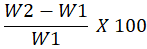
W1 = Initial weight of the dry film (before immersion)
W2 = Final weight of the swollen film (after immersion in buffer solution)
Different polymers mucoadhesive capacities are measured using this technique. Mertti Marvole created the modified technique. Goat buccal mucosa was preserved in Phosphate buffer solution after being procured from a nearby slaughterhouse. The experiment was carried out within three hours of the mucosa being procured. After being cleaned with distilled water, the goat mucosa was gently adhered to the glass slide using cyanoacrylate adhesive. This amount was placed in a Petri dish with a buffer solution of pH 6.8. The solution was maintained at 37°C for the duration of the experiment. Cyanoacrylate adhesive was used to adhere the patch to the glass stopper, which was then secured with a thread. The plastic beaker was fastened to the opposite end of that thread. Finger pressure was used for 30 seconds to attach the patch to the mucosa. The force needed to detach the patch from the mucosa was measured(11).
The ex vivo bio-adhesion time was ascertained (n = 3) after application of the patches onto freshly cut goat buccal mucosa. The fresh goat buccal mucosa was fixed in the inner side of the beaker, above 2.5 cm from the bottom, with cyanoacrylate glue. One side of each patch was wetted with one drop of isotonic phosphate buffer pH 6.8 and pasted to the goat buccal mucosa by applying a light force with a fingertip for 30 s. The beaker was filled with 80 ml of pH 6.8 Phosphate buffer and was kept at 37°C ± 1. After 2 min, a 50 rpm stirring rate was applied to simulate the buccal cavity environment, and patch adhesion was monitored up to 6 h. The time required for the patch to detach from the sheep buccal mucosa was recorded as the mucoadhesion time(12).
The USP Dissolution Test Apparatus Type II was used to conduct the buccal film dissolution investigations. Before the dissolving test began, each patch strip was positioned at the bottom of the dissolution vessel and adhered to a rectangular glass slide using cyanoacrylate glue or instant adhesive. 250ml of pH 6.8 phosphate buffer were employed as the dissolving media, which was agitated at 50 rpm. Every five minutes, the samples were taken out and swapped out for an equivalent volume of dissolving media. Spectrophotometric analysis was performed on the extracted samples at 225 nm(13).
An in vitro drug release study was carried out using a Franz diffusion cell. Here, egg membrane is used as a biological membrane.
Preparation of egg membrane: Egg membrane is prepared by a small hole being made in the egg to separate the egg yolk. Egg membrane was separated out by placing the egg shell in conc. HCl till the membrane was separated from the shell. Then the separated egg membrane was continuously washed with purified water to make it free from Conc. HCl and finally cleaned or washed in alcohol, then the experiment was carried out.
Permeability studies: The invitro diffusion studies of the buccal patch were performed using egg membrane. The membrane was soaked in phosphate buffer pH 6.8 for 6–8 hr. The receptor compartment (63 ml) was filled with phosphate buffer, pH 6.8. The patch was applied under occlusion on the egg membrane fitted between the donor and receptor compartments of the diffusion cell. The drug release was performed at 37 ± 0.5°C at a stirring speed of 50 rpm using a magnetic stirrer. The required quantity of the sample from receptor medium was withdrawn at regular intervals and replaced immediately with an equal volume of phosphate buffered saline, pH 6.8. The amount of Rizatriptan Benzoate released into the receptor medium was quantified by using a UV-visible spectrophotometer at 225nm(14)(15).
RESULTS AND DISCUSSION
Results
The organoleptic evaluation of Rizatriptan Benzoate confirmed that the drug appears as a white to off-white, odorless amorphous powder. The solubility studies showed that the drug is freely soluble in water and phosphate buffer (pH 6.8), supporting its suitability for buccal delivery. The melting point (181.63 °C) matched standard values, indicating purity. FTIR spectra confirmed the presence of key functional groups and verified compatibility between the drug and extracted jackfruit starch, as no major interactions were observed.
Jackfruit seed starch was successfully extracted and showed acceptable moisture content, water absorption capacity, and solubility characteristics, confirming its suitability as a natural polymer.
Seven buccal film formulations (F1–F7) were prepared and evaluated. All films showed uniform weight, good flexibility, smooth texture, and a surface pH between 6.0 and 7.0, indicating compatibility with buccal tissues(Table 2). Folding endurance values above 250 indicated strong mechanical integrity. Swelling indices ranged from 81–93%, supporting good hydration and mucoadhesive behavior.
Table no 2: Evaluation of Physicochemical parameters of mucoadhesive buccal films of Rizatriptan benzoate.
|
Formulation code |
PHYSICOCHEMICAL PARAMETERS |
||||
|
Weight variation (g)± S.D |
Thickness (mm)± S.D. |
Folding endurance± S.D |
Surface pH± S.D |
Moisture content (%) |
|
|
F1 |
0.136±0.005 |
0.124±0.005 |
274.3±1.15 |
6.08±0.015 |
6.26±0.15 |
|
F2 |
0.106±0.011 |
0.131±0.001 |
284±1.0 |
6.41±0.015 |
6.04±0.18 |
|
F3 |
0.116±0.007 |
0.126±0.002 |
296±1.0 |
6.96±0.39 |
7.29±0.36 |
|
F4 |
0.043±0.005 |
0.136±0.001 |
345±1.63 |
6.23±0.007 |
6.88±0.078 |
|
F5 |
0.073±0.005 |
0.130±0.003 |
304±1.7 |
6.91±0.03 |
7.02±0.22 |
|
F6 |
0.096±0.011 |
0.136±0.001 |
374±1.0 |
6.67±0.26 |
6.94±0.058 |
|
F7 |
0.113±0.005 |
0.128±0.001 |
311±1.7 |
6.28±0.022 |
7.1±0.035 |
The data is presented in an average of mean ± SD; n=3
In-vitro mucoadhesive strength
The in-vitro mucoadhesive strength of the buccal films was measured using goat buccal mucosa to determine how firmly each formulation adheres to the mucosal surface. Among all formulations, F4 showed notably strong mucoadhesion, with an average detachment force of 28.0 ± 1.3 g. This indicates that the polymer combination in F4 provides an optimal balance of hydration, swelling, and cohesive strength, allowing the film to attach securely to the buccal tissue.
In-Vitro Mucoadhesive Time
The in-vitro mucoadhesive time was evaluated using fresh goat buccal mucosa to determine how long the film remains attached under simulated buccal conditions. Among all the formulations, F4 demonstrated the most favorable mucoadhesive time, with an average adhesion duration of 14 ± 1.8 minutes. The results confirm that F4 exhibits effective and reliable mucoadhesion, contributing to its selection as the optimized formulation.
In -vitro dissolution data
The in-vitro dissolution studies were performed to compare the drug-release profiles of all seven formulations (F1–F7) of Rizatriptan Benzoate buccal films. The results showed that all formulations were capable of releasing the drug progressively over 90 minutes, but with noticeable differences based on polymer composition. Among the first four batches, F4 exhibited the fastest and highest drug release when compared to other formulations.
Overall, the dissolution data confirmed that polymer ratio strongly influences drug-release behavior, and F4 demonstrated the most desirable release profile, making it the optimal formulation for rapid therapeutic action.
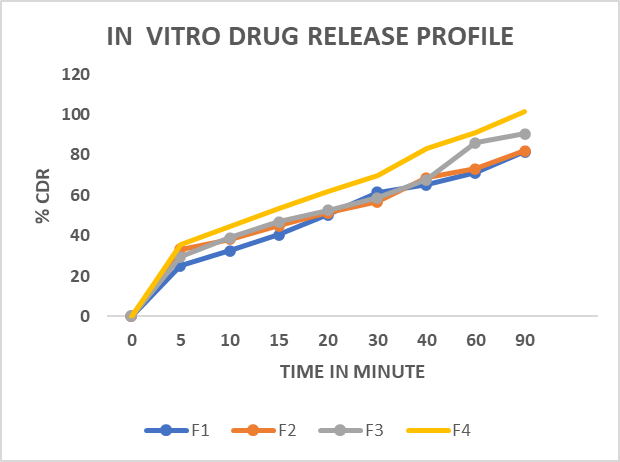
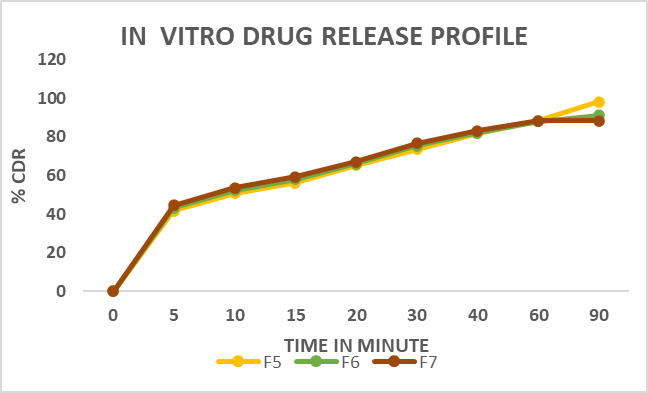
Fig no. 1: In-vitro dissolution data of Rizatriptan Benzoate formulation F1-F7
In vitro permeation studies
The in-vitro permeation study for the optimized formulation F4 was conducted using a Franz diffusion cell with egg membrane to evaluate the diffusion of Rizatriptan Benzoate across a biological barrier. F4 showed a steady and significant increase in permeation with time, indicating efficient drug transport. The diffusion flux values for F4 ranged from 20.71 mg/cm² at lower concentrations to 68.38 mg/cm² at higher concentrations, demonstrating stronger permeation performance compared to other formulations.
CONCLUSION
This study established that jackfruit seed starch can serve as an efficient, natural, biodegradable polymer for the preparation of mucoadhesive buccal films. The optimized formulation (F4) achieved desirable mechanical, physicochemical, and mucoadhesive properties, and ensured controlled release of Rizatriptan Benzoate suitable for migraine management through buccal administration.
The developed films are cost-effective, patient-friendly, and environmentally sustainable, representing a promising alternative to synthetic polymers. Future work may focus on in-vivo pharmacokinetic evaluation, stability studies, and scale-up optimization to facilitate clinical translation and potential commercialization of this natural polymer-based buccal drug delivery system.
REFERENCE

Sujatha, Sahana B R, Roshini P, Reshma, Sakshi R, Rakshitha M, Extraction and Formulation of Buccal Film Using Jackfruit Seed Starch, Int. J. of Pharm. Sci., 2025, Vol 3, Issue 11, 4661-4668. https://doi.org/10.5281/zenodo.17750341
 10.5281/zenodo.17750341