
1 Shree Dhanvantary Pharmacy College, Kim, Surat, Gujarat.
2 Vidhyadeep Institute of Pharmacy, Vidhyadeep University, Anita, Kim, Surat, Gujarat
3 Shree Naranjibhai Lalbhai Patel College of Pharmacy, Umrakh.
The present investigation aimed to develop and evaluate two distinct polyherbal dentifrice formulations utilizing crude plant powders and hydroalcoholic extracts, respectively, and to conduct a comparative assessment of their physicochemical and organoleptic properties.Six medicinal plants (Achyranthes aspera, Capparis decidua, Senna auriculata, Jateorhiza palmata, Mimusops elengi, and Sesamum indicum) were incorporated with pharmaceutical excipients using the dry gum method. Both formulations were standardized to 100 g and subjected to comprehensive evaluation including organoleptic assessment (colour, odour, taste, texture), physicochemical characterization (pH, moisture content, volatile matter), foamability studies, and spreadability analysis following pharmacopeial standards. The crude powder formulation demonstrated a light brown coloration with pH 7.0, foam volume of 3 mL, and moisture content of 39.4%. The extract-based formulation exhibited a light green appearance with pH 7.5, enhanced foam volume of 6 mL, and reduced moisture content of 26.2%. Both preparations displayed acceptable organoleptic characteristics including aromatic odour, pleasant taste, smooth texture, and uniform spreadability. Both polyherbal formulations exhibited satisfactory physicochemical stability and organoleptic acceptance. The extract-based dentifrice demonstrated superior foaming properties and enhanced moisture stability, indicating improved pharmaceutical performance. These findings support the potential of polyherbal dentifrices as efficacious, safe, and natural alternatives to conventional synthetic oral care products.
Oral healthcare represents a fundamental component of overall systemic health maintenance, with dental hygiene practices directly correlating to the prevention of numerous pathological conditions. Contemporary oral health challenges encompass a spectrum of microbially-mediated disorders including dental plaque formation [1,2], carious lesions, periodontal diseases [3], oral mucosal lesions, halitosis, endodontic infections, and oral malignancies [4]. The pathogenesis of these conditions predominantly involves microbial colonization and subsequent biofilm formation.
Dental caries, primarily attributed to cariogenic microorganisms such as Streptococcus mutans and Lactobacillus acidophilus, results from the bacterial conversion of dietary sucrose into adherent glycan polymers, facilitating plaque biofilm establishment and maturation. The metabolic activity of these organisms generates organic acids, particularly lactic acid, leading to localized enamel demineralization and subsequent carious lesion development [5].
Contemporary commercial dentifrices incorporate various synthetic agents including cetylpyridinium chloride, hydrogen peroxide, chlorhexidine, and fluoride compounds to address oral pathological conditions. However, prolonged exposure to these chemical constituents may result in adverse effects, including mucosal irritation from peroxide-based whitening agents and potential toxicity from preservatives such as formaldehyde and ethylene diamine tetraacetic acid [4].
Herbal formulations present a promising alternative approach, offering bioactive phytoconstituents with established antimicrobial, anti-inflammatory, and antioxidant properties while minimizing adverse effects associated with synthetic chemicals. The integration of traditional medicinal plants into modern pharmaceutical dosage forms represents a convergence of ethnopharmacological knowledge with contemporary formulation science
MATERIALS AND METHODS
Ethical Considerations
This study involved the formulation and evaluation of herbal preparations using plant materials. No human or animal subjects were involved in the research. Plant materials were collected following sustainable harvesting practices and local regulatory guidelines. The study was conducted in accordance with Good Manufacturing Practices (GMP) for pharmaceutical preparations.
Plant Materials
Six medicinal plants were selected based on their documented ethnopharmacological applications in oral healthcare:
Commonly designated as chaff-flower, this perennial herb demonstrates widespread distribution across tropical ecosystems. The plant exhibits characteristic herbaceous stems, ovate-shaped leaves with reticulate venation patterns, and prominent nodal structures. Ethnomedicinal applications include management of oedematous conditions, haemorrhoids, gastrointestinal disorders, respiratory ailments, and dermatological conditions [5]. Phytochemical profiling reveals the presence of triterpenoid saponins containing oleanolic acid as the aglycone moiety, ecdysterone, and long-chain alcohols.
This xerophytic shrub, locally known as Karira, demonstrates adaptation to arid and semi-arid environments across Africa, the Middle East, and South Asia, particularly the Thar desert region [6]. Morphological characteristics include slender, leafless branches, erythematous flowers, and fleshy berry fruits. The plant serves dual nutritional and medicinal purposes while contributing to ecological conservation through soil stabilization and afforestation programs
Designated as Avaram Senna or Ranawara, this drought tolerant shrub exhibits distribution throughout arid regions of India and Sri Lanka. Morphological features include paripinnate compound leaves and conspicuous yellow flowers. Ethnobotanical applications encompass antihyperglycemic and antihyperlipidemic properties [7]. Root decoctions are utilized for diabetes management, urinary disorders, and fever reduction, while leaves serve as mild laxatives. The plant demonstrates significant antibacterial activity attributed to anthraquinone compounds, cardiac glycosides, and tannins [8]
Commonly known as calumba, this perennial climbing vine is indigenous to East Africa. Characteristic features include large tuberous root systems, palmate membranous leaves, and small greenish flowers. Traditional applications include utilization as a bitter tonic for appetite stimulation and gastrointestinal disorder management. Unlike many botanical preparations, calumba lacks tannin content, rendering it compatible with iron-containing formulations used in anemia treatment. The plant contains pharmacologically active isoquinoline alkaloids.
Known as Spanish cherry or Bakula, this evergreen tree demonstrates distribution across South and Southeast Asia, extending to Northern Australia [9]. Ayurvedic applications document the utilization of bark, flowers, fruits, and seeds for their astringent, tonic, anthelmintic, and febrifuge activities, particularly in dental disorders including gingival bleeding, pyorrhoea, and dental caries. The fragrant flowers are utilized in therapeutic infusions, while the edible fruits serve nutritional purposes
Sesame oil, derived from Sesamum indicum seeds, represents one of the earliest cultivated oilseed extracts. The oil composition includes linoleic acid (41%), oleic acid (39%), palmitic acid (8%), and stearic acid (5%). Beyond culinary applications, sesame oil demonstrates ethnomedicinal relevance in oral healthcare through oil-pulling practices, attributed to its saponification and emulsification properties [10]
Formulation Development
Two distinct polyherbal dentifrice formulations were developed utilizing:
Table 1: Herbal Components in Crude Drug-Based Formulation
|
Sr. No. |
Ingredients |
Quantity (g/100g) |
Therapeutic Application |
|
1 |
A. aspera leaf powder |
2.5 gm |
Anti-inflammatory activity |
|
2 |
S. indicum oil |
0.02 mL |
Dental analgesic properties |
|
3 |
C. decidua seed powder |
0.05 gm |
Anti-oxidant activity |
|
4 |
M. elengi seed powder |
6 gm |
Periodontal disorder management |
|
5 |
S. auriculata powder |
1.6 gm |
Anti-oxidant properties |
|
6 |
J. palmata powder |
0.03 gm |
Anti-bacterial activity |
Table 2: Pharmaceutical Excipients and Base Components
|
Sr. No. |
Ingredients |
Quantity (g/100g) |
Functional Category |
|
1 |
Hydroalcoholic Extract |
Variable |
Active ingredient |
|
2 |
Calcium carbonate |
41 gm |
Abrasive agent |
|
3 |
Sodium Chloride |
0.9 gm |
Intracanal irrigant |
|
4 |
Sorbitol |
44 gm |
Humectant |
|
5 |
Sodium lauryl sulphate |
1.5 gm |
Detergent and foaming agent |
|
6 |
Sodium carboxymethyl cellulose |
1.8 gm |
Binding agent |
|
7 |
Methylparaben |
0.2 gm |
Preservative |
|
8 |
Sodium benzoate |
0.1 gm |
Preservative |
|
9 |
Honey |
0.2 mL |
Sweetening Agent |
|
10 |
Rose Oil |
q.s. |
Flavoring agent |
Extract Preparation
Hydroalcoholic extracts were prepared using a standardized 1:1 ethanol-water (v/v) solvent system. Plant materials underwent sonication using a ultrasonic bath for 30 minutes at 40 0C followed by maceration for 24 hours at room temperature (25±2°C). Solvent evaporation was conducted using a rotary evaporator under controlled conditions (40°C, 100 rpm), and sesame oil was subsequently incorporated into the concentrated extract.
Manufacturing Process
The dry gum method was employed for formulation preparation following established protocols. Solid excipients were accurately weighed using an analytical balance, passed through standardized #80 mesh sieve, and triturated with sorbitol in a porcelain mortar until achieving a homogeneous semisolid consistency. Herbal powders or hydroalcoholic extracts were incorporated into the base formulation along with sesame oil under continuous trituration. Rose oil was added during the final processing stage for flavour enhancement. All formulations were prepared under ambient conditions (25±2°C, 60±5% RH) and stored in airtight containers.
Evaluation Parameters
Organoleptic and Physical Assessment:
Visual examination encompassed color evaluation, odor characterization, taste assessment, consistency determination, and texture analysis. The powder-based formulation exhibited light brown coloration, while the extract-based preparation demonstrated light green appearance.
pH Determination:
A 50% aqueous suspension was prepared by dispersing 10 g of dentifrice in 10 mL of freshly boiled and cooled distilled water at 27°C. Following thorough agitation, pH measurements were conducted within 5 minutes using calibrated digital pH instrumentation.
Moisture and Volatile Matter Content:
Moisture content was assessed by drying 5 g of the formulation in a porcelain dish at 105 °C until constant weight. The percentage loss on drying was calculated as:
% Moisture by mass=M100×Δm?
Where, Δm = loss of mass (g) on drying
M = initial mass (g).
Foamability Test:
Foaming capacity was evaluated by dispersing 2 g of toothpaste in 5 mL distilled water in a graduated cylinder. The mixture was shaken uniformly (10 strokes), and the final foam volume was recorded and analyzed
Spreadability Test:
Spreadability determination utilized the slip-and-drag methodology. Approximately 1-2 g of dentifrice was positioned between glass slides (10 × 10 cm). The upper slide was permitted to move under gravitational force, and spreading diameter was measured after 3 minutes. Triplicate determinations were performed, and mean values were calculated.
RESULTS AND DISCUSSION
Physiochemical Characterization
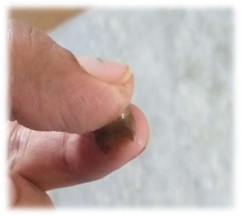
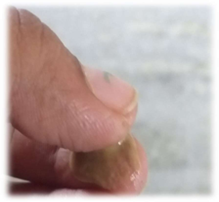
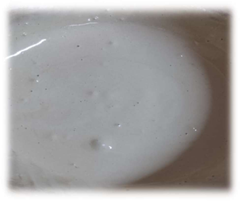
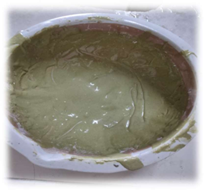
Comprehensive evaluation of both polyherbal dentifrice formulations revealed distinct physicochemical profiles. The crude powder formulation demonstrated a light brown appearance attributed to the natural pigmentation of constituent plant materials, while the extract-based preparation exhibited a light green coloration reflecting the concentrated phytochemical constituents. Organoleptic assessment indicated that both formulations possessed aromatic and characteristic odours considered acceptable for oral care applications. Taste evaluation, conducted through sensory analysis, revealed pleasant and acceptable palatability in both preparations. Texture analysis demonstrated smooth consistency with uniform spreadability characteristics, confirmed through manual assessment protocols established in previous investigations.
A B C D
Figure 1: A - Surface smoothness of powder-based toothpaste, B - Surface smoothness of extract-based toothpaste, C - Visual appearance: colour of extract-based toothpaste, D - Visual appearance: colour of powder-based toothpaste.
pH Analysis
pH measurements revealed values of 7.0 and 7.5 for the powder-based and extract-based formulations, respectively. These values fall within the physiologically compatible range for oral care products, ensuring compatibility with oral tissues while maintaining stability of active constituents. The slightly elevated pH in the extract formulation may be attributed to the alkaline nature of certain extracted compounds
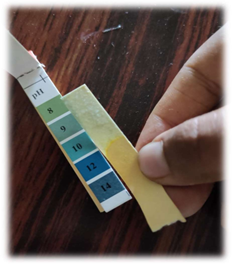
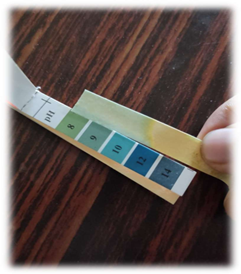
A B
Figure 2: A - Formulated powder-based herbal toothpaste, B - Formulated extract-based herbal toothpaste
Foaming Properties
Foamability assessment demonstrated superior performance in the extract-based formulation (6 mL foam volume) compared to the powder variant (3 mL foam volume). This enhancement can be attributed to the increased solubility and surface-active properties of extracted phytochemical compounds, potentially improving cleansing efficacy and consumer acceptance.
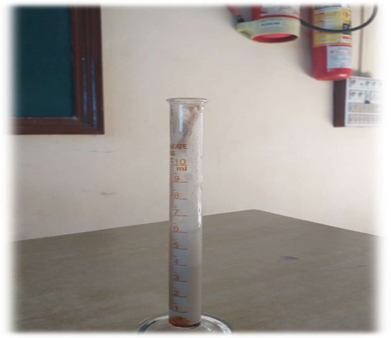
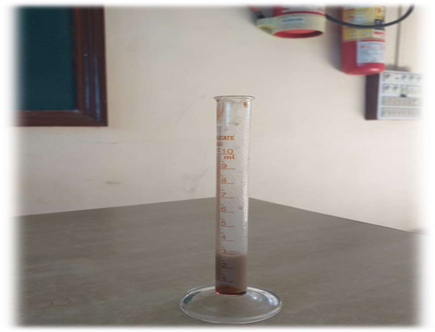
A B
Figure 3: A - Foam Test – Extract Formulation, B - Foam Test – Powder Formulation
Moisture Content Analysis
Moisture content evaluation revealed 39.4% in the powder formulation versus 26.2% in the extract-based preparation. The reduced moisture content in the extract formulation indicates enhanced stability characteristics, potentially extending shelf-life and reducing microbial contamination risk. These values align with established stability requirements for herbal oral care formulations.
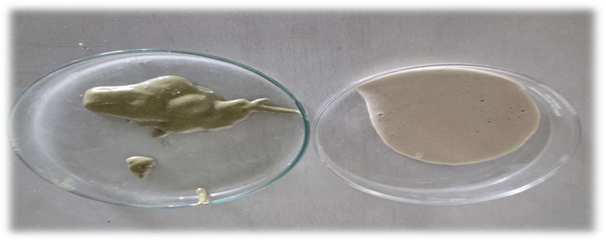
Figure 4: Assessment of Moisture and Volatile Constituents
Comparative Performance Assessment
Both formulations demonstrated acceptable physicochemical parameters suitable for oral care applications. The extract-based formulation exhibited superior performance in terms of foaming capacity and moisture stability, indicating potential advantages in pharmaceutical performance and product stability. The observed differences can be attributed to the concentrated nature of active constituents in the extract formulation and the removal of non-essential plant materials during the extraction process
CONCLUSION
The current investigation successfully developed and evaluated two distinct polyherbal dentifrice formulations incorporating traditional medicinal plants with established oral healthcare applications. Comparative physicochemical assessment revealed that both crude powder and extract-based formulations possess acceptable quality parameters suitable for oral care applications. The extract-based formulation demonstrated superior performance characteristics, including enhanced foaming properties and improved moisture stability, suggesting potential advantages in terms of consumer acceptance and product longevity. These findings support the therapeutic potential of integrating traditional medicinal plants into modern pharmaceutical dosage forms for oral healthcare applications. The successful development of these polyherbal dentifrices represents a significant advancement in the formulation of natural oral care products, offering safe and effective alternatives to conventional synthetic preparations. Future investigations should focus on comprehensive antimicrobial efficacy evaluation, clinical performance assessment, and long-term stability studies to validate the therapeutic utility of these formulations in clinical practice. The outcomes of this research contribute to the growing body of evidence supporting the integration of traditional ethnopharmacological knowledge with contemporary pharmaceutical technology, potentially leading to the development of improved oral care products with enhanced safety profiles and therapeutic efficacy
CONFLICT OF INTERESTS
The authors declare no conflicts of interest regarding the publication of this manuscript.
REFERENCES

Prajapati Vinod, Achla Vyas, Mehul Bagde, Formulation Design, Optimization, and Physicochemical Evaluation of a Polyherbal Dentifrice: A Comprehensive Pharmaceutical Technology Approach, Int. J. of Pharm. Sci., 2026, Vol 4, Issue 1, 1834-1841. https://doi.org/10.5281/zenodo.18299313
 10.5281/zenodo.18299313
