

We use cookies to ensure our website works properly and to personalise your experience. Cookies policy
Matoshri College of Pharmacy, Eklahare, Near Odhagaon Aurangabad Highway, Tal & Dist. Nashik, 422105, Maharashtra, India.
Wound healing is a multifaceted physiological process that is often hindered in chronic conditions, leading to the need for advanced biomaterials for effective management. Although mammalian collagen has been regarded as the standard choice, its use is limited due to the risks of zoonotic disease transmission, ethical issues, and immunogenic reactions. This review examines marine-derived collagen (MC) as a promising and sustainable alternative sourced from plentiful marine byproducts such as fish skin, scales, and invertebrates like jellyfish and sponges. We present a thorough overview of sources for MC, the refined extraction methods employed (including eco-friendly techniques such as deep eutectic solvents), and its distinctive physicochemical properties. The review showcases MC's excellent biocompatibility, reduced immunogenicity, and superior moisture-binding capacity in comparison to terrestrial sources. Additionally, it clarifies the molecular mechanisms through which MC enhances wound healing, particularly by promoting fibroblast proliferation, encouraging angiogenesis, and aiding in re-epithelialization. Moreover, we assess the therapeutic effectiveness of various MC-based formulations spanning hydrogels, porous scaffolds, electrospun nanofibers, and synergistic composites. Although there are ongoing challenges with thermal stability, recent studies suggest that marine collagen is a safer, cost-efficient, and environmentally friendly biomaterial. This paper concludes that MC has considerable potential for the development of innovative wound dressings that overcome the shortcomings of existing treatments while fostering sustainable practices in pharmaceuticals.
Wound healing is a multifaceted and dynamic physiological response to tissue damage that unfolds in four overlapping yet distinct stages: hemostasis, inflammation, proliferation, and remodeling1.
Hemostasis is the quick reaction that helps stop bleeding. Within seconds, vasoconstriction takes place, then platelets adhere to exposed collagen and aggregate, driven by von Willebrand factor and fibrinogen. Platelets create a temporary plug, which is secured by fibrin strands from the coagulation cascade, forming a provisional wound matrix that acts as both a barrier and a framework for future healing2.
The inflammatory phase lasts for a few days and involves the recruitment of neutrophils and macrophages through chemotactic signals such as PDGF, FGF, TGF-β, and C5a. These immune cells eliminate bacteria and cellular waste, while also releasing soluble factors that encourage angiogenesis, thrombosis, and the activation of fibroblasts. While this process is crucial, prolonged inflammation can hinder the healing process and lead to the development of chronic wounds2,3.
The proliferation phase starts 3 to 5 days after the injury and continues for about 14 days. Fibroblasts move to the wound area and produce a temporary extracellular matrix (ECM) made up of Type III collagen, fibronectin, and glycosaminoglycans (GAGs). Angiogenesis reinstates the blood supply through the activation of endothelial cells by VEGF, TGF-α, and bFGF. Epithelial cells multiply and migrate over the granulation tissue to restore the epithelium of the wound, while myofibroblasts facilitate the contraction of the wound edges4.
The remodeling stage starts around 21 days after the injury occurs. Type III collagen slowly gives way to Type I collagen, which has greater tensile strength. The tissue is reinforced through enzymatic cross-linking facilitated by transglutaminases and lysyl oxidases, while fibroblasts and capillaries experience apoptosis, transforming granulation tissue into an organized structure abundant in collagen. Ultimately, the scar tissue usually maintains about 80% of the tensile strength of normal skin4.
Importance of Biomaterials in Wound Care:
Biomaterials signify a transformative approach in the management of wound care, especially for intricate and long-lasting wounds where the body's natural healing process is compromised. Collagen-based biomaterials offer three-dimensional structures that facilitate cellular attachment, movement, growth, and specialization while influencing the wound's microenvironment5.?
Collagen, the most prevalent protein in the extracellular matrix (ECM), serves as an effective scaffold for tissue repair and as a carrier for bioactive substances. In chronic wounds characterized by a lack of ECM and heightened enzymatic degradation, topical collagen helps restore this biochemical equilibrium. Collagen dressings can absorb the surplus matrix metalloproteinases (MMPs) found in the fluid of chronic wounds, thereby altering the harmful microenvironment associated with chronic wounds and promoting healing. The excellent conformability of collagen dressings and their ease of application without harming newly formed tissue make them suitable for the treatment of acute wounds, chronic ulcers, and burns6.
Collagen formulations encompass sponges, gels, films, composite structures, and injectable solutions tailored for particular therapeutic effects. Collagen sponges are especially beneficial due to their wet-strength, enabling suturing to soft tissue, serving as scaffolds for structured tissue development, and allowing the incorporation of cultured cells or bioactive substances to improve regenerative potential5.
Limitations of Traditional Collagen Sources:
Conventional collagen sourced from mammals like cows and pigs has various notable drawbacks that limit its use and safety7.
The primary constraint is the risk of disease transmission. Bovine collagen poses a potential threat of transmitting bovine spongiform encephalopathy (BSE), a deadly neurodegenerative prion illness, despite rigorous regulatory measures. While the actual risk of infection in processed products is minimal, this potential raises considerable regulatory and clinical issues. Lengthy purification and sterilization processes elevate production costs and could negatively affect the properties of the biomaterial7.
Concerns about immunogenicity, although generally low for Type I collagen, may arise when anti-collagen antibodies are detected in patient serum, as well as with the possibility of cellular immune responses in some individuals. This variability has the potential to negatively affect healing outcomes in vulnerable groups8.
Manufacturing limitations include labour-intensive extraction from mammalian tissues, inconsistent supply chains, and variable product quality dependent on animal byproduct availability. Extensive processing further increases complexity and production costs. Reliance on livestock raises environmental and ethical sustainability concerns9.
Chemical and physical limitations include lower solubility at physiological pH, restricting use in injectable formulations, and potentially reduced biological activity depending on processing methodology9.
Advantages of Marine-Derived Collagen:
Marine-derived collagen (MC) from fish, jellyfish, sea sponges, and seaweed offers compelling advantages over mammalian sources for wound healing applications10.
Safety and disease prevention represent the primary advantage. Marine organisms are not susceptible to prion diseases, and marine collagen carries no documented risk of transmitting mammalian pathogens or neurodegenerative diseases. This advantage provides regulatory clarity and clinical confidence11.
Superior biocompatibility and low immunogenicity are distinctive properties. Marine collagen exhibits significantly lower immunogenicity than bovine collagen with reduced pro-inflammatory cytokine production and minimal immune cell activation. Fish collagen shows no immune rejection and is gradually degraded and replaced by newly synthesized collagen, facilitating seamless wound integration. Structural differences in triple helix conformation reduce recognition by innate immune receptors12.
Enhanced bioavailability and absorption distinguish marine collagen from terrestrial sources. Superior water solubility at physiological pH facilitates extraction and formulation in aqueous solutions, hydrogels, injectable formulations, and oral preparations. Higher solubility and smaller molecular weight enhance tissue uptake and enable systemic delivery13.
Proven wound healing efficacy is extensively documented in preclinical and clinical studies. Marine collagen peptides promote rapid wound closure, enhanced fibroblast and keratinocyte migration and proliferation, increased granulation tissue deposition, improved re-epithelialization, stimulated angiogenesis, and enhanced wound appearance. At 50 μg/mL, marine collagen-induced cell migration matches EGF (10.0 ng/mL) stimulation. Treated rabbits demonstrate significantly accelerated healing with increased hydroxyproline levels, elevated fibroblast proliferation, and enhanced vascularization at 7 days post-treatment. Marine collagen increases expression of chemotactic factors β-FGF and TGF-β1, enhancing cell recruitment while providing antimicrobial wound protection14.
Cost-effectiveness and sustainability present compelling economic and ecological advantages. Marine collagen extraction from abundant renewable resources, including fish byproducts and aquaculture waste, ensures sustainable supply chains reducing livestock agriculture dependence. Byproduct utilization represents a cost-effective production strategy and environmentally responsible biomaterial sourcing, addressing waste management while reducing expenses9.
Bioactive peptide properties extend therapeutic potential beyond structural support. Marine collagen peptides demonstrate antioxidant, antimicrobial, anti-inflammatory, and immunomodulatory activities. These peptides exhibit free radical scavenging, inhibit cellular senescence, and provide UV-protection—properties valuable for aged and photodamaged skin repair13.
Advanced tissue engineering scaffold properties make marine collagen suitable for regeneration. Type I marine collagen enables 3D bioprinted structures with ideal biocompatibility, biodegradability, and low immunogenicity. Marine collagen scaffolds support cell attachment, proliferation, and differentiation essential for tissue repair and ECM architecture mimicry for skin, bone, cartilage, and vascular applications9.
Sources of Marine Collagen:
Fish-Based Collagen Sources:
Fish represent the most abundant and commercially viable source of marine collagen, with extraction primarily from byproducts generated during fish processing operations. Approximately 30% of total fish waste byproducts consist of collagen-rich tissues including skin, scales, and bones. Fish byproducts such as heads, skins, viscera, intestines, frames, and fillet cutoffs contain substantial quantities of high-quality collagen that can be efficiently extracted. Individual extraction from specific collagen-rich tissues—including skins, bones, heads, scales, and viscera—produces good-quality collagen when maintained with adequate preservation and storage conditions15.
Fish collagen demonstrates higher bioavailability with approximately 1.5 times greater absorption efficiency compared to bovine and porcine-derived alternatives. Marine collagen extracted from fish sources is typically Type I collagen, the predominant fibrillar form found in connective tissues and skin. Fish species commonly utilized for collagen extraction include tilapia (Oreochromis niloticus and Oreochromis mossambicus), sea bass, sturgeon, blue shark, and various teleost and cartilaginous fish species16.
Fish skin is the primary source for marine collagen extraction due to its abundance of high-quality proteins and easy accessibility during fish processing. Young fish skin provides higher collagen concentrations, with both Type I and Type III collagen present, making young fish specimens particularly suitable for scaffold preparation in wound healing applications17.
Fish scales represent an underutilized collagen source, particularly in freshwater species such as Nile tilapia and saltwater species such as Giant groupers, offering high protein content and therefore higher collagen yields. Scales possess comparable collagen characteristics to skin despite differing slightly in peptide hydrolysis patterns18.
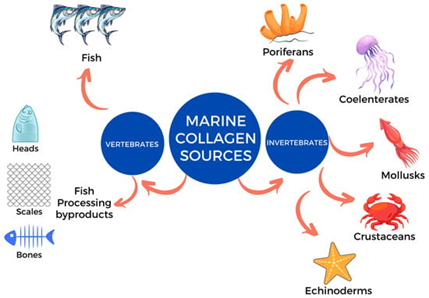
Figure 1. Source of marine collagen.
Fish bones are rich in collagen and represent a significant collagen source from aquaculture waste streams, providing sustainable material for collagen biomaterial production. Bone byproducts from fish processing contribute substantially to the total collagen pool available for extraction and valorization15.
Non-Fish Marine Organisms as Collagen Sources:
Jellyfish have emerged as promising alternative marine collagen sources, possessing very high collagen content and representing a sustainable utilization of by-catch organisms and underused biomass. Jellyfish species such as Rhopilema esculentum, Rhizostoma pulmo, and Nemopilema nomurai contain substantial quantities of collagen with extraction yields of 43.2% (acid-soluble collagen) and 47.5% (pepsin-soluble collagen). Jellyfish collagen stimulates both transcription and translation, enhancing immunoglobulin and cytokine production comparable to or exceeding responses stimulated by bovine collagen and gelatin. Jellyfish collagen possesses moisturizing effects and provides protection against ultraviolet-induced photoaging19.
Sea urchins represent a valuable source of native collagen, particularly from peristomial membranes surrounding the mouth, which constitute a unique echinoderm exclusive mutable collagenous tissue (MCT). Sea urchin collagen can be easily extracted without destructive methods while preserving its native fibrillar conformation, intact glycosaminoglycan surface decoration, structural integrity, and mechanical performance. Collagen extracted from sea urchin tissues has been identified as Type I collagen, structurally similar to mammalian collagen Type I, the main collagen type in human tissues including the dermis20.
Starfish and other echinoderms demonstrate significant potential as marine collagen sources, with collagen from species such as Asterias rubens (Atlantic) and A. amurensis (North Pacific) displaying structural characteristics related to mammalian Type I collagen. Echinoderm-derived collagen from starfish aboral arm walls produces collagen fibrils suitable for two-dimensional membrane production without cellular debris or calcium carbonate residues21.?
Sea cucumbers are established sources of Type I collagen, with collagen primarily extracted from the body wall and connective tissues. Sea cucumber species including Stichopus japonicus, Parastichopus californicus, and Bohadschia species contain collagen with amino acid compositions differing from mammalian Type I collagen while maintaining similar fibrillar structures. Pepsin-solubilized collagen from sea cucumber maintains intact triple-stranded helices, high moisture retention and absorption capacities, and radical scavenging abilities exceeding vitamins C and E22.
Marine sponges (Poriferans) contain collagen and structurally related proteins called spongin, with spongin fibers ranging from 30 to 50 μm in diameter creating interconnected pores of 100 to 300 μm. Sponge collagen demonstrates excellent biocompatibility with cell attachment, proliferation, migration, and differentiation capabilities. The collagenous composition of marine sponge fibers functions as cell-matrix adhesion molecules supporting osteoblast and fibroblast attachment and promoting tissue regeneration23.
Marine macroalgae and microalgae represent emerging collagen sources, with exopolysaccharides (EPS) from microalgae including Porphyridium cruentum, Chrysotila dentata, and Phaeodactylum tricornutum possessing collagen-like properties. Microalgae such as Chlorella vulgaris can produce and synthesize collagenases and collagen-like proteins, offering considerable commercial potential for collagen synthesis promotion and tissue regeneration. Brown algae such as Cystoseira barbata can be combined with jellyfish collagen to create composite formulations for wound healing applications24.
Types of Collagens in Marine Organisms:
Marine organisms contain multiple collagen types with:
Type I collagen being predominant in most marine sources. Type I collagen, the most abundant collagen type in vertebrates and marine organisms, constitutes approximately 70% of skin dry weight and represents the main structural protein in dermis, tendons, vasculature, organs, and bone organic matrix25.
Type III collagen is present in marine sources, particularly in fish skin, and is more abundant in early stages of tissue healing compared to Type I collagen. Young fish skin demonstrates substantial Type III collagen content, making such specimens particularly valuable for wound healing scaffold applications where rapid tissue repair and regeneration are required. Fish species such as Oreochromis mossambicus exhibit significantly higher Type III collagen concentration (over 40% higher) compared to Oreochromis niloticus, demonstrating inter-species variation in collagen composition26.
Type II collagen is present in cartilaginous tissues of marine organisms, though less commonly extracted compared to Type I and Type III collagens. Marine cartilage from fish species contains Type II collagen, making these tissues suitable for cartilage tissue engineering applications26.
Marine collagen amino acid composition, denaturation temperature, sequence structure, morphology, and molecular weight vary depending on source organism and extraction method employed, resulting in diverse physicochemical properties and functional characteristics16.
Extraction Techniques for Marine Collagen:
Acid-Soluble Collagen (ASC) Extraction:
Acid-soluble collagen (ASC) represents the most commonly employed extraction method for marine collagen, utilizing organic acids (acetic acid, citric acid, lactic acid) or inorganic acids (hydrochloric acid, phosphoric acid) to dissociate collagen from the tissue matrix. The ASC extraction process involves initial pretreatment of samples through cleaning, separation of raw material, cutting into small pieces, and alkaline treatment to eliminate non-collagenous proteins and lipids. Samples are soaked in sodium hydroxide (0.1 mol/L) at 4°C for 24 hours with solution replacement every 8 hours27.
Following pretreatment, collagen extraction occurs through acid treatment with acetic acid (0.1-0.75 mol/L) at 4°C, with extraction times typically ranging from 3 to 9 hours. Acid extraction results in collagen yields varying based on extraction time, temperature, solid-to-liquid ratio, and acid concentration, with typical yields ranging from 14.16% to 61.17% depending on fish species and storage conditions. Ultrasound treatment significantly enhances ASC extraction efficiency, achieving yields up to 90.40% with sea bass skin using optimal ultrasound conditions of 20 kHz frequency, 80% amplitude, 0.1 M acetic acid solution, and 3-hour duration26.
Pepsin-Soluble Collagen (PSC) Extraction:
Pepsin-soluble collagen (PSC) extraction employs enzymatic proteolysis using pepsin protease to enhance collagen yield compared to acid extraction alone. Pepsin is the most commonly used enzyme for enzymatic extraction, with pepsin-solubilized collagen demonstrating superior yields compared to acid extraction. The PSC extraction process begins with initial ASC extraction followed by addition of pepsin (typically 0.1-1% concentration) to the residue in acetic acid solution (0.5-0.75 mol/L) at 4°C28.
Enzymatic hydrolysis with pepsin proceeds for extended periods, typically 24-72 hours, with sonication applied to facilitate extraction kinetics and mass transfer. Pepsin extraction results in higher collagen yields than acid extraction alone, with reported increases of 1.5- to 2-fold in collagen extraction compared to ASC alone. Pepsin-soluble collagen extracted from jellyfish using combined acid and pepsin methods yields 43.2% (ASC) and 47.5% (PSC), with subsequent enzymatic hydrolysis producing collagen peptides in white powder form with dry weight yields of 52.3% (ASC) and 59.5% (PSC)29 Marine Jellyfish Collagen and Other Bioactive Natural Compounds from the Sea, with Significant Potential for Wound Healing and Repair Materials29.
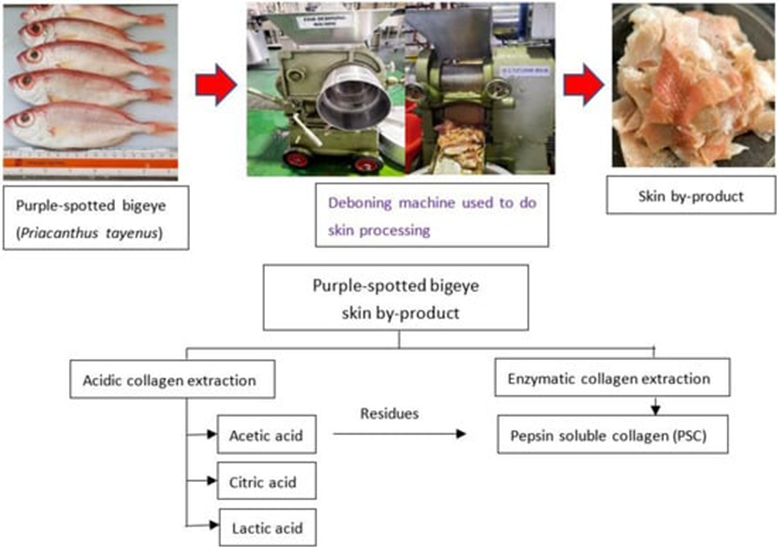
Figure 2. Schematic Representation of Pepsin-Soluble Collagen (PSC) Extraction Process
The molecular weight of extracted PSC varies based on enzyme treatment duration, with PSC molecular weights typically ranging from 57-165 kDa depending on fish species, acid extraction time, and pepsin extraction duration. Pepsin-solubilized collagen maintains intact triple helical structure and demonstrates preserved physiochemical properties compared to native collagen30.
Enzymatic Hydrolysis Methods:
Enzymatic hydrolysis using proteolytic enzymes beyond pepsin generates collagen peptides with reduced molecular weights, enhanced bioavailability, improved solubility, and enhanced biological activity. Enzymes employed include collagenases from marine organisms, flavourzyme, trypsin, and other proteases capable of degrading the collagen triple helix structure31.
Enzymatic hydrolysis parameters significantly influence peptide yield and molecular weight distribution. Sturgeon fish skin collagen hydrolysis with flavourzyme at specific conditions (6068.4 U/g enzyme concentration, 35.5°C temperature, pH 7, 6-hour hydrolysis time) produces low-molecular-weight collagen peptides (1996 Da) with enhanced antioxidant capacity and UV-B radiation protection27.
Sequential enzymatic hydrolysis employing multiple enzymes produces diverse collagen peptide yields and molecular weights. Two-stage hydrolysis of sturgeon fish skin collagen with pepsin (72 hours) followed by flavourzyme (7 hours) produces collagen peptides with various molecular weights and higher overall yields compared to single-enzyme approaches27.
Crude collagenolytic enzyme extracts (CEE) from marine organisms such as jumbo squid hepatopancreas and sierra fish viscera effectively hydrolyze collagen fibres and connective tissue into bioactive peptides at 37°C for 3 hours with enzyme-to-substrate ratios of 1:100. These endogenous marine enzymes possess high affinity for collagen substrates, facilitating efficient collagen peptide production with biological activities not previously tested31.
Advanced Extraction Techniques:
Ultrasound-Assisted Extraction (UAE) significantly enhances collagen extraction efficiency through acoustic cavitation forces that disrupt tissue particle structures, increase surface area, facilitate mass transfer, and accelerate dissolution kinetics. Ultrasonic sonication at 20 kHz frequency and 80% amplitude enhances both ASC and PSC extraction yields substantially. Sonication proves vital for facilitating collagen extraction from fish skin by increasing mixing efficiency, particle disruption, and extraction rate15.
Deep Eutectic Solvent (DES) and Natural Deep Eutectic Solvent (NADES) Extraction represents an emerging green and sustainable extraction approach utilizing environmentally benign solvents composed of natural constituents such as citric acid:xylitol:water at 1:1:10 molar ratios. Deep eutectic solvent extraction of collagen from blue shark skins produces pure Type I collagen through process intensification approaches while reducing environmental impact and extraction time compared to conventional methods. Natural deep eutectic solvents combined with ultrasound-assisted extraction (UAE) and microwave-assisted extraction (MAE) enable efficient collagen extraction with minimal solvent toxicity and environmental footprint32.
Supercritical Fluid Extraction (SFE) and other innovative extraction methodologies represent developing technologies for collagen recovery from marine sources. These advanced techniques offer potential advantages including enhanced purity, reduced processing time, and minimized use of organic solvents compared to conventional chemical extraction methods15.
Extraction Parameter Optimization:
Collagen extraction yield and quality are optimized through careful control of multiple parameters including temperature, extraction time, solid-to-liquid ratio, and solvent/enzyme concentration. Lower temperatures (4°C) preserve collagen structure and bioactivity during extraction. Longer extraction times (24-72 hours) increase collagen yield, with optimal times varying by extraction method and fish species employed28.
Solid-to-liquid ratios and acid/enzyme concentrations significantly influence extraction kinetics and final collagen yield. Adequate storage and quick processing of fish byproducts preserve biochemical and structural collagen properties, preventing degradation and maintaining functional attributes essential for biomedical applications27.
PHYSICOCHEMICAL PROPERTIES OF MARINE COLLAGEN:
Amino Acid Composition:
Marine collagen exhibits a characteristic amino acid profile dominated by high glycine (Gly), proline (Pro), and hydroxyproline (Hyp) content, typically comprising ~33% Gly, ~20% Pro, and ~10% Hyp, mirroring mammalian collagen patterns essential for triple helix stability. Glycine occupies every third position in the repeating Gly-X-Y sequence where X is often Pro and Y is Hyp, providing structural flexibility and hydrogen bonding capacity. Marine collagen shows slightly higher imino acid (Pro+Hyp) content in some fish species (e.g., 210-220 residues/1000) compared to bovine collagen (~210), enhancing stability, though variations exist by species and extraction method33.
Thermal Stability Characteristics:
Marine collagen demonstrates lower thermal denaturation temperature (Td) ranging from 26-36°C compared to mammalian collagen (39-41°C), attributed to reduced imino acid content and altered Pro/Hyp ratios influenced by cold-water adaptation of marine species. Td values vary by source: fish skin collagen ~28-32°C, jellyfish ~25-30°C, while sea cucumber maintains higher stability (~34°C) due to unique glycosylation. Despite lower Td, marine collagen retains triple helical structure at physiological temperatures (37°C) and shows rapid fibrillogenesis initiating near 20°C34.
Structural Properties:
Marine collagen forms native fibrils with 67 nm D-periodic banding patterns identical to mammalian collagen, supporting cell adhesion via integrin binding and ECM mimicry. It exhibits high solubility (>99% at acidic pH), tunable porosity (50-300 μm in sponge collagen), and biodegradability, ideal for scaffolds. Fish collagen fibrils show higher water absorption (10-15x dry weight) and form porous hydrogels with interconnected networks promoting fibroblast infiltration35.
Comparison with Mammalian Collagen:
Table No.1: Comparison of Marine and Mammalian Collagen Properties
|
Property |
Marine Collagen |
|
Gly/Pro/Hyp Content |
High (~33/20/10%); species-variable |
|
Thermal Stability (Td) |
Lower (26-36°C) |
|
Solubility |
Superior at physiological pH |
|
Immunogenicity |
Very low |
|
Fibril Formation |
Rapid, porous networks |
|
Bioavailability |
1.5x higher absorption |
Marine collagen offers enhanced solubility and safety but reduced thermal stability versus mammalian sources, making it preferable for biomedical applications requiring biocompatibility over high-temperature processing36.
Biological Functions Relevant to Wound Healing
Marine collagen is highly biocompatible and exhibits low antigenicity, which minimizes immune rejection and allergic reactions in wound healing applications. It provides a natural extracellular matrix scaffold that supports essential cellular processes including adhesion, migration, and proliferation of fibroblasts and keratinocytes, thereby facilitating tissue regeneration and repair. Marine collagen also promotes angiogenesis by stimulating growth factors such as β-FGF and TGF-β1, which are critical for new blood vessel formation and oxygen supply to the wound site.
Additionally, marine collagen possesses antioxidant and anti-inflammatory properties, reducing oxidative stress and limiting prolonged inflammation that could otherwise impede healing. This bioactive functionality supports a favourable wound microenvironment conducive to healing. Marine collagen's ability to retain moisture further assists by maintaining a hydrated wound environment, which accelerates epithelialization and prevents tissue desiccation. The porous structure of marine collagen scaffolds enhances cellular infiltration and extracellular matrix deposition, integral to effective wound closure and remodelling.
Collectively, these multifaceted biological activities make marine collagen a versatile and promising biomaterial for advanced wound care management, promoting faster and higher quality healing outcomes compared to traditional collagen sources.
This section synthesizes current research findings and is supported by multiple studies demonstrating marine collagen's roles in supporting each key aspect of wound repair and regeneration13.
MECHANISM OF MARINE COLLAGEN IN WOUND REPAIR:
Marine collagen accelerates wound repair through multiple interconnected mechanisms that target key phases of the healing cascade13.
Enhancing Fibroblast Migration and Proliferation:
Marine collagen peptides promote fibroblast migration in a dose-dependent manner, with concentrations of 50 μg/mL achieving wound closure rates comparable to 10 ng/mL epidermal growth factor in scratch assays. Treated wounds exhibit elevated fibroblast proliferation and infiltration by day 7, facilitating granulation tissue formation37.
Stimulating Extracellular Matrix (ECM) Synthesis:
Marine collagen upregulates hydroxyproline synthesis a marker of collagen production in a time- and dose-dependent manner, enhancing ECM deposition essential for tissue structural integrity. Fish collagen sponges are metabolized into new tissue components, downregulating collagen gene expression while supporting matrix remodelling without excessive deposition38.
Accelerating Re-epithelialization:
Collagen treatments increase keratinocyte migration and proliferation, promoting rapid epidermal coverage observed within 24 hours in vitro. In vivo studies demonstrate enhanced re-epithelialization with reduced wound gaps and improved epidermal regeneration in marine collagen-treated burn and excision wounds39.
Promoting Collagen Deposition and Tissue Remodelling:
Hydroxyproline levels rise significantly in treated groups at 7-11 days post-injury, correlating with increased collagen fibre organization, tensile strength, and reduced scar formation. Histological analysis reveals denser collagen bundles and mature granulation tissue in marine collagen applications13.
Interaction with Growth Factors:
Marine collagen stimulates expression of angiogenic (VEGF) and fibrogenic (TGF-β1, β-FGF) factors, enhancing vascularization, inflammatory cell recruitment, and fibroblast chemotaxis. These interactions protect wounds from infection while coordinating proliferation and remodeling phases14.
These mechanisms collectively result in faster wound closure (11-21 days), improved vascularization, and superior tissue quality compared to controls38.
MARINE COLLAGEN-BASED WOUND HEALING MATERIALS:
Hydrogels:
Marine collagen hydrogels maintain optimal moisture balance while promoting cell attachment and proliferation due to their biocompatibility and porous network structure. Tilapia skin collagen (PSC) hydrogels at 10 mg/mL demonstrate excellent biocompatibility with NIH-3T3 fibroblasts and accelerate wound healing rates by 14-28 days in vivo through enhanced ECM remodeling and hydroxyproline deposition40.
Combined hydrogels with alginate, chitosan, and hyaluronic acid improve mechanical strength, adhesion, and antimicrobial properties. Cuttlefish skin collagen-chitosan gels exhibit rapid wound closure in rat models via increased fibroblast infiltration and vascularization. CHI-C/CSG/OMCC mussel-inspired hydrogels provide hemostasis, self-healing, and accelerated full-thickness wound repair13.
Films and Membranes:
Marine collagen-based films and membranes offer controlled permeability for gas exchange while providing bacterial barrier function essential for preventing infection. These dressings conform to wound beds, absorb exudate selectively, and support re-epithelialization through sustained bioactive release41.
Fish collagen films demonstrate high tensile strength and transparency, facilitating monitoring while promoting granulation tissue formation and neoangiogenesis in excision wounds. Composite collagen-alginate membranes enhance barrier properties and controlled degradation matching healing timelines42.
Sponges and Scaffolds:
Porous marine collagen sponges excel in exudate absorption (10-15x dry weight) and provide 3D scaffolds for tissue regeneration with interconnected pores (50-300 μm). Fish collagen sponges are metabolized into host tissue, promoting fibroblast proliferation, vascularization, and orderly collagen deposition without fibrosis14?
Sea bass and tilapia collagen scaffolds demonstrate 90% wound closure by day 14 in rat models, superior to commercial dressings, due to optimal porosity supporting cell migration and nutrient diffusion. Crosslinked sponges maintain structural integrity while degrading controllably during remodeling35.
Nanoparticles and Nanofibers:
Marine collagen nanofibers, produced via electrospinning, mimic native ECM with high surface area facilitating rapid cell adhesion and infiltration. Barramundi collagen Nano-BCM accelerates full-thickness wound healing versus DuoDerm through enhanced angiogenesis and myofibroblast differentiation42.?
Drug-loaded nanoparticles incorporate antibiotics, growth factors (VEGF, EGF), and silver nanoparticles into marine collagen matrices for sustained release. COL-CS-OKGM-Ag nanoparticles provide dual antibacterial action, ROS scavenging, and 21-day scarless healing in infected wounds. Tilapia collagen-AM-Centella asiatica nanoparticles promote complete re-epithelialization with minimal scarring43.
These formulations leverage marine collagen's unique properties to address diverse wound healing challenges from acute injuries to chronic infected ulcers44.
MARINE COLLAGEN COMPOSITES:
Marine collagen composites enhance wound healing through synergistic combinations that improve mechanical properties, antimicrobial activity, moisture retention, and bioactivity45.
Collagen–Chitosan:
Collagen-chitosan composites combine marine collagen's biocompatibility with chitosan's antimicrobial and hemostatic properties. Chitosan-collagen-alginate (CCA) dressings achieve 48.49% wound closure by day 5 in rat models versus 28.02% (gauze) and 38.97% (chitosan alone), promoting fibroblast proliferation, re-epithelialization, and growth factor expression (EGF, bFGF, TGF-β). Fish collagen-nanochitosan-henna extract composites complete healing in 8 days with enhanced collagen deposition and reduced inflammation45.
Collagen–Alginate:
Collagen-alginate composites provide moisture balance, exudate absorption, and controlled degradation. Alginate's ion exchange accelerates hemostasis while collagen supports cell adhesion; combined hydrogels promote angiogenesis and cytokine production for chronic wound repair. CCA composites prevent seawater immersion while accelerating healing through sustained growth factor release45.
Collagen–Silver Nanoparticles:
Collagen-silver nanoparticle composites offer potent antibacterial action against MRSA and E. coli while maintaining biocompatibility. Marine collagen-AgNP dressings provide dual ROS scavenging and 21-day scarless healing in infected wounds, with silver release inhibiting biofilm formation. The composite enhances fibroblast migration and ECM synthesis without cytotoxicity46.
Collagen–Oxidized Cellulose:
Collagen-oxidized cellulose composites leverage cellulose's hemostatic absorbency with collagen's regenerative capacity. These scaffolds absorb 10-15x their weight in exudate while providing structural support for granulation tissue formation. Oxidized cellulose stabilizes marine collagen hydrogels, improving mechanical strength and degradation profiles matching healing timelines47.
Synergistic Roles in Wound Healing:
These composites exhibit multifunctional synergy: chitosan/alginate enhance antimicrobial/hemostatic properties; silver provides infection control; oxidized cellulose improves absorbency; marine collagen drives regeneration. Combined formulations accelerate all healing phases faster hemostasis, reduced inflammation, enhanced proliferation/angiogenesis (VEGF/TGF-β upregulation), and organized remodeling achieving 90-100% wound closure by day 14 versus 60-70% for single components. Composites address chronic wounds by balancing moisture, preventing infection, and promoting scarless repair48.
Advantages of Marine Collagen in Wound Care:
Marine collagen offers several distinct advantages that make it an ideal biomaterial for wound care applications:
CHALLENGES AND LIMITATIONS:
Despite its promising advantages, marine collagen faces several challenges and limitations that impact its broader clinical application in wound care.
Low Thermal Stability Compared to Mammalian Collagen:
Marine collagen generally has lower thermal denaturation temperatures (26-36°C) than mammalian collagen (39-41°C), due largely to lower proline and hydroxyproline content. This reduced thermal stability can limit its use in high-temperature processing and certain biomedical applications requiring prolonged structural integrity39.
Variability Between Marine Species:
Significant species-dependent variability exists in collagen yield, amino acid composition, molecular weight, and physicochemical properties. Such heterogeneity complicates standardization of marine collagen products and necessitates tailored extraction and purification protocols for each source organism46.
Purification and Standardization Issues:
Marine collagen extraction from diverse aquatic species often introduces challenges in purification to remove non-collagenous proteins, minerals, and contaminants. Batch-to-batch consistency and standardization of bioactive peptide profiles remain difficult, affecting reproducibility and reliability in therapeutic applications39.
Need for Crosslinking to Enhance Mechanical Strength:
Compared to mammalian collagen, marine collagen has lower biomechanical stiffness and tensile strength, requiring crosslinking or blending with polymers (e.g., chitosan, alginate) to improve mechanical properties for wound dressing materials and scaffolds. However, crosslinking must balance enhanced strength with biocompatibility and biodegradability46.
Limited Large-Scale Clinical Trials:
While numerous preclinical and in vitro studies demonstrate marine collagen's efficacy, clinical data in humans remain limited. There is a need for more extensive randomized controlled trials to validate safety, optimal dosing, formulation, and therapeutic outcomes in diverse patient populations39.
Despite these limitations, ongoing advancements in extraction technologies, composite formulations, and clinical research are progressively overcoming these challenges, supporting marine collagen’s expanding role in advanced wound care46.
FUTURE PERSPECTIVES:
Marine collagen research is poised for transformative advancements that will expand its therapeutic potential in wound healing and regenerative medicine.
Genetic Engineering and Recombinant Marine Collagen:
Genetic engineering enables production of recombinant marine collagen with precise control over sequence, post-translational modifications, and functionalization, eliminating animal sourcing variability and disease risks. Expression systems using yeast (Pichia pastoris), mammalian cells (CHO, HEK293), and transgenic plants offer scalable, virus-free production with defined molecular weights and enhanced stability. Codon-optimized recombinant Type I/III marine collagen maintains triple-helical structure and bioactivity, supporting customized scaffolds for personalized wound therapy49.
Marine Collagen-Based Bioactive Wound Dressings:
Next-generation bioactive dressings will incorporate marine collagen with growth factors (VEGF, EGF, PDGF), antimicrobial peptides, and anti-inflammatory agents for sustained release matching healing phases. Smart formulations responsive to wound microenvironment (pH, temperature, enzymes) will optimize drug delivery, reducing dressing changes and infection risk46.
Smart Wound Dressings:
pH-sensitive, antibacterial, and drug-releasing marine collagen dressings represent the future of intelligent wound care. pH-responsive hydrogels release antibiotics in acidic infected environments while maintaining neutral pH homeostasis for healing. Silver nanoparticle-embedded and quaternary ammonium chitosan composites provide on-demand antimicrobial action triggered by bacterial presence. Thermosensitive marine collagen gels transition from liquid to solid at body temperature, enabling minimally invasive application with controlled degradation44.
Marine Collagen in 3D Bioprinting for Wound Regeneration:
Marine collagen's biocompatibility, rapid gelation, and printability make it ideal for 3D bioprinting skin substitutes with precise vascular networks and dermal-epidermal junctions. Bioink formulations combining marine collagen with gelatine methacryloyl (GelMA) and alginate achieve high cell viability (>90%) and layer-by-layer deposition mimicking native skin architecture. Printed constructs support fibroblast-keratinocyte co-culture and vascular endothelial cell alignment for full-thickness wound regeneration50.
Integration with Stem Cell Therapy:
Marine collagen scaffolds enhance mesenchymal stem cell (MSC) adhesion, proliferation, and paracrine signalling, amplifying regenerative potential. Collagen-MSC composites upregulate TGF-β/Smad pathways, promoting collagen synthesis and angiogenesis while reducing scar formation. Decellularized marine collagen matrices preseeded with adipose-derived stem cells (ADSCs) demonstrate 2-fold faster wound closure and complete re-epithelialization in diabetic models51.
These converging technologies genetic engineering, smart materials, bioprinting, and stem cell integration promise to revolutionize wound care, delivering personalized, bioactive therapies that achieve scarless healing and functional tissue restoration52.
CONCLUSION:
Marine-derived collagen (MC) has become an outstanding and sustainable substitute for conventional mammalian biomaterials in wound healing applications. Its remarkable biocompatibility, minimal risk of pathogen transmission, and capacity to enhance fibroblast proliferation and angiogenesis position it as a strong promoter of tissue repair. In addition, utilizing MC from fishery byproducts tackles important ecological issues by transforming waste into valuable biomedical materials. Despite certain challenges like thermal instability, recent progress in crosslinking and composite technologies is effectively addressing these concerns. Future studies should aim at standardizing extraction techniques and performing extensive clinical trials to thoroughly validate MC as a leading option in the forthcoming advancements of regenerative medicine.
REFERENCES


Akshay Nehe*, Aaditi Punekar, Marine-Derived Collagen: A Comprehensive Review of Sources, Extraction, And Applications in Wound Healing, Int. J. of Pharm. Sci., 2025, Vol 3, Issue 12, 2429-2447 https://doi.org/10.5281/zenodo.17936432
 10.5281/zenodo.17936432