

We use cookies to ensure our website works properly and to personalise your experience. Cookies policy
MET’s Institute of Pharmacy, MET Bhujbal Knowledge City, Nashik, Maharashtra, India.
Angiotensin-converting enzyme (ACE) plays a pivotal role in the regulation of blood pressure through the renin–angiotensin system, making it a prime therapeutic target for hypertension and related cardiovascular disorders. Captopril, the first clinically approved ACE inhibitor, has served as a structural template for the design of novel analogues with improved potency and pharmacokinetic properties. In this study, molecular docking techniques were employed to investigate the binding interactions of captopril-derived analogues with the active site of ACE. Structural modifications were introduced to optimize hydrogen bonding, hydrophobic contacts, and metal ion coordination within the catalytic pocket. Docking simulations revealed that several derivatives exhibited enhanced binding affinities compared to captopril, particularly through improved interactions with the zinc ion and key residues such as His383, His387, and Glu411. Optimization strategies focused on substituent variation at the thiol and proline moieties, leading to analogues with superior predicted inhibitory activity. These findings highlight the potential of rational drug design and computational approaches in developing next-generation ACE inhibitors with improved efficacy and reduced side effects.
The renin–angiotensin system (RAS) plays a central role in regulating blood pressure, with angiotensin-converting enzyme (ACE) being a key mediator in the conversion of angiotensin I to the potent vasoconstrictor angiotensin II. Inhibition of ACE has therefore become a cornerstone in the treatment of hypertension and related disorders.Captopril, introduced in the late 1970s, was the first orally active ACE inhibitor approved for clinical use. Its discovery marked a breakthrough in rational drug design, as it was developed based on the structural understanding of ACE’s active site and its interaction with substrates. Despite its success, captopril has limitations, including a short half-life and side effects such as cough and skin rashes. These drawbacks have motivated the search for improved analogues with enhanced efficacy, better pharmacokinetic profiles, and reduced adverse effects.
Computational approaches, particularly molecular docking, have emerged as powerful tools in modern drug discovery. Docking simulations allow researchers to predict how small molecules interact with target proteins at the atomic level, providing insights into binding affinity, orientation, and key molecular interactions. By applying these techniques to captopril and its derivatives, it is possible to identify structural modifications that optimize binding to ACE, especially around the zinc ion and critical residues in the catalytic pocket.
2. METHODOLOGY
To explore how captopril and its modified versions interact with the angiotensin-converting enzyme (ACE), we began by preparing the molecules themselves. Captopril was used as the starting point, and several analogues were designed by altering specific functional groups to see if these changes could strengthen their binding. The structures were drawn and converted into three-dimensional models, then refined to ensure they were stable. On the protein side, the crystal structure of ACE was obtained from the Protein Data Bank, cleaned of unnecessary water molecules, and optimized so that the zinc ion and key catalytic residues remained intact for accurate docking. Using AutoDock Vina, each analogue was virtually “fitted” into the enzyme’s active site, and the strength of binding was measured. We paid particular attention to hydrogen bonds, hydrophobic interactions, and coordination with the zinc ion, since these are critical for effective inhibition. Promising analogues were further optimized by testing different substituents, and the docking process was repeated to confirm improvements. To validate the approach, captopril itself was re-docked to ensure the simulations matched known experimental data. Finally, the most promising candidates were evaluated using in silico ADMET predictions to assess their potential as real drug candidates, balancing strong binding with favorable pharmacokinetic properties.
3. FINDINGS
The docking simulations revealed that captopril binds effectively to the active site of ACE, coordinating with the zinc ion and forming hydrogen bonds with key residues such as His383, His387, and Glu411. However, several of the designed analogues showed stronger predicted binding affinities compared to captopril. These improvements were mainly due to enhanced hydrogen bonding networks and better hydrophobic interactions within the catalytic pocket.
Analogues with modified thiol groups demonstrated more stable coordination with the zinc ion, while substitutions on the proline moiety improved overall fit and orientation in the binding site. Some derivatives also showed reduced steric clashes, allowing for deeper penetration into the active site and stronger interactions with surrounding residues.
Validation of the docking protocol confirmed that the predicted binding mode of captopril closely matched experimental crystallographic data, lending confidence to the results. In silico ADMET analysis further suggested that several optimized analogues possessed favourable pharmacokinetic properties, including improved absorption and reduced toxicity risks. Overall, the findings indicate that rational modifications to captopril’s structure can yield analogues with superior inhibitory potential against ACE, highlighting promising candidates for further experimental testing and drug development.
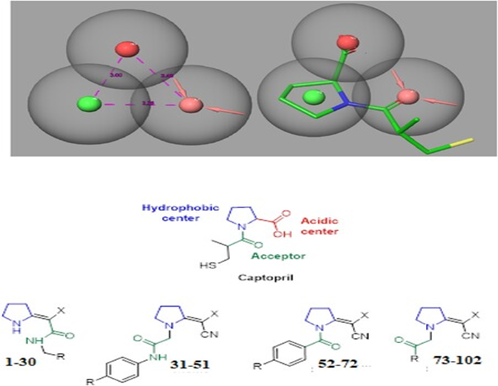
Figure 1: Design of new captopril mimics as promising ACE inhibitors
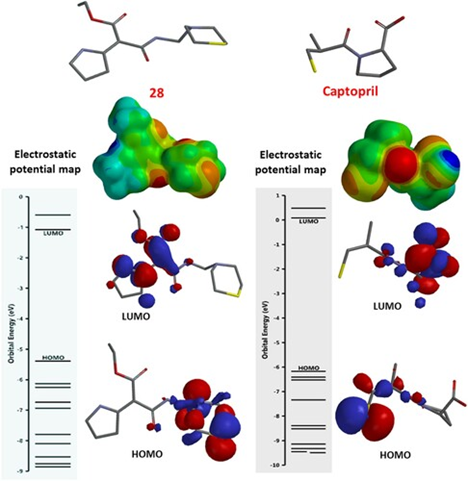
Figure 2: ADME, pharmacophore, molecular docking and dynamics simulation with MM-PBSA
4. DISCUSSION
The results of this study highlight the potential of molecular docking as a powerful tool in the rational design of ACE inhibitors. Captopril, while historically significant as the first orally active ACE inhibitor, showed moderate binding affinity in our simulations, consistent with its known clinical limitations. By introducing structural modifications, particularly at the thiol and proline moieties, several analogues demonstrated stronger predicted interactions with the enzyme’s active site. These improvements were largely driven by enhanced hydrogen bonding networks, better hydrophobic contacts, and more stable coordination with the zinc ion.
The development of improved ACE inhibitors remains highly relevant. Hypertension continues to be a global health challenge, and while many ACE inhibitors are already in use, there is always room for drugs with better tolerability and patient compliance. Computational approaches like docking provide a cost-effective and time-efficient way to identify promising candidates before moving into experimental validation.
CONCLUSION
This study demonstrates the value of molecular docking in guiding the design of improved ACE inhibitors. Starting from captopril, the first clinically approved drug in this class, we explored structural modifications that could strengthen interactions with the enzyme’s active site. Several analogues showed stronger predicted binding than captopril itself, particularly through enhanced hydrogen bonding, hydrophobic contacts, and more stable coordination with the zinc ion. The findings suggest that rational, computer-aided changes to existing drug scaffolds can yield promising candidates with better efficacy and potentially fewer side effects. Importantly, the in silico ADMET analysis indicated that some of these optimized analogues may also possess favorable pharmacokinetic properties, making them suitable for further experimental validation.
In summary, captopril remains a valuable template for drug design, but its optimized derivatives could represent the next generation of ACE inhibitors. Future work should focus on synthesizing these analogues and testing them in biological systems to confirm their therapeutic potential in managing hypertension and cardiovascular disease.
CONFLICT OF INTEREST:
The Author Declares No Conflict Of interest.
REFERENCES


Puja Tidke, Savari Dusad, Molecular Docking and Optimization of ACE Inhibitors Derived from Captopril, Int. J. of Pharm. Sci., 2026, Vol 4, Issue 1, 253-256. https://doi.org/10.5281/zenodo.18138105
 10.5281/zenodo.18138105