Sustained Release (SR) matrix tablets are advanced oral drug-delivery systems designed to maintain a steady therapeutic concentration of drug over an extended period, thereby reducing dosing frequency and enhancing patient compliance. These systems are classified based on the type and role of the matrix-forming polymer into hydrophilic, hydrophobic, lipid-based, biodegradable, and mineral matrices. Matrix tablets are commonly prepared by direct compression, wet granulation, melt granulation, and hot-melt extrusion, depending on drug characteristics and polymer properties. The release of drug from a matrix system usually follows mechanisms such as diffusion, erosion, swelling, or a combination of diffusion–erosion, controlled by the physio-chemical nature of the drug and polymer. To ensure optimal functionality, the formulation undergoes systematic evaluation, including pre-compression tests (flow properties and compressibility), post-compression quality assessments (weight variation, hardness, thickness, friability, and drug content), and in vitro dissolution studies using suitable release media and mathematical kinetic modeling to determine the drug-release pattern. Overall, sustained-release matrix tablets provide a simple, cost-effective, and efficient approach to controlled drug delivery, making them highly suitable for drugs requiring prolonged therapeutic action.
Keywords
Matrix tablets, classification, various method of preparation, mechanism, evaluation test
Introduction
×
Sustained-release (SR) oral dosage forms are designed to release a drug at a controlled, slow rate over an extended period, with the purpose of maintaining a more constant plasma drug concentration compared to conventional immediate-release forms. The rationale for SR formulations includes improved therapeutic efficacy, enhanced patient compliance (because of reduced dosing frequency), decreased fluctuations in drug concentration (“peak-valley” effects), and potentially reduced side effects. Among the various approaches to modified-release dosage forms, matrix tablets have emerged as one of the most practical and commercially viable options.[1] In a matrix tablet, the active pharmaceutical ingredient (API) is uniformly dispersed or dissolved throughout a polymeric (or other) matrix either hydrophilic or hydrophobic which retards the release of the drug via diffusion, dissolution, swelling, erosion or a combination of these mechanisms. [2]The simplicity of manufacturing (often via standard wet granulation or direct compression), ability to accommodate relatively large drug doses, use of commonly available and economical excipients (e.g. certain polymers), and minimal dependence on specialized production facilities make matrix tablets especially attractive for SR formulations.[3] Because of these advantages, there has been continued and growing interest over decades in developing and optimizing matrix-based sustained release formulations. Matrix tablets are broadly classified depending on the nature of the matrix material (retardant) used.
Typical categories include hydrophobic (plastic) matrices, lipid-based matrices, hydrophilic (polymeric) matrices, biodegradable matrices, and others. In hydrophobic matrix systems, for example, a drug is mixed with an inert or hydrophobic polymer (e.g. ethyl cellulose, certain acrylates), compressed into a tablet, and release is controlled primarily through diffusion of the drug through the network of channels between polymer particles. Hydrophilic matrix tablets often using swellable polymers such as hydroxypropyl methylcellulose (HPMC) are also widely used because of their flexibility in controlling release profiles, cost-effectiveness, and regulatory acceptance. Given their versatility, simplicity, and proven success in sustaining drug release, matrix tablets remain a cornerstone in modified-release oral drug delivery systems. Ongoing research continues to optimize polymer types, combinations (hydrophilic/hydrophobic blends), drug loading capacities, and manufacturing methods to achieve precise, reproducible, and patient-friendly release profiles.[4]
Fig.no. 01 Sustained release matrix tablet
Classification of Matrix Tablet:
Hydrophilic (swelling) matrices
Made from water-soluble or swellable polymers (e.g., HPMC, sodium alginate, xanthan gum). On contact with aqueous media these polymers hydrate and form a gel layer; drug release is governed by diffusion through the gel and/or erosion of the gel layer. Hydrophilic matrices are widely used because of manufacturing simplicity and predictable in-vitro/in-vivo behavior.
Hydrophobic / inert (plastic) matrices
Constructed from water-insoluble polymers or “inert” plastics (e.g., ethyl cellulose, Eudragit® RS, cellulose acetate). Drug release is primarily by diffusion through pores/channels or through the tortuous network formed by the polymer, and the matrix often remains intact and is excreted as an empty scaffold. These systems are useful for drugs needing slow, diffusion-controlled release.[5]
Lipid / wax matrices (solid lipid matrices)
Use lipids or waxes (e.g., glyceryl behenate, Compritol®, Precirol®) as matrix formers. Lipid matrices can provide sustained release by creating hydrophobic domains; they are particularly useful for poorly water-soluble drugs and for processing by hot-melt extrusion or melt-fusion methods.
Biodegradable polymer matrices
Matrix materials composed of biodegradable polyesters and similar polymers (e.g., PLA, PLGA, poly(ester-amide) variants). These degrade overtimes (hydrolysis/enzymatic cleavage), combining controlled diffusion and material erosion. Useful when a biodegradable scaffold is desired (e.g., implantable, or long-acting formulations).[6]
Mineral / Inorganic (adsorbent) matrices
Matrix systems employing inorganic excipients such as clays, silica or mineral particulates which can adsorb API and modulate release by physical entrapment and tortuosity. These are used for APIs and to modify microstructure/porosity of the matrix.[7]
Composite/ hybrid matrices (mixed systems)
Formulations combining two or more of the above types (e.g., hydrophilic + hydrophobic blends, polymer + lipid, or polymer + mineral) to tailor release kinetics, mechanical properties, and robustness against variability in pH or transit time. Blends often let formulators tune initial burst, steady-state release, and erosion.
Instead of a single monolithic tablet, multiarticulate matrices (pellets, granules) are formulated so that each small unit is a matrix system; advantages include reduced variability in GI transit and easier release-profile customization. (This is an important practical classification that overlaps the above material types.)[8]
Matrix Tablet Preparation Process:
Selection of drug and polymer:
The first step is to choose an active pharmaceutical ingredient (API) (the “drug”) and an appropriate polymer (or matrix former). The polymer serves as the rate-controlling agent: it embeds the drug and regulates its release. Polymers may be hydrophilic (e.g. water-swelling) or hydrophobic (insoluble waxes / plastic materials).
The choice depends on the physicochemical properties of the drug (e.g. solubility, stability, dose), the desired release profile (sustained, extended, delayed), and the route/formulation constraints.[9]
Characterization of materials:
Once drug and polymer (and other excipients) are selected, each material must be characterized. Typical parameters include bulk/tapped density, flow properties (e.g. angle of repose, Hauser ratio, Carr’s index), particle size distribution, and moisture content. These influence later processing (mixing, granulation, compression) and the quality of the final tablet.
Proper characterization ensures reproducibility, uniformity of blend, and acceptable flow ability and compressibility.[10]
Drug–polymer compatibility study
A common method is to prepare binary (or ternary) mixtures of drug + polymer (and sometimes excipients) and evaluate by analytical techniques (e.g. spectroscopy, thermal analysis) to ensure there is no chemical interaction that could compromise stability or efficacy.
For example, in a study formulating a high-dose hydrophobic drug with polymeric matrix, authors performed compatibility studies and confirmed via FTIR that “clarithromycin and other ingredients … were compatible.”
Only after establishing compatibility can formulation proceed.[11]
Preparation of matrix mixture
Depending on the formulation design, the drug, polymer, and possibly other excipients are blended (dry mix) or subject to a granulation process (wet granulation, high-shear granulation, etc.), to ensure uniform distribution of drug in the polymer matrix.
The aim is to produce a powder or granule blend with good flow and compressibility, suitable for tablet compression.[12]
Addition of excipients
Apart from drug + polymer, additional excipients may be included: fillers, diluents, glidants, lubricants, channeling or “wicking” agents, pH modifiers or solubilizes (if needed), flow enhancers, etc. [11]
The correct type and number of excipients can help achieve desired tablet properties (mechanical strength, porosity, dissolution behavior, stability) and ensure process ability.[13]
Compression into tablets
The prepared blend or granules are compressed using a tablet press (e.g. single-punch, rotary, multi-punch machine) to form tablets.
The compression parameters (force, punch shape/size, compression speed) influence the tablet’s physical properties — hardness, friability, porosity, and density are all of which affect drug release.[14]
Evaluation of matrix tablets
After compression, the tablets must undergo a battery of quality control tests to ensure they meet pharmacopeia and formulation targets:
Physical parameters: weight variation, thickness, hardness, friability, uniformity of drug content.
In-vitro dissolution / release testing: to measure how the drug is released over time in a suitable dissolution medium — to confirm sustained/controlled release behavior. [14]
Stability studies (if required): to check whether drug-polymer/excipient interactions, physical changes or degradation occur over storage time.[15]
Fig no.02 method of preparation of matrix table
Different Methods of Matrix Tablet Preparation:
Direct compression method
Wet granulation method
Melt granulation method
Hot-melt extrusion method
Dry granulation/ Roller compaction
Ion-exchange resin matrix
Floating/ effervescent matrix tablet
A. Direct compression method:
In direct compression, the drug, polymer (or matrix former), and other excipients are directly blended as powder and compressed into tablets - no granulation or wetting involved. This method is fast, simple, economical, and suitable when the powders have good flow ability and compressibility.
However, if the API or excipients are poorly compressible, or if content uniformity or flow is poor, direct compression may lead to weight variation, poor tablet strength, segregation, or non-uniform drug distribution.[16]
Wet granulation involves adding a granulating fluid (e.g. water or solvent, often with a binder) to the powder blend to form a wet mass, followed by sieving / milling, then drying, and possibly re-milling to yield granules with defined size and good flow/compression properties.[17]
C. Dry Granulation (DG):
Dry granulation forms granules without any liquid or solvent — by compacting the powder mix under pressure (e.g. roller compaction or slugging), then milling the compact to produce granules.
Useful for moisture- or heat-sensitive drugs and formulations where solvent use is undesirable.
Compared with wet granulation, dry granulation is simpler, faster, and more cost-effective; but granules may have less ideal mechanical strength, more fines, variable density, and resultant tablets may show poor uniformity or friability if not optimized.[18]
D. Melt Granulation / Hot?Melt Extrusion (HME):
Melt granulation is a process where a binder (often polymeric) is melted, then mixed with drug and excipients to form granules (upon cooling). In HME, materials are heated, melted, mixed under shear, and extruded through a die, then cooled and milled (or directly compressed) into tablets.
E. Ion?Exchange Resin Matrix Tablet:
In these systems, ion-exchange resins (IERs) — insoluble, cross-linked polymers bearing ionzable groups — are used. The drug is loaded onto the resin via ion exchange, forming a drug-resin complex, which is then incorporated into a tablet (matrix). This can be used for taste-masking, modified or sustained release, and pH-dependent release profiles.[19]
Because the drug is bound to the resin, release occurs by ion-exchange mechanism in the GI tract, often resulting in controlled or prolonged release.[20]
F. Floating (Effervescent) Matrix Tablets:
Floating/effervescent matrix tablets are designed to float in gastric fluid — remaining in the stomach for prolonged periods, thereby prolonging gastric residence time, and enabling sustained drug release in the stomach or upper GI tract.
Typically formulated with gas-generating agents (e.g. sodium bicarbonate + acid) or low-density polymers, and may use standard matrix-forming polymers (e.g. hydrophilic polymers) to build the tablet matrix.
After ingestion, the tablet swells, generates gas, becomes less dense than gastric fluid — thus floats. The matrix then controls drug release over an extended period.[21]
Drug Release Mechanism from Matrix Device:
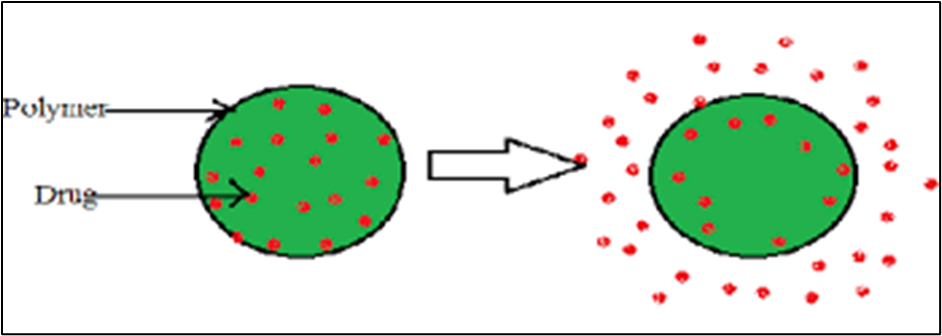
Drug release from a matrix device (e.g. a polymeric matrix tablet) typically involves one or more of the following processes:
Polymer Swelling & Gel-Layer Formation:
When a hydrophilic matrix tablet (or other polymeric matrix) contacts water (e.g. gastrointestinal fluid), water penetrates the matrix, causing hydrophilic polymer(s) to hydrate, swell, and transform from a glassy to a rubbery state. This creates a gel (hydrated) layer on the tablet surface.[22]
Diffusion of Drug through the Gel / Matrix Network:
Once the gel layer forms, the dissolved (or partially dissolved) drug diffuses through the hydrated polymer network or pores, from the interior toward the exterior, toward the surrounding fluid.[23]This diffusion constitutes a major mechanism of drug release — especially for water-soluble drugs.
Over time, as the outer gel layer becomes fully hydrated, polymer chains may disentangle, relax, and begin to dissolve or erode into the surrounding medium. This erosion gradually depletes the matrix, allowing further drug release. For poorly water-soluble drugs or formulations designed for slower release, erosion (rather than diffusion) may dominate.[24]
Combined / Mixed Mechanism (Diffusion + Erosion):
In many real-world matrix systems, drug release is governed by both diffusion through the swollen matrix and erosion of the matrix. [22]The relative contribution of each depends on various factors — polymer type & viscosity, drug solubility, tablet geometry & porosity, hydration/erosion kinetics, and external conditions (e.g. agitation).[25]
Influence of Drug Solubility & Polymer Properties:
For highly water-soluble drugs, diffusion through the gel barrier often predominates — leading to relatively faster release [26]. For poorly soluble drugs, or when a more sustained, slower release is desired, matrix erosion may govern the release, especially when using low-viscosity polymers or hydrophobic matrices. The viscosity, type, and concentration of polymer (or matrix former) critically influence the gel-layer formation rate, gel strength, erosion rate, and hence the release kinetics.[27]
Kinetic Profiles — from First-Order to Zero-Order or Anomalous Behavior:
Depending on the dominating mechanism(s) and matrix design, the release kinetics may follow different patterns. For example:
A diffusion-controlled release may approximate Fickian diffusion (release ∝ √time).
A matrix dominated by erosion (or relaxation) may show more constant (zero-order) or non-Fickian (anomalous) release, often desirable for sustained delivery[28].
Fig.no. 03 Mechanism of drug release from matrix device
Evaluation Test for Sustained Release Matrix Tablet:
1. Pre-compression (powder / granule) evaluation
Flow properties — e.g. angle of repose, bulk density, tapped density, compressibility index (Carr’s index), Hausner ratio. This ensures that the powder or granules are suitable for uniform die-filling and compression.
Powder/granule uniformity and blend homogeneity — to ensure consistent drug distribution before compression.
These tests help avoid weight variation, content non-uniformity, and poor tablet-to-tablet reproducibility.
Once tablets are compressed — whether by direct compression, wet granulation, or other method — the following must be assessed:
Weight variation (uniformity of weight) — to confirm consistency among tablets. Thickness / Dimensions / Diameter — to ensure uniform tablet size and shape, important for reproducibility and patient acceptability.
Hardness (crushing strength / mechanical strength) — to ensure tablets are robust enough for handling, packaging, transportation, yet able to release drug appropriately.
Friability — to check whether tablets resist abrasion/fracture under mechanical stress (e.g. during handling). Acceptable friability is often < 1%.[29]
Drug content / Assay / Content Uniformity — verify that each tablet contains the correct amount of drug, within defined limits (e.g. ±5% or per pharmacopeia specifications).
Drug–polymer (or drug–excipient) compatibility / Interaction Studies (when needed) — using e.g. FT-IR, DSC, XRD to ensure no undesirable chemical interactions between drug and matrix-forming excipients.
These ensure the tablets are pharmaceutically acceptable, consistent, and physically stable.
3. In vitro Drug Release / Dissolution Studies
This is the key test for a sustained-release matrix tablet — to evaluate how the drug is released over time under physiological-like conditions. Typical protocol:
Use standard dissolution apparatus (e.g. USP type I or II) — basket or paddle method depending on formulation.
Use appropriate dissolution media — e.g. acidic medium for first hours (pH 1.2) to simulate stomach, then buffer (pH 6.8 or 7.4) to simulate intestinal fluid, depending on drug and design.
Maintain controlled temperature (commonly 37 °C ± 0.5 °C) and agitation speed.
Collect samples at predetermined time intervals over the designed release period (e.g. 8–24 hours), analyze via suitable assay (e.g. UV-Visible spectrophotometry) to determine cumulative percent drug released over time.
Use mathematical/kinetic modeling of dissolution data — e.g. fit data to models such as zero-order, first-order, Higuchi (diffusion), Korsmeyer–Peppas model (diffusion/erosion mechanism), etc., to characterize release kinetics and mechanism.
These tests together show if the matrix tablet is releasing the drug in a sustained, controlled manner and help distinguish between different release mechanisms (diffusion, erosion, swelling, etc.).
4. Stability Studies (and Long-Term Evaluation)
A stability study is performed to evaluate how the quality, safety, and efficacy of a sustained-release (SR) matrix tablet change with time under the influence of environmental factors such as temperature, humidity, and light.
For many formulations, especially intended for real-world use, stability testing is done — to ensure that after storage under defined conditions (e.g. temperature, humidity) the tablets maintain their physical integrity, drug content, and release profile.[30]
CONCLUSION
Sustained Release (SR) matrix tablets continue to play a vital role in advanced oral drug-delivery systems by offering prolonged therapeutic effects with a single dose. These systems are especially advantageous for drugs with short half-lives and frequent dosing requirements, as they help maintain consistent plasma concentrations, reduce peak-to-trough fluctuations, and minimize side effects associated with high initial drug levels. Through the strategic selection of polymers—whether hydrophilic, hydrophobic, lipid, or biodegradable—formulators can tailor the release rate and duration, ensuring better compliance and improved patient outcomes. The development of matrix tablets can be achieved using manufacturing techniques such as direct compression, wet granulation, melt granulation, and hot-melt extrusion, each selected based on drug stability, polymer compatibility, and processing feasibility. The drug release from such systems is governed by different mechanisms including Fickian diffusion, polymer swelling, matrix erosion, or a combination of these processes. Kinetic modeling helps identify the underlying mechanism and optimize the formulation for predictability and robustness.
Overall, sustained release matrix tablets provide a simple yet highly effective approach to controlled drug delivery. Their versatility, economic feasibility, and capability for dose optimization make them an important area of ongoing research and innovation in pharmaceutical formulation. With continued advancements in materials and manufacturing technologies, matrix-based sustained release systems are expected to remain a cornerstone in enhancing therapeutic efficiency and patient-centric drug delivery in the future.
REFERENCES
H.D. Zalte & R.B. Saudagar. Review on Sustained Release Matrix Tablet. International Journal of Pharmacy and Biological Sciences (IJPBS), 2013; 3(4): 17–29.
A. Prakhar. A Comprehensive Review on Sustained Release Matrix Tablets: A Promising Dosage Form. UJPR Online, 2018.
Mayur Karvekar, Arshad Bashir Khan. A Brief Review on Sustained Release Matrix-Type Drug Delivery System. Journal of Pharmaceutical Research, 2017; 16(3): 282–289. DOI: 10.18579/jpcrkc/2017/16/3/118769.
Payal Mohaniya et al. A Review on Sustained Release Matrix Tablet. International Journal of Pharmaceutical Sciences and Medicine (IJPSM). Vol. 9, Issue 2, February 2024, pp. 52–58.
Vasvári G., Kalmár J., Veres P., Vecsernyés M., Bácskay I., Fehér P., Ujhelyi Z., Haimhoffer Á., Rusznyák Á., Fenyvesi F., Váradi J. Matrix systems for oral drug delivery: Formulations and drug release. Drug Discovery Today: Technologies. Volume 27, July 2018, pages 71–80. DOI: 10.1016/j.ddtec.2018.06.009.
Maderuelo C., Zarzuelo A., Lanao J.M. Critical factors in the release of drugs from sustained release hydrophilic matrices. Journal of Controlled Release. 154(1), 25 August 2011, pages 2–19. DOI: 10.1016/j.jconrel.2011.04.002.
Rosiaux Y., Jannin V., Hughes S., Marchaud D. Solid lipid excipients — matrix agents for sustained drug delivery. Journal of Controlled Release. 188, 28 August 2014, pages 18–30. DOI: 10.1016/j.jconrel.2014.06.004.
Crowley M.M., Schroeder B., Fredersdorf A., Obara S., Talarico M., Kucera S., et al. Physicochemical properties, and mechanism of drug release from ethyl cellulose matrix tablets prepared by direct compression and hot-melt extrusion. International Journal of Pharmaceutics. 269(2), 28 January 2004, pages 509–522. DOI: 10.1016/j.ijpharm.2003.09.037.
Khan, N. A., Khan, A., Ullah, R., Ullah, M., Alotaibi, A., Ullah, R., & Haider, A. (2022). Preparation and Characterization of Hydrophilic Polymer Based Sustained-Release Matrix Tablets of a High Dose Hydrophobic Drug. Polymers, 14(10), Article 1985. https://doi.org/10.3390/polym14101985
Rao, N. G. R. (2013). Review on Matrix Tablet as Sustained Release. International Journal of Pharmaceutical & Research Sciences (IJPRAS). (Issue and pages as per journal)
Nokhodchi, A. (2012). The Role of Oral Controlled Release Matrix Tablets in Drug Delivery. Journal / Review Article.
Prakhar, A. (2018). A Comprehensive Review on Sustained Release Matrix Tablets. UJPR Online.
Kumar, D., Archana, & Niranjan, A. K. (2022). A Comprehensive Review on Sustained Release Matrix Drug Delivery System. Journal of Drug Delivery and Therapeutics, 12(4-S), 249-253. DOI: 10.22270/jddt.v12i4-s.5540 ?
Singh, P., et al. (2021). Formulation and Evaluation of Sustained Release Matrix Tablets of Aceclofenac Using Hydrophilic Polymers. BJOP
Krishna Rajan, D., et al. (2013). Formulation and Evaluation of Sustained Release Matrix Tablets of Levofloxacin Using Natural Polymers.
Verma, B. K., Pandey, S., & Arya, P. “Tablet granulation: current scenario and recent advances.” Universal Journal of Pharmaceutical Research, 2017, 2(5), pp. 30-35.
Raghavendra Rao, N. G., Raj, K. P., Nayak, B. S. “Review on Matrix Tablet as Sustained Release.” International Journal of Pharmaceutical Research & Allied Sciences, 2013, 2(3), pp. 1-17.
Shanmugam, S., et al. “Granulation techniques and technologies: recent progress.” World Journal of Pharmacy and Pharmaceutical Sciences, 2015.
Songire, P. R., Aher, S. S., Saudagar, R. B. “Recent Research on Matrix Tablets for Controlled Release – A Review.” Asian Journal of Pharmaceutical Technology & Innovation, 2015, 5(4), pp. 214–221. DOI: 10.5958/2231-5713.2015.00031.8
Sulaiman, T. N. S., et al. “Review: Excipients for Tablet Manufacturing (Direct Compression).” Journal of Pharmaceutical Sciences (JPS), 2020
Razavi, F. S., et al. “An overview on Floating Drug Delivery Systems (FDDS).” Fabad Journal of Pharmaceutical Sciences, 2021, 46(3), pp. 345–362.
Fu, Y., Kao, W. J. (2010). “Drug Release Kinetics and Transport Mechanisms of Non-degradable and Biodegradable Polymer Matrices.” European Journal of Pharmaceutics and Biopharmaceutics, Vol. 78, Issue 2, pp. 265-276.
Goldoozian, S., et al. (2021). “Gel Strength of Hydrophilic Matrix Tablets in Terms of In Vitro and In Vivo Performance.” Pharmaceutical Research, Vol. 38, Issue 9 (2021), Article 188.
Nokhodchi, A. (2012). “The Role of Oral Controlled Release Matrix Tablets in Drug Delivery.” Journal of Controlled Release, Vol. 157, Issues 2–3, pp. 171–178
Mohd Ghori, M. U. & Conway, B. (2015). “Hydrophilic Matrices for Oral Controlled Drug Delivery.” International Journal of Pharmaceutics, Vol. 490, Issue 1–2, pp. 221–230.
Hardy, I. J., et al. (2007). “Modulation of Drug Release Kinetics from Hydroxypropyl Methylcellulose Matrix Tablets.” European Journal of Pharmaceutics and Biopharmaceutics, Vol. 66, Issue 3, pp. 223–233
Reynolds, T. D., et al. (1998). “Polymer Erosion and Drug Release Characterization from HPMC Matrices.” Journal of Pharmaceutical Sciences, Vol. 87, Issue 9, pp. 991–996.
Kardil, D. P., et al. (2023). “A Comprehensive Review of Recent Studies on Matrix Tablets for Drug Delivery with Oral Controlled Release.” Biomedicine & Pharmacotherapy, 162 (2023).
Patil C. C., Bhairappa S., Vijapure V. K.; Research Journal of Pharmacy and Technology, 2019; 12(6): 3017–3023. DOI: 10.5958/0974-360X.2019.00510.9.
Formulation and Evaluation of Sustained Release Matrix Tablets of Indapamide using Method cel K15M CR — Hossain M.A., Alam S., Paul P.; Journal of Applied Pharmaceutical Science, 2013.
Reference
H.D. Zalte & R.B. Saudagar. Review on Sustained Release Matrix Tablet. International Journal of Pharmacy and Biological Sciences (IJPBS), 2013; 3(4): 17–29.
A. Prakhar. A Comprehensive Review on Sustained Release Matrix Tablets: A Promising Dosage Form. UJPR Online, 2018.
Mayur Karvekar, Arshad Bashir Khan. A Brief Review on Sustained Release Matrix-Type Drug Delivery System. Journal of Pharmaceutical Research, 2017; 16(3): 282–289. DOI: 10.18579/jpcrkc/2017/16/3/118769.
Payal Mohaniya et al. A Review on Sustained Release Matrix Tablet. International Journal of Pharmaceutical Sciences and Medicine (IJPSM). Vol. 9, Issue 2, February 2024, pp. 52–58.
Vasvári G., Kalmár J., Veres P., Vecsernyés M., Bácskay I., Fehér P., Ujhelyi Z., Haimhoffer Á., Rusznyák Á., Fenyvesi F., Váradi J. Matrix systems for oral drug delivery: Formulations and drug release. Drug Discovery Today: Technologies. Volume 27, July 2018, pages 71–80. DOI: 10.1016/j.ddtec.2018.06.009.
Maderuelo C., Zarzuelo A., Lanao J.M. Critical factors in the release of drugs from sustained release hydrophilic matrices. Journal of Controlled Release. 154(1), 25 August 2011, pages 2–19. DOI: 10.1016/j.jconrel.2011.04.002.
Rosiaux Y., Jannin V., Hughes S., Marchaud D. Solid lipid excipients — matrix agents for sustained drug delivery. Journal of Controlled Release. 188, 28 August 2014, pages 18–30. DOI: 10.1016/j.jconrel.2014.06.004.
Crowley M.M., Schroeder B., Fredersdorf A., Obara S., Talarico M., Kucera S., et al. Physicochemical properties, and mechanism of drug release from ethyl cellulose matrix tablets prepared by direct compression and hot-melt extrusion. International Journal of Pharmaceutics. 269(2), 28 January 2004, pages 509–522. DOI: 10.1016/j.ijpharm.2003.09.037.
Khan, N. A., Khan, A., Ullah, R., Ullah, M., Alotaibi, A., Ullah, R., & Haider, A. (2022). Preparation and Characterization of Hydrophilic Polymer Based Sustained-Release Matrix Tablets of a High Dose Hydrophobic Drug. Polymers, 14(10), Article 1985. https://doi.org/10.3390/polym14101985
Rao, N. G. R. (2013). Review on Matrix Tablet as Sustained Release. International Journal of Pharmaceutical & Research Sciences (IJPRAS). (Issue and pages as per journal)
Nokhodchi, A. (2012). The Role of Oral Controlled Release Matrix Tablets in Drug Delivery. Journal / Review Article.
Prakhar, A. (2018). A Comprehensive Review on Sustained Release Matrix Tablets. UJPR Online.
Kumar, D., Archana, & Niranjan, A. K. (2022). A Comprehensive Review on Sustained Release Matrix Drug Delivery System. Journal of Drug Delivery and Therapeutics, 12(4-S), 249-253. DOI: 10.22270/jddt.v12i4-s.5540 ?
Singh, P., et al. (2021). Formulation and Evaluation of Sustained Release Matrix Tablets of Aceclofenac Using Hydrophilic Polymers. BJOP
Krishna Rajan, D., et al. (2013). Formulation and Evaluation of Sustained Release Matrix Tablets of Levofloxacin Using Natural Polymers.
Verma, B. K., Pandey, S., & Arya, P. “Tablet granulation: current scenario and recent advances.” Universal Journal of Pharmaceutical Research, 2017, 2(5), pp. 30-35.
Raghavendra Rao, N. G., Raj, K. P., Nayak, B. S. “Review on Matrix Tablet as Sustained Release.” International Journal of Pharmaceutical Research & Allied Sciences, 2013, 2(3), pp. 1-17.
Shanmugam, S., et al. “Granulation techniques and technologies: recent progress.” World Journal of Pharmacy and Pharmaceutical Sciences, 2015.
Songire, P. R., Aher, S. S., Saudagar, R. B. “Recent Research on Matrix Tablets for Controlled Release – A Review.” Asian Journal of Pharmaceutical Technology & Innovation, 2015, 5(4), pp. 214–221. DOI: 10.5958/2231-5713.2015.00031.8
Sulaiman, T. N. S., et al. “Review: Excipients for Tablet Manufacturing (Direct Compression).” Journal of Pharmaceutical Sciences (JPS), 2020
Razavi, F. S., et al. “An overview on Floating Drug Delivery Systems (FDDS).” Fabad Journal of Pharmaceutical Sciences, 2021, 46(3), pp. 345–362.
Fu, Y., Kao, W. J. (2010). “Drug Release Kinetics and Transport Mechanisms of Non-degradable and Biodegradable Polymer Matrices.” European Journal of Pharmaceutics and Biopharmaceutics, Vol. 78, Issue 2, pp. 265-276.
Goldoozian, S., et al. (2021). “Gel Strength of Hydrophilic Matrix Tablets in Terms of In Vitro and In Vivo Performance.” Pharmaceutical Research, Vol. 38, Issue 9 (2021), Article 188.
Nokhodchi, A. (2012). “The Role of Oral Controlled Release Matrix Tablets in Drug Delivery.” Journal of Controlled Release, Vol. 157, Issues 2–3, pp. 171–178
Mohd Ghori, M. U. & Conway, B. (2015). “Hydrophilic Matrices for Oral Controlled Drug Delivery.” International Journal of Pharmaceutics, Vol. 490, Issue 1–2, pp. 221–230.
Hardy, I. J., et al. (2007). “Modulation of Drug Release Kinetics from Hydroxypropyl Methylcellulose Matrix Tablets.” European Journal of Pharmaceutics and Biopharmaceutics, Vol. 66, Issue 3, pp. 223–233
Reynolds, T. D., et al. (1998). “Polymer Erosion and Drug Release Characterization from HPMC Matrices.” Journal of Pharmaceutical Sciences, Vol. 87, Issue 9, pp. 991–996.
Kardil, D. P., et al. (2023). “A Comprehensive Review of Recent Studies on Matrix Tablets for Drug Delivery with Oral Controlled Release.” Biomedicine & Pharmacotherapy, 162 (2023).
Patil C. C., Bhairappa S., Vijapure V. K.; Research Journal of Pharmacy and Technology, 2019; 12(6): 3017–3023. DOI: 10.5958/0974-360X.2019.00510.9.
Formulation and Evaluation of Sustained Release Matrix Tablets of Indapamide using Method cel K15M CR — Hossain M.A., Alam S., Paul P.; Journal of Applied Pharmaceutical Science, 2013.
Swaraj Deshmukh
Corresponding author
Kokan Gyanpeeth Rahul Dharkar College of Pharmacy and Research Institute, Mumbai University, Karjat ???????





 10.5281/zenodo.18137691