
1,3,7,8 Faculty of Pharmacy, Uttar Pradesh University of Medical Sciences, Saifai, Etawah, Uttar Pradesh, India 206130
2,4,5,6 Gurukula Kangari Deemed to be University, Haridwar, Uttarakhand
Moringa oleifera, a member of the Moringaceae family, is widely known for being a very nutritious and important medicinal plant that grows throughout tropical and subtropical regions, especially in underdeveloped nations. Rich in proteins, essential amino acids, vitamins, minerals, and a variety of bioactive phytochemicals, including flavonoids, phenolic acids, tannins, saponins, and carotenoids, its leaves have long been used as food and medicine. Its wide range of pharmacological effects is largely attributed to these components. Numerous experimental and clinical research have demonstrated its antioxidant, antibacterial, anti-inflammatory, antidiabetic, antihypertensive, hepatoprotective, wound-healing, anticancer, and anthelmintic properties. The leaves are safe to regularly consume due to their excellent nutrient bioaccessibility and comparatively low amounts of antinutritional factors. In addition to their therapeutic use, moringa leaves have attracted attention as functional food additives due to their ability to enhance the nutritional content of food products. When used at the recommended dosages, moringa leaf preparations are generally safe for both humans and animals, according to safety reviews.The literature on the nutritional makeup, bioactive components, bioavailability, health advantages, food applications, and safety features of Moringa oleifera leaves is compiled and critically assessed in this study. The combined data demonstrates their potential as cost-effective, long-lasting, and multipurpose nutraceutical resources that are especially useful in the fight against chronic illnesses and malnutrition in environments with low resources.
Moringa oleifera, a member of the Moringaceae family, is utilized for food and nutrition and is widely spread from India to Africa and several other tropical drought-prone regions.[1] Moringa oleifera is regarded as a significant plant due to its entire structure being utilizable for culinary, medicinal, and many industrial and household applications. [2,3] The leaves may be roasted, consumed as a salad, or kept as dried powder for extended periods without a loss of nutritional content. Because of its natural phytochemicals, which include phenolic acids, flavonoids, carotenoids, and glucosinolates, their leaves can be utilized not only for food and feed but also as functional foods or nutraceuticals. [4,5] The plant M. oleifera is recognized for possessing plenty of nutrients as a food and stimulant, and it is easy to grow due to its rapid growth and strong response to climate change. Thus, in developing countries, M. oleifera is used as a source of vitamins, minerals, proteins, and calories. Dry M. oleifera leaves are said to have more calcium, magnesium, phosphorus, potassium, copper, iron, protein, carbohydrates, fiber, vitamin B, and calories than fresh leaves. On the other hand, fresh leaves contain more vitamin C as well as vitamin E. The M. oleifera seed has recently been shown to have higher levels of protein, magnesium, and vitamin E than the leaf, seed, or pod. [6,7,8]. Research has been done to demonstrate its potential as medicine because of its many traditional uses. Anti-diabetic, anti-diarrheal, anti-helmintic, anti-leishmanial, anti-fungi, anti-bacterial, anti-allergic, anti-cancer, anti-inflammatory, and anti-oxidant are some of its pharmacological characteristics. According to Hastuty and Nitia, M. oleifera leaf extract effectively increases young girls' hemoglobin levels. Prior to treatment, their hemoglobin levels were 10.83 g/dL; however, following M. oleifera treatment, they raised to 12.72 g/dL [9].
These leaves of this plant have long been used as medicine in India to cure conjunctivitis and remove intestinal worms from the stomach.[10] In addition to treating anemia, fresh leaves from moringa help breastfeeding and pregnant women produce more milk [11].
In recent years, the use of herbal medicine has increased dramatically. The main source of health care for developing countries is medicinal plants. Moringa leaves are therefore a suitable option for poor nations looking for high-quality healthcare that offers easy, reasonably priced therapy in places where Western medication is unavailable. Delaying the beginning of many diseases is made easier by medical experts' knowledge of optimal dietary intake. By presenting aggregated data on moringa leaves that highlight the key bioactive components, bio accessibility, and health benefits, this study seeks to fill a vacuum in the scientific literature. Herbal treatment has been increasingly popular in recent years. The medicinal properties of plants are the main source of medical treatment for developing countries. Therefore, moringa leaves are a viable option for developing nations looking for high-quality healthcare that offers convenient and reasonably priced therapy in places where Western medication is unavailable. Many ailments can be postponed by medical experts' knowledge of optimal dietary intake.
By offering compiled information on the leaves of moringa that highlights the vital bioactive elements, bio accessibility, and health advantages, this review seeks to fill the gap within the scientific literature. As a result, the study primarily concentrates on the existing understanding of the nutritional value, composition, bio accessibility, and health-promoting qualities of the bioactive compounds present in Moringa oleifera leaves. It also enables researchers to broaden their research and look at moringa leaves as beneficial ingredients in different kinds of cuisine.
2. The Plant Moringa oleifera's nutritional Composition
Because of its extensive usage as a nutritious plant with a high nutritional content and as a dietary supplement to cure childhood malnutrition, Moringa oleifera has been referred to as a "miracle tree."[5] The whole nutritional composition of the Moringa oleifera plant is shown in Table 1. The crude protein content of the leaves varied from 10.74% to 30.29%, the carbohydrate content from 13.41 to 63.11%, the fat content from 6.50 to 20%, the crude fiber content from 7.09 to 35%, and the mineral matter content from 7.64 to 10.71% on a dry weight basis [11,12]. Moringa leaves have an exceptionally high protein content when compared to other leaves used as food. This plant also contains important amino acids and a high provitamin A concentration [13]. A number of chromatographic methods have been used to purify MOP-2, a new polysaccharide that was recently extracted from moringa leaves using hot-water. This MOP-2 may be used as an immunoregulatory agent in a number of functional meals [14]. Polyunsaturated fatty acids, such as omega-3 and omega-6, which are essential for several cardiovascular functions and for revitalizing the body, are also abundant in moringa leaves.
It also contains low levels of saturated fatty acids and a high concentration of monounsaturated fatty acids [15]. It is said to be a good source of nutrients that are necessary for growth and development. Because moringa leaves include four times as much calcium and twice as much digestible protein as milk, they can be used as calcium and protein supplements. The plant's leaves also include minerals including potassium, zinc, magnesium, iron, and copper [16]. Vitamin A and C are found in fresh leaves in amounts of 7564 IU and 145 g, respectively, which are 252% and 235% of the daily requirements. After six months, malnourished children who took 10 g of powdered dry moringa leaf powder daily exhibited a significant increase in weight gain and a faster rate of recovery than the control group. M. oleifera leaves are rich in phenolic acids, flavonoids, tannins, saponins, alkaloids, and other phytochemicals; their derivatives are well-known for their anti-cancer properties [17]. These are neither toxic nor dangerous. They may interfere with the absorption and consumption of several supplements, such as calcium, magnesium, iron, and zinc, if taken in excess. Its seeds and leaves contain less phytate and saponins than the majority of legumes, including beans. Consequently, it has been found that eating leaves is safer and healthier [18,19].
Table 1. Moringa oleifera Fresh leaves nutritional values
|
Nutritional Components |
Fresh Leaves |
|
Calories (cal) |
92 |
|
Crude Protein (g) |
6.7 |
|
Carbohydrate (g) |
12.5 |
|
Fat (g) |
1.7 |
|
Fiber (g) |
0.89 |
|
Potassium (mg) |
259 |
|
Calcium (mg) |
440 |
|
Iron (mg) |
0.85 |
|
Magnesium (mg) |
42 |
|
Phosphorus (mg) |
70 |
|
Copper (mg) |
0.07 |
|
Vitamin A (mg) |
1.28 |
|
Vitamin B1 (mg) |
0.06 |
|
Vitamin B2 (mg) |
0.05 |
|
Vitamin B3 (mg) |
0.8 |
|
Vitamin C (mg) |
220 |
|
Vitamin E (mg) |
448 |
3. Advantages of Moringa oleifera for Health
This plant has several health benefits, including anti-inflammatory, antimicrobial, anti-cancerous, and antioxidant qualities [20,21].
Table 2 Primarily moringa oleifera is used.
|
Part of Plant |
Uses |
|
Leaves |
Wound healing, snake bites, stimulation, breast milk production, diarrhea, animal feed, constipation, bronchitis, glandular swelling, rheumatism, influenza, food, malaria, arthritis |
|
Seed |
Skincare, haircare, fertilizer, cure for eye disease, fever, snake bite, headache, bladder disorders, ulcer, gastritis, gout, stimulant, antispasmodic, stomachache, anemia, joint pain, hypertension, water purification |
|
Root |
Anticoagulant, wound healing, laxative, diuretic, toothache, cold, sores, asthma, bronchitis, epilepsy, urinary discharge, antiparalytic, cardiac tonic |
|
Fruits |
Antidiabetic, antipyretic, asthma, spleen disorders, skin tumor, joint pain |
|
Bark (Stem) |
Cardiac complications, fever, eye disease, digestive disorders, animal feed, headache, hypoglycemia, toothache |
|
Flower |
Stimulant, tonic, cholagogue, cold, inflammation, muscle disorders, tumor, cholera |
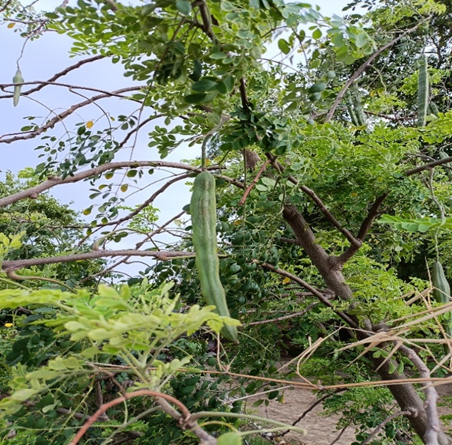
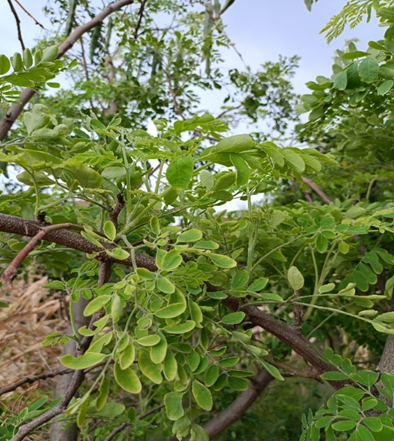
Fig. A Fig. B
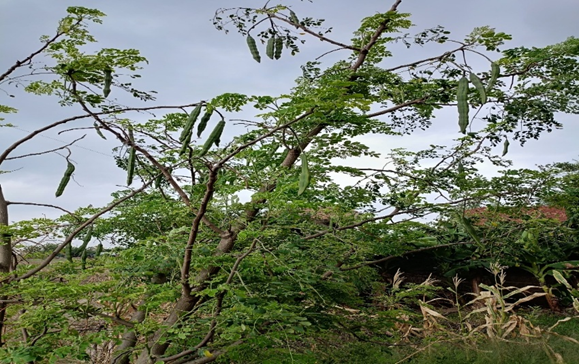
Fig. C
Figure 1: (A) Fruit, (B) Leaves, (C) Plant
3.1: Antioxidant Properties
There is a linear correlation between phenolic content and higher level of antioxidant activity in leaves. [26], helping in the development of products that improve the oxidative stability of food products. Because of its increased poly phenolic content, the extract from Moringa oleifera methanolic leaves shown good antioxidant activity (IC5049.86g/mL) in comparison to ascorbic acid (IC5056.44 g/mL) [27]. Furthermore, it has been observed that the antioxidant evaluation of leaves correlates carrying out the cold protection properties of flora [28], Additionally, that their portions have utilized as a naturally occurring fat Protective [29] Moringa leaf extract was found to considerably lessen the detrimental effects of Plant Lepidium sativum during stresses from cadmium. In rats inebriated with aluminum phosphide, 100 milligrams of moringa extract per kilogram of body weight significantly lowers malondialdehyde (MDA) and raises antioxidant levels. It can therefore be applied as an adjuvant therapy to prevent cardio toxicity caused by aluminum phosphide (Alp) [30]. evaluated the phytochemical profile Considering topical products (gel as well as nanoparticles) and their antioxidant and hydrating effects using the portion of moringa leaves that contains hydro alcohol. Both formulations' appropriateness as a formulation was confirmed by their excellent size of particles, pH level, and fluidity. Flavonoids and phenolic acids were among the seven distinct chemicals that were found. This formulation may also be used as a novel skin medication delivery method, as evidenced by its increased antioxidant capacity of favorable Results of the biophysical assessment of the skin (increased stratum corneum water content and decreased loss of water through the skin. Another study found that goats' milk and serum quality might be improved by substituting moringa leaves for alfalfa fodder [31].
3.2: Antimicrobial
Compounds' antimicrobial qualities are always of interest because of how important they are in preventing infectious infections. The creation of herbal antibacterial substances has grown to crucial in a time when microbes are constantly changing and exhibiting resistance to antimicrobial agents Applying the diffusion method in an agar well, different portions Numerous antimicrobial M. oleifera extracts were investigated in opposition to Staphylococcus aureus and Escherichia coli According to the study, the most effective suppression of Escherichia. Coli was found in an 80% extracted by methanol of the pulp, seed, and leaves, when it came to S. aureus, the aqueous pulp extract performed better than the other extracts, whereas the floral extracts with 70% and 80% methanol had the same value [32]
3.3: Anthelmintic
Numerous bodily parts can become infected with parasitic worms, which may cause health problems for the host. The economic loss of livestock could result from this. Because anthelmintic worms harm not just cattle but also human health, there is increased interest in developing anthelmintic medications to mitigate these losses. Nilani et al uses earthworms that are 3–5 cm in length and 0.1–0.2 cm in width. Examined these edoil M. oleifera anthelmintic characteristics. These drugs were separated into 25 and 50 mg/mL quantities, it showed helminthic characteristics. The paralysis duration was twenty-one and sixteen minutes, respectively, and thirty and twenty-four minutes were the times of death. Additionally, the study discovered that oleic acid (57), which is present in seed oils 25 mg/mL is the concentration that demonstrated a paralysis time of 23 minutes and a death time of 33 minutes. [33]
3.4: Antihypertensive
A cardiovascular condition called hypertension results in persistently high blood pressure levels. Heart disease, renal disease, and stroke are among the health issues that could result from it. In order to illustrate the impact of M. oleifera seed oil, Randriamboajonvy et al employed spontaneous hypertensive rats (SHR) as a model for experimentation. Following that, 10 days of treatment, the results demonstrated a significant decrease in the inoculatorsy heart rate while the inoculatory heart rate remains unchanged. The left ventricle's capacity during diastole, which was considerably lower in SHR rats than in WKY (control) rats, was enhanced by using seed oil in SHR. The ejection fraction, a measure of systolic ventricular function, was considerably lower in both the control and seed oil-treated SHR groups as compared to WKY rats. This implies that the systolic ventricular function in spontaneous hypertensive rats was considerably reduced in both the control and seed oil-treated SHR groups. This implies that the systolic ventricular function in SHR was not improved by seed oil administration Seed oil therapy totally reversed the elevated isovolumic relaxation time, which is a sign indicating impaired diastolic function in SHR. In hearts treated with SHR seed oil, cardiomyocyte size shrank in comparison to SHR regulate the heart as a result of the oil from M. oleifera seeds treatment. Additionally, the study investigated how seed oil may protect against heart fibrosis in SHR via interacting with signaling pathways via peroxisome proliferators-activated receptors (PPARs). Rats treated with SHR seed oil showed higher left ventricle staining compared to SHR controls when PPARα and PPARδ expression in heart tissue was assessed. All of these results point to a positive effect Effects M. oleifera seed oil on cardiac function and structure in SHR, as well as a rise in the δ and PPAR-α signaling pathways [34]
Acuram et al. investigated the antihypertensive effects of ethyl acetate and methanol extracts in connection to the suppression of the angiotensin converting enzyme (ACE); blood pressure was also investigated. Nω-nitro-L arginine methyl ester (L-name) caused hypertension in mice. When compared to methanol extract, the results demonstrated that ethyl acetate considerably reduced blood pressure on the last day and suppressed ACE [35]
3.5: Wound Healing
Leaves from M. oleifera were macerated by Tofiq et al. using 70% ethanol. Seven groups participated in the experiment, which examined the characteristics of wound healing. In comparison to gentamicin ointment, the results showed that an ointment with The extract formulation with a 10% concentration produced more regenerated hair follicles, brighter skin, and reduced scarring. Ramadhany et al. used ethanol and Soxhlet to create M. oleifera leaf extract. In order to study the extract's ability to treat gingival sores, it was converted into 4 and 15% gel. Over the course of seven days, the study examines the angiogenesis, fibroblasts, neutrophils, and epithelial thickness. It was discovered that 15% M. oleifera liquid extract had a stronger effect on neutrophil decrease, fibroblast amounts, and angiogenesis. However, the thickening of the epithelium was more successful with 4% M. oleifera gel extract. [36]
3.6: Anti-diarrheal
Misra et al. assessed M. oleifera potential to prevent diarrhea. Petroleum ether was used to extract M. oleifera leaves, which were subsequently subjected to ethanol for 7 days. Castor oil was utilized to produce diarrhea, and Six groups—one for control and one for extract dosages—were developed from the animal models. Using a 150 mg/kg extract dose, the study demonstrated that the extract from ethanol effectively worked as a diarrheal remedy within 52 minutes, with 0.130 mg of feces overall [37]
3.7: Liver Protecting
Pari and Kumar assessed an ethanol extract from Moringa oleifera leaves' hepatoprotective properties in rats whose livers had been damaged by anti-tubercular drugs like Pyrazinamide (PZA), rifampicin (RMP), and isoniazid (INH). This extract's influence on various parameters indicates that it had significant protective effects when taken orally. These comprised the serum concentrations of bilirubin, alkaline phosphatases glutamic pyruvictransaminase (alanine aminotransferase), glutamicoxaloacetictransaminase (as partate aminotransferase),and lipid per oxidation and lipids in the helper. Khalid et al. evaluated the potential preventive benefits of M. oleifera leaf powder and a 70% ethanol leaf extract in reducing renal and liver problems in female albinos caused by polycystic ovary syndrome (PCOS). PCOS was brought on by injecting of testosterone intramuscularly During 35 days at a dose of 1.0 mg/100 g body weight.
At intervals of 0, 7, and 14 days, these serum samples were evaluated for liver function (LFT), renal function (RFT), and the oxidative stress biomarker malondialdehyde (MDA). Mice treated with M. oleifera exhibited significant reductions in levels of total bilirubin, urea, creatinine, alanine aminotransferase (ALT), aspartate aminotransferase (AST), and alkalinephosphatase (ALP) as compared to PCOS-induced controls. However, there was a noticeable increase in total protein, albumin, globulin, and the albumin/globulin (A/G) ratio.
Furthermore, oxidative stress levels significantly decreased in response to treatments, exposure duration, and their combined effect. The findings of this study suggest that Moringa oleifera leaf powder and extract may improve renal and hepatic functioning and reduce oxidative stress in female albino mice with PCOS-induced dysfunction.
3.8: Preventing Diabetes
M. oleifera has historically been used as a diabetes treatment. Gupta et al. looked into the proper effects of M. oleifera as an anti-diabetic drug. Al-Malki, and El Rabey. Different dosages of M. oleifera pod and seed powders were employed. A male rat with diabetes produced by streptozotocin served as the animal model. The criteria used included measures of IL-6, immunoglobulin A, immunoglobulin G, albumin, potassium, sodium, creatinine, uric acid, fasting blood sugar, and glycosylated hemoglobin. A greater dose was thought to be more effective, although both investigations demonstrated that Extracts from M. oleifera may be able to restore the abnormalities to a level that is approximately normal. All subject groups' water consumption returned to normal after therapy [40,41]
Hamedetal previously investigated the antioxidant properties of M. oleifera leaf extracts.
To ascertain the anti-diabetic effectiveness of purified flavonoids from crude extracts, they also investigated the α-glucosidase inhibitory effects. The findings demonstrated that pure
flavonoids inhibited α-glucosidase in an uncompetitive manner by 54.41% at 100μg/mL and 99.01% at 800μg/mL[42] According to Chenetal, M. oleifera leaf extracts in ethanol could be used as an anti-diabetic medication. The α-glucosidase value was determined in order to investigate the activity. The study's IC50 value was 123 micrograms/milliliter [43].
3.9: Antitumor
Using A549 human lung cancer cells, Jung evaluated the anticancer properties of M. oleifera leaf extracts. Throughout the assessment, which was done using MTTassay, changes and apoptotic effects were seen. The finding that the treatment of M. oleifera extract caused a dose-dependent down regulation of caspase-3 and an over expression of cleaved caspase-3 suggested an activation of apoptosis. A noticeable dose-specific suppression of several proteins involved in cell survival and proliferation, including Akt, p-IkB, NF-kB, p-Erk, β-catenin, and cyclin D1, was found. Unlike the untreated control group, Reactive oxygen species (ROS) emissions were significantly reduced after 48 hours of treatment with soluble M. oleifera extracts. This implies a decrease in oxidative stress. In conclusion, the study discovered that MOL treatment inhibited the growth of tumor cells and reduced internal reactive oxygen species (ROS) in human lung cancer cells. and brought about apoptosis. These findings demonstrate the potential of M. oleifera leaf extracts as a viable option for further research and development in the context of lung cancer treatment. [44]
An extract of M. oleifera leaves successfully stopped Daltonly DL cells from growing, according to Kumar et al. This inhibition was characterized by obvious changes in the cell's overall shape and changes in the mitochondrial membrane potential (ΔΨm). Notably, cell cycle arrest during the G2/M phase and a significant increase in p53 and p21 levels were seen in DL cells treated with the extract. Furthermore, The treatment raised levels of pro-apoptotic markers such Bax, cytochrome-c (Cyt-c), and caspase-3 while lowering expression levels of the anti-apoptotic Bcl-2 protein. These changes unmistakably indicate that DL cells are undergoing apoptosis. Mechanistically The anticancer efficacy of M. oleifera extract was attributed to the suppression of the MEK/ERK driven pathway in DL cells. It's also intriguing that MOML's inhibition of DL growth was accompanied with improvements in hematological parameters and apoptotic induction in DL-induced mice.
4: Utilizing Moringa Leaves in Food Products for Dietary Use.
Since many chronic diseases are now common and functional meals can prevent or lessen their severity, they are becoming more and more significant in daily life. Following a number of studies on functional foods, it was determined that these goods fall into a significant category of consumer needs since they offer health benefits.[46] The body's overproduction of free radicals can damage big macromolecules like proteins, lipids, and DNA, which can lead to number of chronic illnesses. [47] According to recent research, moringa leaves are frequently employed to create useful foods.[48,49]. The addition of moringa leaves considerably raised the nutritional value of a number of baked goods. Sengev and associates.[50] When 5% moringa leaves were added to wheat flour bread to fortify it, the bread's protein and crude fiber contents rose dramatically to 54% and 56%, respectively. However, additional research showed that the crude fiber level of the fortified bread rose considerably (88%) compared to its protein content (17%) [51].
5. Moringa leaf safety considerations.
Herbal therapies are often believed to be safe and devoid of adverse effects because they are considered natural products. Moringa leaves are highly recommended as natural dietary supplements due to their high nutritional content and few anti nutritional components. In human investigations, moringa leaves have not yet been shown to have any negative effects .Furthermore, leaves in a broad variety of forms and preparations have been consumed as food all over the world with no known negative side effects. It was determined that 70 g of moringa leaf extract per day was safe and non-toxic.[52] The toxicity of the preparation of moringa leaves was also investigated in a number of animal experiments Mice were given oral dosages of 6400 mg/kg and 1500 mg/kg intra peritoneally in the acute study to evaluate the toxicity of the aqueous extracts; in the sub-chronic trial, mice were given oral doses of 250, 500, and 1500 mg/kg for 60 days. The lethal dosage for mice was LD50 =1585 mg/kg. No notable alterations were observed in histo pathological or biochemical measures, and oral dosing was considered safe for ingestion.[53] On the other hand, Adedapo et al. verified that a dose of 400–2000 milligrams per kilogram of body weight was safe for rats [52]. The blood cell count and serum enzyme level were evaluated as normal after 21 days of treatment, even at a higher dose (2000 mg/kg), and the dose-dependent body weight decreased throughout the experiment, according to Moodley [54].
6. CONCLUSIONS
Moringa oleifera leaves are considered a "miracle tree" because they offer a special combination of nourishment and treatment. The studied literature unequivocally shows that the leaves are incredibly rich in essential amino acids, vitamins, minerals, macro and micronutrients, and a variety of phytochemicals with demonstrated biological activity. Their great antioxidant capacity is essential for reducing oxidative stress, which is the root cause of many chronic illnesses. Traditional claims of medicinal use are supported by experimental and clinical results that demonstrate considerable antibacterial, antidiabetic, antihypertensive, hepatoprotective, wound-healing, and anticancer benefits.
Significantly, even when consumed over an extended period of time at the right dosages, moringa leaves show little toxicity and high nutritional bioaccessibility. It has been demonstrated that their addition to functional foods significantly increases nutritional value, providing a workable solution to malnutrition and micronutrient shortages. Their suitability as dietary supplements is further supported by safety tests conducted on both people and animals. To increase evidence-based applications, more standardized clinical trials, dose optimization studies, and bioavailability assessments are needed, despite the many benefits that have been established. Overall, Moringa oleifera leaves hold immense promise as cost-effective, natural, and sustainable ingredients for nutritional enhancement, disease prevention, and health promotion. Their broader integration into food systems and healthcare practices could significantly contribute to improving public health, particularly in developing and resource-constrained regions.
REFERENCES








Ranjeet Kumar, Rohit Kumar, Devesh Kumar, Sachin Thakur, Shubham Bhandari, Govind Sharma, Pooja Kushwah, Preeti Yadav, Moringa oleifera's Phytochemical and Nutritional Foundation: A Natural Superfood, Int. J. of Pharm. Sci., 2026, Vol 4, Issue 1, 2757-2769. https://doi.org/10.5281/zenodo.18363048
 10.5281/zenodo.18363048
