

We use cookies to ensure our website works properly and to personalise your experience. Cookies policy
Ideal Institute of Pharmacy, Posheri, Wada, Palghar, Maharashtra, India 421303
SLN and NLC have been identified since 1990 as a substitute carrier system to liposomes and polymeric nanoparticles. Subsequently with the arising drawbacks in SLN,NLC is more preferred because it is favorable for the effective course of utilization. They are a nano-particulate transporter framework comprising of strong lipids, fluid lipids, emulsifying specialists, and water. NLC comprises of various solid-lipid matrices and oil molecules suspended in it, methods for preparing NLC are strong and dependable for business scale creation. moreover, uniform dissemination of medication inside the lipid is different advantages of methods including NLC. It has reasonable procedure to fabricate Nanoparticles preparation. Lipophilic medications of NLC are more dissolvable in fluid lipids than in solid lipids. Methods of NLC are utilized in assembling of drugs and beauty care products for skin application The concluded information outlines the commitment of these nanoparticles to novel medicines is thus, Revolutionary.
Nanostructure lipid transporters (NLC) are the new age of lipid nanoparticles, drawing in significant consideration as novel colloidal medication transporters for skin use. NLC were created to overcome the limits related with the SLN. SLN comprise of strong lipids, while NLC comprise of a combination of exceptionally mixed strong lipid (long chain) with fluid lipid (short chain), ideally in a proportion of 70:30 up to a proportion of 99.9:0.1. The subsequent grid of the lipid molecule shows a softening point wretchedness contrasted with the first strong lipid, but the network stays strong at internal heat level 1. Regularly noticed drawbacks of SLN incorporate restricted drug-stacking limit, drug ejection during capacity, and somewhat high water content in the scatterings (70-99.9%). 2,3 When contrasted with SLN, NLC have a higher medication stacking limit with respect to various dynamic mixtures, and stay away from or limit possible ejection of dynamic mixtures during capacity 2. For various medications, the dissolvability of fluid lipid is higher than that of strong lipid, which improves drug-stacking 4. NLC have various highlights that are favourable for the effective course of utilization. These transporters are made out of physiological and biodegradable lipid, showing low foundational poisonousness and low cytotoxicity 5. The little size of lipid particles guarantee close contact to the layer corneum and can upgrade drug motion through the8 skin, and because of their strong lipid lattice, a controlled delivery from these transporters are conceivable 5,6.
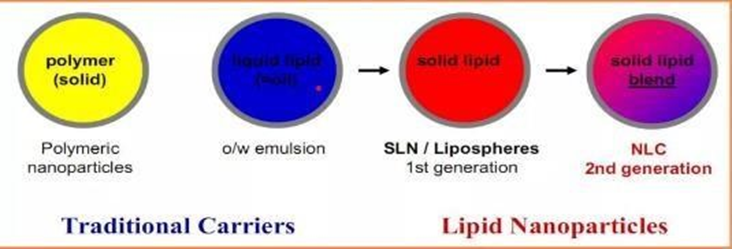
Fig.1:Traditional carriers to Lipid Nanoparticles
TYPES OF NLC
NLC type I (imperfect crystal model) Flawed gem type NLC comprises of a profoundly confused grid with many voids and spaces which can oblige more medication particles in nebulous bunches. These flaws in the precious stone request are gained by blending strong lipids in with sufficient measure of fluid lipids (oils).
Because of shifting chain length of unsaturated fats and the combination of mono-, di-, and triacylglycerol’s, the framework of NLC can't shape a profoundly requested structure. Blending spatially various lipids increments drug payload limit anyway this model offers least ensnarement efficiency. 7,8
NLC type II (various sort) Different sort NLC is oil/lipid/water type. Lipophilic medications are more dissolvable in fluid lipids than solid lipids. This thought prompts the improvement of numerous sort NLC utilizing high fluid lipid content. Oil moieties, at low fixations, are really scattered in the lipid network. The expansion of oil past its solvency actuates stage division shaping little nano compartments of oil surrounded in the strong grid. Type II model deal benefits like high medication capture proficiency, controlled drug discharge and limited drug leakage. 8, 9
NLC type III (amorphous model) amorphous type NLC is formed via cautiously blending lipids so as to limit the medication spillage because of cycle of crystallization. Explicit lipids, for example, hydroxyl octacosanyl, hydroxyl stearate, isopropylmyristate or dibutyl adipatev structure strong yet non-glasslike particles. The lipid lattice exists in a homogenous undefined state.7-9
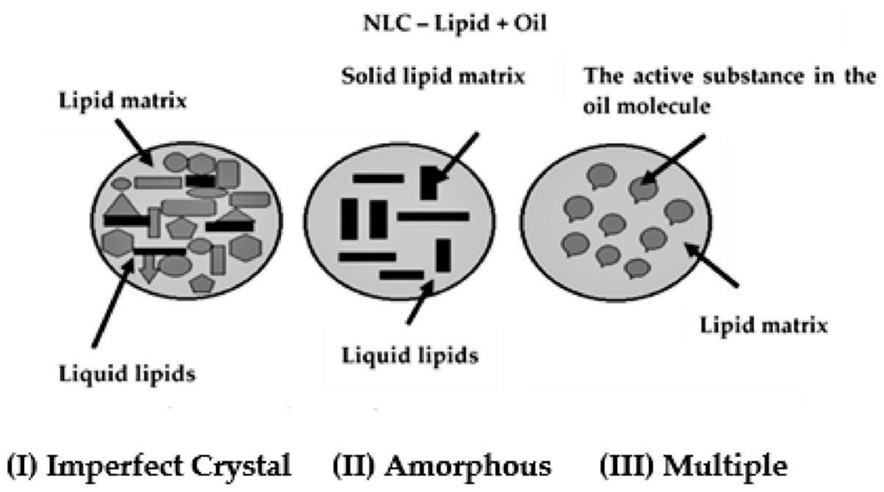
Fig. 2:Types of Nanoparticles
METHODS OF PREPARATION OF NLC
High-pressure homogenization procedure :
This method is strong and dependable for the business scale creation of NLCs. High strain utilized in homogenization procedure makes it conceivable to stay away from utilization of natural solvents in arrangements and render them eco well disposed. Furthermore, high-pressure homogenization is not difficult to increase and an alluring method being utilized in the assembling of drugs and beauty care products for skin application.10 Hot homogenization:
In this approach homogenization is directed at raised temperature. The strong lipids are softened at a temperature over 5-10°C over their dissolving point. A scattering is gotten by adding fluid lipid and medication to be epitomized. The combination is scattered in watery arrangement of surfactant (s) warmed to same temperature by high shear blending gadget and prompts development of pre-emulsion. The pre-emulsion is presented in high strain homogenizer at controlled temperature. For the most part 3 to 5 cycles at 500-1500 bar are adequate for homogenization. The lipid recrystallizes and causes development of nanoparticles as nanoemulsion is step by step chilled off. Work of high temperature during the cycle might prompt debasement of intensity touchy fixings. One more issue which might emerge is decrease in emulsifying limit of surfactants because of high temperature as surfactants have cloud point lower than 85°C. This might instigate flimsiness to nanocarriers.10-14.
Cold homogenization :
In this method lipid soften containing dynamic specialist is quickly cooled to being set utilizing fluid nitrogen or dry ice, then processed and ground prior to being scattered in chilly surfactant stage and accordingly homogenized at room temperature. Pressure utilized in cool cycle is higher for example 5-10 patterns of 1500 bar. This approach limits the warm openness of medication and appropriate for thermolabile medications. Further developed drug capture effectiveness and uniform dissemination of medication inside the lipid are different advantages of the technique. Anyway, it results in nanoparticles of more factor sizes.13-17.
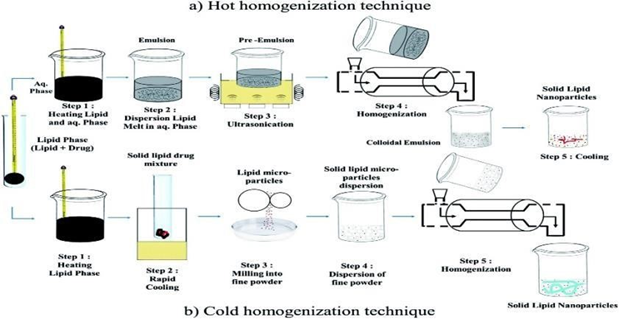
Fig. 3:Digramatic Representation of Hot and Cold Homogenization
Dissolvable emulsification dissipation strategy
In this strategy, the lipids (strong lipid + fluid lipid) alongside drug are broken down in a water immiscible natural dissolvable (cyclohexane, chloroform).25 The got combination is scattered into fluid arrangement of emulsifiers creating an o/w emulsion. Vanishing under decreased pressure is utilized to eliminate dissolvable from the emulsion. Vanishing prompts the scattering of nanoparticles in the fluid stage (by lipid precipitation in the watery medium). This technique maintains a strategic distance from any warm pressure, yet use of natural dissolvable is a burden. Molecule size can shift from 30-100 nm as per the strong lipid and surfactant.11,17
Solvent emulsification dispersion technique
In this strategy, dissolvable and water are commonly immersed to keep up with beginning thermodynamic harmony. A while later, the lipids and medication is broken down in the water-immersed dissolvable. Dissolvable containing medication and lipids are emulsified in a dissolvable soaked fluid emulsifier arrangement by a homogenizer to shape an o/w emulsion. The lipid nanoparticles accelerate after weakening with abundance water (proportion: 1:5-1:10) because of dispersion of the natural dissolvable from the emulsion beads to the persistent stage. The dissolvable can be taken out by ultrafiltration or lyophilization. Dissolvable dissemination is more imaginative and a large portion of the dissolvable utilized show a superior wellbeing profile contrasted with unpredictable solvents.18
Microemulsion technique
In this methodology, the strong lipid is liquefied, trailed by expansion of fluid lipid and solubilization of medication in the ensuing combination. Independently, a combination of emulsifier, co-emulsifier and water is warmed at same temperature. Both the lipid and the fluid stage are blended in suitable proportions and delicately mixed to create thermodynamically stable oil in water hot microemulsion. The hot microemulsion is immediately scattered into an abundance of chilled water (0-4°C) with overwhelming mixing. The weakening causes the breakdown of microemulsion into a nanoemulsion with ultrafine particles. The proportion of the hot microemulsion to cold water normally lies in the scope of 1:10 to 1:50. As the microemulsion is weakened by chilly water, the inward lipid drops recrystallize to shape Nano size transporters. The size of the nanoparticles relies upon the bead size of microemulsion and temperature distinction among microemulsion and ice water. Quick cooling and thus hardening can forestall the collection of particles and lead to creation of more modest particles.26 NLC scatterings framed by this strategy contained huge amount of particles in the micron range; subsequently, in this condition, the hour of mixing, level of lipids, and measure of medication were upgraded to acquire the suitable size and higher capture productivity. The strategy requires no unique gear or energy for creation of NLC; consequently, it is easy to economically increase the technique.11,19,20
Double emulsion strategy
This technique is primarily utilized for the development of lipid nanoparticles stacked with hydrophilic medications. This procedure beats the issue of idealism of water solvent moiety in fluid stage from sleek stage as explored in microemulsion method.29 In this strategy, drug is first and foremost broke up in fluid dissolvable (inward fluid stage) and afterward is scattered in lipid stage (Liquid strong lipid + fluid lipid+ lipophilic surfactant+ lipophilic dynamic moiety) to create essential emulsion (w/o). Both lipid and the watery stage are kept up with at same temperature. Stabilizer forestalls loss of medication to the outside stage during dissolvable dissipation. A short time later, essential emulsion is scattered into an enormous volume of surfactant fluid arrangement followed by sonication to frame a twofold emulsion (w/o/w). The lipid nanoparticles are then decontaminated by ultrafiltration or dissolvable evaporation.17,21
Dissolvable Infusion strategy
It is a reasonable new procedure to fabricate lipid nanoparticles. In this method, lipids are solubilized in watermiscible dissolvable (e.g., CH3)2CO, methanol, ethanol, isopropyl liquor) or water-solvent dissolvable combination and afterward quickly infused into fluid surfactant arrangement under consistent mixing. Resultant scattering is separated to dispose of abundance lipid.31 The procedure depends on quick dispersion of the dissolvable over the dissolvable lipid communicated with the watery phase.32 The molecule size of nanocarriers relies upon dissemination pace of the natural dissolvable through the lipid-dissolvable point of interaction. This strategy offers the benefit of simple taking care of, productivity, adaptability, no work of specialized hardware (e.g., high-pressure homogenizer) and utilization of endorsed natural solvents.22
High shear homogenization and ultrasonication
One of the strategies for the development of NLCs is high shear homogenization or ultrasonification. These distributing methods utilize gadgets to plan nanocarriers. Strong and fluid lipid is dissolved and scattered in a watery surfactant arrangement under high shear homogenization or ultrasonication bringing about development of nanodispersion.23,24 Serious shear powers vital for the nano-emulsification are created by ultrasonic cavitation which delivers fiercely and unevenly collapsing vacuum air pockets and separate particles down to the nanometer scale.25
Test type ultrasonication produce wanted outcomes like homogenization, scattering, agglomeration, processing and emulsification.26 The sort and convergence of lipid and surfactant, their proportion, season of sonication or disturbance, speed are a portion of the boundaries to be improved to get a reproducible technique coming about little size nanocarriers. Low scattering quality is a detriment of high shear homogenization and ultrasonication. Scattering nature of the lipid nanoparticles created by these methods is much of the time impacted by the presence of microparticles prompting actual flimsiness upon storage.27 Metal pollutions from the gear is the other significant issue related with ultrasonication.25
Phase reversal strategy
It is a novel, financially savvy and dissolvable free methodology for the definition of lipid nanocarriers that includes the stage reversal from o/w to w/o emulsion. It include two stages.
Stage 1 includes blending of the relative multitude of fixings (lipid, surfactant and water) in upgraded extents. The combination is blended and temperature is expanded at a pace of 4°C to reach up to 85°C from room temperature. Three temperature cycles (85-60-85-60-85°C) are applied to the framework to arrive at stage reversal zone.
Stage 2 outcomes an irreversible shock acquainted with break the framework, because of weakening with cold water (0oC). This quick expansion of cold water causes arrangement of nanocapsules. Utilization of a sluggish attractive blending for 5 minutes maintains a strategic distance from molecule total. Low energy inclusion empowers the arrangement of stable straightforward scatterings (less than 25 nm), which can be utilized for epitome of various bioactive compounds.28
Microfluidization method
The method includes utilization of a new, licensed blending innovation utilizing high shear liquid gadget known as microfluidizer. In this cycle, the fluid is constrained at accelerate to 400 m/s through microchannels to an impingement region at high working tensions. Cavitation and the going with shear and effect are responsible for the proficient molecule size decrease inside the "connection chamber". The strategy can be used on lab as well as creation scale.29
Film contactor strategy
Film contactor is utilized to distinguish layer frameworks that are utilized to "Stay in touch" two stages. The lipid stage, at a temperature over its softening point is put in a compressed vessel. It is permitted to penetrate through artistic layer pores under applied strain to shape little beads. The fluid stage, under constant mixing, stream digressively inside the film module, and brush away the beads framed at the pore outlets. Cooling of the readiness to room temperature prompts the development of lipid particles. Temperature of fluid and lipid stage, watery stage unrelated stream speed and strain of lipid stage and film pore size are the cycle boundaries influencing size of lipid nanocarriers. The advantages of this new course of layer emulsification are business adaptability and control on molecule size by fitting enhanced parameters.30
ADVANTAGES AND DISASVANTAGES OF NLC 5, 6, 31
|
Advantages |
Disadvantages |
|
More loading capacity for some drugs |
Cytotoxic effects related to the nature of lipid matrix and concentration |
|
Less water in the dispersion |
Irritation and sensitizing action of surfactants |
|
Prevent or minimize the drug expulsion during storage |
Application and efficiency in case of protein and peptide drugs and gene delivery systems still need to be exploited |
|
Control and targeted drug release |
Stability of Lipids |
|
Feasibilities of loading both lipophilic and hydrophilic drugs |
- |
|
Use of biodegradable and biocompatible lipids |
- |
|
Avoid organic solvents |
- |
|
More affordable (less expensive than polymeric/surfactant based carriers |
- |
|
Easier to qualify, validate and gain regulatory approval |
- |
|
Better physical stability |
- |
|
Ease of preparation and scale-up |
- |
|
Improve benefit/risk ratio |
- |
|
Increase of skin hydration and elasticity |
- |
|
Small size ensures close contact with the stratum corneum |
- |
|
Enhanced stability of drugs |
- |
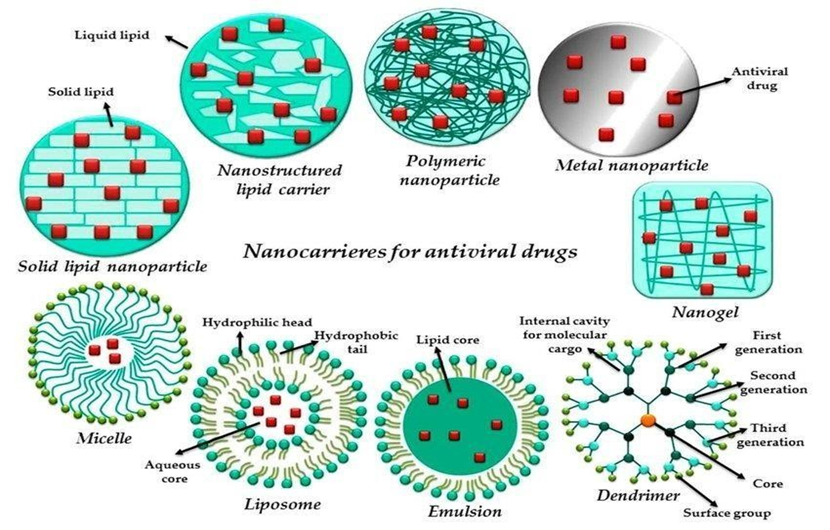
Fig. 4:Nanocarriers for Antiviral Drugs
APPLICATION
Interest in NLCs for oral administration of drugs has been increasing in recent years. Increased bioavailability and prolonged plasma levels are described for per oral administration of NLCs. The lipid nanocarriers can protect the drugs from the harsh environment of the gastrointestinal tract. The lipophilic drugs can be entrapped by NLCs to resolve insolubility concerns. Repaglinide, an anti-diabetic agent with poor water solubility, has low oral bioavailability and a short half-life.32
Brain targeting not only increases the cerebrospinal fluid concentration of the drug but also reduces the frequency of dosing and side effects. The major advantages of this administration route are avoidance of first pass metabolism and rapid onset of action as compared to oral administration. LNC (e.g. NLC) of this generation are considered to be one of the major strategies for drug delivery without any to the drug molecule because of their rapid uptake by the brain, bio acceptability and biodegradability. Further, the feasibility in scale-up and absence of burst effect make them more promising carriers for drug delivery. In addition, NLC further enhanced the intranasal drug delivery of duloxetine in the brain for the treatment of major depressive disorder. Nanostructured Lipid Carriers (NLCs) of asenapine maleate to improve the bioavailability and enhance the uptake of ASN to the brain.33
Tacrolimus – loaded NLCs were successful prepared. The penetration rate of these NLCs through the skin of a hairless mouse was greater than that of Prototopic. In vitro penetration tests revealed that the tacrolimus-loaded NLCs have a penetration rate that is 1.64 times that of the commercial tacrolimus ointment, Protopic.34
Inhalation drug delivery represents a potential delivery route for the treatment of several pulmonary disorders. NLCs have greater stability against the shear forces generated during nebulization compared to polymeric nanoparticles, liposomes and emulsions .NLCs are comprised of an inner oil core surrounded by an outer solid shell and hence allow the high payload of a lipophilic drug8. NLCs in pulmonary disorders seems to be promising strategy since lung epithelium can be directly reached resulting in faster onset of action, desired dose and dosing frequency can be reduced as compared to other administered routes like oral and undesirable side effects of drugs can be avoided. Bio adhesive properties of NLCs are due to their small particle size as well lipophilic character led to longer residence time in lungs.35-36
In supplement, the function of NLC in cancer chemotherapy is presented and hotspots in research are emphasized. It is foreseen that, in the beside future, nanostructured lipid carriers will be further advanced to consign cytotoxic anticancer compounds in a more efficient, exact and protected manner. ZER into NLC did not compromise the anti-proliferative effect of ZER. Both ZER and ZER-NLC significantly induced apoptosis via the intrinsic pathway in time-dependent manner. The proposed mechanism of apoptosis of cancer cells induced by ZER and ZER-NLC is via activation of caspase-9 and caspase-3, inhibition of anti-apoptotic protein, and stimulation of proapoptotic protein expressions. Loading of ZER into NLC will increase the bioavailability of the insoluble ZER in the treatment of cancers.37
Novel colloidal delivery systems have gained considerable interest for antiparasitic agents with focus on 3 major parasitic diseases viz. malaria, leishmaniosis and trypanosomiasis. Lipid Nanoparticles combine advantages of traditional colloidal drug carrier systems like liposomes, polymeric nanoparticles and emulsions but at the same time avoid or minimize the drawbacks associated with them. The delivery system should be designed in such a way that physicochemical properties and pharmacokinetic properties are modulated of the antiparasitic agents in order to improve bio specificity (targetablity) rather than bioavailability with minimization in the adverse effects associated with it. SLNs and NLCs have ability to deliver hydrophobic and hydrophilic drug with more physical and biocompatibility Dihydroartemisnin (Anti-malarial) loaded NLCs the drug release behaviour from the NLC exhibited a biphasic pattern with burst release at the initial stage and sustained release subsequently.38
The characteristic features of SLNs and NLCs for ocular application are the improved local tolerance and less astringent regulatory requirements due to the use of physiologically acceptable lipids. The other benefits include the ability to entrap lipophilic drugs, protection of labile compounds, and modulation of release behaviour.39
The use of nanocarriers provides suitable way for the nasal delivery of antigenic molecules. These represent the key factors in the optimal processing and presentation of the antigen. Nasal administration is the promising alternative non-invasive route of drug administration due to fast absorption and rapid onset of action, avoiding degradation of labile drugs (peptides and proteins) in the GI tract and insufficient transport across epithelial cell layers. The development of a stable nanostructured lipid carrier (NLC) system as a carrier for curcumin (CRM) bio distribution studies showed higher drug concentration in brain after intranasal administration of NLCs than PDS. The results of the study also suggest that CRM-NLC is a promising drug delivery system for brain cancer therapy.40
The Nano-drug delivery systems such as Nano micelles, Nano emulsions and nanoparticles has displayed a great potential in improved parenteral delivery of the hydrophobic agents since last two decades. NLC has been considered as an alternative to liposomes and emulsions due to improved properties such as ease in manufacturing, high drug loading, increased flexibility in modulating drug release profile, and along with these, their aqueous nature and biocompatibility of the excipients has enabled intravenous delivery of the drug with passive targeting ability and easy abolishment. Another reported example is NLCs of artemether (Nanoject) that offers significant improvement in the anti-malarial activity and duration of action as compared to the conventional injectable formulation. Nanoject can be considered as a viable alternative to the current injectable intramuscular (IM) formulation.41-42
Lipid nanoparticles as a carrier system has superiorities mainly prolonged circulation time and increased area under the curve (AUC) with manageable burst effect. NLCs would provide highly desirable physic?chemical characteristics as a delivery vehicle for lipophilic drugs. Drug loading and stability were improved. Tashinone (TA) loaded NLCs the in?vitro incubation tests confirmed that TA?NLC could bind to apoA?I specifically. Macrophage studies demonstrated that TA?NLC incubated with native HDL could turn endogenous by association to apo?lipoproteins, which cannot trigger immunological responses and could escape from recognition by macrophages.43
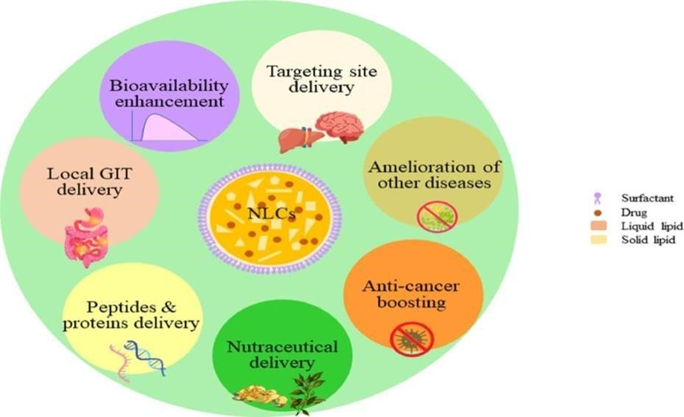
Fig.5:Various Applications of Nanostructured lipid carriers
ADVANCED RESEARCHES AND THEIR USES
Restorative Uses of NLC:
Lipid nanoparticles, SLN and NLC can be utilized to plan dynamic mixtures in beauty care products, for example drawn out arrival of scents The joining of restorative mixtures and balance of delivery is more adaptable while utilizing NLC. Likewise, the arrival of bug anti-agents has been depicted. A component of general interest is the adjustment of synthetically labile mixtures. The strong grid of the lipid nanoparticle safeguards them against substance debasement for example Retinol and coenzyme Q10. An as of late found highlight is the sunscreen impeding impact of lipid nanoparticles. Like particles, for example, titanium dioxide the translucent lipid particles disperse UV light, accordingly securing against UV illumination 44 Trans Epidermal Water loss:
Tacrolimus stacked NLCs were effectively ready. The entrance pace of these NLCs through the skin of a bare mouse was more prominent than that of Prototopic®. Invitro entrance tests uncovered that the tacrolimusloaded NLCs have an infiltration rate that is 1.6 times that of the business tacrolimus balm 45
Increment of Skin Impediment: Occlusive impact is revealed for lipid nanoparticles. By utilizing very little lipid particles, which are delivered from exceptionally translucent and low liquefying point lipids, the most noteworthy impediment can be reached. Particles more modest than 400 nm containing somewhere around 35% lipid of high crystallinity have been best. Contrasting NLC with various oil content showed that an expansion in oil content prompts a reduction in the occlusive variable 46-49 Improvement of Skin Saturation and Medication Focusing on:
An increment of skin infiltration was detailed for coenzyme Q 10-stacked SLN as contrasted with Q10 in fluid paraffin and isopropanol. The combined measures of Q10 were not entirely set in stone to playing out a tape stripping test. After five strips the combined measure of Q10 was1%, 28% and 53% of the applied sum from thefluid paraffin, isopropanolol and the SLN plan separately. Comparable outcomes were accomplished by one more review for Q10 stacked NLC 50
Enhancement of Ultraviolet (UV) Blocking Activity:
Some side effects of organic UV blockers are reported due to the penetration of these compounds into the skin causing skin irritation and allergic reactions. This penetration can be reduced by incorporating these compounds in lipid nanoparticles. Furthermore, a significant increase in sun protection factor (SPF) up to 50 was reported after the encapsulation of titanium dioxide into NLC. Encapsulation of inorganic sunscreens into NLC is, therefore, a promising approach to obtain well tolerable sunscreens with high SPF 51
CONCLUSION
The NLC’s are the new generation of formulations which offer much more flexibility in drug loading, modulation of release and improved performance in producing final dosage forms such as injectable, creams, tablets, capsules etc. The writing and patent in this review concludes that NLCs have a wide assortment of drug applications, including Topical pulmonary, cancer, oral, parasitic, ocular, Intranasal, parenteral, cardiovascular. As this novel system can be effectively increased for large scale production, subsequently has a lot of potential in the upcoming future of the pharmaceutical field.
ACKNOWLEDGEMENT:
No Acknowledgement
CONFLICT OF INTEREST:
No Conflict of Interest
FINANCIAL SUPPORT:
This article did not receive any funding.
REFERENCES


Santoshi Yadav, Pawan Pathak, Dnyaneshwar Patil, Sonali Uppalwar, Nanostructured Lipid Carrier (NLC): A Revolutionary Novel Drug Delivery System, Int. J. of Pharm. Sci., 2025, Vol 3, Issue 11, 2200-2213. https://doi.org/10.5281/zenodo.17610357
 10.5281/zenodo.17610357