

We use cookies to ensure our website works properly and to personalise your experience. Cookies policy
Siddhi’s Institute of Pharmacy, Nandgaon, Murbad, Thane, Maharashtra, India 421401
Nanotechnology has become a revolutionary tool in herbal medicine, offering new ways to get around the problems that occur with traditional herbal compositions. Traditional herbal formulations frequently exhibit inadequate solubility, instability, and diminished bioavailability, hence limiting their therapeutic efficacy. This review intends to evaluate recent progress in nanotechnology-based methods for improving herbal medication delivery. Recent research investigations were scrutinized to assess the utilization of various nanocarriers, including liposomes, niosomes , phytosomes, solid lipid nanoparticles, and polymeric nanoparticles, in enhancing the pharmacokinetic and pharmacodynamic characteristics of herbal medications. These studies show that nano-formulation greatly improve medication solubility, stability, and controlled release, which in turn increases bioavailability and therapeutic efficacy. Nanotechnology also helps with targeted delivery, which lowers systemic toxicity and makes it easier for patients to follow their treatment plans. The combination of nanotechnology with herbal medicine is a potential and sustainable technique for producing next-generation herbal therapies. Continued study in this subject may change natural product-based medicine administration by providing higher safety, efficacy, and consistency in clinical outcomes.
Nanoparticle technology has evolved as a prominent field because to its unique chemical, physical, and biological features. The term nanotechnology arises from the Greek word “nano,”meaning “dwarf”1. It encompasses the design and implementation of materials and systems at the nanoscale scale, typically ranging from 1 to 100 nm.
Nanomedicine, a subfield of nanotechnology, focuses on targeted drug delivery, illness diagnostics, and increased therapeutic efficacy with minimal toxicity2.Various nano materials such as liposomes, dendrimers, micelles, and polymeric nanoparticles have been produced for these objectives. Overall, nanotechnology represents a multidisciplinary approach that has enormous potential for the future of diagnosis, prevention, and treatment of diseases3.
This review discusses the integration of nanotechnology with herbal drug delivery systems and the role of chromatographic and spectroscopic techniques in their evaluation and standardization.
Need for nanotechnology in Herbal drug delivery:
The application of nanotechnology in herbal medicine attempts to promote therapeutic efficacy while decreasing adverse effects of herbal components. This notion lays the basis for combining innovative drug delivery technologies into traditional herbal compositions. Modern drug delivery systems provide site-specific targeting, ensuring that the appropriate dose reaches the precise location of action, hence enhancing therapeutic outcomes.4
Integrating Ayurvedic or herbal medications with nanotechnology can considerably boost their effectiveness and widen their therapeutic potential for complex disorders. However, conventional herbal formulations often suffer disadvantages such as poor solubility, low bioavailability, and lack of standardization, which limits their therapeutic usage5.
Nanotechnology provides excellent solutions to address the limits of conventional herbal formulations by enhancing solubility, stability, and controlled release of active ingredients. It allows the production of nanosized carriers such as liposomes and polymeric nanoparticles that protect herbal elements and ensure targeted distribution at the desired site of action6.
Types of Nanotechnology Based Herbal Formulation
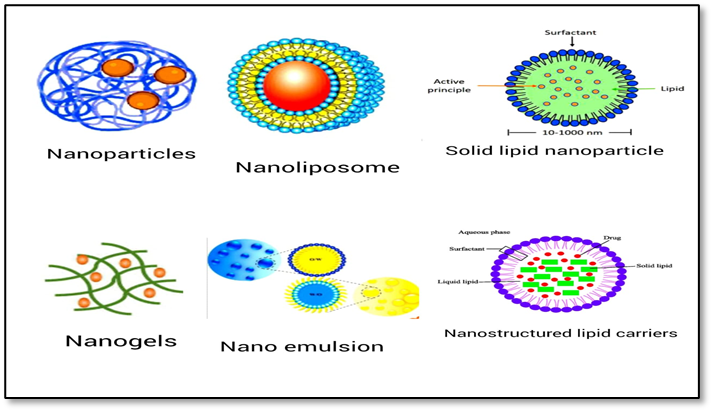
Fig. no.1: Different types of nanotechnology-based herbal formulations for improved drug delivery 7,8,9,10
Solid lipid nanoparticles:
Solid lipid nanoparticles (SLNs) are colloidal carriers that are used to deliver lipophilic drugs. They are usually 50 to 1000 nm long and are made via homogenization, ultrasonication, or solvent-diffusion. SLNs are made of lipids that are solid at room and body temperature. They are very stable and protect medications that are sensitive to heat from breaking down. Choosing the right lipids and surfactants makes it possible for things like getting through the blood-brain barrier. Their compatibility with lipophilic compounds improves drug loading and entrapment efficiency, making SLNs a promising way to deliver herbal medicine 7.
Nanoparticles:
Nanoparticles are nanoscale carriers (1-1000 nm) formed of natural or synthetic polymers that can hold, trap, encapsulate, or attach medicines. They are classed as nanospheres, with pharmaceuticals uniformly distributed throughout the matrix, or nanocapsules, where drugs are encased within a polymeric cavity. Constructed from biocompatible materials like as lipids, polysaccharides, and biodegradable polymers, nanoparticles can also combine phospholipids, minerals, and plant-derived chemicals like curcumin, quercetin, paclitaxel, and doxorubicin. Their versatility and capacity to increase medication delivery make them an attractive foundation for herbal medicines11.
Nanoliposome:
Nanoliposomes are spherical vesicles with one or more lipid bilayers that can encapsulate herbal extracts or active compounds in their aqueous core or within the lipid layers. They are developed using a simple technology that consists of six phospholipids and cholesterol. They are combined to form these spherical structures, and the medicine is added to them. To develop herbal nanodrug liposomes, researchers have to analyze them for several factors, such as the therapeutic efficacy, the lipid components, the particle size, surface charge, and amount of drug associated with the carrier at various points in time 8.
Nanoemulsion:
A nanoemulsion is a transparent or slightly translucent system with droplet sizes ranging from 20 to 500 nm. It is thermodynamically unstable, it remains kinetically stable, which makes it suitable for drug delivery. Nanoemulsions are mainly administered through two routes transdermal and oral9. Because of their simple structure, nanoemulsions are highly versatile and can be developed into different dosage forms such as liquids, sprays, creams, gels, and aerosols. They also allow multiple routes of administration, including ocular, topical, pulmonary, intravenous, and intranasal delivery. Nano-emulsion are especially useful for drugs that undergo extensive first-pass metabolism or have hydrophilic properties, as they can significantly improve bioavailability10.
Nanostructured lipid carriers:
Nanostructured lipid carriers (NLCs) were developed to overcome the limitations of traditional delivery systems. They are mainly composed of solid lipids, liquid lipids, and surfactants, each contributing to stability, drug loading, and performance. In solid lipid nanoparticles (SLNs), the highly crystalline structure often limits drug incorporation and may cause drug expulsion during storage. NLCs resolve this by incorporating liquid lipids (such as oils or unsaturated fatty acids), which disturb the rigid lattice and form a less ordered matrix. This prevents drug leakage, improves encapsulation, and supports sustained release11.
Nanogels:
Nanogels are nanoscale (20–200 nm), cross-linked polymer networks that act as hydrogels with exceptional water-absorbing capacity. They are formed by connecting polymer chains into a macromolecular network and serve as highly efficient drug carriers. They can encapsulate drugs, proteins, peptides, herbal extracts, or bioactives within their pores and release them in a controlled manner.[8]. Administration routes include oral, pulmonary, nasal, parenteral, and ocular, making them extremely versatile. By improving bioavailability, safety, biodistribution, and patient compliance, nanogels hold strong promise in modern drug delivery system12.
Preparation methods of herbal nanocarriers:
Preparation methods of herbal nanocarriers are as follows,
High Pressure Homogenization13:
In this method, the lipid phase containing the drug is mixed with an aqueous surfactant solution under high pressure. It can be performed by hot or cold homogenization. In hot HPH, melted lipids with the drug are emulsified and then cooled to form nanoparticles, while in cold HPH, the solidified drug–lipid mixture is ground and homogenized at low temperature to form nanocarriers.
Solvent Evaporation Method14:
In this method, the drug and polymer or lipid are dissolved in a volatile organic solvent and emulsified with a stabilizer into an aqueous phase. The solvent is then evaporated under reduced pressure, causing the polymer to solidify and form drug-loaded nanoparticles. The formed nanoparticles are purified, dried, and stored for further use.
Nanoprecipitation method15,16.:
In this method, the drug and polymer are dissolved in a water-miscible organic solvent such as acetone. The organic phase is then rapidly injected into an aqueous solution under continuous stirring. The organic solvent diffuses into the aqueous phase, leading to the precipitation of nanoparticles. Finally, the solvent is removed under reduced pressure, and the nanoparticles are dried and collected.
Ionotropic Gelation Method17:
In this method, biopolymers such as chitosan, alginate, or hyaluronic acid are dissolved in an aqueous medium. An ionic crosslinking agent like calcium chloride or sodium tripolyphosphate is added under stirring. The polymer and crosslinker interact ionically to form nanoparticles. Drugs or essential oils can be mixed before crosslinking, followed by purification and drying of the formed nanoparticles.
Emulsion Solvent Diffusion Method18:
In this method, the polymer is dissolved in a volatile organic solvent, and the drug is either dissolved or dispersed in this polymer solution. The mixture is then emulsified into an aqueous phase under constant stirring. As the organic solvent evaporates, the polymer precipitates and solidifies around the drug, leading to the formation of microspheres or nanoparticles.
Evaluation of herbal nanoparticles:
1. Particle size and zeta potential 19,20
Method used:-
Dynamic Light Scattering (DLS) using a Zeta-sizer / Photon Correlation Spectroscopy (PCS)
Principle :-
DLS measures the fluctuations in light scattering caused by the Brownian motion; Zeta potential is from electrophoretic mobility, indicate surface charge and colloidal stability.
Application in herbal drug evaluation:-
Determines formulation uniformity, dispersibility, and bioavailability; predicts nanoparticle stability in storage and in?vivo.
Interpretation:-
Stable if Zeta potential >?±30?mV. Uniform size?=?stable dispersion. Variation?=?aggregation or instability requiring reformulation.
2. Entrapment Efficiency20
Method used:-
High-Performance Liquid Chromatography + Ultraviolet-Visible Spectrophotometry + Ultracentrifugation.
Principle :-
Centrifugation separates nanoparticles from the unentrapped drug, which is subsequently quantified spectroscopically.
Entrapment Efficiency (%) = (Entrapped / Total Drug) × 100
Application in herbal drug evaluation:-
Evaluates the drug-loading capacity and encapsulation efficiency, which are critical for stability and sustained release.
Interpretation:-
Solid encapsulation and enhanced active protection correlate with high efficiency, whereas leakage or lowered loading efficiency correlate with poor efficiency.
3. In Vitro Release Kinetics 11
Method used:-
USP Dissolution Apparatus (Type I – basket; Type II – paddle); Modified Franz Diffusion Cell for semisolids.
Principle :-
The nanoparticles are put in dissolving fluids with pH levels remarkably similar to those in the body. Drug concentration is tested at specified intervals, and the data is contrasted with alternative kinetic models.
Application in herbal drug evaluation:-
Used to investigate how herbal medications are released from nanoparticles under synthetic stomach (pH 1.2), intestinal (pH 6.8), and colonic (pH 7.4) environments. This helps guarantee that the drug is provided in a strictly controlled and targeted way, which improves its absorption and therapeutic consequences.
Interpretation:-
We use models like Zero-order, First-order, Higuchi, and Korsmeyer-Peppas to look at the release data. These models assist figure out if the drug release is caused by diffusion, erosion, or both. This helps enhance the formulation.
4. Morphological Studies21
Method used :-
Scanning Electron Microscopy (SEM) and Transmission Electron Microscopy (TEM) are used to study nanoparticle morphology.
Principle :-
SEM emits broad images of the nanoparticle surface by scanning it with a beam of electrons. TEM allows the view through the particles, illustrating their internal characteristics and how evenly the particles are scattered.
Application in herbal drug evaluation:-
Assists to investigating the internal organization, uniformity, appearance, and shape of herbal nanoformulations. Improved formulation quality and performance are assured through recognizing aggregation or deviations.
Interpretation:-
SEM demonstrates surface texture and uniformity, while TEM indicates if the particles are uniform, spherical, or layered. Consistent, smooth morphology signifies a powerful nanoformulation with superior structural integrity and good potential for controlled dissolution.
5. Stability Studies21
Method used :-
Dynamic Light Scattering (DLS) and Transmission Electron Microscopy (TEM).
Principle :-
Stability is examined by monitoring changes in particle size, distribution, and morphology under certain storage conditions. DLS analyzes hydrodynamic diameter and polydispersity index to detect aggregation or degeneration, while TEM visualizes structural alterations such as formation or disintegration.
Application in herbal drug evaluation:-
Indicates the shelf-life and physical durability of herbal nanotechnology. Ensures that nanoparticles maintain their intended size, shape, and function, resulting in consistent drug release, bioavailability, and effective therapy.
Interpretation:-
Any increase in particle size, polydispersity, or abundant structural change indicates unsteadiness. Consistent particle size and unchanged shape across time represent high stability and formulation versatility
6. Spectroscopic Techniques 22
Method used:-
Ultraviolet (UV) Spectroscopy, Infrared (IR) Spectroscopy, Mass Spectroscopy, Nuclear Magnetic Resonance (NMR) Spectroscopy
Principle :-
Based on the interaction of electronic electromagnetic waves with matter. Molecules absorb distinct wavelengths depending on their energy levels, producing a visible spectrum. Every substance has a distinct spectral pattern, helping to recognize and quantify components.
Application in herbal drug evaluation:-
Used to identify and represent bioactive components, confirm purity, and detect adulterants or impurities in herbal medicines .UV-Visible helps measure active chemicals and electronic transitions; IR identifies functional groups; mass spectroscopy offers molecular weights and fragmentation patterns; NMR discloses molecule structure and atomic configurations.
Interpretation:-
Spectroscopic examinations behave like molecular fingerprints that demonstrate the truthfulness and purity of herbal constituents. Comparing spectra with standard guidelines assures authenticity, while analyzing peak intensity or area allows quantitative assessment of herbal product quality
7. Chromatographic Techniques22
Method used :-
Thin Layer Chromatography (TLC), High-Performance Liquid Chromatography (HPLC), Column Chromatography, Ion Exchange Chromatography
Principle :-
Works based on differential interaction between two phases - a stationary phase (solid or liquid on a solid support) and a mobile phase (liquid or gas) that travels through it.Every aspect moves at various speeds depending on its affinity toward specific phases, leading to separation.
Application in herbal drug evaluation:-
Essential for detecting, isolating, and measuring active compounds in plant extracts.It determines purity, identifies adulteration or contamination, and guarantees quality control during production. Helps standardize herbal compositions and authenticate active phytochemicals such as alkaloids, flavonoids, and terpenoids.
Interpretation:-
Results are discovered as chromatograms with spots (TLC), bands (column chromatography) Each applies to a unique compound with a characteristic Rf value or retention duration., or peaks (HPLC).Comparing these with reference standards assures authenticity, purity, and quality—creating an authoritative fingerprint for herbal product verification.
Application of herbal nanotechnology in major disorders:
Hepatoprotective nano carriers:
Basically, hepatoprotective nano carriers are the same small particles that protect the liver from damage. These nano systems deliver medicines directly to liver cells for better treatment. Liver toxicity is a major health problem caused by oxidative stress, drug injury, infections, and chronic exposure to toxic substances like alcohol and industrial chemicals. Basically, the liver does detoxification and metabolism to keep the body balanced, but too much exposure to toxic substances causes oxidative damage and inflammation, leading to the same liver diseases like fibrosis and cirrhosis23.
Conventional medicines often cause adverse effects in liver disease treatment, which has led to growing interest in herbal alternatives. Plants such as milk thistle, ginger, green tea, mandarin, and liquorice contain bioactive molecules like flavonoids, polyphenols, and saponins that show hepatoprotective activity. These compounds act through antioxidant and anti-inflammatory mechanisms, reduce oxidative stress, and support hepatocyte regeneration. Different extraction techniques are commonly used to isolate these active constituents with high efficiency. Evidence indicates that combining herbal agents with standard therapies may improve management of liver injury, while future studies are required to validate clinical efficacy, optimize dosages, and explore molecular mechanisms24.
Cardiovascular benefits:
As per worldwide health data, cardiovascular diseases are the main causes of sickness and death. Regarding global mortality, CVDs cause more deaths than any other disease. Despite recent progress in CVD management, patient outcomes vary greatly due to ongoing challenges in detection and treatment. Further research is needed to improve these results, as the disease itself presents complex diagnostic and therapeutic difficulties25.
We are seeing that nanotechnology gives us the chance to use very small materials for making health better and controlling diseases only. We are seeing that nanotechnologies have good potential for treating long-term diseases in recent years, especially cancer and heart diseases only. We are seeing that nanoparticles work as drug carriers to make normal treatments more effective and safer. This approach is showing good results in improving how medicines work in the body26.
Diabetes mellitus:
In India, diabetes is a growing health concern, particularly in urban areas. While modern medicine offers various synthetic drugs for diabetes management, these often come with side effects and limitations. As a result, herbal remedies are gaining popularity due to their affordability, availability, and lower risk of side effects.
India has a long history of treating a variety of illnesses, including diabetes, with medicinal plants in systems like Ayurveda. Several native plants with blood sugar-lowering properties have been part of traditional diets for centuries. However, only a few of these have undergone thorough scientific evaluation to confirm their effectiveness. Medicinal plants such as Trigonella foenum graecum (fenugreek), Allium sativum (garlic), Caesalpinia bonduc, and Ferula assafoetida are commonly used in antidiabetic therapies. Their effectiveness is largely due to bioactive compounds like phenolics, flavonoids, terpenoids, and coumarins, which help reduce blood glucose levels. Given their potential benefits and minimal side effects, herbal formulations are emerging as a promising approach for managing diabetes, especially in regions where access to synthetic drugs is limited27.
Neuroprotective and anticancer activity:
Neuroprotection involves preserving brain and nerve cells, especially in disorders like Alzheimer’s, Parkinson’s, stroke, and multiple sclerosis. Herbal compounds such as curcumin, resveratrol, berberine, and ginsenosides show strong antioxidant and anti-inflammatory effects that protect neurons and support tissue repair. However, their poor solubility and limited brain delivery reduce effectiveness. Nanotechnology offers a solution through nanocarriers like liposomes, micelles, nanoemulsions, solid lipid nanoparticles, and dendrimers, which enhance drug stability, bioavailability, and targeted delivery for improved treatment of neurological diseases28.
Anticancer activity:
Cancer continues to be a leading cause of death, with drug resistance posing a major challenge to effective treatment. Resistance arises through mechanisms such as drug efflux, altered targets, DNA repair, apoptosis evasion, and the protective tumor microenvironment (TME). Tumor heterogeneity further drives resistant cell survival under therapeutic pressure Immunosenescence, the age-related decline of immune function, contributes significantly to resistance. Senescent immune cells secrete SASP factors like IL-6 and IL-8, which support tumor survival, angiogenesis, and metastasis. The diminished cytotoxicity of T cells and NK cells, along with the elevation of Tregs and MDSCs, undermines anti-tumor immunity27.
Herbal-derived natural products (HDNPs) such as quercetin, fisetin, and EGCG can change the immune system, lower inflammation, and get rid of old cells. Nanoparticles create drugs easier to dissolve, stable, and able to penetrate their target in the tumor microenvironment. This helps drugs work more effectively and fight drug resistance, especially in elderly patients28.
Antioxidant and Anti-inflammatory:
Antioxidants are compounds that prevent free radicals from damaging cells in the body. Free radicals are unstable molecules that may damage DNA, proteins, lipids, and carbohydrates. Antioxidants may decrease down or completely stop oxidative stress, which is a cause of aging and ongoing disorders, even in little doses. They originally were employed to keep food from going unacceptable but they also help lower stress, aging, heart disease, and cancer29.
More and more people are interested in natural antioxidants for health and food, which makes it more difficult to figure out how well they work. Plants make a lot of antioxidants on their own to protect themselves from oxidative stress. These substances provide a lot of possibilities for improving human health and stopping diseases, and Indian medicinal plants are especially good suppliers30.
Anti-inflammatory:
Anti-inflammatory medications are divided into several categories. Types include nitric oxide donors, immunomodulators, glucocorticoids, antioxidants, and nonsteroidals. Anti-inflammatory drugs (NSAIDs). Because of their strong lipophilicity and propensity to generate a variety of Because of their negative side effects, these drugs necessitate the creation of “new drug delivery systems”, or anti-inflammatory drugs. (NDDS), which can enhance their features and implementations. The majority of eye procedures and conditions are associated with an inflammatory response. As a result, medications have been developed to directly treat the eye is the exact target location. Intraocular injections are used to treat the vast majority of inner eye structures affected by local inflammation, but there are several drawbacks, like unstable medications levels, local adverse effects, and prescription drugs bioavailability30.
Case studies with enhanced outcomes over traditional forms:
Natural product based nanomedicines improve solubility of poorly soluble drugs, enhance biocompatibility, and reduce toxicity in non-target tissues. Combining nanotechnology with pharmacology enables precise, controlled, and sustained drug delivery. Nanoparticles as carriers increase dissolution, circulation time, and therapeutic accuracy while minimizing side effects31.
These nanoformulations can target tumor sites through passive or active mechanisms, improving efficacy and reducing harm to healthy tissues. Targeted nanocarriers ensure greater drug accumulation at diseased sites via receptor interactions or ligand attachment, maximizing therapeutic benefit32.
Applications of Herbal Nanotechnology in Major Disorders:
Traditional drug delivery systems (DDS) used in cancer therapy often face significant challenges, including poor bioavailability, high cytotoxicity, and complex synthesis processes. These limitations can result in insufficient drug accumulation at tumor sites and undesirable side effects on healthy tissue. Herbal polysaccharides (HPS), derived from natural Chinese herbs, have emerged as promising alternatives to conventional DDS33.
Herbal compounds like ginsenosides, ursolic acid, and polysaccharides from Angelica sinensis demonstrate the ability to impede tumor development and enhance immune function. Recent advances have focused on incorporating these herbal actives into smart drug delivery systems, including liposomes, micelles, and nanoparticles. These nanoformulations enhance the solubility and stability of herbal drugs, facilitate targeted delivery, and allow for co-delivery with traditional chemotherapeutics34.
Receptor-mediated targeted drug delivery has become a key strategy in cancer therapy, offering greater precision in treating malignant cells while reducing systemic toxicity 35. Ligand-based targeting involves the use of small molecules, peptides, and antibodies, as well as the development of novel ligands to enhance specificity. The main goal of cancer treatment is to target cancer cells while minimizing harm to healthy tissue. Although radiation and chemotherapy are commonly used, they often cause serious side effects and may not result in complete reduction.Ligand-based targeting improves drug selectivity and reduces off-target effects. Active targeting using small molecules allows for more accurate delivery to cancer cells. The focus of nanomedicine research is to improve treatment efficacy by advancing targeting strategies and minimizing side effects36.
Smart nanoparticles (NPs) have become a viable alternative to conventional nanoparticles for cancer therapy. compared to conventional nanoparticles, they can be activated by specific stimuli and target-specific sites with accurate drug delivery37.
The term pH-sensitive describes nanoparticles that, within a specific pH range, can change their size, shape, charge, or solubility. When the pH changes, making them ideal for targeted drug delivery. These materials are particularly helpful for targeted treatment because, in addition to their role in normal bodily functions, pH also plays a significant role in diseases like cancer, inflammation, and infections.
In cancer therapy, these nanoparticles exploit the acidic tumor environment for controlled drug release. They react to local pH variations in tumors or inflamed tissues through swelling, dissociation, or degradation. Compared to conventional micelles, pH-responsive nanoparticles provide more precise drug release and better visualization due to interactions like hydrophobic forces, hydrogen bonding, π–π stacking, and ionic bonding38.
In cancer therapy, the ultimate goal of nanomedicine is to eliminate tumors without harming healthy tissues. However, most conventional drugs lack selectivity and damage both cancerous and normal cells, leading to severe side effects and poor patient quality of life. To overcome this, smart drug delivery systems have been developed to improve precision. One promising approach is the use of stimuli-responsive nanocarriers, which release drugs specifically in tumor sites when triggered by certain conditions. Tumor tissues differ from normal tissues in several ways such as higher glutathione (GSH) concentration, excess enzyme activity, and acidic pH making them suitable for internal stimuli-based targeting39.
Curcumin, the bioactive compound from Curcuma longa (turmeric), shows strong anti-cancer effects by regulating cell growth, apoptosis, angiogenesis, and metastasis. However, its clinical use is limited due to poor solubility, low absorption, and rapid metabolism40.
Nanotechnology addresses these issues through curcumin-loaded nanoparticles (nanocurcumin) such as polymeric nanoparticles, liposomes, micelles, and nanoemulsions, which improve solubility, stability, and bioavailability. Functionalized nanoparticles enhance tumor targeting and cellular uptake. Although clinical results are mixed, nanocurcumin offers a promising approach to enhance curcumin’s therapeutic potential and overcome its pharmacokinetic limitations41.
Regulatory and Commercialization Challenges
Nanomedicine includes both natural and synthetic products, requiring safety, efficacy, and quality testing before approval. However, differing international regulations create major challenges. The EU and U.S. FDA use varying definitions and guidelines for nanomaterials, leading to inconsistent classification and regulatory barriers42.
This leads to a fragmented system, where the same herbal nanoformulation may be treated differently in each country. Such inconsistencies make regulatory approval and international comparison difficult, delay product development, and increase costs. Moreover, testing and characterization methods are not standardized worldwide, adding further complexity. Without unified definitions, shared protocols, and aligned standards, global acceptance and safe use of herbal nanoformulations remain limited43.
2. Standardization and Toxicity Issues:
One of the major barriers in herbal drug development is lack of standardization. The reproducibility of herbal formulations is often inconsistent due to factors such as geographical origin, biodiversity, and seasonal variation, which directly affect the concentration and quality of phytoconstituents. Additionally, isolation of active compounds can sometimes result in the loss of natural synergistic effects, reducing efficacy compared to whole plant extracts44.
Toxicity concerns also arise in both conventional and nanoformulated herbal medicines. Traditional Ayurvedic preparations like Bhasma metal-based nanoparticles of gold, silver, zinc, iron, copper, and others demonstrate enhanced absorption and stability, but they raise questions regarding metal toxicity, dosage safety, and long-term accumulation in the body. Even though processes like Bhasmikarana are designed to detoxify and stabilize metals, incomplete processing or poor quality control may lead to toxic side effects. Similarly, poorly characterized nanoformulations may present unknown risks related to particle size, bio-distribution, and interaction with biological systems45.
3. Cost and Scalability Challenges:
The commercialization of nanomedicines addresses various hurdles, including minimal innovation in testing trial design, insufficient collaboration within researchers and industry, uncertain regulatory procedures, and high development costs. Compared to traditional medications, the nanomedicine trials are more complex and expensive, inhibiting large-scale application. Nanoparticles enhance medicine delivery and diminish adverse effects, their manufacturing needs specialized materials and rigorous manufacture conditions, boosting overall expenses. Additionally, doubts concerning long-term safety remain. overcoming these obstacles relating to cost, scalability, and regulation is vital to ensure more expansive availability and successful medical integration of nanomedicines46.
FUTURE TRENDS AND INNOVATIONS:
Emerging technologies are expanding the scope of herbal nanomedicine through novel carriers and computational design tools.
Nanoherbosomes:
Herbal compounds like flavonoids and polyphenols form nanoscale complexes called nanoherbosomes by linking with phospholipids. With sizes around 50–200 nm, they easily cross cell membranes and protect herbal actives from stomach degradation47.
Compared to traditional extracts, they show better solubility, absorption, and effectiveness at lower doses. Nanoherbosomes are being explored for cancer prevention, anti-inflammatory and organ-protective therapies, and skincare applications. Despite challenges like complex production and high cost, they bridge modern drug delivery systems with traditional herbal medicine48.
Nanozymes:
Growing concerns about environmental pollution have increased the need for safe and eco-friendly solutions. While natural enzymes effectively degrade pollutants, they face challenges such as instability, high cost, and strict working conditions. To overcome these issues, scientists developed nanozymes—nanomaterials that mimic enzyme activity. Nanozymes are more stable, cost-effective, and easier to produce than natural enzymes. Their versatility makes them valuable in various applications, including environmental cleanup and catalytic tumor therapy49.
Quantum dots:
Quantum dots (QDs) are tiny semiconductor nanoparticles (1–10 nm) with unique optical and electronic properties. Their high brightness, stability, and size make them useful in drug delivery, bioimaging, and biosensing. In nanomedicine, QDs coated with biocompatible materials enable targeted drug delivery and precise imaging. They also help in disease diagnosis and personalized therapy. Beyond medicine, QDs are applied in electronics, solar cells, and environmental technologies. However, challenges such as potential toxicity from heavy metals and regulatory concerns highlight the need for safer alternatives like carbon nanodots and further research into biocompatible synthesis methods50,51
Use of artificial intelligence in nanocarrier design:
The rapid progress of AI technologies has greatly influenced the design and optimization of nanocarriers and pharmaceuticals. By applying different AI methods, researchers have been able to shorten development timelines, and accelerate pharmaceutical research and innovation. Despite these advantages, one of the recurring challenges in applying machine learning is the issue of limited or inaccessible data. This often arises from the high costs of clinical trials and the lengthy processes of research, formulation, and optimization, which lead large pharmaceutical companies to safeguard their data. In addition, there is an increasing shift in focus from simply achieving good performance with machine learning models to also understanding how these models operate, as interpretability and transparency are becoming more important. In the future, stronger integration of AI with the pharmaceutical industry will open new opportunities for R&D. A 3D atomic-level repository of nanocarriers is still lacking, but it could enable easier analysis and design of nanocarrier systems52.
CONCLUSION:
Nanotechnology has emerged as a promising strategy to enhance the therapeutic potential of herbal medicines by overcoming challenges such as poor solubility, low bioavailability, and limited stability. This review demonstrates that nanotechnology offers significant prospects for delivering herbal drugs and nutraceuticals, providing effective solutions for disease prevention and overall health improvement. The combination of nanotechnology with traditional herbal medicine can lead to formulations with improved bioavailability, reduced toxicity, faster onset of action, higher plasma levels, longer duration, targeted delivery, and enhanced therapeutic effects. Chromatographic and spectroscopic techniques complement these advancements by enabling precise evaluation of herbal drugs. They ensure product quality, safety, and consistency, supporting standardization processes necessary for regulatory compliance and global acceptance. However, only a limited number of nano-phytomedicines have reached clinical use due to challenges such as costly equipment, complex scale-up, high production expenses, possible health and environmental risks, and short shelf life. Overcoming these barriers is essential for broader adoption and the successful integration of advanced herbal formulations into modern healthcare.
CONFLICT OF INTEREST:
The authors declare that there is no conflict of interest.
REFERENCES





Priyanka Suroshe, Shweta Bunde, Rutuja Pawar, Mayuri Salve, Avinash Gunjal, Nanotechnology-Based Approaches in Herbal Drug Delivery and Standardization, Int. J. of Pharm. Sci., 2025, Vol 3, Issue 12, 3961-3977. https://doi.org/10.5281/zenodo.18087161
 10.5281/zenodo.18087161