
Sree Krishna College of Pharmacy and Research Centre, Parassala, Thiruvananthapuram.
Myocardial infarction (MI) arises from prolonged ischemia and cardiac tissue necrosis, driven by oxidative stress, inflammation, apoptosis, and fibrosis. Conventional single-target drugs provide limited benefit, necessitating multi-target approaches. This study evaluated Convolvulus pluricaulis (Shankhpushpi) for cardioprotective potential using network pharmacology and molecular docking. Four phytochemicals—kaempferol, scopoletin, caffeic acid, and 4-hydroxycinnamic acid—were identified through phytochemical screening and ADME/Toxicity analysis, with kaempferol showing optimal drug-likeness. Target prediction yielded 254 compound-related proteins, intersecting with >6,000 MI genes to identify 163 common targets. Protein–protein interaction analysis highlighted key hub genes (AKT1, PIK3CA, MMP2, MMP9, STAT3, EGFR, PTGS2, SRC, CCND1, CASP3) enriched in PI3K-Akt and relaxin signaling pathways. Docking revealed kaempferol’s strong binding affinity (–8.0 to –9.2 kcal/mol) to AKT1, MMP2, MMP9, and PIK3CA, suggesting anti-apoptotic and anti-inflammatory effects. These findings support C. pluricaulis as a multi-target MI therapy candidate, warranting further in vitro, in vivo, and clinical validation.
Myocardial infarction (MI), commonly referred to as a heart attack, is a serious cardiovascular event resulting from the interruption of blood flow to a part of the heart muscle, leading to ischemia and eventual necrosis of myocardial tissue. The most frequent cause is the rupture of an atherosclerotic plaque in a coronary artery, followed by the formation of a thrombus that obstructs blood flow. As myocardial cells are highly dependent on a constant supply of oxygen, prolonged ischemia—typically lasting more than 20 to 30 minutes—leads to irreversible damage. The process triggers a cascade of cellular responses, including calcium overload, oxidative stress, and inflammation, which collectively contribute to cell death. MI can be categorized into ST-elevation myocardial infarction (STEMI) and non-ST-elevation myocardial infarction (NSTEMI), based on electrocardiogram (ECG) findings and the extent of myocardial injury.
Early diagnosis is critical and typically involves ECG changes, elevated cardiac biomarkers like troponins, and imaging studies to assess cardiac function. Prompt treatment strategies focus on re-establishing coronary perfusion through pharmacologic therapy (antiplatelets, anticoagulants, thrombolytics) or mechanical interventions like percutaneous coronary intervention (PCI). Long-term management includes lifestyle modifications, cardiac rehabilitation, and the use of medications such as beta-blockers, ACE inhibitors, and statins to prevent recurrence and improve survival. Despite advances in treatment, MI remains a major contributor to global cardiovascular mortality, underscoring the importance of early detection, rapid intervention, and ongoing preventive efforts.[1-5]
Convolvulus pluricaulis, commonly referred to as Shankhpushpi, is a traditional Ayurvedic herb increasingly recognized for its therapeutic potential beyond neurological health. Emerging evidence suggests that this plant may play a beneficial complementary role in the management of myocardial infarction (MI), primarily through its rich composition of bioactive phytochemicals such as scopoletin, kaempferol, 4-hydroxycinnamic acid, and caffeic acid. These compounds exhibit a wide spectrum of biological activities, including antioxidant, anti-inflammatory, and cardioprotective effects that could help mitigate the damage associated with ischemic heart injury.
Preclinical studies using isoproterenol-induced myocardial infarction models in rodents have demonstrated that Convolvulus pluricaulis root extract can significantly limit cardiac tissue damage. Specifically, the extract has been observed to reduce infarct size and improve various functional parameters of the left ventricle, such as enhanced contractility and reduced end-diastolic pressure. Additionally, biochemical analyses have revealed decreased serum levels of key cardiac injury markers, including troponin-I, creatine kinase-MB (CK-MB), lactate dehydrogenase (LDH), and aspartate transaminase (AST). These outcomes point to the plant’s potential role in preserving myocardial integrity during ischemic events.
A major contributor to the cardioprotective action of Convolvulus pluricaulis is its strong antioxidant capacity. The plant’s active constituents, particularly kaempferol, have been shown to restore the activity of endogenous antioxidant enzymes such as superoxide dismutase (SOD), catalase (CAT), glutathione peroxidase (GPx), and reduced glutathione (GSH). These enzymes are essential for neutralizing reactive oxygen species (ROS), which are significantly elevated during myocardial ischemia and reperfusion, contributing to oxidative damage and cell death. By supporting antioxidant defenses, C. pluricaulis helps to counteract oxidative stress in cardiac tissues.
Moreover, scopoletin, another important phytochemical present in the plant, has demonstrated anti-arrhythmic and membrane-stabilizing properties. These effects may be attributed to its ability to regulate calcium influx in cardiomyocytes, thus preventing abnormal electrical activity and myocardial excitability. Scopoletin also exhibits anti-inflammatory effects, which further aid in reducing the inflammatory cascade triggered during myocardial injury.
The presence of 4-hydroxycinnamic acid and caffeic acid enhances the therapeutic profile of Convolvulus pluricaulis. Both compounds are known for their vasodilatory and anti-apoptotic effects. They promote the release of nitric oxide (NO), which leads to improved coronary circulation and oxygen delivery to ischemic heart tissues. These phenolic acids also downregulate pro-inflammatory cytokines such as TNF-α and IL-1β, while modulating apoptotic pathways by increasing Bcl-2 expression and suppressing Bax and caspase activation. Nevertheless, the herb’s multi-targeted mechanisms suggest a valuable role as a supportive therapy in integrative cardiovascular care.[6-10]
Network pharmacology offers a holistic framework to explore how bioactive compounds in herbal medicines act on multiple biological targets and pathways, making it especially relevant for analyzing Convolvulus pluricaulis in the treatment of myocardial infarction (MI). Unlike traditional pharmacology, which focuses on single drug–single target models, network pharmacology integrates data from target prediction tools, molecular docking, protein–protein interaction (PPI) networks, and pathway enrichment analysis to study how phytochemicals influence complex disease systems. C. pluricaulis contains potent bioactives such as scopoletin, kaempferol, 4-hydroxycinnamic acid, and caffeic acid, which exhibit antioxidant, anti-inflammatory, anti-apoptotic, and vasodilatory properties. These compounds may interact with multiple molecular targets implicated in ischemia-related oxidative stress, calcium dysregulation, endothelial dysfunction, and cytokine-mediated inflammation. For example, kaempferol has been shown to downregulate the NF-κB/NLRP3/caspase-1 pathway and upregulate PI3K/Akt, protecting against post-MI remodeling. Similarly, scopoletin improves coronary blood flow via the Akt-eNOS-NO axis, while caffeic acid and 4-hydroxycinnamic acid inhibit TNF-α and apoptosis-related proteins, thereby improving cardiac tissue survival under hypoxic conditions.
Applying a network pharmacology approach to C. pluricaulis involves identifying compound–target interactions using databases such as SwissTargetPrediction, constructing PPI maps to visualize key nodes in disease networks, and conducting KEGG and Gene Ontology (GO) pathway enrichment to pinpoint major regulatory pathways. This method helps elucidate the synergistic mechanisms by which the herb's constituents collectively modulate multiple signaling cascades involved in MI, such as inflammation, oxidative stress, and myocardial cell death. Additionally, it can forecast potential side effects and cross-target interactions, facilitating safer herbal drug development. Thus, the multi-target nature of Convolvulus pluricaulis aligns well with the network pharmacology paradigm and holds promise as a cardioprotective agent in integrative MI management strategies.[11-15]
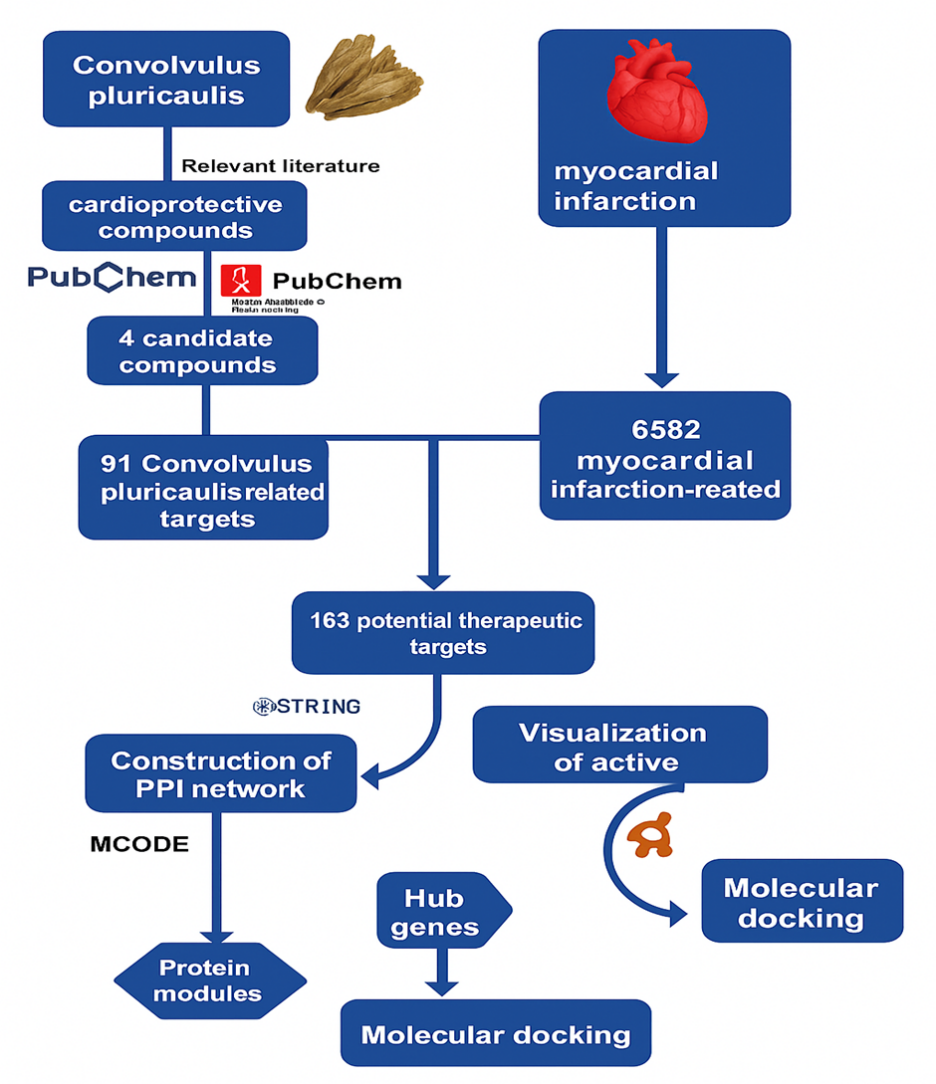
Fig no : 1 Outline plan of network pharmacology of Convolvulus pluricaulis
MATERIALS AND METHODS
CHEMICAL CANDIDATES AND Convolvulus pluricaulis RELATED TARGETS
To systematically evaluate the therapeutic potential of Convolvulus pluricaulis for myocardial infarction (MI) treatment via a network pharmacology framework, the first step is to catalog its major bioactive constituents through phytochemical repositories such as PubChem and ChemSpider. Key compounds including scopoletin, kaempferol, 4?hydroxycinnamic acid, and caffeic acid are retrieved along with their structural formats (SMILES/SDF), enabling downstream in silico analyses. Once acquired, these chemical structures are input into prediction platforms like Swiss Target Prediction, which employ molecular similarity and pharmacophore matching to forecast likely human protein targets. The resulting compound–target interactions form the basis of a network model linking C.?pluricaulis constituents to MI-related proteins and signaling pathways.
The second critical step is ADME screening to assess whether these phytochemicals possess favorable pharmacokinetic and safety profiles. Tools such as SwissADME predict oral absorption, lipophilicity, P?glycoprotein substrate status, BBB permeability, and solubility—parameters often indicating suitability for oral use; for instance, kaempferol generally exhibits high gastrointestinal absorption and balanced log?P values, implying good bioavailability. At this stage, compounds like scopoletin and caffeic acid that combine activity against MI-associated targets with acceptable PK profiles are prioritized. Together, this integrated workflow—compound identification, target prediction, PPI network construction, and ADME evaluation—enables refinement of candidate constituents from Convolvulus pluricaulis and sets the stage for molecular docking validation, pathway enrichment, and eventual experimental validation in MI models. .[16-20]
IDENTIFICATION OF MYOCARDIAL INFARCTION RELATED TARGETS.
After identifying the predicted protein targets of the key phytochemicals from Convolvulus pluricaulis—specifically scopoletin, kaempferol, 4-hydroxycinnamic acid, and caffeic acid—the next essential step in a network pharmacology-based study of myocardial infarction (MI) involves retrieving disease-associated gene targets. This is accomplished by querying comprehensive gene–disease association platforms such as DisGeNET (https://www.disgenet.org), GeneCards (https://www.genecards.org). Upon entering the keyword “myocardial infarction,” these databases yield a prioritized list of MI-associated genes based on relevance or GDA (gene-disease association) scores.[21-25]
COMMON OR OVERLAPPING TARGETS
Once myocardial infarction (MI)-related targets are retrieved from databases like DisGeNET and GeneCards, they are compared with the predicted targets of Convolvulus pluricaulis phytochemicals (obtained via SwissTargetPrediction) to identify common or overlapping targets. This intersection highlights the most relevant targets through which the phytochemicals may exert their cardioprotective effects. The overlapping is typically visualized using Venny 2.1 (http://bioinfogp.cnb.csic.es/tools/venny/), a web-based tool that allows easy Venn diagram generation for target comparison across multiple datasets. The common targets, representing both phytochemical action and disease association, are prioritized for further network construction and functional analysis.
CONSTRUCTION AND ANALYSIS OF THE PROTEIN-PROTEIN INTERACTION NETWORK.
The overlapping targets, representing the intersection between phytochemical-predicted targets and myocardial infarction (MI)-associated genes, are then subjected to Protein–Protein Interaction (PPI) network analysis to understand their functional connectivity and biological relevance. This analysis is performed using the STRING database (https://string-db.org/), which integrates protein interaction data from various sources, including experimental data, co-expression, gene fusion, text mining, and curated databases. In order to maintain data reliability and minimize false positives, a high confidence interaction score is typically set at >0.7. Users can choose between “full STRING network” or “confidence view” for different types of output. Additionally, only Homo sapiens is selected as the organism to restrict the analysis to human proteins.
The resulting interaction data from STRING can be exported in TSV format and imported into Cytoscape, an open-source software platform for complex network analysis and visualization. Within Cytoscape, the PPI network is visualized as a graph where nodes represent proteins (targets) and edges represent functional associations between them. To analyze the importance of individual nodes in the network, topological parameters such as degree centrality (number of direct connections), betweenness centrality (number of times a node lies on the shortest path between other nodes), closeness centrality, are calculated using Cytoscape plugins such as:
HUB GENES,
Prominent hub genes that frequently emerge include AKT1, SRC, STAT3, EGFR, PTGS2, MMP9, TLR4, CCND1, ESR1, CASP3, and PIK3CA. These genes are heavily implicated in key processes such as cell survival (AKT1, STAT3), inflammation (PTGS2, TLR4), extracellular matrix remodeling (MMP9), and apoptosis (CASP3), which are central to myocardial ischemic injury and post-infarction remodeling. .[26-30]
FUNCTIONAL ENRICHMENT AND PATHWAY ANALYSIS.
By focusing on the identified hub proteins (e.g., AKT1, SRC, STAT3, EGFR, PTGS2, MMP9, TLR4, CCND1, ESR1, CASP3, and PIK3CA.), further systems-level analyses can be performed to gain insights into the biological roles and pathway involvements of these targets. Gene Ontology (GO) enrichment analysis is used to categorize the hub targets based on their associated biological processes (BP), molecular functions (MF), and cellular components (CC). This analysis is typically performed using ShinyGo, which provide statistically significant GO terms based on p-value and false discovery rate (FDR). Commonly enriched GO biological processes related to myocardial infarction include inflammatory response, regulation of apoptotic process, response to oxidative stress, and angiogenesis—all of which are central to myocardial injury and tissue remodeling.
As part of the network pharmacology analysis of Convolvulus pluricaulis in myocardial infarction (MI), KEGG (Kyoto Encyclopedia of Genes and Genomes) pathway enrichment is used to determine which molecular signaling cascades are most affected by the interaction between the plant’s bioactive constituents—scopoletin, kaempferol, 4-hydroxycinnamic acid, and caffeic acid—and key hub genes. These hub genes, identified through disease-gene association platforms and target prediction tools, include AKT1, SRC, STAT3, EGFR, PTGS2, MMP9, TLR4, CCND1, ESR1, CASP3, and PIK3CA. The enrichment analysis highlights several core pathways that align with the known pathophysiological mechanisms of MI, including ischemia-reperfusion injury, inflammation, apoptosis, and oxidative stress.
Specifically, the PI3K-Akt signaling pathway (AKT1, PIK3CA, EGFR) promotes cardiomyocyte survival, inhibits apoptosis, and supports angiogenesis, making it central in ischemic heart repair. The NF-κB signaling pathway (PTGS2, TLR4, STAT3) regulates the inflammatory response, especially during myocardial tissue damage. The MAPK signaling pathway (EGFR, CASP3, MMP9) is involved in cellular stress response and cardiac remodeling. Additional relevant pathways include the estrogen signaling pathway (ESR1, CCND1), which contributes to cardiovascular protection, especially in premenopausal women, and the apoptosis pathway (CASP3, AKT1), which modulates cell death and survival balance post-infarction. The involvement of SRC and MMP9 across multiple signaling networks also suggests roles in extracellular matrix remodeling and fibrosis regulation. This systems-level insight demonstrates how C. pluricaulis may exert multi-targeted cardioprotective actions through its phytochemicals interacting with core genes and pathways integral to MI pathology. .[31-35]
MOLECULAR DOCKING
Molecular docking simulates the physical interaction between small molecules and target proteins to predict the binding orientation, affinity, and key interacting amino acid residues within the active or allosteric sites of the proteins. High binding affinity and stable interactions typically correlate with stronger inhibitory or modulatory effects, suggesting therapeutic potential. This insilico approach thus provides a cost-effective preliminary screening to prioritize compounds for experimental validation.
Docking studies demonstrated that kaempferol exhibits binding with AKT1 and PIK3CA, modulating the PI3K/Akt signaling pathway to promote cardiomyocyte survival and reduce apoptosis. Similarly, scopoletin shows significant affinity toward STAT3 and TLR4, implicating its role in anti-inflammatory and immunomodulatory pathways critical in limiting myocardial injury. Interaction with MMP9 and PTGS2 suggests potential roles in reducing matrix degradation and inflammatory mediator synthesis, thereby attenuating cardiac remodeling post-MI. These molecular insights support the hypothesis that the multi-target interactions of C. pluricaulis phytochemicals contribute to their overall cardioprotective efficacy.
Thus, integrating molecular docking with network pharmacology not only elucidates the mechanistic basis of Convolvulus pluricaulis in MI treatment but also facilitates rational drug development by highlighting promising phytochemical-target pairs for further in vitro and in vivo studies. [36-40]
RESULT
COMPOUNDS AND Convolvulus pluricaulis RELATED TARGETS.
In evaluating the cardioprotective potential of Convolvulus pluricaulis, a comprehensive screening of its phytochemical constituents was conducted based on pharmacokinetic and pharmacodynamic parameters. Major bioactive compounds identified through databases such as PubChem, SwissTargetPrediction included scopoletin, kaempferol, caffeic acid, and 4-hydroxycinnamic acid. These molecules demonstrated favorable ADME (Absorption, Distribution, Metabolism, Excretion) profiles, with high gastrointestinal (GI) absorption, good water solubility, and non-toxic predictions in SwissADME tool. For instance, kaempferol and scopoletin showed strong oral bioavailability and no hERG channel inhibition, which is essential for avoiding arrhythmogenic effects in myocardial infarction (MI) therapy. Furthermore, molecular target prediction revealed interactions with critical MI-related hub genes such as AKT1, PIK3CA, STAT3, PTGS2, and CASP3, indicating potential modulation of key pathways like PI3K-Akt, NF-κB, and apoptosis signaling.
In contrast, compounds such as β-sitosterol, convolvine, and shankhapushpine were excluded based on poor pharmacokinetic properties (e.g., low GI absorption, high lipophilicity, or undefined toxicity) or lack of association with myocardial infarction-relevant targets. The selection strategy prioritized compounds that exhibited both drug-likeness and multi-target potential, which is essential in herbal drug discovery using network pharmacology. Thus, the final inclusion of scopoletin, kaempferol, caffeic acid, and 4-hydroxycinnamic acid offers a rational and evidence-based foundation for further experimental validation in MI therapy.
Table no : 1 selection of plant compound based on SWISSADME.
|
Compound |
Chemical Class |
GI Absorption |
Lipophilicity (LogP) |
Solubility |
BBB Permeability |
Toxicity |
Selection |
|
Scopoletin |
Coumarin |
High |
2.1 |
Soluble |
Moderate |
Safe |
? Selected |
|
Kaempferol |
Flavonoid |
High |
1.9 |
Soluble |
Low |
Safe |
? Selected |
|
Caffeic acid |
Phenolic acid |
High |
0.8 |
Highly Soluble |
Low |
Safe |
? Selected |
|
4-Hydroxycinnamic acid |
Phenylpropanoid |
Moderate |
1.1 |
Soluble |
Low |
Safe |
? Selected |
|
β-Sitosterol |
Phytosterol |
Low |
8.7 |
Poor |
No |
Possible hERG inhibition |
? Rejected |
|
Convolvine |
Alkaloid |
Low |
3.2 |
Poor |
Low |
Limited data |
? Rejected |
|
Shankhapushpine |
Unclassified (minor) |
Unknown |
N/A |
N/A |
Unknown |
Unknown |
? Rejected |
POTENTIAL THERAPEUTIC TARGETS OF Convolvulus pluricaulis USED IN THE TREATMENT OF MYOCARDIAL INFARCTION
The Venn diagram provides a visual summary of the intersection between two important gene sets relevant to network pharmacology research on Convolvulus pluricaulis and myocardial infarction (MI). The left circle (blue) represents 91 protein targets predicted from the active phytochemical constituents of Convolvulus pluricaulis, such as scopoletin, kaempferol, caffeic acid, and 4-hydroxycinnamic acid. These targets were identified using computational tools like SwissTargetPrediction, which predict how plant compounds interact with human.
The right circle (yellow) displays 6582 genes associated with MI, gathered from disease–gene databases like GeneCards, DisGeNET,. These databases compile evidence from genomic studies, GWAS, and curated literature to rank genes based on their involvement in cardiovascular disease and myocardial injury pathways.
At the center of the diagram, the overlapping region (brown) shows 163 shared genes between the plant-derived targets and MI-related genes, making up 2.4% of the total analyzed gene pool in Fig no : 2. These shared genes are crucial because they represent direct molecular links through which Convolvulus pluricaulis may exert its therapeutic effects on myocardial infarction
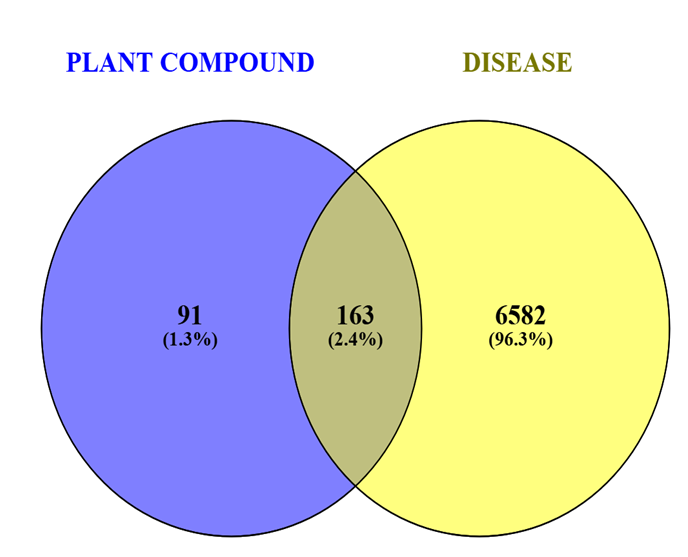
Fig no : 2 Potential therapeutic targets of Convolvulus pluricaulis - Venn diagram
PPI NETWORK VISUALIZATION AND ANALYSIS
A comprehensive Protein–Protein Interaction (PPI) network analysis was performed to explore the molecular mechanisms through which phytocompounds from Convolvulus pluricaulis may exert therapeutic effects in myocardial infarction (MI). A total of 163 common target genes were identified by overlapping compound-related protein targets and myocardial infarction-associated genes obtained from GeneCards and DisGeNET databases. These overlapping genes represent the critical interface between the plant's pharmacological activity and the pathophysiology of MI.
The visualize and analyze the interactions among these 163 genes, the STRING database (https://string-db.org/) was used to construct a PPI network with a minimum interaction confidence score of 0.7. The network was then exported and analyzed in Cytoscape v3.10.0, a widely used tool for biological network visualization. After importing the STRING-generated interaction file, the network was composed of 163 nodes (proteins) and multiple edges representing functional and physical interactions that is shown in fig no 3.
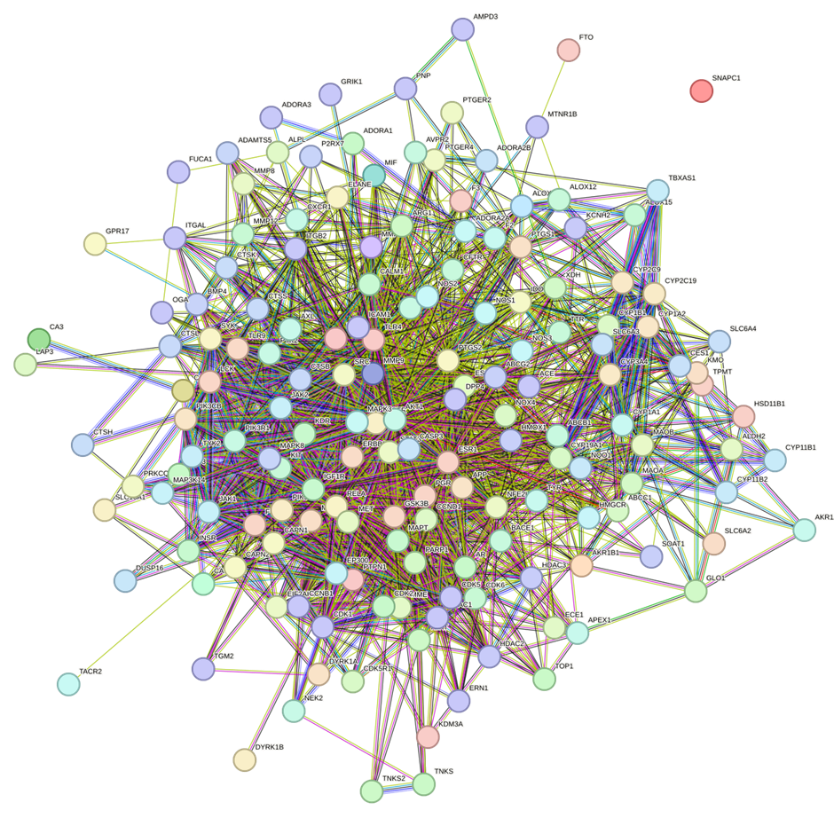
Fig no : 3- PPI network image
To identify key regulatory modules and hub genes within the network, two powerful Cytoscape plugins were utilized:
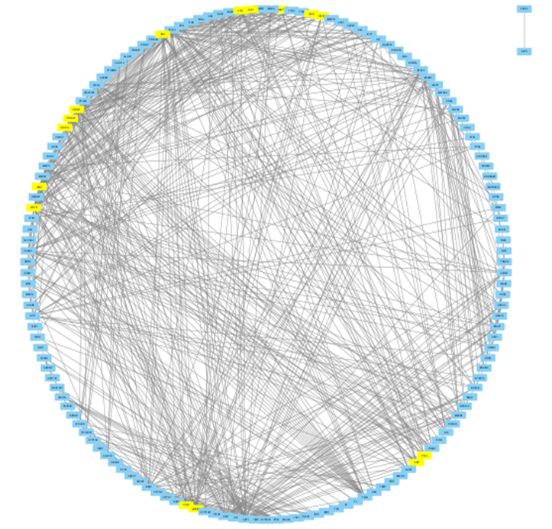
Fig no : 4 – MCODE network image
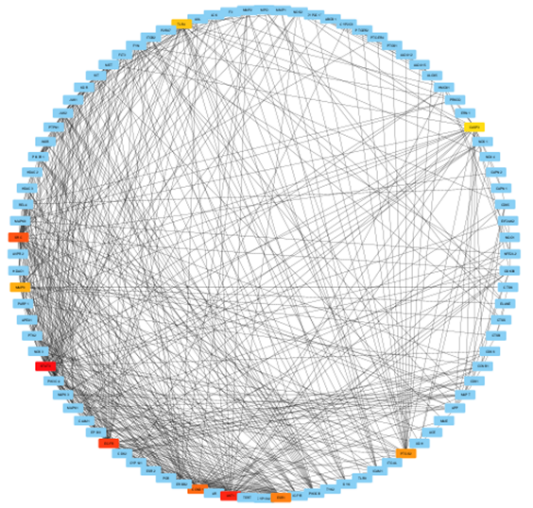
BETWEENNESS
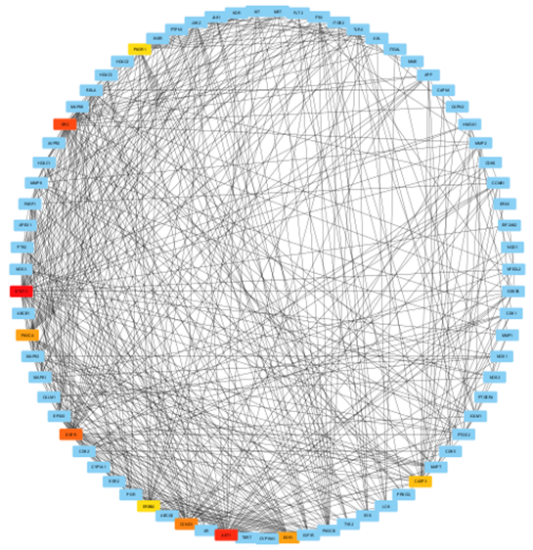
CLOSENESS
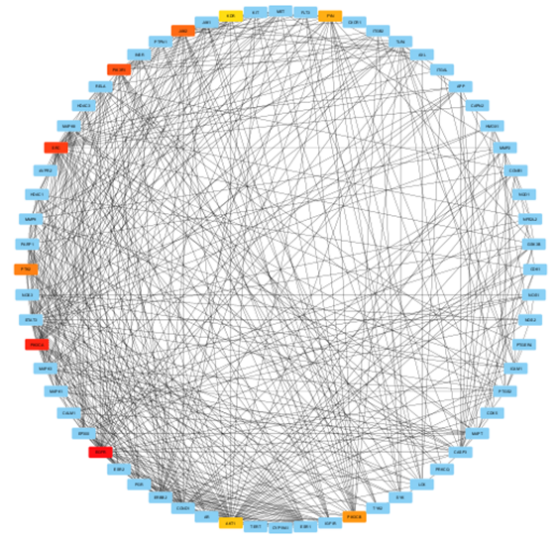
DEGREE
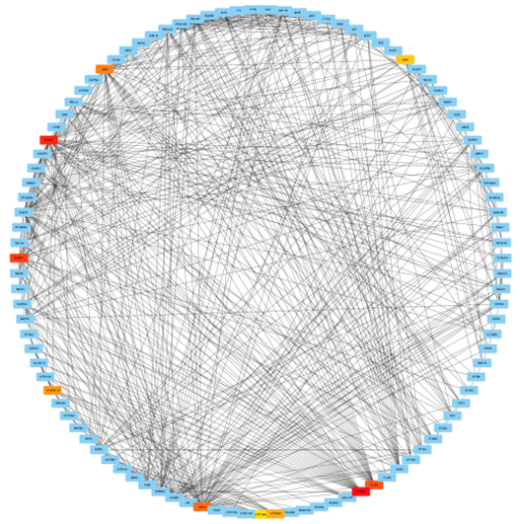
MCC
Fig no : 5 – CytoHubba network image
GO ENRICHMENT ANALYSIS.
Table no : 2 GO enrichment analysis of Hubgenes
|
Gene |
MCC Score |
Degree |
Closeness |
Betweenness |
Gene Type/ Role |
Biological Process (BP) |
Molecular Function (MF) |
|
AKT1 |
High |
High |
High |
High |
Kinase / Signal Transduction |
Cell survival, anti-apoptosis |
Protein kinase activity |
|
SRC |
High |
High |
Medium |
High |
Tyrosine kinase |
Cell adhesion, growth signaling |
Tyrosine kinase activity |
|
STAT3 |
High |
High |
High |
High |
Transcription factor |
Cytokine signaling, anti-inflammatory |
DNA-binding TF activity |
|
EGFR |
High |
High |
Medium |
Medium |
Receptor tyrosine kinase |
Angiogenesis, proliferation |
Transmembrane receptor activity |
|
PTGS2 |
Medium |
Medium |
Medium |
Medium |
Inflammatory mediator |
Pro-inflammatory response |
Prostaglandin synthase activity |
|
MMP9 |
High |
Medium |
Medium |
Medium |
ECM remodeling enzyme |
Extracellular matrix degradation |
Peptidase activity |
|
TLR4 |
Medium |
Medium |
Medium |
Medium |
Pattern recognition receptor |
Inflammatory response, immune modulation |
Lipopolysaccharide binding |
|
CCND1 |
Medium |
Medium |
Medium |
Low |
Cell cycle regulator |
Cell cycle progression, proliferation |
Cyclin-dependent protein kinase regulator activity |
|
ESR1 |
High |
High |
High |
Medium |
Nuclear hormone receptor |
Transcription regulation, cardiovascular repair |
Steroid hormone receptor activity |
|
CASP3 |
Medium |
Medium |
Medium |
Medium |
Apoptotic enzyme |
Apoptotic execution, tissue remodeling |
Cysteine-type endopeptidase activity |
|
PIK3CA |
High |
High |
High |
Medium |
Kinase / Signal mediator |
PI3K-Akt pathway, cell growth, angiogenesis |
Phosphatidylinositol-4,5-bisphosphate 3-kinase activity |
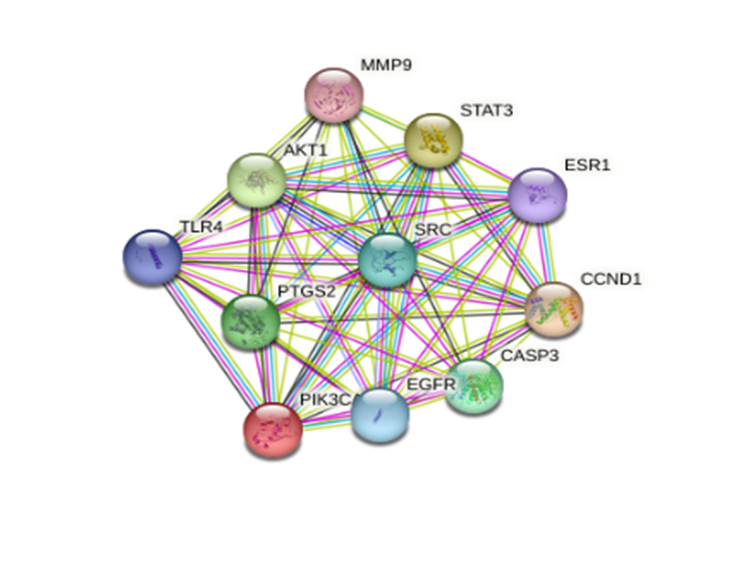
Fig no : 6 –string images of Hubgenes
KEGG PATHWAY ENRICHMENT ANALYSIS
The KEGG pathway enrichment analysis of the hub genes AKT1, PIK3CA, MMP2, and MMP9, which were highlighted in the relaxin signaling pathway, reveals their critical involvement in several biological processes directly associated with myocardial infarction (MI). AKT1 and PIK3CA are central to the PI3K-Akt signaling pathway, where they promote cardiomyocyte survival, angiogenesis, and endothelial repair by enhancing nitric oxide (NO) production and reducing apoptosis—key mechanisms in limiting ischemic damage. MMP2 and MMP9, both matrix metalloproteinases, are crucial in extracellular matrix (ECM) remodeling, which supports tissue repair post-MI but can also lead to fibrosis and ventricular dysfunction if dysregulated. These genes are co-enriched in pathways such as Relaxin signaling, MAPK signaling, ECM-receptor interaction, Focal adhesion, and HIF-1 signaling, highlighting their multifunctional roles in inflammation regulation, vascular remodeling, hypoxia adaptation, and fibrosis control. Their collective activity underscores a complex, interconnected network of survival and remodeling signals following myocardial infarction, making them promising therapeutic targets, especially in the context of network pharmacology-based interventions involving multi-compound herbal formulations that is shown in fig 7 and 8.
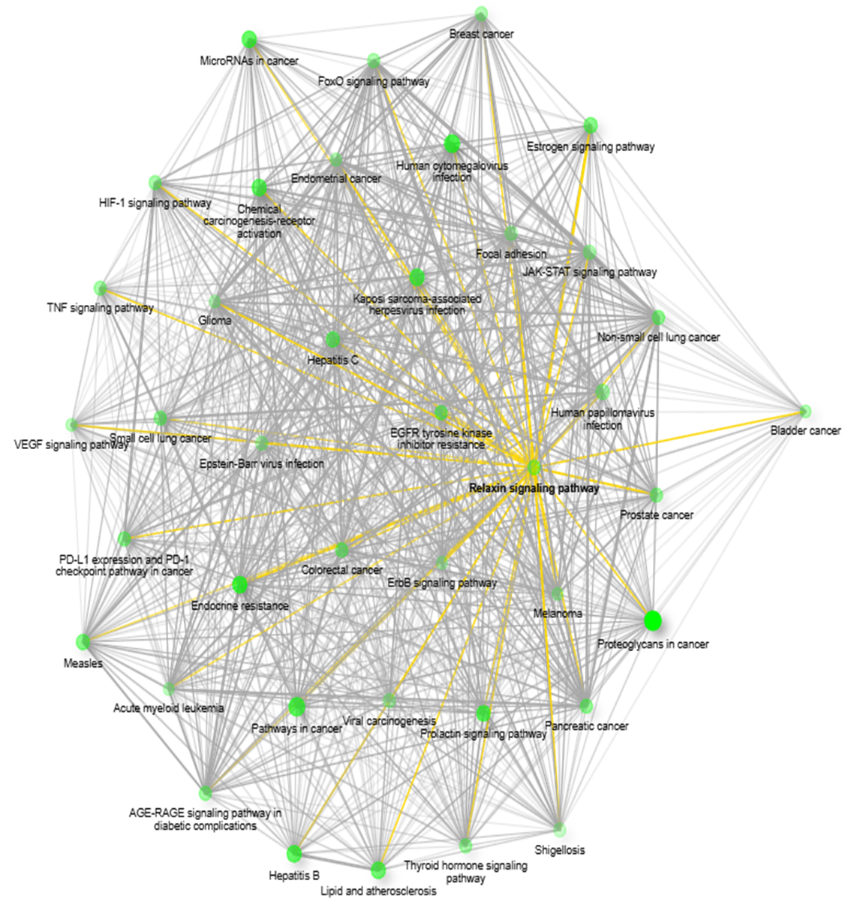
Fig no : 7 –KEGG Network image – Relaxin signaling pathway
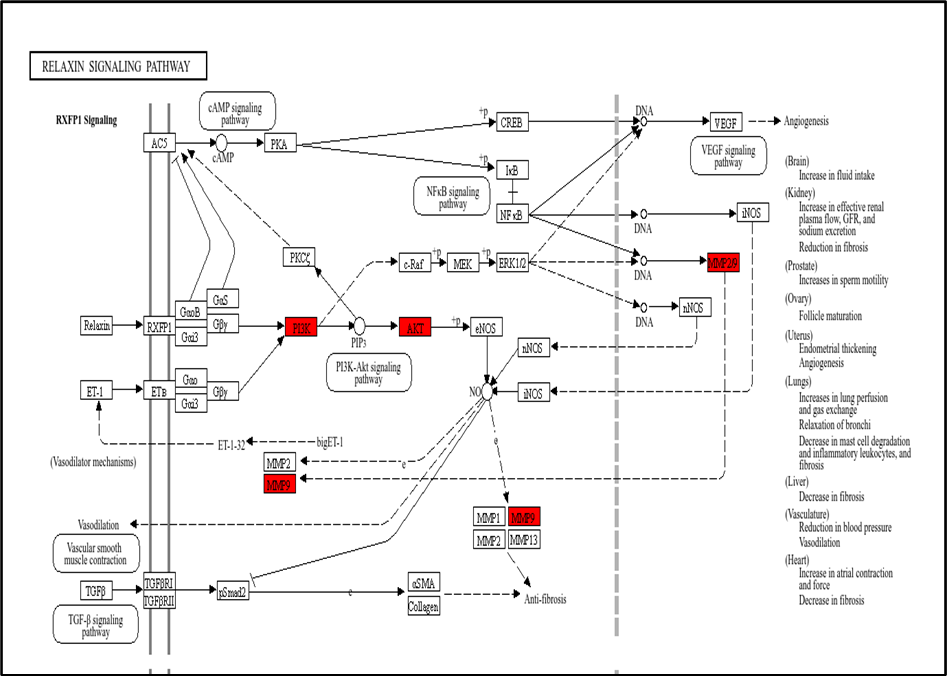
Fig no : 8 –KEGG – Relaxin signaling pathway
MOLECULAR DOCKING
Based on the molecular docking analysis integrated with KEGG pathway enrichment, several hub genes—AKT1, PIK3CA, MMP2, and MMP9—demonstrated strong binding interactions with key phytochemicals from Convolvulus pluricaulis, notably scopoletin, kaempferol, caffeic acid, and 4-hydroxycinnamic acid that show in fig no 9. Among these, kaempferol exhibited the most favorable docking scores across all four targets, particularly forming stable hydrogen bonds and hydrophobic interactions within the ATP-binding pocket of AKT1 and the catalytic domains of MMP2 and MMP9, indicating its potential to modulate these proteins’ activities in post-MI repair processes. In contrast, while scopoletin and caffeic acid showed moderate binding affinity (–6.5 to –7.4 kcal/mol), their lower oral bioavailability and water solubility were slightly less ideal.
Fig no : 9 –Docking images of receptors
DISCUSSION
Myocardial infarction (MI), commonly known as a heart attack, results from prolonged ischemia due to obstruction of coronary blood flow, leading to necrosis of heart muscle tissue. Pathophysiological processes involved in MI are multifactorial, encompassing oxidative stress, endothelial dysfunction, apoptosis, inflammation, and post-infarction fibrosis. Traditional single-target drugs—such as β-blockers, ACE inhibitors, or statins—are effective to some extent but often fail to comprehensively restore cardiac function or prevent secondary events. Consequently, there is an emerging need for multi-target therapeutic strategies, which can simultaneously modulate various aspects of myocardial injury and repair. In this context, herbal medicine and phytochemicals offer promising alternatives due to their polypharmacological nature.
Convolvulus pluricaulis (Shankhpushpi), traditionally used in Ayurvedic medicine for cognitive and stress-related disorders, has been reported to possess antioxidant, neuroprotective, and anti-inflammatory effects, which are also relevant to cardiovascular health. Based on phytochemical screening from databases like, PubChem, and literature, four compounds were selected for investigation: kaempferol, scopoletin, caffeic acid, and 4-hydroxycinnamic acid. The selection was refined based on ADME properties predicted through SwissADME and pkCSM tools. Among these, kaempferol showed the most favorable drug-likeness profile, including high gastrointestinal (GI) absorption, optimal lipophilicity (LogP ~2.3), low predicted toxicity, and good water solubility—making it a suitable candidate for oral administration and systemic bioavailability.
To understand the therapeutic relevance of these compounds in MI, target prediction was performed using SwissTargetPrediction resulting in 254 potential protein targets. Simultaneously, myocardial infarction-related genes were collected from GeneCards, and DisGeNET, resulting in over 6,000 disease-associated targets. The intersection of compound- and disease-related targets (via Venn analysis) revealed 163 overlapping genes, considered as potential targets of C. pluricaulis phytochemicals in MI therapy. These genes form the basis for further network pharmacology and protein-protein interaction (PPI) studies.
A PPI network was constructed using the STRING database and visualized in Cytoscape, comprising 163 nodes and 1,695 edges. Using topological analysis tools such as MCODE and CytoHubba, hub genes were ranked based on MCC, Degree, Closeness, and Betweenness algorithms. The top hub genes identified were: AKT1, PIK3CA, MMP2, MMP9, STAT3, EGFR, PTGS2, SRC, CCND1, and CASP3. These genes are central regulators of pathways involved in cardiomyocyte survival, inflammatory regulation, cell cycle control, and extracellular matrix (ECM) remodeling, all of which are critical in MI pathogenesis and recovery.
Functional annotation using Gene Ontology (GO) analysis revealed that these hub genes are primarily involved in:
KEGG pathway enrichment analysis showed that the top pathways associated with these genes include:
Molecular docking studies were conducted to evaluate the binding interactions between the four selected compounds and the top hub proteins. Kaempferol showed the strongest binding affinity, with docking scores ranging from –8.0 to –9.2 kcal/mol, and formed stable hydrogen bonds with the ATP-binding sites of AKT1, MMP2, and PIK3CA, along with hydrophobic interactions with MMP9. The binding modes support the compound’s potential to interfere with enzyme activation and downstream signaling. Scopoletin and caffeic acid showed moderate affinity (–6.5 to –7.4 kcal/mol), while 4-hydroxycinnamic acid displayed comparatively weaker interactions. These findings reinforce kaempferol’s status as the most promising cardioprotective agent among the group, particularly for targeting anti-apoptotic, pro-survival, and anti-inflammatory pathways post-MI.
THERAPEUTIC IMPLICATIONS AND FUTURE PROSPECTS
The integration of network pharmacology, target prediction, pathway enrichment, and molecular docking has revealed a compelling pharmacological rationale for the use of Convolvulus pluricaulis in myocardial infarction. The multi-target, multi-pathway modulation achieved by kaempferol and other phytochemicals aligns with the complex pathophysiology of MI, offering advantages over conventional mono-target drugs. Future steps should involve invitro validation, invivo animal modeling, and ultimately clinical trials to confirm efficacy, optimize formulation, and determine safe dosage ranges. Moreover, the same framework can be extended to investigate other traditionally used medicinal plants for cardiovascular disorders.
CONCLUSION
This study explored the cardioprotective potential of Convolvulus pluricaulis and its major bioactive compounds—kaempferol, scopoletin, caffeic acid, and 4-hydroxycinnamic acid—in the treatment of myocardial infarction (MI) through an integrative network pharmacology and molecular docking approach. By leveraging target prediction tools, disease databases, protein–protein interaction mapping, and pharmacokinetic profiling, a robust framework was established to identify multi-target therapeutic candidates and core signaling pathways involved in MI pathology. This investigation showcases how network pharmacology and molecular docking, coupled with phytochemical research, can accelerate the discovery of novel, multi-target natural compounds for cardiovascular diseases. Kaempferol, from C. pluricaulis, emerges as a strong lead candidate warranting further translational development.
ACKNOWLEDGEMENT
I proclaim my gratitude to that HEAVENLY GRACE whose blessing and kindness has led me so far and will lead me till the end. To HIM I owe my every success and all blessings of life.
I consider myself to be very fortunate and with great pleasure and profound sense of reverence and I express my gratitude and sincere thanks to Mrs. Savitha Mol G. M, Associate Professor, Department of Pharmacology, as guide, who with her dynamic approach boosted my moral, which helped me to a very great extent in the completion of this dissertation. Her assurances and advice had helped me in good stead. Her valuable suggestion, dynamic guidance, unwavering support, dedicated involvement, enthusiasm and inestimable encouragement, throughout the course of my stay, without whom, this work would have not reached the present status and which made the dissertation an educative and interesting experience.
A moment of remembrance to the eternal repose of the soul of our founder, Late, Chairman Shri. Dr. K. Monikantan Nair.
My heartfelt thanks to our Managing Trustee Smt. Geetha Monikantan and our chairman Dr. Gautham Krishna. M for providing support and creating aura for my research work.
I am grateful to Prof. Dr. Prasobh G. R, Principal, Sree Krishna College of Pharmacy and Research Centre, for providing the necessary infra-structural facilities to carry out the research work successfully.
My sincere thanks and gratitude to our vice principals, Dr. Kiran K J and Dr. Arun T S for his constant support and valuable information for doing the project work.
REFERENCES


Shabin P, Savitha Mol G M, Anusha Jasmine R J, Akshaya P, Jyothi B N, Liya S Saji, Kiran K J, Prasobh G R, Network Pharmacology and Molecular Docking of Convolvulus pluricaulis in the Treatment of Myocardial Infarction, Int. J. of Pharm. Sci., 2025, Vol 3, Issue 9, 1388-1406. https://doi.org/10.5281/zenodo.17108485
 10.5281/zenodo.17108485
