View Article

  • Phytochemical, Antimicrobial, Antifungal and GC-MS Profiling of Digitaria Linn by using Distilled Water and Methanolic Extract

  • 1 Department of Science and Humanities, KCES COEM, Jalgaon, Maharashtra, India 425001
    2 Department of Chemistry, J.D.M.V.P. Samaj's, Shri. S. S. Patil Art's, Shri. Bhausaheb T. T. Salunkhe Commerce and Shri. G. R. Pandit Science College, Jalgaon, Maharashtra 425001
     

Abstract

The study of Digitaria leaves extract investigates its antimicrobial and antifungal properties, which hold potential benefits for health. The mature Digitaria plant, often regarded as a weed grass, is typically considered a waste agricultural plant, yet it has significant therapeutic potential. Methanolic extract was used to phytochemical analysis was conducted using Gas Chromatography-Mass Spectrometry (GC-MS), which successfully identified and quantified the extract, contains several key bioactive compounds. The analysis of the methanolic extract identified the bioactive phytochemicals, with phenols, alkaloids, terpenoids, flavonoids, tannins, saponins, steroids and glycosides. The distilled water was used as the solvent for both antimicrobial and antifungal assays. The analysis shows the effective antifungal activity. The investigation highlights that the methanolic extract of Digitaria leaves is a valuable source of numerous bioactive compounds, underscoring the potential of this species in traditional medicine and its applicability in modern therapeutic practices.

Keywords

Phytochemical, antimicrobial, antifungal, GC-MS, Digitaria, Medicinal plant

Introduction

The Plant extracts is highly interest since decades. The researchers focus on explore their photochemical application in medicinal, foods, drugs etc. plant extracts is used in tonics, meals to increase body immunity [1].

Digitaria commonly known as digit grass and also consider as weeds in turf grass system and in agriculture also. Digitaria derived from latin digitus (finger) that means it seems like to radiating inflorescence branches [2]. Digitaria collective names refers as “finger grass”. There is great species within Digitaria, it might be annual or perennial with or without stolons, with or without rhizomes, erect or may be prostrate. This genus varies in inflorescence structure length of spikelet scales, spikelet indumentums types. Digitaria either mesophytic or xerophytic mostly grown in open habitats. Digitaria differ in leaf architecture and in amount of hairs also. Digitaria also known as crabgrass produce large amount of seeds and a single plant can produce upto 1,88,000 seeds. Digitaria is the most competitive C4 weeds of horticulture, agriculture and turfgrass landscape in temperate and tropical regions [3]. Having C4 photosynthetic pathway Digitaria have the ability to tolerate dry conditions, hot and very competitive during the summer when C3 plant come under stress. Here we discuss about the literature of some pharmacological properties of species belong to Digitaria. Likewise Digitaria exilis, Digitaria iburua, Digitaria radicosa, Digitaria insularis, Digitaria horizontalis, Digitaria sanguinalis.

Reagents and Plant Sample 

The study involved the mature leaves of the Digitaria plant from district Jalgaon of Maharashtra. Plant specimens were authenticated from the Botanical Department of Nutan Maratha College, Jalgaon, Maharashtra. The chemicals used in the analysis were of laboratory grade and sourced from Sigma-Aldrich, India.

Processing of Plant Material

The leaves of Digitaria were dried at a controlled temperature to prevent exposure to direct sunrays. The mechanical grinder used for a fine powder. The powdered leaf sample was stored securely at temperature 4°C using airtight container for subsequent analysis.

Extraction of Digitaria Plant Material

50 grm of Digitaria leaves powder haeated in 500ml of distilled water at temperature 60oC for 3hr. Filtrate using whatman paper 1. Sample keeps for antimicrobial, antifungal activity.

250g of powdered leaves were soaked in 700 mL of methanol for 7 days. After this period, the mixture was filtered. The resulting filtrate keep phytochemicals compounds, using rotary evaporator the sample was concentrated.

Phytochemical analysis

The different extract of aerial part of Digitaria were apply to qualitative analysis using standard process [4] Tannines, flavanoids, total phenolics and the quantitative examination of tannins by standard method [5] The  Phytosterol, alkaloids, steroids were examed by the preferred method [6]. Saponins and Glycosides quantify with referred method [7].

Anti-microbial activity assay

The Antibacterial activity was checked by following Zone Inhibition Method (Kirby-Bauer method). The MHA plates were inoculated by spreading with 100 µl of Bacterial culture, Bacillus subtilis and Escherichia coli (Inoculum was prepared by adjusting 0.5 McFarland Unit - Approx cell density (1.5 X 10⁸ CFU/mL from Mueller- Hinton Broth) and followed by placing the discs containing 5 µl of different concentration (0 to 400 mg/ml). One disc in each plate was loaded with solvent alone which served as vehicle control and Ciprofloxacin disc (3µg) was taken as positive control. The plates of Bacillus subtilis and Escherichia coli were incubated (Basil Scientific Corp. India- Incubator) at 37°C for 24 hrs. The clear zones created around the disc were measured and recorded [32]

Anti-fungal Activity Assay

The Antifungal activity was checked by following Zone Inhibition Method (Kirby-Bauer method). The SDA plates were inoculated by spreading with 100 µl of Fungal culture, Candida albicans and Trichoderma asperellum (Inoculum was prepared by adjusting 0.5 McFarland Unit - Approx cell density (1.5 X 10⁸ CFU/mL from Sabouraud dextrosebroth)and followed by placing the discs containing 5 µl of different concentration (0 -400 mg/ml). One disc in each plate was loaded with solvent alone which served as vehicle control and Fluconazoledisc (24µg)was taken as positive control. The plates of Candida albicans and Trichoderma asperellum were incubated (Basil Scientific Corp. India- Incubator) at 37 °C for 24 hrs. The clear zones created around the disc were measured and recorded [32].

Gas chromatography- mass spectroscopy

The Gas chromatography- mass spectroscopy analysis of methanolic extracts Digitaria leaves was conducted using a GC 5183-4647:870uL Agilent Technologies system an AOC-20i auto-sampler and a GC-MS having an Elite-1 hybrid silica capillary column. The electron impact mode operated system at 70 eV, with helium gas (99.99%) applied at a constant flow rate of 3 ml/min and an infusion volume of 2 µL (split ratio of 10:1). The injector temperature was set to 220°. The ion source temperature was maintained at 250°C. The oven temperature was initially set at 40°C (isothermal for 3 minutes), then increased at a rate of 7°C/min to 320°C, followed by an increase of 5°C/min to 320°C, and held isothermal for 9 minutes at 320°C. The ranged fragments in size from 45 to 450 Da, and the mass spectra were recorded at 70 eV with a scan time of 0.5 seconds. The GC run took 65 minutes to complete. The relative percentage of each segment was calculated by comparing its average peak area to the total areas [8]. Turbo Mass version 5.0 software was used to process the mass spectra and chromatograms. The National Institute of Standards and Technology (NIST) source having 62,000 patterns, was data used for compare the mass spectra for result with NIST 20.L library [9]. The names, molecular weights, and structures of the analyzed constituents were identified. The analysis of GC-MS was performed by Shraddha Analytical Services, Ghatkopar (West), Mumbai.

RESULT AND DISCUSSION

Phytochemical characterization

The analysis of the methanolic extract identified the bioactive phytochemicals, with phenols, alkaloids, terpenoids,  flavonoids,  tannins, saponins, steroids and glycosides. The phytochemical analysis using solvents methanol  extracts of Digitaria leaves in Table 1. The pharmacological analysis of therapeutic plant medicine relies on bioactive secondary metabolites [10]. The methanolic extract contains a number of active phytochemicals, including phenols, alkaloids, terpenoids,  flavonoids,  tannins, saponins, steroids and glycosides. Phenolics and flavonoids, which are known for their antioxidant properties, may play a role in disease treatment, including cancer [11]. Flavonoids also help prevent metal-induced lipid peroxidation and have, anti-inflammatory, lower allergic and control viral effects [12].

Phenolic compounds can bind metal ions, neutralize oxidants, and block singlet oxygen, making them valuable as chemotherapeutic agents. Flavonoids and phenolics are used in drug development and clinical applications [13]. Tannins offer lower diarrheal, antimicrobial, anti-inflammatory, and antioxidant benefits [14]. Saponins are noted with their cholesterol-lowering effects [15], while terpenoids are significant for their antibacterial, antifungal, antimalarial, and antioxidant properties [16]. Among different solvents, the methanolic extract of Digitaria leaves showed superior results in extractive value and phytochemical analysis, making it suitable for further research [17].

Table 1: Qualitative phytochemical screening of methanol extract of Digitaria leaves.

Sr. No.

Phytochemicals

Solvent  Methanol

1

Tannins

+

2

Terpenoids

+

3

Flavonoid

+

4

Phenol

+

5

Phytosterol

+

6

Alkaloids

+

7

Steroids

+

8

Saponins

+

9

Glycosides

+

Anti-microbial activity assay

The distilled water extracts for antimicrobial using the stain Bacillus subtilis and Escherichia coli. The extract was not found the antimicrobial activity against respective stain [32].

Anti-fungal activity assay

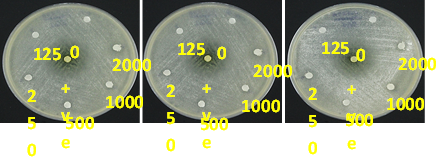
The distilled water extracts for antifungal using the stain Candida albicans and Trichoderma asperellum. The extract was not found antifungal activity using the stain Candida albicans but antifungal activity effective against the stain Trichoderma asperellum at the amount 250ug. (Image-1 and Graph-1) The average zone at effective amount in 8mm (Table-3) [18].

Table- 3: Effective amount and Average Zone at Effective amount (in mm)

Sr. No.

Sample

Effective amount

Average Zone at Effective amount (in mm)

1

Amphotericin B (PC)

180µg

8

2

Digitaria leaves extract

250µg

8

Image -1 Amount present per disc in µg / Sample Dispensed Volume- 5µl

Positive Control (Amphotericin B) - 180 µg (Dispensed Volume- 12 µl
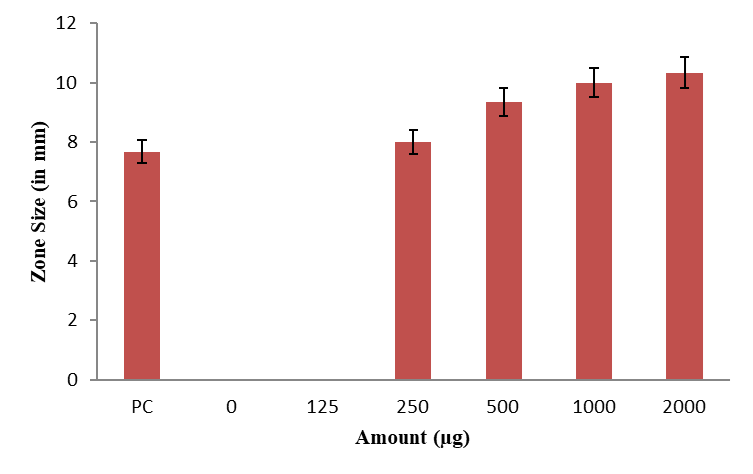
  1. 1 Antifungal Activity- T. asperellum- Distilled water Digitaria leaves extract.

Gas chromatography- mass spectroscopy

GC-MS analysis is a crucial initial step for identifying active compounds [19], aiding in the understanding of various individual components in plant species [18]. This technique profiles phytochemicals in medicinal plants. The methanolic extract of Digitaria leaves was examined using GC-MS, with the chromatograms (Fig.1) summarized in Table 2. The mass spectra of the major phytoconstituents in the sample were matched with reference compounds from the source of NIST library. The GC-MS chromatogram of the methanolic extract from the Digitaria leaves revealed 6 major peaks, signifying the presence of multiple bioactive phytochemicals (Fig.1). The findings provide the relative percentages of the key bioactive compounds. 4H-Pyran-4-one, 2,3-dihydro-3,5-dihydroxy-6-methyl (1.99%), n-Hexadecanoic acid (24.42%), 9,12,15-Octadecatrienoic acid (Z,Z,Z) (29.42%), Octadecanoic acid (2.48%), Stigmasterol (2.15%), and gamma Sitosterol (3.30%).

The GC-MS spectrum profile confirmed the presence of major phytochemical compounds in the extract, was examined with their retention times. The peak heights indicate the relative concentrations of these phytochemicals. By comparing the mass spectra with the NIST library, the study identified and distinguished key phytoconstituents in the sample. Among the identified compounds, 4H-Pyran-4-one, 2,3-dihydro-3,5-dihydroxy-6-methyl having Antioxidant and Anti-inflammatory [20]  n-Hexadecanoic acid were recognized for their antibacterial properties. [21], 9,1215 -Octadecadienoic acid (Z,Z)- has Antimicrobial [22] property. Octadecanoic acid has Antioxidant [23] properties. Stigmasterol applicable as Anticancer, anti-osteoarthritis, anti-inflammatory, anti-diabetic, immunomodulatory, antiparasitic, antifungal, antibacterial, antioxidant, and neuroprotective [24]. The gamma.-Sitosterol has Anticancer and Anti-diabetic  activity [25, 26].
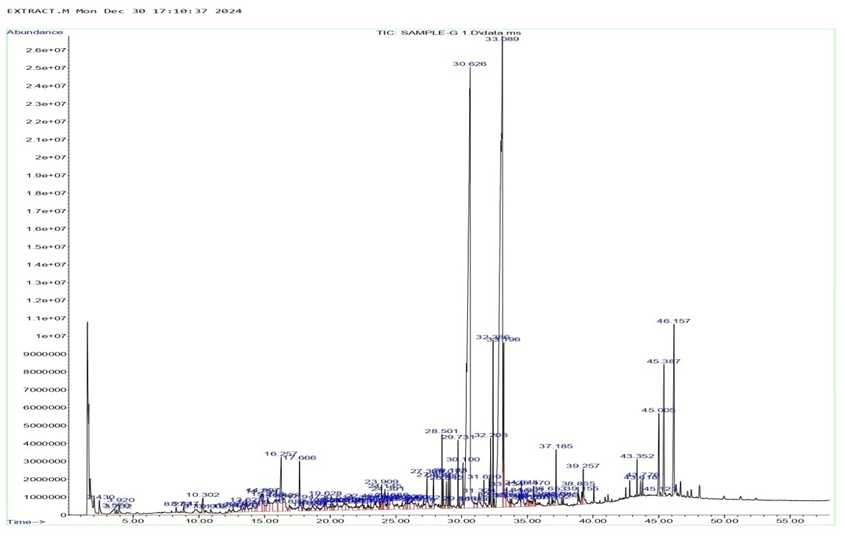
Fig.1 The GC-MS chromatogram of methanolic extract of Digitaria leave.

Table 2: The phytochemical compound isolated from methanol extract fo matured Digitaria leaves investigation and analysis by GC-MS with Retention time and Percent yield.

Sr. No.

Name of Compound

Retention time (min)

Yield      % w/w

Activity

1

4H-Pyran-4-one, 2,3-dihydro-3,5-di hydroxy-6-methyl-

16.25

1.99

Antioxidant and Anti-inflammatory [20]

2

n-Hexadecanoic acid

30.62

24.42

Antioxidant and Anti-bacterial[21]

3

9,12,15-Octadecatrienoic acid,(Z, Z,Z)-

33.09

29.42

Antioxidant and Anti-microbial [22]

4

Octadecanoic acid

33.19

2.48

Antioxidant [23]

5

Stigmasterol

45.38

2.15

Anticancer, anti-osteoarthritis, anti-inflammatory, anti-diabetic, immunomodulatory, antiparasitic, antifungal, antibacterial, antioxidant, and neuroprotective [24]

6

gamma.-Sitosterol

46.15

3.30

Anticancer [25] Anti-diabetic [26]

4H-Pyran-4-one, 2,3-dihydro-3,5-di hydroxy-6-methyl-

4H-Pyran-4-one, 2,3-dihydro-3,5-dihydroxy-6-methyl, commonly known as DDMP, is a cyclic organic compound with a pyran ring. It has two hydroxyl groups at the 3rd and 5th positions, a methyl group at the 6th position, and a specific double bond configuration within the ring. This compound is typically formed as a by product of the Maillard reaction and is notable for its antioxidant capabilities [27].

n-Hexadecanoic acid

N-hexadecanoic acid, often referred to as palmitic acid, is a saturated fatty acid consisting of a 16-carbon chain. It has a linear structure with no double bonds between the carbon atoms. Palmitic acid is widely present in various fats and oils, such as palm oil, coconut oil, and animal fats, where it constitutes a considerable part of their composition. Its chemical formula is CH3(CH2)14COOH, and it is regarded as a key saturated fatty acid in living organisms [28].

9,12,15-Octadecatrienoic acid,(Z, Z,Z)-

9,12,15-Octadecatrienoic acid, commonly known as alpha-linolenic acid (ALA), is an 18-carbon fatty acid with three double bonds at positions 9, 12, and 15. All of these double bonds have a cis (Z) configuration, which is represented by the (Z,Z,Z) notation. This essential omega-3 fatty acid is predominantly found in plant oils such as flaxseed oil [29].

Octadecanoic acid

Octadecanoic acid, widely known as stearic acid, is a saturated fatty acid composed of an 18-carbon straight-chain structure. It is one of the most prevalent fatty acids in nature, found abundantly in both animal and plant fats such as beef tallow, lard, cocoa butter, and shea butter. This fatty acid appears as a waxy solid with the chemical formula C18H36O2 and is commonly utilized in products like soaps, cosmetics, and candles for its thickening and emulsifying properties [30].

Stigmasterol

Stigmasterol is a plant sterol with various potential health benefits, including anti-tumor effects by promoting apoptosis, inhibiting tumour growth, and preventing metastasis in cancers like breast, lung, liver, and ovarian. It also has anti-inflammatory properties, may help manage diabetes, acts as an antioxidant, offers neuroprotective effects, and may lower LDL cholesterol levels [24].

gamma.-Sitosterol

Gamma-sitosterol, a stereoisomer of beta-sitosterol, is a sterol lipid from the stigmastanes class with the chemical formula C29H50O. While it is commonly used in plant extracts, its toxicity in human cell assays may limit its use as a natural supplement [31].

CONCLUSION

The methanolic extract of Digitaria leaves was analyzed, revealing the presence of bioactive phytochemicals, including phenols, alkaloids, terpenoids, flavonoids, tannins, saponins, steroids, and glycosides. This study emphasizes the extract's potential as a rich source of bioactive compounds, showcasing its relevance in traditional medicine and its potential use in modern therapeutic applications.  The distilled water extracts for antimicrobial using the stain Bacillus subtilis, Escherichia coli and antifungal using the stain Candida albicans Trichoderma asperellum properties. The extract was not found the antimicrobial activity against respective stain and antifungal activity using the stain Candida albicans but antifungal activity effective against the stain Trichoderma asperellum at the amount 250ug. The average zone at effective amount in 8mm.

Gas chromatography-mass spectrometry (GC-MS) analysis identified 4H-Pyran-4-one, 2,3-dihydro-3,5-dihydroxy-6-methyl (1.99%), n-Hexadecanoic acid (24.42%), 9,12,15-Octadecatrienoic acid (Z,Z,Z) (29.42%), Octadecanoic acid (2.48%), Stigmasterol (2.15%), and gamma Sitosterol (3.30%).The findings six compounds highlight the significance of Digitaria leaves, commonly considered weed waste, as a major of bioactive constituents towards promising health benefits.

REFERENCES

  1. Bhalla, Nitesh, et al. "Phytochemical analysis of Moringa oleifera leaves extracts by GC-MS and free radical scavenging potency for industrial applications." Saudi journal of biological sciences 28.12 (2021): 6915-6928.
  2. Quattrocchi U. CRC world dictionary of grasses: common names, scientific names, eponyms, synonyms, and etymology. CRC Press (Taylor & Francis Group), Boca Raton, FL 2006;1:A-D.
  3. Matthew TE, James FW, Kathryn LK, Katherine HD, Verma KS. Pantoea spp. Associated with Smooth Crabgrass (Digitaria ischaemum) Seed Inhibit Competitor Plant Species. Microorganisms 2019;7:143.
  4. Dahanayake JM, Perera PK, Galappatty P, Perera HDSM, Arawwawala LDAM. Comparative Phytochemical Analysis and Antioxidant Activities of Tamalakyadi Decoction with Its Modified Dosage Forms. Evid Based Complement Alternat Med. 2019 May 2;2019:6037137. doi: 10.1155/2019/6037137. PMID: 31186663; PMCID: PMC6521515.
  5. El-Shiekh RA, Salem MA, Mouneir SM, Hassan A, Abdel-Sattar E. A mechanistic study of Solenostemma argel as anti-rheumatic agent in relation to its metabolite profile using UPLC/HRMS. J Ethnopharmacol. 2021 Jan 30;265:113341. doi: 10.1016/j.jep.2020.113341. Epub 2020 Sep 4. PMID: 32891814.
  6. Teclegeorgish, Z. W., Mokgalaka, N. S., Vukea, N., de la Mare, J.-A., & Tembu, V. J. (2020). Cytotoxicity of triterpenoids from Clerodendrum glabrum against triple negative breast cancer cells in vitro. South African Journal of Botany, 133, 144–150. doi:10.1016/j.sajb.2020.07.009
  7. Auwal MS, Saka S, Mairiga IA, Sanda KA, Shuaibu A, Ibrahim A. Preliminary phytochemical and elemental analysis of aqueous and fractionated pod extracts of Acacia nilotica (Thorn mimosa). Vet Res Forum. 2014 Spring;5(2):95-100. PMID: 25568701; PMCID: PMC4279630.
  8. Narayanan, M., Ranganathan, M., Subramanian, S.M. et al. Toxicity of cypermethrin and enzyme inhibitor synergists in red hairy caterpillar Amsacta albistriga (Lepidoptera: Arctiidae). JoBAZ 81, 45 (2020). https://doi.org/10.1186/s41936-020-00185-9
  9. Kandasamy, S., Devarayan, K., Bhuvanendran, N., Zhang, B., He, Z., Narayanan, M., … Pugazhendhi, A. (2021). Accelerating the production of bio-oil from hydrothermal liquefaction of microalgae via recycled biochar-supported catalysts. Journal of Environmental Chemical Engineering, 9(4), 105321. doi:10.1016/j.jece.2021.105321
  10. Kar, P., Mishra, D. K., Roy, A., Chakraborty, A. K., Sinha, B., & Sen, A. (2020). Elucidation of phytomedicinal efficacies of Clerodendrum inerme (L.) Gaertn. (Wild Jasmine). South African Journal of Botany. doi:10.1016/j.sajb.2020.07.027
  11. Pothiaraj Govindan, Manoranjani Murugan, Sasikumar Pitchaikani, Premavathi Venkatachalam, Abilash Valsala Gopalakrishnan, Sabariswaran Kandasamy, Harshavardhan Shakila, Synthesis and characterization of bioactive silver nanoparticles from red marine macroalgae Chondrococcus Hornemannii, Materials Today: Proceedings,2021.
  12. Mathiyazhagan Narayanan, Murugan Prabhakaran, Devarajan Natarajan, Sabariswaran Kandasamy, Rathinam Raja, Isabel S. Carvalho, Veeramuthu Ashokkumar, Arunachalam Chinnathambi, Sulaiman Ali Alharbi, Kesavan Devarayan, Arivalagan Pugazhendhi, Phycoremediation potential of Chlorella sp. on the polluted Thirumanimutharu river water, Chemosphere, Volume 277,2021,130246
  13. Noreen, R., Intisar, A., Ghaffar, A., Jabeen, F., Abid, M. A., Din, M. I., … Sattar, T. (2018). Constituents of Volatile Oil from Bark of Clerodendrum serratum (L.) and its Antibacterial Activity. Journal of Essential Oil Bearing Plants, 21(1), 198–205. https://doi.org/10.1080/0972060X.2018.1449669
  14. Mathiyazhagan Narayanan, Ramar Thangabalu, Devarajan Natarajan, Suresh Kumarasamy, Sabariswaran Kandasamy, Ashraf Elfasakhany, Arivalagan Pugazhendhi, Reclamation competence of Crotalaria juncea with the amalgamation and influence of indigenous bacteria on a waste dump of bauxite mine,Chemosphere,Volume 279,2021,130632, ISSN 0045-6535.
  15. S. Mutheeswaran, P. Saravana Kumar, P. Yuvaraj, V. Duraipandiyan, Naif Abdullah Al-Dhabi, K. Balakrishna, S. Ignacimuthu,Screening of some medicinal plants for anticariogenic activity: An investigation on bioactive constituents from Jatropha gossypifolia (L.) root,Biocatalysis and Agricultural Biotechnology,Volume 10,2017,Pages 161-166.
  16. Mathiyazhagan Narayanan, Gajendiran Kandasamy,  Murali P, Sabariswaran Kandasamy, Veeramuthu Ashokkumar, Omaima Nasif, Arivalagan Pugazhendhi, Optimization and production of polyhydroxybutyrate from sludge by Bacillus cereus categorized through FT-IR and NMR analyses, Journal of Environmental Chemical Engineering. Volume 9, Issue 1,2021,104908,
  17. Narayanan, M., Murugan, J. M., Kandasamy, G., Kandasamy, S., Nasif, O., Rajendran, M., & Pugazhendhi, A. (2020). The biotransformation potential of Bacillus cereus on β- cypermethrin to protect the earthworm (Perionyx excavatus) on insecticide -contaminated soil. Archives of Agronomy and Soil Science, 68(7), 944–955.
  18. Aye, M., Aung, H., Sein, M., & Armijos, C. (2019). A Review on the Phytochemistry, Medicinal Properties and Pharmacological Activities of 15 Selected Myanmar Medicinal Plants. Molecules, 24(2), 293. doi:10.3390/molecules24020293.
  19. Ida Sriyanti, Leni Marlina, Ahmad Fudholi, Sherin Marsela, Jaidan Jauhari, Physicochemical properties and In vitroevaluation studies of polyvinylpyrrolidone/cellulose acetate composite nanofibres loaded with Chromolaena odorata (L) King extract, Journal of Materials Research and Technology, Volume 12, 2021, Pages 333-342.
  20. Xiangying Yu, Mingyue Zhao, Fei Liu, Shitong Zeng, Jun Hu, Identification of 2,3-dihydro-3,5-dihydroxy-6-methyl-4H-pyran-4-one as a strong antioxidant in glucose–histidine Maillard reaction products, Food Research International, Volume 51, Issue 1, 2013, Pages 397-403, ISSN 0963-9969, https://doi.org/10.1016/j.foodres.2012.12.044
  21. Ganesan, T., Subban, M., Christopher Leslee, D.B. et al. Structural characterization of n-hexadecanoic acid from the leaves of Ipomoea eriocarpa and its antioxidant and antibacterial activities. Biomass Conv. Bioref. 14, 14547–14558 (2024). https://doi.org/10.1007/s13399-022-03576-w.
  22. Fatema, Samreen & Ubale, Milind & Farooqui, Mazahar & Pathan, Mohd Arif Ali Khan. (2019). ANALYSIS OF BIOLOGICAL ACTIVITY AND GAS CHROMATOGRAPHY-MASS SPECTROMETRY STUDY OF CONVENTIONAL EXTRACTION OF VITEX NEGUNDO LINN. LEAVES. Asian Journal of Pharmaceutical and Clinical Research. 12. 289. 10.22159/ajpcr.2018.v12i1.27854.
  23. AIP Conference Proceedings 2353, 030098 (2021); https://doi.org/10.1063/5.0053057 Published Online: 25 May 2021
  24. Bakrim S, Benkhaira N, Bourais I, Benali T, Lee LH, El Omari N, Sheikh RA, Goh KW, Ming LC, Bouyahya A. Health Benefits and Pharmacological Properties of Stigmasterol. Antioxidants(Basel). 2022 Sep 27;11(10):1912. doi: 10.3390/antiox11101912. PMID: 36290632; PMCID: PMC9598710.
  25. Shenbagamoorthy Sundarraj, Ramar Thangam, Vellingiri Sreevani, Krishnasamy Kaveri, Palani Gunasekaran, Shanmugam Achiraman, Soundarapandian Kannan,
  26. Isolation and Identification – gamma Sitosterol by GC-MS - from the Leaves of Girardinia heterophylla (Decne)
  27. Chen, Z.; Liu, Q.; Zhao, Z.; Bai, B.; Sun, Z.; Cai, L.; Fu, Y.; Ma, Y.; Wang, Q.; Xi, G. Effect of hydroxyl on antioxidant properties of 2, 3-dihydro-3, 5-dihydroxy-6-methyl-4 H-pyran-4-one to scavenge free radicals. RSC Adv. 2021, 11, 34456–34461.
  28. Aparna V, Dileep KV, Mandal PK, Karthe P, Sadasivan C, Haridas M. Anti-inflammatory property of n-hexadecanoic acid: structural evidence and kinetic assessment. Chem Biol Drug Des. 2012 Sep; 80(3):434-9. doi: 10.1111/j.1747-0285.2012.01418.x. Epub 2012 Jun 27. PMID: 22642495.
  29. Beare-Rogers (2001). "IUPAC Lexicon of Lipid Nutrition" (PDF). Archived (PDF) from the original on 12 February 2006. Retrieved 22 February 2006.
  30. Z. Zhen, T.F. Xi, Y.F. Zheng,11 - Surface modification by natural biopolymer coatings on magnesium alloys for biomedical applications,Editor(s): T. S. N. Sankara Narayanan, Il-Song Park, Min-Ho Lee,In Woodhead Publishing Series in Biomaterials,Surface Modification of Magnesium and its Alloys for Biomedical Applications,Woodhead Publishing,2015,Pages 301-333,ISBN 9781782420781,https://doi.org/10.1016/B978-1-78242-078-1.00011-6.
  31. γ-Sitosterol from Acacia nilotica L. induces G2/M cell cycle arrest and apoptosis through c-Myc suppression in MCF-7 and A549 cells,Journal of Ethnopharmacology,Volume 141, Issue 3,2012,Pages 803-809,ISSN 0378-8741,https://doi.org/10.1016/j.jep.2012.03.014.
  32. John C. Christenson, E. Kent Korgenski, Ryan F. Relich, 286 - Laboratory Diagnosis of Infection Due to Bacteria, Fungi, Parasites, and Rickettsiae, Editor(s): Sarah S. Long, Charles G. Prober, Marc Fischer, Principles and Practice of Pediatric Infectious Diseases (Fifth Edition), Elsevier, 2018, Pages 1422 1434.e3, ISBN 9780323401814.

Reference

  1. Bhalla, Nitesh, et al. "Phytochemical analysis of Moringa oleifera leaves extracts by GC-MS and free radical scavenging potency for industrial applications." Saudi journal of biological sciences 28.12 (2021): 6915-6928.
  2. Quattrocchi U. CRC world dictionary of grasses: common names, scientific names, eponyms, synonyms, and etymology. CRC Press (Taylor & Francis Group), Boca Raton, FL 2006;1:A-D.
  3. Matthew TE, James FW, Kathryn LK, Katherine HD, Verma KS. Pantoea spp. Associated with Smooth Crabgrass (Digitaria ischaemum) Seed Inhibit Competitor Plant Species. Microorganisms 2019;7:143.
  4. Dahanayake JM, Perera PK, Galappatty P, Perera HDSM, Arawwawala LDAM. Comparative Phytochemical Analysis and Antioxidant Activities of Tamalakyadi Decoction with Its Modified Dosage Forms. Evid Based Complement Alternat Med. 2019 May 2;2019:6037137. doi: 10.1155/2019/6037137. PMID: 31186663; PMCID: PMC6521515.
  5. El-Shiekh RA, Salem MA, Mouneir SM, Hassan A, Abdel-Sattar E. A mechanistic study of Solenostemma argel as anti-rheumatic agent in relation to its metabolite profile using UPLC/HRMS. J Ethnopharmacol. 2021 Jan 30;265:113341. doi: 10.1016/j.jep.2020.113341. Epub 2020 Sep 4. PMID: 32891814.
  6. Teclegeorgish, Z. W., Mokgalaka, N. S., Vukea, N., de la Mare, J.-A., & Tembu, V. J. (2020). Cytotoxicity of triterpenoids from Clerodendrum glabrum against triple negative breast cancer cells in vitro. South African Journal of Botany, 133, 144–150. doi:10.1016/j.sajb.2020.07.009
  7. Auwal MS, Saka S, Mairiga IA, Sanda KA, Shuaibu A, Ibrahim A. Preliminary phytochemical and elemental analysis of aqueous and fractionated pod extracts of Acacia nilotica (Thorn mimosa). Vet Res Forum. 2014 Spring;5(2):95-100. PMID: 25568701; PMCID: PMC4279630.
  8. Narayanan, M., Ranganathan, M., Subramanian, S.M. et al. Toxicity of cypermethrin and enzyme inhibitor synergists in red hairy caterpillar Amsacta albistriga (Lepidoptera: Arctiidae). JoBAZ 81, 45 (2020). https://doi.org/10.1186/s41936-020-00185-9
  9. Kandasamy, S., Devarayan, K., Bhuvanendran, N., Zhang, B., He, Z., Narayanan, M., … Pugazhendhi, A. (2021). Accelerating the production of bio-oil from hydrothermal liquefaction of microalgae via recycled biochar-supported catalysts. Journal of Environmental Chemical Engineering, 9(4), 105321. doi:10.1016/j.jece.2021.105321
  10. Kar, P., Mishra, D. K., Roy, A., Chakraborty, A. K., Sinha, B., & Sen, A. (2020). Elucidation of phytomedicinal efficacies of Clerodendrum inerme (L.) Gaertn. (Wild Jasmine). South African Journal of Botany. doi:10.1016/j.sajb.2020.07.027
  11. Pothiaraj Govindan, Manoranjani Murugan, Sasikumar Pitchaikani, Premavathi Venkatachalam, Abilash Valsala Gopalakrishnan, Sabariswaran Kandasamy, Harshavardhan Shakila, Synthesis and characterization of bioactive silver nanoparticles from red marine macroalgae Chondrococcus Hornemannii, Materials Today: Proceedings,2021.
  12. Mathiyazhagan Narayanan, Murugan Prabhakaran, Devarajan Natarajan, Sabariswaran Kandasamy, Rathinam Raja, Isabel S. Carvalho, Veeramuthu Ashokkumar, Arunachalam Chinnathambi, Sulaiman Ali Alharbi, Kesavan Devarayan, Arivalagan Pugazhendhi, Phycoremediation potential of Chlorella sp. on the polluted Thirumanimutharu river water, Chemosphere, Volume 277,2021,130246
  13. Noreen, R., Intisar, A., Ghaffar, A., Jabeen, F., Abid, M. A., Din, M. I., … Sattar, T. (2018). Constituents of Volatile Oil from Bark of Clerodendrum serratum (L.) and its Antibacterial Activity. Journal of Essential Oil Bearing Plants, 21(1), 198–205. https://doi.org/10.1080/0972060X.2018.1449669
  14. Mathiyazhagan Narayanan, Ramar Thangabalu, Devarajan Natarajan, Suresh Kumarasamy, Sabariswaran Kandasamy, Ashraf Elfasakhany, Arivalagan Pugazhendhi, Reclamation competence of Crotalaria juncea with the amalgamation and influence of indigenous bacteria on a waste dump of bauxite mine,Chemosphere,Volume 279,2021,130632, ISSN 0045-6535.
  15. S. Mutheeswaran, P. Saravana Kumar, P. Yuvaraj, V. Duraipandiyan, Naif Abdullah Al-Dhabi, K. Balakrishna, S. Ignacimuthu,Screening of some medicinal plants for anticariogenic activity: An investigation on bioactive constituents from Jatropha gossypifolia (L.) root,Biocatalysis and Agricultural Biotechnology,Volume 10,2017,Pages 161-166.
  16. Mathiyazhagan Narayanan, Gajendiran Kandasamy,  Murali P, Sabariswaran Kandasamy, Veeramuthu Ashokkumar, Omaima Nasif, Arivalagan Pugazhendhi, Optimization and production of polyhydroxybutyrate from sludge by Bacillus cereus categorized through FT-IR and NMR analyses, Journal of Environmental Chemical Engineering. Volume 9, Issue 1,2021,104908,
  17. Narayanan, M., Murugan, J. M., Kandasamy, G., Kandasamy, S., Nasif, O., Rajendran, M., & Pugazhendhi, A. (2020). The biotransformation potential of Bacillus cereus on β- cypermethrin to protect the earthworm (Perionyx excavatus) on insecticide -contaminated soil. Archives of Agronomy and Soil Science, 68(7), 944–955.
  18. Aye, M., Aung, H., Sein, M., & Armijos, C. (2019). A Review on the Phytochemistry, Medicinal Properties and Pharmacological Activities of 15 Selected Myanmar Medicinal Plants. Molecules, 24(2), 293. doi:10.3390/molecules24020293.
  19. Ida Sriyanti, Leni Marlina, Ahmad Fudholi, Sherin Marsela, Jaidan Jauhari, Physicochemical properties and In vitroevaluation studies of polyvinylpyrrolidone/cellulose acetate composite nanofibres loaded with Chromolaena odorata (L) King extract, Journal of Materials Research and Technology, Volume 12, 2021, Pages 333-342.
  20. Xiangying Yu, Mingyue Zhao, Fei Liu, Shitong Zeng, Jun Hu, Identification of 2,3-dihydro-3,5-dihydroxy-6-methyl-4H-pyran-4-one as a strong antioxidant in glucose–histidine Maillard reaction products, Food Research International, Volume 51, Issue 1, 2013, Pages 397-403, ISSN 0963-9969, https://doi.org/10.1016/j.foodres.2012.12.044
  21. Ganesan, T., Subban, M., Christopher Leslee, D.B. et al. Structural characterization of n-hexadecanoic acid from the leaves of Ipomoea eriocarpa and its antioxidant and antibacterial activities. Biomass Conv. Bioref. 14, 14547–14558 (2024). https://doi.org/10.1007/s13399-022-03576-w.
  22. Fatema, Samreen & Ubale, Milind & Farooqui, Mazahar & Pathan, Mohd Arif Ali Khan. (2019). ANALYSIS OF BIOLOGICAL ACTIVITY AND GAS CHROMATOGRAPHY-MASS SPECTROMETRY STUDY OF CONVENTIONAL EXTRACTION OF VITEX NEGUNDO LINN. LEAVES. Asian Journal of Pharmaceutical and Clinical Research. 12. 289. 10.22159/ajpcr.2018.v12i1.27854.
  23. AIP Conference Proceedings 2353, 030098 (2021); https://doi.org/10.1063/5.0053057 Published Online: 25 May 2021
  24. Bakrim S, Benkhaira N, Bourais I, Benali T, Lee LH, El Omari N, Sheikh RA, Goh KW, Ming LC, Bouyahya A. Health Benefits and Pharmacological Properties of Stigmasterol. Antioxidants(Basel). 2022 Sep 27;11(10):1912. doi: 10.3390/antiox11101912. PMID: 36290632; PMCID: PMC9598710.
  25. Shenbagamoorthy Sundarraj, Ramar Thangam, Vellingiri Sreevani, Krishnasamy Kaveri, Palani Gunasekaran, Shanmugam Achiraman, Soundarapandian Kannan,
  26. Isolation and Identification – gamma Sitosterol by GC-MS - from the Leaves of Girardinia heterophylla (Decne)
  27. Chen, Z.; Liu, Q.; Zhao, Z.; Bai, B.; Sun, Z.; Cai, L.; Fu, Y.; Ma, Y.; Wang, Q.; Xi, G. Effect of hydroxyl on antioxidant properties of 2, 3-dihydro-3, 5-dihydroxy-6-methyl-4 H-pyran-4-one to scavenge free radicals. RSC Adv. 2021, 11, 34456–34461.
  28. Aparna V, Dileep KV, Mandal PK, Karthe P, Sadasivan C, Haridas M. Anti-inflammatory property of n-hexadecanoic acid: structural evidence and kinetic assessment. Chem Biol Drug Des. 2012 Sep; 80(3):434-9. doi: 10.1111/j.1747-0285.2012.01418.x. Epub 2012 Jun 27. PMID: 22642495.
  29. Beare-Rogers (2001). "IUPAC Lexicon of Lipid Nutrition" (PDF). Archived (PDF) from the original on 12 February 2006. Retrieved 22 February 2006.
  30. Z. Zhen, T.F. Xi, Y.F. Zheng,11 - Surface modification by natural biopolymer coatings on magnesium alloys for biomedical applications,Editor(s): T. S. N. Sankara Narayanan, Il-Song Park, Min-Ho Lee,In Woodhead Publishing Series in Biomaterials,Surface Modification of Magnesium and its Alloys for Biomedical Applications,Woodhead Publishing,2015,Pages 301-333,ISBN 9781782420781,https://doi.org/10.1016/B978-1-78242-078-1.00011-6.
  31. γ-Sitosterol from Acacia nilotica L. induces G2/M cell cycle arrest and apoptosis through c-Myc suppression in MCF-7 and A549 cells,Journal of Ethnopharmacology,Volume 141, Issue 3,2012,Pages 803-809,ISSN 0378-8741,https://doi.org/10.1016/j.jep.2012.03.014.
  32. John C. Christenson, E. Kent Korgenski, Ryan F. Relich, 286 - Laboratory Diagnosis of Infection Due to Bacteria, Fungi, Parasites, and Rickettsiae, Editor(s): Sarah S. Long, Charles G. Prober, Marc Fischer, Principles and Practice of Pediatric Infectious Diseases (Fifth Edition), Elsevier, 2018, Pages 1422 1434.e3, ISBN 9780323401814.

Photo
Kiran Patil
Corresponding author

Department of Science and Humanities, KCES COEM, Jalgaon, Maharashtra, India 425001

Photo
Dr. Madhuri Patil
Co-author

Department of Chemistry, J.D.M.V.P. Samaj's, Shri. S. S. Patil Art's, Shri. Bhausaheb T. T. Salunkhe Commerce and Shri. G. R. Pandit Science College, Jalgaon, Maharashtra 425001

Kiran Patil, Dr. Madhuri Patil, Phytochemical, Antimicrobial, Antifungal and GC-MS Profiling of Digitaria Linn by using Distilled Water and Methanolic Extract, Int. J. of Pharm. Sci., 2026, Vol 4, Issue 2, 4709-4718. https://doi.org/10.5281/zenodo.18817443

More related articles
Formulation And Evaluation Of Mucoadhesive Film Fo...
Muthamil C , Sreedharan.N.K.K, Dr. Senthilkumar.K.L, ...
Injectable In-Situ Forming Hydrogels: A Versatile ...
AnaswaraAshok K. C., Anusree R. S., Dr. Jisha Mohanan, ...
Formulation and Evaluation of an Alcohol Based Her...
Avhad Sanket, Kshirsagar Diksha, Warule Pooja, Shaikh Gulamgaus F...
Related Articles
A New Simple Method Development and Validation of Mirabegron in Bulk and Pharmac...
Barhate Vidya , Aishwarya Sunilkumar , Sugriv Ghodake, Kamble Hemant , ...
Epilepsy: A Review of the Latest Advances in Diagnostic Techniques and Therapeut...
Dr. V. Saidurga Shravya, Boddupelli Madhusudhan, Charanya Peechara, ...
Efficacy and Safety of Low-Dose Olanzapine for the Prevention of Chemotherapy-In...
Tanuja Bheemarasetti, Karumanchi Nagurmeera, Tadimalla Sherli, Dr. T. V. Sivaramakrishna, Dr. D. Kri...
Formulation And Evaluation Of Mucoadhesive Film For The Treatment Of Migraine ...
Muthamil C , Sreedharan.N.K.K, Dr. Senthilkumar.K.L, ...
More related articles
Formulation And Evaluation Of Mucoadhesive Film For The Treatment Of Migraine ...
Muthamil C , Sreedharan.N.K.K, Dr. Senthilkumar.K.L, ...
Injectable In-Situ Forming Hydrogels: A Versatile Depot Platform for Localized a...
AnaswaraAshok K. C., Anusree R. S., Dr. Jisha Mohanan, ...
Formulation and Evaluation of an Alcohol Based Herbal Hand Sanitizer...
Avhad Sanket, Kshirsagar Diksha, Warule Pooja, Shaikh Gulamgaus Faiyaz, Waghmare Onkar, ...
Formulation And Evaluation Of Mucoadhesive Film For The Treatment Of Migraine ...
Muthamil C , Sreedharan.N.K.K, Dr. Senthilkumar.K.L, ...
Injectable In-Situ Forming Hydrogels: A Versatile Depot Platform for Localized a...
AnaswaraAshok K. C., Anusree R. S., Dr. Jisha Mohanan, ...
Formulation and Evaluation of an Alcohol Based Herbal Hand Sanitizer...
Avhad Sanket, Kshirsagar Diksha, Warule Pooja, Shaikh Gulamgaus Faiyaz, Waghmare Onkar, ...