
View Article

Abstract

Herbal medicines are widely used across the world due to their safety, cultural acceptance, and significant therapeutic potential. However, poor bioavailability remains a major limitation for many phytoconstituents. Most plant-derived active compounds, including flavonoids, glycosides, polyphenols, tannins, and alkaloids, exhibit low absorption and reduced systemic availability because of their large molecular size, poor lipid solubility, and limited membrane permeability. As a result, higher doses are often required to achieve therapeutic effects, which may reduce patient compliance. Phytosome technology has emerged as an advanced drug delivery system designed to overcome these challenges by complexing phytoconstituents with phospholipids, thereby improving their compatibility with biological membranes. The formation of a phospholipid–phytoconstituent complex enhances absorption, increases bioavailability, improves stability, and prolongs therapeutic activity. This review highlights the fundamental concept of phytosomes, various preparation methods, characterization techniques, advantages, limitations, and diverse applications in herbal drug delivery. Additionally, recent advancements and commercially available phytosomal formulations are discussed to emphasize their growing significance in modern phytopharmaceutical research.

Keywords

Phytosomes, Herbal Drug Delivery, Phytoconstituents, Bioavailability Enhancement, Phospholipid Complexes

Introduction

Herbal drug products have gained significant attention due to their potential therapeutic benefits and minimal side effects compared to conventional synthetic drugs. However, the bioavailability of these herbal compounds is often limited due to their poor solubility and absorption. Phytosomes, a novel drug delivery system, have emerged as a promising solution to these challenges by enhancing the bioavailability and therapeutic efficacy of herbal drugs. This innovative approach involves the encapsulation of herbal extracts with phospholipids, forming complexes that improve solubility and absorption. The importance of phytosomes in herbal drug formulation can be understood through several key aspects.

  1. Enhanced Bioavailability and Solubility
  • Phytosomes improve the solubility and bioavailability of herbal compounds, which are typically lipid-insoluble, by forming lipid-compatible molecular complexes with phospholipids like phosphatidylcholine1,2 
  • This technology allows for better absorption of active phytoconstituents, such as flavonoids and terpenoids, across biological membranes 3
  1. Therapeutic Efficacy and Applications
  • Phytosomes have been shown to enhance the therapeutic efficacy of herbal drugs, allowing for lower therapeutic doses and targeted delivery 4
  • They are used in various applications, including dietary supplements and cosmetics, and have been effective in managing conditions like inflammation, cancer, and heart disease1,2 
  1. Advancements and Market Presence
  • Recent advancements in phytosome technology have led to the development of transdermal delivery systems, further expanding their application 3
  • Several phytosomal products, such as those containing curcumin and silymarin, are already available in the market, demonstrating their commercial viability 5

While phytosomes offer significant advantages in herbal drug delivery, challenges remain in standardizing quality control methods and ensuring consistent production. Further research and development in this area could enhance the reliability and effectiveness of phytosomal formulations, potentially revolutionizing the field of herbal medicine delivery systems.

  1. CONCEPT OF PHYTOSOME

Phytosomes are innovative lipid-based nanovesicles in which standardized plant extracts or isolated polyphenolic phytochemicals are molecularly complexed with phospholipids, predominantly phosphatidylcholine, through hydrogen bonding between the polyphenolic moieties and the phosphate–choline head group. This interaction produces self?assembled vesicular systems structurally related to liposomes, encapsulating active phytoconstituents within a lipid environment and thereby overcoming the intrinsic hydrophilicity and membrane?permeation barriers of many glycosides and flavonoids. By improving compatibility with lipid-rich biological membranes, phytosomes markedly enhance the permeability, bioavailability, and therapeutic efficacy of enclosed plant components and are now regarded as efficient nanocarrier systems for oral and topical delivery of phytochemicals in diverse indications, including cancer and other chronic disorders.6,7,8,9
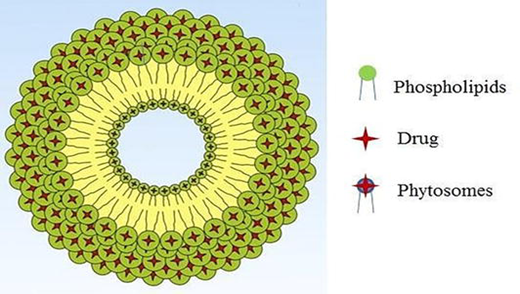
Figure 1: Structure of Phytosome10

  1. DIFFERENCE BETWEEN PHYTOSOMES AND LIPOSOMES

Table: 1 Difference between Phytosomes and Liposomes

Feature

Phytosomes

Liposomes

Citation

Basic nature

Molecular complex of phytochemical with phospholipid

Closed phospholipid bilayer vesicle

9,11

Main purpose

Enhance solubility, permeability and bioavailability of herbal phytochemicals

General carrier for many hydrophilic and lipophilic drugs

9,11,12

Drug location

Phytochemical closely associated with/complexed to phospholipid (improves membrane affinity)

Drug dissolved in aqueous core or within bilayer, not necessarily complexed

7,13

Typical cargo

Plant polyphenols and other phytochemicals (e.g., silymarin, quercetin)

Small?molecule drugs, peptides, nucleic acids, extracts, etc.

9,11,14

Bioavailability effect

Often produces large increases in oral or topical bioavailability vs. free extract

Improves delivery but effect depends strongly on formulation and drug

9,14

Stability & release

Good interaction with phytochemicals; release can be faster than liposomes

Often higher physical stability with slower release

13

Example applications

Meriva®(Curcumin Phytosome) used for Anti-inflammatory, joint health, and antioxidant support

Doxil® (Doxorubicin HCl Liposome Injection for  Treatment of ovarian cancer, AIDS-related Kaposi's sarcoma, and multiple myeloma.

15,16

4. COMPONENTS OF PHYTOSOME

  1. Phytoconstituent / plant extract (hydrophilic part)
  • Standardized plant extract or pure phytochemical, most often polyphenols such as flavonoids, terpenoids, tannins, xanthones 
  • Examples: Silymarin, Quercetin, Catechin, Curcumin, Green Tea Polyphenols, Ginsenosides 2,17,18
  1. Phospholipid (lipid component)
  • Core structural component; usually phosphatidylcholine (PC) from soy or egg3,19
  • Other phospholipids that can be used: phosphatidylethanolamine, phosphatidylserine, phosphatidylinositol3,20.

Phytosomes are formed by hydrogen bonding between the polar head of the phospholipid  and polar groups (–OH, –COOH, –NH?) of the phytoconstituent2,21,22

  1. Solvent system (for complex formation)
  • Complex is produced by reacting extract and phospholipid in aprotic or non?polar organic solvents such as dioxane, acetone, ethanol, methanol, chloroform, dichloromethane, or hexane, depending on method 2,11,21,23
  • Solvent is later removed (rotary evaporation, lyophilization), leaving the solid phytosomal complex2,21.
  1. Optional excipients (formulation dependent)
  • Stabilizers / antioxidants (e.g., vitamin E, butylated hydroxytoluene) to protect lipids and polyphenols from oxidation 24,25
  • Cryoprotectants like mannitol or sugars when freeze?drying26
  • Surfactants or polymers in advanced systems to adjust surface charge or stability 24,25

5. METHODS OF PREPARATION OF PHYTOSOMES FOR HERBAL DRUG DELIVERY

Phytosomes are prepared by reacting herbal extracts or purified phytoconstituents with phospholipids (mainly phosphatidylcholine) in suitable organic solvents, then removing the solvent and processing the resulting phyto?phospholipid complex into a dosage form. The main methods used for herbal drug delivery are solvent evaporation / thin?film hydration, anti?solvent precipitation, solvent ether injection, co?solvent lyophilization / freeze?drying and spray?drying6,27–30

  1. Solvent Evaporation/ Thin?Film Hydration

In the solvent evaporation / thin film method, the extract and phospholipid are dissolved in a common organic solvent (e.g., methylene chloride, dioxane, ethanol), often in a 1:1 or 1:2 molar ratio, then the solvent is removed under reduced pressure to form a thin film or solid complex that can be hydrated to give phytosomal vesicles6,29,31 This is the most commonly reported technique for phytosomes of silymarin, ginkgo, green tea, and many other herbal drugs 2,6,32

  1. Anti Solvent Precipitation

In anti solvent precipitation, the extract–phospholipid solution in a miscible organic solvent is added to a non solvent (e.g., n hexane), leading to precipitation of the complex, which is then filtered and dried28,30,31 

  1. Solvent Ether Injection

Solvent ether (or solvent) injection involves injecting an organic solution of phospholipid and phytoconstituent into an aqueous phase, where rapid diffusion of solvent induces spontaneous formation of nano sized phytosomes 27,28

  1. Freeze Drying / Co Solvent Lyophilization

To improve stability and handling, these primary complexes can be further processed by freeze drying or co solvent lyophilization, in which the organic solvent is removed and the dispersion is lyophilized, often with cryoprotectants27–29 

  1. Spray Drying / Vacuum Drying

Spray drying or vacuum drying are also used to obtain free flowing phytosomal powders suitable for solid oral dosage forms. 29,30Choice of method affects particle size, entrapment efficiency, yield and release behaviour, and is selected according to the herbal drug’s solubility and the intended route (oral, topical, transdermal).28,33,34

  1. KEY CHARACTERISATION / EVALUATION PARAMETERS FOR PHYTOSOMES

For herbal phytosome products, characterisation focuses on confirming complex formation, nanosystem quality, and in vitro performance.

1. Basic physicochemical characterisation

Core critical quality attributes:

    • Particle size & size distribution (PDI)

Dynamic light scattering is routinely used to determine mean size and polydispersity; size strongly influences stability, skin/oral absorption and biodistribution2,9,35

    • Zeta potential (surface charge)

Indicates electrostatic stability; sufficient magnitude (positive or negative) helps prevent aggregation and predicts shelf stability and behavior at biological interfaces 2,35,36

    • Morphology and lamellarity

Transmission and scanning electron microscopy (TEM/SEM) provide information on vesicle shape, surface, and uni-/multilamellar structure, important for release behavior and stability.2,9,37

    • Chemical composition and complex formation

FTIR, DSC, NMR and X ray diffraction are used to confirm interactions (H bonding, ionic interactions) between phytoconstituents and phospholipids and to distinguish true phytosomes from simple physical mixtures.9,19,37

2. Encapsulation and drug loading

    • Encapsulation efficiency (EE%) and drug loading

Quantified (typically by HPLC/UV) after separating free drug (dialysis, ultracentrifugation); EE% is a key indicator of formulation success and strongly affects dose and bioavailability.9,35,36

3. In vitro performance tests

    • In vitro release profile

Dialysis or diffusion studies in biorelevant media are used to determine release kinetics; sustained or improved release vs. crude extract is usually targeted.9,12,35

    • Stability studies

Monitoring size, PDI, zeta potential, EE%, and chemical integrity over time under different temperatures, pH, and light conditions evaluates physical/chemical stability and suitability for scale up.2,9,36,38

4. Biological evaluation (preclinical/clinical)

    • Permeation/uptake studies

Cell or skin models (for topical) and Caco 2/intestinal models (for oral) assess enhanced permeability versus plain extracts.7,9,39

    • Pharmacokinetics and bioavailability

Animal or human studies measuring Cmax, AUC, and t½ show consistently higher systemic exposure for phytosomes of curcumin, silymarin, quercetin and others compared with non complexed extracts.6,9,24,29

    • Pharmacodynamic/therapeutic endpoints

Disease specific models (anti inflammatory, anticancer, hepatoprotective, metabolic, etc.) compare efficacy and required dose versus conventional herbal formulations.8,9,12,24

    • Safety/biocompatibility

Cytotoxicity assays and in vivo toxicity profiles confirm that phospholipid complexes remain biocompatible and do not introduce new adverse effects relative to the parent herb.24,36,38

  1. ADVANTAGES AND LIMITATIONS PHYTOSOMES FOR HERBAL PRODUCTS

Phytosomes are phospholipid–plant extract complexes designed to overcome poor bioavailability of many herbal actives.

Advantages

  • Greatly enhanced bioavailability and absorption of poorly absorbed polyphenols (e.g., silymarin, curcumin, quercetin, resveratrol) versus crude extracts or simple capsules 9,35,40
  • Improved solubility and permeability across lipid?rich biological membranes (gut, skin), giving higher tissue levels at lower doses7,8,12,35
  • Protection from degradation (acid, enzymes, oxidation), leading to better stability and shelf life than conventional herbal formulations7,24,35
  • Dose sparing and fewer side?effects: higher pharmacological activity at reduced doses, with good biocompatibility due to use of physiological phospholipids 9,34,35,40,41
  • Versatile dosage forms: can be formulated as capsules, tablets, syrups, gels, creams and cosmetics 7,29,35
  • Food?grade/ nutraceutical positioning and existence of successful marketed products (e.g. Siliphos, Meriva, Greenselect, Casperome) support translational potential 7,9,35

Limitations and challenges

  • Formulation and stability issues: some systems are pH?sensitive, prone to instability or rapid drug leakage, complicating large?scale production and storage 7,9,12,42,43
  • Scale?up and manufacturing control: maintaining particle size, loading and reproducibility during industrial production is difficult; quality control must be rigorous9,42
  • Limited and heterogeneous clinical evidence: many data are preclinical; few well?designed head?to?head clinical trials versus non?phytosomal extracts exist, so superiority is not fully established across indications9,40
  • Regulatory and cost barriers: classification between drug/nutraceutical, lack of specific guidelines, and higher production costs may restrict broad adoption24,42,43
  • Safety still needs long?term validation: components are generally regarded as safe, but more chronic?use and high?dose clinical studies are required38,43
  1. MARKETED PHYTOSOMAL PRODUCTS FOR HERBAL DRUGS

A number of phytosome?based herbal products are already commercialized, mainly through the Indena “phytosome/ herbosome/ planterosome” platforms and similar technologies.

Table  2: Representative marketed phytosome products and indications.

Product / trade name

Main herb / active

Main indication / use

Citations

Siliphos (silybin phytosome) / Legalon SIL, Silipide

Silybum marianum (silymarin/silybin)

Hepatoprotection in chronic liver disease, toxic liver injury, NAFLD; improved oral bioavailability vs. plain silymarin

9,39,44

Meriva / Curcumin phytosome

Curcuma longa (curcumin)

Anti?inflammatory and antioxidant; arthritis, joint pain, metabolic and cardiovascular support

9,25,35

Greenselect / GreenSelect Phytosome

Camellia sinensis (green tea catechins)

Weight management, metabolic syndrome, antioxidant and cardiovascular support

6,9,35

Ginkgoselect / Ginkgo biloba phytosome

Ginkgo biloba extract

Cognitive function, peripheral vascular disease, microcirculation

6,9,45,46

Leucoselect / grape seed phytosome

Vitis vinifera (proanthocyanidins)

Cardiovascular protection, antioxidant, capillary fragility

9,25,29

Mirtoselect / bilberry phytosome

Vaccinium myrtillus (anthocyanins)

Vision support, capillary health

6,9

Boswellia phytosome (e.g. Casperome)

Boswellia serrata acids

Anti?inflammatory, osteoarthritis, IBD adjunct

9,12,35

Ginseng, hawthorn, rutin, catechin phytosomes

Panax ginseng, Crataegus spp., etc.

Tonic, cardioprotective, antioxidant and cosmetic uses

6,29,46

  1. RECENT ADVANCES IN PHYTOSOMES FOR HERBAL DRUG DELIVERY
  1. Nanostructured and modified phytosomes
  • Nano?phytosomes and nanostructured phytosomes: downsizing to nanometer range enhances surface area, cellular uptake, and enables more precise control of release and targeting12,25,35
  • Surface?modified/stealth phytosomes (e.g., PEGylated, polymer?coated) are being explored to prolong circulation, reduce RES uptake and enable tumor or inflamed?tissue targeting, especially in cancer applications8,12,24,35
  • Food?grade and biopolymer hybrid systems: encapsulation of phytosomes into biopolymers (maltodextrin, gums, other GRAS excipients) via spray?drying has improved stability, flow properties and shelf life for oral and functional?food use35,47
  1. Therapeutic expansion
  • Strong growth in anticancer phytosomes (curcumin, quercetin, silybin, genistein, berberine, etc.), often as chemo?sensitizers or toxicity?reducing adjuncts8,12,24
  • Increasing work on topical phytosomes for anti?aging, photoprotection, wound healing and dermal delivery of polyphenols, with superior skin penetration vs. conventional extracts and liposomes6,7,9,29,46
  • Exploration in neurodegenerative, cardiometabolic, infectious and wound?healing indications, taking advantage of improved bioavailability and tissue targeting12,38
  1. FUTURE PROSPECTS

Across recent reviews, several converging directions are highlighted:

  • Intelligent / stimuli?responsive phytosomes: systems responsive to pH, redox or enzymes to release phytochemicals selectively at tumor or inflamed sites are proposed as a next step24,35
  • Personalised and precision herbal medicine: combining phytosomes with pharmacogenomics and disease phenotyping to tailor botanical combinations and doses to individuals2,35
  • Combination and co?loaded phytosomes: multi?herb or herb?drug co?encapsulation (e.g., curcumin + other polyphenols or chemotherapeutics) to exploit synergy and reduce conventional drug dosage8,24,35
  • Regulatory?grade manufacturing and quality control: emphasis on scalable, reproducible processes (e.g., spray drying, continuous manufacturing), robust characterization and ICH?compatible stability to transition from nutraceuticals to prescription phytopharmaceuticals9,25,48
  • Expanded clinical translation: reviews repeatedly call for larger, well?designed RCTs directly comparing phytosomes with non?phytosomal herbal products to confirm advantages in hard clinical endpoints rather than just PK improvements 8,24,38

Overall, phytosomes are positioned as a maturing platform that already supports multiple marketed herbal products, with current research pushing toward nano?engineered, targeted and personalized phytosomal systems capable of meeting pharmaceutical regulatory standards.

CONCLUSION

Phytosome technology represents an important advancement in herbal drug delivery by overcoming key limitations of conventional formulations, such as poor solubility, permeability, and bioavailability of phytoconstituents. Complexation with phospholipids enhances the absorption, stability, and therapeutic efficacy of bioactive compounds like curcumin, silymarin, quercetin, and green tea polyphenols while maintaining safety due to the biocompatible nature of phospholipids. Phytosomes have demonstrated improved pharmacokinetic and pharmacodynamic profiles across various therapeutic applications, including hepatoprotection, inflammation, cancer, cardiovascular disorders, and cosmeceuticals, with several products already commercialized. Despite these advantages, challenges related to large-scale manufacturing, quality control, regulatory approval, and limited clinical evidence remain, highlighting the need for standardized production methods and well-designed clinical trials. Overall, phytosomes effectively bridge traditional herbal medicine and modern nanotechnology, offering a promising platform for future phytopharmaceutical and nutraceutical development

REFERENCES

              1. Nsairat, H. et al. Phytosomes: a modernistic approach to the delivery of herbal drugs. Advanced and Modern approaches for Drug Delivery 301–355 (2023) doi:10.1016/B978-0-323-91668-4.00029-0.
              2. Lakshmi, K. V. N., Satya, N., Reddy, J. K. & Narendra, D. Nature Meets Nanotechnology: Evolution of Phytosomes. International Journal of Pharmaceutics and Drug Analysis 26–34 (2025) doi:10.47957/IJPDA.V13I2.628.
              3. Mehta, G., Rani, R., Pal, A., Amar, S. & & Singh, P. Phytosomes:An Overview. International Journal of Pharmaceutics and Drug Analysis 65–71 (2024) doi:10.47957/IJPDA.V12I1.578.
              4. Khabarov, I. A. et al. Phytosomes – an Effective Drug-Delivery System. Development, Technology, Application. Eurasian Chemico-Technological Journal 26, 233–243 (2024).
              5. Lakshmi, K. V. N., Satya, N., Reddy, J. K. & Narendra, D. Nature Meets Nanotechnology: Evolution of Phytosomes. International Journal of Pharmaceutics and Drug Analysis 26–34 (2025) doi:10.47957/IJPDA.V13I2.628.
              6. Kumar, A., Kumar, B., Singh, S. K., Kaur, B. & Singh, S. A REVIEW ON PHYTOSOMES: NOVEL APPROACH FOR HERBAL PHYTOCHEMICALS. Asian Journal of Pharmaceutical and Clinical Research 10, 41–47 (2017).
              7. Alharbi, W. S. et al. Phytosomes as an Emerging Nanotechnology Platform for the Topical Delivery of Bioactive Phytochemicals. Pharmaceutics 13, (2021).
              8. Chaudhary, K. & Rajora, A. Phytosomes: a critical tool for delivery of herbal drugs for cancer: Phytosomes: Advancing Herbal Medicine Delivery. Phytochemistry Reviews 24, 165–195 (2025).
              9. Barani, M. et al. Phytosomes as Innovative Delivery Systems for Phytochemicals: A Comprehensive Review of Literature. Int. J. Nanomedicine 16, 6983–7022 (2021).
              10. Vishwakarma, D. K. et al. Phytosomes as a Novel Approach to Drug Delivery System. https://doi.org/10.5772/INTECHOPEN.113914 (2024) doi:10.5772/INTECHOPEN.113914.
              11. Lu, H., Zhang, S., Wang, J. & Chen, Q. A Review on Polymer and Lipid-Based Nanocarriers and Its Application to Nano-Pharmaceutical and Food-Based Systems. Front. Nutr. 8, (2021).
              12. Gaikwad, S. S. et al. Overview of phytosomes in treating cancer: Advancement, challenges, and future outlook. Heliyon 9, e16561 (2023).
              13. Mancini, S. et al. Functionalized liposomes and phytosomes loading Annona muricata L. aqueous extract: Potential nanoshuttles for brain-delivery of phenolic compounds. Phytomedicine 42, 233–244 (2018).
              14. Shriram, R. G. et al. Phytosomes as a Plausible Nano-Delivery System for Enhanced Oral Bioavailability and Improved Hepatoprotective Activity of Silymarin. Pharmaceuticals 15, (2022).
              15. Curcumin Phytosome ® Meriva ® Low-level chronic inflammation. Pioneering a contemporary approach to turmeric.
              16. Doxil (doxorubicin HCl liposome injection) for Hospital Care | Baxter. https://www.baxter.com/doxil-doxorubicin-hcl-liposome-injection-hospital-care.
              17. Mehmood, H. Phytosome as a Novel Carrier for Delivery of Phytochemicals: A Comprehensive Review. Middle East Journal of Applied Science & Technology 06, 21–51 (2023).
              18. Sakure, K., Patel, A., Pradhan, M. & Badwaik, H. R. Recent Trends and Future Prospects of Phytosomes: A Concise Review. Indian J. Pharm. Sci. 86, (2024).
              19. Saritha, M., Ramya, A., Sonia, A., Monika, S. & Sowmya, K. Phytosomes: A Novel approach for improving the efficacy of Herbal Extracts. Res. J. Pharm. Technol. 16, 6028–6031 (2023).
              20. Deepti Dwivedi, Alok Kumar Shukla & Satya Prakash Singh. Phytosomes - An emerging approach for effective management of Dermatological Disorder. International Journal of Research in Pharmaceutical Sciences 13, 8–14 (2022).
              21. Mehmood, H. Phytosome as a Novel Carrier for Delivery of Phytochemicals: A Comprehensive Review. Middle East Journal of Applied Science & Technology 06, 21–51 (2023).
              22. Hashemzadeh, H., Hanafi-Bojd, M. Y., Iranshahy, M., Zarban, A. & Raissi, H. The combination of polyphenols and phospholipids as an efficient platform for delivery of natural products. Scientific Reports 2023 13:1 13, 2501- (2023).
              23. Raghav, A., Attri, M. & Chaudhary, H. Review of Phytosomes and Ethosomes: Groundbreaking Approaches for Delivering the Phytochemical Components of Plants. Curr. Drug Deliv. 22, 666–677 (2025).
              24. Chauhan, D. et al. Advancements in nanotechnology for the delivery of phytochemicals. J. Integr. Med. 22, 385–398 (2024).
              25. Hari Priya, V. M. & Kumaran, A. Recent Trends in Phytosome Nanocarriers for Improved Bioavailability and Uptake of Herbal Drugs. Pharmaceutical Sciences 29, 298–319 (2023).
              26. Deleanu, M. et al. Formulation of Phytosomes with Extracts of Ginger Rhizomes and Rosehips with Improved Bioavailability, Antioxidant and Anti-Inflammatory Effects In Vivo. Pharmaceutics 15, (2023).
              27. Kamireddy, S., Sangeetha, S. & Kosanam, S. Phytosomal Drug Delivery System: A Detailed Study. Current Traditional Medicine 10, 28–35 (2023).
              28. Pahwa, R. et al. Insights into various approaches of Phytosomes for Enhanced Therapeutic Potential of Bioactives. Res. J. Pharm. Technol. 15, 4277–4282 (2022).
              29. Dwivedi, J. et al. Phytosome based cosmeceuticals for enhancing percutaneous absorption and delivery. Journal of Research in Pharmacy 29, 242–271 (2025).
              30. Karata?, A. & Turhan, F. Phyto-Phospholipid Complexes as Drug Delivery System for Herbal Extracts/Molecules. Turk J Pharm Sci 12, 93–102 (2015).
              31. Joshi, R., & Bhardwaj, M. (2019). Novel Approach on Herbal Drug Delivery System: Phytosome A Brief Overview. **.
              32. Gnananath, K., Nataraj, K. S. & Rao, B. G. Phospholipid Complex Technique for Superior Bioavailability of Phytoconstituents. Adv. Pharm. Bull. 7, 35–42 (2017).
              33. Danish, I. Phytosome: Recent Investigation for a New Drug Delivery System. International Journal of Newgen Research in Pharmacy & Healthcare 163–175 (2024) doi:10.61554/IJNRPH.V2I1.2024.61.
              34. Kanojiya, D., Parmar, G., Chauhan, B., Gondalia, S. & Rakholiya, M. Phytosomes: A Contemporary Method for Delivering Novel Herbal Drugs. Journal of Natural Remedies 24, 239–253 (2024).
              35. Mavi, N., Sharma, P. K. & Gupta, D. K. Phytosomes: Bridging Nature And Nanotechnology For Enhanced Drug Delivery. Int. J. Environ. Sci. 11, 801–818 (2025).
              36. Gondake, R. D. et al. Phytosomes as a Biocompatible Delivery System for Herbal Medicines. Res. J. Pharm. Technol. 17, 4621–4629 (2024).
              37. Poudyal, A. et al. A  Comprehensive Review on Phytosomes: A Novel Drug Delivery System of Phytoconstituents. Int. J. Life Sci. Pharma Res. P143–P161 (2022) doi:10.22376/IJPBS/LPR.2022.12.5.P143-161.
              38. Koppula, S., Shaik, B. & Maddi, S. Phytosomes as a New Frontier and Emerging Nanotechnology Platform for Phytopharmaceuticals: Therapeutic and Clinical Applications. Phytotherapy Research 39, 2217–2249 (2025).
              39. Patel, P., Modi, C., Patel, H., Patel, U., Ramchandani, D., Patel, H., & Paida, B. (2023). Phytosome: An Emerging Technique for Improving Herbal Drug Delivery. The Journal of Phytopharmacology
              40. Surendra Kumar, M. et al. Phytosomes: nature’s secret to enhanced bioavailability. Journal of Applied Pharmaceutical Research 12, 88–99 (2024).
              41. Deniz, F. S. S., Demiroz, F. N. T., Ulutas, O. K. & Orhan, I. E. Phytosomes-Unraveling the Unique Properties of Plant-Derived Nanotechnological Drug Delivery Systems: A Review. Curr. Med. Chem. 32, 3088–3105 (2025).
              42. Jacob, S., Kather, F. S., Boddu, S. H. S., Rao, R. & Nair, A. B. Vesicular Carriers for Phytochemical Delivery: A Comprehensive Review of Techniques and Applications. Pharmaceutics 2025, Vol. 17, Page 464 17, 464 (2025).
              43. Sadr, S. et al. Phytosome-based nanotechnology for enhanced efficacy of anticancer phytocompounds: Challenges and prospects. J. Drug Deliv. Sci. Technol. 104, 106543 (2025).
              44. Kumar, A., Kumar, B., Singh, S. K., Kaur, B. & Singh, S. A Review On Phytosomes: Novel Approach For Herbal PhytochemicalS. Asian Journal of Pharmaceutical and Clinical Research 10, 41–47 (2017).
              45. Edulakanti, A. Phytosomes: An emerging trend for herbal drug delivery. International Journal of Pharmacognosy and Pharmaceutical Sciences 5, 08–12 (2023).
              46. Khanzode, M. B. et al. Review on phytosomes: A novel drug delivery system. https://gsconlinepress.com/journals/gscbps/sites/default/files/GSCBPS-2020-0345.pdf 13, 203–211 (2020).
              47. Anant Bansode, A., Dinesh Vyas, U., Mugale, V., Pralhad Bamankar, S. & Waghmare, P. C. Phytosomes: Modern Approach to the Delivery of Herbal Drugs. International Journal of Advanced Research in Science, Communication and Technology (IJARSCT) International Open-Access, Double-Blind, Peer-Reviewed, Refereed, Multidisciplinary Online Journal 5, (2025).
              48. Ramkishor Jadhav, S. et al. Novel Drug Delivery Systems for Delivery of Herbal Medicine. International Journal of Advanced Research in Science, Communication and Technology (IJARSCT) 3, (2023).

Reference

  1. Nsairat, H. et al. Phytosomes: a modernistic approach to the delivery of herbal drugs. Advanced and Modern approaches for Drug Delivery 301–355 (2023) doi:10.1016/B978-0-323-91668-4.00029-0.
  2. Lakshmi, K. V. N., Satya, N., Reddy, J. K. & Narendra, D. Nature Meets Nanotechnology: Evolution of Phytosomes. International Journal of Pharmaceutics and Drug Analysis 26–34 (2025) doi:10.47957/IJPDA.V13I2.628.
  3. Mehta, G., Rani, R., Pal, A., Amar, S. & & Singh, P. Phytosomes:An Overview. International Journal of Pharmaceutics and Drug Analysis 65–71 (2024) doi:10.47957/IJPDA.V12I1.578.
  4. Khabarov, I. A. et al. Phytosomes – an Effective Drug-Delivery System. Development, Technology, Application. Eurasian Chemico-Technological Journal 26, 233–243 (2024).
  5. Lakshmi, K. V. N., Satya, N., Reddy, J. K. & Narendra, D. Nature Meets Nanotechnology: Evolution of Phytosomes. International Journal of Pharmaceutics and Drug Analysis 26–34 (2025) doi:10.47957/IJPDA.V13I2.628.
  6. Kumar, A., Kumar, B., Singh, S. K., Kaur, B. & Singh, S. A REVIEW ON PHYTOSOMES: NOVEL APPROACH FOR HERBAL PHYTOCHEMICALS. Asian Journal of Pharmaceutical and Clinical Research 10, 41–47 (2017).
  7. Alharbi, W. S. et al. Phytosomes as an Emerging Nanotechnology Platform for the Topical Delivery of Bioactive Phytochemicals. Pharmaceutics 13, (2021).
  8. Chaudhary, K. & Rajora, A. Phytosomes: a critical tool for delivery of herbal drugs for cancer: Phytosomes: Advancing Herbal Medicine Delivery. Phytochemistry Reviews 24, 165–195 (2025).
  9. Barani, M. et al. Phytosomes as Innovative Delivery Systems for Phytochemicals: A Comprehensive Review of Literature. Int. J. Nanomedicine 16, 6983–7022 (2021).
  10. Vishwakarma, D. K. et al. Phytosomes as a Novel Approach to Drug Delivery System. https://doi.org/10.5772/INTECHOPEN.113914 (2024) doi:10.5772/INTECHOPEN.113914.
  11. Lu, H., Zhang, S., Wang, J. & Chen, Q. A Review on Polymer and Lipid-Based Nanocarriers and Its Application to Nano-Pharmaceutical and Food-Based Systems. Front. Nutr. 8, (2021).
  12. Gaikwad, S. S. et al. Overview of phytosomes in treating cancer: Advancement, challenges, and future outlook. Heliyon 9, e16561 (2023).
  13. Mancini, S. et al. Functionalized liposomes and phytosomes loading Annona muricata L. aqueous extract: Potential nanoshuttles for brain-delivery of phenolic compounds. Phytomedicine 42, 233–244 (2018).
  14. Shriram, R. G. et al. Phytosomes as a Plausible Nano-Delivery System for Enhanced Oral Bioavailability and Improved Hepatoprotective Activity of Silymarin. Pharmaceuticals 15, (2022).
  15. Curcumin Phytosome ® Meriva ® Low-level chronic inflammation. Pioneering a contemporary approach to turmeric.
  16. Doxil (doxorubicin HCl liposome injection) for Hospital Care | Baxter. https://www.baxter.com/doxil-doxorubicin-hcl-liposome-injection-hospital-care.
  17. Mehmood, H. Phytosome as a Novel Carrier for Delivery of Phytochemicals: A Comprehensive Review. Middle East Journal of Applied Science & Technology 06, 21–51 (2023).
  18. Sakure, K., Patel, A., Pradhan, M. & Badwaik, H. R. Recent Trends and Future Prospects of Phytosomes: A Concise Review. Indian J. Pharm. Sci. 86, (2024).
  19. Saritha, M., Ramya, A., Sonia, A., Monika, S. & Sowmya, K. Phytosomes: A Novel approach for improving the efficacy of Herbal Extracts. Res. J. Pharm. Technol. 16, 6028–6031 (2023).
  20. Deepti Dwivedi, Alok Kumar Shukla & Satya Prakash Singh. Phytosomes - An emerging approach for effective management of Dermatological Disorder. International Journal of Research in Pharmaceutical Sciences 13, 8–14 (2022).
  21. Mehmood, H. Phytosome as a Novel Carrier for Delivery of Phytochemicals: A Comprehensive Review. Middle East Journal of Applied Science & Technology 06, 21–51 (2023).
  22. Hashemzadeh, H., Hanafi-Bojd, M. Y., Iranshahy, M., Zarban, A. & Raissi, H. The combination of polyphenols and phospholipids as an efficient platform for delivery of natural products. Scientific Reports 2023 13:1 13, 2501- (2023).
  23. Raghav, A., Attri, M. & Chaudhary, H. Review of Phytosomes and Ethosomes: Groundbreaking Approaches for Delivering the Phytochemical Components of Plants. Curr. Drug Deliv. 22, 666–677 (2025).
  24. Chauhan, D. et al. Advancements in nanotechnology for the delivery of phytochemicals. J. Integr. Med. 22, 385–398 (2024).
  25. Hari Priya, V. M. & Kumaran, A. Recent Trends in Phytosome Nanocarriers for Improved Bioavailability and Uptake of Herbal Drugs. Pharmaceutical Sciences 29, 298–319 (2023).
  26. Deleanu, M. et al. Formulation of Phytosomes with Extracts of Ginger Rhizomes and Rosehips with Improved Bioavailability, Antioxidant and Anti-Inflammatory Effects In Vivo. Pharmaceutics 15, (2023).
  27. Kamireddy, S., Sangeetha, S. & Kosanam, S. Phytosomal Drug Delivery System: A Detailed Study. Current Traditional Medicine 10, 28–35 (2023).
  28. Pahwa, R. et al. Insights into various approaches of Phytosomes for Enhanced Therapeutic Potential of Bioactives. Res. J. Pharm. Technol. 15, 4277–4282 (2022).
  29. Dwivedi, J. et al. Phytosome based cosmeceuticals for enhancing percutaneous absorption and delivery. Journal of Research in Pharmacy 29, 242–271 (2025).
  30. Karata?, A. & Turhan, F. Phyto-Phospholipid Complexes as Drug Delivery System for Herbal Extracts/Molecules. Turk J Pharm Sci 12, 93–102 (2015).
  31. Joshi, R., & Bhardwaj, M. (2019). Novel Approach on Herbal Drug Delivery System: Phytosome A Brief Overview. **.
  32. Gnananath, K., Nataraj, K. S. & Rao, B. G. Phospholipid Complex Technique for Superior Bioavailability of Phytoconstituents. Adv. Pharm. Bull. 7, 35–42 (2017).
  33. Danish, I. Phytosome: Recent Investigation for a New Drug Delivery System. International Journal of Newgen Research in Pharmacy & Healthcare 163–175 (2024) doi:10.61554/IJNRPH.V2I1.2024.61.
  34. Kanojiya, D., Parmar, G., Chauhan, B., Gondalia, S. & Rakholiya, M. Phytosomes: A Contemporary Method for Delivering Novel Herbal Drugs. Journal of Natural Remedies 24, 239–253 (2024).
  35. Mavi, N., Sharma, P. K. & Gupta, D. K. Phytosomes: Bridging Nature And Nanotechnology For Enhanced Drug Delivery. Int. J. Environ. Sci. 11, 801–818 (2025).
  36. Gondake, R. D. et al. Phytosomes as a Biocompatible Delivery System for Herbal Medicines. Res. J. Pharm. Technol. 17, 4621–4629 (2024).
  37. Poudyal, A. et al. A  Comprehensive Review on Phytosomes: A Novel Drug Delivery System of Phytoconstituents. Int. J. Life Sci. Pharma Res. P143–P161 (2022) doi:10.22376/IJPBS/LPR.2022.12.5.P143-161.
  38. Koppula, S., Shaik, B. & Maddi, S. Phytosomes as a New Frontier and Emerging Nanotechnology Platform for Phytopharmaceuticals: Therapeutic and Clinical Applications. Phytotherapy Research 39, 2217–2249 (2025).
  39. Patel, P., Modi, C., Patel, H., Patel, U., Ramchandani, D., Patel, H., & Paida, B. (2023). Phytosome: An Emerging Technique for Improving Herbal Drug Delivery. The Journal of Phytopharmacology
  40. Surendra Kumar, M. et al. Phytosomes: nature’s secret to enhanced bioavailability. Journal of Applied Pharmaceutical Research 12, 88–99 (2024).
  41. Deniz, F. S. S., Demiroz, F. N. T., Ulutas, O. K. & Orhan, I. E. Phytosomes-Unraveling the Unique Properties of Plant-Derived Nanotechnological Drug Delivery Systems: A Review. Curr. Med. Chem. 32, 3088–3105 (2025).
  42. Jacob, S., Kather, F. S., Boddu, S. H. S., Rao, R. & Nair, A. B. Vesicular Carriers for Phytochemical Delivery: A Comprehensive Review of Techniques and Applications. Pharmaceutics 2025, Vol. 17, Page 464 17, 464 (2025).
  43. Sadr, S. et al. Phytosome-based nanotechnology for enhanced efficacy of anticancer phytocompounds: Challenges and prospects. J. Drug Deliv. Sci. Technol. 104, 106543 (2025).
  44. Kumar, A., Kumar, B., Singh, S. K., Kaur, B. & Singh, S. A Review On Phytosomes: Novel Approach For Herbal PhytochemicalS. Asian Journal of Pharmaceutical and Clinical Research 10, 41–47 (2017).
  45. Edulakanti, A. Phytosomes: An emerging trend for herbal drug delivery. International Journal of Pharmacognosy and Pharmaceutical Sciences 5, 08–12 (2023).
  46. Khanzode, M. B. et al. Review on phytosomes: A novel drug delivery system. https://gsconlinepress.com/journals/gscbps/sites/default/files/GSCBPS-2020-0345.pdf 13, 203–211 (2020).
  47. Anant Bansode, A., Dinesh Vyas, U., Mugale, V., Pralhad Bamankar, S. & Waghmare, P. C. Phytosomes: Modern Approach to the Delivery of Herbal Drugs. International Journal of Advanced Research in Science, Communication and Technology (IJARSCT) International Open-Access, Double-Blind, Peer-Reviewed, Refereed, Multidisciplinary Online Journal 5, (2025).
  48. Ramkishor Jadhav, S. et al. Novel Drug Delivery Systems for Delivery of Herbal Medicine. International Journal of Advanced Research in Science, Communication and Technology (IJARSCT) 3, (2023).

Photo
Aswathi D
Corresponding author

Crescent College of Pharmaceutical Sciences, Kannur, Kerala, India.

Photo
Rahana Raveendran
Co-author

Crescent College of Pharmaceutical Sciences, Kannur, Kerala, India.

Photo
Kavya Raveendran
Co-author

Crescent College of Pharmaceutical Sciences, Kannur, Kerala, India.

Photo
Aiswariya A
Co-author

Crescent College of Pharmaceutical Sciences, Kannur, Kerala, India.

Photo
Aswathi P
Co-author

Crescent College of Pharmaceutical Sciences, Kannur, Kerala, India.

Rahana Raveendran, Aswathi D, Kavya Raveendran, Aiswariya A, Aswathi P, Phytosome: Unlocking the Therapeutic Potential of Herbal Phytoconstituents, Int. J. of Pharm. Sci., 2026, Vol 4, Issue 2, 4686-4696. https://doi.org/10.5281/zenodo.18817283

More related articles
Impact and Challenges of Periodic Safety Update Re...
Sakshi Joshi, Arnab Majumedar, Bhavik Joshi, Vinit Movaliya, Bhav...
Gangrene: Early Detection, Emerging Therapies, and...
Faraz Pathan, Rubina Sheikh, Ayesha Siddiqua, Ashna Khan, Sana Ma...
Related Articles
A Review Article of Clinical Research Studies and Pharmacovigilance for Healthca...
Sonawane Diksha, Kandalkar Nilam, Gangawane Khushi, Bhandalkar Gauri, Sonawane Kajol, ...
Pharmacokinetics And Pharmacodynamics of Warfarin in Critically Ill Hematologica...
Rafael Pajaro Mojica, Luis Navarro Falx, Daniela Zuluaga Ramos, Luis Gutierrez Romero, Dayanna Maza ...
A Systematic Review of The Association Between Adulthood and Psychological Stres...
Jennila Meghana, Bhadrachalam Rohini, Sanjana Sahu, Paila Bhanujirao, ...
Impact and Challenges of Periodic Safety Update Reporting ...
Sakshi Joshi, Arnab Majumedar, Bhavik Joshi, Vinit Movaliya, Bhavik Joshi, ...
More related articles
Impact and Challenges of Periodic Safety Update Reporting ...
Sakshi Joshi, Arnab Majumedar, Bhavik Joshi, Vinit Movaliya, Bhavik Joshi, ...
Gangrene: Early Detection, Emerging Therapies, and The Role of Artificial Intell...
Faraz Pathan, Rubina Sheikh, Ayesha Siddiqua, Ashna Khan, Sana Malik, Prerona Das, ...
Impact and Challenges of Periodic Safety Update Reporting ...
Sakshi Joshi, Arnab Majumedar, Bhavik Joshi, Vinit Movaliya, Bhavik Joshi, ...
Gangrene: Early Detection, Emerging Therapies, and The Role of Artificial Intell...
Faraz Pathan, Rubina Sheikh, Ayesha Siddiqua, Ashna Khan, Sana Malik, Prerona Das, ...