
View Article

Abstract

Quality by Design (QbD) has emerged as a transformative approach in pharmaceutical development, aiming to build quality into products from the earliest stages. Unlike traditional quality assurance methods that rely heavily on end-product testing, QbD emphasizes a thorough understanding of processes, identification of critical quality attributes (CQAs), and control strategies based on risk assessment and scientific rationale. This review explores the fundamental principles of QbD, its application across various stages of pharmaceutical development, and the regulatory framework supporting its implementation. Key components such as Design of Experiments (DoE), risk management tools, and the use of process analytical technology (PAT) are discussed in detail. The article also highlights the benefits and challenges of adopting QbD, including improved product consistency, regulatory flexibility, and resource optimization. Through this comprehensive overview, the review aims to provide insights into the evolving landscape of pharmaceutical quality management and the pivotal role of QbD in ensuring patient safety and product efficiency. Definition: Quality by Design (QbD) is a systematic approach to pharmaceutical development that emphasizes designing and building quality into a product from the beginning and process understanding and controls based on sound science Quality risk management (ICHQ8)

Keywords

Quality by Design (QBD), pharmaceutical development, critical quality attributes (CQAs), risk assessment, design space, process analytical technology (PAT), control strategy, process understanding, design of experiments (DoE), regulatory compliance, continuous improvement, product lifecycle management

Introduction

Quality by Design (QbD) is a systematic, science-based approach to pharmaceutical development that emphasizes building quality into a product from the earliest stages, rather than relying solely on end-product testing. The concept was introduced by the U.S. Food and Drug Administration (FDA) as part of its initiative to modernize pharmaceutical manufacturing and ensure consistent product performance. QbD aims to understand how formulation components, process parameters, and material attributes collectively influence the critical quality attributes (CQAs) of a drug product. The foundation of QbD lies in the principle that quality should be designed into a product rather than tested into it. This approach integrates comprehensive risk assessment, experimental design, and process understanding to ensure that the final product consistently meets its intended performance. Key elements of QbD include defining a Quality Target Product Profile (QTPP), identifying Critical Quality Attributes (CQAs), determining Critical Material Attributes (CMAs) and Critical Process Parameters (CPPs), and establishing a design space within which consistent quality can be achieved. By applying QbD principles, pharmaceutical companies can develop more robust and efficient manufacturing processes. This not only enhances product quality and patient safety but also provides regulatory flexibility and facilitates continuous improvement. Regulatory agencies such as the FDA and the European Medicines Agency (EMA) encourage the adoption of QbD to promote innovation, reduce variability, and streamline product lifecycle management. In summary, QbD represents a paradigm shift from traditional quality assurance methods toward a proactive, knowledge-driven framework. It enables better control of product and process variability, ultimately leading to higher confidence in pharmaceutical quality and improved outcomes for patients.
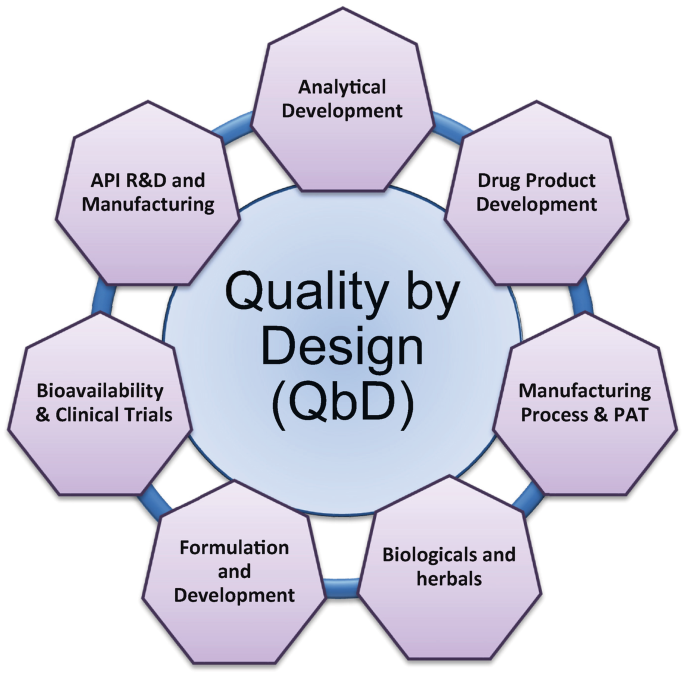
Concepts Of QBD:

Quality target product profile:

In the pharmaceutical development process, the Quality Target Product Profile (QTPP) serves as the cornerstone of the Quality by Design (QbD) approach. It outlines the critical quality attributes that define the desired performance, safety, and efficacy of a pharmaceutical product. QTPP provides a prospective summary of the quality characteristics that the final product should possess to ensure it meets the intended clinical objectives and regulatory requirements.

Definition:

According to the U.S. Food and Drug Administration (FDA), the QTPP is “a prospective summary of the quality characteristics of a drug product that ideally will be achieved to ensure the desired quality, taking into account safety and efficacy.”
In simple terms, the QTPP acts as a blueprint for product development, guiding formulation scientists and process engineers in designing and controlling the manufacturing process.

Role of QTPP in QbD:

In the QbD framework, the QTPP is the starting point for systematic product and process development. It drives the identification of:

Critical Quality Attributes (CQAs) of the product,

Critical Material Attributes (CMAs) and Critical Process Parameters (CPPs), and

The overall control strategy to maintain consistent product quality.

By clearly defining the QTPP at the early development stage, teams can ensure that all subsequent steps align with the intended therapeutic purpose and patient needs.

Key Elements of a QTPP

A typical QTPP includes the following parameters, tailored to the dosage form and route of administration:

Parameter

Description


Dosage form

Defines the physical form of the product (tablet, capsule, injection, etc.)


Route of administration

Specifies how the product will be delivered to the patient (oral, parenteral, topical, etc.)


Dosage strength

Indicates the amount of active pharmaceutical ingredient (API) per unit dose


Intended use or indication

Clarifies the therapeutic purpose of the product


Bioavailability and pharmacokinetics

Target levels to ensure desired therapeutic action


Stability

Desired shelf-life and storage conditions


Impurity limits

Acceptable levels of degradation products or residual solvents


Appearance and organoleptic properties

Includes color, taste, odor, and visual aspects


Container closure system

Must ensure product protection and compatibility


Safety and efficacy profile

Must be consistent with the intended therapeutic effect.


Relationship Between QTPP and CQAs:

Each element of the QTPP translates into one or more Critical Quality Attributes (CQAs)—the physical, chemical, biological, or microbiological properties that must be controlled to ensure the product meets its QTPP.
For example:

  • A QTPP goal for “rapid disintegration within 5 minutes” leads to identifying disintegration time as a CQA.
  • A QTPP requirement for “bioequivalence with reference product” connects to CQAs such as dissolution rate and content uniformity.

Design Space:

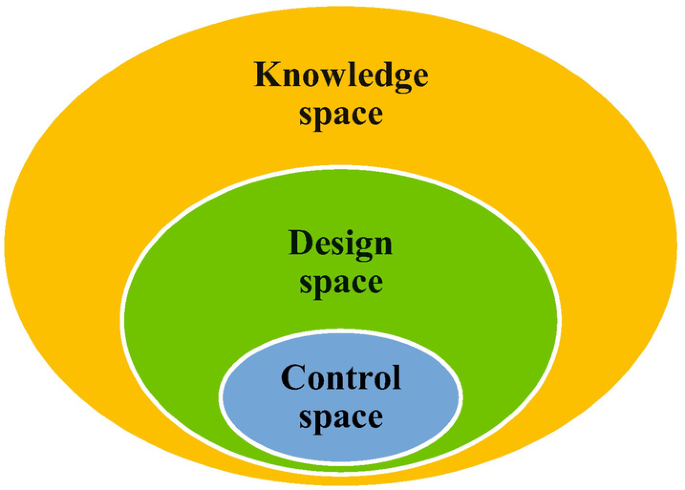
Design Space (DS) is a fundamental concept in the Quality by Design (QbD) framework, as outlined by the International Council for Harmonisation (ICH) guideline Q8 (R2). It represents the multidimensional combination and interaction of input variables (e.g., material attributes) and process parameters that have been demonstrated to assure product quality. Operating within the established design space is not considered a change, while movement outside the design space requires regulatory post-approval notification.

Definition:

According to ICH Q8 (R2):

“Design Space is the multidimensional region that links material attributes and process parameters with product quality.” It is developed through systematic experimentation and data analysis, establishing a relationship between critical process parameters (CPPs) and critical quality attributes (CQAs).

Role in QBD

The purpose of establishing a design space is to achieve a thorough process understanding and enhance flexibility in manufacturing. It allows manufacturers to make adjustments within the defined region without additional regulatory approvals, provided the product quality remains within acceptable limits.
Control Strategy:

The control strategy is a fundamental component of the Quality by Design (QbD) framework in pharmaceutical development and manufacturing. It refers to a planned set of controls, derived from product and process understanding, that ensures the final product consistently meets its quality attributes and regulatory requirements throughout the lifecycle. According to the International Council for Harmonisation (ICH) guideline Q10 and Q11, a control strategy is “a planned set of controls, derived from current product and process understanding that ensures process performance and product quality.”
The primary objective of the control strategy is to maintain a state of control by managing variability in raw materials, process parameters, and environmental conditions, thereby assuring the quality of the drug product.

Product Life Cycle Management And Continual Improvement:

Product Life Cycle Management (PLM) in Quality by Design (QbD) :

Product Life Cycle Management (PLM) is a systematic approach that encompasses all stages of a pharmaceutical product’s existence — from conception, development, and manufacturing to marketing, post-approval monitoring, and eventual discontinuation. Within the Quality by Design (QbD) framework, PLM ensures that product quality is maintained consistently throughout its lifecycle, while also supporting regulatory compliance and efficient knowledge management.

Continual Improvement in Quality by Design (QbD) :

Continual improvement is a core principle of both QbD and the ICH Q10 Pharmaceutical Quality System. It refers to the ongoing effort to enhance product quality, process efficiency, and regulatory compliance through data-driven decision-making and scientific understanding.

Regulatory agencies encourage continual improvement within the QbD framework, as it demonstrates a proactive commitment to quality. The ICH guidelines (Q8–Q12) advocate a science- and risk-based approach that enables flexibility in post-approval changes when supported by strong process understanding.

The synergy between PLM and continual improvement forms the backbone of modern pharmaceutical quality systems. PLM provides the framework for structured data and knowledge flow across all lifecycle stages, while continual improvement drives the dynamic evolution of processes based on that knowledge. Together, they enable a closed-loop control system where product and process understanding are continually enhanced — resulting in sustained compliance, reduced risk, and consistent delivery of high-quality products.

Tools of QbD:

The concept of qbd has two components -the science underlying the design and science of manufacturing. Upon understanding the elements of QbD it is important to familiar with the commonly used tools in QbD are:

Risk Assessment:

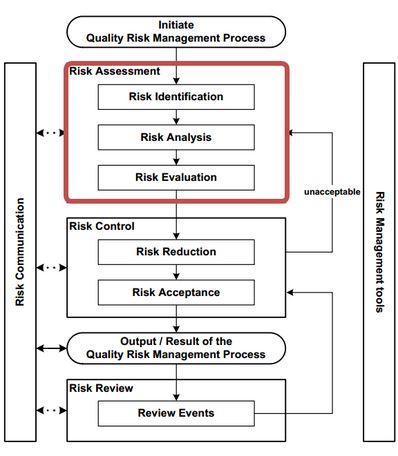
Risk assessment is a fundamental element of the Quality by Design (QbD) framework, as outlined by the International Conference on Harmonisation (ICH) guidelines, particularly ICH Q8 (R2), Q9, and Q10. Within QbD, risk assessment serves as a systematic process for identifying, analysing, and controlling variables that could affect the quality, safety, and efficacy of pharmaceutical products. Its ultimate goal is to ensure that product quality is built into the design and development process rather than tested at the end.

Steps in Risk Assessment Process

The risk assessment process in QbD typically includes three interrelated steps — risk identification, risk analysis, and risk evaluation — as recommended by ICH Q9.

Risk Identification

This step involves recognizing all possible variables, inputs, or process steps that may influence product quality. Sources of information may include prior knowledge, literature, laboratory studies, and manufacturing experience. Tools commonly used include:

  • Cause-and-Effect Diagrams (Ishikawa/Fishbone diagrams)
  • Failure Mode and Effects Analysis (FMEA)
  • Fault Tree Analysis (FTA)
    These tools help map relationships between process variables and quality attributes.

Risk Analysis

In this step, each identified risk is analyzed to estimate the likelihood of occurrence, the severity of its impact, and its detectability. This quantitative or qualitative evaluation helps in prioritizing risks. For instance:

  • FMEA assigns numerical scores for severity (S), occurrence (O), and detectability (D) to calculate a Risk Priority Number (RPN = S × O × D).
  • Probability–Impact Matrices classify risks as high, medium, or low based on probability and impact ratings.

Risk Evaluation

Here, the significance of each risk is compared against predetermined criteria or thresholds to decide which risks require control or mitigation. The evaluation supports defining the control strategy — determining which parameters must be tightly controlled and which can be more flexible within the design space.

Tools and Techniques for Risk Assessment in QbD

Several structured and semi-quantitative tools are used for risk assessment:

Tool/Method

Purpose

Typical Application

FMEA

Identify and prioritize potential failure modes

Manufacturing and formulation steps

FTA

Determine root causes of failures

Complex system analysis

Ishikawa Diagram

Visualize cause–effect relationships

Early-stage identification

HAZOP (Hazard and Operability Study)

Assess deviations from intended operation

Process design and scale-up

DOE (Design of Experiments)

Quantify and validate impact of factors

Establishing design space

Integration of these tools helps maintain a scientific and transparent approach to risk management.
Design Of Experiment (DoE):

Design of Experiments (DoE) is a fundamental statistical and systematic tool used within the Quality by Design (QbD) framework to understand the relationship between process variables and product quality attributes. It enables scientific product and process development by providing structured methods for exploring the influence of multiple factors simultaneously. Regulatory agencies such as the U.S. Food and Drug Administration (FDA) and the International Council for Harmonisation (ICH) recognize DoE as a critical element in establishing a robust design space, as outlined in ICH Q8 (R2).

Principles of DoE:

The foundation of DoE lies in three core principles:

  1. Randomization – minimizes bias and ensures independent data collection.
  2. Replication – improves precision and allows estimation of experimental error.
  3. Blocking – isolates the effects of nuisance factors.

These principles enable reliable statistical inference and improve the robustness of conclusions drawn from the experiments.

Data Analysis and Model Validation:

Statistical software (e.g., Design-Expert®, JMP®, Minitab®) is often used for data fitting and model validation. Model adequacy is verified through:

  • Analysis of Variance (ANOVA) for significance testing.
  • Residual analysis to confirm model assumptions.
  • Response surface plots to visualize factor interactions.
  • Desirability functions for multi-response optimization.

Validated models provide a quantitative understanding of the process and support risk-based decision-making.

Regulatory Perspective:

Regulatory guidelines such as ICH Q8 (R2), ICH Q9, and ICH Q10 encourage the use of DoE for pharmaceutical development. FDA’s Process Analytical Technology (PAT) framework also aligns with DoE-based approaches for real-time process control. Submitting DoE results in regulatory filings demonstrates scientific process understanding and facilitates flexible post-approval changes within the established design space.

Process Analytical Technology (PAT):

Pharmaceutical manufacturing has evolved from traditional end-product testing toward a science- and risk-based approach emphasizing product and process understanding. The Quality by Design (QbD) framework, introduced by the International Council for Harmonisation (ICH Q8–Q11), promotes the design of quality into products from the earliest stages of development. Within this framework, Process Analytical Technology (PAT) plays a crucial role as an enabling tool for achieving real-time process monitoring, control, and continuous improvement.

Concept of Process Analytical Technology (PAT) :

PAT is defined by the U.S. Food and Drug Administration (FDA) as “a system for designing, analysing, and controlling manufacturing through timely measurements of critical quality and performance attributes of raw and in-process materials and processes, to ensure final product quality.” PAT combines analytical tools, process analysers, data acquisition systems, and multivariate data analysis to monitor key process parameters (CPPs) and critical quality attributes (CQAs) in real time. The goal is to move from empirical batch testing toward real-time process control and assurance of quality.

Common PAT Tools and Techniques:

Technique

Measurement Type

Application

NIR Spectroscopy

Chemical composition

Blend uniformity, drying processes

Raman Spectroscopy

Molecular structure

Crystallinity, polymorphism

FTIR Spectroscopy

Functional group analysis

Reaction monitoring

UV–Vis Spectroscopy

Concentration analysis

Dissolution, content uniformity

Mass Spectrometry (MS)

Molecular weight, impurities

Biopharmaceutical process monitoring

Particle Size Analyzers (Laser Diffraction)

Physical attributes

Granulation, milling

Challenges:

Challenges Facing Quality by Design (QbD)

  1. Limited Understanding and Training
    Many researchers and industry personnel lack adequate knowledge and experience in QbD principles, making it difficult to apply them effectively.
  2. High Initial Cost and Time
    Implementing QbD requires significant investment in data collection, experimentation, and analysis, which increases early development costs and time.
  3. Complex Data Analysis
    QbD involves extensive statistical tools and risk assessment methods. Handling large amounts of data and interpreting results correctly can be challenging.
  4. Regulatory Uncertainty
    Although regulatory agencies encourage QbD, differences in guidelines and expectations between regions can create confusion.
  5. Integration with Existing Systems
    Adapting QbD within traditional manufacturing and documentation systems often requires major process and mindset changes.
  6. Resource and Infrastructure Limitations
    Smaller organizations may lack the resources, equipment, and software needed to implement QbD effectively.
  7. Cultural Resistance
    Some teams are resistant to change and prefer traditional methods, which slows down QbD adoption.

APPLICATIONS OF QBD:

Quality by Design (QbD) is a systematic approach used in the pharmaceutical and biotechnology industries to ensure the quality, safety, and effectiveness of products. It focuses on understanding processes and controlling variables from the beginning of development. Some important applications include:

  1. Pharmaceutical Product Development:

QbD helps design robust formulations by identifying critical material attributes and process parameters that affect product quality.

  1. Process Optimization:

It allows efficient process development and optimization through design of experiments (DoE) and risk assessment tools.

  1. Analytical Method Development:

QbD ensures reliable analytical methods by defining method performance characteristics and establishing control strategies.

  1. Regulatory Compliance:

QbD supports regulatory submissions by providing scientific justification and detailed process understanding required by agencies like the FDA and EMA.

  1. Manufacturing Efficiency:

By controlling variability, QbD minimizes production failures, improves yield, and reduces costs.

  1. Continuous Improvement:

It encourages lifecycle management and continuous process verification, ensuring long-term product quality.

  1. Biopharmaceuticals and Vaccines:

QbD is increasingly applied in biologics to ensure consistency in complex processes such as fermentation and purification.

CONCLUSION:

Quality by Design (QbD) represents a transformative approach to pharmaceutical development and manufacturing, shifting the focus from end-product testing to proactive quality assurance throughout the entire lifecycle of a product. By systematically integrating scientific understanding, risk assessment, and process control, QbD ensures that quality is built into the product from the very beginning rather than being tested into it at the end. This paradigm fosters a deep understanding of the relationships between critical quality attributes (CQAs), critical process parameters (CPPs), and material attributes, thereby promoting robust and consistent product performance. The implementation of QbD enhances regulatory flexibility, improves process efficiency, and reduces overall production costs by minimizing batch failures and process variability. Furthermore, it aligns with the regulatory expectations set by ICH guidelines (Q8–Q11), which emphasize a science- and risk-based framework for pharmaceutical quality. The use of advanced analytical tools, design of experiments (DoE), and process analytical technology (PAT) enables real-time monitoring and control, supporting continuous improvement and innovation.

REFERENCES

  1. Yu, L. X., Amidon, G., Khan, M. A., Hoag, S. W., Polli, J., Raju, G. K. & Woodcock, J. “Understanding Pharmaceutical Quality by Design.” AAPS Journal. 2014;16(4):771–783. pmc.ncbi.nlm.nih.gov.
  2. Lionberger, R. A., Lee, S. L., Lee, L. M., Raw, A., & Yu, L. X. “Quality by Design: Concepts for ANDAs.” AAPS Journal. 2008;10(2):268–276. link.springer.com.
  3. Béla Kovács et al. “Quality-by-design in pharmaceutical development: From current perspectives to practical applications.” [Title of Journal, 2021]. PubMed .
  4. “Applications and Principles of Quality by Design (QbD) in European Union Regulatory Dossiers for Medicinal Products from 2020 to 2023.” International Journal of Pharmaceutical Sciences and Drug Research. 2024;16(2):279-285. ijpsdronline.com.
  5. Bhise, J. J., Bhusnure, O. G., Mule, S. T., Mujewar, I. N., Gholve, S. B., & Jadhav, P. U. “A Review on Quality by Design Approach (QBD) for Pharmaceuticals.” Journal of Drug Delivery and Therapeutics. 2019;9(3-s):1137-1146. jddtonline.info.
  6. Deepak Kumar, Rahul Ancheria, Saumya Shrivastava, Shankar Lal Soni, Mukesh Sharma. “Review on Pharmaceutical Quality by Design (QbD).” Asian Journal of Pharmaceutical Research and Development. 202?, Vol etc. ajprd.com.
  7. Avinash Dewangan, Rajendra Kumar Sahu. “Quality by Design (QbD) Approach in Pharmaceutics: A Critical Review.” Journal of Cardiovascular Disease Research. 2020;11(10).
  8. Sangshetti, J. N., Deshpande, M., Arote, R., Zaheer, Z., & Shinde, D. B. “Quality by design approach: Regulatory need.” Arab Journal of Chemistry. 2014. ijpca.org+2ajprd.com+.
  9. “Review on Quality by Design Approach (Qbd).” V. Manu Shree & R. Chandramouli. Current Trends in Biotechnology and Pharmacy. 2021;15(4):447-454. abap.co.
  10. “Quality-by-design in pharmaceutical industry: Tools, Perspectives and Challenges.” Gandhi, A., Roy, C. PharmaTutor. 2016. phar.
  11. “Quality By Design: A Review.” PharmaTutor. Kengar, M. D., Tamboli, J. A., & Magdum, C. S. 2019;7(4):48-51. pharmatu.
  12. “A review on quality by design - Int J Pharm Chem Anal.” Darkunde, S. L. International Journal of Pharmaceutical Chemistry & Analysis. 2018;5(1):1-6. ijpca.org.
  13. Mohammed, Jamil; Sharma, Vijay; Ravindra, N; Singh, Virender. “A Comprehensive Review on Quality by Design (QbD) in Pharmaceuticals.” International Journal of Health Advancement and Clinical Research. 2024. ijhacr.com.
  14. Ambati Vamsi Krishna, Paradeshi Mounika, G. Vedavathi Sai, Kannedari Venkatesh. “A Review on Quality by Design Approach (QBD) And Its Benefits.” International Journal of Pharmacognosy. 2024. ijpjournal.com.
  15. “The Evolution of Quality by Design (QbD) for Biologics.” Newcombe, Anthony R. PDA Journal of Pharmaceutical Science and Technology. 2014;68(4):320-322. journal.pda.o.
  16. “A Comprehensive Overview on Quality by Design in Pharmaceutical Industries.” Journal of Drug Discovery and Health Sciences. 2025;2(01):20-28. jddhs.com.
  17. “Application of quality by design in the current drug development.” Asian Journal of Pharmaceutical Sciences. 2017;12(1):1-8. PubMed.
  18. Rethinking Pharmaceutical Industry with Quality by Design: Application in Research, Development, Manufacturing, and Quality Assurance.” The AAPS Journal. (recent) link.springer.com.
  19. “ICH Q8(R2) Pharmaceutical Development.” ICH Guideline. 2009 (FDA/EMA). U.S. Food and Drug Administration.
  20. ICH Guideline Q10: Pharmaceutical Quality System. ICH. 2008.
  21. Quality by design in pharmaceutical manufacturing: A systematic review of current status, challenges and future perspectives. [source via PubMed]. pubmed.ncbi.nlm.nih.gov.
  22. Quality by Design (QBD) and Its Benefits. International Journal of Pharmacognosy. 2024;11(8):414-420. ijpjournal.co.
  23. Quality by Design (QBD) Approach in Pharmaceutics: A Critical Review. Journal of Cardiovascular Disease Research. 2020;11(10). jcdronline.org.
  24. An industrial case study: QbD to accelerate time-to-market of a drug product (oral solid dosage form). AAPS Open. 2021;7:12. SpringerOpen.
  25. Quality by Design in Pharmaceuticals: A Review of its Impact on Regulatory Compliance and Product Quality. Drug Research (Stuttgart). 2024;74(1):18-23. Thieme.
  26. A Review on Quality by Design Approach (QBD) for Pharmaceuticals. Journal of Drug Delivery and Therapeutics. 2019;9(3-s):1137-1146. (Older, but foundational) jddtonline.info.
  27. Development of Oral Fast Disintegrating Films in Quality by Design Framework: A Review. IJBPAS. 2023;12(6):2708-2719. ijbpas.com.
  28. A Review on Development and Validation of Ultra Performance Liquid Chromatography For Estimation Of Drug In Pharmaceutical Dosage Form By Quality By Design (QBD) Approach. International Journal in Pharmaceutical Sciences. 2023; Vol 1, Issue 7, pp123-138. ijpsjournal.com.
  29. A Review on Various Aspects of Quality by Design [QbD] on New Drug Approval. UPI Journal of Pharmaceutical, Medical and Health Sciences. 2024;7(4):8-15. uniquepu.
  30. Quality by Design (QbD) Approach for Formulation Development and Evaluation of Fixed-Dose Combination Tablets: A Comprehensive Review. Research & Reviews in Pharmacy and Pharmaceutical Sciences.2023; 12:011. rroij.com.
  31. Review on Pharmaceutical Quality by Design (QdD). Asian Journal of Pharmaceutical Research and Development. 2023;7(2). ajprd.com.
  32. An In-Depth Review on Approach of Qbd For Analytical Development: Current Scenario And Future Perspectives. African Journal of Biomedical Research. 2024;27(4S):323-335. africanjournalofbiomedicalresearch.com.
  33. QbD-Based Approach to Optimize Niosomal Gel of Levosulpiride for Transdermal Drug Delivery. Gels. 2023;9(3):213. mdpi.com.
  34. Development of Bedaquiline-Loaded SNEDDS Using Quality by Design (QbD) Approach to Improve Biopharmaceutical Attributes for the Management of Multidrug-Resistant Tuberculosis (MDR-TB). Antibiotics. 2023;12(10):1510. mdp.
  35. Analytical quality by design used in the pharmaceutical industry: A review. Drug Discovery. 2023;17(39): e22dd1930. discoveryjournals.org.
  36. A Comprehensive Review on Quality by Design (QbD) in Pharmaceuticals. International Journal of Health Advancement and Clinical Research. 2024;2(4):55-59. ijhacr.com.
  37. A Comprehensive Overview on Quality by Design in Pharmaceutical Industries. Journal of Drug Discovery and Health Sciences. 2025;2(1):20-28. jddhs.com.
  38. Applications and Principles of Quality by Design (QbD) in European Union Regulatory Dossiers for Medicinal Products from 2020 to 2023. International Journal of Pharmaceutical Sciences and Drug Research. 2024;16(2):279-285. ijpsdronline.com.
  39. Systematic Implementation of Quality by Design (QbD): A Perspective from Generic Pharmaceutical Industries. Journal of Pharmaceutical Research International. 2025;37(4):38-56. journaljpri.com.
  40. Rethinking Pharmaceutical Industry with Quality by Design: Application in Research, Development, Manufacturing, and Quality Assurance. The AAPS Journal. 2025;27:96. link.springer.com.
  41. Yang, S.; Hu, X.; Zhu, J.; Zheng, B.; Bi, W.; Wang, X.; Wu, J.; Mi, Z.; Wu, Y. Aspects and Implementation of Pharmaceutical Quality by Design from Conceptual Frameworks to Industrial Applications.Pharmaceutics. 2025; 17(5):623.
  42. Bak, Y. W.; Woo, M. R.; Cho, H. J.; Kwon, T. K.; Im, H. T.; Cho, J. H.; Choi, H-G. Advanced QbD-Based Process Optimization of Clopidogrel Tablets with Insights into Industrial Manufacturing Design.Pharmaceutics. 2025; 17(5):659. mdpi.com.
  43. Patel, R.; Kesarpu, S.; Patel, B. Systematic Implementation of Quality by Design (QbD): A Perspective from Generic Pharmaceutical Industries.Journal of Pharmaceutical Research International. 2025; 37(4):38-56. journaljpri.com.
  44. Khan, M. M. G.; Raut, S. R.; Shirkhedkar, A. A.; et al. QbD-based development and AGREE-guided validation of a stability-indicating RP-HPLC method for Tafamidis Meglumine in bulk drug and formulation.Discover Chemistry. 2025; 2:234.
  45. Srishti S. A.; Pinky P. P.; Taylor, R.; Guess, J.; Karlik, N.; Janjic, J. M. Quality by Design (QbD)-Driven Development and Optimization of Tacrolimus-Loaded Microemulsion for the Treatment of Skin Inflammation.Pharmaceutics. 2024; 16(12):1487. mdpi.com.
  46. Sivadasan, D.; Madkhali, O. A. The Design Features, Quality by Design Approach, Characterization, Therapeutic Applications, and Clinical Considerations of Transdermal Drug Delivery Systems—A Comprehensive Review.Pharmaceuticals. 2024; 17(10):1346. mdpi.com.
  47. Atre, P.; Rizvi, S. A. A. A brief overview of quality by design approach for developing pharmaceutical liposomes as nano-sized parenteral drug delivery systems.RSC Pharmaceutics. 2024; 1:675-688. pubs.rsc.org.
  48. Bairagi, A.; Kothrukar, R.; Chikhale, H.; et al. AQbD-novel strategy for analytical methods.Future Journal of Pharmaceutical Sciences. 2024; 10:138. SpringerOpen.
  49. Khagga Bhavya Sri; Saba Fatima; Mogili Sumakanth. Analytical quality by design used in the pharmaceutical industry: A review.Drug Discovery. 2023; 17(39):e22dd1930. discoveryjournals.org.
  50. Amudha, S.; Hari Shankar, R. A. An Overview on Quality by Design in Pharmaceutical Product Development.Journal of Chemical Health Risks. 2025; 15(1). jchr.org.
  51. Yu, L. X., Amidon, G., Khan, M. A., Hoag, S. W., Polli, J., Raju, G. K., & Woodcock, J. (2014). Understanding Pharmaceutical Quality by Design.The AAPS Journal, 16(4), 771–783.https://doi.org/10.1208/s12248-014-9598-3.

Reference

  1. Yu, L. X., Amidon, G., Khan, M. A., Hoag, S. W., Polli, J., Raju, G. K. & Woodcock, J. “Understanding Pharmaceutical Quality by Design.” AAPS Journal. 2014;16(4):771–783. pmc.ncbi.nlm.nih.gov.
  2. Lionberger, R. A., Lee, S. L., Lee, L. M., Raw, A., & Yu, L. X. “Quality by Design: Concepts for ANDAs.” AAPS Journal. 2008;10(2):268–276. link.springer.com.
  3. Béla Kovács et al. “Quality-by-design in pharmaceutical development: From current perspectives to practical applications.” [Title of Journal, 2021]. PubMed .
  4. “Applications and Principles of Quality by Design (QbD) in European Union Regulatory Dossiers for Medicinal Products from 2020 to 2023.” International Journal of Pharmaceutical Sciences and Drug Research. 2024;16(2):279-285. ijpsdronline.com.
  5. Bhise, J. J., Bhusnure, O. G., Mule, S. T., Mujewar, I. N., Gholve, S. B., & Jadhav, P. U. “A Review on Quality by Design Approach (QBD) for Pharmaceuticals.” Journal of Drug Delivery and Therapeutics. 2019;9(3-s):1137-1146. jddtonline.info.
  6. Deepak Kumar, Rahul Ancheria, Saumya Shrivastava, Shankar Lal Soni, Mukesh Sharma. “Review on Pharmaceutical Quality by Design (QbD).” Asian Journal of Pharmaceutical Research and Development. 202?, Vol etc. ajprd.com.
  7. Avinash Dewangan, Rajendra Kumar Sahu. “Quality by Design (QbD) Approach in Pharmaceutics: A Critical Review.” Journal of Cardiovascular Disease Research. 2020;11(10).
  8. Sangshetti, J. N., Deshpande, M., Arote, R., Zaheer, Z., & Shinde, D. B. “Quality by design approach: Regulatory need.” Arab Journal of Chemistry. 2014. ijpca.org+2ajprd.com+.
  9. “Review on Quality by Design Approach (Qbd).” V. Manu Shree & R. Chandramouli. Current Trends in Biotechnology and Pharmacy. 2021;15(4):447-454. abap.co.
  10. “Quality-by-design in pharmaceutical industry: Tools, Perspectives and Challenges.” Gandhi, A., Roy, C. PharmaTutor. 2016. phar.
  11. “Quality By Design: A Review.” PharmaTutor. Kengar, M. D., Tamboli, J. A., & Magdum, C. S. 2019;7(4):48-51. pharmatu.
  12. “A review on quality by design - Int J Pharm Chem Anal.” Darkunde, S. L. International Journal of Pharmaceutical Chemistry & Analysis. 2018;5(1):1-6. ijpca.org.
  13. Mohammed, Jamil; Sharma, Vijay; Ravindra, N; Singh, Virender. “A Comprehensive Review on Quality by Design (QbD) in Pharmaceuticals.” International Journal of Health Advancement and Clinical Research. 2024. ijhacr.com.
  14. Ambati Vamsi Krishna, Paradeshi Mounika, G. Vedavathi Sai, Kannedari Venkatesh. “A Review on Quality by Design Approach (QBD) And Its Benefits.” International Journal of Pharmacognosy. 2024. ijpjournal.com.
  15. “The Evolution of Quality by Design (QbD) for Biologics.” Newcombe, Anthony R. PDA Journal of Pharmaceutical Science and Technology. 2014;68(4):320-322. journal.pda.o.
  16. “A Comprehensive Overview on Quality by Design in Pharmaceutical Industries.” Journal of Drug Discovery and Health Sciences. 2025;2(01):20-28. jddhs.com.
  17. “Application of quality by design in the current drug development.” Asian Journal of Pharmaceutical Sciences. 2017;12(1):1-8. PubMed.
  18. Rethinking Pharmaceutical Industry with Quality by Design: Application in Research, Development, Manufacturing, and Quality Assurance.” The AAPS Journal. (recent) link.springer.com.
  19. “ICH Q8(R2) Pharmaceutical Development.” ICH Guideline. 2009 (FDA/EMA). U.S. Food and Drug Administration.
  20. ICH Guideline Q10: Pharmaceutical Quality System. ICH. 2008.
  21. Quality by design in pharmaceutical manufacturing: A systematic review of current status, challenges and future perspectives. [source via PubMed]. pubmed.ncbi.nlm.nih.gov.
  22. Quality by Design (QBD) and Its Benefits. International Journal of Pharmacognosy. 2024;11(8):414-420. ijpjournal.co.
  23. Quality by Design (QBD) Approach in Pharmaceutics: A Critical Review. Journal of Cardiovascular Disease Research. 2020;11(10). jcdronline.org.
  24. An industrial case study: QbD to accelerate time-to-market of a drug product (oral solid dosage form). AAPS Open. 2021;7:12. SpringerOpen.
  25. Quality by Design in Pharmaceuticals: A Review of its Impact on Regulatory Compliance and Product Quality. Drug Research (Stuttgart). 2024;74(1):18-23. Thieme.
  26. A Review on Quality by Design Approach (QBD) for Pharmaceuticals. Journal of Drug Delivery and Therapeutics. 2019;9(3-s):1137-1146. (Older, but foundational) jddtonline.info.
  27. Development of Oral Fast Disintegrating Films in Quality by Design Framework: A Review. IJBPAS. 2023;12(6):2708-2719. ijbpas.com.
  28. A Review on Development and Validation of Ultra Performance Liquid Chromatography For Estimation Of Drug In Pharmaceutical Dosage Form By Quality By Design (QBD) Approach. International Journal in Pharmaceutical Sciences. 2023; Vol 1, Issue 7, pp123-138. ijpsjournal.com.
  29. A Review on Various Aspects of Quality by Design [QbD] on New Drug Approval. UPI Journal of Pharmaceutical, Medical and Health Sciences. 2024;7(4):8-15. uniquepu.
  30. Quality by Design (QbD) Approach for Formulation Development and Evaluation of Fixed-Dose Combination Tablets: A Comprehensive Review. Research & Reviews in Pharmacy and Pharmaceutical Sciences.2023; 12:011. rroij.com.
  31. Review on Pharmaceutical Quality by Design (QdD). Asian Journal of Pharmaceutical Research and Development. 2023;7(2). ajprd.com.
  32. An In-Depth Review on Approach of Qbd For Analytical Development: Current Scenario And Future Perspectives. African Journal of Biomedical Research. 2024;27(4S):323-335. africanjournalofbiomedicalresearch.com.
  33. QbD-Based Approach to Optimize Niosomal Gel of Levosulpiride for Transdermal Drug Delivery. Gels. 2023;9(3):213. mdpi.com.
  34. Development of Bedaquiline-Loaded SNEDDS Using Quality by Design (QbD) Approach to Improve Biopharmaceutical Attributes for the Management of Multidrug-Resistant Tuberculosis (MDR-TB). Antibiotics. 2023;12(10):1510. mdp.
  35. Analytical quality by design used in the pharmaceutical industry: A review. Drug Discovery. 2023;17(39): e22dd1930. discoveryjournals.org.
  36. A Comprehensive Review on Quality by Design (QbD) in Pharmaceuticals. International Journal of Health Advancement and Clinical Research. 2024;2(4):55-59. ijhacr.com.
  37. A Comprehensive Overview on Quality by Design in Pharmaceutical Industries. Journal of Drug Discovery and Health Sciences. 2025;2(1):20-28. jddhs.com.
  38. Applications and Principles of Quality by Design (QbD) in European Union Regulatory Dossiers for Medicinal Products from 2020 to 2023. International Journal of Pharmaceutical Sciences and Drug Research. 2024;16(2):279-285. ijpsdronline.com.
  39. Systematic Implementation of Quality by Design (QbD): A Perspective from Generic Pharmaceutical Industries. Journal of Pharmaceutical Research International. 2025;37(4):38-56. journaljpri.com.
  40. Rethinking Pharmaceutical Industry with Quality by Design: Application in Research, Development, Manufacturing, and Quality Assurance. The AAPS Journal. 2025;27:96. link.springer.com.
  41. Yang, S.; Hu, X.; Zhu, J.; Zheng, B.; Bi, W.; Wang, X.; Wu, J.; Mi, Z.; Wu, Y. Aspects and Implementation of Pharmaceutical Quality by Design from Conceptual Frameworks to Industrial Applications.Pharmaceutics. 2025; 17(5):623.
  42. Bak, Y. W.; Woo, M. R.; Cho, H. J.; Kwon, T. K.; Im, H. T.; Cho, J. H.; Choi, H-G. Advanced QbD-Based Process Optimization of Clopidogrel Tablets with Insights into Industrial Manufacturing Design.Pharmaceutics. 2025; 17(5):659. mdpi.com.
  43. Patel, R.; Kesarpu, S.; Patel, B. Systematic Implementation of Quality by Design (QbD): A Perspective from Generic Pharmaceutical Industries.Journal of Pharmaceutical Research International. 2025; 37(4):38-56. journaljpri.com.
  44. Khan, M. M. G.; Raut, S. R.; Shirkhedkar, A. A.; et al. QbD-based development and AGREE-guided validation of a stability-indicating RP-HPLC method for Tafamidis Meglumine in bulk drug and formulation.Discover Chemistry. 2025; 2:234.
  45. Srishti S. A.; Pinky P. P.; Taylor, R.; Guess, J.; Karlik, N.; Janjic, J. M. Quality by Design (QbD)-Driven Development and Optimization of Tacrolimus-Loaded Microemulsion for the Treatment of Skin Inflammation.Pharmaceutics. 2024; 16(12):1487. mdpi.com.
  46. Sivadasan, D.; Madkhali, O. A. The Design Features, Quality by Design Approach, Characterization, Therapeutic Applications, and Clinical Considerations of Transdermal Drug Delivery Systems—A Comprehensive Review.Pharmaceuticals. 2024; 17(10):1346. mdpi.com.
  47. Atre, P.; Rizvi, S. A. A. A brief overview of quality by design approach for developing pharmaceutical liposomes as nano-sized parenteral drug delivery systems.RSC Pharmaceutics. 2024; 1:675-688. pubs.rsc.org.
  48. Bairagi, A.; Kothrukar, R.; Chikhale, H.; et al. AQbD-novel strategy for analytical methods.Future Journal of Pharmaceutical Sciences. 2024; 10:138. SpringerOpen.
  49. Khagga Bhavya Sri; Saba Fatima; Mogili Sumakanth. Analytical quality by design used in the pharmaceutical industry: A review.Drug Discovery. 2023; 17(39):e22dd1930. discoveryjournals.org.
  50. Amudha, S.; Hari Shankar, R. A. An Overview on Quality by Design in Pharmaceutical Product Development.Journal of Chemical Health Risks. 2025; 15(1). jchr.org.
  51. Yu, L. X., Amidon, G., Khan, M. A., Hoag, S. W., Polli, J., Raju, G. K., & Woodcock, J. (2014). Understanding Pharmaceutical Quality by Design.The AAPS Journal, 16(4), 771–783.https://doi.org/10.1208/s12248-014-9598-3.

Photo
S. Deepthi
Corresponding author

Department of Pharmaceutical Analysis & Chemistry, Qis College of Pharmacy, Ongole.

Photo
Dr. M. Kishore babu
Co-author

Department of Pharmaceutical Analysis & Chemistry, Qis College of Pharmacy, Ongole.

Photo
SK. Sheema
Co-author

Department of Pharmaceutical Analysis & Chemistry, Qis College of Pharmacy, Ongole.

Photo
T. Sampath Kumar
Co-author

Department of Pharmaceutical Analysis & Chemistry, Qis College of Pharmacy, Ongole.

Photo
P. Anjani Praneetha
Co-author

Department of Pharmaceutical Analysis & Chemistry, Qis College of Pharmacy, Ongole.

Photo
R. Mashith
Co-author

Department of Pharmaceutical Analysis & Chemistry, Qis College of Pharmacy, Ongole.

Photo
P. Lakshmitha
Co-author

Department of Pharmaceutical Analysis & Chemistry, Qis College of Pharmacy, Ongole.

S. Deepthi*, Dr. M. Kishore babu, SK. Sheema, T. Sampath Kumar, P. Anjani Praneetha, R. Mashith, P. Lakshmitha, Quality by Design in Pharmaceutical Development: A Comprehensive Review of Concepts, Tools and Applications, Int. J. of Pharm. Sci., 2025, Vol 3, Issue 10, 2706-2718 https://doi.org/10.5281/zenodo.17442528

More related articles
From Fat Cell to Fit Tech: Review on Management an...
Rajeshwari Malode, Sayyed Shiban Ali, S. P. Zambad, ...
A Review on Pre-Eclampsia in Pregnancy...
Athira E, Dr. Divyashree N, Midhuna T., Riya Sara thomas, Salma S...
A Review on Facewash...
Neha Pawar, M. S. Mohite, ...
Formulation And Development Of Bilayer Tablets Of Cimetidine And Sucralfate For ...
Naumaan Naeem shaikh, Pradnya Palekar, Shanbhag Sanjana Jadhav, Samiksha Shinde, Akshaya Aravamudhan...
A Clinical Investigation of Acalypha Wilkesiana's Possible Heart-Protecting Effe...
Hrutik Sunil Jaiswal, Aditi Jyotishi, Dr. Karna khavane, ...
Related Articles
Review On Transdermal Drug Delivery System...
Sachin Pawar, Nitin Sawle, Dr. Gajanan Sanap, ...
Nanotechnology-Based Approaches in Herbal Drug Delivery and Standardization...
Priyanka Suroshe, Shweta Bunde, Rutuja Pawar, Mayuri Salve, Avinash Gunjal, ...
A Review of Pharmacological Agents for Cataract Prevention...
Shrushti Darade, Pratik Bhand, Ajay Bhagwat, Ishwari Borhade, Priyanka Narasale, Swapnil Auti, ...
Red Blood Cell Membrane Camouflaged Nano Particles...
Daphne sherine, Dr. Ravichandran, Sukesh kumar B., Abjel A., Gopi S., ...
More related articles
A Review on Pre-Eclampsia in Pregnancy...
Athira E, Dr. Divyashree N, Midhuna T., Riya Sara thomas, Salma S., Sreeshna K. V., ...
A Review on Facewash...
Neha Pawar, M. S. Mohite, ...
A Review on Pre-Eclampsia in Pregnancy...
Athira E, Dr. Divyashree N, Midhuna T., Riya Sara thomas, Salma S., Sreeshna K. V., ...
A Review on Facewash...
Neha Pawar, M. S. Mohite, ...
