

We use cookies to ensure our website works properly and to personalise your experience. Cookies policy
Department of Quality Assurance, Indore Institute of Pharmacy, Pithampur road, Opposite to IIM, Rau, Indore, Madhya Pradesh, Pincode – 453331, India.
The International Council for Harmonization of Technical Requirements of Pharmaceuticals for human use is in charge of this quality risk management, or Q9. Every procedure and product in the pharmaceutical sector has some level of risk. According to the most recent guidance, risk is defined as the product of the likelihood that harm will occur and the seriousness of that harm. In the pharmaceutical sector, quality risk management refers to a comprehensive and ongoing process that minimizes risks to product quality in order to maintain risk, optimize benefits, enhance and sustain quality. It is a methodical procedure for identifying, managing, sharing, and reviewing risks to a pharmaceutical product's quality. QRM can be used in the pharmaceutical sector in many phases, including any biological product's lifespan, production, distribution, inspection, and evaluation of pharmaceutical items. General risk management concepts, procedures that can be effectively applied to spot possible quality problems are covered in QRM.
Every production procedure in the pharmaceutical sector has involved quality risk management, and there has historically been a risk linked to pharmaceutical products. This QRM system is a preventive or predictive1. QRM has become a mandatory regulatory requirement towards healthcare organizations2. The FDA and other regulatory bodies, is embracing the Q9 concepts. ICH Q9 QRM was created by the Expert Working Group (Quality) of the International Conference on Harmonization concerning Technical Requirements for the Registration of Pharmaceuticals for Human Use3. In general Q9 (QRM) is a whole process for maintaining and controlling potential quality issues during the development and manufacturing to ensure the high quality of drug product2 and some Q9 tools are major role play in pharmaceutical industry to more effective and consistent risk based decisions so, it is a valuable components of an effective quality system. QRM are effectively utilized in many areas of business and government including finance, insurance, occupational safety, public health, pharmacovigilance, and by agencies regulating these industries4,5.
The late 19th century saw additional drug legislation come into effect.In the US, during the Mexican-American War of 1846–1848, many American soldiers were also dying due to disease like malaria, yellow fever, and cholera. The reason was not a slaughter scene in war time only, but also due to a lack of safety and efficacy of imported drugs. United States Import Drug Act 1848 was commissioned to test and ensure the purity and safety of imported drugs prior to border crossing7,8. But it wasn't a suitable risk management guideline until 19909. In 1999, a Task Force submitted a risk management report to the FDA Commissioner, which led to the modern discovery of risk management for pharmaceuticals and biological goods. In August 2002, the Food and Drug Administration announced a new effort called "Pharmaceutical cGMPs for the 21st Century- A Risk-based approach," which approved a proactive risk management plan that included both internal and external hazards. The final report on the FDA plan was released in September 2004.According to the paper, the FDA and the industry should jointly adopt the quality systems paradigm for regulating and managing quality7,8. The ICH's 2005 publication of the quality risk management (Q9) guideline has had a big influence on regulators and the pharmaceutical sector3. On January 20, 2023, the updated Q9(R1) guideline on quality risk management (QRM) was released by the International Council for Harmonization (ICH). The guideline became effective on July 23, 202310.
Quality: The extent to which certain basic characteristics of a system, process, or product meet requirement.
Risk: Risk is a combination of the likelihood that harm will occur and the severity of that harm.
Quality risk management: A methodical process for the control, communication, assessment, and review of risk to the quality of the medicine product throughout the product" life cycle is outlined in the International Conference on Harmonization’s(ICH) Q9 guidance document11,12. A quality product is largely dependent on quality risk management, which is the focus of the entire ICH-Q9 guideline. Both proactive and retroactive approaches may be used in QRM7.
Harm: Harm to health, including harm that may result from a product's losing its effectiveness, safety, quality, or availability3.
According to the International Council for Harmonisation of Technical Requirements for Pharmaceuticals for Human Use (ICH).
There are two primary principles of Quality risk management Which are:
The QRM methodology additionally incorporates the following concepts in addition to the two already mentioned:
It offers quality risk management concepts and tool examples that can be used for various pharmaceutical quality concerns: Developmental phase, Manufacturing process, Distribution system, The inspection procedure and the procedures for submitting or reviewing drug substances, drug products, biological, and biotechnological products at every stage of their lifecycle. Biological and biotechnological products, as well as drug products, also use: Raw materials, Solvents, Excipients, Materials for packaging and labeling4.
For every company that wishes to guarantee the efficacy and safety of its products, quality risk management, or QRM, is crucial. Avoiding issues is only one aspect of risk management; other aspects include process improvement and better decision-making. Organizations can take proactive steps to reduce risk by using QRM to help them see possible problems before they become serious ones. GDP, a globally accepted set of guidelines for guaranteeing the quality of medications across the supply chain, also requires quality risk management. GDP has been used more frequently in the US and other nations, although it is mainly enforced in Europe. Another advantage is that businesses can prioritize tasks based on risk level, which results in a more effective use of resources. Additionally, it fosters a transparent and trusting culture between businesses and government agencies6.
A systematic approach to coordinating, facilitating, and enhancing science-based decision making is quality risk management9. The Quality Risk Management (QRM) approach includes several stages to guarantee that all potential risks are identified, evaluated, controlled, communicated, and re-examined. This process is crucial in maintaining high-quality standards and ensuring the safety of products and regulatory compliance13. Indeed, QRM is significant for its ability to detect and address quality concerns at the inception of product design9. The QRM model is outlined in the diagram that follows7:
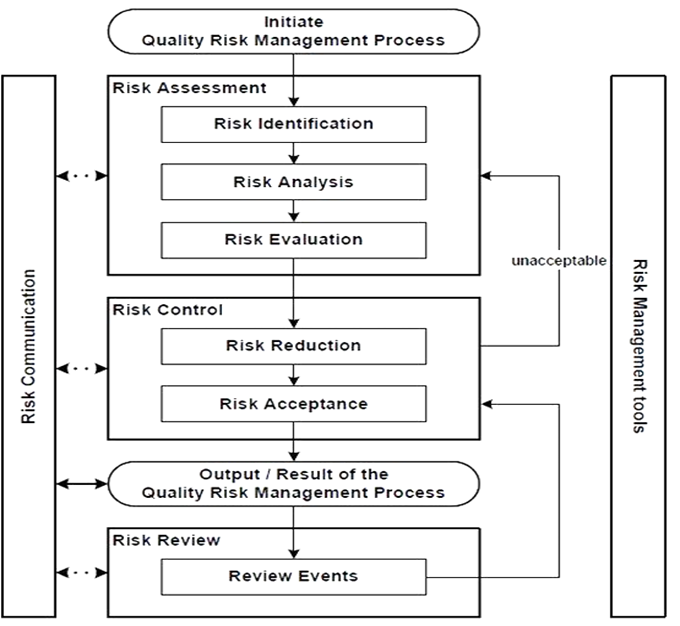
Fig. 01: Quality risk management process11.
The QRM framework describes the process for identifying and resolving quality risks. Despite being primarily designed for pharmaceutical manufacturing, this model can be applied to various manufacturing systems. Manufacturers can use the QRM's general flow to make empirical decisions based on data collected. In addition to ensuring that the QRM process is well-defined, implemented, and evaluated using the readily available resources, decision-makers in the process should be in charge of organizing and working with other relevant teams and departments14.
The Quality risk management task are usually, but not always, handle by interdisciplinary teams4. Teams should be composed of professionals from the relevant fields (e.g. A. business development, engineering, quality unit, legal, statistics, clinical, production operations, sales and marketing, engineering, regulatory affairs, and others) in addition to those who are familiar with the quality risk management procedure. Decision makers should be able to:
The purpose of the QRM process is to reduce risk and improve quality through science-based decision-making. The steps listed above can be used to start and develop a risk management strategy.
Table 1: Create a cross-functional group and select a leader example QRM team
|
Lawyer
|
Each team member will be in charge of organizing quality risk management across the company's departments and functions6.
The first step in the QRM process is risk assessment, which entails identifying potential risks as well as analyzing16 and evaluating the risks of being exposed to those risks17. A clear problem description or risk question, a suitable risk management tool, and the kinds of information that will answer the risk question are the first steps in conducting a high-quality risk assessment4. Three basic questions are frequently useful in precisely defining the risk for risk assessment purposes:2,5
Risk assessments are a useful management tool and best practice for determining, assessing, and analyzing the risks connected to a particular system or process step18.
In quality risk management, risk identification methodically draws on a variety of information sources, including historical and theoretical data, analytical techniques, expert opinions, and stakeholder concerns, in order4,5 to identify hazards associated with a defined risk .The question, "What might go wrong?" is addressed in this step19.
It is the assessment of the risk connected to the hazards that have been identified. It is the qualitative or quantitative process of establishing a connection between the severity of harms and their likelihood of occurring20. In some risk management tools, the capability to detect the harm (detectability) also factors (determinants) in the analysis of risk2,11,15. This analysis is advantage when undertaken with a multi-functional team of SMEs. This assures that risks are analysed from many perspectives. Team discussion is particularly valuable so that different understandings of the risk can be surfaced9.
The process of risk evaluation involves comparing the identified and analyzed risk to predetermined acceptance criteria while taking probability, severity, and detectability into account. Risk assessments take into account the quality of the evidence supporting each of the three main questions3,4. A risk evaluation's report may include a qualitative description of various risks or a quantitative assessment of risk. A numerical likelihood is used in quantitative risk expression. Another way to describe risk with qualitative descriptors like high, medium, or low. These descriptors should be determined in detail for better clarity while assigning the rating9.
High: when the adverse event or its effects are likely to be detected by the control.
Medium: when the negative event or its effects may be detected by the control.
Low: when the adverse event or its effects are unlikely to be detected by the control.
Zero: when there is no detection control3.
Table 2: A Risk Matrix to Assess Hazards6.
|
Likelihood |
Very likely |
Likely |
Unlikely |
Highly unlikely |
|
Fatality |
High |
High |
High |
Medium |
|
Major |
High |
High |
Medium |
Medium |
|
Minor |
High |
Medium |
Medium |
Low |
|
Negligible |
Medium |
Medium |
Low |
Low |
Risk control
Risk control involves making decisions about accepting and/or reducing risks21. Risk control aims to lower the risk to a manageable level. The importance of the risk should determine how much effort is put into risk control. Decision makers may employ a variety of techniques, such as benefit-cost analysis, to determine the ideal degree of risk control9,15.
The questions below could be the main focus of risk control.
The goal of risk reduction is to lower the likelihood and severity of an event by putting in place suitable system, process, and product controls17. Implementing risk reduction strategies may enhance the importance of already-existing risks or introduce new ones into the system. Therefore, after putting a risk reduction procedure in place, it could be appropriate to revisit the risk assessment in order to find and assess any potential changes in risk15. Examine the following scenarios:
Reduce severity: Prevent failure before it has serious repercussions, reject, and remember.
Reduce probability: Analyze the batch's problems.
Increase the detection: Switch from manual to automated inspection. During clarifying events, tools are reapplied and checked to see if any new dangers emerged. The inspection process changes from being labor-intensive to being mechanical23.
It is a choice to take a chance. Even the best risk management techniques may not completely remove risk for some kinds of injuries24. In such events, the QRM technique has been successfully applied, and it should be guaranteed that the risk is within an acceptable range. This acceptable limit would be determined based on a number of variables and occurrences7.
The term "risk communication" refers to the sharing of information and details about risk management between decision-makers and other stakeholders25. The quality risk management process's output or outcome must be properly documented and shared. Interested parties may be considered stakeholders, such as industry and the patient, industry and regulators, within a company, industry or regulatory authority, etc.5,9
It is necessary to examine the output and outcomes of the risk management process in order to incorporate fresh knowledge and information. Events that could affect the initial quality risk management decision should continue to be handled through the quality risk management process once it has been started. Risk acceptance choices may be modified as part of a risk review11.
A scientific and practical approach to decision-making is supported by quality risk management tools, which offer transparent, reproducible, and recorded ways to complete the process26.
Table 3: Risk management tools2,11,7,4,27,20
|
Risk management tool |
Description/attributes |
Potential applications |
|
Primary Tools |
||
|
|
|
|
Risk ranking and filtering |
|
|
|
Secondary Tools |
|
|
|
Hazard operability analysis (HAZOP) |
|
|
|
Hazards analysis and critical control points (HACCP) |
|
|
|
Preliminary hazard analysis (PHA) |
Based on using past experience or understanding of a hazard or failing to recognize future risks, dangerous situations, and occurrences that could be harmful, as well as estimating the likelihood that they will occur for a certain activity, facility, product, or system. |
|
|
Failure modes effects analysis (FMEA) |
|
|
|
Failure Mode, Effects and Criticality Analysis (FMECA) |
|
|
CONCLUSION
Four main components make up the systematic process of quality risk management: risk assessment, risk control, risk communication, and review of risks to the drug product's quality throughout its lifecycle. The process of risk management also heavily relies on the choice of team and approach. In addition to ensuring that risks are appropriately managed, QRM assists in the pharmaceutical industry in making consistent and traceable decisions that will lower risk through the consistent use of tools and methods. As a result, risk management in the pharmaceutical industry leads to increased safety, improved quality, lower development time, and less waste. Internal and external requirements are met by the efficiency of risk management, and regulatory audits and inspections are conducted in a more methodical manner. The organization can achieve its goals with the help of QRM.
REFERENCES



Gourav Kushwah, Dr. Gurmeet Chhabra*, Dr. Nimita Manocha, Gaurav Sarsodia, Quality Risk Management: A Current International Pharmaceutical Industry Practice to Optimize the Product Quality, Int. J. of Pharm. Sci., 2025, Vol 3, Issue 7, 96-106. https://doi.org/10.5281/zenodo.15782537
 10.5281/zenodo.15782537