
Gajanan Maharaj College of Pharmacy, Chh, Sambhajinagar.
This study focuses on the formulation and evaluation of a polyherbal syrup for managing jaundice, incorporating extracts from Phyllanthus niruri, Andrographis paniculata, Picrorhiza kurroa, Boerhavia diffusa, and Terminalia chebula. The syrup was assessed through physicochemical, phytochemical, and biological tests, including a liver injury model induced by carbon tetrachloride (CCl?). Results revealed significant hepatoprotective effects, evidenced by improved liver biomarkers. The syrup showed good stability, safety, and efficacy, highlighting its potential as a natural adjunct treatment for liver disorders. Further clinical validation is recommended.
Jaundice is a clinical condition characterized by yellowing of the skin and sclera due to the accumulation of bilirubin in the blood, often resulting from hepatic dysfunction. It is a common manifestation of various liver diseases, including hepatitis, cirrhosis, and obstruction of the bile ducts. Conventional treatments for jaundice focus primarily on symptomatic relief and supportive care. However, these approaches may not always address the underlying hepatic damage, and long-term use of synthetic drugs may lead to adverse effects. This study aims to formulate and evaluate a polyherbal syrup composed of extracts from Phyllanthus niruri, Andrographis paniculata, Picrorhiza kurroa, Boerhavia diffusa, and Terminalia chebula—plants renowned in Ayurvedic medicine for their liver-protective and detoxifying actions. The syrup was developed using a sugar-based vehicle with added preservatives, flavoring agents, and pH stabilizers to ensure its palatability and stability.
Material used:
Bhumiamla, kutki, Kalmegh, punarnava, Sucrose, Citric acid, Sodium benzoate,
Glycerine, Lemon juice , Purified water.
Api (active pharmaceutical ingredient)
1.Bhumiamala
1. Liver Health
Bhumi Amla is often used to treat liver disorders like hepatitis, jaundice, and fatty liver. It helps regenerate liver cells and supports detoxification.
2. Kidney Support
Its diuretic properties help flush out toxins and may help prevent kidney stones (hence the name "Stonebreaker").
3. Antiviral Properties
It has shown promising effects in fighting viruses like Hepatitis B and C by inhibiting viral replication.
4. Anti-inflammatory & Antioxidant
Rich in compounds like flavonoids, tannins, and lignans, Bhumi Amla helps reduce inflammation and oxidative stress
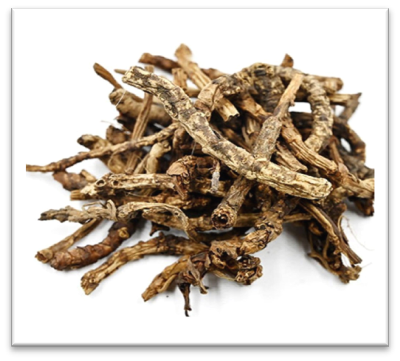
2.Kutki
1. Liver Health & Detoxification
Hepatoprotective Effects: Kutki is renowned for its ability to protect the liver from damage caused by toxins, alcohol, and medications. It stimulates bile production, aiding in fat digestion and toxin elimination.
2. Digestive Health
Enhances Digestion: The bitter nature of Kutki stimulates the digestive fire (Agni), improving digestion and alleviating issues like indigestion, bloating, and acidity.
3. Immune System Support
Boosts Immunity: Kutki contains powerful antioxidants and bioactive compounds that help strengthen the immune system. Its anti-inflammatory and antimicrobial properties make it effective in fighting infections and reducing inflammation .
4. Anti-inflammatory & Antioxidant Properties
Reduces Inflammation: Kutki possesses anti-inflammatory properties that help in reducing chronic inflammation, which is a root cause of many modern disease
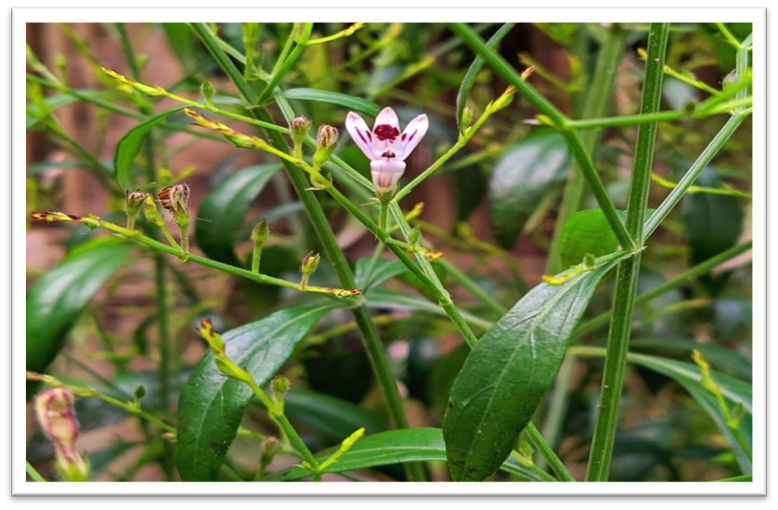
3. Kalmegh
1. Liver Protection & Detoxification
Kalmegh is hepatoprotective, meaning it helps protect the liver from toxins, alcohol damage, and infections like hepatitis. It stimulates bile secretion, susupportindigestion and detoxification
2. Boosts Immunity
It strengthens the immune system and is often used to prevent and treat common infections such as colds, flu, and respiratory tract infections due to its antiviral and antibacterial properties.
3. Anti-inflammatory & Antioxidant
Kalmegh contains powerful antioxidants and compounds like andrographolide that reduce inflammation and oxidative stress in the body.
4. Supports Respiratory Health
Helps relieve symptoms of bronchitis, asthma, and cough by reducing inflammation and mucus production
Methods of preparation of syrup:
1. Collect and clean the herbs
2. Make a herbal decoction (herbal tea)
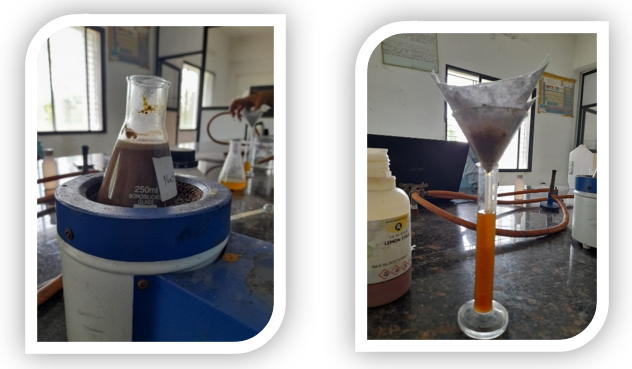
3. Concentrate The Decoction
4. Add sweeteners and preservatives
5. Mix, filter, and adjust
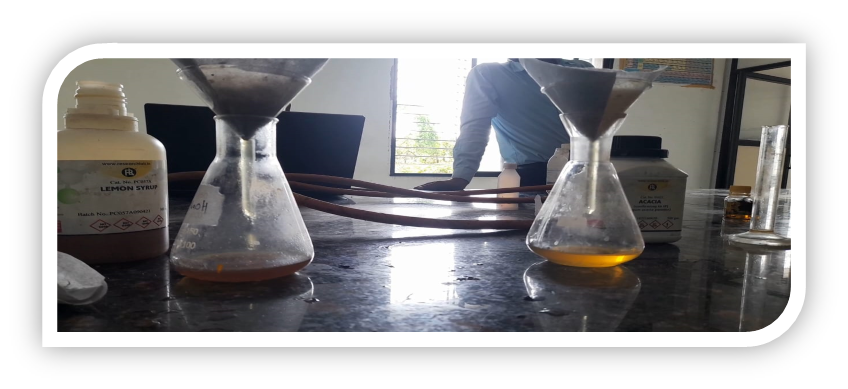
6. Bottle and label the syrup
Formulation Of 100 Ml Syrup:
|
Ingredient |
Pre formulation Quantity(g/ml) |
Post Formulation Quantity (g/ml) |
Final Formulation quantity(g/ml) |
|
Bhumi amla |
5g |
5g |
5g |
|
Kutki |
5g |
5g |
5g |
|
kalmegh |
5g |
5g |
5g |
|
PunarNava |
5g |
5g |
5g |
|
Sucrose |
27 g |
32g |
30g |
|
Sodium benzoate |
1g |
1g |
1g |
|
Citric acid |
2g |
2g |
2g |
|
Purified water |
50 ml |
45ml |
47ml |
Evaluation Parameter:
1. Organoleptic Properties
Objective: Check for color, odor, and taste.
Method: Visual inspection and sensory evaluation.
Standard: Should be clear (if required), free from particulate matter, with acceptable odor and taste.
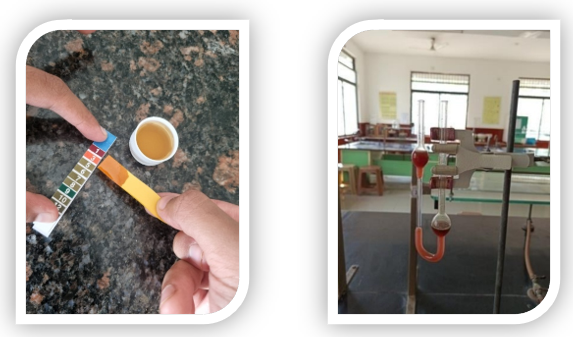
2. pH Test
Objective: Determine the acidity or alkalinity of the syrup.
Method: Use a calibrated pH meter or pH paper.
Standard: Typically, between 4.0 to 6.0 for oral syrups.
3. Viscosity Test
Objective: Ensure proper flow characteristics.
Method: Using a viscometer (e.g., Brookfield viscometer).
Standard: Depends on the formulation type but should be consistent and not watery or overly thick.
CONCLUSION
The present study focused on the extraction, formulation, and preliminary evaluation of a polyherbal syrup intended for the supportive management of jaundice. Selected medicinal plants such as Phyllanthus niruri, Andrographis paniculata, Boerhavia diffusa, Tinospora cordifolia, and Berberis aristata were chosen based on traditional use and literature support for their hepatoprotective and antioxidant properties. Different extraction techniques, including maceration, decoction, and Soxhlet extraction, were optimized for each plant depending on the nature of the phytoconstituents and plant part used. The results revealed that all selected herbs yielded satisfactory amounts of extractives, and phytochemical screening confirmed the presence of bioactive compounds like alkaloids, flavonoids, phenolics, and glycosides, which are known to contribute to liver protection and detoxification. The standardized extracts were found to be stable and compatible for use in syrup formulation, and initial organoleptic and physicochemical evaluations showed acceptable characteristics for a liquid oral dosage form.
REFERENCES

Komal Chavan*, Pankaj Sanap, Research Article on Formulation and Evolution of Herbal Syrup for Management of Jaundice, Int. J. of Pharm. Sci., 2025, Vol 3, Issue 6, 2672-2677. https://doi.org/10.5281/zenodo.15654849
 10.5281/zenodo.15654849
