
1,2,3,4,6 Rungta Institute of Pharmaceutical Sciences and Research
5 Rungta Institute of Pharmaceutical Science.
In today’s context, herbal toothpaste made with natural ingredients is gaining greater public preference compared to synthetic, chemical-based formulations. People consider them safer and more effective for reducing dental caries and protecting against various oral problems common in the present generation. In this formulation, we have incorporated aloe vera gel, clove oil, liquorice, cinnamon oil, tragacanth mucilage, peppermint oil, and honey. These natural extracts exhibit multiple therapeutic properties, including anti-ulcer, anti-cariogenic, antibacterial, and wound-healing activities. In addition to developing this herbal formulation, key physical parameters such as pH, stability, spreadability, foamability, and homogeneity were evaluated to ensure a more effective and stable product. The objective of this project was to prepare and analyze a herbal toothpaste made from selected natural ingredients and to determine its potential in supporting overall oral health.
Maintaining oral hygiene is crucial for overall health, and toothpaste plays a key role in daily dental care. In recent times, interest in herbal-based toothpaste has increased because of the potential oral health benefits offered by plant-derived ingredients. These herbal formulations are becoming widely preferred, as they are considered natural, safer, and effective substitutes for traditional chemical-based toothpaste.
Developing and accessing herbal toothpaste has become an important research focus within oral healthcare. Natural ingredients like aloe vera, liquorice, clove oil, and cinnamon oil have long been valued for their therapeutic benefits and are recognized for their antibacterial, anti-inflammatory, and antioxidant activities that support oral well-being. By incorporating these components, herbal toothpaste formulations can enhance oral health through their synergistic natural effects.
The objective of this final year project is to develop and analyze a herbal toothpaste formulated with selected natural ingredients and to determine its potential role in improving oral health. The study includes a thorough assessment of the toothpaste’s physical properties, pH, and microbiological characteristics using suitable evaluation techniques. The results of this work may enhance current understanding of herbal toothpaste formulations and offer meaningful insights into the advantages of incorporating herbal components in oral care products.
The importance of this project stems from its ability to enhance the field of oral healthcare by examining the development and assessment of a herbal toothpaste formulation. The results may offer useful information to dental practitioners, researchers, and consumers who are seeking natural substitutes for conventional oral care products. In addition, this work may pave the way for future studies and innovations in herbal toothpaste formulations aimed at supporting oral health and raising the overall standard of oral care products.
Typical Dental Concerns
Dental issues are widespread and affect people globally. Among the most frequent concerns are tooth decay, gum infections, bad breath, and tooth sensitivity. These conditions can lead to pain, discomfort, and embarrassment, ultimately diminishing an individual’s overall quality of life.
Tooth decay: It develops when the protective enamel layer of the tooth breaks down, allowing bacteria to reach deeper layers and form cavities.
Gum disease: Commonly referred to as gingivitis or periodontitis, this condition is a bacterial infection that attacks the tissues that support and surround the teeth. It may result in swollen, red, and bleeding gums, along with bad breath and, in severe cases, tooth loss.
Tooth sensitivity: This condition arises when enamel erosion or gum recession exposes the dentin and its nerve endings, leading to sharp discomfort when consuming hot, cold, or sugary foods and beverages.
Tooth erosion: This happens when acidic foods, drinks, or other factors gradually wear down the enamel, resulting in sensitivity, changes in tooth color, and a rough or uneven tooth surface.
Bad breath: Also called halitosis, it can result from inadequate oral hygiene, gum infections, dental decay, or various underlying health conditions.
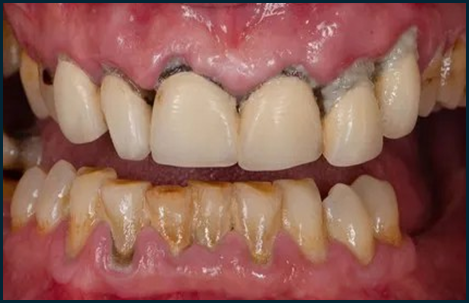
Fig No. 1: Multiple dental issues
Limitations of commercially available toothpaste
Harsh chemicals: Several commercial toothpaste formulations include strong agents such as sodium lauryl sulphate (SLS), which may irritate oral tissues and lead to inflammation.
Artificial sweeteners and Flavors: Certain toothpaste products contain synthetic flavouring agents and sweeteners that may not be ideal for overall consumer health.
Environmental impact: Manufacturing and discarding standard toothpaste products can harm the environment, especially when they include plastic microbeads or other environmentally unsafe components.
Alternatively, herbal toothpaste may deliver multiple benefits, such as:
Environmental friendliness: Herbal toothpaste can be produced using eco-friendly ingredients and sustainable packaging options.
Natural ingredients: Herbal toothpaste is generally formulated using plant-based components that are mild on oral tissues and free from strong or harmful chemicals.
Holistic benefits: Numerous herbal toothpaste blends include botanicals traditionally valued for supporting oral health, helping to reduce inflammation and combat harmful bacteria.
Objective
Formulation development: To create an innovative herbal toothpaste using ingredients such as aloe, liquorice, clove oil, cinnamon oil, peppermint oil, tragacanth mucilage, honey, calcium carbonate, glycerine, and distilled water.
Assessment of ingredient effectiveness: To examine the effectiveness of the chosen herbal components with respect to their antimicrobial, anti-inflammatory, and other beneficial properties that support oral health.
Physicochemical analysis: To perform a detailed evaluation of the toothpaste’s physicochemical properties such as pH, texture, and other essential parameters to confirm its quality, uniformity, and overall suitability.
Sensory assessment: To evaluate the sensory characteristics of the developed toothpaste such as taste, flavour, and overall user acceptability in order to determine its appeal and consumer preference.
Comparison with commercial products: To compare the antimicrobial effectiveness of the developed herbal toothpaste with that of existing market brands, including Patanjali and Neem-based toothpastes.
Safety evaluation: To carry out safety testing, including stability analysis, to confirm the shelf-life of the herbal toothpaste and ensure that it is safe for regular oral use.
Formulation refinement: To fine-tune the herbal toothpaste formulation using the evaluation findings and introduce necessary modifications to attain the desired performance, quality, and therapeutic effectiveness.
Documentation and presentation: To thoroughly record the formulation process, evaluation outcomes, and overall project findings, and compile them into a detailed report that also includes suggestions for future research or potential enhancements.
Standard Requirements for Toothpaste
Keep the mouth hygienic and refreshed
Safe, gentle, and irritation-free
Long-lasting effect
Effective stain-removal action
Maintains natural tooth colour
Formulation Procedure
There are two types of toothpaste formulation procedures.
Dry gum method
Wet gum method
The dry gum method is a widely applied approach for preparing toothpaste formulations. Below is the general procedure followed for all herbal toothpaste batches
(F1 = Formulation 1, F2 = Formulation 2, F3 = Formulation 3, F4 = Formulation 4)
using this technique.
Accurately weigh and measure the necessary amounts of each ingredient according to the chosen formulation batch, ensuring precise quantities to obtain the intended final product.
In a mortar and pestle, thoroughly triturate and blend the dry ingredients such as calcium carbonate, liquorice, and tragacanth mucilage until a uniform, homogenous powder mixture is achieved.
Incorporate the liquid components aloe vera gel, clove oil, cinnamon oil, peppermint oil, honey, and glycerine into the mixing vessel.
Gradually introduce the blended dry powders into the liquid components while continuously stirring with a spatula to ensure uniform mixing.
Continue blending the mixture until a consistent, smooth paste forms. If needed, gradually add small amounts of distilled water while stirring to reach the preferred thickness and texture of the toothpaste.
Carefully document the entire formulation process detailing ingredient quantities, steps performed, and observations or results in a clear and comprehensive manner.
Evaluate and interpret the data collected, and formulate conclusions based on the outcomes of the experimental work.
Evaluation for Herbal Toothpaste
Evaluating herbal toothpaste is a crucial step to ensure the product is safe, effective, and meets the required quality standards. This report summarizes the outcomes of various tests performed on the herbal toothpaste formulation. The evaluations included physical assessments, such as foaming ability, spread ability, and homogeneity; chemical analyses, including antimicrobial activity and identification of active constituents; and sensory tests, covering taste, odour, and texture. Additionally, the pH of the toothpaste was measured to determine its potential effect on oral health. The findings from these evaluations provide assurance that the herbal toothpaste is of high quality and suitable for dental care use.
Stability Studies
Stability studies were performed to evaluate the durability and shelf-life of the prepared herbal toothpaste under different storage conditions. The samples were stored following the International Conference on Harmonisation (ICH) guidelines for pharmaceutical stability testing.
Sample Preparation: The prepared herbal toothpaste was produced in bulk and packed into 0.5?g aluminium tubes, which were securely sealed to protect against moisture. For the stability study, a total of five tubes were used, with all samples stored at 25°C and 60% relative humidity (room temperature) for a period of 2 months.
Sensory Evaluation Test
Procedure: A group of trained panellists were given samples of the toothpaste and asked to rate its taste, aroma, and texture on a scale from 1 to 10. Between testing each sample, the evaluators were instructed to rinse their mouths with distilled water to prevent cross-contamination.
Determination of Spreadability
The slip and drag properties of the paste are used to assess spreadability. Approximately 1–2?g of herbal toothpaste was placed between two 10?×?10?cm glass slides stacked together without initial sliding. The slides were then moved in opposite directions. After 3 minutes, the distance the paste had spread (in cm) was measured. The experiment was repeated three times, and the average of the readings was calculated.
Foamability
The quality of the foam was assessed based on its texture, volume, and stability. To measure foaming capacity, 2?g of herbal toothpaste was combined with 5?ml of water in a measuring cylinder and shaken 10 times. The total volume of foam generated was then recorded.
Sharp and edge abrasive particles
To detect any sharp or abrasive components, a small amount of the toothpaste was applied to a finger and rubbed across butter paper over a distance of 15–20?cm. This procedure was repeated at least ten times.
pH Test
The pH of the toothpaste was determined using pH indicator strips to confirm that it lies within the acceptable range for oral care products. The impact of pH on the toothpaste’s antimicrobial activity and its compatibility with the oral environment was also assessed.
Anti-microbial activity
The in vitro antibacterial activity of the prepared toothpaste was evaluated using the disc diffusion method against pathogenic bacterial strains Escherichia coli and Staphylococcus aureus on nutrient agar plates. Initially, E. coli and S. aureus cultures were grown and allowed to multiply on the agar medium. The plates were first streaked with the bacterial inoculum, and then 5?mm wells were created in the agar using a sterile cork borer. The surface of each well was gently rotated to ensure even distribution of the inoculum. The prepared herbal toothpaste and commercial toothpaste samples were then placed into the wells. Plates were sealed with paraffin, labelled, and incubated at 37?°C for 24 hours. After incubation, the plates were examined, and the diameter of the zone of inhibition (ZOI) around each sample was measured in millimetres using a ruler.
CONCLUSION
This section presents and interprets the findings obtained from the evaluation of the prepared herbal toothpaste formulations. Several quality assessment tests were conducted to determine the overall performance and effectiveness of the formulations, including foaming ability, antimicrobial activity, spreadability, pH analysis, and organoleptic characteristics. The results offer important information regarding how well the toothpaste foams, its effectiveness against microorganisms, its ease of application, its acidity or alkalinity, and its sensory appeal. The discussion elaborates on these outcomes, compares them with the expected standards, and highlights any significant observations. The results are examined in the context of the study’s objectives to determine the formulation’s potential in addressing oral health issues and to identify areas where improvements may be needed.
pH: According to the Indian Pharmacopoeia (IP), the recommended pH range for toothpaste generally falls between 6.0 and 8.0, though the exact range may vary depending on the formulation’s specific guidelines. A pH value of 8 is considered acceptable and falls within this standard range. A slightly alkaline pH, such as 8, helps create an oral environment that is less conducive to the growth of acid-producing bacteria, thereby supporting oral health and reducing the risk of dental problems like tooth decay.
REFERENCES


Pulkit Singh Rajput, Naman Nagvanshi, Varsha Sahu, Sakshi Singh, Anurag Aman Sahu, Dr. Gyanesh Kumar Sahu, Review of Formulation and Evaluation of Herbal Toothpaste, Int. J. of Pharm. Sci., 2026, Vol 4, Issue 4, 849-855 https://doi.org/10.5281/zenodo.19436076
 10.5281/zenodo.19436076
