View Article

Abstract

Nasal spray could be a promising approach to preventing respiratory tract infection. This study explored lay people’s perceptions and experiences of using nasal sprays to prevent RTI’s to identify barriers and facilitators to their adoption and continued use. Nasal spray is the most common dosage form for intranasal drug delivery system to ease of administration and efficient nasal deposition compared to drop installation . With the nozzle of a spray bottle inserted into nostril, liquid dosage forms ( including solution , suspensions and emulsions) are atomized into fine droplets for nasal deposition. Its aims to inspire scientist to develop new delivery system to provide effective symptoms management for this group of patient. The intranasal delivery is preferable route for administration of the drug for local, systemic as well as central nervous system drug delivery. Advantages of nasal spray dosage form such as it is cost-effective, easy to use/carry and self-administrable, it has high patient compliance make this dosage form growing opportunity for nasal drug delivery. This article outlined the relevant aspects of nasal anatomy, physiology and histology, and the biological, physicochemical and pharmaceutical factors that must be considered during the formulation development of nasal spray. It is intuitively expected that this review will help to understand nasal formulation and it’s in- vitro characteristics.[1].

Keywords

Nasal Spray, Nasal drug delivery system, formulation and in-vitro characterization

Introduction

Nasal spray is defined as a medicament that consist of therapeutically active substance dissolved or suspended in a mixture of additives or solution, delivered through non-pressurized dispenser providing a metered dosage of active substance. Intranasal drug delivery is recognized to be a useful and reliable alternative to oral and parenteral routes. The nasal route of drug delivery can be used for both local and systemic drug delivery. For instance, localized nasal drug delivery is usually used to treat conditions related to the nasal cavity, such as congestion, rhinitis, sinusitis and related allergic conditions. A diverse range of drugs including corticosteroids, anti-histamines, anti-cholinergic and vasoconstrictors can be administered locally. In recent years, achieving a systemic drug action using the nose as the entry portal into the body has received more attention. Also, the nasal delivery seems to be a favorable way to circumvent the obstacles for blood- brain barrier (BBB) allowing the direct drug delivery in the biophase of central nervous system (CNS)-active compounds. It has also been considered to the administration of vaccine .

In recent time, the nasal drug delivery received a great deal of attention for its convenient, promising, and reliable way of systemic administration for drugs, especially for those drugs which are ineffective orally and those which must be administered by injections. This route provides a large surface area, porous endothelial membrane, high total blood flow, bypassing the first-pass metabolism, and ready accessibility. Furthermore, nasal mucosa is permeable to more compounds than the gastrointestinal tract due to the absence of pancreatic, gastric enzymatic activities, and interference by gastrointestinal contents. The early recorded historical application of nasal drug delivery was restricted to topical applications of drugs intended for only local effects. However in recent times, its application grown to include a wide range of targeted areas in the body to produce local and systemic effects. Nasal drug delivery also finds a special place in the traditional system of medicine such as the Ayurvedic system of Indian medicine which is called as “Nasya karma” and is a well- recognized way of treatment .In therapeutics, nose forms an important part of the body for faster and higher level of drug absorption with the possibility of self-administration. Drugs are ranging from small micromolecules to large macromolecules such as peptide/proteins, hormones, and vaccines, are being delivered through the nasal cavity. It is reported that lipophilic drugs are generally well absorbed from the nasal cavity with pharmacokinetic profiles often identical to those obtained following an intravenous injection with a bioavailability approaching up to 100% in many cases. Large absorption surface area and high vascularization lead to fast absorption. In emergency, nasal route can be used as a substitute route of parenteral administration . Drugs are rapidly absorbed from the nasal cavity after intranasal administration, resulting in rapid systemic drug absorption. An approach if made for increasing the residence time of drug formulations in the nasal cavity can result in improved nasal drug absorption. Depending on the desired site of drug action, the drug to be inhaled needs to be adjusted to particle size, concentration, and chemical form to ensure a local or systemic drug action .[2],[3],[4],[5].

Anatomy And Physiology of Nose:

Nasal depression is lined with mucus and hairs which are involved in those functions, gobbled patches and pathogens. Also resonance of produced sounds mucus MMC [immunological conditioning and metabolism of endogenous substances are also essential functions of nasal structures. The mortal nasal depression has a total volume of 15- 20 mL and a total face area of roughly 150 cm2 The nasal halves correspond of four areas( nasal entranceway, patio, respiratory region and olfactory region) that are distinguished according to their anatomic and histological characteristics.
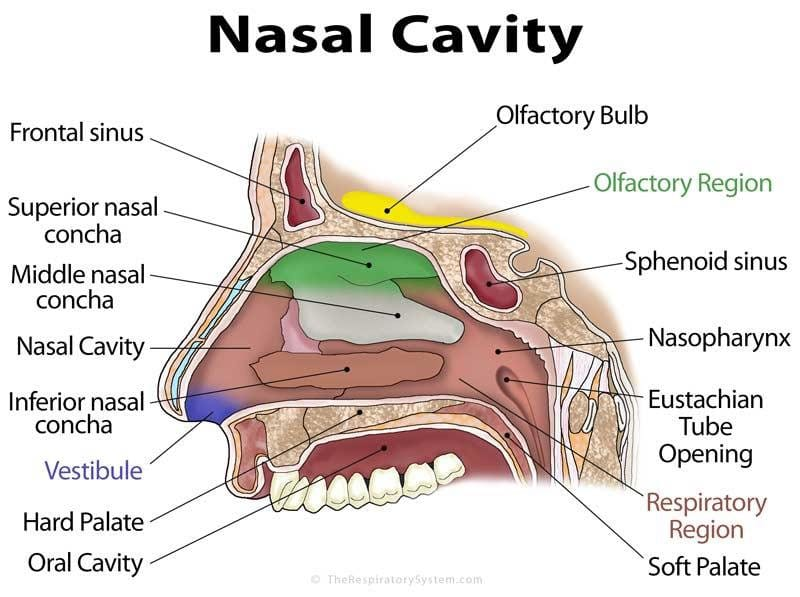
1) Nasal vestibule

In this area of nasal depression, there are nasal hairs, also called vibrissae, which filter the gobbled patches. Nasal vestibular characteristics are desirable to go high resistance again poisonous environmental substances.

2) Atrium

Between the nasal vestibule and the respiratory region, there is an atrium. A stratified squamous epithelium makes up its anterior part, and the by pseudo stratified columnar cells in the posterior region showing off microvilli.

3) Respiratory region

Divided into upper, middle and lower nasal turbinate protruding from the sidewall. These special structures are Humidification and temperature control of the inhaler air. Between them there is a space called a way these are the passages through which the air flow is created Ensure intimate contact with inhaled air the mucosal surface of the respiratory tract lower and middle . The tract receives the nasolacrimal ducts and sinuses these are air-filled pockets inside the bone around the face and nasal cavities. Nose the most important airway mucosa Sections are formed for systemic delivery of drugs via epithelium, basement membrane, and lamina exclusive use Nasal discharge is essential for many people Physiological functions.

4) Olfactory region

The olfactory region is located on the roof of the Extends a short distance under the nasal cavity and nasal septum and side walls. Its epithelium is the only part central nervous system directly exposed to the outside world Surroundings. Similar to respiratory epithelium, the sense of smell is also pseudo stratified, but included Special olfactory receptor cells important for odors Perception.[10,11].

Advantages of Nasal Drug Delivery System :

1. Intranasal administration offers several practical advantages from the viewpoint of patients (non-invasiveness, essentially painless, ease drug delivery and favorable tolerability profile)

2. Rapid drug absorption.

3. Quick onset of action.

4. Hepatic first – pass metabolism is absent.

5. The bioavailability of larger drug molecules can be improved by means of absorption enhancer or other approach.

6. Better nasal bioavailability for smaller drug molecules

Limitations:

1. Dose is limited because of relatively small area available for the absorption of drug.

2. Time available for drug absorption is limited.

3. Diseased condition of nose impairs drug absorption.

4. The absorption enhancers used to improve nasal drug delivery system may have histological toxicity which is not yet clearly established.

5. Absorption surface area is less when compared to GIT.

6. Nasal irritation

7. Certain surfactants used as chemical enhancers may disrupt and even dissolve Membrane in high concentration.[13].

Oxymetazoline:

Brand name : Afri
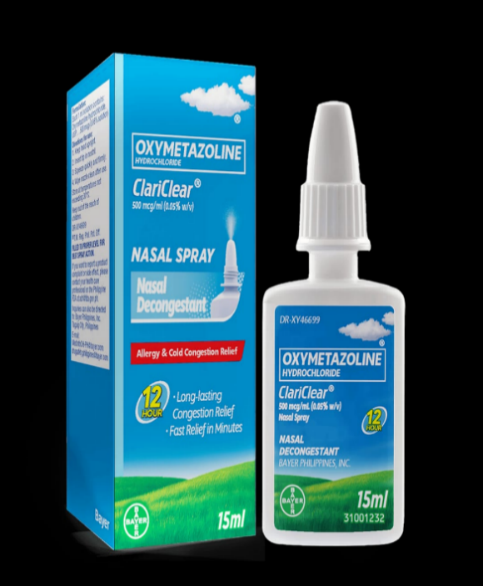
The product is indicated for symptomatic relief of nasal congestion due to hay fever ,common cold and sinusitis .

Oxymetazoline HCL is a sympathomimetic agent which exerts a local vasoconstriction action in nasal mucosa reducing nasal congestion . Afrin nasal spray is described as No-Drip formulation because it becomes more viscous when spread and remains on mucosal membrane more effectively than a standard aqueaous solution clinical studies have shown than oxymetazoline acts within a few minutes and its effect may last upto 12 hours .

Sr No

Ingredients

Purpose

01

Oxymetazoline HCL

Active ingredient

02

Benzalkonium chloride

Preservative

03

Disodium edetate

Antioxidant

04

Polyethylene glycol

Viscosity modifier

05

Povidone

Viscosity modifier

06

Propylene glycol

Moisturizing agent

07

Sodium phosphate

Buffer

08

Purified water

Solvent

Marketed Formulations:

Drug Substance

[Product Name]

Indication

Dosage Form

Status

Manufacturer

Salman calcitonin

Osteoporosis

Solution (spray)

Marketed

Novartis Pharma

Desmoprassin

Antidiuretic Hormone

Solution (spray)

Marketed

Ferring Arzneimitted

Buserelin

Buserelin

Solution(spray)

Marketed

Aventis Pharma

Nafarelin

Endometriosis

Solution(spray)

Marketed

Pharmacia

Oxytocin

Lactation Induction

Solution (spray)

Marketed

Novartis Pharma

Zolemitriptan

Migraina

Solution (spray)

Marketed

Astra Zeneca

Protirelin

Thyroid Diagnostics

Solution(spray)

Marketed

Aventis Pharma

Estradiol

Hormone Replacement

Solution(spray)

Marketed

Servier

Future needs and further research and development :

It is not surprising to find a lot of research focusing to develop nasal drug delivery system and its contribution in therapeutic management .In general, a concise overview of the pharmacotherapy of nasal drug delivery system has highlighted that in spite of the availability of new drugs and several specialized devices.[9]

CONCLUSION:

The nasal cavity has a large surface area and a highly vascularized mucosa. Drugs absorbed by the rich network of blood vessels pass directly into the systemic circulation, thereby avoiding the first-pass metabolism. Agrowing body of evidence relating to nasal drug delivery suggests it might use for challenging drugs which can facilitate the pharmaceutical manufacturing and drug delivery challenges. Considering the wealth of activity and interest in the area of nasal drug delivery, together with the potential benefits from this route of administration, we should expect to see a range of novel nasal products reaching the market shortly.

REFERENCES

  1. Savarese G, Seferovic P, Rosano GMC, Lund LH, Becher PM, Coats AJS. Global burden of heart failure: a comprehensive and updated review of epidemiology. Cardiovascular Research. 2022 Feb 12;118(17):3272–87.
  2. Savarese G, Lund LH. Global Public Health Burden of Heart Failure. Cardiac Failure Review. 2017 Jan 1;3(1):7.
  3. Edelmann F, Mörike K, Störk S, Muth C, Prien P, Knosalla C. Chronic Heart Failure. Deutsches Ärzteblatt International. 2018 Feb 23;115(8).
  4. Gomberg-Maitland M, Fuster V, Baran DA. Treatment of congestive heart failure: guidelines for the primary care physician and the heart failure specialist. Archives of internal medicine. 2001 Feb 12;161(3):342.
  5. Madonna R, Biondi F, Alberti M, Ghelardoni S, Mattii L, D’Alleva A. Cardiovascular outcomes and molecular targets for the cardiac effects of Sodium-Glucose Cotransporter 2 Inhibitors: A systematic review. Biomedicine & Pharmacotherapy. 2024 Apr 27;175:116650.
  6. Tamargo J. Sodium–glucose Cotransporter 2 Inhibitors in Heart Failure: Potential Mechanisms of Action, Adverse Effects and Future Developments. European Cardiology Review. 2019 Apr 30;14(1):23–32.
  7. Salah HM, Mcguire DK, Lopes RD, Santos-Gallego CG, Al’Aref SJ, Vaduganathan M, et al. Sodium-Glucose Cotransporter 2 Inhibitors and Cardiac Remodeling. Journal of Cardiovascular Translational Research. 2022 Mar 15;15(5):944–56.
  8. Kasichayanula S, Liu X, Griffen SC, Lacreta F, Boulton DW. Clinical Pharmacokinetics and Pharmacodynamics of Dapagliflozin, a Selective Inhibitor of Sodium-Glucose Co- transporter Type 2. Clinical Pharmacokinetics. 2013 Oct 9;53(1):17–27.
  9. Plosker GL. Dapagliflozin: a review of its use in patients with type 2 diabetes. Drugs. 2014 Nov 12;74(18):2191–209.
  10. Ryaboshapkina M, Ye R, Ye Y, Birnbaum Y. Effects of Dapagliflozin on Myocardial Gene Expression in BTBR Mice with Type 2 Diabetes. Cardiovascular drugs and therapy. 2023 Nov 2;39(1).
  11. Komoroski B, Kornhauser D, Boulton D, Pfister M, Vachharajani N, Li L, et al. Dapagliflozin, a Novel SGLT2 Inhibitor, Induces Dose-Dependent Glucosuria in Healthy Subjects. Clinical Pharmacology & Therapeutics. 2009 Jan 7;85(5):520–6.
  12. Kasichayanula S, Chang M, Boulton DW, Lacreta FP, Yamahira N, Liu X, et al. Pharmacokinetics and pharmacodynamics of dapagliflozin, a novel selective inhibitor of sodium-glucose co-transporter type 2, in Japanese subjects without and with type 2 diabetes mellitus. Diabetes, Obesity and Metabolism. 2011 Feb 23;13(4):357–65.
  13. Heerspink HJL, Mann JFE, Toto RD, Sjöström CD, Langkilde AM, Rossing P, et al. Dapagliflozin in Patients with Chronic Kidney Disease. New England Journal of Medicine. 2020 Oct 8;383(15):1436–46.
  14. Furtado R, Cahn A, Langkilde AM, Mcguire DK, Wiviott SD, Dellborg M, et al. Efficacy and Safety of Dapagliflozin in Type 2 Diabetes According to Baseline Blood Pressure: Observations From DECLARE-TIMI 58 Trial. Circulation. 2022 May 5;145(21):1581–91.
  15. Andersen MJ, Borlaug BA. Heart failure with preserved ejection fraction: current understandings and challenges. Current Cardiology Reports. 2014 Jun 4;16(7).
  16. Brown DA, Pitt B, Allen ME, Gheorghiade M, Filippatos G, Stauffer BL, et al. Mitochondrial function as a therapeutic target in heart failure. Nature Reviews Cardiology. 2016 Dec 22;14(4):238–50.
  17. Takahama H, Kitakaze M. Pathophysiology of cardiorenal syndrome in patients with heart failure: potential therapeutic targets. American Journal of Physiology-Heart and Circulatory Physiology. 2017 Jul 21;313(4):H715–21.
  18. Escobar C, Nuñez J, Camafort M, Manzano L, Pascual-Figal D. Current Role of SLGT2 Inhibitors in the Management of the Whole Spectrum of Heart Failure: Focus on Dapagliflozin. Journal of Clinical Medicine. 2023 Oct 27;12(21):6798.
  19. Docherty KF, Pandey A, Toursarkissian N, Mooe T, Jiang H, Weiss S, et al. Effect of Dapagliflozin in DAPA-HF According to Background Glucose-Lowering Therapy. Diabetes Care. 2020 Sep 2;43(11):2878–81.
  20. Shih JY, Hong CS, Chen ZC, Chang WT, Kang NW, Fisch S, et al. Dapagliflozin Suppresses ER Stress and Improves Subclinical Myocardial Function in Diabetes: From Bedside to Bench. Diabetes. 2020 Oct 28;70(1):262–7.
  21. Parizo JT, Heidenreich PA, Salomon JA, Spertus JA, Khush KK, Sandhu AT, et al. Cost- effectiveness of Dapagliflozin for Treatment of Patients With Heart Failure With Reduced Ejection Fraction. JAMA Cardiology. 2021 May 26;6(8):926.
  22. Cahn A, Langkilde AM, Mosenzon O, Sabatine MS, Yanuv I, Kooy A, et al. Cardiorenal outcomes with dapagliflozin by baseline glucose-lowering agents: Post hoc analyses from DECLARE-TIMI 58. Diabetes, Obesity and Metabolism. 2020 Sep 22;23(1):29–38.
  23. Zheng XD, Jiang XY, Qu Q, Tang C, Sun JY, Wang ZY. Effects of Dapagliflozin on Cardiovascular Events, Death, and Safety Outcomes in Patients with Heart Failure: A Meta- Analysis. American Journal of Cardiovascular Drugs. 2020 Oct 1;21(3):321–30.
  24. Investigators D. Dapagliflozin and Cardiovascular Outcomes in Type 2 Diabetes. New England Journal of Medicine. 2019 Jan 24;380(4):347–57.
  25. Ptaszynska A, Johnsson KM, Parikh SJ, De Bruin TWA, Apanovitch AM, List JF. Safety profile of dapagliflozin for type 2 diabetes: pooled analysis of clinical studies for overall safety and rare events. Drug safety. 2014 Aug 6;37(10):815–29.
  26. Cahn A, Wiviott SD, Bhatt DL, Raz I, Rozenberg A, Mcguire DK, et al. Safety of dapagliflozin in a broad population of patients with type 2 diabetes: Analyses from the DECLARE-TIMI 58 study. Diabetes, Obesity and Metabolism. 2020 Apr 27;22(8):1357–68.
  27. Kohan DE, Fioretto P, Parikh S, Johnsson K, Ying L, Ptaszynska A. The effect of dapagliflozin on renal function in patients with type 2 diabetes. Journal of Nephrology. 2016 Feb 19;29(3):391–400.
  28. Fioretto P, Langkilde AM, Buse JB, Giorgino F, Sartipy P, Reyner D, et al. Efficacy and safety of dapagliflozin in patients with type 2 diabetes and moderate renal impairment (chronic kidney disease stage 3A): The DERIVE Study. Diabetes, Obesity and Metabolism. 2018 Jul 10;20(11):2532–40.
  29. Silva Dos Santos D, Polidoro JZ, Borges-Júnior FA, Girardi ACC. Cardioprotection conferred by sodium-glucose cotransporter 2 inhibitors: a renal proximal tubule perspective. American Journal of Physiology-Cell Physiology. 2019 Nov 13;318(2):C328–36.
  30. Kashiwagi A, Maegawa H. Metabolic and hemodynamic effects of sodium-dependent glucose cotransporter 2 inhibitors on cardio-renal protection in the treatment of patients with type 2 diabetes mellitus. Journal of Diabetes Investigation. 2017 May 12;8(4):416–27.
  31. Castoldi G, Barzaghi F, Di Gioia CRT, Meani M, Carletti R, Zerbini G, et al. Sodium Glucose Cotransporter-2 Inhibitors in Non-Diabetic Kidney Disease: Evidence in Experimental Models. Pharmaceuticals. 2024 Mar 11;17(3):362.
  32. Fonseca-Correa JI, Correa-Rotter R. Sodium-Glucose Cotransporter 2 Inhibitors Mechanisms of Action: A Review. Frontiers in Medicine. 2021 Dec 20;8.
  33. Camilli M, Camilli M, Viscovo M, Maggio L, Bonanni A, Torre I, et al. Sodium–glucose cotransporter 2 inhibitors and the cancer patient: from diabetes to cardioprotection and beyond. Basic Research in Cardiology. 2024 Jun 27;120(1):241–62.
  34. Beitelshees AL, Leslie BR, Taylor SI. Sodium–Glucose Cotransporter 2 Inhibitors: A Case Study in Translational Research. Diabetes. 2019 May 13;68(6):1109–20.
  35. Carlson CJ, Santamarina ML. Update review of the safety of sodium-glucose cotransporter 2 inhibitors for the treatment of patients with type 2 diabetes mellitus. Expert Opinion on Drug Safety. 2016 Aug 12;15(10):1401–12.
  36. Severino P, Birtolo LI, Chimenti C, Angotti D, Lavalle C, D’Amato A, et al. Sodium- glucose cotransporter 2 inhibitors and heart failure: the best timing for the right patient. Heart Failure Reviews. 2021 Oct 16;28(3):709–21.
  37. Kimura G. Diuretic Action of Sodium-Glucose Cotransporter 2 Inhibitors and Its Importance in the Management of Heart Failure. Circulation Journal. 2016 Jan 1;80(11):2277–81.
  38. Ujjawal A, Schreiber B, Verma A. Sodium-glucose cotransporter-2 inhibitors (SGLT2i) in kidney transplant recipients: what is the evidence? Therapeutic Advances in Endocrinology and Metabolism. 2022 Jan 1;13(Suppl 2):204201882210900.
  39. Williams DM, Evans M. Dapagliflozin for Heart Failure with Preserved Ejection Fraction: Will the DELIVER Study Deliver? Diabetes Therapy. 2020 Aug 27;11(10):2207– 19.
  40. Dhillon S. Dapagliflozin: A Review in Type 2 Diabetes. Drugs. 2019 Jun 25;79(10):1135–46.
  41. Plosker GL. Dapagliflozin. Drugs. 2012 Dec 1;72(17):2289–312.
  42. Epstein BJ, Sultan S, Rosenwasser RF, Sutton D, Choksi R. SGLT-2 inhibitors and their potential in the treatment of diabetes. Diabetes, Metabolic Syndrome and Obesity: Targets and Therapy. 2013 Nov 1;6(4):453.

Reference

  1. Savarese G, Seferovic P, Rosano GMC, Lund LH, Becher PM, Coats AJS. Global burden of heart failure: a comprehensive and updated review of epidemiology. Cardiovascular Research. 2022 Feb 12;118(17):3272–87.
  2. Savarese G, Lund LH. Global Public Health Burden of Heart Failure. Cardiac Failure Review. 2017 Jan 1;3(1):7.
  3. Edelmann F, Mörike K, Störk S, Muth C, Prien P, Knosalla C. Chronic Heart Failure. Deutsches Ärzteblatt International. 2018 Feb 23;115(8).
  4. Gomberg-Maitland M, Fuster V, Baran DA. Treatment of congestive heart failure: guidelines for the primary care physician and the heart failure specialist. Archives of internal medicine. 2001 Feb 12;161(3):342.
  5. Madonna R, Biondi F, Alberti M, Ghelardoni S, Mattii L, D’Alleva A. Cardiovascular outcomes and molecular targets for the cardiac effects of Sodium-Glucose Cotransporter 2 Inhibitors: A systematic review. Biomedicine & Pharmacotherapy. 2024 Apr 27;175:116650.
  6. Tamargo J. Sodium–glucose Cotransporter 2 Inhibitors in Heart Failure: Potential Mechanisms of Action, Adverse Effects and Future Developments. European Cardiology Review. 2019 Apr 30;14(1):23–32.
  7. Salah HM, Mcguire DK, Lopes RD, Santos-Gallego CG, Al’Aref SJ, Vaduganathan M, et al. Sodium-Glucose Cotransporter 2 Inhibitors and Cardiac Remodeling. Journal of Cardiovascular Translational Research. 2022 Mar 15;15(5):944–56.
  8. Kasichayanula S, Liu X, Griffen SC, Lacreta F, Boulton DW. Clinical Pharmacokinetics and Pharmacodynamics of Dapagliflozin, a Selective Inhibitor of Sodium-Glucose Co- transporter Type 2. Clinical Pharmacokinetics. 2013 Oct 9;53(1):17–27.
  9. Plosker GL. Dapagliflozin: a review of its use in patients with type 2 diabetes. Drugs. 2014 Nov 12;74(18):2191–209.
  10. Ryaboshapkina M, Ye R, Ye Y, Birnbaum Y. Effects of Dapagliflozin on Myocardial Gene Expression in BTBR Mice with Type 2 Diabetes. Cardiovascular drugs and therapy. 2023 Nov 2;39(1).
  11. Komoroski B, Kornhauser D, Boulton D, Pfister M, Vachharajani N, Li L, et al. Dapagliflozin, a Novel SGLT2 Inhibitor, Induces Dose-Dependent Glucosuria in Healthy Subjects. Clinical Pharmacology & Therapeutics. 2009 Jan 7;85(5):520–6.
  12. Kasichayanula S, Chang M, Boulton DW, Lacreta FP, Yamahira N, Liu X, et al. Pharmacokinetics and pharmacodynamics of dapagliflozin, a novel selective inhibitor of sodium-glucose co-transporter type 2, in Japanese subjects without and with type 2 diabetes mellitus. Diabetes, Obesity and Metabolism. 2011 Feb 23;13(4):357–65.
  13. Heerspink HJL, Mann JFE, Toto RD, Sjöström CD, Langkilde AM, Rossing P, et al. Dapagliflozin in Patients with Chronic Kidney Disease. New England Journal of Medicine. 2020 Oct 8;383(15):1436–46.
  14. Furtado R, Cahn A, Langkilde AM, Mcguire DK, Wiviott SD, Dellborg M, et al. Efficacy and Safety of Dapagliflozin in Type 2 Diabetes According to Baseline Blood Pressure: Observations From DECLARE-TIMI 58 Trial. Circulation. 2022 May 5;145(21):1581–91.
  15. Andersen MJ, Borlaug BA. Heart failure with preserved ejection fraction: current understandings and challenges. Current Cardiology Reports. 2014 Jun 4;16(7).
  16. Brown DA, Pitt B, Allen ME, Gheorghiade M, Filippatos G, Stauffer BL, et al. Mitochondrial function as a therapeutic target in heart failure. Nature Reviews Cardiology. 2016 Dec 22;14(4):238–50.
  17. Takahama H, Kitakaze M. Pathophysiology of cardiorenal syndrome in patients with heart failure: potential therapeutic targets. American Journal of Physiology-Heart and Circulatory Physiology. 2017 Jul 21;313(4):H715–21.
  18. Escobar C, Nuñez J, Camafort M, Manzano L, Pascual-Figal D. Current Role of SLGT2 Inhibitors in the Management of the Whole Spectrum of Heart Failure: Focus on Dapagliflozin. Journal of Clinical Medicine. 2023 Oct 27;12(21):6798.
  19. Docherty KF, Pandey A, Toursarkissian N, Mooe T, Jiang H, Weiss S, et al. Effect of Dapagliflozin in DAPA-HF According to Background Glucose-Lowering Therapy. Diabetes Care. 2020 Sep 2;43(11):2878–81.
  20. Shih JY, Hong CS, Chen ZC, Chang WT, Kang NW, Fisch S, et al. Dapagliflozin Suppresses ER Stress and Improves Subclinical Myocardial Function in Diabetes: From Bedside to Bench. Diabetes. 2020 Oct 28;70(1):262–7.
  21. Parizo JT, Heidenreich PA, Salomon JA, Spertus JA, Khush KK, Sandhu AT, et al. Cost- effectiveness of Dapagliflozin for Treatment of Patients With Heart Failure With Reduced Ejection Fraction. JAMA Cardiology. 2021 May 26;6(8):926.
  22. Cahn A, Langkilde AM, Mosenzon O, Sabatine MS, Yanuv I, Kooy A, et al. Cardiorenal outcomes with dapagliflozin by baseline glucose-lowering agents: Post hoc analyses from DECLARE-TIMI 58. Diabetes, Obesity and Metabolism. 2020 Sep 22;23(1):29–38.
  23. Zheng XD, Jiang XY, Qu Q, Tang C, Sun JY, Wang ZY. Effects of Dapagliflozin on Cardiovascular Events, Death, and Safety Outcomes in Patients with Heart Failure: A Meta- Analysis. American Journal of Cardiovascular Drugs. 2020 Oct 1;21(3):321–30.
  24. Investigators D. Dapagliflozin and Cardiovascular Outcomes in Type 2 Diabetes. New England Journal of Medicine. 2019 Jan 24;380(4):347–57.
  25. Ptaszynska A, Johnsson KM, Parikh SJ, De Bruin TWA, Apanovitch AM, List JF. Safety profile of dapagliflozin for type 2 diabetes: pooled analysis of clinical studies for overall safety and rare events. Drug safety. 2014 Aug 6;37(10):815–29.
  26. Cahn A, Wiviott SD, Bhatt DL, Raz I, Rozenberg A, Mcguire DK, et al. Safety of dapagliflozin in a broad population of patients with type 2 diabetes: Analyses from the DECLARE-TIMI 58 study. Diabetes, Obesity and Metabolism. 2020 Apr 27;22(8):1357–68.
  27. Kohan DE, Fioretto P, Parikh S, Johnsson K, Ying L, Ptaszynska A. The effect of dapagliflozin on renal function in patients with type 2 diabetes. Journal of Nephrology. 2016 Feb 19;29(3):391–400.
  28. Fioretto P, Langkilde AM, Buse JB, Giorgino F, Sartipy P, Reyner D, et al. Efficacy and safety of dapagliflozin in patients with type 2 diabetes and moderate renal impairment (chronic kidney disease stage 3A): The DERIVE Study. Diabetes, Obesity and Metabolism. 2018 Jul 10;20(11):2532–40.
  29. Silva Dos Santos D, Polidoro JZ, Borges-Júnior FA, Girardi ACC. Cardioprotection conferred by sodium-glucose cotransporter 2 inhibitors: a renal proximal tubule perspective. American Journal of Physiology-Cell Physiology. 2019 Nov 13;318(2):C328–36.
  30. Kashiwagi A, Maegawa H. Metabolic and hemodynamic effects of sodium-dependent glucose cotransporter 2 inhibitors on cardio-renal protection in the treatment of patients with type 2 diabetes mellitus. Journal of Diabetes Investigation. 2017 May 12;8(4):416–27.
  31. Castoldi G, Barzaghi F, Di Gioia CRT, Meani M, Carletti R, Zerbini G, et al. Sodium Glucose Cotransporter-2 Inhibitors in Non-Diabetic Kidney Disease: Evidence in Experimental Models. Pharmaceuticals. 2024 Mar 11;17(3):362.
  32. Fonseca-Correa JI, Correa-Rotter R. Sodium-Glucose Cotransporter 2 Inhibitors Mechanisms of Action: A Review. Frontiers in Medicine. 2021 Dec 20;8.
  33. Camilli M, Camilli M, Viscovo M, Maggio L, Bonanni A, Torre I, et al. Sodium–glucose cotransporter 2 inhibitors and the cancer patient: from diabetes to cardioprotection and beyond. Basic Research in Cardiology. 2024 Jun 27;120(1):241–62.
  34. Beitelshees AL, Leslie BR, Taylor SI. Sodium–Glucose Cotransporter 2 Inhibitors: A Case Study in Translational Research. Diabetes. 2019 May 13;68(6):1109–20.
  35. Carlson CJ, Santamarina ML. Update review of the safety of sodium-glucose cotransporter 2 inhibitors for the treatment of patients with type 2 diabetes mellitus. Expert Opinion on Drug Safety. 2016 Aug 12;15(10):1401–12.
  36. Severino P, Birtolo LI, Chimenti C, Angotti D, Lavalle C, D’Amato A, et al. Sodium- glucose cotransporter 2 inhibitors and heart failure: the best timing for the right patient. Heart Failure Reviews. 2021 Oct 16;28(3):709–21.
  37. Kimura G. Diuretic Action of Sodium-Glucose Cotransporter 2 Inhibitors and Its Importance in the Management of Heart Failure. Circulation Journal. 2016 Jan 1;80(11):2277–81.
  38. Ujjawal A, Schreiber B, Verma A. Sodium-glucose cotransporter-2 inhibitors (SGLT2i) in kidney transplant recipients: what is the evidence? Therapeutic Advances in Endocrinology and Metabolism. 2022 Jan 1;13(Suppl 2):204201882210900.
  39. Williams DM, Evans M. Dapagliflozin for Heart Failure with Preserved Ejection Fraction: Will the DELIVER Study Deliver? Diabetes Therapy. 2020 Aug 27;11(10):2207– 19.
  40. Dhillon S. Dapagliflozin: A Review in Type 2 Diabetes. Drugs. 2019 Jun 25;79(10):1135–46.
  41. Plosker GL. Dapagliflozin. Drugs. 2012 Dec 1;72(17):2289–312.
  42. Epstein BJ, Sultan S, Rosenwasser RF, Sutton D, Choksi R. SGLT-2 inhibitors and their potential in the treatment of diabetes. Diabetes, Metabolic Syndrome and Obesity: Targets and Therapy. 2013 Nov 1;6(4):453.

Photo
Vaishnavi Rakshe
Corresponding author

Department of Pharmacy, Krishnarao Bhegade Institute of Pharmaceutical Education and Research, Talegaon Dabhade 410407.

Photo
Sanika Asawale
Co-author

Department of Pharmacy, Krishnarao Bhegade Institute of Pharmaceutical Education and Research, Talegaon Dabhade 410407.

Photo
Sanskruti Phule
Co-author

Department of Pharmacy, Krishnarao Bhegade Institute of Pharmaceutical Education and Research, Talegaon Dabhade 410407.

Photo
Manasi Deshmukh
Co-author

Department of Pharmacy, Krishnarao Bhegade Institute of Pharmaceutical Education and Research, Talegaon Dabhade 410407.

Photo
Godavari Kiran Brahma
Co-author

Department of Pharmacy, Krishnarao Bhegade Institute of Pharmaceutical Education and Research, Talegaon Dabhade 410407.

Vaishnavi Rakshe, Sanika Asawale, Sanskruti Phule, Manasi Deshmukh, Review on Nasal Spray, Int. J. of Pharm. Sci., 2025, Vol 3, Issue 11, 2451-2458 https://doi.org/10.5281/zenodo.17626974

More related articles
A Comprehensive Review on Poly Herbal Cough Syrup...
N. B. V. D. Lalitha, B. Sravana Sree, P. Sai Lakshmi, N. Phanindr...
Herbal Lip Balm: A Comprehensive Review on Types, ...
Saroja Jadhav, Kapil Jubre, Kajal Bhivsane, ...
A Comprehensive Review on Rabies Vaccines for Prevention and Treatment...
Dain Amar, Snehal D. Kadbhane, Dr. Vijaykumar Kale, Raman Chavan, Aboli Borade, ...
A Comprehensive Review on Gelatin: Synthesis, Functional Properties, and Pharmac...
Roshani Shah, Christina Viju, Shristi Singh, Ishika Puralkar, ...
More related articles
A Comprehensive Review on Poly Herbal Cough Syrup...
N. B. V. D. Lalitha, B. Sravana Sree, P. Sai Lakshmi, N. Phanindra, Dr. T. K. V. Kesava Rao, ...
A Comprehensive Review on Poly Herbal Cough Syrup...
N. B. V. D. Lalitha, B. Sravana Sree, P. Sai Lakshmi, N. Phanindra, Dr. T. K. V. Kesava Rao, ...