
Matoshri Miratai Aher College of Pharmacy Karjule Harya, Tal. Parner, Dist. Ahmednagar, pin - 414304.
Shankhpushpi (Convolvulus pluricaulis) is one of the essential Ayurvedic herbs, which is well known for the support it provides to the Central Nervous System (CNS). As a natural brain tonic and CNS stimulant, it helps in memory, learning capacity, and concentration improvement. Besides, the plant is rich in a number of bioactive compounds such as alkaloids, flavonoids, and glycosides, which the major source of its neuropharmacological principles. In many ways, the research that have been done suggest that the ability of Shankhpushpi to enhance cholinergic transmission, increase acetylcholine levels, and improve cerebral circulation is what leads to better cognitive performance. Moreover, it possesses antioxidant and anti-stress activities, which strengthen neurons against oxidative and psychological stress. Consequently, Shankhpushpi is regarded as a stimulant of the central nervous system that is not only safe but also able to revitalize the brain, sharpen the mind and keep it healthy in general.
Shankhpushpi?????? (Convolvulus pluricaulis Choisy) is a single most famous medicinal herb that is proudly exhibited on the shelves of all the traditional Ayurvedic pharmacies for the well-being of the brain and nervous system. Medhya Rasayana is a class of herbs among which this one is recognized, an area that is conjectured to improve the memory, brains, and mental functions. The anxiety, stress, insomnia, and mental fatigue have been some of the diseases for which the plant has been used historically.
Shankhpushpi has been proven by modern medicine to have a significant pharmacological effect on the central nervous system (CNS). It performs the function of a CNS stimulant as it elevates alertness, learning, and memory. The main chemical compounds (alkaloids, flavonoids, and glycosides) in Shankhpushpi are the most likely contributors to its neuroprotective and cognitive-enhancing effects.
Furthermore, research on animals and humans has shown that Shankhpushpi affects neurotransmitter levels—the ones that donate acetylcholine and gamma-aminobutyrates
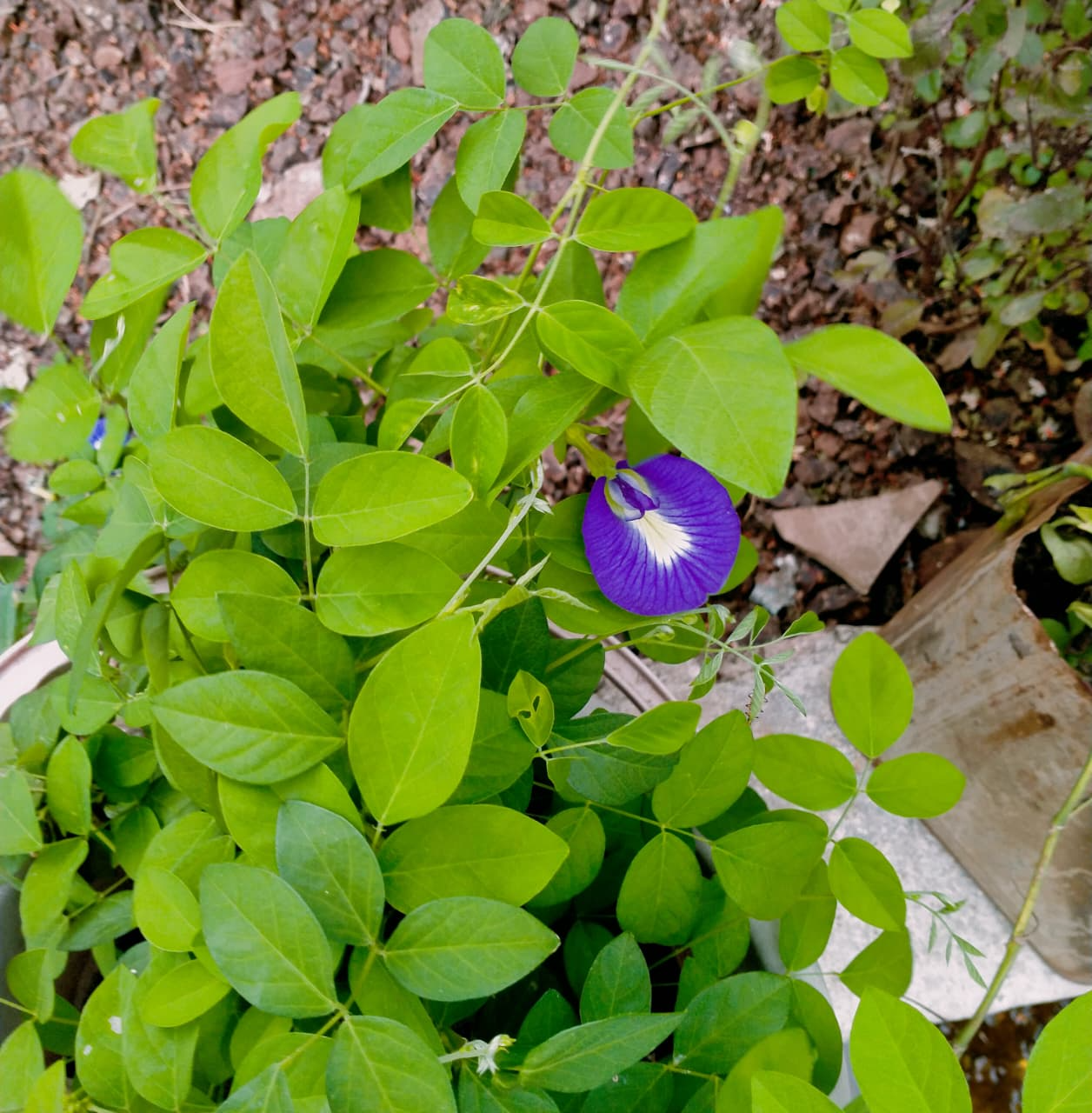
Fig. Shankhpushpi (Convolvulus pluricaulis Choisy)
|
Taxonomic Rank |
Details |
|
Kingdom |
Plantae |
|
Division |
Angiospermae (Flowering plants) |
|
Class |
Dicotyledonae |
|
Order |
Solanales |
|
Family |
Convolvulaceae (Morning Glory family) |
|
Genus |
Convolvulus |
|
Species |
Convolvulus pluricaulis Choisy |
(GABA)-which are the components that most probably learn and remember on the occasion of the studies. The antioxidant part of the herb also shields the neuronal cells from the oxidative attack that keeps the brain healthy in general. Because of such features, Shankhpushpi is considered as good as the synthetic CNS stimulants and even better without the side effects of the latter group as a wild guess at this point experiments confirm its role as such actually. With so many questions to answer-from mechanism to therapeutic potential and beyond- comprehensive studies on Shankhpushpi as a cognitive-enhancer continue uninterrupted.
Botanical?????? name: Convolvulus pluricaulis Choisy (family Convolvulaceae). There is some literature that names the plant as Convolvulus prostrates or Evolvulus alsinoides depending on the region. Hence, it is essential to carry out a precise botanical identification for research that can be repeated.
Medium: Medhya Rasayana (intellect-promoting) in Ayurveda used for memory enhancement, insomnia, anxiety, nerve debility, and as an adjunct in formulations for epilepsy and mental ??????fatigue.
Phytochemical?????? exploration has revealed diverse compound classes in Shankhpushpi:
- Alkaloids: shankhapushpine, convolvine and a mixture of other alkaloids chemically related to neuroactivity.
- Flavonoids: quercetin, kaempferol and glycosides with antioxidant and neuritogenic activities.
- Coumarins, glycosides, sterols and fatty alcohols: β-sitosterol glycoside, octacosanol, hydroxy cinnamic derivatives and volatile oil components.
The phytochemical profile is dependent on the plant part, solvent of extraction, location and processing; the consistency of the results is highly dependent on ??????standardization.
4. Pharmacology — Preclinical Evidence
4.1 Nootropic and Memory-Enhancing Activity
Preclinical studies reveal that extracts have a positive effect on cognitive functions of animals and are able to reverse amnesia. These studies in rodents have utilized behavioral paradigms such as passive avoidance, elevated plus maze, Morris water maze and scopolamine-induced amnesia ??????models.
4.2 Antioxidant and Neuroprotective Effects
The Shankhpushpi extracts lead to a reduction in the oxidative stress markers, revival of the antioxidant enzyme levels, and neuronal protection in the models induced by toxins.
4.3 Cholinergic Modulation and Anti-AChE Activity
Shankhpushpi is a potent inhibitor of acetylcholinesterase (AChE) activity, hereby making cholinergic neurotransmission more ??????effective
4.4 Anti-Stress, Adaptogenic and Anxiolytic Properties
Behavioral tests show that the drug has anxiolytic and anti-stress effects, which help to alleviate stress-induced cognitive impairment.
5. Mechanisms of Action — Integrative View
Several mechanisms are responsible for the CNS stimulant effect of Shankhpushpi:
1. Cholinergic enhancement.
2. Antioxidant and anti-apoptotic effects.
3. Better cerebral ??????perfusion/metabolism.
6. Clinical and Human Data
There are only a few clinical trials, however, initial evidence shows that the patient may benefit from increased attention span, memory, and reduced mental fatigue.
7. Safety, Toxicity and Drug Interactions
Experiments on animals reveal a broad safety range. Side effects in humans are minimal, nevertheless, the possibility of drug interactions with anticholinergics and acetylcholinesterase inhibitors should not be ??????disregarded.
8. Standardization, Formulations and Quality Control
Main concerns are proper identification of botanicals, standardization of extracts, and uniform dosage forms. The enhancement of bioavailability is still not resolved.
9. Gaps, Limitations and Future Directions
The most important research gaps to consider are the absence of well-designed clinical trials, partial safety data, requirement of standardization, and few pharmacodynamic studies in ??????humans.
10. CONCLUSION
Preclinical?????? data provide support for Shankhpushpi as a safe and effective use of nature as a CNS stimulant and a nootropic agent. But it needs more clinical evidence and standardized extracts before it can be given freely.
Shankhpushpi (Convolvulus pluricaulis Choisy) is one of the most significant Medhya Rasayana plants in Ayurvedic medicine, which has been traditionally used as a memory enhancer, anxiolytic, and energizer. A considerable number of preclinical studies reveal in vivo and in vitro a complex neuropharmacological profile of the drug with effects including nootropic, antioxidant, neuroprotective, cholinergic-modulating, and adaptogenic. The main phytoconstituents - such as alkaloids (shankhapushpine, convolvine), flavonoids (quercetin, kaempferol), coumarins, sterols, and glycosides - collectively implement the neurotropic actions of the plant through various mechanisms like acetylcholinesterase inhibition, free-radical scavenging, neurotransmitter modulation, and improved cerebral ??????circulation.
REFERENCES



Sase Suraj Arjun*, Najiya Salim Shaikh, Sagar Nikita Sanjay, Review on Shankhpushpi (Convolvulus pluricaulis Choisy) as a CNS Stimulant, Int. J. of Pharm. Sci., 2025, Vol 3, Issue 11, 2157-2160 https://doi.org/10.5281/zenodo.17606921
 10.5281/zenodo.17606921
