
View Article

Abstract

Neem (Azadirachta indica) is an important medicinal plant used in traditional medicine. Different parts of neem such as leaves, bark, and seeds have many therapeutic properties. Neem shows antimicrobial, antioxidant, anti-inflammatory, and antidiabetic activities. It is commonly used to treat skin diseases, infections, and dental problems. Because of its medicinal value, neem is widely used in herbal and pharmaceutical products.

Keywords

Neem, Azadirachta indica, Medicinal plant, Antimicrobial activity, Antioxidant activity, Anti-inflammatory, Antidiabetic, Bioactive compounds, Traditional medicine, Herbal medicine.

Introduction

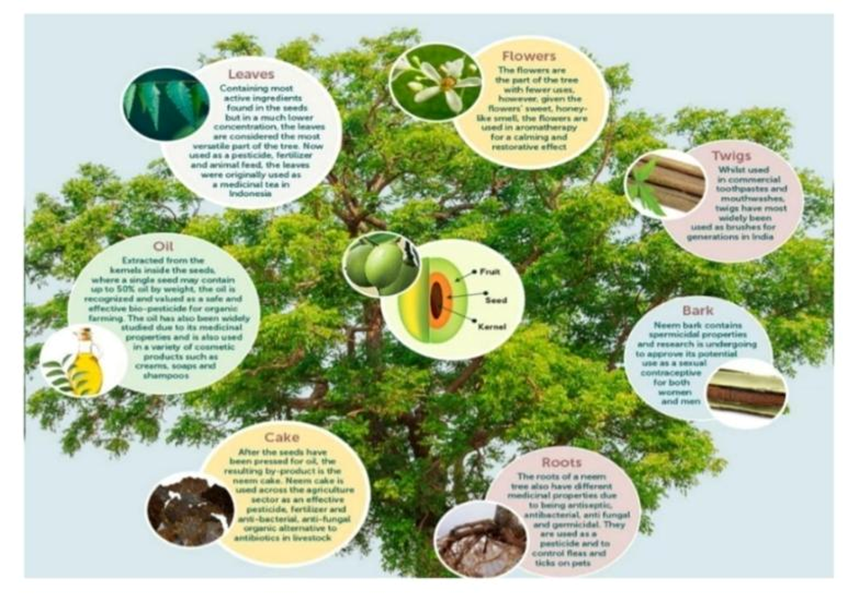
Neem (Azadirachta indica) is a well-known medicinal plant widely used in traditional Indian medicine. It belongs to the family Meliaceae. Neem has been used for thousands of years in Ayurveda, Unani, and Siddha systems of medicine. Almost all parts of the neem tree such as leaves, bark, seeds, flowers, and oil have medicinal value.

BOTANICAL DESCRIPTION

Scientific Name: Azadirachta indica

Family: Meliaceae

Common Name: Neem

Parts Used: Leaves, bark, seeds, flowers, oil

Distribution: India and tropical regions
CHEMICAL CONSTITUENTS

Neem contains many active chemical compounds such as:
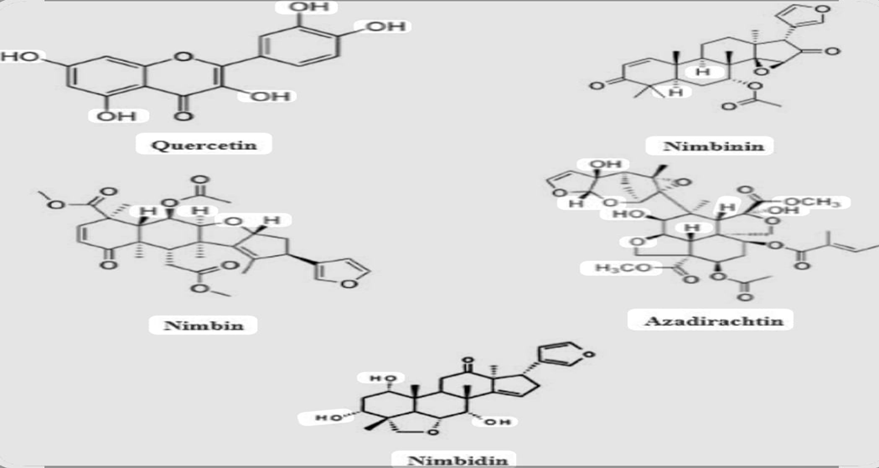
  • Azadirachtin
  • Nimbin
  • Nimbidin
  • Salannin
  • Quercetin

MEDICINAL USES OF NEEM

Neem is used in:

  • Skin diseases like acne, eczema, and psoriasis
  • Wound healing and infections
  • Dental problems
  • Diabetes management
  • Blood purification

PHARMACOLOGICAL ACTIVITIES

Neem shows various pharmacological activities:

Antibacterial:

Neem has antibacterial properties that kill bacteria and stop their growth. It is effective against many disease-causing bacteria and is used for skin infections, wounds, and dental care. Neem leaves, bark, and seeds contain active compounds like nimbin and nimbidin.

Antifungal:

Neem has antifungal properties that stop the growth of harmful fungi. It is useful in treating skin infections like ringworm and dandruff. Neem leaves and seeds contain active compounds such as nimbidin and azadirachtin.

Anti-inflammatory:

Neem helps to reduce swelling, pain, and redness. It is useful in wounds, skin problems, and inflammatory conditions due to compounds like nimbidin and flavonoids.

Antioxidant:

Neem protects the body from damage by free radicals. Its leaves and bark contain flavonoids, polyphenols, and vitamin C, which help prevent cell damage and aging.

Antidiabetic:

Neem helps lower blood sugar and improve insulin action. Its leaves and bark contain compounds like nimbidin that support diabetes management.

ROLE OF NEEM IN SKIN DISORDERS

Neem is very useful for skin health. It helps treat acne, pimples, eczema, psoriasis, wounds, and fungal infections. Neem leaves, bark, and oil have antibacterial, antifungal, anti-inflammatory, and antioxidant properties that reduce infection, swelling, and skin damage.

It is commonly used in herbal creams, soaps, and oils to keep the skin healthy and clear.

ROLE OF NEEM IN DENTAL CARE

Neem is very useful for keeping our teeth and gums healthy. Its leaves and twigs have antibacterial properties that kill germs in the mouth. Regular use of neem can: Prevent tooth decay by stopping harmful bacteria.Stop gum diseases like gingivitis because it reduces inflammation. Freshen breath naturally. Neem is often used in toothpaste, mouthwashes, or chewing sticks for oral hygiene.

ROLE OF NEEM IN DIABETES

Neem helps in controlling blood sugar levels. Its leaves, bark, and seeds have compounds that can improve insulin activity and reduce sugar in the blood. Regular use of neem may help prevent complications of diabetes, like heart problems or kidney damage

SAFETY AND TOXICITY

Neem is generally safe when used in small amounts, like in food, toothpaste, or skin products. High doses, especially of neem oil or seeds, can be toxic and may cause stomach problems, liver damage, or even serious effects in children. Pregnant women should avoid neem as it may cause complication.

CONCLUSION

Neem (Azadirachta indica) is a medicinal plant with many health benefits. It has antibacterial, antifungal, anti-inflammatory, antioxidant, and antidiabetic properties. It is useful for skin, teeth, and overall health, but high doses can be toxic, so it should be used carefully.

REFERENCES

  1. Biswas K. et al. (2002). Biological activities and medicinal properties of neem. Current Science, 82(11), 1336–1345.
  2. Subapriya R., Nagini S. (2005). Medicinal properties of neem leaves. Current Medicinal Chemistry, 12(18), 2201–2213.
  3. Biswas S., et al., 2000. Neem and its therapeutic potentials. International Journal of Pharmacology, 36(1), 17–24.
  4. Subramanian P., et al., 2001. Antidiabetic effects of Neem leaves in rats. Journal of Ethnopharmacology, 76, 233–238.
  5. Kumar S., et al., 2010. Medicinal uses of Neem: A review. Asian Pacific Journal of Tropical Biomedicine, 1(3), 242–247.
  6. Koul O., et al., 1990. Neem: A tree for solving global problems.
  7. WHO, 2019. Azadirachta indica (Neem) monograph. World Health Organization.
  8. Boeke S.J., et al., 2004. Safety evaluation of Neem and its products. Food and Chemical Toxicology, 42, 971–980.

Reference

  1. Biswas K. et al. (2002). Biological activities and medicinal properties of neem. Current Science, 82(11), 1336–1345.
  2. Subapriya R., Nagini S. (2005). Medicinal properties of neem leaves. Current Medicinal Chemistry, 12(18), 2201–2213.
  3. Biswas S., et al., 2000. Neem and its therapeutic potentials. International Journal of Pharmacology, 36(1), 17–24.
  4. Subramanian P., et al., 2001. Antidiabetic effects of Neem leaves in rats. Journal of Ethnopharmacology, 76, 233–238.
  5. Kumar S., et al., 2010. Medicinal uses of Neem: A review. Asian Pacific Journal of Tropical Biomedicine, 1(3), 242–247.
  6. Koul O., et al., 1990. Neem: A tree for solving global problems.
  7. WHO, 2019. Azadirachta indica (Neem) monograph. World Health Organization.
  8. Boeke S.J., et al., 2004. Safety evaluation of Neem and its products. Food and Chemical Toxicology, 42, 971–980.

Photo
Trupti Wakade
Corresponding author

Dattakala College of Pharmacy, Swami Chincholi, Bhigwan, Daund, Pune, Maharashtra, 413130

Photo
Amruta Kumbhar
Co-author

Dattakala College of Pharmacy, Swami Chincholi, Bhigwan, Daund, Pune, Maharashtra, 413130

Photo
Vijay Sonavane
Co-author

Dattakala College of Pharmacy, Swami Chincholi, Bhigwan, Daund, Pune, Maharashtra, 413130

Trupti Wakade, Amruta Kumbhar, Vijay Sonavane, Role of Neem in Health and Disease Management, Int. J. of Pharm. Sci., 2026, Vol 4, Issue 1, 3716-3719. https://doi.org/10.5281/zenodo.18442434

More related articles
Adverse Drug Reactions Associated With Antibiotics...
Hari Singh Rathore, Mehul Soni, Bhoomi Soni, Narendra Bheemraj Pa...
Innovations In Nanotechnology and Advances in Brea...
Nikita Mane, Pankaj Mandpe, Neeraj Kotian, Princy Singh, ...
Green Tea Catechins-Based Herbal Churna: A Novel A...
Tejaswini Taware, Sakshi Shahu, Sunil Bhagat, Dr. Swati Deshmukh,...
Ban On Hookah Smoking- An Applaudable Law Passed By The State Of Haryana Safegua...
J.C. Balachandar, M. Jayachandran, Shiv Swaroop Singh IRS, Saanvi Agrawal, S. Irshad Ahamed, A. Ayes...
Standardization of Chyavanaprasam K Tab: A Diabetic-Friendly Tablet Based on Cla...
Sibi Narayanan, Reeshma C. R., Smitha Francis, Anju Antony, Veena K., ...
Related Articles
Detail review on pharmacokinetic parameters, efficacy and safety of Ertugliflozi...
Priyadarshini Chaudhari, Mona Gupta, Dr. Khushbu Patel, Dr. C. N. Patel, ...
CRISPR-Cas9: A Magical Revolution in Stem Cells Gene Therapy...
Pradip Kushwaha, Avinash Maurya, Sudheer Yadav, Riya Singh, Shweta Mishra, ...
In-Situ Gel: A Gastro-retentive Drug Delivery System ...
S. G. Patil, J. J. Dandale, R. M. Savakhande, ...
Adverse Drug Reactions Associated With Antibiotics In Indian Population : A Revi...
Hari Singh Rathore, Mehul Soni, Bhoomi Soni, Narendra Bheemraj Parihar, Mahendra Singh Rathore, ...
More related articles
Adverse Drug Reactions Associated With Antibiotics In Indian Population : A Revi...
Hari Singh Rathore, Mehul Soni, Bhoomi Soni, Narendra Bheemraj Parihar, Mahendra Singh Rathore, ...
Innovations In Nanotechnology and Advances in Breast Cancer Treatment ...
Nikita Mane, Pankaj Mandpe, Neeraj Kotian, Princy Singh, ...
Green Tea Catechins-Based Herbal Churna: A Novel Approach for Alzheimer’s Dise...
Tejaswini Taware, Sakshi Shahu, Sunil Bhagat, Dr. Swati Deshmukh, ...
Adverse Drug Reactions Associated With Antibiotics In Indian Population : A Revi...
Hari Singh Rathore, Mehul Soni, Bhoomi Soni, Narendra Bheemraj Parihar, Mahendra Singh Rathore, ...
Innovations In Nanotechnology and Advances in Breast Cancer Treatment ...
Nikita Mane, Pankaj Mandpe, Neeraj Kotian, Princy Singh, ...
Green Tea Catechins-Based Herbal Churna: A Novel Approach for Alzheimer’s Dise...
Tejaswini Taware, Sakshi Shahu, Sunil Bhagat, Dr. Swati Deshmukh, ...