

We use cookies to ensure our website works properly and to personalise your experience. Cookies policy
Dadhichi Collage of Pharmacy, Cuttack, Odisha, India
Self-driving drug discovery is emerging as a transformative paradigm that combines artificial intelligence, automated synthesis, and advanced biological validation to accelerate the development of new therapeutics. Traditional pipelines often treat drug discovery and drug delivery as separate processes, leading to late-stage failures due to poor formulation, limited targeting, or inadequate clinical translation. In contrast, integrated closed-loop platforms connect AI-guided molecular design with robotic experimentation, organoid-based disease modeling, and adaptive nanomedicine optimization in a continuous feedback cycle. Reinforcement learning and generative models enable rapid exploration of chemical space, while automated laboratories provide real-time synthesis and screening of candidate compounds. Patient-derived organoids and organ-on-chip systems further improve predictive accuracy by capturing complex human-like responses. Simultaneously, next-generation drug delivery systems, including lipid nanoparticles, stimuli-responsive carriers, and biomimetic nanovesicles, can be optimized alongside drug candidates to enhance tissue specificity and therapeutic index. This review highlights recent advances in autonomous discovery–delivery integration, discusses key applications in drug-resistant infections, glioblastoma, and precision oncology, and outlines regulatory and translational challenges. Closed-loop self-driving frameworks may redefine future therapeutic development by enabling faster, more personalized, and delivery-aware drug innovation.
The process of discovering and developing new therapeutic agents has historically been characterized by long timelines, high attrition rates, and escalating financial burdens. Despite major advances in molecular biology, medicinal chemistry, and clinical pharmacology, the translation of promising scientific insights into approved medicines remains inefficient. Conventional drug discovery pipelines typically require more than a decade of development and involve substantial risk of failure, particularly in late-stage clinical trials. These failures are frequently attributed not only to insufficient target engagement or unexpected toxicity, but also to inadequate delivery of the therapeutic agent to the intended tissue microenvironment. As a result, the pharmaceutical landscape is increasingly shifting toward integrated, technology-driven strategies that can accelerate discovery while simultaneously addressing formulation and delivery barriers.
In recent years, artificial intelligence (AI) has emerged as a disruptive force in drug discovery. Machine learning models, generative algorithms, and deep neural networks are now capable of analyzing vast chemical and biological datasets to predict molecular properties, identify novel targets, and propose candidate compounds with optimized pharmacological profiles. AI-guided approaches have demonstrated potential in reducing the time required for hit identification and lead optimization, particularly through computational screening of chemical space that would otherwise be experimentally inaccessible. However, despite the excitement surrounding AI-driven drug design, many current frameworks remain limited by their dependence on static datasets, fragmented workflows, and insufficient experimental feedback. In most cases, computational predictions are generated upstream, while laboratory synthesis, biological testing, and formulation development occur downstream in separate, disconnected stages.
This separation highlights a fundamental problem in modern drug development: drug discovery and drug delivery are often treated as independent disciplines, even though clinical success depends on their convergence. A molecule with excellent in vitro potency may fail in vivo due to poor solubility, rapid clearance, inability to cross biological barriers, or lack of tissue specificity. Similarly, advanced delivery systems may be unable to compensate for suboptimal molecular properties if delivery considerations are introduced too late in the pipeline. These challenges are particularly evident in complex disease settings such as drug-resistant tuberculosis, glioblastoma, and heterogeneous cancers, where therapeutic resistance, anatomical barriers, and patient-to-patient variability severely limit the effectiveness of conventional approaches.
To overcome these limitations, the concept of “self-driving” or autonomous drug discovery has gained increasing attention. Self-driving drug discovery refers to an integrated closed-loop framework in which AI-based molecular design is directly coupled with automated chemical synthesis, high-throughput biological screening, and iterative optimization through real-time feedback. Unlike traditional linear pipelines, closed-loop systems operate as adaptive cycles: computational models generate hypotheses, robotic laboratories execute experiments, biological platforms provide response data, and AI systems learn from experimental outcomes to refine subsequent designs. This approach is inspired by autonomous engineering systems in other fields, where continuous learning and automation enable rapid optimization of complex processes.
A critical and underexplored dimension of this paradigm is the integration of next-generation drug delivery systems (DDS) within the self-driving loop. Nanomedicine platforms, lipid nanoparticles, polymeric carriers, stimuli-responsive systems, and biomimetic vesicles have transformed the delivery landscape by enabling targeted, controlled, and tissue-specific transport of therapeutics. These delivery technologies are no longer limited to improving pharmacokinetics; they increasingly shape therapeutic mechanisms, immune interactions, and resistance evolution. Yet, delivery design is rarely optimized in parallel with molecular discovery. The next frontier therefore lies in combining AI-driven discovery with delivery-aware formulation engineering, creating autonomous pipelines that generate not only potent drug candidates but also clinically viable delivery solutions.
Recent advances in reinforcement learning, generative chemistry, and multi-objective optimization provide a foundation for this integration. Reinforcement learning algorithms can iteratively improve molecular design by rewarding candidate structures that satisfy multiple constraints, such as potency, selectivity, metabolic stability, and formulation compatibility. Similarly, generative models can propose chemical structures tailored for encapsulation within specific nanocarriers or engineered for improved permeability across biological barriers. These computational capabilities become significantly more powerful when paired with automated synthesis platforms, including robotic chemistry workstations and flow chemistry systems that can rapidly produce and test candidate molecules.
In parallel, the development of more predictive biological validation platforms has strengthened the feasibility of closed-loop discovery. Traditional two-dimensional cell culture models often fail to capture the complexity of human tissue architecture, immune interactions, and microenvironmental heterogeneity. Patient-derived organoids and organ-on-chip systems have therefore emerged as transformative tools for drug screening and mechanistic evaluation. Organoids can replicate key structural and functional features of tumors, infections, and organ-specific disease states, enabling more clinically relevant assessment of drug efficacy and toxicity. When incorporated into autonomous workflows, these systems can provide high-content phenotypic feedback that guides AI optimization in a biologically meaningful manner.
The convergence of AI, robotics, organoid validation, and nanomedicine delivery is particularly relevant for diseases where therapeutic failure is strongly linked to delivery barriers and resistance mechanisms. Drug-resistant tuberculosis remains a global health emergency, driven by the emergence of multidrug-resistant (MDR) and extensively drug-resistant (XDR) strains. Effective therapy requires not only new antimicrobials but also targeted delivery into macrophages and granulomatous lesions where bacteria persist. Nanoparticle-based antibiotic delivery, combined with AI-driven resistance prediction, represents a promising avenue for accelerating TB drug development.
Similarly, glioblastoma remains one of the most lethal brain malignancies, largely due to the blood–brain barrier (BBB), tumor heterogeneity, and rapid adaptive resistance. Many therapeutics fail not because of insufficient molecular potency, but because they cannot reach infiltrative tumor regions at therapeutic concentrations. Closed-loop systems that co-optimize BBB-penetrating delivery vehicles alongside drug candidates could provide a new pathway for meaningful clinical progress.
Precision oncology further illustrates the need for adaptive, personalized discovery–delivery frameworks. Cancer is not a single disease but a collection of evolving molecular subtypes, often requiring individualized therapeutic strategies. Patient-derived organoids combined with AI-guided drug design and targeted nanocarriers offer the potential for rapid development of patient-specific treatment regimens. Autonomous pipelines could enable iterative optimization based on real-time tumor response, redefining the concept of personalized medicine.
Despite its promise, the implementation of self-driving discovery–delivery ecosystems faces significant challenges. Data quality, model interpretability, experimental reproducibility, and regulatory acceptance remain critical barriers. Autonomous systems require robust validation frameworks to ensure safety, transparency, and clinical reliability. Regulatory agencies must adapt to evaluate AI-generated candidates, automated synthesis workflows, and adaptive nanomedicine platforms, all of which challenge traditional drug approval paradigms. Ethical considerations, including accountability in autonomous decision-making and equitable access to advanced technologies, must also be addressed.
The scope of this review is to provide a comprehensive and forward-looking analysis of self-driving drug discovery integrated with next-generation drug delivery systems. By examining the technological foundations of AI-guided molecular generation, robotic synthesis automation, organoid-based screening, and adaptive nanomedicine engineering, this review highlights the emergence of closed-loop therapeutic innovation. Particular emphasis is placed on high-impact disease applications, including drug-resistant infections, glioblastoma, and precision oncology, where delivery-aware autonomous pipelines may offer transformative clinical benefits. Furthermore, this work discusses translational bottlenecks, regulatory perspectives, and future directions necessary for the maturation of autonomous discovery platforms.
The novelty of this review lies in its unified framework that connects autonomous drug discovery with delivery optimization as a single iterative system rather than separate downstream processes. By positioning nanomedicine and formulation design as core components of the closed-loop pipeline, this review advances a next-generation vision of therapeutic development: one in which drugs and delivery vehicles are co-designed, experimentally validated in predictive human-relevant models, and continuously optimized through AI-driven feedback. Such integrated self-driving ecosystems may represent the future of drug innovation, enabling faster, more precise, and clinically translatable therapeutic solutions.
Table 1. Key Components of Self-Driving Closed-Loop Drug Discovery Integrated with Next-Generation Drug Delivery
|
Closed-Loop Module |
Key Technology |
Role in Autonomous Pipeline |
Output Generated |
Major Advantage |
|
AI Molecular Design |
Generative AI, Transformers, Reinforcement Learning |
Designs novel drug candidates with multi-objective constraints |
Optimized lead molecules |
Faster exploration of chemical space |
|
Automated Synthesis |
Robotic chemistry, Flow synthesis platforms |
Produces AI-designed compounds with minimal human intervention |
Rapid compound libraries |
Reduces time from design to testing |
|
Biological Validation |
Organoids, Organ-on-chip, High-content screening |
Tests efficacy and toxicity in human-relevant models |
Functional response data |
Better prediction of clinical outcomes |
|
Delivery Optimization |
Lipid nanoparticles, Stimuli-responsive nanocarriers, Biomimetic DDS |
Co-optimizes formulation for targeting and stability |
Delivery-ready therapeutic candidates |
Enhances tissue specificity and reduces side effects |
|
Omics Feedback Integration |
Single-cell RNA-seq, Proteomics, Metabolomics |
Provides mechanistic feedback for iterative AI learning |
MoA + resistance insights |
Enables adaptive redesign cycles |
|
Iterative Closed Loop Learning |
Active learning, Bayesian optimization |
Continuously improves drug + DDS design based on results |
Next-generation optimized candidates |
Accelerates discovery with real-time refinement |
Table 2. Emerging Disease Applications of Autonomous Drug Discovery–Delivery Closed-Loop Systems
|
Disease Focus Area |
Key Challenge in Conventional Therapy |
Closed-Loop Advantage |
Role of Nano-DDS Integration |
Future Clinical Potential |
|
Drug-Resistant Tuberculosis (MDR/XDR-TB) |
Poor penetration into granulomas and macrophages, resistance evolution |
AI-guided design of resistance-aware antimicrobials |
Targeted nanoparticle antibiotics for intracellular delivery |
High global priority for AMR control |
|
Glioblastoma |
Blood–brain barrier limits drug delivery, rapid tumor adaptation |
Autonomous optimization of BBB-permeable candidates |
Brain-targeted lipid nanoparticles and biomimetic carriers |
Breakthrough potential in neuro-oncology |
|
Precision Oncology |
Tumor heterogeneity and patient-specific drug response |
Organoid-driven personalized closed-loop optimization |
Tumor-targeted nanocarriers + adaptive formulations |
Strong future for individualized cancer therapy |
|
Chronic Viral Infections |
Viral persistence and immune escape |
AI models predict escape mutations and drug redesign |
Long-acting nano-formulations for sustained antiviral delivery |
Emerging area beyond vaccines |
|
Rare Genetic Disorders |
Limited targets and poor delivery of RNA/gene therapies |
Closed-loop RNA therapeutic development |
Next-gen LNPs and gene-editing delivery systems |
Rapidly expanding clinical pipeline |
1. From Linear Pipelines to Autonomous Discovery Ecosystems
Drug discovery has traditionally followed a sequential structure: target identification is followed by hit discovery, lead optimization, preclinical validation, formulation development, and finally clinical translation. While this staged approach has produced many successful medicines, it is inherently slow and vulnerable to late-stage failure. A major reason is that decision-making is distributed across disconnected phases, with limited opportunity for real-time learning between computational predictions, experimental outcomes, and delivery constraints.
The emergence of self-driving drug discovery represents a structural shift from linear progression to closed-loop optimization. In an autonomous ecosystem, drug candidates are not generated once and evaluated downstream; instead, they are iteratively redesigned through continuous feedback between artificial intelligence engines, automated synthesis platforms, and biologically relevant testing systems. This transition parallels developments in autonomous engineering, where iterative control systems outperform static design approaches by continuously adapting to observed outcomes.
In the context of therapeutics, the closed-loop paradigm becomes particularly powerful when drug discovery is integrated with delivery-aware constraints. Rather than optimizing potency alone, next-generation pipelines increasingly treat developability, formulation compatibility, and tissue targeting as co-equal objectives from the earliest design stages.
2. AI as the Computational Core of Self-Driving Drug Discovery
Artificial intelligence has become the primary computational driver enabling autonomous discovery. Unlike classical in silico screening, which relies on docking or rule-based filters, modern AI systems learn complex molecular representations directly from chemical and biological data. These models can identify subtle structure–activity relationships, anticipate pharmacokinetic liabilities, and propose entirely novel chemical entities beyond known scaffolds.
AI frameworks in drug discovery can be broadly understood as operating across three interconnected layers:
(i) Predictive modeling, where molecular properties such as binding affinity, solubility, toxicity, or metabolic stability are estimated.
(ii) Generative design, where new candidate structures are constructed algorithmically rather than retrieved from existing libraries.
(iii) Decision optimization, where candidates are ranked and iteratively improved under multi-objective constraints.
The self-driving paradigm requires all three layers to function synergistically, since autonomous systems must not only evaluate compounds but actively propose improved successors based on experimental feedback.
3. Molecular Representation Learning: The Foundation of Intelligent Design
A central challenge in AI-driven chemistry is representing molecules in a form that computational systems can interpret. Traditional descriptors such as fingerprints or physicochemical parameters provide limited resolution, particularly when predicting complex biological behaviors.
Deep learning models instead rely on learned representations derived from:
Graph neural networks (GNNs) have become particularly influential because they preserve structural topology while enabling message passing between atomic environments. This allows models to learn how local functional groups influence global pharmacological properties, which is critical in lead optimization.
For delivery-integrated discovery, representation learning must also encode formulation-relevant features such as lipophilicity balance, ionization states, and nanoparticle encapsulation potential. These parameters strongly shape whether a compound can be translated into a clinically viable delivery system.
4. Generative AI and De Novo Chemical Space Exploration
One of the most transformative capabilities of AI is de novo molecular generation. Instead of screening millions of known compounds, generative models create candidates that satisfy predefined biological and physicochemical objectives.
Key generative approaches include:
The importance of generative design within self-driving discovery is that it enables continuous hypothesis production. Closed-loop systems require an AI engine capable of proposing new candidates immediately after experimental feedback is obtained, allowing rapid iteration rather than slow human-driven redesign cycles.
However, generative novelty alone is insufficient. Molecules must also be synthesizable, biologically relevant, and compatible with downstream delivery strategies.
5. Reinforcement Learning: The Optimization Engine of Autonomous Discovery
Reinforcement learning (RL) provides the most direct computational analogy to autonomous control systems. In RL-based drug discovery, the AI agent is trained to modify or construct molecules in a way that maximizes a reward function.
The reward function may integrate:
Unlike supervised learning, which depends on static labeled datasets, RL can operate dynamically, improving candidate quality through iterative exploration and exploitation.
This makes RL particularly suited for closed-loop environments, where experimental outcomes continuously update the reward landscape.
For example, if organoid testing reveals unexpected toxicity, the RL reward can be adjusted in real time to penalize structural motifs associated with adverse phenotypes, driving the next design cycle toward safer analogs.
6. Multi-Objective Optimization: Co-Designing Drug and Delivery
A defining feature of next-generation autonomous discovery is multi-objective optimization. Classical medicinal chemistry often prioritizes potency first, addressing delivery challenges later through formulation engineering. This separation contributes to clinical attrition.
Self-driving pipelines instead optimize across multiple coupled dimensions:
This co-design principle is particularly important in nanomedicine-integrated discovery. Many potent small molecules fail because they cannot be formulated effectively or accumulate non-specifically in healthy tissues. Conversely, delivery platforms can only perform optimally when molecular properties are aligned with encapsulation and release kinetics.
Thus, autonomous systems increasingly treat the drug candidate and the delivery vehicle as a combined therapeutic object rather than independent components.
7. Active Learning and Experimental Feedback Integration
The closed-loop concept depends on continuous learning from experimental outcomes. Active learning strategies enable AI models to select the most informative experiments rather than testing candidates randomly.
In practice, active learning may guide:
By prioritizing experiments with maximal information gain, autonomous platforms reduce resource expenditure while accelerating convergence toward optimal candidates.
This feedback-driven approach distinguishes self-driving discovery from conventional AI screening, which often remains disconnected from real laboratory iteration.
8. Disease-Relevant Motivation: Why Autonomous AI Matters
The value of AI–RL closed-loop discovery becomes most apparent in diseases where conventional development repeatedly fails:
Drug-resistant tuberculosis requires antimicrobials optimized not only for potency but for intracellular delivery into macrophages and penetration into granulomatous lesions.
Glioblastoma demands co-optimization of molecular efficacy and BBB-crossing delivery systems, since most drugs cannot reach infiltrative tumor margins.
Precision oncology requires patient-specific adaptation, where organoid-guided response data can reshape AI optimization in near real time.
These contexts highlight that the next frontier is not merely faster discovery, but discovery that is inherently delivery-aware, resistance-aware, and clinically translatable.
9. Robotic Chemistry as the Physical Engine of Autonomous Drug Discovery
While artificial intelligence provides the computational intelligence of self-driving discovery, robotic synthesis platforms represent its physical execution layer. Without automation in chemical experimentation, AI-generated hypotheses remain theoretical, constrained by the slow and labor-intensive nature of conventional medicinal chemistry workflows.
Robotic chemistry transforms synthesis from a manual artisanal process into a programmable, scalable, and reproducible system. In autonomous pipelines, robotic workstations can execute reaction planning, reagent dispensing, purification, and compound characterization with minimal human intervention. This enables rapid translation of AI-designed molecules into experimentally validated candidates, reducing the design–make–test cycle from months to days.
Self-driving laboratories differ from classical high-throughput synthesis in that they are not merely parallelized. Instead, they operate as adaptive experimental systems, where each synthesis outcome directly informs the next computational iteration. This closed-loop integration is essential for accelerating lead optimization, particularly in chemically complex or rapidly evolving disease contexts.
10. Automated Reaction Optimization and Flow Chemistry Platforms
One of the most impactful contributions of robotics is automated reaction optimization. Traditional reaction development requires extensive trial-and-error to identify optimal catalysts, solvents, temperatures, and reaction times. Autonomous platforms instead use algorithm-guided exploration of reaction conditions, often employing Bayesian optimization or reinforcement learning to converge toward high-yield synthetic routes efficiently.
Flow chemistry further strengthens the self-driving paradigm by enabling continuous synthesis rather than batch-based experimentation. Flow systems offer several advantages:
For drug discovery, flow synthesis allows autonomous platforms to produce structurally diverse candidates in a highly controlled environment, supporting iterative cycles of AI-driven redesign.
In delivery-integrated discovery, flow chemistry can also support the synthesis of functionalized molecules optimized for nanoparticle conjugation or encapsulation, ensuring compatibility between drug structure and formulation strategy.
11. Automated Formulation and Nano-DDS Screening as a Parallel Loop
A critical limitation of conventional pipelines is that formulation and drug delivery considerations are often introduced late, after a lead compound has been selected. This delay contributes significantly to translational failure, as many potent molecules exhibit poor solubility, instability, or unfavorable biodistribution.
In autonomous discovery frameworks, formulation becomes an active co-optimized variable. Robotic platforms are increasingly capable of automated formulation screening, where nanocarriers are generated and evaluated in parallel with molecular candidates.
Key delivery platforms integrated into closed-loop workflows include:
Robotic formulation systems can systematically vary parameters such as lipid composition, polymer ratios, surface ligands, and particle size. The resulting delivery performance metrics, including encapsulation efficiency, release kinetics, and targeting specificity, feed back into AI optimization.
This establishes a dual closed-loop structure: one loop optimizing molecular properties, and another optimizing delivery architecture, both converging toward a clinically translatable therapeutic system.
12. Organoids and Organ-on-Chip Models as the Biological Feedback Core
Autonomous discovery requires experimental validation systems that accurately represent human disease biology. Traditional two-dimensional cell cultures provide limited predictive value, often failing to capture the structural complexity, immune interactions, and microenvironmental heterogeneity that determine therapeutic response in vivo.
Patient-derived organoids and organ-on-chip systems have emerged as essential biological engines for closed-loop discovery. These models offer several transformative capabilities:
Organoids therefore provide response data that is significantly more clinically relevant than conventional assays. In autonomous pipelines, organoid phenotypes can serve as real-time feedback signals for AI learning.
For example, if a candidate compound demonstrates efficacy in tumor organoids but fails to penetrate deeper cell layers, delivery optimization can be triggered within the same loop, guiding nanoparticle redesign.
13. Disease-Specific Closed-Loop Applications
13.1 Drug-Resistant Tuberculosis
Drug-resistant TB illustrates the importance of integrating delivery optimization within autonomous pipelines. Mycobacterium tuberculosis persists within macrophages and granulomas, where drug penetration is often insufficient. Conventional antibiotics may show potency in vitro but fail to reach intracellular niches at therapeutic concentrations.
Closed-loop systems can address this by:
Such delivery-aware optimization may accelerate the discovery of therapeutics capable of suppressing resistance evolution while improving lesion-specific exposure.
13.2 Glioblastoma and Blood–Brain Barrier Constraints
Glioblastoma remains one of the most challenging cancers due to the blood–brain barrier and the infiltrative nature of tumor growth. Many drug candidates fail not because they lack potency, but because they cannot cross the BBB or accumulate at tumor margins.
Autonomous closed-loop discovery can integrate:
By embedding BBB penetration and delivery constraints into the reward functions of reinforcement learning models, autonomous systems can generate candidates inherently optimized for neuro-oncology translation.
13.3 Precision Oncology and Personalized Closed Loops
Cancer heterogeneity makes one-size-fits-all therapeutics increasingly ineffective. Precision oncology requires iterative adaptation based on patient-specific molecular profiles and functional drug response.
Organoid-guided autonomous pipelines enable:
This approach shifts drug discovery from population-level averages toward individualized therapeutic development.
14. Multi-Omics and Mechanistic Feedback Integration
Beyond phenotypic outcomes, autonomous systems increasingly incorporate mechanistic feedback through multi-omics profiling:
These high-dimensional datasets enrich the closed-loop learning process. AI models can infer causal relationships between molecular structure, delivery performance, and biological response, enabling mechanistically informed redesign rather than empirical iteration.
In resistance-driven diseases, such as MDR-TB or recurrent glioblastoma, omics-guided feedback may be critical for anticipating evolutionary escape pathways.
15. Challenges in Robotic–Organoid–Nano Integration
Despite its promise, the integration of robotics, organoids, and nanomedicine introduces significant challenges:
Addressing these barriers will determine whether self-driving discovery remains an experimental innovation or becomes a clinically transformative platform
16. Adaptive Nano-DDS as an Active Variable in Autonomous Drug Optimization
Next-generation drug delivery systems are no longer passive carriers introduced after a lead molecule is selected. In autonomous closed-loop discovery, nano-DDS platforms become dynamic, co-optimized design variables that shape therapeutic success as much as the drug structure itself.
The clinical limitations of many drug candidates are not rooted in insufficient potency but in delivery failure: poor solubility, rapid systemic clearance, non-specific biodistribution, or inability to cross physiological barriers. Self-driving pipelines therefore treat delivery as an inseparable component of therapeutic identity, integrating formulation constraints directly into AI reward functions and experimental iteration cycles.
Adaptive nanomedicine engineering involves the systematic optimization of carrier parameters such as:
In closed-loop frameworks, these delivery attributes are continuously tuned alongside molecular redesign, enabling the development of candidates that are not only biologically potent but also clinically deployable.
17. Intelligent Nanocarrier Design: From Static Formulations to Learnable Delivery Systems
Traditional formulation development relies heavily on empirical trial-and-error. Autonomous delivery engineering replaces this with data-driven optimization, where AI models learn relationships between formulation composition and biological performance.
Key next-generation nanocarrier classes relevant to self-driving discovery include:
Lipid nanoparticles (LNPs) LNPs have emerged as dominant delivery vehicles for RNA therapeutics, but their modular design also enables small molecule and protein delivery. Closed-loop optimization can adjust lipid composition to tune tissue tropism, immune compatibility, and endosomal escape efficiency.
Stimuli-responsive polymeric carriers Smart polymers respond to pH gradients, enzymatic triggers, or redox environments. Autonomous systems can engineer carriers that release payloads selectively within tumor microenvironments or intracellular infection niches.
Biomimetic and cell-derived nanovesicles Exosome-inspired carriers and membrane-coated nanoparticles offer immune evasion and tissue-homing capabilities. AI-guided optimization can identify surface architectures that enhance targeting while minimizing off-target uptake.
Intracellular infection-targeted nano-antibiotics
In diseases such as MDR-TB, nanoparticle delivery into macrophages is essential. Closed-loop systems can optimize uptake pathways, granuloma penetration, and sustained intracellular drug exposure.
In autonomous pipelines, these platforms evolve from delivery tools into programmable therapeutic components that can be optimized through iterative learning.
18. Closed-Loop Co-Design of Drug Structure and Carrier Architecture
A defining novelty of self-driving discovery–delivery ecosystems is the co-design principle: molecules and carriers are optimized simultaneously rather than sequentially.
This co-design process operates across coupled dimensions:
For example, if an AI-designed anticancer compound exhibits high potency but limited tumor penetration, the loop can respond through two parallel redesign routes:
The closed-loop system therefore explores a multi-dimensional therapeutic space where drug and delivery are treated as a unified optimization target.
19. Omics-Guided Feedback as the Mechanistic Intelligence Layer
Phenotypic screening provides efficacy signals, but autonomous systems require mechanistic understanding to avoid superficial optimization and anticipate resistance pathways.
Multi-omics profiling introduces a mechanistic intelligence layer into closed-loop learning:
In autonomous discovery, omics data functions not merely as descriptive output but as actionable feedback that reshapes AI optimization.
For instance, if omics analysis indicates activation of compensatory survival pathways after treatment, the AI loop can prioritize:
Thus, omics feedback transforms closed-loop systems from potency-driven engines into mechanistically adaptive discovery frameworks.
20. Resistance-Aware Autonomous Therapeutic Development
Resistance remains one of the most persistent challenges across infectious disease and oncology. Static drug development often fails because therapeutic pressure drives evolutionary escape.
Closed-loop autonomous systems provide a unique opportunity to integrate resistance prediction into early design cycles.
In MDR-TB, resistance-aware pipelines can:
In glioblastoma, resistance-aware loops can:
In precision oncology, resistance-aware co-design enables continuous therapeutic adaptation based on patient-specific organoid response dynamics.
By embedding resistance suppression into reward functions, self-driving systems move beyond short-term efficacy toward long-term therapeutic durability.
21. Translational Bottlenecks in Autonomous Discovery–Delivery Platforms
Despite their transformative potential, autonomous systems face translational barriers that must be critically addressed:
Reproducibility and standardization Organoid models and nanocarrier formulations require robust standardization to ensure consistent outcomes across laboratories and patient populations.
Scalability of robotic synthesis and formulation Autonomous platforms often operate at micro-scale, while clinical translation demands scalable, GMP-compliant manufacturing pipelines.
Data integration complexity Closed-loop learning requires harmonization of chemical, formulation, phenotypic, and omics datasets, which are often heterogeneous and high-dimensional.
Model interpretability and accountability Regulators and clinicians require transparency in AI decision-making, particularly when systems autonomously propose novel therapeutic structures.
These challenges define the boundary between experimental novelty and clinical impact.
22. Regulatory Governance of Self-Driving Therapeutic Innovation
Regulatory frameworks are currently designed around static drug candidates and fixed manufacturing protocols. Autonomous discovery challenges these paradigms by introducing:
Key regulatory questions include:
Future governance will likely require hybrid models combining traditional validation standards with new regulatory science approaches for autonomous platforms.
23. Future Roadmap: Toward Fully Integrated Therapeutic Digital Twins
The ultimate trajectory of self-driving discovery is the development of therapeutic digital twins: computational replicas of patient biology that allow simulation-driven optimization before real-world intervention.
Such systems may integrate:
This would enable highly personalized closed-loop optimization, where therapies are designed not only for a disease class but for an individual patient’s evolving biological landscape.
The convergence of AI, robotics, organoids, nanomedicine, and digital twin modeling represents a next-generation paradigm shift in therapeutic innovation.
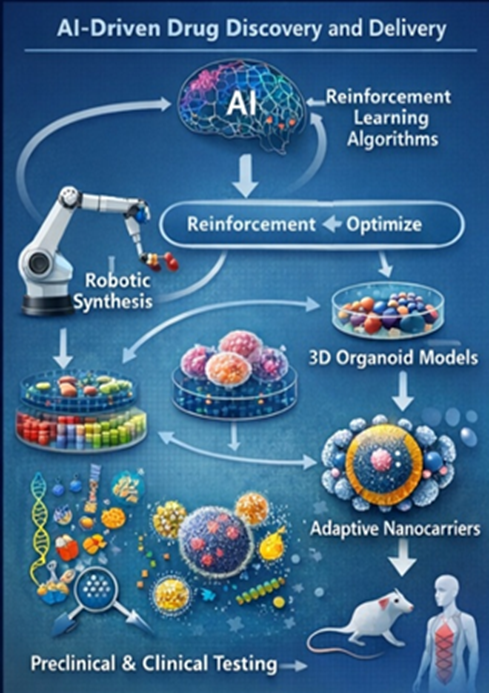
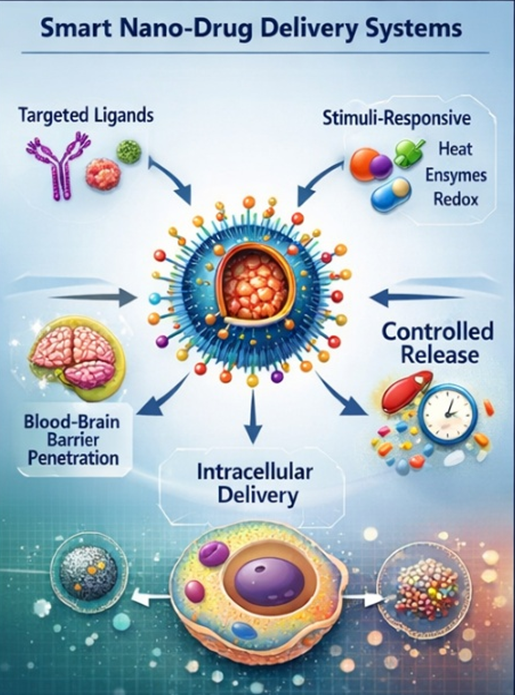
Fig 1. AI driven Drug Discovery and Delivery Fig 2. Smart nano drug delivery system
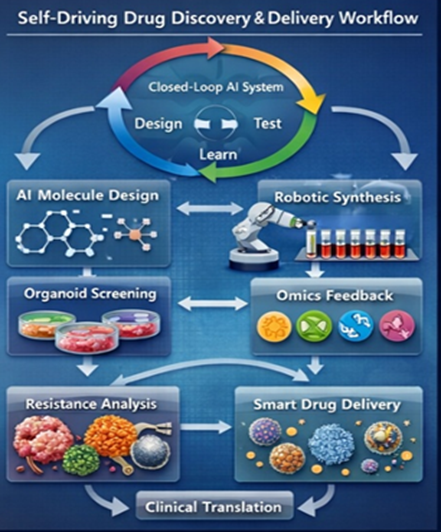
Fig 3. Self Driving Drug Discovery and delivery workflow
Literature Review
Table 3. literature review
|
Sr.No. |
Title |
Journal |
Author(s) |
Method |
Result |
|
1 |
Artificial Intelligence (AI) Applications in Drug Discovery and Drug Delivery: Revolutionizing Personalized Medicine |
Pharmaceutics |
Serrano DR et al. |
Comprehensive review of AI methods across drug discovery and delivery |
Showed AI integration enhances target ID, lead optimization, formulation prediction, and personalized therapies. AI reduces time and cost across pipeline stages. |
|
2 |
AI-assisted autonomous manufacturing of tailored drug-loaded nanoparticles by multi-step continuous-flow platform |
Chemical Engineering Journal |
Mottafegh A et al. |
Developed fully autonomous multi-step flow synthesis with AI for nanoparticle DDS |
Demonstrated rapid closed-loop synthesis, purification, characterization and optimization of drug-loaded nanoparticles in real-time, drastically reducing optimization time. |
|
3 |
Self-driving laboratories: A paradigm shift in nanomedicine development |
Matter |
(Perspective) |
Analytical review of self-driving labs and ML integration in nanomedicine |
Described conceptual frameworks linking machine learning with automated experimentation in nanomedicine, highlighting interdisciplinary needs. |
|
4 |
Artificial intelligence for drug delivery: Yesterday, today and tomorrow |
Acta Pharmaceutica Sinica B |
Wu Y et al. |
Review on AI applications across formulation and DDS design |
Traced technological evolution of AI in drug delivery, from early predictive models to advanced formulation optimization and experimental guidance systems. |
|
5 |
Learning To Navigate The Synthetically Accessible Chemical Space Using Reinforcement Learning |
arXiv |
Gottipati S et al. |
RL framework embedding synthetic accessibility into molecular generation |
RL improved de novo drug design by ensuring synthesizability and exploring chemical space with higher QED and practical routes. |
|
6 |
Graph Neural Networks in Modern AI-aided Drug Discovery |
arXiv |
Zhang O et al. |
GNN review for drug discovery tasks |
Showed GNNs improve molecular property prediction, virtual screening and generation tasks essential for autonomous discovery pipelines. |
|
7 |
AI Agents in Drug Discovery |
arXiv |
Seal S et al. |
Conceptual overview of agentic AI systems in drug discovery |
Demonstrated potential of AI systems that reason and act across discovery workflows, crucial for closed-loop automation. |
|
8 |
Self-Driving Laboratories for Chemistry and Materials Science |
Chemical Reviews |
(Review) |
Automated synthesis integration with AI design |
Automated systems combined generative design with synthesis to discover active compounds, showcasing early automated closed-loop chemistry. |
|
9 |
Self-driving labs: a deeper integration of robotics in chemical synthesis |
Nature |
Dai T et al. |
Developed autonomous mobile robots for exploratory synthesis |
Showed AI-driven robots perform synthesis and decision-making in chemistry, increasing throughput and adaptability. |
|
10 |
Paradigm shift in therapeutics: AI in drug delivery systems |
RSC Pharmaceutics |
Singh S & De A |
Review of AI-driven DDS design |
Outlined how AI predicts properties and optimizes nanocarrier design while discussing regulatory and clinical implementation issues. |
|
11 |
A Systematic Review of Advanced Drug Delivery Systems |
Pharmaceutics |
Uzakova AB et al. |
Systematic analysis of intelligent DDS evolution |
Highlighted transition from static carriers to dynamic, “smart”, context-adaptive delivery platforms aligning with autonomous systems. |
|
12 |
Nanorobotics targeted drug delivery system for brain-specific targeting |
Current Pharmaceutical Design |
Akriti R, Kamal S, Hitesh D |
Review focused on AI-nanorobotics for BBB drug delivery |
Summarized advantages, limitations, and design considerations for brain-specific AI-enabled nanorobotics DDS. |
|
13 |
AI-Powered Nanoarchitectonics for Smart Drug Delivery |
Advanced Materials |
Bae H et al. |
Perspective on AI-driven nano-architected systems |
Proposed frameworks where nano-structures adapt in response to signals, improving targeted delivery. |
|
14 |
Integrated autonomous multi-step platform for rapid manufacturing … |
ACS Digitell |
(Conference abstract) |
Demonstrated autonomous multi-step nanoparticle manufacturing |
Confirmed capability to tune size and drug loading in nanoparticles using closed-loop AI control. |
|
15 |
Artificial Intelligence (AI) in Pharmaceutical Research |
JDDT/Pharm Res |
(Review) |
General AI review in pharmaceutical research |
Showed AI accelerates drug design, target identification, predictive modeling and streamlines discovery workflows. |
CONCLUSION
Autonomous and self-driving drug discovery is emerging as a transformative paradigm that integrates artificial intelligence, robotics, and next-generation drug delivery technologies into a unified closed-loop workflow. This review highlights how reinforcement learning-based molecular design, automated synthesis platforms, organoid-based biological validation, and adaptive nanomedicine engineering together enable faster and more precise therapeutic development. Such integrated pipelines have the potential to overcome key bottlenecks in conventional drug discovery, including long optimization cycles, poor translational predictability, and inefficient formulation design. However, significant challenges remain in data standardization, regulatory acceptance, clinical scalability, and ethical deployment of autonomous decision-making systems. Future progress will depend on interdisciplinary collaboration and the establishment of robust validation frameworks to ensure safety, reproducibility, and real-world impact. Overall, AI–robotics-driven discovery combined with intelligent delivery systems represents a future-proof direction for precision therapeutics and accelerated clinical translation.
ACKNOWLEDGEMENTS
The authors acknowledge the support of colleagues and institutional facilities that contributed to the preparation of this manuscript. The authors also recognize the contributions of researchers worldwide whose work has advanced the fields of artificial intelligence, autonomous laboratories, and next-generation drug delivery systems. No external funding agency had any role in the study design, data interpretation, or writing of the manuscript.
REFERENCES



Abhinandan Satapathy, PN Tapaswini Behera, Rajat Kumar Kar, Self-Driving Drug Discovery Integrated with Next-Gen Drug Delivery: AI–Robotics–Nanomedicine Closed Loops, Int. J. of Pharm. Sci., 2026, Vol 4, Issue 2, 1368-1388. https://doi.org/10.5281/zenodo.18558514
 10.5281/zenodo.18558514