
1Department of Pharmaceutical Chemistry, Government College of Pharmacy, Karad. Maharashtra, India-415124.
2Department of pharmacognosy and phytochemistry, Government College of Pharmacy, Amravati, Maharashtra, India-444601.
3Department of Pharmaceutics, Government College of Pharmacy, Karad. Maharashtra, India-415124.
Numerous active pharmaceutical ingredients (APIs) face challenges such as limited water solubility, poor absorption in the body (bioavailability), and instability due to polymorphic transformations. To address these issues, API-based ionic liquids (API-ILs) have emerged as a powerful and innovative solution, capable of improving the physicochemical properties of APIs while preserving their original molecular identity. This review explores a range of synthetic methods such as metathesis, neutralization, mechano-chemical techniques, and microwave-assisted synthesis that enable the creation of customized, task-specific ionic liquids. It also highlights a broad array of characterization tools, from conventional methods like NMR, FTIR, DSC, and XRD, to advanced AI-driven technologies including machine learning-based NMR prediction, MALDI matrix modelling, and SERS analysis. These tools accelerate the understanding and fine-tuning of API-ILs for pharmaceutical use. Additionally, the review compiles recent examples of bioactive API-ILs, showcasing their improved solubility, permeability, thermal resistance, and multifunctional therapeutic potential. The use of artificial intelligence in the analysis and design of ionic liquids is opening new frontiers in drug formulation and eco-friendly pharmaceutical development. Ultimately, API-ILs represents a promising avenue for enhancing drug delivery through various routes, including oral, transdermal, and injectable systems.
Since the middle of the 1990s, there has been a lot of interest in ionic liquids (ILs) [1] .As I write this review, I had seen large number of publication on ILs and majority of them has been published since 1998 when Michael Freemantle provided Chem. Eng. News with an essay titled ‘‘Designer Solvents—Ionic Liquids May Boost Clean Technology Development [2].Earlier in 1914 Paul Walden synthesize the ethyl ammonium nitrate because of their ionic character, he had also formulated the Walden rule which provide the basis for a very useful classification of ionic liquids [3]. They have attracted particularly high attention in past years; approximately 2800 papers were published in the area of ILs in 2024 alone (mentioned in fig.1) showing different types of new ILs application.
Active pharmaceutical ingredients (APIs) in solid form have a number of difficulties, which comprises of Poor solubility [4], low bioavailability [5] and polymeric conversion [6]. But between 40 and 70 percent of the medications being developed have poor water solubility, which may affect their bioavailability and therapeutic effectiveness and cause drugs to fail later in the development process.[7,8]. Significant attempts have been made to look for alternate methods of delivering the popular APIs in order to get around these drawbacks. Among the many tactics that have been tried, salt formation [9,10], Solid dispersions [11], Prodrug approach [12], Crystal engineering [13] and Nano-suspensions [14] On the other hand, making salt is a common method of making things more soluble. In particular, one method to improve bioavailability and maybe address polymorphism conversion is to transform APIs into liquid salts.
Ionic liquids (ILs) have attracted significant interest as solvents. ILs is commonly defined as salts that melt below 100°C although many are liquid at room temperature (RTIL). ILs have negligible vapour pressure and low flammability; properties that make them convenient to handle over a wide range of temperatures and process conditions [15,16]. Up to now, ILs have been grouped into three generations according to their properties and characteristics: The first are mainly based on their use as solvents, showing their unique intrinsic physical properties [17] the second have physical and chemical properties that can be easily tuned, promoting the formation of “task-specific ionic liquids” [18] and the third involve active pharmaceutical ingredients (API), which are being used to produce ILs with biological activity (API-ILs) [19].
Additionally, ionic liquids (ILs) have attracted increasing interest recently in the context of green organic synthesis. Although ionic liquids were initially introduced as alternative green reaction media because of their unique chemical and physical properties of no volatility, no flammability, thermal stability, and controlled miscibility, today they have marched far beyond this boundary, showing their significant role in controlling reactions as solvent or catalysts [20]. It has become evident that ILs may be beneficial due to their unique properties to modify drugs that are difficult to formulate and the potential to mitigate some of the challenges associated with traditional pharmaceutical salts, including form changes, solubility, and permeability [10]. Additionally, by combining various drugs into one compound, any dual-functional and synergistic effect can be established. The ultimate goal for the preparation of liquid salts is to establish low lattice forces between the API and the counter ion, which can be effectively achieved by choosing bulky counter ions with soft electron density and a minimal number of potential H-bonds amongst molecules [21] and this type of approach is best when we are going to design API-Based ionic liquids. However, the preparation methods of ILs are divided into traditional preparation method and auxiliary synthesis method, in which the traditional way includes one-step and two-step synthesis methods, and the auxiliary synthesis method includes sonication, microwave irradiation, electro chemical means and so on[22].
Hence, the primary aim of this review is to summarise synthetic approaches in recent years and more focused on how ILs function as green solvents. API-ILs are typically composed of a hydrogen bond acceptor (HBA) and a hydrogen bond donor (HBD), both of which mixed in a proper molar ratio to form a io liquid [23]. APIs can act as HBDs because the majority of them present as amides, carboxylic acids and alcohol groups. [Ch][Cl], a quaternary ammonium salt, remains the most prominently featured HBA in API-ILs [24]. So ,accordingly API-ILs can be synthesised and characterise by applying different techniques such as FTIR,NMR and most widely used DSC and TGA to check thermochemical properties as they change the property of sample with change of temperature or time. Additionally, potential applications of these API-ILs were also discussed.
Because of the unique properties of ILs, their application in the pharmaceutical field has been extended far beyond the development of novel liquid forms (API-ILs), being investigated as well in other stages of drug development and delivery. The number of publications related to the enhancements of physicochemical property of API due to ILs in the pharmaceutical field has grown exponentially in the past 10 years, as illustrated in Figure 1. (Source from science Direct Database).
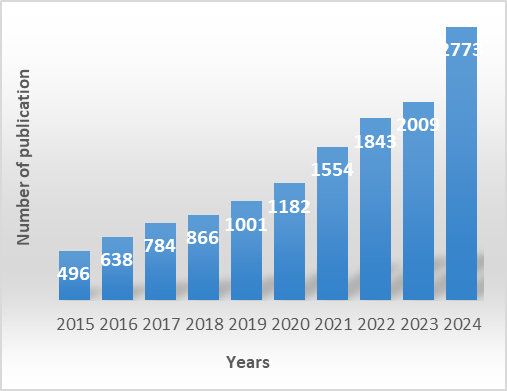
Figure 1. Number of publications per year in ten years perspective related to ILs and active pharmaceutical ingredients (APIs) (number of articles, reviews and book chapters according to a ScienceDirect database search using as keywords “active pharmaceutical ingrediants”, “ionic liquids” on date 03 February 2025.
Transforming active pharmaceutical ingredients (APIs) into liquid forms presents a valuable approach to enhance their effectiveness and delivery. The primary aim in forming liquid salts is to reduce the lattice energy between the API and its counterion. This is best accomplished by selecting counterions that are bulky, possess soft electron densities, and have few opportunities for hydrogen bonding between molecules. These counterions are typically monovalent, asymmetrical, and feature flexible alkyl chains, which introduce steric hindrance among the salt components (10, 25). After the first API-IL was reported by the Rogers group in 2007, many IL forming biocompatible cations and anions have been reported as potential counterparts for APIs (Fig.2.1). Most API-ILs are synthesized through either metathesis or neutralization reactions involving a crystalline API and a suitable ionic liquid-forming counterion. Typically, the salt forms of both the cation and anion are dissolved in a solvent and stirred at room or controlled temperatures, allowing the formation of the desired API-IL while removing the resulting inorganic salts. A well-known example is the first reported API-IL, ranitidine docusate, which was prepared by reacting ranitidine hydrochloride with sodium docusate in methanol. The mixture was stirred with heat, followed by extraction using chloroform and washing with water to eliminate residual inorganic salts. Finally, the solvent was evaporated using a rotary evaporator. (26).
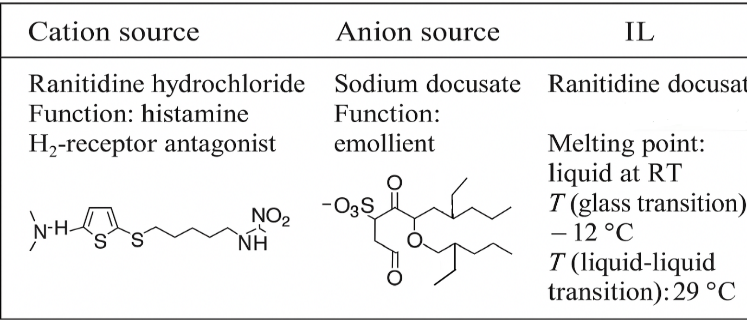
Figure 2.1. Ranitidine hydrochloride was investigated to show that a well-known polymorphic API could be reformulated as a room temperature IL. Reproduced from ref. (26).
Typically, significant quantities of organic solvents like methanol, ethanol, isopropanol, acetone, chloroform, and tetrahydrofuran are employed in the synthesis of API-ILs via metathesis reactions. However, this process can generate undesirable impurities that may pose risks to both human health and the environment. (27, 28). To overcome these challenges, mechano-chemical processing has emerged as an eco-friendly alternative for API-IL synthesis. This method relies on grinding techniques and requires minimal or no use of organic solvents. Martin and colleagues pioneered this approach by producing mechanoAPI-ILs of gabapentin and L-glutamic acid through simple grinding of API precursors with IL-forming counter ions. Their work demonstrated that this strategy offers a quicker, solvent-free, reproducible, and high-yield process, making it a more sustainable option for API-IL preparation. (Fig.2.2). A range of ketoprofen-based mechanoAPI-ILs was synthesized using benzocaine, procaine, or tetracaine through grinding with an agate mortar and pestle. Nevertheless, further research is necessary to fully understand the underlying mechanisms and to establish these methods as general approaches for broader API-IL synthesis.
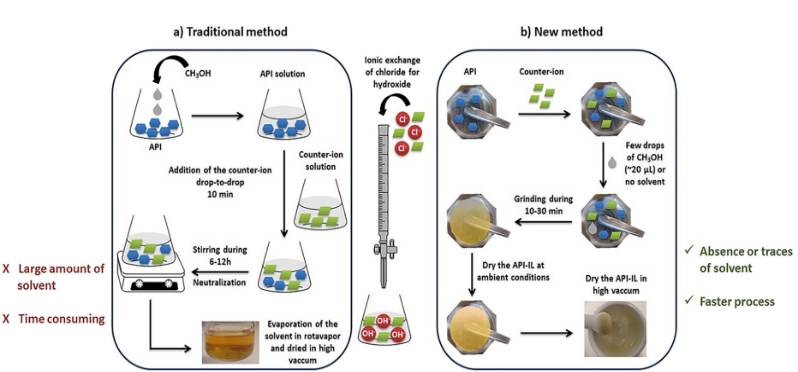
Figure 2.2. Comparison of (a) Traditional method and (b) Mechano-chemical method of API-IL preparation. The ionic exchange process common in both methods is shown in the middle. Reproduced with permission from Ref. (28)
Overall, hydrogen bonding—rather than traditional salt formation—between free APIs and counterions plays a crucial role in transforming solid APIs into API-ILs, acting as the primary driving force for their liquefaction. These API-ILs generally exhibit significantly improved aqueous solubility compared to their poorly water-soluble parent compounds, suggesting the potential for enhanced bioavailability.
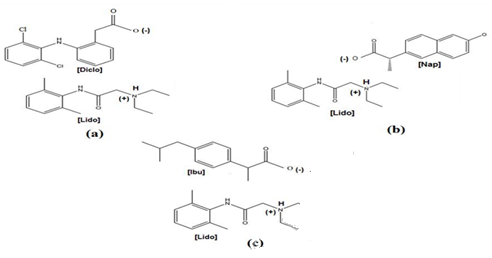
Figure 2.3 (a) [Lido][Diclo], (b) [Lido][Nap], and (c) [Lido][Ibu] at room temperature: the chemical composition and macroscopic appearance, regenerate from the ref.(31).
In 2019, A. Abednejad and colleagues synthesized ionic liquids with dual biological functions through metathesis reactions. The proposed compounds combined analgesic and anti-inflammatory properties by pairing a cation derived from lidocaine with anions derived from hydrophobic nonsteroidal anti-inflammatory drugs (NSAIDs) (Fig.2.3). These API-ILs demonstrated up to a 470-fold increase in water solubility without altering their cytotoxicity profile. They were incorporated into a bilayer wound dressing composed of a biocompatible hyaluronic acid (HA) layer and a hydrophobic polyvinylidene fluoride (PVDF) membrane, which functioned as a drug reservoir. The API-IL-loaded membranes exhibited comparable effectiveness to the original drugs in suppressing LPS-induced production of nitric oxide and prostaglandin E2 in macrophages, confirming their anti-inflammatory potential. (31).
Due to their ionic nature, ILs can rapidly absorb microwave energy, enabling faster and more efficient chemical reactions. This approach has been successfully applied in certain cases to directly convert lactones to lactams in a one-pot process, yielding high product amounts (over 80%) within a short reaction time of approximately 35 minutes. (Fig.2.4). The direct lactamization of lactones is a rapid process that leverages the short reaction times of microwave-assisted techniques along with the unique properties of highly polar ionic liquids, which enable slow substitution reactions to occur without the need for added acids or bases. (32).
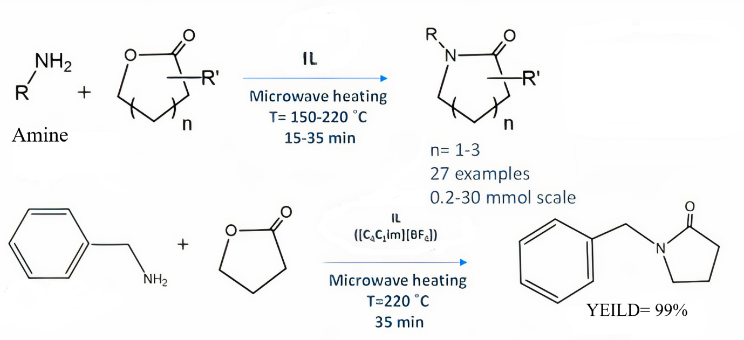
Figure 2.4. A quick and acid-free microwave technique based on one-pot IL for the direct synthesis of lactams from lactones and primary amines suggested in (32).
Many pharmaceutical compounds—such as antifungals, antibiotics, alkaloids, and cardiac glycosides—contain heterocyclic structures designed to replicate the architecture and biological activity of natural substances. (33). Reactions conducted in ionic liquid (IL) solvent systems exhibit enhanced regioselectivity, making them highly effective for the synthesis of various heterocyclic active pharmaceutical ingredients (APIs) (34, 35). ILs made from imidazolium have been employed as solvents in the production of antiviral medications such as trifluridine, brivudine, and stavudine(35). (Fig.2.5) presents a summary of the synthesis time and yield of nucleoside-based antiviral drugs using ionic liquid (IL) media. In this study, trifluridine was produced as a single product within the IL environment. Optimal results were obtained using 1-methoxyethyl-3-methylimidazolium methane sulfonate {[(C1OC2)C1im][MsO]} as the IL, acetic anhydride as the acylating agent, and 4-dimethylaminopyridine (DMAP) as a catalyst. The synthesis was completed within 20–25 minutes, achieving a 91% yield without the need for further purification.
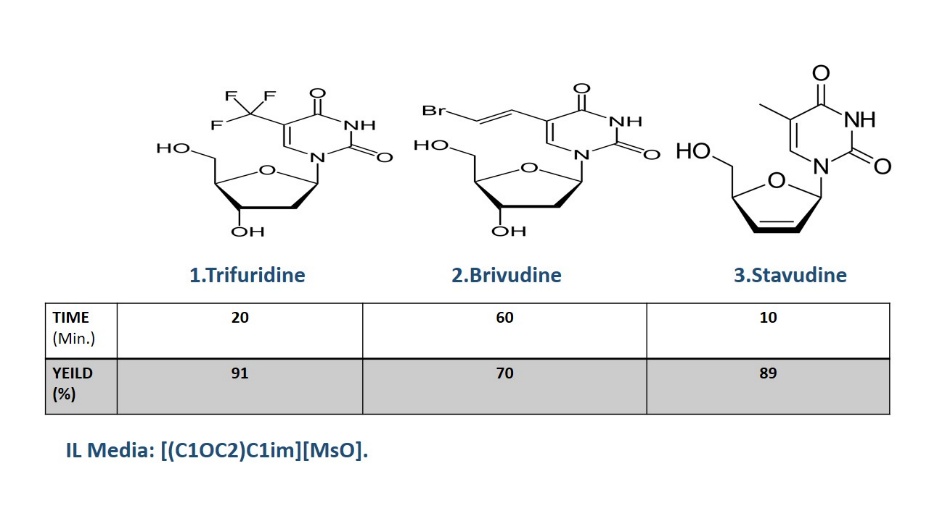
Figure 2.5. The synthesis of antiviral medications utilizing nucleosides in an ionic liquid medium was proposed in (35).
A straightforward yet effective iodination method has been employed to synthesize antifungal and antiprotozoal agents like iodoquinol and clioquinol. This method leverages the multifunctional properties of ionic liquids, as illustrated in (Fig. 2.6). Specifically, 1-butyl-3-methylpyridinium dichloroiodate served both as the solvent and the iodinating agent, eliminating the need for any additional oxidants, catalysts, or bases (36).
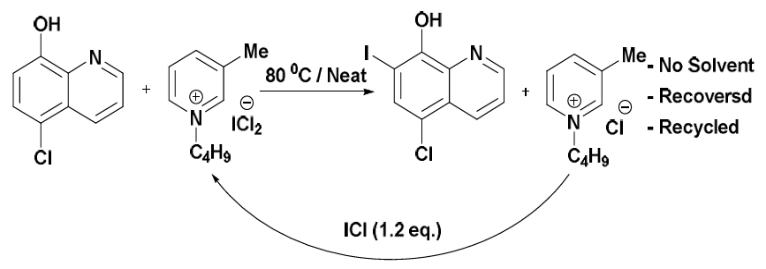
Figure 2.6. The employment of IL as an iodinating agent and solvent in the production of clioquinol, Reproduce from the ref. (36).
The table below shows the logical design of the ionic liquid by matching with appropriate organic and inorganic counter ions with active medical components, all are reported inprevious years. By creating stable salts or liquids with improved solubility, permeability and thermal characteristics, these syntheses seek to maximize medication performance. Using acids (such as lactic or docusate), amino acid esters, or surfactant-like moieties, strategic ion pairing produces dual-functional ILs that enhance delivery and bioactivity. A lot of formulations behave like ionic liquids at room temperature, which improves processing and formulation compatibility. Furthermore, synthesis frequently results in amorphization, nan structuring and polymorphism control all of which are essential for the development of pharmaceuticals. These customized ILs offer a modular way to change a drug's characteristics without changing the fundamental structure of the API (77, 78).
Table 2. Above table enlisted the synthesize ionic liquids of API reported in previous year and summarise the important findings about them.
|
No. |
API |
Counter ion |
API-ILs |
Activity |
Important Findings |
Ref. |
|
1 |
Lidocaine |
Docusate |
Ranitidine docusate |
Anti-ulcer, Local anaesth-etics. |
a) Addressed polymorphism issue. b) Synergistic effect added. c) Increase in API bioactivity with topical administration. d) The surfactant used increases membrane permeability. |
26,36 |
|
2 |
Procaine |
Acetate |
Procainium acetate |
Local anaesthetics |
a) Separated at room temperature. b) Crystalline dehydrate form and alter the solubility, bioavailability. |
37 |
|
3 |
Lidocaine |
HCl |
Lidocaine hydrochloride |
Local anaesthetics. |
a) The amorphization of the hydrochloride salt of lidocaine. b) Room temperature ionic liquid |
38 |
|
4 |
Acyclovir |
Glycine, Alanine, Serine |
[ch]: Glycine, Alanine, Serine. |
Antiviral |
a) Increased ACV penetration within and through the skin. b) Enhanced ACV solubility with IL by 581-fold compared to water. |
39 |
|
5 |
Acyclovir |
Lactic acid, formic acid, oleic and propionic acid. |
[Cho]: lactic acid, formic acid, oleic and propionic acid |
Antiviral |
a) Thermodynamically stable, spherical structured and nano-sized. b) Improved penetration of acyclovir employing the ME. c) Enhanced ACV solubility in IL by 678-fold compared to water. |
40 |
|
6 |
Prilocaine |
Docusate |
Prilocaine docusate |
Local anaesthetics |
a) The PIL has a high degree of ionicity as it is less reliant on the Bronsted acid used. b) Dual functional ILs. |
41 |
|
7 |
Acetylsal-icylic acid |
Cetylpyridi-nium, Benzethoni-um, Tramadol-ium, Lidocainium. |
CetPySal, BESal TramSal LidSal |
Antibacterial, Analgesics, Local anaesthetics.
|
a) Improved physical characteristics and increased solubility. b)Break down into the correspo-nding salicylate ILs when they come into contact with moisture. c) Dual functional ILs. |
42 |
|
8 |
Ibuprofen |
L-valine ethyl, propyl, isopropyl, butyl, pentyl and hexyl ester |
[ValOEt]: [IBU] [ValOPr]: [IBU [ValOiPr]: [IBU] [ValOBu]: [IBU] [ValOAm]: [IBU] [ValOHex]: [IBU] |
Non-steroidal anti-inflammatory drug (NSAID) |
a) 42-fold improvement in aqueous solubility and a decrease in the coefficient of partition. b) Compared to the parent medication, propyl and isopropyl ester improved the permeation by 12.09 and 13.55 times, respectively. |
43 |
|
9 |
Ibuprofen |
N-methyl-2-pyrrolid-one |
[IBU]: N-methyl-2 pyrrolidone |
Non-steroidal anti-inflammatory drug (NSAID) |
a) Increased drug clearance in the skin by 2.6 times when compared with API-IL based on choline. b) Exceptional thermal and physico-thermal stability. |
44 |
|
10 |
Ibuprofen Naproxen Ketopro-fen. |
Choline |
[Cho]: [IBU], [Cho]:[NAP], [Cho]:[KET]. |
Non-steroidal anti-inflamma-tory drug (NSAID) |
a) Increased physico-thermal stability and aqueous solubility by up to 100 times. b) IL-incorporated membranes have a rehydration capacity that is 18–26 times greater than that of bacterial cellulose. |
45 |
|
11 |
Donepezil |
Docusate Ibuprofen , Oleate acid, Linoleate acid α- linolenic acid, Docosah-exaenoic acid. |
[DON][DOC], [DON][IBU], [DON][OA], [DON][LA], [DON][ALA], [DON][DHA]. |
Acetylchol-inesterase inhibitors. |
a) Enhanced partition coefficient and 190-fold increase in aqueous solubility. b) Increased the permeation of IL-based fixes by 1.9 and 1.55 times compared to the free API. c) A benefit in skin permeability compared to the donepezil |
46 |
|
12 |
Vitamins- B |
Cholinium cation |
cholinium nicotinate [Ch][B3], cholinium pantothenate [Ch][B5] and cholinium pyridoxylate [Ch][B6]. |
Dermal care |
a) Improved aqueous solubility up to 30.6 times greater and excellent thermal resistance. b) When compared to BC, the rehydration capacity of BC-ILs membranes was enhanced by 2.9 to 4.8 times. |
47 |
|
13 |
Lumefantr-ine |
docusate |
[Doc]: Lumefantrine |
antimalarial drug |
a) increased the plasma exposure by 35 times with oral administration. b) When compared to lumefantrine the solubility of lumefantrine in LBF was increased 2 -80 times by isolating as the lumefantrine docusate IL. |
48 |
|
14 |
Lidocaine |
Diclofenac |
[LID] [DIC]. |
Local anaesthetics, Non-steroidal anti-inflammat-ory drug (NSAID).
|
a) Controllable cumulative release of the drug from a transdermal patch filled with IL. b) Better thermal stability and a reduced melting point. |
49 |
|
15 |
Methotre-xate |
[ProEt]+, [PheEt]+, [AspEt]+, [cho]+, [TMA]+. |
[MTX]:[ProEt], [MTX]:[PheEt], [MTX]:[AspEt], [MTX]:[cho], [MTX]:[TMA]. |
Anticancer Prodrug. |
a) Improved the anticancer activity by 4 fold when a low-toxicity amino acid ester were included. b) Enhanced thermal stabil-ity and solubility by up to 5000 times compared to free API. |
50 |
|
16 |
Ibuprofen |
[N1,1,10,10], [Pro], [N6,6,6,6], [P6,6,6,14] [C4MIM]. |
[N1,1,10,10] [ibu], [Pro][Ibu], [N6,6,6,6][Ibu], [P6,6,6,14][Ibu]. |
Non-steroidal anti-inflammatory drug (NSAID).
|
a) Raised the permeability for [N1,1,10,10][IBU] and [N6,6,6,6][IBU] by 3.7 and 4.5 times, respectively, in comparison to the parent APIs. b) higher thermal stability and solubility up to 1400 times as comparison to parent medications |
51 |
|
17 |
Lidocaine |
[IBU], [NAP], [DIC]. |
[LID]: [IBU], [LID]: [NAP], [LID]: [DIC]. |
Local anaesthetics |
a)Superior heat stability and up to 470-fold increased solubility. b) improved drug release in contrast to free medicines. |
31 |
|
18 |
Diphenh-ydramine |
[IBU], [NAP], |
[DHP]:[IBU], [DHP]:[NAP]. |
Antihistam-ine, Non-steroidal anti-inflammatory drug (NSAID). |
a)Showed enhanced bioavailability and feasible drug release. b) Enhanced thermal stability with water solubility.
|
52 |
|
19 |
Caprolac-tam |
Salicylic acid |
[CAP][SAL] |
Anticancer |
a) Smaller than the corresponding precursors with respect to melting point. b) Displayed a non-toxic nature and ideal oral drug behaviour according to the ADMET analysis. |
53 |
|
20 |
Pyridazi-none |
vanillyl motifs |
Pyridazinone vanillyl (Val-ILs) motifs |
Cardiovascu-lar drugs. |
a) Shown a potency approximately 7 times greater than that of pyridazinone having a neutral arm. b) The strength of API-ILs was increased via H-bonding,π stacking, and π-cation associations. |
54 |
|
21 |
Mefena-mic acid |
[Cho], Di(2-hydroxy- ethyl) dimethyl ammonium. |
[MEF]: [Cho], [MEF]:di(2-hydroxyethyl) dimethyl ammonium. |
Non-steroidal anti-inflammatory drug (NSAID). |
a) Drug loading, the size of particles, polydispersity, as well as polymer molar mass all affected drug release. b) The quantity of hydroxyl groups in the IL-forming cation determines its size and shape. |
24 |
|
22 |
Ampicill-in. |
Tetraethyl ammonium, Cholinium, 1-Ethyl-3-methyl Imidazolium, Trihexyltetradecyl Phosphonium, Cetylpyridinium.
|
[TEA][Amp] [N1112OH][Amp] [C2MIM][Amp] [P6,6,6,14][Amp] [C16Pyr][Amp]
|
Antibiotic, Antiseptics, Anti-biofilm. |
a) [Cholin] [Amp]: minimal toxicity, biocompatibility, very high water solubility, with a low melting point and higher octanol–water partition coefficient. b) An efficient approach to lessen microbial antibiotic resistance. |
55,56, 57 |
|
23 |
Ketopro-fen, Naproxen |
[Cho]. |
[Cho]:[KET], [Cho]:[ [NAP]. |
Non-steroidal anti-inflammatory drug (NSAID). |
a) Greater toxicity in the presence of choline cation compared to the sodium salt form of APIs. b) Increased solubility in water by up to 48 folds. |
58 |
|
24 |
Tetracyc-line |
Docusate |
Tetracycline Docusate. |
Antibiotic |
a) In comparison with tetracycline hydrochloride, the water solubility of tetracycline docusate was reduced to half. b) Raised in liposome–water partition coefficient and log p. |
59 |
|
25 |
Albendazole |
Malonic acid |
ABZ -ILs |
Antihelminthic |
a) 2.61 and 2.25 fold increase in solubility of ILs in different solvent compared to ABZ. b) Anthelmintic activity was retained. |
79 |
|
26 |
Ethambutol |
Hydrochloride nalidixate. Adipate, HCl-(ZnCl2)2,
|
Ethambutol hydrochlor-ide nalidixate, Ethambutol: HCl-(ZnCl2)2,
|
|
a) Synergistic collaboration among ILs and double active salts. b) Ion combinations have stronger antibacterial efficacy against marine microorganisms. c) Enhance water solubility and shelf life while resolving crystal polymorphism-related problems. |
60,61, 62 |
Before using ionic liquids for specific applications, it is essential to characterize them to ensure their purity and to understand their structure. API-ILs, which are salt-like aqueous forms of active pharmaceutical ingredients, exhibit unique properties influenced by hydrogen bonding, ionic interactions, and π-π stacking. (63). Therefore, various characterization techniques are used to evaluate these interactions, which is crucial for designing efficient drug delivery systems, improving solubility and stability, assessing potential toxicity, and ultimately enabling pharmaceutical applications by adjusting the properties of API-ILs to fulfil specific therapeutic requirements. (64,65,66).Numerous techniques are available today. In this review, however, we will focus on summarizing the traditional methods and provide a brief overview of the advanced emerging techniques.
3.1 Traditional technique of characterization:
Traditional approaches to characterizing ionic liquids (ILs) primarily focus on their physicochemical properties, thermal behaviour, molecular structure, and degree of crystallinity (67). These characterization techniques help in understanding ionic interactions, as well as assessing stability, solubility and viscosity all of which are crucial for drug delivery and various industrial applications.
Table 3.1. A variety of characterization techniques are available, each serving a specific purpose and used to investigate key parameters that reveal essential information about the material's properties
|
Techniques |
Purpose |
Key Parameters |
|
Spectroscopic Techniques (68) |
||
|
Nuclear Magnetic Resonance (NMR, 1H & 13C) |
Structural confirmation, chemical shifts |
Chemical shifts, coupling constants, relaxation times |
|
Fourier Transform Infrared Spectroscopy (FTIR) |
Functional group identification |
Characteristic peaks of API, IL cations/anions |
|
Raman Spectroscopy |
Bond vibrations, molecular interactions |
Bond vibrations, structural changes |
|
UV-Vis Spectroscopy |
Determines optical and electronic properties |
Absorption peaks, charge transfer transitions |
|
Thermal Analysis Techniques (69) |
||
|
Differential Scanning Calorimetry (DSC) |
Thermal properties, phase transitions |
Phase transitions, polymorphism |
|
Differential Thermal Analysis (DTA) |
Monitors endothermic and exothermic reactions |
Heat flow changes |
|
Thermogravimetric Analysis (TGA) |
Decomposition, thermal stability |
Mass loss, decomposition profiles |
|
Structural and Morphological Techniques (70) |
||
|
Scanning Electron Microscopy (SEM) |
high-resolution imaging and elemental analysis of surfaces |
Particle size, shape, texture |
|
Transmission Electron Microscopy (TEM) |
Provides high-resolution structural analysis |
Atomic structure, aggregation behaviour |
|
X-Ray Diffraction (XRD) |
Crystallinity, polymorphism |
Crystallinity index, phase identification |
|
Other Physicochemical Techniques (69) |
||
|
Dynamic Light Scattering (DLS) |
Particle size, zeta potential |
Hydrodynamic diameter, stability |
|
Rheological Analysis |
Viscosity, flow behaviour |
Shear stress, thixotropy |
|
Surface Tension Analysis |
Wetting properties, interfacial behaviour |
Contact angle, interfacial energy |
3.2 Advanced & Emerging Characterization Techniques:
3.2.1. NMR Data prediction via machine learning algorithm (71):
In this study, the author introduces D-MPNN+, an advanced chemical representation method that significantly improves the accuracy of machine learning (ML) predictions for chemical properties. This is achieved by integrating Directed Message Passing Neural Networks with topological descriptors and quantum-mechanical (QM) information. The research emphasizes the importance of incorporating diverse molecular descriptors and NMR chemical shift data to enhance the predictive performance of ML models. When evaluated on datasets related to solubility, toxicity, and various physicochemical characteristics, this approach outperforms traditional SMILES and fingerprint-based inputs. By effectively reducing prediction errors and capturing complex structural and electronic features, the model proves to be a valuable asset for both cheminformatics and molecular design.
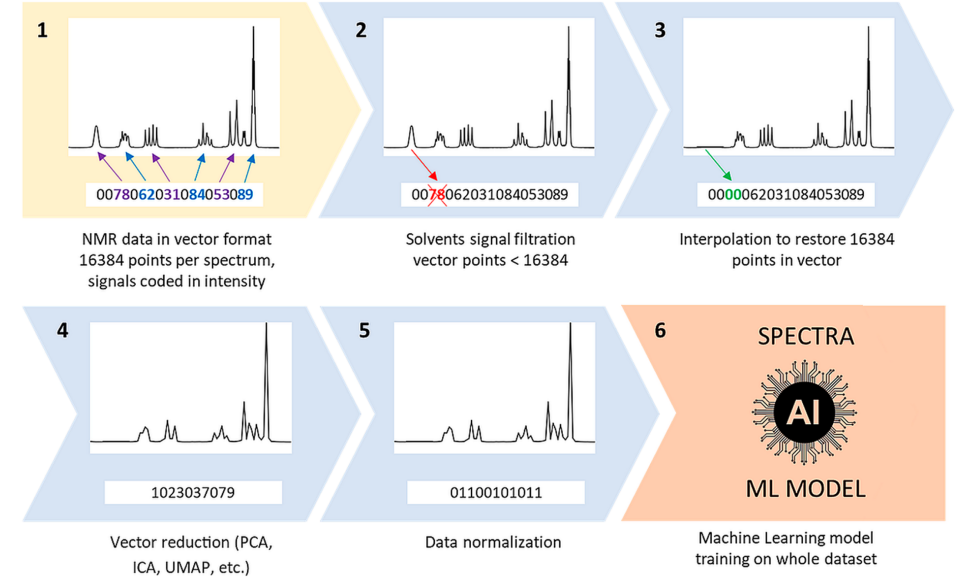
Figure 3.2.1 Procedure for 1H NMR data preparation in order to facilitate machine learning. The general method is used to turn raw 1H NMR data into machine learning input.
The D-MPNN+ model can be applied to characterize ionic liquids (ILs) by accurately predicting their physicochemical properties, which are often difficult to determine through experimental methods. Such properties include viscosity, conductivity and thermal stability. By integrating quantum-mechanical descriptors with NMR spectral data commonly utilized in IL research we can better represent electronic environments and structure–property relationships in ILs. This approach accelerates the discovery and design of new ILs for applications in drug delivery, separation processes and sustainable (green) chemistry.
3.2.2. AI-Assisted MALDI Matrix Design (72):
This study presents a machine learning-based approach for designing effective matrices for Matrix-Assisted Laser Desorption/Ionization (MALDI) mass spectrometry. Using Light Gradient Boosting Machine (LightGBM) models, the researchers predicted key factors influencing electron transfer efficiency, a critical aspect of MALDI matrix functionality by analysing a curated dataset of over 800 compounds. By identifying structural features and molecular descriptors such as LogP, HOMO-LUMO energy gap, and molecular surface area associated with high performance, they were able to efficiently guide the discovery of promising new matrix candidates.
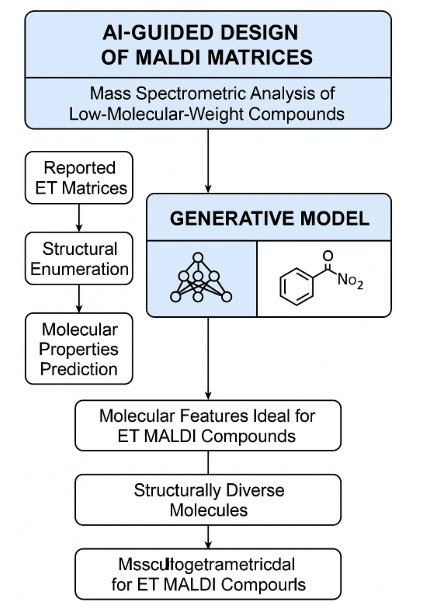
Figure 3.2.2. Flowchart showing the AI-guided process for creating MALDI matrices that optimizes candidate chemical selection and predicts electron transfer efficiency using machine learning models.
Gaining insight into the electron transfer properties of ionic liquids can enhance their effectiveness in soft ionization techniques, as they are often used as solvents or co-matrices in MALDI. A similar AI-based approach can be employed to screen ionic liquids for desirable physicochemical traits such as polarity, proton affinity, and energy transfer capabilities. This strategy accelerates the selection of ILs tailored to specific analyte types or ionization methods, ultimately improving sensitivity and resolution in complex sample analyses using mass spectrometry
.3.2.3. Surface-Enhanced Raman Spectroscopy (73):
This article emphasizes the exceptional sensitivity and chemical selectivity of Surface-Enhanced Raman Spectroscopy (SERS) and reviews its progress in biomedical applications. By enhancing Raman scattering of molecules adsorbed on nanostructured metal surfaces, SERS proves valuable for biomolecule identification, monitoring biological processes, and disease diagnosis. The paper discusses key advancements in machine learning for data analysis, integration with microfluidic systems, and the development of SERS substrates like gold and silver nanoparticles. It also addresses challenges such as substrate uniformity, biocompatibility, and consistency of signal detection.
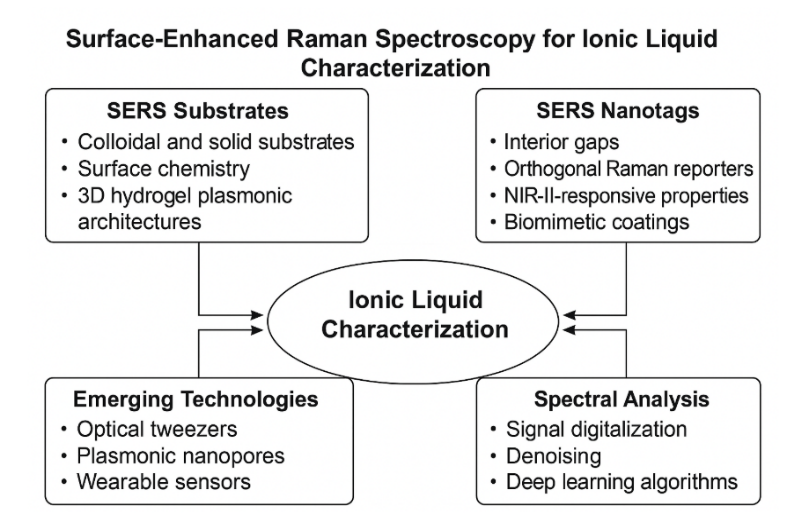
Figure 3.2.3. Diagram demonstrating the use of new spectral analysis techniques to characterize ionic liquids utilizing SERS developments.
Due to their complex ionic composition, ionic liquids (ILs) often exhibit unique vibrational signatures. Surface-Enhanced Raman Spectroscopy (SERS) can amplify the Raman signals of ILs even at very low concentrations, allowing precise molecular characterization, studies of drug or excipient interactions, and monitoring of their behaviour under various conditions such as different solvents, temperatures, or pH levels. Additionally, by combining SERS with computational techniques, structure-activity relationships relevant to drug delivery and formulation science can be revealed. This makes SERS a valuable analytical tool for advancing IL-based innovations and pharmaceutical research.
3.2.4. Open Powder X-ray Diffraction Database (74):
With over 92,000 entries, the opXRD database is the largest open-access collection of experimental powder X-ray diffraction (pXRD) patterns. The primary aim of this project is to leverage machine learning (ML) to automate structural characterization and accelerate the discovery of new materials. Traditional pXRD analysis methods like Rietveld refinement are labour-intensive and require expert knowledge, making them less scalable. By including both labelled and unlabelled experimental diffractogram, opXRD overcomes previous limitations and supports transfer learning, as well as the training and evaluation of ML models. Unlike models trained solely on simulated data—which often struggle to handle noisy experimental results—opXRD enables better generalization to real-world data. The initiative also promotes open science by enhancing transparency and reproducibility.
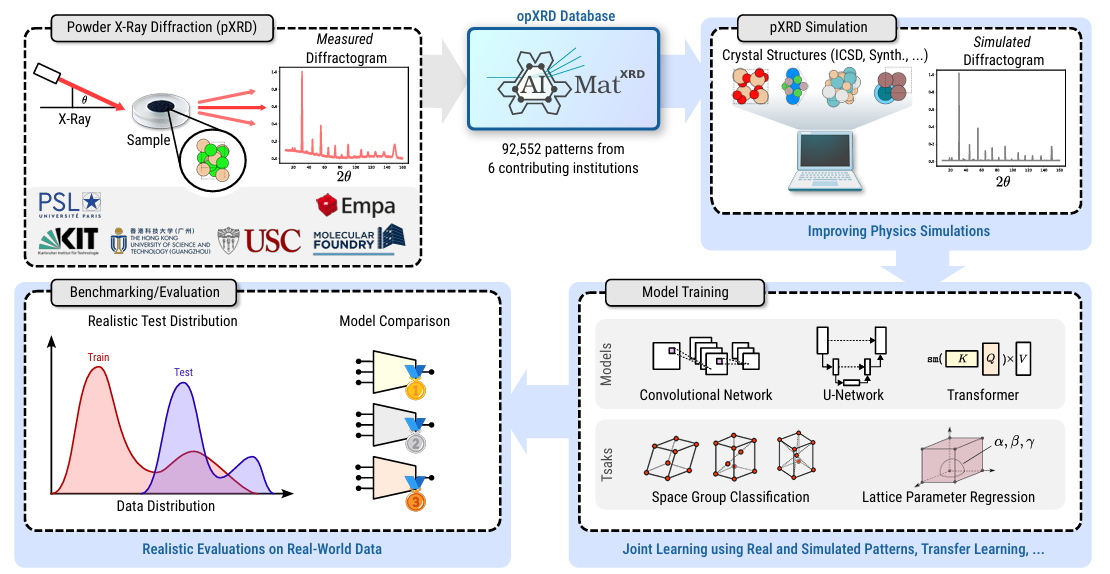
Figure 3.2.4. Gives a summary of the machine learning processes that the opXRD database supports and promotes
Although ionic liquids (ILs) are typically amorphous or only weakly crystalline, they often form solid crystalline salts or IL-based composites. Crystalline phases in IL-derived materials can be investigated by training or fine-tuning machine learning models using the opXRD database. This approach also enables the study of phase purity, polymorphism, and structural transformations in hybrid IL systems or IL-templated materials. Integrating opXRD data into these analyses facilitates high-throughput screening and structural prediction of IL-based materials, ultimately enhancing their applications in drug delivery, energy storage, and catalysis.
3.2.5. Electron Backscatter Diffraction (EBSD) Imaging (75):
This new approach improves electron backscatter diffraction (EBSD) imaging by recovering high-quality data from partially sampled scans using compressive sensing and inpainting techniques. Traditional EBSD requires a full raster scan of the sample, which is time-consuming and can cause beam damage. The method employs beta-process factor analysis (BPFA) to reconstruct complete crystallographic maps from subsampled probe points, significantly reducing electron exposure and data acquisition time. The study demonstrates that even with as little as 5–10% of probe locations, band contrast and inverse pole figure (IPF) maps can be accurately reconstructed, even in noisy conditions.
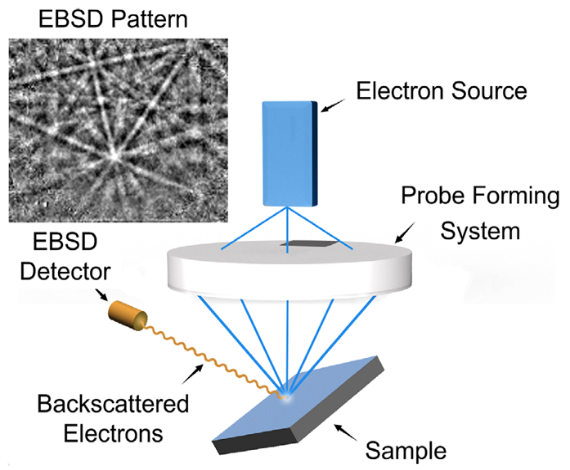
Figure 3.2.5. Demonstrates the standard instrument geometry, in which an electron beam incident on a highly tilted sample's crystal plane forms an EBSD pattern (EBSP).
Although ionic liquids are often amorphous, many IL-based composites or salts form crystalline domains. In beam-sensitive IL systems or thin films—where conventional techniques may damage the sample or yield low-quality data—this EBSD approach enables the analysis of such crystalline regions. The compressive EBSD method serves as a powerful tool for developing ILs used in energy storage, catalysis, or drug delivery by providing detailed insights into grain structure, crystallinity, and phase distribution in IL-derived materials
3.2.6. HRTEM Data Interpretation using AI (76):
This study demonstrates the use of Variational AutoEncoders (VAEs), a deep learning technique, to analyze complex in situ high-resolution transmission electron microscopy (HRTEM) data. The model autonomously identifies and interprets dynamic atomic events, such as lattice rearrangements during nanocrystal annealing, without requiring prior human labeling. By generating a compressed latent space that encapsulates physical processes like intra-particle ripening and rotations, the approach enables faster and more accurate understanding of non-structural transformations.
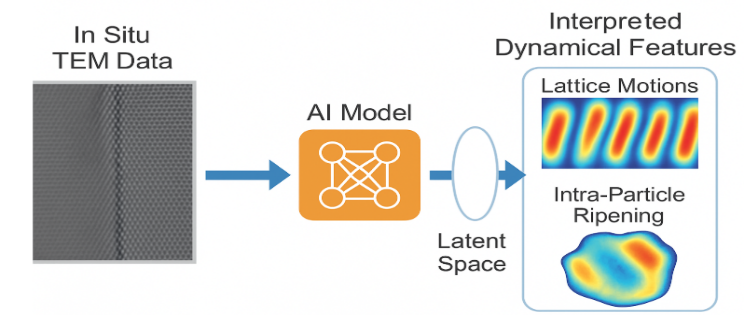
Figure 3.2.6. Demonstration of High-Resolution Transmission Electron Microscopy (HRTEM) data Interpretation using variational autoencoders (VAEs), a deep learning model.
AI-assisted HRTEM analysis enables the investigation of the nanoscale structural organization in IL-based systems. It allows detection of crystallization, phase transitions, and defect formation within materials derived from ionic liquids. This technique proves valuable for IL formulation, stability assessment, and optimization across applications like catalysis, energy storage, and pharmaceuticals, as it can automatically interpret atomic-level behaviours.
Owing to their unique set of properties, ionic liquids have garnered attention in biomedical research, serving both as convenient catalysts for drug synthesis and as promising components in pharmaceutical formulations. Several key reviews have documented the advantages of applying ionic liquids within medicinal chemistry (80, 81, 82 ).
CONCLUSION
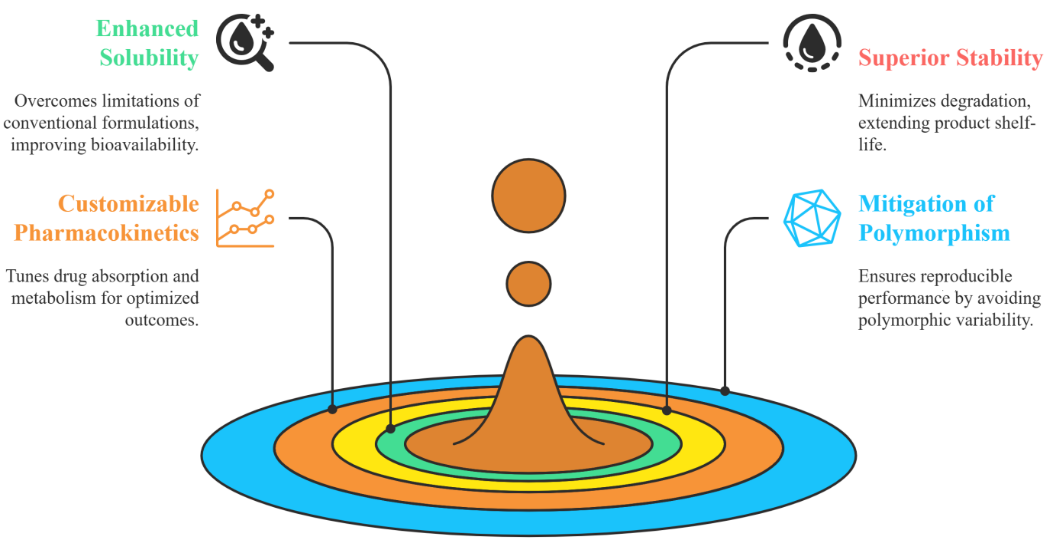
API-based ionic liquids (API-ILs) present an innovative and efficient approach to addressing major pharmaceutical limitations, including inadequate solubility, limited bioavailability, and polymorphic behaviour. By combining APIs with compatible counter ions, these systems enhance both physicochemical and pharmacokinetic attributes without modifying the drug’s primary structure.
This review outlines modern synthesis techniques—such as ion exchange, mechano-chemical processing, and microwave-assisted reactions—that not only simplify production but also reduce reliance on organic solvents. Analytical methods, including conventional tools like FTIR, NMR, and DSC, alongside emerging technologies like AI-powered NMR interpretation, SERS, and HRTEM, are crucial for evaluating and optimizing API-IL performance.
Proven across multiple drug categories, API-ILs hold significant promise for improving delivery methods, particularly in transdermal, oral, and injectable systems. Looking ahead, advancing their safety profile, regulatory approval, and large-scale production will be key to unlocking their full pharmaceutical potential.
REFERENCES




Deep Chaudhari*, Sofiya Mujawar, Vinayak Rasal, Harshit Shende, Chetan Shahare, Synthetic Approaches and AI-Assisted Characterization of API-Based Ionic Liquids: A Strategy to Enhance Physicochemical Properties, Int. J. of Pharm. Sci., 2025, Vol 3, Issue 6, 4070-4092. https://doi.org/10.5281/zenodo.15732736
 10.5281/zenodo.15732736
