
Pravara Rural Education Society's College of Pharmacy (For Women) Chincholi, Nashik.
A long-used adaptogenic plant in ayurvedic therapy, Ashwagandha (Withania Somnifera, WS) has recently caught the attention of modern medical researchers. The concept is that, similar to drug combination, its therapeutic potential may allow sustained benefits with longer treatment intervals, enabling continuous year-to-year improvements without interruption. Because of these qualities, ashwagandha is anticipated to be beneficial in adjuvant therapy for depression, anxiety, and pain conditions that represent growing public health concerns. Through a number of biochemical mechanisms affecting the nervous system, the bioactive constituents of WS, particularly withanolides, may help reduces symptoms of anxiety and depression. The presence of phytochemical compounds further contributes to its therapeutic and nutritional value. This review aims to provide a comprehensive summary of preclinical and clinical studies exploring the neuropsychiatric effects of WS, with a particular focus on its application in pain and anxiety management, and to establish a foundation for future investigations.
Overview Of Pain and Anxiety
Anxiety, discomfort, and pain are common reactions to medical procedures. These emotions, particularly in youngsters, have a negative impact on comfort levels during medical operations and are linked to negative outcomes like escape attempts, poor recovery, irregular feeding and sleeping patterns, and indications of posttraumatic stress disorder. Interventions are also required to treat pain and anxiety in juvenile patients since these conditions can cause people to avoid seeking medical attention (1). One of the most frequent reasons adults seek medical attention is chronic pain, which has been connected to poor perceived health or a lower quality of life, opioid dependence, anxiety and depression, and limitations in daily activities and mobility. According to population-based estimates, between 11% and 40% of American adults suffer from chronic pain. In the United States, the lifetime prevalence of anxiety disorders is close to 30%, making them pervasive and incapacitating illnesses(2). As the most prevalent mental illness Anxiety is a serious issue that impacts individuals of all ages. Stress, which is the body’s physiological reaction to threats, frequently coexists with anxiety. While short-term exposure to the stress response is intended to be a helpful coping strategy, prolonged stress is likely to worsen pre-existing conditions and lead to a loss in general health. To lessen the impact of these prevalent health hazards, treatment procedures for anxiety management and stress reduction are constantly being sought(3).
Introduction Of Ashwagandha
Herbs have long been utilized in perfumes, cosmetics, and cooking. They are often used to treat a variety of ailments using traditional medicine. Withania somnifera (L.) is one of the most important perennial plants for healing in Indian traditional medicine(4). Withania somnifera popularly known as Ashwagandha in Sanskrit, has been extensively implemented as herbal medicine.The species name has been described as ‘somnifera’, which means “sleep-inducer” in Latin,for its anti-stress characteristics(6).Even though there has been a lot of Research done on WS thus far, this highlights the need for more study in the areas of standardization, marker profiling, and extraction process optimization. Furthermore, extensive safety and effectiveness research combined with a stringent regulatory framework will increase the usefulness of this powerful herb and its derivatives in food, medicine, and supplement items(4).Common names for ashwagandha (Withania somnifera, fam. Solanaceae) include “Indian Ginseng” and “Indian Winter Cherry.” Due to its many health benefits, it has been used as a Rasayana for thousands of years, making it one of the most important herbs in India’s traditional medical system, Ayurveda. Rasayana is defined as a metallic or herbal concoction that increases happiness and fosters a young state of physical and mental health. While middle-aged and older people take these kinds of treatments to prolong their lives, young children are given them as “tonics”. The most popular of the Ayurvedic Rasayana herbs is ashwagandha. The herb is referred to as “Sattvic Kapha Rasayana.” The majority of Rasayana plants are anti-stress and adaptogen. Ashwagandha improves memory, the brain’s functioning, and nervous system work. It promotes a healthy sexual and reproductive balance by enhancing the reproductive system’s functionality. It increases the body’s resistance to stress because it is a potent adaptogen. By boosting cell-mediated immunity, Ashwagandha fortifies the body’s resistance to disease. Additionally, it has strong antioxidant qualities that aid in preventing free radical-induced cellular damage(5).
Botanical Description
Plant description
An explanation of ashwagandha (Withania somnifera) from a botanical perspective: Small, usually upright can reach a height of two feet.The plump, whitish-brown roots are covered in bristles. The most significant part of the plant is its roots, which are also used medicinally.The leaves are simple oblong, petiolate, opposite, and small.In axillary, umbellate cymes, the berries are small, globose, and orange-red when fully grown; the seeds are reniform and yellow; and the flowers are indistinguishable, greenish or yellow.The fruit is harvested in the late fall, and the seeds are dried before being planted in the spring. Grown in arid regions of India “(especially Madhya Pradesh, Rajasthan, Punjab, Haryana, Uttar Pradesh, Gujarat, and Maharashtra), Yemen, Nepal, Sri Lanka, and parts of China”. (7)
Geographical sources
Native to the arid regions of India, North Africa, and the Middle East, ashwagandha, also called Withania somnifera, is a perennial shrub.It is believed to have originated in the Indian subcontinent and has been used in Ayurvedic medicine for thousands of years.The Indian states of Rajasthan, Gujarat, and Madhya Pradesh are the primary growing regions for ashwagandha.The Indian states of Rajasthan, Gujarat, and Madhya Pradesh are the primary growing regions for ashwagandha. Other regions of the nation, including Maharashtra, Uttar Pradesh, and Haryana, also grow it. Other nations in the region, including Nepal, Pakistan, and Sri Lanka, also contain ashwagandha. Other countries around the world, like Yemen and China, also grow it. The plant can withstand high temperatures and little irrigation, and it is ideally suited to grow in desert and semi-arid areas with poor soil conditions. It favors sandy or loamy soils that have adequate drainage, a pH of 6 to 7.5, and full sun(8).
Traditional uses
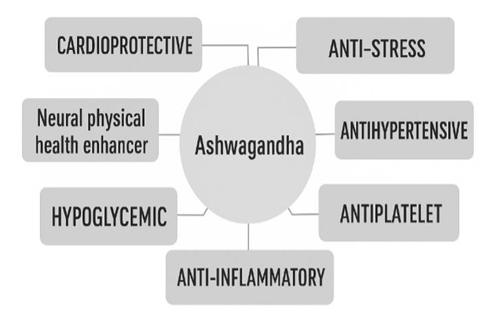
Fig1.Traditional uses of ashwagandha
1. This herb is classified as an adaptogen, which is a nontoxic herb that acts on the neuroendocrine system and the HPA axis to restore physiological function in a nonspecific manner.
2. Although it doesn’t have sedative properties, ashwagandha is useful for treating insomnia. Its nerval and rejuvenating qualities provide energy, which aids in the body’s ability to relax and fall asleep. “Therefore, instead of using sedatives to cover up a stress-related issue it aids the body in addressing it. A herb that reduces stress eliminates insomnia and revitalizes the nerve system.
3. Ashwagandha has also been demonstrated to reduce blood pressure and is quite successful in preventing ulcers brought on by stress.
4. Ashwagandha is the herb of choice for arthritis, which is characterized by aching, dry, swollen, and inflamed joints.
5. Studies on ashwagandha have found that the plant’s extracts directly affect sperm production in the seminiferous tubules of young mice.
6. Ashwagandha raises hair melanin and hemoglobin (red blood count). It reduces cholesterol and stabilizes blood sugar(9).
Phytoconstituents Of Ashwagandha
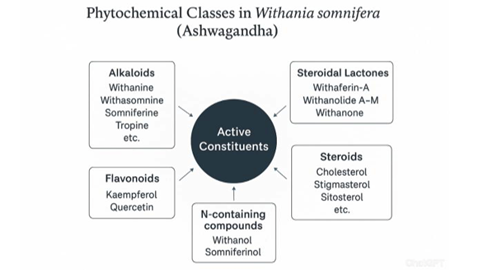
Fig 2. Phytoconstituents of ashwagandha
Researchers are always interested in the phytochemicals of Withania somnifera. Groups of chemicals, including as tannin, alkaloids, flavonoids, and steroidal lactones, have been isolated and discovered as a result of the extensive research conducted on this species.More than 13 alkaloids, 138 withanolides, and a number of sitoindosides—a withanolide with a glucose molecule at carbon 27—have been identified from the aerial parts, roots, and other plant components. The plant’s phytochemical profile showed that the bioactive chemicals are found In the stem bark, leaves, roots, and fruits. While the roots of the plant include alkaloids, steroids, volatile oils, and reducing sugars, the leaves are said to contain 12 withanolides, condensed tannins, flavonoids, glycosides, and free amino acids. As previously stated, these chemicals’ multifaceted significance attracted a great deal of research interest worldwide. The bioactive steroid lactones In particular it has been determined that the main chemical components of WS are withanolides. The formation of the C-28 steroidal lactones which consist of withanolides on an ergostane-type skeleton comes after C-22 and C-26 oxidize to create a six-membered lactone ring. Numerous structural variants of withano-lides with biological activity including withanone and withaferin A, have been described and reported. In addition, withanolide (A-D). Withanolide glycosides, also known as glycowithanolides, which have been identified as withanosides, are found in the plant .Apart from the glycowithanolides and the withanolide alkaloids, the plant methanolic extract includes amino acids like aspartic acid, proline, tyro-Sine, alanine, glycine, glutamic acid, cysteine, and trypto-Phan in addition to tropine, choline pseudotropine, withasomnine, mesoanaferine, withanine, somniferine, hentriacontane, withanaminine, visamine, ash-Wagandhine, pseudowithanine, withaniol, reducing sugars, and iron(10).
1.Withanolides Derivatives
Derivatives and Withanolides One of the main bioactive substances is steroidal lactones. Examples include somnifericin, coagulin H/S, withanosides I through XI, withaferin A, withanolide A, and withanolide D, among many more. The roots, leaves, shoots, fruits, and berries are the primary locations for these substances. The distinctive ergostane structure of withanolides includes a lactone ring.
2.Alkaloids
These consist of choline, isopeletierin, kuskohigrin, anaferin, witanin, somniferin, somnin, tropin, somniferinin, pseudowitanin, and pseudotropin.. These contribute to the pharmacological properties of the plant and are found in different areas of it.
3.Somniferine:
Supports traditional claims of ashwagandha as a herb that promotes sleep and reduces pain by exhibiting sedative and mild analgesic properties.
4.Glycosides
Glycoside Withanolides glucose-containing glycosides, including sitoindoside IX and X.
5.Saponins
Saponins that are steroidal Ashwagandha contains sitoindosides VII and VIII, for instance. Sitoindosides imitate the effects of anxiolytic medications by improving stress tolerance and lowering corticosterone levels in experimental animals.
6.Flavanoids
Flavonoids comprise substances such as quercetin, 6-dihydroxycemferol, 3-O-rutinoside, and glycosidic derivatives. Ashwagandha’s pharmacological profile is greatly influenced by flavonoids and phenolics, but in lesser levels.
7.Other Substances Additionally detected are coumarins (such as scopoletin), sterols, chlorogenic acid, resins, lipids, carbohydrates, and fatty acids.
8.Phenolic compounds and phytophenols
Antioxidant qualities are influenced by phytophenols and phenolic substances. The profiles of these phytochemicals can differ depending on the area and plant part used, and they have been measured and examined in various research. The main bioactive components of ashwagandha that are thought to be responsible for many of its therapeutic benefits are the withanolides, particularly withaferin A and withanolide D(4).
Pharmacokinetics Of Ashwagandha
Studies on the pharmacokinetics of herbal medications bioactive ingredients offer important insights into their metabolism, dose, and therapeutic usage guidelines. Nevertheless, nothing is known about the bioavailability and metabolism of withanolide in humans(11). From the plasma concentration vs. time data, pharmacokinetic parameters such as the maximum observed concentration (Cmax), maximum observed time (Tmax), area under the curve (AUC), half-life (t1/2), and elimination rate constant (Kel) were computed. Based on the experimental data, Cmax and Tmax were estimated(12).
Mechanism Of Action
1.Neurotransmitter’s Gamma-Aminobutyric Acid (GABA) Related Activity
The most significant inhibitory neurotransmitter in the central nervous system is GABA, and it is believed that GABAergic neurotransmissions are crucial for controlling anxiety. GABA agonist medications, which increase GABAergic activity and are frequently used to treat anxiety disorders, primarily operate on GABA type A (GABAA) receptors. The anti-anxiety action of WS may be partially explained by chemicals in ashwagandha that interact with and modify GABAA receptors, according to a large body of preclinical research. When combined with sub-therapeutic dosages of GABA a GABA receptor agonist and diazepam a GABAA receptor modulator a sub-effective dose of an unidentified WS Root extract raised the seizure threshold in mice in a mouse model of seizures induced by pentylenetetrazol (PTZ). A methanolic extract of WS combined with pentobarbital provided more protection against PTZ-induced toxicities than either drug alone, according to a previous mouse study. Additionally, combining a sub-protective dosage of WS with GABA improved the extract’s protective qualities. Two of the main chemicals in WS, withaferin A and withanolide A, did not directly affect GABAA receptors, however an aqueous root extract of WS showed GABAA receptor agonist activity in rat brain GABAA channels. A subtype of GABAA receptors, GABAρ1 receptors have special pharmacological characteristics such as increased sensitivity to GABA and a slower rate of desensitization.
2. Antioxidant effect
WS may have antidepressant effects is through its antioxidant activity. Oxidative stress has been connected to a number of mental illnesses, including depression, even though the intricate pathophysiology of this condition is still not fully understood. The brain’s high oxygen consumption makes it vulnerable to oxidative stress, which can raise the formation of reactive oxygen species and increase the availability of lipids that are vulnerable to peroxidation caused by ROS. According to the oxidative stress theory of depressive disorders, oxidative stress is a crucial stage in a series of events that culminate in depressive symptoms, along with the activation of pro-inflammatory and pro-apoptotic mediators. WS is a strong candidate for research into its potential antidepressant properties because it has shown both antioxidant and anti-inflammatory properties in a variety of animal models.
3.Serotonergic Activity
Studies on animals have shown that WS may have serotonergic action, which may contribute to its antidepressant properties. Horses were employed in a stress model where they were stressed by separation, exercise, and noise. “Found that administering WS root powder for 21 days stopped a stress-induced decrease in serum serotonin levels. An unidentified root extract of WS also prevented a stress-induced decrease in hippocampal serotonin levels in a mouse model of restraint stress”.(13).
Extraction Techniques
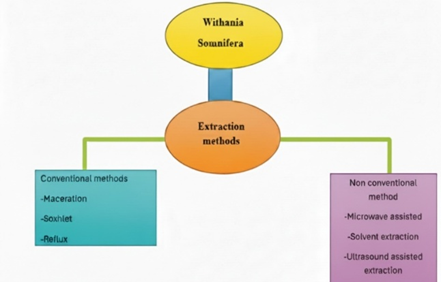
Fig 3. Extraction methods of ashwagandha
WS contains a wide range of bioactive compounds that contribute to its therapeutic properties including flavonoids alkaloids and withanolides. These bioactive chemicals are extracted from plant material using a variety of extraction procedures. The kind of bioactive substances to be extracted the required level of extract purity and the extract’s intended usage are some of the variables that influence the extraction technique selection. Common methods for extractinginclude supercritical fluid extraction, ultrasonic extraction, maceration, reflux extraction, Soxhlet extraction, and microwave-assisted extraction. These extraction methods have made it possible to separate bioactive substances from WS that have a variety of medicinal uses(4). Maceration and the Hot Continuous Percolation Process for Extraction Using varied drug-solvent ratios (1:6, 1:8, 1:10), 100 g of dried W. somnifera roots were thoroughly extracted using a variety of solvents (alcohol, water, and hydro alcohol (50:50)) by hot continuous percolation (10 hours) and maceration techniques (10 hours). Following their drying, the extracts percentage yields were calculated. To determine the type of phytoconstituents included in the extracts, a preliminary phytochemical test was conducted(14).
1.Microwave extraction: Using a range of solvents (alcohol, water, and hydro-alcohol 50:50) and various drug-solvent ratios (1:6, 1:8, and 1:10), 10g of dried Withania somnifera roots were fully extracted utilizing microwave-assisted extraction for one to two minutes. Additionally, 800 MHz of micro power is utilized for extraction. Above their boiling temperatures the extracts were evaporated. Lastly, the dried extracts’ yield percentages were calculated.
2.Ultrasonication method of extraction: 10g of dried roots of Withania somnifera were thoroughly extracted using a variety of solvents (alcohol, water, hydro-alcohol 50:50) and different drug-solvent ratios (1:6, 1:8, and 1:10) using ultrasonication for Ihr. The extraction temperature was 600 C. Above their boiling temperatures, the extracts were evaporated. The yield percentages, of the dried extracts were then determined.
3.Chromatographic Analysis: To determine the components that are present in various extracts, thin layer chromatography (TLC) of various ashwagandha extracts was carried out. Toluene: ethyl-acetate: acetic acid (65:33:2), acetonitrile: water (75:25), and chloroform: methanol (90:10) are examples of different solvent systems. The detecting chamber was the iodine chamber(15).
Preclinical Study
Effects Of Ashwagandha on Anxiety
1.Animal studies
The therapeutic effects of Withania somnifera (WS) On anxiety were investigated using root extracts, leaf Extracts, and mixtures of compounds such as Withaferin-A and cytoindosides VII-X isolated from this plant while investigating the effects of Withania Somnifera on anxiety, extracts obtained from both Root and leaf were applied. While obtaining these Extracts, different extraction methods and different Solvents such as water, ethanol, methanol, and Hydroalcoholic were used. This suggests the potential for several bioactive substances to interact. Furthermore, Withania somnifera Extracts have been shown to enhance the effects of Known anti-anxiety drugs. For instance, it was discovered that a subtherapeutic dose of oral Withania somnifera root extract (50 mg/kg) increased the anxiolytic effect of diazepam (0.5 mg/kg) in a rat social isolation model when administered at a subtherapeutic dose. This finding raises the possibility that Withania somnifera and medications used to treat anxiety could work in concert. (16).
a.Open Field Analysis (OF)
To quantify mice’s anxiety, the OF test is used. Five minutes are allotted for the animals to explore a 39 cm by 39 cm by 39 cm square arena .Time spent in various places Any maze software might be used to automatically quantify the arena. More time spent outside the arena indicates greater worry, while more time spent in the heart of the arena indicates less anxiety.
b.Forced Swim Test (FST)
Mandatory swimming exam the FST assesses behavior that resembles depression. A camera and any maze software are used to automatically score the mice’s immobility throughout the six minutes they spend in a cylindrical container (45 cm in height, 20 cm in diameter) filled with lukewarm water. More depressive-like behavior is indicated by a longer duration of immobility.
c.Elevated plus maze(EPM)
For rodents, the elevated plus maze (EPM) is a commonly used behavioral test. It has been proven to evaluate any pharmaceutical drugs’ anxiolytic effects and identify the fundamental processes behind animals’ anxiety-related behavior. Each animal is placed into a plus sign-shaped apparatus with two identically sized It stood 50 centimeters from the ground with one arm open and two closed. By assessing the spontaneous motor activity (total and/or closed arm entries), we may concurrently identify the anti-anxiety behavior (increased open arm duration and/or open arm entries). For five minutes each day, the number of times an animal entered with its arms open and closed with all four paws was noted as was the amount of time it spent in open arms(17).
2.Human Studies
A prospective, randomized, double-blind, placebo-controlled clinical trial was conducted by Chandrasekhar and colleagues (2012) to evaluate the safety and efficacy of Ashwagandha (Withania somnifera) root extract in adults suffering from chronic stress and anxiety. In this study, a total of 64 participants were randomly assigned to receive either a high-concentration full-spectrum Ashwagandha root extract (KSM-66, 300 mg twice daily) or placebo for 60 days. Standardized scales were used to measure stress and anxiety levels, and serum cortisol levels were also evaluated as a biochemical marker of stress. The results demonstrated that Individuals in the Ashwagandha group showed a significant reduction in stress and anxiety scores compared to the placebo group. In addition, serum cortisol levels were substantially reduced, indicating a positive effect on the physiological stress response. Participants receiving Ashwagandha also reported improvements in sleep quality and overall well-being. This clinical evidence strongly suggests that Ashwagandha root extract is effective in reducing anxiety and stress, while also being safe for human use, thereby supporting its therapeutic role as a natural anxiolytic agent(18).
Effect Of Ashwagandha On Pain
1.Animal studies
a.Hot plate method
Rats were split up into the following groups for the Hotplate test [7]. There are six animals in each cluster. Animals in Group I received 5% Tween 80 in water; animals in Animals in Treatment II received 1-150 mg/kg b.wt. extract, those in Treatment III received 250 mg/kg b.wt. extract, and 350 mg/kg b.wt. extract was given to those in Group IV. There were four experimental groups. As controls, rats given saline fluid were used. WS was administered to the experimental groups at doses of 150, 250, and 350 mg/kg b.wt., p.o. The test involved placing each animal separately on a hot plate that was kept at a steady temperature of 55+0.3oC. With a 15-second cutoff interval, the latency to the first indication of hind paw licking or the jump reflex to avoid heat nociception was used as an indicator of nociceptive threshold. Up to four hours after the medication was administered, the nociceptive threshold was checked every sixty minutes.
b.Carrageenan induced effect
Carrageenan-induced anti-inflammatory properties of WS’s 85% methanolic extract were studied. The animals were split up into the groups listed below. Normal (Group I): 5% Tween 80 in water; Standard (Group II): -10 mg/kg b.wt. indomethacin Treatment III: 1-150 mg/kg b.wt. extract Treatment IV: 250 mg/kg b.wt extract and Treatment V: Treatment III: 350 mg/kg b.wt extract. The carrageenan-induced edema model was used to investigate the WS extract’s anti-edematogenic qualities. Rats were utilized in groups of six. One hour before to the administration of an intradermal injection of carrageenan (0.1 ml of a 1% solution in 0.9% saline solution) into the plantar region of the right hind paw, the animals were administered a saline solution, indomethacin (10 mg/kg b.wt, p.o.), and a dosage of a specific WS extract The contralateral paw received an injection of 0.1 milliliters of saline solution. The 150, 250, and 350 mg/kg b.wt p.o injections were given to the WS extract-treated group. Using volume displacement techniques, the paw volume was measured prior to the injection and every hour thereafter for four hours. The degree of inflammation was assessed by the volume difference between the left and right paws.
C.Tail Immersion Method
Rats using the tail immersion method, [8] were split up into the following groups. There are six animals in each cluster, Group I Control animals (water containing 5% Tween 80) Treatment Group II 1–150 mg/kg b.wt extract Treatment Group III 2–250 mg/kg b.wt extract Group IV 350 mg/kg b.wt extract for Treatment III. The tail-flick test was used by the analgesiometer to gauge the antinociceptive effect in rats. Up to 60 minutes after treatment, WS under study and the vehicle were used to evoke reactions every 15 minutes. There were, four experimental groups. As controls, rats given saline fluid were used. WS was administered to the experimental groups at doses of 150, 250, and 350 mg/kg p.o. Experimental procedure for inflammation caused,by “carrageenan”.(19)
2.Human studies
W. somnifera 250 mg, W. somnifera 125 mg, and a placebo were administered twice daily to 60 individuals with knee joint pain and discomfort in a double-blind fashion. The Visual Analogue Scale (VAS), Knee Swelling Index (KSI), and Modified WOMAC were used to quantify baseline and at 4, 8, and 12 weeks.(2).
Safety Of Use, Contradiction And Dosage Consideration
Safety of use
One of the most crucial elements of any clinical investigation is safety assessment. Every pharmaceutical formulation and ingredient used as a drug or supplement must first pass safety and tolerability tests before moving on to efficacy tests. Generally, plant-based products used in Ayurvedic medicine are considered as safe. These items undergo a thorough review process in accordance with Ayurvedic principles. Moreover, such products are time-tested, have a long history of application in various health-related aspects, and aid in attaining better health. However, each compound must undergo thorough scientific examination and safety, effectiveness, and adverse event testing before being accepted and used in the general population. The present study is part of a large study that evaluated the immunological impact of the herb and the effect on the muscle mass, strength, stamina in the selected participants. The present part of the study addresses the safety concern related to Ashwagandha consumption with specific and common dosages that are being used.
Recently, Kelgane et al.37 have conducted a study to understand the effect of variable dosage on human volunteers for the same product used in this study. In the current clinical investigation, however, we have concentrated on the most commonly reported dosage, which is 600 mg/day. In the present section of the study, we have also reported the impact of the herb on the thyroid hormonal profile as that was one of the concerns raised recently related to this herb
Healthy human beings to understand the safety and tolerability of Ashwagandha related to muscle activity, exercise tolerance, cholesterol level (LDL), and body fat percentage Hepatoprotection remained a major concern for most pharmaceutical or nutraceutical component use. In most of the reports, Ashwagandha was reported to have a possible hepatoprotective role. Several other similar studies also reported such activity of the herb extract. The administration of Ashwagandha root extract did not alter the considered hematological and biochemical parameters significantly in the participants. These shows that participants administered with Ashwagandha root extract over 8-weeks did not show any adverse reactions(21).
Contradictions
Ashwagandha root phytotherapy is growing , but it’s crucial to remember that not all patients should use the preparations until their other therapies are under control. This group may include hyperthyroidism patients who exhibit symptoms like irritability, restlessness, anxiety, palpitations, hand shaking, psychomotor agitation, muscle weakness and exhaustion, and diminished libido. Although vitania sluggard root preparations have been shown to be effective in reducing the aforementioned symptoms, it is not recommended for usage in individuals with hyperthyroidism since they worsen the condition’s consequences. According to research, this raw material raises the levels of tetraiodothyronine (T4) and 3,3’,5-triiodothyronine (T3), which is detrimental in hyperthyroidism.
Male infertility has been treated using Indian ginseng root extract; however, men who have hormone-sensitive prostate cancer should not use the raw material. Studies have shown that the plant can boost testosterone production which accelerates the disease’s progression. Because greater doses of Ashwagandha root extract can cause miscarriage, the serum is completely contraindicated for patients who are planning or already pregnant.
Extreme caution should be used when taking sluggish vitania concurrently with medications acting via the indicated receptor particularly those from the benzodiazepine and barbiturate groups because ashwagandha root methanolic extract has been shown to influence dopaminergic neurons in the ventral tegmental region through GABA-A receptors. This is because of the possibility that the effects of the medications taken could be intensified [146]. Myorelaxant, sedative, sleep aid, and anti-anxiety medications may interact with ashwagandha root, intensifying their effects through synergy. The raw material has additive effects with barbiturates, benzodiazepines, and anticonvulsants, which may exacerbate their negative side effects, including headaches, sleepiness, muscular tremors, decreased libido, and impaired motor coordination.
According to research on ashwagandha root extracts, the raw material may be a CYP2B6 inhibitor or a CYP3A4 inducer, which could result in clinically significant interactions between the raw material and the medication. This occurrence may directly lead to the drug’s side effects getting worse or to the drug’s ineffectiveness un the current course of treatment. Additionally, people with autoimmune illnesses, hypoglycemic, hypotensive, or immunosuppressive medications, and others should speak with a physician about the potential benefits of ashwagandha therapy.
Sluggard is a safe plant for both short-term and long-term use according to the research that is currently available on both humans and animals. The consumption of raw materials or their processing has not yet been demonstrated to have any notable negative effects. The primary contraindications would be hypersensitivity reactions to this species or to plants in the Solanaceae family. Patients with autoimmune illnesses should stay away from raw materials to prevent autoimmunity from immune system supplements. Ashwagandha’s immunostimulant properties may accelerate the course of diseases like rheumatoid arthritis, lupus, and multiple sclerosis. As a result, ashwagandha root preparations shouldn’t be taken with immunosuppressive medications. There are antagonistic effects between the medicine and the raw material(22).
Dosage consideration
Use of ashwagandha at a dosage of 240 mg/day for 60 days led to a reduction in the feeling of stress and fatigue. Administering 500 mg of ashwagandha root extract cause significant improvements in the a reduction in morning cortisol in saliva, an increase in serotonin in urine. 700 mg of ashwagandha taken daily improves sleep, increases energy, and sharpens the mind, all of which assist reduce stress. 300 mg of ashwagandha extract daily, it was found that this extract has a beneficial effect on weight management and cortisol reduction in individuals experiencing chronic stress(23).
Useful Preparation of Ashwagandha
• When applied to a localized area an ashwagandha leaf paste has anti-inflammatory properties.
• The herbal massage oil that contains ashwagandha is beneficial for a variety of conditions including epilepsy paralysis insomnia and more.
• Ashwagandha, when processed with ghee, sugar, and honey, is a very effective aphrodisiac that boosts sperm count, mobility, and semen quantity. It works well for poor libido, erectile dysfunction, and early ejaculation.
• When taken on a regular basis, ashwagandha churna helps to alleviate problems including rheumatism, senile debility, nervous weariness, brain-fag, low memory, loss of muscular activity, and spermatorrhea. It gives the body more vitality and energy. It aids in the reconstruction of bodily systems that have been weakened by long-term illnesses like, rheumatism and syphilis. Additionally, it restores the body’s depleted energy from excessive activity and mental strain, thereby delaying the onset of premature aging.
• An effective way to counteract cravings for sweets Ashwagandha can be used to prepare vata. Add a tablespoon of date sugar and roast one ounce of ashwagandha in ghee. Keep refrigerated in a screw-top glass container.
• Ashwagandha when taken regularly is very helpful for underweight youngsters. It can be taken in the morning around twenty minutes before breakfast in the middle of the afternoon if sweet cravings occur and before bed with a cup of hot milk. It raises body weight and vitality. Regular ashwagandha use lowers cholesterol and blood sugar levels.
• A finely ground ashwagandha powder combined with oil is highly beneficial for a variety of skin conditions.
• When administered to nursing mothers ashwagandha thickens and improves the nutritional value of the milk in addition to acting as a galactogogue(9).
Future Perspectives
There are a number of gaps in the existing research on ashwagandha. Although the benefit of ashwagandha supplements is quite obvious, more research is needed to determine the precise mechanisms of action. GABAergic activity that promotes sleep, increasing antioxidant capacity, and hormones like cortisol and testosterone are all possible processes worth investigating. Possible crosstalk between those mechanisms and their hierarchy is another fascinating topic. Ashwagandha’s beneficial effects on both the quantity and quality of sleep are thought to be among its main modes of action. In contrast to actigraphy, higher quality measurement techniques such lab-based polysomnography should be used in future studies. Furthermore, the precise processes behind these impacts require further clarification.
Even while ashwagandha appears to consistently reduce tension and anxiety, it’s crucial to investigate how it affects other populations, such as professional athletes during competition season. Athletes participating in weight-dependent sports, which interfere with sleep and stress management, would be the most interesting groups to study in this field. Aesthetic disciplines weight-class combat sports, rowing, ski jumping, and horseback riding are some examples of these sports. Additional research is required to determine the best dosage schedules alternative training methods and results various populations and the specific chemicals and mechanisms that underlie those effects. There aren’t many potential clinical uses for ashwagandha. In addition to its effects on psychological issues including melancholy anxiety and sleeplessness, ashwagandha may also have an impact on fertility vitality and cognitive performance particularly as people age(24).
CONCLUSION
A branch of Ayurvedic medicine called Rasayana aims to prevent aging, increase vitality and intelligence, and fortify the body’s resistance to disease. The biological properties of Withania somnifera, one of the best examples of the Rasyana medicinal plant, include immunomodulation, anti-cancer, anti-depressant, and neuroprotective effects. The disadvantages of modern conventional drugs include increased resistance, unavoidable side effects, decreased efficacy with prolonged use, and excessive cost. As a result, focus must be placed on herbal and natural remedies such as Withania that can provide overall protection for the neurons and brain. Numerous bioactive compounds, such as phenols, flavonoids, steroids, and alkaloids, are found in ashwagandha. Extensive study has been conducted on the potential of WS extract to cure many clinical diseases.Numerous studies in the literature demonstrate the beneficial effects of ashwagandha on mental health conditions like depression and anxiety(25). Ashwagandha’s adaptogenic qualities make it a useful coping mechanism that helps improve one’s capacity to manage anxiety and despair. Extensive study has been conducted on the potential of WS extract to cure many clinical diseases. The results of the included research show that ashwagandha formulations are effective in reducing anxiety and stress. Although there aren’t many negative effects linked to ashwagandha, more research is needed to ascertain its safety when used over an extended period of time.Future research and use in the treatment of mental health issues may be possible due to ashwagandha’s broad mode of action as a natural adaptogen and its lower adverse effect rate when compared to chemical medications. Traditional antidepressant and anxiolytic medications which are frequently disliked or ineffective because of side effects may have an alternative in ashwagandha. However more clinical research and an assessment of the long-term impacts are needed. Further investigation into the effects of various herb formulations and dosages is also crucial. It is also essential to clarify the molecular mechanisms of action. More research is needed to fully understand how ‘ashwagandha affects the nervous system’ and neurotransmitter regulation as well as how it affects biochemical alterations particularly those linked to anxiety and depression. To sum up ashwagandha is a promising natural defense against depression and anxiety but further study and scientific investigations are required(26).
REFERENCES


Madhuri Takate*, Sheetal Gosavi, Therapeutic Potential of Ashwagandha (Withania Somnifera) In the Management of Pain and Anxiety: A Comprehensive Review, Int. J. of Pharm. Sci., 2025, Vol 3, Issue 11, 1287-1301 https://doi.org/10.5281/zenodo.17564376
 10.5281/zenodo.17564376
