
View Article

Abstract

Flueggea leucopyrus Willd., commonly known as the Bushweed or White Honey Shrub, is a deciduous medicinal shrub belonging to the family Phyllanthaceae. Found primarily in the arid and semi-arid regions of India, Sri Lanka, and parts of East Africa, it is highly valued in traditional medicine systems like Ayurveda and Siddha. Pharmacological investigations have highlighted its potent antioxidant, antimicrobial, and anti-inflammatory properties. Recent studies focus on its cytotoxic potential against cancer cell lines and its efficacy in treating chronic wounds and skin disorders. This overview explores its botanical profile, phytochemical constituents—specifically its unique alkaloids—and its emerging role in modern pharmacology..

Keywords

Flueggea leucopyrus; Bushweed; White Honey Shrub; Phyllanthaceae; Phytochemical constituents

Introduction

Flueggea leucopyrus is a small, hardy, thorny shrub belonging to the family Phyllanthaceae, a family well known for medicinally important plants. It is widely distributed in dry and tropical regions of South Asia, particularly in India and Sri Lanka, where it has been used for centuries in traditional systems of medicine such as Ayurveda, Siddha, and folk medicine.

The plant typically grows between 1 to 4 meters in height, forming a dense, spiny thicket. Its woody branches are zigzag in shape, ending in sharp thorns, which are modified stems. The leaves are small, ovate to obovate, and simple with smooth margins, generally 5–15 mm long. They are deciduous, falling off in the dry season to reduce water loss58. Flueggea leucopyrus produces unisexual, greenish-white flowers, which are dioecious, meaning male and female flowers grow on separate plants. The flowers are small, borne in leaf axils, with 5–6 sepals and no petals. Male flowers contain multiple stamens, while female flowers have a three-lobed ovary. Flowering usually occurs in the early dry season.

The fruit is a small globose capsule, about 4–6 mm in diameter, which splits open when mature to release smooth, brownish-black seeds. The root system is deep and robust, allowing the plant to survive in arid conditions by tapping into underground moisture. Traditionally, various parts of Flueggea leucopyrus especially the leaves and roots are used in Ayurveda and Siddha medicine. The leaf paste is applied externally to treat chronic wounds, ulcers, skin infections, and even skin cancer, particularly in Sri Lanka and southern India. In folk medicine, it is also used for treating intestinal worms, dysentery, joint pain,and swelling. The plant is believed to possess antimicrobial, anti-inflammatory, cytotoxic, and wound-healing properties, though scientific validation is still ongoing.

Its role in ethnoveterinary practices is also notable, where it is used to treat skin lesions and infections in livestock. Despite its harsh appearance and thorny nature, Flueggea leucopyrus is a resilient and medicinally important species valued for its therapeutic applications and ecological hardiness.
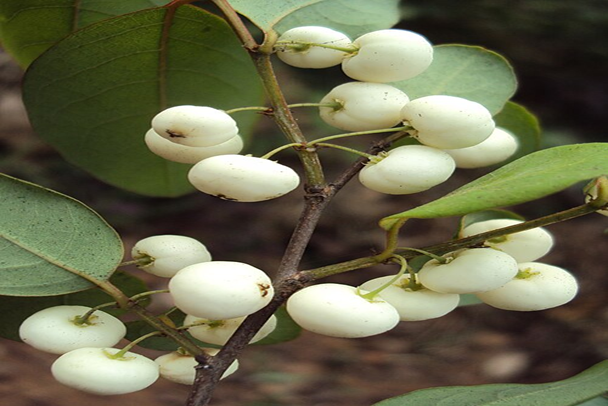


Fig 1 . Flueggea Leucopyrus

TRADITIONAL USE OF FLUEGGEA LEUCOPYRUS

Flueggea leucopyrus, commonly known as Indian Snowberry, has been used for centuries in traditional systems of medicine across South Asia. In India, the plant holds an important place in Ayurveda, Siddha, and various folk healing traditions, especially in dry and rural regions where it grows naturally. Traditional healers use different parts of the plant, including leaves, roots, stem bark, and fruits, for therapeutic purposes. The leaves are commonly crushed into a paste and applied externally to wounds, cuts, and skin infections to promote healing and reduce inflammation. It is also traditionally used to manage skin disorders such as eczema, itching, and rashes. Decoctions prepared from the leaves or roots are sometimes administered internally to relieve joint pain, inflammatory conditions, mild fever, and general weakness. In some regions of India, the plant is also used in remedies intended to support liver health

In Sri Lanka, Flueggea leucopyrus is widely recognized in indigenous medicine and is particularly valued for its use in managing chronic inflammatory conditions and tumors. Traditional practitioners prepare herbal decoctions from the aerial parts of the plant and administer them as part of complementary treatment approaches for certain long-term illnesses. The plant is also applied externally for ulcers and wounds due to its believed antiseptic and healing properties. Its reputation in Sri Lankan traditional medicine has led to increased scientific interest in studying its potential cytotoxic and antioxidant activities.

TAXONOMICAL CLASSIFICATION


Rank

CLASSIFICATION

Kingdom

Plantae

Subkingdom

Tracheobionta (Vascular plants)

Division

Magnoliophyta ( Angiosperms)

Class

Magnoliopsida ( Dicotyledons)

Order

Malpighiales

Family

Phyllanthaceae

Genus

Flueggea

Species

Flueggea leucopyrus (Willd.) Kurz

Synonyms

Phyllanthus leucopyrus, Securinega leucopyrus


BOTANICAL DESCRIPTION


Category

Description

Synonyms

Securinega leucopyra,

Phyllanthus leucopyrus

Common names


Katupila {Sri Lanka},

Indian snowberry,

putrajivaka {India}

Stem\bark


Young stems green and smooth mature

bark greyish brown, thin, rough

Leaves


Simple, alternate, distichous:

ovate to obovate :1-3cm long

entire margin: globous, pale green

Fruit


Globose drupe/berry 5-7 mm,

white and translucent when ripe enclosing 3-6 seeds

Seed

Tiny, oblong, brown, 1 per cell

Flowering season

March-June

Distribution

Tropical and subtropical Asia: India, Sri Lanka,

Myanmar, SE Asia

Habitat

Dry deciduous forests, scrublands

agricultural lands: sandy soils


PHYTOCHEMICAL CONSTITUENTS OF FLUEGGEA LEUCOPYRUS
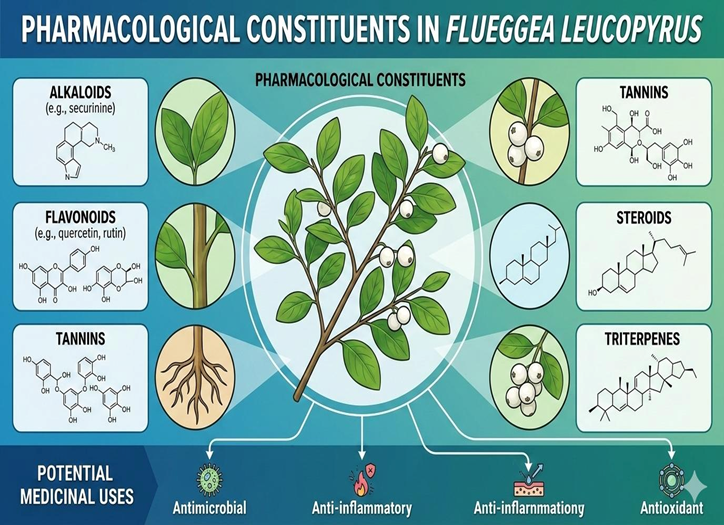
  • Alkaloids: Present in all parts, with slightly higher concentrations often found in the roots (approx. 2.52 mg/kg).
  • ?Flavonoids & Phenolics: Significant levels of total phenolics (up to 38.49 mg/g in leaf methanolic extracts) and flavonoids (up to 20.33 mg/g) provide the plant with its strong antioxidant and anti-inflammatory properties.
  • ?Tannins & Saponins: Higher concentrations of tannins are found in the bark (approx. 1.62%) and leaves (1.15%).
  • ?Terpenoids & Steroids: Including compounds like Lupeol, \alpha-sitosterol, and Stigmasterol.
  • ?Glycosides: Identified in leaf and stem extracts, though in smaller quantitative amounts.


DISTRIBUTION OF PHYTOCHEMICALS IN PLANT PARTS

Plant Part

Key Phytochemicals Identified

Leaves


Flavonoids, Alkaloids, Saponins,

Glycosides, Phenolics, Terpenoids

Bark


Tannins (High), Alkaloids, Saponins,

Phenolics

Roots


Alkaloids (High), Flavonoids, Steroids,

Phenols

Stem

Saponins, Tannins, Catechin, Lignin

PHARMACOLOGICAL ACTIVITY OF FLUEGGEA LEUCOPYRUS

1.Wound Healing Activity

Flueggea leucopyrus, extensively used in traditional drug for treating habitual injuries, skin ulcers, andnon-healing injuries. Leaf paste is applied externally to promote towel rejuvenescence and mending. Scientific studies have verified crack compression and epithelialization in beast models.

2.Antimicrobial Activity

Excerpts of Flueggea leucopyrus have shown significant antimicrobial goods against colorful bacterial and fungal strains, including Staphylococcus aureus and Escherichia coli, supporting its traditional use for skin infections and crack operation.

3.Antifungal activity

At colourful attention the ethanolic leaves excerpt of the factory shows the antifungal effect against fungal species similar as A. niger, C. lunata and A. solani by slice prolixity system on comparing with standard ketoconazole.( Helina, Kumar and Prasad, 2015)

4. Anti-inflammatory effect

Traditionally used to treat common pain, swelling, and seditious skin conditions. Preclinical studies show that splint and root excerpts reduce inflammation in convinced beast models like carrageenan- convinced paw edema.

5.Antianxiety activity

An ethanolic excerpt of factory leaves was administered orally at different attention anxiolytic exertion was studied by using the light and dark model and glass chamber test. The results demonstrate that both boluses significantly reduce anxiety- suchlike geste

6.Cytotoxic/Anticancer Activity

In folk drug, especially in Sri Lanka, the factory is used for treating skin cancers.

Laboratory studies have shown cytotoxic goods of its excerpts on certain cancer cell lines, indicating implicit anticancer properties.

7.Antioxidant Activity

The factory is rich in flavonoids and phenolic composites, which contribute to its antioxidant parcels. Excerpts have been shown to scavenge free revolutionaries, potentially reducing oxidative stress in natural systems.

8.Anthelmintic Activity

Traditionally Flueggea leucopyrus is used as a remedy for intestinal worms. Laboratory tests support its anthelmintic exertion, showing it can incapacitate and kill helminths.

9.Antidiabetic Activity

In some traditional practices, the factory is used to manage high blood sugar. Beast studies suggest that excerpts may help in reducing blood glucose situations, indicating hypoglycaemic eventuality

10.Hepatoprotective and Analgesic Conditioning

Primary findings suggest that Flueggea leucopyrus may offer liver protection and pain relief in experimental models, although further exploration is demanded to validate these goods

11.Diuretic activity

Flueggea leucopyrus has been shown to increase urine affair in experimental studies using rat models. Administration of the waterless excerpt redounded in a significant rise in urine volume, suggesting an aquaretic or diuretic effect. These goods may be attributed to the phytochemical ingredients present in the factory, which could impact renal function and electrolyte balance. Importantly, the study indicated no apparent toxin at the tested boluses, supporting the implicit safe use of the excerpt for diuretic purposes. These findings give a scientific base for the traditional use of F. leucopyrus in promoting urinary excretion and managing affiliated conditions.

CONCLUSION

Flueggea leucopyrus is a medicinal factory rich in different phytochemicals, including flavonoids, phenolics, tannins, alkaloids, and saponins, which contribute to its wide range of pharmacological conditioning. Scientific examinations have demonstrated its promising antioxidant,anti-inflammatory, antidiabetic, anthelminthic, anticonvulsant, antianxiety, and crack mending parcels. These natural conditioning support its traditional use in colorful remedial operations. Still, despite encouraging primary results, utmost studies remain limited to in vitro or beast models. Thus, farther exploration is essential to insulate and characterize the active composites, interpret their mechanisms of action, and conduct clinical trials to establish safety and efficacy in humans. Overall, Flueggea leucopyrus holds significant eventuality as a source of natural bioactive composites for the development of new remedial agents.

ACKNOWLEDGEMENT

The authors express their heartfelt gratitude to Dr. Ganesh Phadtare, Head of the Department of Pharmacology at IVM's Krishnarao Bhegade Institute of Pharmaceutical Education and Research, Talegaon Dabhade, Pune, for his invaluable guidance and academic mentorship. They also sincerely appreciate the consistent encouragement and insightful discussions provided by Darshana Shejwal and Sandhya Patil. The authors are thankful to IVM's Krishnarao Bhegade Institute of Pharmaceutical Education and Research for offering the essential infrastructure and facilities required for this work. Furthermore, they extend special thanks to all researchers and custodians of traditional knowledge whose contributions have significantly enriched the understanding of Flueggea leucopyrus.

REFERENCES

  1. Abeysinghe D, Soysa P. Traditional and ethnobotanical uses of Flueggea leucopyrus in Sri Lanka. International Journal of Herbal Medicine 2014; 2:56–6
  2. Bailly C. Phytochemistry and pharmacological activities of Flueggea species: A review. Plants 2024; 13:540.
  3. Bala P, Devi K. A wonderful medicinal plant: Securinega (Flueggea) leucopyrus (Willd)—A brief review. Journal of Pharmacognosy and Phytochemistry 2017; 6:231–236.
  4. Soysa, P., De Silva, I. S., & Wijayabandara, J. (2014). Evaluation of antioxidant and antiproliferative activity of Flueggea leucopyrus Willd (katupila). BMC Complementary and Alternative Medicine, 14:274.
  5. Vasantrao, S. U., & Biyani, R. K. (2020). Evaluation of preclinical aphrodisiac activity of Flueggea leucopyrus Willd. leaves. Current Bioactive Compounds, 16(3).
  6. Ravi, V., Thalavai Pandian, A., Renuga, R., Sivapriya, O., & Vijayakanth, P. (2019). Antifungal activity of fruit extracts of Flueggea leucopyrus Willd. Against phytopathogenic fungi (Aspergillus spp.). IOSR Journal of Pharmacy and Biological Sciences (IOSR-JPBS), 14(1), 1–7.
  7. Bakshu, L. M., Jeevan Ram, A., & Venkata Raju, R. (2001). Antimicrobial activity of Securinega leucopyrus. Fitoterapia, 72(8), 930–933.
  8. Wang, G.-c., Wang, Y., Zhang, X.-q., Li, Y.-l., & Ye, W.-c. (2010). Securinega alkaloids from Flueggea leucopyrus. Chemical & Pharmaceutical Bulletin (Tokyo), 58(3), 390–393.
  9. Bulugahapitiya S, Munasinghe M. Phytochemical profile, proximate composition and antioxidant properties of Flueggea leucopyrus Willd. Sri Lankan Journal of Biology 2018; 3:45–53.
  10. Fernando LM, Perera HM. Neuroprotective and anticonvulsant properties of Flueggea leucopyrus: Experimental evidence from animal models. Journal of Natural Medicines 2019; 73:1–9.
  11. Soysa P, Suresh TS, Senevirathne S. Evaluation of antioxidant and antiproliferative activity of Flueggea leucopyrus Willd. (Katupila). BMC Complementary and Alternative Medicine 2014; 14:1–9.
  12. Subramanian R, Krishnamurthy S. Anti-inflammatory and analgesic activity of Flueggea leucopyrus extracts in animal models. Asian Pacific Journal of Pharmaceutical Sciences 2024; 14:102–110.
  13. Verma R, Bharadwaj M. Medicinal plants used in traditional system of medicine in tribal areas of Udaipura Tehsil of Raisen District (M.P.) especially for wound healing and skin diseases. Biosciences Biotechnology Research Asia 2011; 5:243–248.
  14. Wijayabandara R, Soysa P. Antimicrobial and antioxidant evaluation of Flueggea leucopyrus leaf extract. Sri Lankan Journal of Pharmacognosy 2016; 2:22–28.
  15. Gopi Chand J, Amreen Sultana S, Chandra Sekhar GNS, Eswar Tony D, Rama Lakshmi N, Narendra Babu A, Nadendla R. Securinega leucopyrus improves memory and learning in Alzheimer’s model: An experimental study in rat. International Journal of PharmTech Research 2019; 12:01–07.
  16. Ellepola N, Deraniyagala S, Ratnasooriya W, Perera K. Aqueous extract of Flueggea leucopyrus increases urine output in rats. Tropical Journal of Pharmaceutical Research 2015; 14:95–101
  17. Vasantrao US, Biyani KR. Evaluation of preclinical aphrodisiac activity of Flueggea leucopyrus Willd. leaves. Current Bioactive Compounds 2020; 16:335–341.
  18. Jayaweera K, Dharmasena S, Ravihari U, Samaraweera T, Dunukara J, Herath L. Antimicrobial and preservative activity of Flueggea leucopyrus and other plant extracts against some common milk pathogens and their biocompatibility. Preprints 2024; doi:10.20944/preprints202403.1818.v1.
  19. Kapadiya M, Jain V, Dudhamal TS. A case of myiasis in the post excisional wound of a malignant lesion managed by Ayurveda. Journal of University of Shanghai for Science and Technology 2024; 26:12.
  20. Phytochemical profile, proximate composition and antioxidant properties of Flueggea leucopyrus (Willd). Vingnanam Journal of Science, 15(1):19–26 (2020).
  21. GC-MS analysis of ethyl acetate extract of Flueggea leucopyrus — NVEO Journal of Research & Reviews.
  22. Willdenow, C. L. (1806). Species Plantarum, Editio quarta, 4:757.
  23. Kumar V, Singh R. Evaluation of anticonvulsant potential of Flueggea leucopyrus leaf extract in rodents. Pharmacology Biochemistry and Behaviour 2017; 157:67–73.
  24. Mayakrishnan V, Gurusamy R, Balan R. Chemical composition analysis and assessment of antioxidant and anti-inflammatory activities of Flueggea leucopyrus. Antioxidants 2024; 13:964.
  25. Perera D, de Silva A. Proximate and elemental composition of Flueggea leucopyrus Willd. Journal of Chemical and Pharmaceutical Research 2015; 7:120–126.
  26. Perera M, Jayasuriya M. Anthelmintic and wound healing properties of Flueggea leucopyrus extracts. Journal of Ethnopharmacology 2019; 235:84–92.
  27. Perera PSS, Kumar DN. Neuropharmacological evaluation of Flueggea leucopyrus extracts in animal models of anxiety and depression. Journal of Ethnopharmacology 2018; 220:150–157.
  28. Prabhakaran T, Sabu M. Ethnomedicinal plants used for the treatment of cuts and wounds by Kuruma tribes, Wayanad district of Kerala, India. Journal of Ethnobiology and Ethnomedicine 2014; 10:25.

Reference

  1. Abeysinghe D, Soysa P. Traditional and ethnobotanical uses of Flueggea leucopyrus in Sri Lanka. International Journal of Herbal Medicine 2014; 2:56–6
  2. Bailly C. Phytochemistry and pharmacological activities of Flueggea species: A review. Plants 2024; 13:540.
  3. Bala P, Devi K. A wonderful medicinal plant: Securinega (Flueggea) leucopyrus (Willd)—A brief review. Journal of Pharmacognosy and Phytochemistry 2017; 6:231–236.
  4. Soysa, P., De Silva, I. S., & Wijayabandara, J. (2014). Evaluation of antioxidant and antiproliferative activity of Flueggea leucopyrus Willd (katupila). BMC Complementary and Alternative Medicine, 14:274.
  5. Vasantrao, S. U., & Biyani, R. K. (2020). Evaluation of preclinical aphrodisiac activity of Flueggea leucopyrus Willd. leaves. Current Bioactive Compounds, 16(3).
  6. Ravi, V., Thalavai Pandian, A., Renuga, R., Sivapriya, O., & Vijayakanth, P. (2019). Antifungal activity of fruit extracts of Flueggea leucopyrus Willd. Against phytopathogenic fungi (Aspergillus spp.). IOSR Journal of Pharmacy and Biological Sciences (IOSR-JPBS), 14(1), 1–7.
  7. Bakshu, L. M., Jeevan Ram, A., & Venkata Raju, R. (2001). Antimicrobial activity of Securinega leucopyrus. Fitoterapia, 72(8), 930–933.
  8. Wang, G.-c., Wang, Y., Zhang, X.-q., Li, Y.-l., & Ye, W.-c. (2010). Securinega alkaloids from Flueggea leucopyrus. Chemical & Pharmaceutical Bulletin (Tokyo), 58(3), 390–393.
  9. Bulugahapitiya S, Munasinghe M. Phytochemical profile, proximate composition and antioxidant properties of Flueggea leucopyrus Willd. Sri Lankan Journal of Biology 2018; 3:45–53.
  10. Fernando LM, Perera HM. Neuroprotective and anticonvulsant properties of Flueggea leucopyrus: Experimental evidence from animal models. Journal of Natural Medicines 2019; 73:1–9.
  11. Soysa P, Suresh TS, Senevirathne S. Evaluation of antioxidant and antiproliferative activity of Flueggea leucopyrus Willd. (Katupila). BMC Complementary and Alternative Medicine 2014; 14:1–9.
  12. Subramanian R, Krishnamurthy S. Anti-inflammatory and analgesic activity of Flueggea leucopyrus extracts in animal models. Asian Pacific Journal of Pharmaceutical Sciences 2024; 14:102–110.
  13. Verma R, Bharadwaj M. Medicinal plants used in traditional system of medicine in tribal areas of Udaipura Tehsil of Raisen District (M.P.) especially for wound healing and skin diseases. Biosciences Biotechnology Research Asia 2011; 5:243–248.
  14. Wijayabandara R, Soysa P. Antimicrobial and antioxidant evaluation of Flueggea leucopyrus leaf extract. Sri Lankan Journal of Pharmacognosy 2016; 2:22–28.
  15. Gopi Chand J, Amreen Sultana S, Chandra Sekhar GNS, Eswar Tony D, Rama Lakshmi N, Narendra Babu A, Nadendla R. Securinega leucopyrus improves memory and learning in Alzheimer’s model: An experimental study in rat. International Journal of PharmTech Research 2019; 12:01–07.
  16. Ellepola N, Deraniyagala S, Ratnasooriya W, Perera K. Aqueous extract of Flueggea leucopyrus increases urine output in rats. Tropical Journal of Pharmaceutical Research 2015; 14:95–101
  17. Vasantrao US, Biyani KR. Evaluation of preclinical aphrodisiac activity of Flueggea leucopyrus Willd. leaves. Current Bioactive Compounds 2020; 16:335–341.
  18. Jayaweera K, Dharmasena S, Ravihari U, Samaraweera T, Dunukara J, Herath L. Antimicrobial and preservative activity of Flueggea leucopyrus and other plant extracts against some common milk pathogens and their biocompatibility. Preprints 2024; doi:10.20944/preprints202403.1818.v1.
  19. Kapadiya M, Jain V, Dudhamal TS. A case of myiasis in the post excisional wound of a malignant lesion managed by Ayurveda. Journal of University of Shanghai for Science and Technology 2024; 26:12.
  20. Phytochemical profile, proximate composition and antioxidant properties of Flueggea leucopyrus (Willd). Vingnanam Journal of Science, 15(1):19–26 (2020).
  21. GC-MS analysis of ethyl acetate extract of Flueggea leucopyrus — NVEO Journal of Research & Reviews.
  22. Willdenow, C. L. (1806). Species Plantarum, Editio quarta, 4:757.
  23. Kumar V, Singh R. Evaluation of anticonvulsant potential of Flueggea leucopyrus leaf extract in rodents. Pharmacology Biochemistry and Behaviour 2017; 157:67–73.
  24. Mayakrishnan V, Gurusamy R, Balan R. Chemical composition analysis and assessment of antioxidant and anti-inflammatory activities of Flueggea leucopyrus. Antioxidants 2024; 13:964.
  25. Perera D, de Silva A. Proximate and elemental composition of Flueggea leucopyrus Willd. Journal of Chemical and Pharmaceutical Research 2015; 7:120–126.
  26. Perera M, Jayasuriya M. Anthelmintic and wound healing properties of Flueggea leucopyrus extracts. Journal of Ethnopharmacology 2019; 235:84–92.
  27. Perera PSS, Kumar DN. Neuropharmacological evaluation of Flueggea leucopyrus extracts in animal models of anxiety and depression. Journal of Ethnopharmacology 2018; 220:150–157.
  28. Prabhakaran T, Sabu M. Ethnomedicinal plants used for the treatment of cuts and wounds by Kuruma tribes, Wayanad district of Kerala, India. Journal of Ethnobiology and Ethnomedicine 2014; 10:25.

Photo
Preeti Lambkane
Corresponding author

IVM’s Krishnarao Bhegade Institute of Pharmaceutical Education and Research, Talegaon Dabhade, Pune, Maharashtra, India 410507

Photo
Dr. Ganesh R. Phadtare
Co-author

IVM’s Krishnarao Bhegade Institute of Pharmaceutical Education and Research, Talegaon Dabhade, Pune, Maharashtra, India 410507

Photo
Dr. Sanjay Arote
Co-author

IVM’s Krishnarao Bhegade Institute of Pharmaceutical Education and Research, Talegaon Dabhade, Pune, Maharashtra, India 410507

Photo
Darshana Shejwal
Co-author

IVM’s Krishnarao Bhegade Institute of Pharmaceutical Education and Research, Talegaon Dabhade, Pune, Maharashtra, India 410507

Photo
Sandhya Patil
Co-author

IVM’s Krishnarao Bhegade Institute of Pharmaceutical Education and Research, Talegaon Dabhade, Pune, Maharashtra, India 410507

Preeti Lambkane, Dr. Ganesh R. Phadtare, Dr Sanjay Arote, Darshana Shejwal, Sandhya Patil, Therapeutic Potential of Flueggea leucopyrus: A Systematic Review of Traditional and Modern Evidence, Int. J. of Pharm. Sci., 2026, Vol 4, Issue 3, 1811-1817. https://doi.org/10.5281/zenodo.19064357

More related articles
Design, Synthesis and Pharmacological Evaluation o...
Avinash Patil, Prashant Chavan, Amitkumar Rawal, Kiran Patil, ...
Optimizing Film-Forming Sprays: Evaluation and Enh...
Fatema Chinwala, Chainesh Shah, Umesh Upadhyay, ...
Instrumental Approaches in Neuropharmacological Sc...
M. Nithya, G. M. Sivakumar, G. Kiruthika, A. Kokila, A. Mohanasun...
Formulation and Evaluation of Chewable Lozenges Containing Guava Leaves Extract ...
Sakshi Waghire, Prachi Murkute , Ashwini Pundkar, Dr.Santosh Payghan, Gayatri Vajir, ...
Pilot Plant Scale-Up of Oral Solid Dosage Forms Using Quality by Design (QbD)...
Aniket Bisen, Amita Rai, Purvi Yadav, Sakshi Bhosale, Monika Khambalkar, Rahul Waman, ...
Nanotechnology-Based Transdermal Systems for Antifungal Therapy: Emphasis on Tra...
Rohan Patil, Sanika Jagadale, Omkar Yadav, Sakshi Vibhute, ...
Related Articles
A Comprehensive Review On Herbal Plants Showing Anti Diabetic Activity...
Saurabh Dumbre, Gaurav Gawade, Swati Jadhav, Pravin Khamkar, ...
Novel Strategies in The Treatment of Life-Threatening Diseases: Focus on Harlequ...
Sahil Karpe , Aniket Sawarkar , Prajwal Koram, Anju Tanna, Mahendra Gunde, ...
Global Introduction of Artificial Intelligence in the Pharmaceutical Industry ...
Rajat Gupta, Sachin Gupta, Vanshika Chaurasiya, Aditya Srivastav, Dr. Sangeeta Singh, Ashvani Kumar,...
Design, Synthesis and Pharmacological Evaluation of Novel Pyrimidine Derivatives...
Avinash Patil, Prashant Chavan, Amitkumar Rawal, Kiran Patil, ...
More related articles
Design, Synthesis and Pharmacological Evaluation of Novel Pyrimidine Derivatives...
Avinash Patil, Prashant Chavan, Amitkumar Rawal, Kiran Patil, ...
Instrumental Approaches in Neuropharmacological Screening: A Review of Insights ...
M. Nithya, G. M. Sivakumar, G. Kiruthika, A. Kokila, A. Mohanasundaram, S. Prasanna, N. Rithikadevi,...
Design, Synthesis and Pharmacological Evaluation of Novel Pyrimidine Derivatives...
Avinash Patil, Prashant Chavan, Amitkumar Rawal, Kiran Patil, ...
Instrumental Approaches in Neuropharmacological Screening: A Review of Insights ...
M. Nithya, G. M. Sivakumar, G. Kiruthika, A. Kokila, A. Mohanasundaram, S. Prasanna, N. Rithikadevi,...