View Article

  • Varicose Veins – A Comprehensive Review on Epidemiology, Pathophysiology, Clinical Features, Risk Factors, Diagnosis, Management, Prevention, and Future

  • MET Institute of Pharmacy, Nashik, Maharashtra, India.

Abstract

Varicose veins are one of the most common chronic venous disorders characterized by dilated, elongated, and tortuous superficial veins, primarily in the lower extremities. The development of varicosities is highly influenced by venous valve incompetence, venous hypertension, and chronic venous insufficiency. Globally, up to 23% of adults are affected, with a significantly higher prevalence in females compared to males. In India, varicose veins impact nearly 22 million women and 11 million men between the ages of 40–80. Despite being a preventable and treatable condition, public awareness remains low. This review paper summarizes the anatomy, epidemiology, etiology, symptoms, complications, diagnostics, treatments, preventive strategies, and recent advancements in varicose vein management

Keywords

Varicose veins, Venous insufficiency, Epidemiology, Treatment, Prevention.

Introduction

Understanding Varicose Veins

Definition

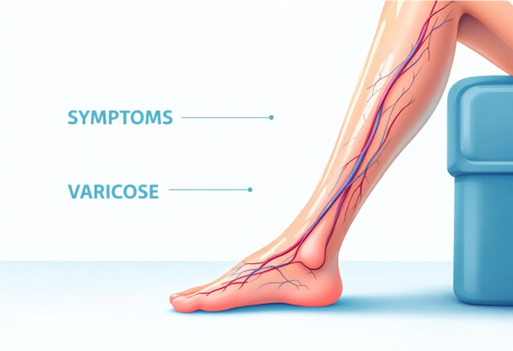
Varicose veins are dilated, twisted, and tortuous superficial veins caused by venous valve incompetence

Location

Most commonly occur in lower extremities due to increased venous pressure and gravitational effect

Classification

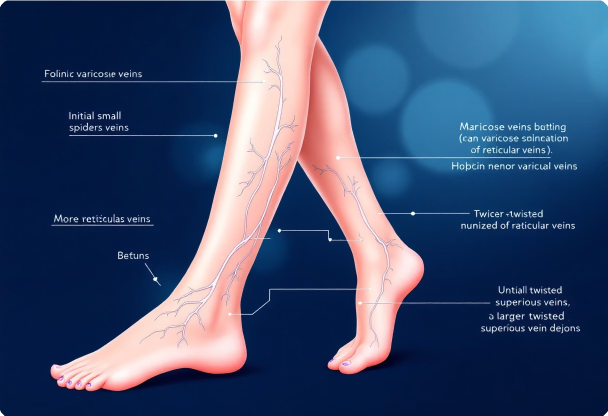
Varicosities represent a spectrum of chronic venous disorders including reticular veins (1–3 mm), spider veins (<1 mm), and large varicose veins (>3 mm)

Problem Statement

Despite high prevalence, varicose veins are often considered cosmetic rather than a medical issue, leading to delayed diagnosis and management
ANATOMY OF VENOUS SYSTEM
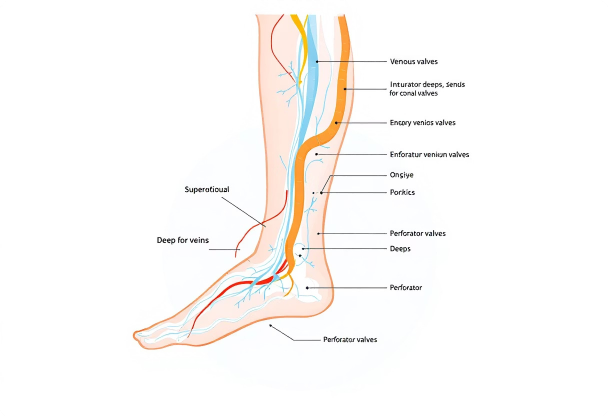
The lower limb venous system comprises:

1. Superficial veins

  • Great saphenous vein
  • Small saphenous vein
  • Tributaries

2. Deep veins

  • Femoral vein
  • Popliteal vein
  • Tibial veins

3. Perforator veins

  • Connect superficial to deep veins

Function of venous valves

Venous valves prevent blood backflow. Their failure leads to reflux, venous pooling, and varicosities

EPIDEMIOLOGY

Global Impact
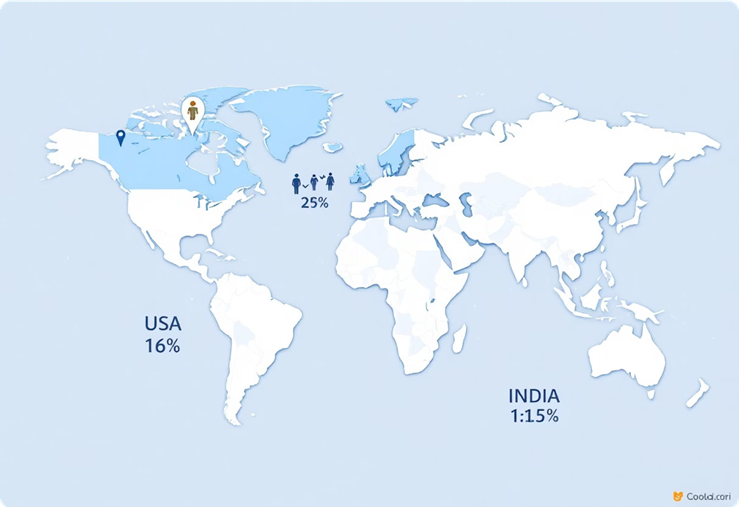
  • Worldwide prevalence: 10–30%
  • USA: 23% adults affected
  • India: 22 million females, 11 million males (age 40–80)
  • Female to male ratio: 2:1

High-Risk Populations

  • Teachers
  • Security guards
  • Shopkeepers
  • Nurses
  • Pregnant women
  • Labor workers

ETIOLOGY (CAUSES)

Varicose veins develop due to increased venous pressure and valve incompetence.
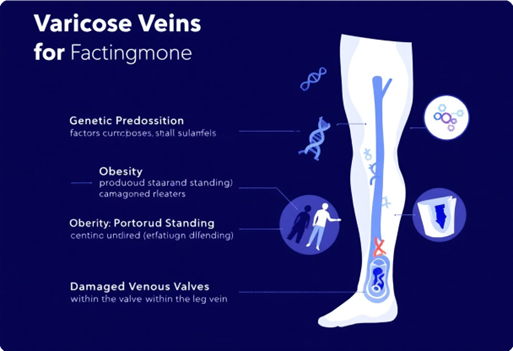
Hereditary Factors

Genetic weakness of vein walls plays a significant role.

Venous Valve Issues

Degeneration of venous valves leads to blood reflux.

Obesity

Increased abdominal pressure contributes to vein strain.

Pregnancy

Hormonal changes and increased pressure impact veins.

Occupational Hazards

Jobs involving prolonged standing increase risk.

Aging

Age-related connective tissue weakness in vein walls.

Deep Vein Thrombosis (DVT)

Previous DVT can damage veins and valves.

Trauma

Injury to veins can lead to varicosity development.

PATHOPHYSIOLOGY

The pathophysiology includes:
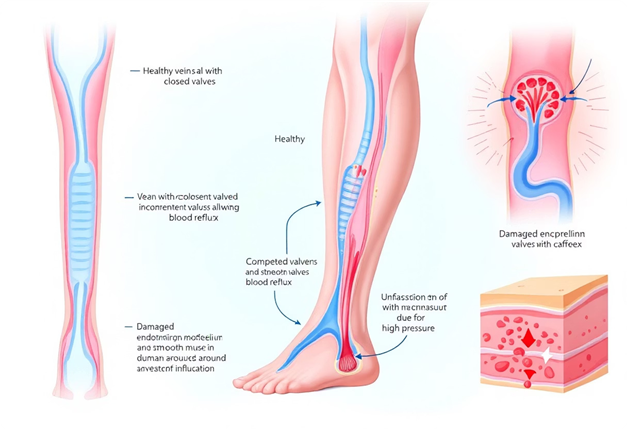
Venous Valve Incompetence

Valves fail to close, blood flows backward, pooling, dilation

Venous Hypertension

  • Increased pressure damages:
  • Endothelium
  • Smooth muscle cells
  • Elastic fibers

Inflammation

  • Inflammatory mediators (IL-1, TNF-c) degrade vein structure

Remodeling of Vein Wall

  • Vein becomes:
  • Dilated
  • Tortuous
  • Thickened or thin

CLASSIFICATION (CEAP)

The CEAP clinical classification includes:
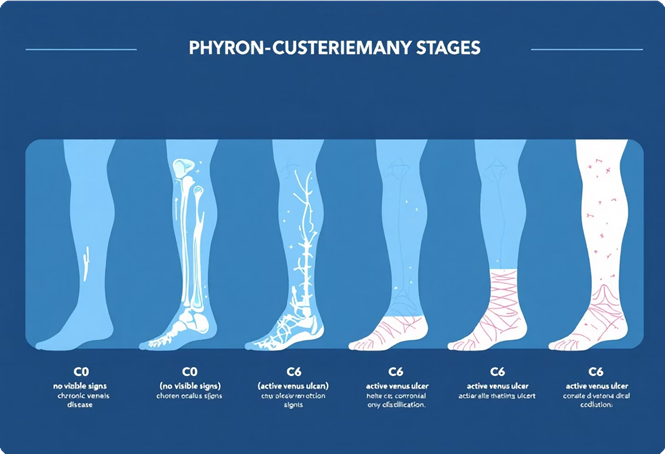
  • C0: No visible signs
  • C1: Telangiectasia, spider veins
  • C2: Varicose veins
  • C3: Edema
  • C4: Skin changes (eczema, pigmentation)
  • C5: Healed ulcer
  • C6: Active venous ulcer

CLINICAL FEATURES (SYMPTOMS)

  • Heaviness in legs
  • Dragging sensation
  • Swelling (oedema)
  • Muscle cramps
  • Burning sensation
  • Restless legs
  • Itching
  • Skin discoloration
  • Leg fatigue
  • Tenderness
  • Visible twisted veins
  • Pain worse on standing

RISK FACTORS

Primary Risk Factors

  • Increasing age
  • Female gender
  • Pregnancy
  • Family history

Lifestyle Factors

  • Prolonged standing jobs
  • Obesity
  • Low physical activity
  • Smoking
  • Alcohol
  • High-fat diet

Medical Factors

  • DVT history
  • Hormonal therapy
  • Leg trauma

COMPLICATIONS

If not treated, varicose veins may lead to:
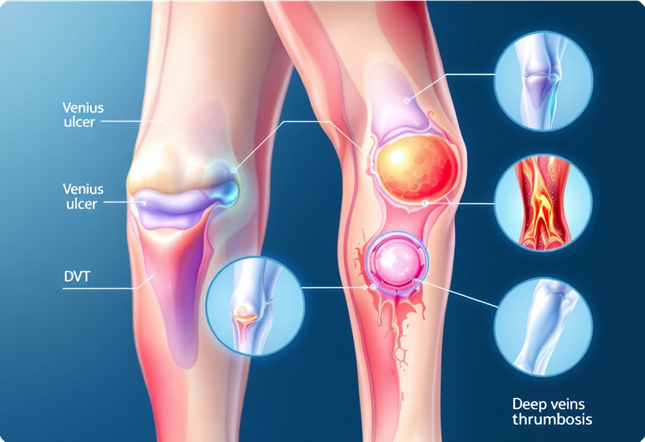
  • Chronic venous insufficiency
  • Venous ulcers
  • Deep vein thrombosis (DVT)
  • Bleeding (due to rupture)
  • Stasis dermatitis
  • Lipodermato-sclerosis
  • Infection (cellulitis)
  • Hyperpigmentation

DIAGNOSIS

Clinical Examination

  • Physical inspection
  • Palpation of veins
  • Trendelenburg test

Doppler Ultrasound

Gold standard for:

  • Mapping vein structure
  • Identifying reflux
  • Valve incompetence

Venography

  • Used rarely but detailed

MANAGEMENT

Treatment includes both conservative and interventional methods.
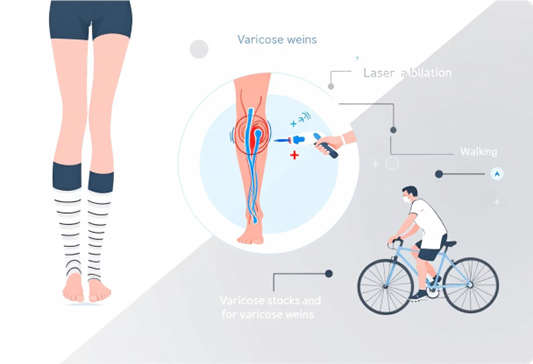
Conservative Management

  • Compression stockings
  • Weight reduction
  • Avoid prolonged standing
  • Leg elevation
  • Exercise: Walking, cycling
  • Avoid tight clothing

Medical Treatment

  • Venoactive drugs:
  • Diosmin
  • Rutin
  • Escin
  • Horse chestnut extract

Surgical / Interventional Treatment

  • Sclerotherapy - Injection collapses veins
  • Endovenous Laser Ablation (EVLA) - Laser energy closes the vein
  • Radiofrequency Ablation (RFA)
  • Vein Stripping Surgery
  • Foam Sclerotherapy
  • Ambulatory Phlebectomy

PREVENTION

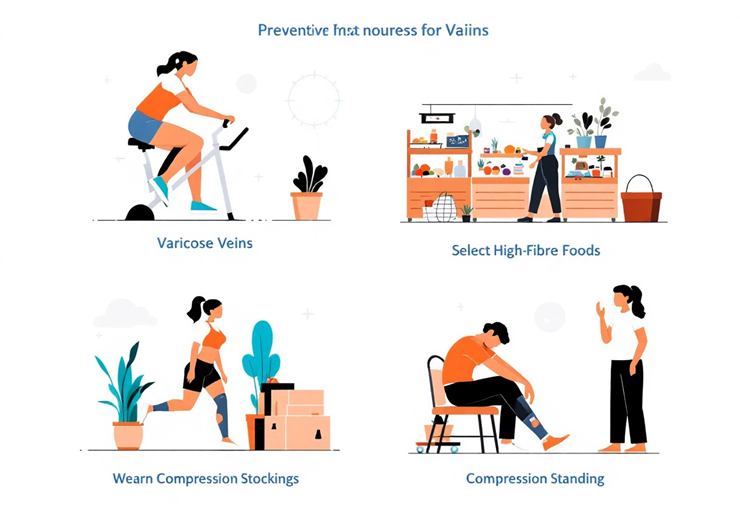
  • Regular exercise
  • Controlled body weight
  • Avoid standing/sitting for long
  • Avoid high heels
  • Eat high-fiber food
  • Use compression therapy
  • Maintain good hydration

FUTURE SCOPE

Future research focuses on:

  • Gene therapy
  • Stem cell–based venous wall regeneration
  • Minimally invasive techniques
  • Nanotechnology-guided venous repair
  • Artificial intelligent vein mapping

CONCLUSION

Varicose veins are a common but neglected venous disorder affecting millions worldwide. Early diagnosis, lifestyle changes, and modern minimally invasive treatments can significantly improve quality of life. Awareness, preventive strategies, and advanced research can reduce the rising burden of chronic venous disease.

REFERENCE

  1. https://www.ncbi.nlm.nih.gov/pmc/articles/PMC152 6945/
  2. https://www.ncbi.nlm.nih.gov/books/NBK470194/
  3. https://scholar.google.com/scholar? q=varicose+veins
  4. https://www.researchgate.net/publication/3279072 66_Prevention_of_Varicose_Veins
  5. https://www.who.int/health-topics/chronic-venous- disease
  6. https://www.ncbi.nlm.nih.gov/pmc/articles/PMC467 357/
  7. https://pubmed.ncbi.nlm.nih.gov/? term=varicose+veins

Reference

  1. https://www.ncbi.nlm.nih.gov/pmc/articles/PMC152 6945/
  2. https://www.ncbi.nlm.nih.gov/books/NBK470194/
  3. https://scholar.google.com/scholar? q=varicose+veins
  4. https://www.researchgate.net/publication/3279072 66_Prevention_of_Varicose_Veins
  5. https://www.who.int/health-topics/chronic-venous- disease
  6. https://www.ncbi.nlm.nih.gov/pmc/articles/PMC467 357/
  7. https://pubmed.ncbi.nlm.nih.gov/? term=varicose+veins

Photo
Akanksha Jagtap
Corresponding author

MET Institute of Pharmacy, Nashik, Maharashtra, India.

Akanksha Jagtap, Varicose Veins – A Comprehensive Review on Epidemiology, Pathophysiology, Clinical Features, Risk Factors, Diagnosis, Management, Prevention, and Future, Int. J. of Pharm. Sci., 2025, Vol 3, Issue 11, 3417-3424. https://doi.org/10.5281/zenodo.17678054

More related articles
Antioxidant and cytotoxicity assessment of the met...
Elora Alam, Rehnuma Jafreen, Nafisa Tabassum, Maria Siddika Mim, ...
Formulation & Evaluation Of Herbal Sunscreen In Co...
Rutuja Golecha , Dr Vaishali Kate , Dr. Santosh Payghan , ...
Scorpion Venom: From Deadly Toxin to Therapeutic T...
Revanth Durga Chodipilli, Maheswari Geddada, Pooja Meka, Lokesh B...
Brivaracetam: A Superior Alternative in Antiepileptic Drug Therapy...
Subadradevi J, Mohanapriya Kesavaraj, Mohammed Ibathur Rahuman M, ...
An Overview on Role of 3D printing in pharmaceutical Sciences ...
Puja Kumari, Garvita Soni, Jaydev Shrivastava, Arvind Jadhav, Nirmal Dongre, Raghvendra Dubey, ...
Efficacy of A Benzocaine Lozenge in The Treatment of Uncomplicated Sore Throat...
Yash Chaudhari , Rushikesh Bhoi, Yash Joshi , Karan Patil , Harshal Mandole, Nazeer Ahmed , ...
Related Articles
A Review Article On: Supercritical Fluid Extraction...
Kiran Shende, Aaditee Gore, Dr. Megha Salve, ...
Perspectives On Cancer Stem Cells: Implications For Future Therapies...
Nidhi Srivastava, Mukesh Ramola, Nidhi Tayal, ...
Evaluation Of Antilithiatic Activity of Bark Extracts of Breynia Rhamnoide Mull-...
Vaishnavi Shende , Shailesh Shende, Kalyani Kathole, Dr. Bhushan Gandhare, Dr. R. O. Ganjiwale, ...
Antioxidant and cytotoxicity assessment of the methanolic extract of Annona reti...
Elora Alam, Rehnuma Jafreen, Nafisa Tabassum, Maria Siddika Mim, ...
More related articles
Antioxidant and cytotoxicity assessment of the methanolic extract of Annona reti...
Elora Alam, Rehnuma Jafreen, Nafisa Tabassum, Maria Siddika Mim, ...
Formulation & Evaluation Of Herbal Sunscreen In Combination With Olive Oil Usefu...
Rutuja Golecha , Dr Vaishali Kate , Dr. Santosh Payghan , ...
Scorpion Venom: From Deadly Toxin to Therapeutic Treasure...
Revanth Durga Chodipilli, Maheswari Geddada, Pooja Meka, Lokesh Babu Peddireddy, Sheba Khandavalli, ...
Antioxidant and cytotoxicity assessment of the methanolic extract of Annona reti...
Elora Alam, Rehnuma Jafreen, Nafisa Tabassum, Maria Siddika Mim, ...
Formulation & Evaluation Of Herbal Sunscreen In Combination With Olive Oil Usefu...
Rutuja Golecha , Dr Vaishali Kate , Dr. Santosh Payghan , ...
Scorpion Venom: From Deadly Toxin to Therapeutic Treasure...
Revanth Durga Chodipilli, Maheswari Geddada, Pooja Meka, Lokesh Babu Peddireddy, Sheba Khandavalli, ...