
Student at St. John Institute Of Pharmacy And Research
Have we ever imagined delivering delicate and concise biologic medications, such as those of antibodies and vaccines, through the layers of skin without pain, needles, or even loss of the initial activity? This futuristic imagination is being realized through the cryo-microneedles (cryoMNs). Which mainly means that the tiny frozen spikes made from biologic-loaded with the cryogenic media that have merged cryopreservation with a transdermal delivery system. This system mainly pierces the skin barrier and melts instantly when it comes in contact with the skin, and eventually releases the fragile therapeutics directly into the tissue. This review reveals the science behind the cryoMNs from their innovation, design, fabrication, and mechanism of action. A comparison has been made with the conventional needle systems, which mainly highlights how the cryoMNs overcame the limitations of heat and solvent sensitivity that were often a problem sensed in the biologic formulation. As the research accelerates, these techniques are poised to redefine the transdermal drug delivery system, turning the frozen microneedles into the next-gen biologics. However, this review mainly gives a brief and detailed explanation of the evolution, potential, and a frontier in the biotechnology that uses the cryogenics of the skin surface.
Over the decades, the idea and the concept of delivering the dosage form through the skin rather than into the skin has mainly evolved from fiction to clinical reality. The designed microneedle patches provide an array of pain-free injections that mainly breach the stratum corneum, which is often referred to as the body's toughest layer. Through these, medicines can be given effortlessly into the epidermis and the dermis, which eventually reach the immune cells, capillaries, and the targeted tissues while preventing the pain of injection in patients. However, the delicate molecules such as the mRNA, antibodies, enzymes, and living cells provide a major obstacle. They crumble under the excessive heat, pressure, and the solvents that are mainly used in the microneedle fabrications. so to overcome this, a fusion of cryogenics and micro-engineering works best, which is often referred to as the cryoMN. The technique of CryoMNs is mainly designed for frozen and biologically laden cryoprotective media that mainly form the ice-spikes that hold the life at zero stillness.1 When it is applied by pressure to the skin, the ice tips that pierce the barrier melt quickly and release the dosage form. Mostly, they signal a new era where the frozen precision meets the transdermal delivery system.
Design and fabrication
The cryoMNs are mainly fabricated by filling the microneedle molds with the cryogenic medium, which is mainly composed of an aqueous solution with cryoprotectants such as trehalose, glycerol, or DMSO. Then these moulds are frozen so that they form a rigid and needle-like structure that can be effectively demolded as a patch. The tip of the frozen needle mainly maintains the rigidity at the cold temperature for insertion into the skin, and then it slowly dissolves in situ at the viable skin temperature. It also contains various variants like the frozen hydrogels, frozen solutions, etc.2
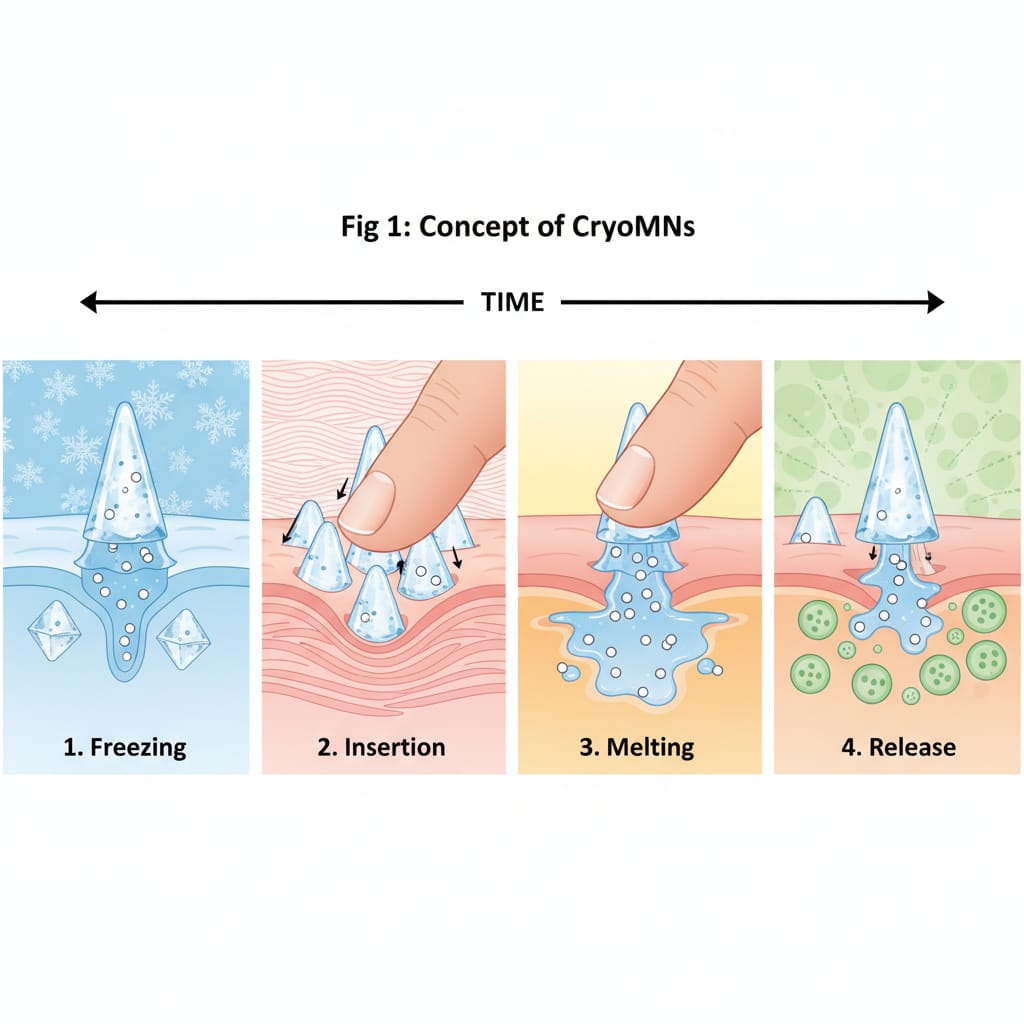
Fig 01: concept of cryoMN
Materials and the cryoprotectants –
The formulation is mainly selected based on the needle mechanical strength, which is mainly required at the time of insertion, the cryoprotection, and the compatibility with the excipients. The commonly reported components mainly used are the sugar protectants such as sucrose and trehalose, PEG, hyaluronic acid, and a low concentration of DMSO.3 For manufacturing the cell-containing cryoMNs, a higher grade of cryoprotectants and controlled freezing is essential. The recent advances in technology use the hydrogel precursors that mainly freeze into the mechanically robust cryo-tips, and eventually they melt to release the cargo. 4
Fabrication of the cryoMNs –
The fabrication method is compatible and straightforward with the existing micromolding workflow that is-
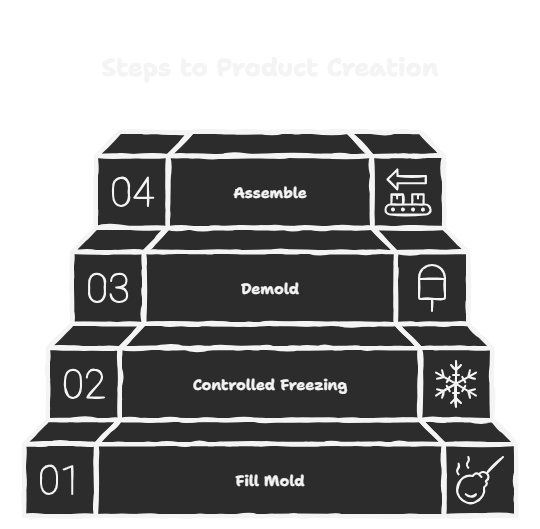
However, the industrial scale-up requires a close and concise attention to produce the freezing rates, aseptic handling of the system, and the cold chain for storing and transporting. Mainly, the automated filling and the controlled freezers have been used to improve the batch uniformity for clinics. 5
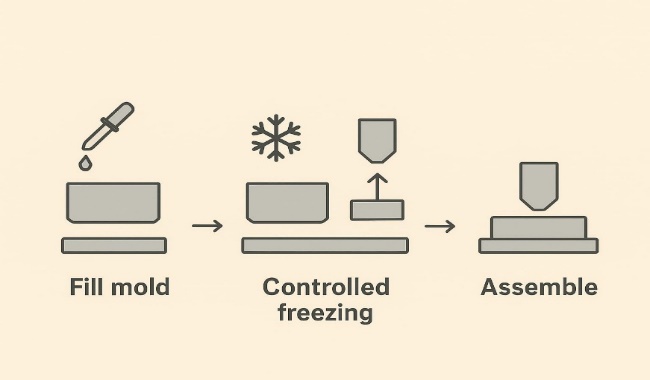
Fig 02: fabrication of CryoMNs.
Mechanism of action: release profile, penetration into the skin, and preservation.
The cryoMNs are a unique fusion of engineering and the cryogenic technique. unlike the traditional needle, which mainly swells the matrices processed at an elevated temperature, the cryoMNs employ the rigid tip freezing, which is capable of penetrating the stratum corneum and the epidermis with less trauma. Once it gets inserted, the frozen matrix melts rapidly or even dissolves upon contact with the tissues, which have a warm temperature. Then the encapsulated payload is directly released into the epidermis of the dermis layer, where the antigen-presenting cells, which are mainly the Langerhans and the dendritic cells, are concentrated.6 This unique temperature-triggered delivery system ensures the spontaneous release and the localization of the payloads, which include mainly the proteins, nucleic acids, and living cells. These sensitive agents are mainly stored in a frozen, cryoprotective environment. The cryoMNs effectively lower the thermal and the enzymatic degradation before their delivery. Comparing the room-temperature polymeric microneedles that mainly require solvent processing, crosslinking, and drying, the cryoMNs eventually maintain the original conformation and the biological activity of the biomolecules.7 The nucleic acid therapeutics, mainly the cryogenic storage with an optimized buffer, which is mainly enriched with sugars or glycol, protect against the attack of nuclease and the structural degradation. When this is applied to the living cell embedded cryoprotectants, they mainly preserve the cell viability and the immunogenicity function. The recent advances in the field of the cryoMNs have demonstrated the successful delivery of the tumor cell vaccine, which has indirectly provided the enhanced antitumor activity. 8
Preclinical applications and evidence –
The intradermal delivery of luciferase mRNA using the cryoMNs mainly showed that the preserved mRNA integrity during molding and the functional protein expressed in the skin after the application. The use of cryoMNs allowed the direct loading of naked or formulated mRNA without exposure to high temperatures. This has led to decentralized mRNA vaccine patches and therapeutics wherein the conditions mostly favour cold temperatures. 9
The reports suggest that cryoMNs can be used for the fragile and sensitive biologics and antibody fragments that mainly tolerate freezing with appropriate excipients. The antigen + immune checkpoint inhibitors have been shown in animal models to elicit an immune response, which mainly demonstrated that this technique can be effectively used for immunotherapies. 10
CryoMNs target the skin APCs for immune priming with the smallest antigen doses. The recent preclinical vaccine studies indicated that the antigens can be delivered intradermally, and the cryoMNs present the advantage of temperature-sensitive vaccines. 11
Advantages over the conventional microneedles
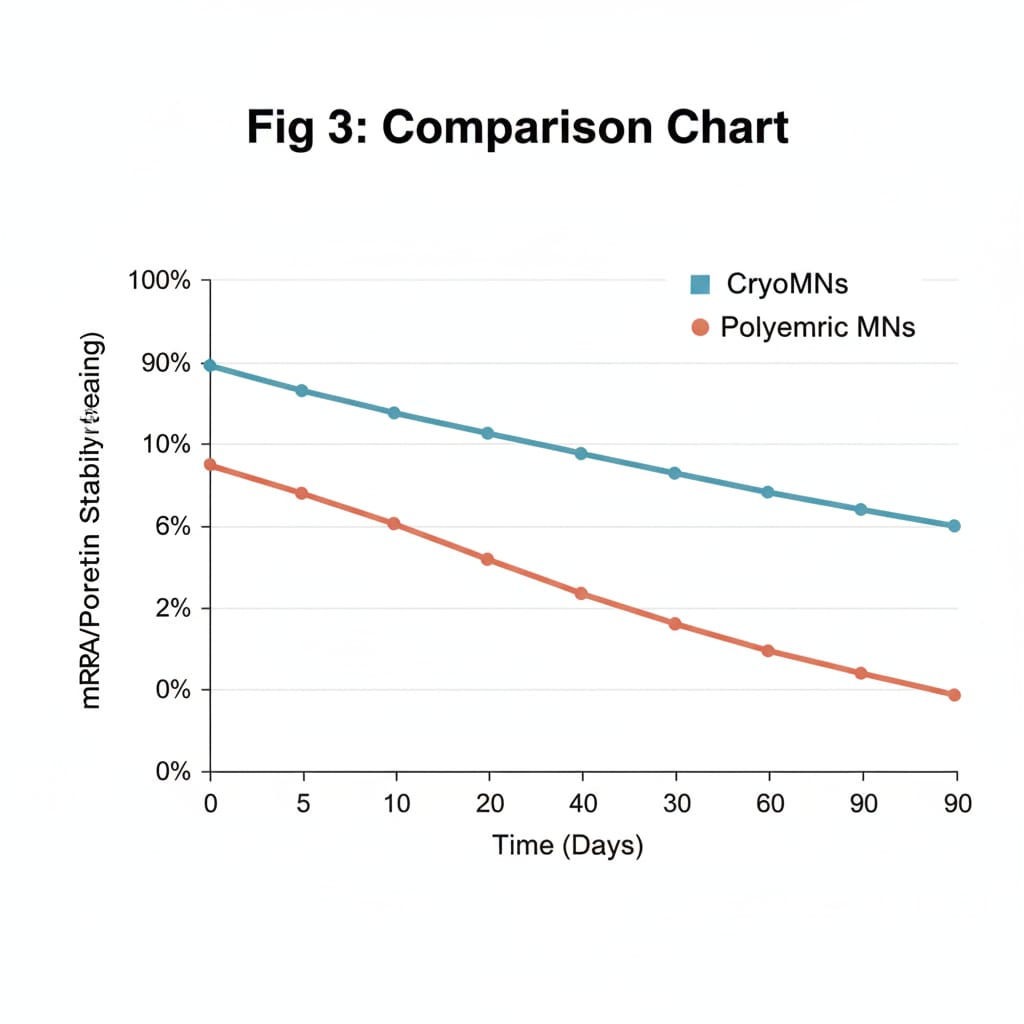
Fig-03: Comparison Chart
Fig 04: Comparison Table
|
Parameters |
CryoMN |
Conventional |
|
Temperature |
Low |
High |
|
Payload compatibility |
Broad |
Limited |
|
Pain Level |
Low |
Cold |
Limitations and challenges –
Though they provide a promising approach in the healthcare system, there are a few drawbacks to this dosage form, too-
CryoMNs currently require cold storage that is -20 to -80°C or at least refrigerated. this mainly complicates distribution with the fully thermostable microneedle. With the use of lyophilized or freeze-dried microneedles and excipient improvement, the cold chain needs are relaxed, but don’t fully provide an alternative. 15
The manufacturing of the CroMNs requires an aseptic processing along with good manufacturing practice conditions. This mainly increases the cost and complexity of the dissolving patches. The regulatory pathways for cell-containing devices that are combined with a drug and the device framework they mainly require dedicated studies.16
The tips of CryoMNs are rigid at low temperatures but can be brittle. This ensures that there is consistent penetration with the fracture of the tip. But the storage and the transfer of these may cause its fracture of the tips. Hence the materials engineering can improve the fracture and provide resistance.
Future scope –
The research directions paved the way for the future directions of the CryoMNs. the development in this field would be a good alternative to the current microneedles. Some of the key future scopes are-
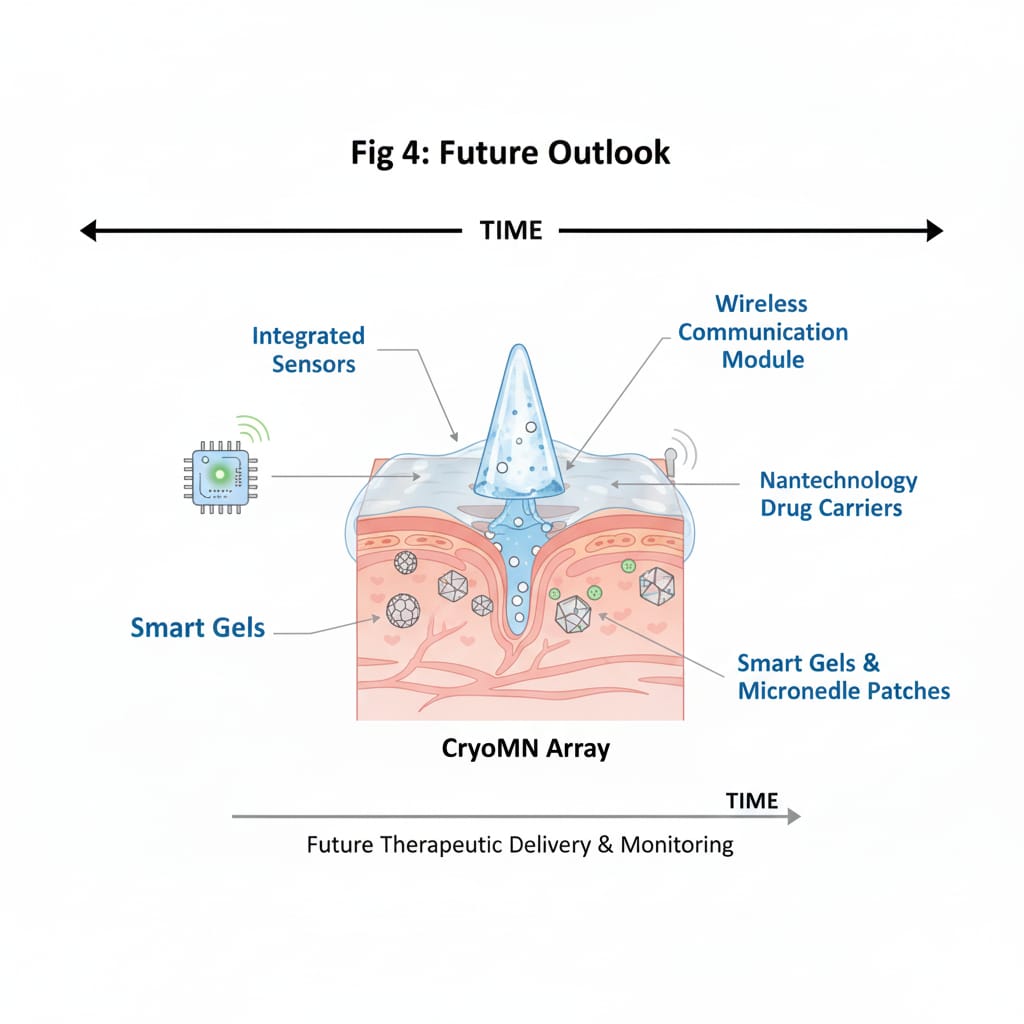
Fig 05: Future Scope
Emerging innovations-
As the research advances on cryoMNs, several innovations are expected to reshape the clinical work and the industrial applicability of this dosage form. The integration of a smart sensing system in combination with the cryoMNs patches would help the scientist in the real-time monitoring of the skin penetration, release rate, and tissue response of cryoMNs, which will mainly pave the way for a responsive and personalized drug delivery platform. The other promising direction involves the bio-inspired microneedle geometrics, which will affect the penetration efficacy and will maintain the mechanical integrity.17 Similarly with the use of biodegradable and self-healing cryo-matrices is under research, which will ensure robust insertion and will not leave any residue. The combination of cryoMNs with nanotechnology is another exciting approach. The hybrid systems, which will combine the microneedles with the cryogenic, will ensure controlled delivery of antigens, modulators, and adjuvants, which mainly target cancer immunotherapy. This research and future advances will improve the field of cryogenics. 18
Regulatory and ethical considerations –
The cryoMNs have currently not achieved full clinical adaptation and regulatory harmonization. 19 Since they combine the device elements with biologic, they probably fall under the combination product regulation, which requires evaluation for biocompatibility, sterility and cryoprotectant toxicity, and device stability and consistency. When they would be profoundly used, they would need ethical considerations, robust informed consent, and data protection. 20
CONCLUSION
Cryogenic microneedles promote a frontier innovation in the biomedical delivery and combining the microengineering precision. this unique capability to maintain the structural and functional integrity of the bilogics with the painless, targeted, and minimally invasive administration makes these a next-generation vaccine and antibody therapy. Continued improvement in the field of formulation science, device miniaturization, and storage technology is likely to accelerate the future research scope. Ultimately, this technique will be beneficial mainly in the microneedling area, promising a future for painless and safe drug therapy. However, they provide a promising future and a better alternative for other dosage forms that have painful insertions. Ultimately, the cryoMNs will define the global healthcare system by transforming the frozen precision into the therapeutic reality.
DISCUSSION
The development of the cryoMNs has created a breakthrough in the transdermal delivery by merging the principles of cryopreservation with microengineering. Unlike the conventional polymeric or the hydrogel needle that exposes the molecules to heat, pressure, the use of the cryoMNs preserves the integrity of the fragile and sensitive therapeutics, such as the mRNA and the antibodies. Their temperature-triggered release mechanism enables the rapid melting upon contact with the skin, which ensures the localized delivery to the epidermis and the dermis region. However, the cold-chain dependency and the scale-up complications remain a key challenge in the context of clinical translation. Overall, they represent a transformative step towards a next-generation biologic delivery, mainly offering a stable, painless, and precise dosage delivery.
REFERENCES



Khan Mohd Aftab Nisar*, Sejal Dsilva, Khan SayeedaKhatoon Nisar, Cryogenic Microneedles: A Next-Gen Approach for Stable and Precise Dose Delivery, Int. J. of Pharm. Sci., 2026, Vol 4, Issue 1, 2652-2658. https://doi.org/10.5281/zenodo.18351487
 10.5281/zenodo.18351487
