

We use cookies to ensure our website works properly and to personalise your experience. Cookies policy
1,2,3 IMCD India Pvt. Ltd., Mumbai, India
4,5 Vivekanand Education Society's College of Pharmacy, Mumbai, Maharashtra, India
Efficient penetration of topical drugs remains a key challenge in dermal drug delivery. This study investigates the use of various chemical penetration enhancers (CPEs), specifically Capmul® GMO-50, Capmul® MCM, Capmul® PG-12, Capmul® PG-8, Kollicream® IPM, and Kollicream® OA — to improve the skin permeability of Clotrimazole. This study aims to enhance the dermal delivery of Clotrimazole by overcoming the barrier properties of the stratum corneum, which significantly restrict the topical permeation of Clotrimazole. Several 1% Clotrimazole cream formulations were developed using different CPEs. These formulations were evaluated through in-vitro drug release studies. The most effective CPE concentration was optimized, and the resulting formulations were subjected to physicochemical characterization and stability testing. Formulations containing CPEs exhibited enhanced drug release compared to controls. Kollicream® IPM emerged as the most effective enhancer, with the optimized formulation F5C (5% Kollicream® IPM) showing the highest cumulative drug release of 40.27 ± 1.23% at 8 hours, compared to 13.55 ± 0.57% for the marketed formulation. F5C also demonstrated favourable physical characteristics, including a viscosity of 28,960 ± 1.23 cP, hardness of 203.5 ± 0.37 g, and adhesive force of 96 ± 0.27 g. It achieved enhancement ratios of 3.962 for steady-state flux (Jss) and 3.66 for permeability coefficient (Kp), indicating significantly improved permeation. The study underscores the importance of selecting effective CPEs for dermal drug delivery. Kollicream® IPM significantly improved Clotrimazole skin penetration and overall formulation performance, making it a promising agent for future topical antifungal products.
Clotrimazole, a synthetic imidazole derivative, is a broad-spectrum antifungal agent extensively utilized in the treatment of various dermatophyte infections and candidiasis [1]. Despite its therapeutic efficacy, its clinical application is significantly hindered by its poor aqueous solubility and limited dermal penetration, leading to suboptimal skin retention and reduced therapeutic effectiveness when applied topically [2]. The primary barrier to effective topical drug delivery is the stratum corneum, the outermost layer of the skin, which serves as a protective shield against environmental aggressors and prevents excessive water loss. Its dense, lipid-rich composition restricts the permeation of both hydrophilic and lipophilic substances [3]. The hydrophobic nature of clotrimazole further exacerbates this issue, leading to poor skin retention and limited therapeutic action at the target site [4]. Consequently, enhancing its skin permeability is crucial for improving its antifungal activity.? To overcome these challenges, the incorporation of chemical penetration enhancers (CPEs) has been explored as a strategy to augment clotrimazole's topical delivery and efficacy [5].?
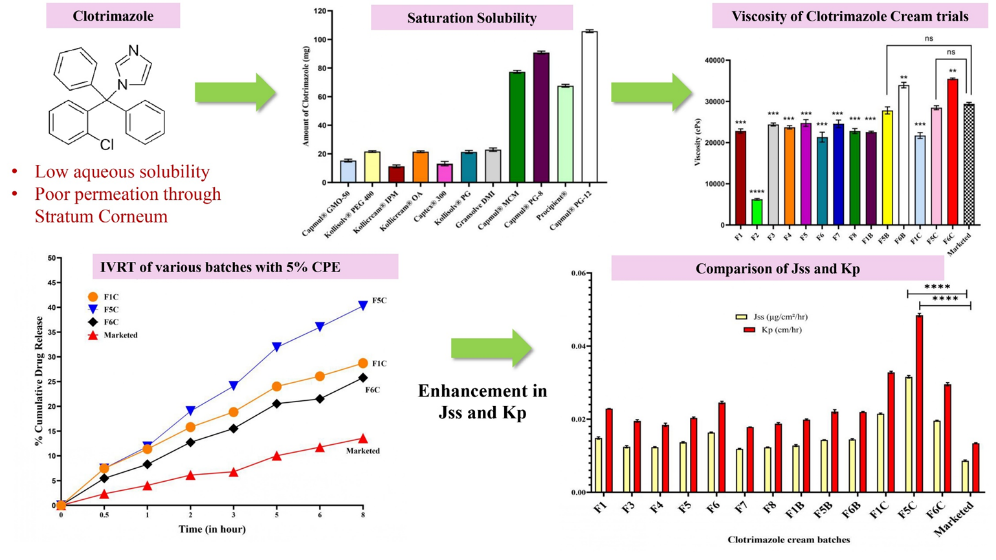
Chemical penetration enhancers are compounds that transiently modify the skin barrier function, facilitating increased drug permeation [6]. These agents interact with the intercellular lipid bilayers of the stratum corneum, inducing structural changes that create transient pores or channels, thereby enhancing drug diffusion [7]. The mechanisms by which CPEs enhance skin permeability include perturbation of the lipid bilayer, increasing the partition coefficient of the drug, and enhancing the solubility of the drug within the skin [8]. For instance, certain enhancers can increase the flux and retention of drugs by disrupting the stratum corneum's lipid structure without causing permanent damage, allowing for reversible enhancement of drug permeation [9]. The efficacy of CPEs is influenced by their chemical structure, concentration, and mechanism of action [10]. ?Capmul® lipids, including Capmul® GMO-50, Capmul® MCM, and Capmul® PG derivatives, are multifunctional excipients utilized to enhance the topical delivery of various active pharmaceutical ingredients [11][12][13]. Capmul® GMO-50 (glyceryl monooleate) serves as an emulsifier and solubilizer, improving the skin's permeability to lipophilic drugs by interacting with the lipid domains of the stratum corneum [14]. Capmul® MCM (a mixture of glyceryl caprylate and caprate) acts as a co-emulsifier, enhancing drug solubility and skin retention [15]. Capmul® PG-8 (propylene glycol monocaprylate) and Capmul® PG-12 (propylene glycol monolaurate) function as skin penetration enhancers, disrupting lipid bilayers to facilitate drug diffusion without causing permanent damage [16][17][18]. Incorporating these CPEs into clotrimazole formulations can significantly improve its dermal absorption and therapeutic efficacy.?
Further, CPEs such as Kollicream® IPM [19], Gransolve DMI (Dimethyl Isosorbide) [20], and Procipient® [21] play significant roles in enhancing the topical delivery of active pharmaceutical ingredients. Kollicream® IPM, a clear and mostly odorless oil, serves as an emollient and skin penetration enhancer by solubilizing lipophilic actives and interacting with the lipid domains of the stratum corneum, facilitating increased drug permeation without disrupting the skin's barrier integrity [22]. Gransolve DMI, known for its solvent properties, aids in the delivery of lipophilic drugs by modifying the lipid structure of skin, enhancing drug diffusion while maintaining skin integrity [23]. Procipient®-Dimethyl Sulfoxide (DMSO), acts by interacting with the lipid bilayer of skin, reducing its rigidity and inducing the formation of transient pores, thereby enhancing drug permeation without causing permanent damage [24]. Incorporating CPEs into clotrimazole formulations can enhance topical permeability and yield promising results. For example, microemulsion-based systems containing clotrimazole and penetration enhancers have demonstrated improved skin retention and antifungal activity compared to conventional creams. These formulations not only enhance the permeation but also reduce the risk of systemic side effects by confining the drug within the skin layers [25]. The application of CPEs offers several advantages in topical drug delivery, including painlessness, non-invasiveness, and the capacity to increase the flux compared to passive diffusion [26].
The objective of this research work is to study the effect of different chemical penetration enhancers on the in vitro dermal delivery of clotrimazole. The creams were evaluated for in vitro drug release through synthetic membranes using Franz diffusion cell. The incorporation of chemical penetration enhancers into clotrimazole formulations significantly enhances its topical delivery and antifungal efficacy. This approach addresses the challenges posed by clotrimazole's poor aqueous solubility and limited dermal penetration, offering a promising strategy for improving its therapeutic performance.
?The study was conducted at IMCD India Pvt. Ltd., Mumbai, utilizing the facilities and equipment available on-site. Clotrimazole (≥98% purity), the active pharmaceutical ingredient (API), was procured from Amoli Organics Pvt. Ltd. Fatty ester-based chemical penetration enhancers (CPEs), including Capmul® GMO-50 (glyceryl monooleate), Capmul® MCM (glyceryl caprylate/caprate), Capmul® PG-12 (propylene glycol monolaurate), and Capmul® PG-8 (propylene glycol monocaprylate), were supplied by ABITEC Corporation. Dimethyl isosorbide (Gransolve DMI) was obtained from Grant Industries, while Oleyl alcohol (Kollicream® OA) and Isopropyl myristate (Kollicream® IPM) were sourced from BASF India Ltd. Dimethyl sulfoxide (Procipient® DMSO) was acquired from Gaylord Chemical Company. All excipients, including emulsifiers, emollients, and humectants, were of standard pharmaceutical grade and classified as Generally Recognized as Safe (GRAS). High-performance liquid chromatography (HPLC)-grade solvents were used throughout the study to ensure analytical accuracy.?
2.1 Pre-formulation Studies
The physicochemical properties of clotrimazole were evaluated through organoleptic examination, determination of melting point, and spectroscopic analyses [27]. Fourier-transform infrared (FT-IR) spectroscopy was performed using a Shimadzu FT-IR spectrophotometer to identify functional groups and confirm the chemical structure of clotrimazole. Furthermore, drug–excipient compatibility studies were conducted to evaluate potential interactions between clotrimazole and the selected excipients. Binary mixtures were prepared and subjected to accelerated stability conditions for assessment [28]. Periodically, samples were withdrawn and analysed using the developed high-performance liquid chromatography (HPLC) method to detect any changes in clotrimazole's stability, which could indicate potential incompatibilities with the excipients.? HPLC analysis was performed using a Shimadzu LC-2010HT system, equipped with a UV-visible detector and auto-injector, controlled by Lab Solution Software. Chromatographic separation was achieved on an Orosil C18 column (4.6 mm × 25 cm, 5 µm particle size). The mobile phase consisted of acetonitrile and a 4.35 mg/mL dibasic potassium phosphate buffer (pH 6.3) in a 70:30 (v/v) ratio. The flow rate was maintained at 1 mL/min, and detection was performed at 238 nm. The specificity, linearity, accuracy, and precision were validated in accordance with International Council for Harmonisation (ICH) Q2(R2) guidelines [29].
2.2 Formulation of Clotrimazole cream
??Various chemical enhancers (table 1) were used in this study for preparation of clotrimazole cream. Formulations of 1% clotrimazole cream incorporating 1.5% CPEs were prepared to evaluate the impact of different enhancers on the cream's efficacy as shown in table 2. Briefly, the oil soluble components were mixed and heated to 70–75°C until a homogeneous, clear solution was obtained. Clotrimazole dissolved in respective CPE was added to the oily phase. Simultaneously, the aqueous phase was prepared by dispersing water-soluble ingredients, in purified water. The mixture was heated to 70–75°C with continuous stirring. Once both phases reached the target temperatures, the oil phase was slowly added to the aqueous phase with continuous stirring. Emulsification was performed using a Silverson homogenizer (L5M) at 2,500 rpm for 15 minutes. This high-shear mixing effectively reduced the droplet size, promoting the formation of a stable o/w emulsion. The cream was stirred for an additional 15 minutes to ensure uniform distribution of the drug throughout the formulation. The cream was then cooled to room temperature under gentle stirring to prevent air entrapment and ensure a smooth texture. Once cooled, the cream was stored in airtight containers, protected from light and moisture, to maintain stability and efficacy [30][31].
Table 1: Details of Chemical Permeation Enhancers (CPE) used in the study [32]
|
Sr. No |
CPE |
Compendial Name/ Common Name |
Molecular Mass |
Molecular Formula |
CAS Number |
HLB value |
|
1 |
Capmul® GMO-50 |
Glyceryl Monooleate, Monoolein |
356.54 g/mol |
C21H40O4 |
25496-72-4 |
3.0 - 4.0 |
|
2 |
Capmul® MCM |
Medium Chain Mono- and Diglycerides |
218.29 g/mol |
C11H22O4 |
26402-22-2, |
4.7 - 5.5 |
|
3 |
Capmul® PG-12 |
Propylene Glycol Monolaurate |
258.40 g/mol |
C15H30O3 |
27194-74-7 |
3.5 |
|
4 |
Capmul® PG-8 |
Propylene Glycol Monocaprylate |
202.29 g/mol |
C11H22O3 |
31565-12-5 |
6.0 |
|
5 |
Kollicream® IPM |
Isopropyl Myristate, 1-Methylethyl tetradecanoate |
270.451 g/mol |
C17H34O2 |
110-27-0 |
11.5 |
|
6 |
Kollicream® OA |
Oleyl alcohol |
268.478 g/mol |
C18H36O |
68002-94-8 |
14-15 |
|
7 |
Gransolve DMI |
Dimethyl Isosorbide |
174.19 g/mol |
C8H14O4 |
5306-85-4 |
8.4 |
|
8 |
Procipient® |
Dimethyl Sulfoxide |
78.13 g/mol |
C2H6OS |
67-68-5 |
Not applicable |
Table 2: Formulation trials of clotrimazole cream with different penetration enhancers
|
Sr. No. |
Ingredients |
F1 (%w/w) |
F2 (%w/w) |
F3 (%w/w) |
F4 (%w/w) |
F5 (%w/w) |
F6 (%w/w) |
F7 (%w/w) |
F8 (%w/w) |
|
1 |
Clotrimazole |
1 |
1 |
1 |
1 |
1 |
1 |
1 |
1 |
|
Oil phase |
|||||||||
|
2 |
Kolliwax® CSA 50 |
7.5 |
7.5 |
7.5 |
7.5 |
7.5 |
7.5 |
7.5 |
7.5 |
|
3 |
Captex® 300 |
3 |
3 |
3 |
3 |
3 |
3 |
3 |
3 |
|
4 |
Kester Wax K62 |
3.5 |
3.5 |
3.5 |
3.5 |
3.5 |
3.5 |
3.5 |
3.5 |
|
5 |
Light mineral oil |
3 |
3 |
3 |
3 |
3 |
3 |
3 |
3 |
|
6 |
Benzyl alcohol |
1 |
1 |
1 |
1 |
1 |
1 |
1 |
1 |
|
7 |
Capmul® GMO-50 |
1.5 |
---- |
---- |
---- |
---- |
---- |
---- |
---- |
|
8 |
Capmul® MCM |
---- |
1.5 |
---- |
---- |
---- |
---- |
---- |
---- |
|
9 |
Capmul® PG-12 |
---- |
---- |
1.5 |
---- |
---- |
---- |
---- |
---- |
|
10 |
Capmul® PG-8 |
---- |
---- |
---- |
1.5 |
---- |
---- |
---- |
---- |
|
11 |
Kollicream® IPM |
---- |
---- |
---- |
---- |
1.5 |
---- |
---- |
---- |
|
12 |
Kollicream® OA |
---- |
---- |
---- |
---- |
---- |
1.5 |
---- |
---- |
|
13 |
Gransolve DMI |
---- |
---- |
---- |
---- |
---- |
---- |
1.5 |
---- |
|
14 |
Procipient® |
---- |
---- |
---- |
---- |
---- |
---- |
---- |
1.5 |
|
15 |
Kolliphor® CS 20 |
3.7 |
3.7 |
3.7 |
3.7 |
3.7 |
3.7 |
3.7 |
3.7 |
|
16 |
NIKKOL SS-10MV |
1.3 |
1.3 |
1.3 |
1.3 |
1.3 |
1.3 |
1.3 |
1.3 |
|
Aqueous phase |
|||||||||
|
17 |
Kollisolv® PEG 400 |
4 |
4 |
4 |
4 |
4 |
4 |
4 |
4 |
|
18 |
Kollisolv® PG |
4 |
4 |
4 |
4 |
4 |
4 |
4 |
4 |
|
19 |
Distilled water |
66.5 |
66.5 |
66.5 |
66.5 |
66.5 |
66.5 |
66.5 |
66.5 |
2.3 Evaluation of creams
?The optimized cream formulations were evaluated for their physical characteristics, including appearance, color, and immediate skin feel attributes such as grittiness, greasiness, tackiness, and texture. Centrifugation testing was performed to assess the robustness and stability of the semisolid formulations by subjecting them to mechanical stress and observing any phase separation. Samples (5 g each) were placed in a tabletop centrifuge (REMI) and centrifuged at 4,500 rpm for 30 minutes at room temperature [33][34]. Post-centrifugation, the formulations were examined for phase separation, which serves as an indicator of instability [35].
2.3.1 Texture analysis
?The texture profile analysis (TPA) of the optimized cream formulations was conducted using a Brookfield CT3 Texture Analyzer, with data analyzed using TexturePro CT software. TPA is a standardized method, applying a two-cycle compression test, providing comprehensive insights into the textural attributes of semisolid products. A cone-shaped probe with a trigger load of 10 grams, target penetration depth of 10 millimeters, and a test speed of 2 millimeters per second was employed for analysis. The probe penetrated the cream sample to the specified depth and then withdrew to its initial position, completing one cycle. This process was repeated to assess the textural parameters, including firmness, adhesiveness, and cohesiveness of the cream. These parameters offer valuable insights into the sensory attributes of the cream, such as its firmness upon application, tendency to adhere to the skin, ability to return to its original shape after deformation, and capacity to withstand repeated applications [36][37][38].
2.3.2 Viscosity and Spreadability
The viscosity of the cream formulation was estimated using a Brookfield Ametek DV2T Viscometer with spindle number SC4-15. Approximately 7-8 grams of the sample formulation were placed in a small sample adapter and allowed to equilibrate for 5 minutes before taking the reading. Viscosity was measured at 25°C and 8 rpm. Data analysis was performed using Rheocalc T software. Further, the spreadability (S) of the cream formulation was assessed using a slip-and-drag method. Approximately 0.1 gram of the formulation was placed on a ground glass slide. The cream was sandwiched between this slide and another upper glass slide of the same dimensions. The upper glass slide was equipped with a hook, and weights were attached to the hook via a thread. As the weights were added, the upper glass-slide gently moved over the ground glass slide. The time taken for the upper glass slide to cover a distance of 10 cm was recorded. The spreadability was calculated using the following formula:
Spreadability (S) = M x L/T
Where S = spread ability, M = weight in the pan (tied to the upper slide), L = length moved by the glass slide and T = time (in sec) taken to separate the slide completely from each other [39][40].
2.3.3 Drug Content
For determining the drug content for the developed formulation, a stock solution was prepared by dissolving 0.5 grams of the cream in a 10 mL volumetric flask and diluting to volume with acetonitrile. The solution was heated at 40°C with sonication for 30 minutes. Subsequently, 2 mL of the supernatant was transferred to another 10 mL volumetric flask and diluted with the mobile phase. After filtration through a 0.45 µm Millipore membrane filter, the filtrate was analyzed using High-Performance Liquid Chromatography (HPLC) with a Shimadzu system [41].
2.3.4 In vitro release test (IVRT)
??In vitro release testing (IVRT) was conducted to assess the drug release rate from cream formulations using Franz diffusion cells equipped with Millipore mixed cellulose ester membranes (0.45 µm, Pall Corporation). The receptor cell volume was maintained at 15 mL, and the receptor medium consisted of ethanol, water, and Transcutol P in a 50:40:10 ratio. Sampling was performed at intervals of 30 minutes, 1, 2, 3, 5, 6, and 8 hours, with the system maintained at 32?±?0.5?°C and a stirring speed of 600 rpm. Aliquots of 0.5 mL were withdrawn at each time point for analysis. These conditions ensured consistent and reproducible IVRT measurements, aligning with established methodologies for assessing the release profiles of topical semi-solid dosage forms [42][43].
2.4 Comparison with the marketed formulation
Upon comparing the in vitro release test (IVRT) results with those of the marketed formulation, it was observed that the test batches demonstrated a superior release profile compared to the marketed formulation. This difference may be attributed to the higher viscosity of the marketed formulation. To eliminate this as a potential factor, selected batches exhibiting superior drug release, namely F1 (Capmul GMO®-50), F5 (Kollicream® IPM), and F6 (Kollicream® OA), were re-formulated with an increased concentration of Kolliwax® CSA 50 to match the viscosity of the marketed formulation. These formulated batches, designated as F1B, F5B, and F6B, respectively, were then subjected for further evaluation as shown in table 3. Further, in-order to study the impact of increased concentration of penetration enhancer with respect to release profile of the drug, trials with 5% PE’s were designed. These formulated batches designated as F1C (Capmul GMO®-50), F5C (Kollicream® IPM), F6C (Kollicream® OA) were formulated and were then subjected for further evaluation as shown in table 3.
Table 3: Optimization trials of clotrimazole cream for viscosity and higher % of CPE
|
Sr. No. |
Ingredients |
F1B (%w/w) |
F5B (%w/w) |
F6B (%w/w) |
F1C (%w/w) |
F5C (%w/w) |
F6C (%w/w) |
|
1 |
Clotrimazole |
1 |
1 |
1 |
1 |
1 |
1 |
|
Oil phase |
|||||||
|
2 |
Kolliwax® CSA 50 |
9 |
9 |
9 |
9 |
9 |
9 |
|
3 |
Captex® 300 |
3 |
3 |
3 |
3 |
3 |
3 |
|
4 |
Kester Wax K62 |
3.5 |
3.5 |
3.5 |
3.5 |
3.5 |
3.5 |
|
5 |
Light mineral oil |
3 |
3 |
3 |
3 |
3 |
3 |
|
6 |
Benzyl alcohol |
1 |
1 |
1 |
1 |
1 |
1 |
|
7 |
Capmul® GMO-50 |
1.5 |
---- |
---- |
5 |
---- |
---- |
|
8 |
Kollicream® IPM |
---- |
1.5 |
---- |
---- |
5 |
---- |
|
9 |
Kollicream® OA |
---- |
---- |
1.5 |
---- |
---- |
5 |
|
10 |
Kolliphor® CS 20 |
3.7 |
3.7 |
3.7 |
3.7 |
3.7 |
3.7 |
|
11 |
NIKKOL SS-10MV |
1.3 |
1.3 |
1.3 |
1.3 |
1.3 |
1.3 |
|
Aqueous phase |
|||||||
|
12 |
Kollisolv® PEG 400 |
4 |
4 |
4 |
4 |
4 |
4 |
|
13 |
Kollisolv® PG |
4 |
4 |
4 |
4 |
4 |
4 |
|
14 |
Distilled water |
66.5 |
66.5 |
66.5 |
66.5 |
66.5 |
66.5 |
2.5 Stability studies
?Stability studies of the optimized cream formulation was carried out at 25?°C?±?2?°C/60?±?5% RH and 40?°C?±?2?°C/75?±?5% RH—in laminated tubes for stability assessment. Evaluations of appearance, rheological properties, pH, and drug content were conducted for 3 months as per ICH Q1A (R2) guidelines [44].
Values in the text and figures represent the mean ± standard error of mean (SEM), with each experiment conducted in triplicate. Statistical analysis involved utilizing one-way analysis of variance (ANOVA) followed by Tukey’s multiple comparison test to assess the significant differences. GraphPad Prism version 10.0.3 (GraphPad Software, San Diego, CA, USA) was utilized for all statistical analyses to ensure clear visualization and accurate interpretation of the results.
3.1 Pre-formulation Studies
?The drug-excipient compatibility studies showed no alterations in the physical characteristics of the samples, indicating compatibility between the excipients and the drug. Forced degradation studies yielded results within acceptable limits, further supporting the stability and integrity of the formulation.? The solubility studies of clotrimazole across different solvents revealed notable variability. The API demonstrated good solubility in Capmul® PG12, Capmul® MCM, and Procipient® DMSO, with the highest solubility observed in Capmul® MCM. This suggests that Capmul® MCM is the most effective medium for dissolving the drug. These findings highlight the potential of these solvents, particularly Capmul® MCM, as shown in Figure 1.
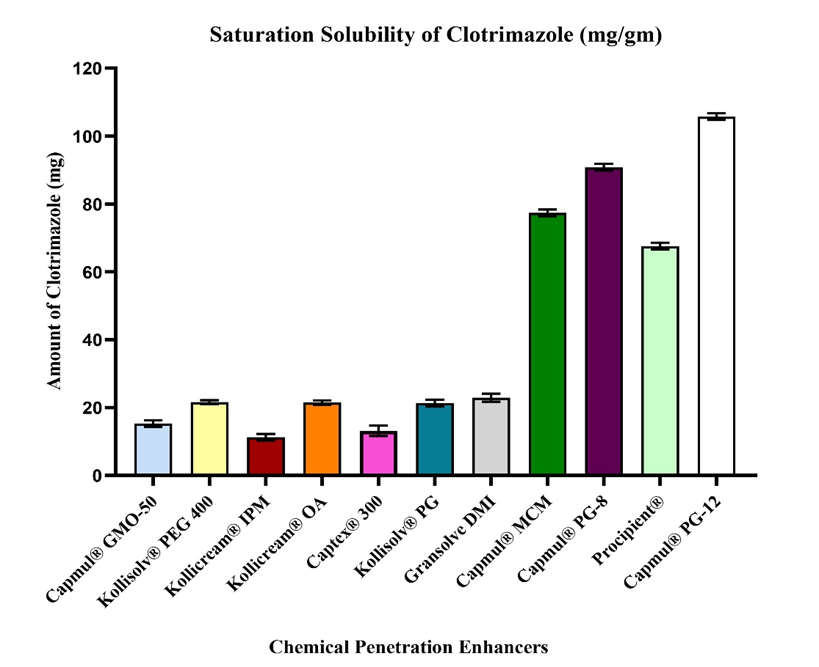
Figure 1: Saturation solubility of clotrimazole in various chemical penetration enhancers
3.2 Evaluation of 1% Clotrimazole cream with 1.5 % CPE
The organoleptic properties including appearance, color and immediate skin feel like grittiness, greasiness and tackiness of the optimized formulations was found to be satisfactory as per the desired specifications. ?The centrifugation stability tests of clotrimazole formulations containing various CPEs yielded the following results: Formulations F1 (Capmul® GMO-50), F3 (Capmul® PG-12), F4 (Capmul® PG-8), F5 (Isopropyl Myristate), F6 (Oleyl Alcohol), F7 (Dimethyl Isosorbide), F8 (Dimethyl Sulfoxide), and F9 (Marketed Formulation) remained stable post-centrifugation, showing no phase separation. Whereas formulation F2 (Capmul® MCM) exhibited phase separation after centrifugation, indicating instability under the test conditions. These findings suggest that certain CPEs, such as Capmul® MCM, may adversely affect the stability of clotrimazole formulations, leading to phase separation. In contrast, other enhancers like Capmul® GMO-50, Capmul® PG-12, and Isopropyl Myristate contributed to formulation stability, as evidenced by the absence of phase separation. This underscores the importance of selecting appropriate CPEs to maintain the physical integrity of clotrimazole formulations. Furthermore, the drug content of all the developed clotrimazole formulations was in the acceptable range of 90-110 % w/w.
3.2.1 Texture analysis
The texture analysis of the different clotrimazole formulations (F1 to F9) demonstrated comparable tendencies across all test formulations. The test formulations consistently exhibited superior texture properties when compared to the marketed formulation (Table 4). The texture profile analysis indicates that the test formulations (F1 to F8) have better texture properties than the marketed formulation, with improvements in both firmness and adhesiveness. The formulations that exhibited higher firmness and adhesive force may offer enhanced stability and better skin retention, which are important for the effectiveness of topical treatments. F5, showed the highest adhesiveness, suggesting it might provide a longer-lasting effect on the skin compared to others. Additionally, the consistent deformation at hardness across most formulations suggests a stable texture performance under stress.
Table 4: Texture profile data of various batches with 1.5% CPE
|
Parameters |
F1 |
F2 |
F3 |
F4 |
F5 |
F6 |
F7 |
F8 |
Marketed |
|
Firmness/hardness (g) |
175.5 |
155 |
195.5 |
177.5 |
192 |
156 |
183 |
193 |
190 |
|
Adhesiveness (mJ) |
5.40 |
5.12 |
5.66 |
5.36 |
5.79 |
5.25 |
5.41 |
5.45 |
5.22 |
|
Deformation at hardness (mm) |
9.95 |
9.96 |
9.98 |
9.98 |
9.94 |
9.98 |
9.96 |
9.98 |
9.70 |
|
Adhesive force (g) |
94.5 |
103.5 |
102.5 |
96 |
99 |
83 |
106 |
95 |
102.1 |
3.2.2 Viscosity and Spreadability
The viscosity of all the test formulations was within the acceptable range. The highest viscosity was observed in F3, which exhibited a value of 24,810 cPs. However, the marketed formulation had a higher viscosity (29,720 cPs) compared to all the test formulations, as shown in Figure 2.
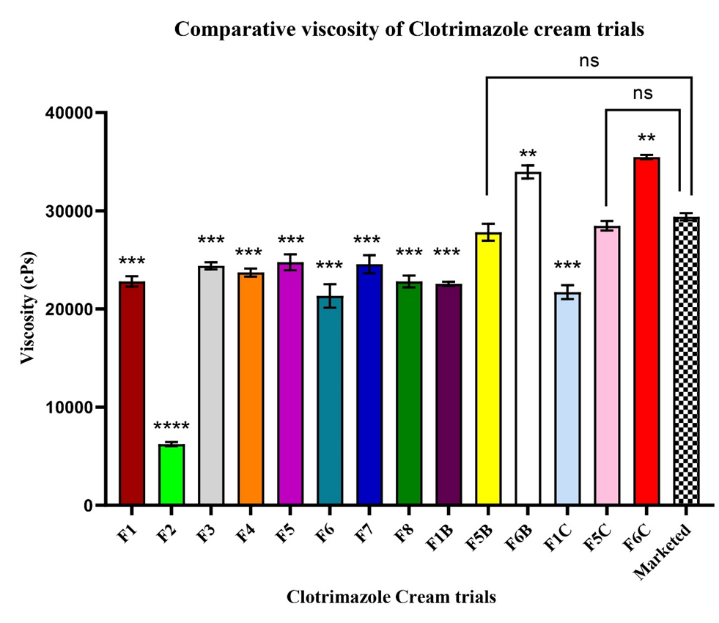
Figure 2: Viscosity measurements of various batches. Data was analyzed in GraphPad prism 10.0.3, using one-way analysis of variance (ANOVA) followed by Tukey’s Multiple Comparison Test. (Note: ns- non-significant (p>0.05), *- significant (p<0.02), **- very significant (p<0.002), ****- highly significant (p<0.001). All measurements were carried out in triplicates (n=3). Data are presented as mean ± Standard Error of Mean (SEM)
3.2.3 In vitro release of Clotrimazole formulations with 1.5% penetration enhancers
The test formulations demonstrated a superior release rate compared to the reference formulation. The F1, F5, and F6 batches, along with the marketed batch, exhibited the percentage of cumulative drug release (% CDR) at 6 hours, as shown in Figure 3.
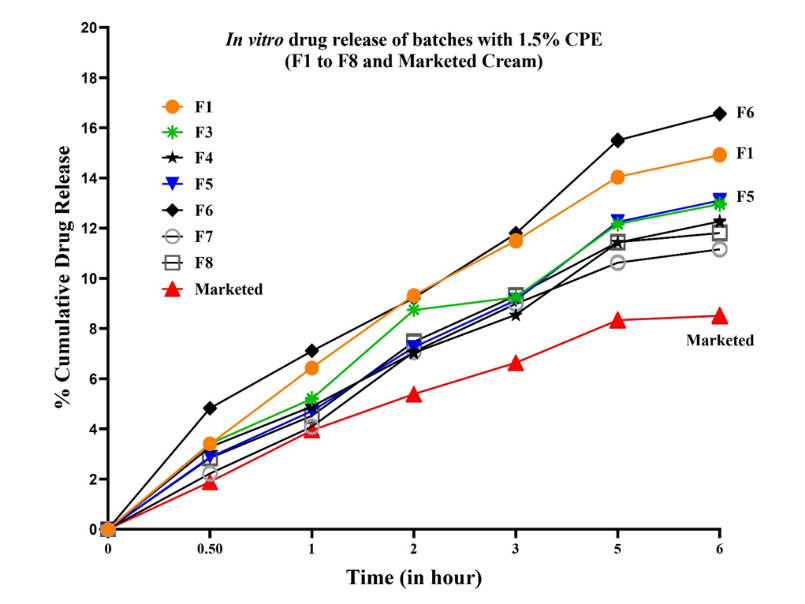
Figure 3: Comparative IVRT of various batches with 1.5% CPE and marketed formulation
When comparing the in vitro release test (IVRT) results with those of the marketed formulation, it was found that the test batches with 1.5% CPE exhibited a better release profile. This discrepancy may be due to the higher viscosity of the marketed formulation. To rule out viscosity as a contributing factor, batches F1B, F5B, and F6B were reformulated with an increased concentration (9% w/w) of Kolliwax® CSA 50. Formulations F1B, F5B, and F6B were prepared using Capmul® GMO-50 (Glyceryl Monooleate), Kollicream® IPM (Isopropyl myristate), and Kollicream® OA (Oleyl alcohol) as penetration enhancers, exhibiting viscosities of 22,380 cPs, 27,560 cPs, and 33,190 cPs, respectively. Among these, F6B showed the highest viscosity, while the marketed formulation, containing an unspecified enhancer, exhibited a viscosity of 29,790 cPs. The texture profile data and IVRT results for these reformulated batches are presented in Table 5 and Figure 4, respectively. The viscosity and spreadability of F1B, F5B, and F6B was found to be comparable with that of the marketed formulation.
Table 5: Texture profile data of batches with taken for increasing viscosity (F1B, F5B, F6B) and higher % of CPE (F1C, F5C, F6C)
|
Parameters |
F1B |
F5B |
F6B |
F1C |
F5C |
F6C |
|
Firmness/hardness (g) |
190 |
170 |
195.5 |
177.5 |
205 |
156 |
|
Adhesiveness (mJ) |
5.8 |
5.45 |
5.66 |
5.36 |
6 |
5.25 |
|
Deformation at hardness (mm) |
9.85 |
9.85 |
9.98 |
9.98 |
9.8 |
9.98 |
|
Adhesive force (g) |
105 |
112 |
102.5 |
96 |
115 |
83 |
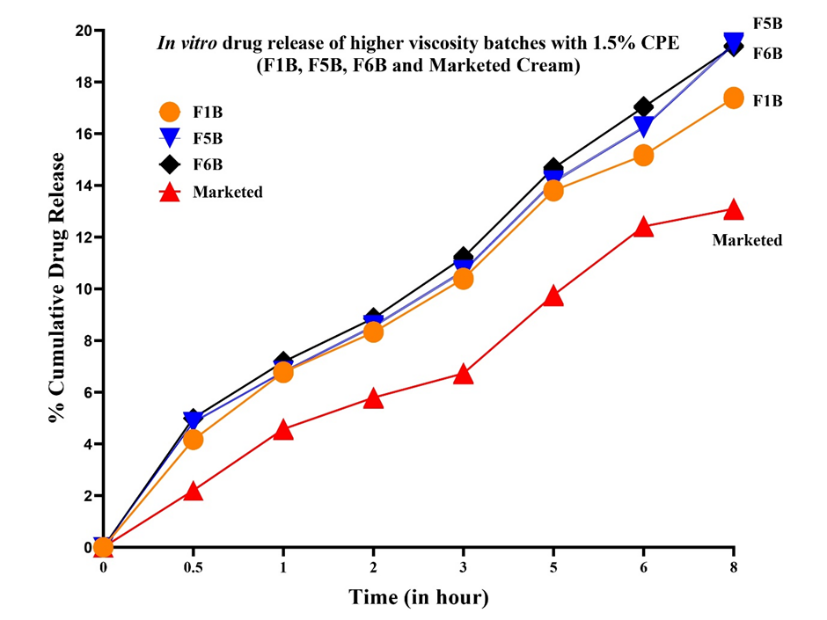
Figure 4: Comparative IVRT of batches with higher viscosity and marketed formulation
Furthermore, the study demonstrated that incorporation of 5% penetration enhancers notably affects the drug release characteristics of the formulations, as evidenced by the data presented in Figure 5. The viscosity of the formulations varied, with F1C (Capmul® GMO-50) having the lowest viscosity at 20,940 cP, followed by F5C (Kollicream® IPM) at 28,960 cP, and the marketed product at 29,790 cP, while F6C (Kollicream® OA) exhibited the highest viscosity at 35,603 cP as shown in figure 2. The steady state flux (Jss), permeability coefficient (Kp), and their respective enhancement ratios for various clotrimazole formulations compared to the marketed formulation are presented in the table 6. The F5C batch demonstrated the highest enhancement ratios among all the tested formulations, with a Jss enhancement ratio of 3.962 and a Kp enhancement ratio of 3.66 relative to the marketed formulation as shown in figure 6. These values indicate that F5C significantly improved both the steady state flux and permeability coefficient of clotrimazole, suggesting a markedly enhanced topical drug delivery potential compared to the marketed product. This superior performance may be attributed to the optimized composition or the choice of penetration enhancer used in this batch.

Figure 5: Comparative IVRT of batches with 5% CPE and marketed formulation
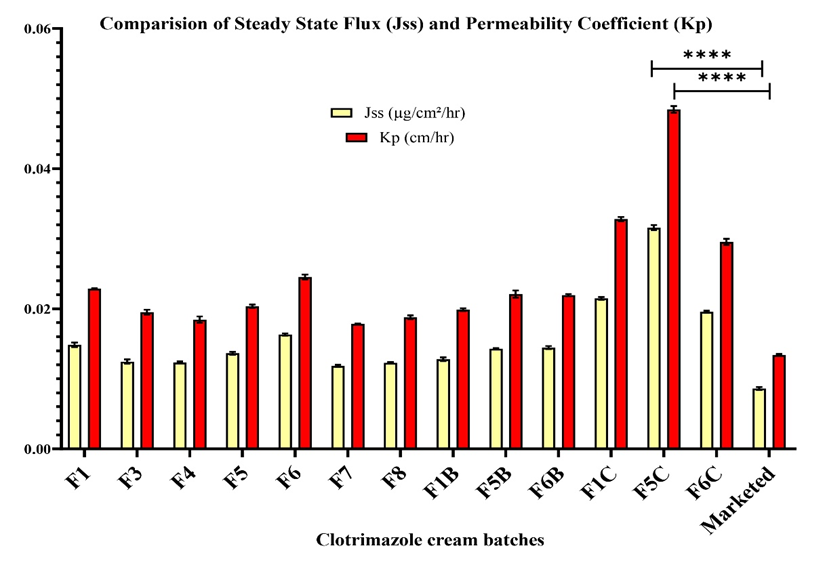
Figure 6: Comparison of Steady state flux (Jss) and Permeability coefficient (Kp)
Table 6: Steady State Flux (Jss), Permeability Coefficient (Kp) and enhancement ratios for Jss and Kp of various trials with that of clotrimazole marketed formulation
|
Batches |
Jss (µg/cm²/hr) |
Kp (cm/hr) |
Enhancement ratio (Jss) |
Enhancement ratio (Kp) |
|
F1 |
0.015 |
0.022866 |
1.875 |
1.732 |
|
F3 |
0.0128 |
0.0195 |
1.6 |
1.477 |
|
F4 |
0.0122 |
0.0185 |
1.525 |
1.402 |
|
F5 |
0.0135 |
0.0205 |
1.688 |
1.553 |
|
F6 |
0.0162 |
0.0246 |
2.025 |
1.864 |
|
F7 |
0.0117 |
0.01785 |
1.462 |
1.352 |
|
F8 |
0.0122 |
0.01859 |
1.525 |
1.408 |
|
F1B |
0.0129 |
0.01966 |
1.612 |
1.489 |
|
F5B |
0.0142 |
0.02165 |
1.775 |
1.64 |
|
F6B |
0.0143 |
0.0218 |
1.788 |
1.652 |
|
F1C |
0.0213 |
0.03247 |
2.662 |
2.459 |
|
F5C |
0.0317 |
0.04832 |
3.962 |
3.66 |
|
F6C |
0.0194 |
0.02957 |
2.425 |
2.239 |
|
Marketed |
0.0087 |
0.013262 |
NA |
NA |
Among the formulations tested, F5C containing Kollicream® IPM exhibited the most effective drug release, surpassing all other formulations, including the marketed product, as shown in Table 7. This suggests that Kollicream® IPM serves as a highly efficient penetration enhancer, optimizing drug release compared to the other tested agents. However, a notable distinction was observed in the in vitro release testing (IVRT) data, where the IVRT results for the in-house batch demonstrated a superior release profile compared to the reference product, indicating a more efficient drug release. The cream exhibited good stability, as the optimized F5C batch maintained its physicochemical properties and key characteristics throughout the three-month stability testing period.
Table 7: Comparison between optimized batch F5C and marketed formulation
|
Parameters |
F5C |
Marketed Formulation |
|
Organoleptic Characteristics |
White, opaque semisolid dosage form without grittiness, greasiness, or tackiness |
White, opaque semisolid dosage form without grittiness, greasiness, or tackiness |
|
Viscosity (cPs) |
28,960 ± 1.23 |
29,790 ± 1.17 |
|
Firmness/ Hardness (g) |
203.5 ± 0.37 |
220.5 ± 1.12 |
|
Adhesiveness (mJ) |
5.36 ± 0.19 |
6.45 ± 0.14 |
|
Deformation at Hardness (mm) |
9.98 ± 1.28 |
9.94 ± 0.16 |
|
Adhesive Force (g) |
96 ± 0.27 |
102.5 ± 0.32 |
|
pH |
5.9 ± 0.14 |
6.9 ± 0.21 |
|
Drug Content (%) |
99.76 ± 0.12 |
99.57 ± 0.09 |
The primary aim of this research project was to enhance the topical permeability of clotrimazole by utilizing various CPEs. The study aimed to identify and evaluate the most effective CPEs to optimize drug release and improve the overall performance of clotrimazole formulations, ensuring better therapeutic efficacy through enhanced skin permeation. The pre-formulation studies established a solid foundation for the development of clotrimazole topical formulations. The drug-excipient compatibility and forced degradation studies confirmed the physical and chemical stability of the formulation components, supporting their suitability in cream formulation. Solubility studies demonstrated that clotrimazole had higher solubility in Capmul® PG12 compared to other solvents, suggesting its potential utility as a solubilizing agent. However, its instability upon centrifugation highlights the need for a balance between solubility enhancement and formulation stability.
Initial evaluations of 1% clotrimazole cream formulations containing 1.5% chemical penetration enhancers (CPEs) showed that most remained physically stable over time. However, formulation F2, which contained Capmul® MCM, exhibited phase separation. This instability is likely attributable to the high lipophilicity of Capmul® MCM, a mono-/diglyceride of medium-chain fatty acids, which may not be fully compatible with the selected emulsifier system. The incorporation of highly lipophilic components disrupted the emulsification process and exceeded the emulsifier’s capacity to stabilize the internal oil phase, leading to coalescence and phase separation [45]. This finding underscores the importance of screening CPEs not only for their permeation enhancement but also for their impact on formulation stability. Texture profile analysis showed that all test formulations (F1–F8) displayed better firmness and adhesiveness compared to the marketed product, suggesting improved retention and potential therapeutic efficacy.
Notably, F5, Formulation F5, which incorporated Kollicream® IPM, exhibited the highest adhesiveness among the tested formulations. This increased adhesiveness suggests prolonged contact with the skin surface, which can facilitate enhanced drug absorption. IPM functions as both a penetration enhancer and an emollient. It improves skin affinity and spreadability of topical formulations due to its low surface tension and lipophilic nature. These properties allow it to form a more intimate contact with the stratum corneum, reducing interfacial resistance and potentially increasing the residence time of the formulation on the skin. Additionally, IPM has been reported to act as a plasticizer in semi-solid systems, which can alter the viscoelastic behavior of the formulation, enhancing its tackiness and adhesive properties. Enhanced adhesiveness allows for a longer duration of drug–skin contact, thereby promoting increased permeation by maintaining the drug reservoir at the application site for an extended period [46][47][48].
Viscosity and spreadability studies revealed that while all test formulations had acceptable viscosity, they were generally less viscous than the marketed cream. This lower viscosity may facilitate better spreadability and drug diffusion. In vitro release testing (IVRT) showed that most test batches had superior drug release compared to the marketed formulation. This improved release could be attributed to the lower viscosity and optimized use of CPEs, particularly in formulations F1, F5, and F6. To assess whether viscosity affected drug release, formulations F1B, F5B, and F6B were prepared using higher concentrations of the gelling agent Kolliwax® CSA 50. These formulations showed viscosities comparable to the marketed product but still demonstrated superior release profiles. This suggests that the enhanced release was primarily due to the choice of CPE rather than viscosity alone. Further enhancement in drug permeation was observed in formulations F1C, F5C, and F6C, all of which contained 5% chemical penetration enhancers (CPEs). Among these, formulation F5C, which incorporated Kollicream® IPM, demonstrated the most pronounced effect, exhibiting the highest cumulative drug release and enhancement ratios when compared to the marketed formulation. The significant increase in permeability parameters with Kollicream® IPM may be attributed to its lipophilic nature, which disrupts the lipid bilayers of the stratum corneum, enhancing drug diffusion. Structural studies have suggested that IPM interacts with the lipid matrix by inserting its hydrophobic tail into the lipophilic domain, while its isopropyl moiety orients toward the polar head groups. Due to its branched configuration and the dynamic nature of the isopropyl group, IPM exhibits limited miscibility with the skin’s native lipids. Further, it contributes to lipid lamellae disorganization and extraction of lipids from the stratum corneum. Recent findings also indicate that IPM tends to accumulate within the skin layers, enhancing local drug retention, as observed with anthramycin rather than promoting systemic permeation [49][50][51].
The superior release and permeability observed in F5C, despite comparable viscosity and mechanical properties to the marketed product, indicate that Kollicream® IPM is an efficient and stable penetration enhancer. Additionally, the optimized batch exhibited favorable organoleptic characteristics, near-neutral pH, and drug content within pharmacopoeial limits, indicating its suitability for topical application. In conclusion, the findings emphasize that both the choice and concentration of penetration enhancers critically influence the performance of topical formulations. Kollicream® IPM demonstrated superior permeation enhancement without compromising stability or texture, making it a promising candidate for future topical drug delivery systems.
The study underscores the critical role of penetration enhancers in optimizing drug permeation through artificial membranes. Among the tested enhancers, Kollicream® IPM proved to be the most effective, followed by Capmul® GMO 50 and Kollicream® OA. The optimized formulation of clotrimazole cream demonstrated superior penetration characteristics compared to the marketed formulation, which suggests promising potential for the topical delivery of clotrimazole. The in vitro release testing emerged as a suitable tool for screening and optimizing the concentration of penetration enhancers, thus facilitating the development of more efficient topical drug delivery systems. The results emphasize the importance of thoroughly selecting penetration enhancers that can effectively modify the barrier properties of skin and improve drug diffusion. Kollicream® IPM enhanced drug permeability due to its lipophilic nature, which disrupted the skin’s lipid structure and temporarily increased skin permeability. This disruption of the stratum corneum barrier was particularly effective for large or polar molecules that would typically struggle to penetrate the skin. This finding points to its potential as an ideal penetration enhancer, capable of facilitating more efficient topical drug delivery. Overall, this study highlights the significance of formulation optimization, specifically with respect to penetration enhancers, in improving drug release profiles and enhancing the effectiveness of topical drug delivery systems. The use of Kollicream® IPM in particular suggests a path forward for improving the bioavailability of topically administered drugs, and its application could lead to the development of more effective and patient-friendly topical therapies. Further research should explore the long-term stability and clinical applicability of these formulations to fully realize their therapeutic potential.
Building upon the promising in-vitro results, future research should focus on in-vivo and dermatopharmacokinetic studies to validate the efficacy of the developed cream. Long-term stability studies are essential to assess its shelf-life and consistent performance. Additionally, molecular dynamics simulations can provide deeper insights into drug permeation, offering a better understanding of the interactions between the drug and various permeation enhancers. This will help optimize permeability and selectivity, ensuring effective delivery and enhanced therapeutic outcomes. Such studies will be crucial for translating the cream from preclinical phases to clinical application with confidence in its safety and effectiveness.
CREDIT ROLES:
ACKNOWLEDGEMENT: Not applicable
FUNDING: The authors declare that no funds, grants or other financial support were received for conducting this study.
CONFLICT OF INTEREST: The authors report there are no competing interests to declare
ETHICAL APPROVAL: Not Applicable
DATA AVAILABILITY STATEMENT: The authors confirm that the data supporting the findings of this study are accessible within the article
CONSENT FOR PUBLICATION: All authors have given consent for this publication
REFERENCES





Sankalp Gharat, Nishant Nirale, Chhanda Kapadia, Swapnali Patil, Harsha Kathpalia, Investigation on Role of Penetration Enhancers to Improve Topical Permeability of Clotrimazole, Int. J. of Pharm. Sci., 2026, Vol 4, Issue 1, 2357-2376. https://doi.org/10.5281/zenodo.18340485
 10.5281/zenodo.18340485