

We use cookies to ensure our website works properly and to personalise your experience. Cookies policy
1 Ph. D. Scholar, Faculty of Pharmacy, Mandsaur University, Mandsaur, MP, 458001
2 Professor, Faculty of Pharmacy, Mandsaur University, Mandsaur, MP, 458001
Quercetin, a bioactive flavonoid widely found in fruits and vegetables, possesses potent antioxidant, anti-inflammatory, anticancer, and cardioprotective properties. However, its therapeutic utilization is limited by poor aqueous solubility, low permeability, rapid metabolism, and low oral bioavailability. To address these challenges, nanotechnology-based delivery systems, particularly nanoemulsions, have emerged as a promising approach to enhance the solubility, stability, and bioavailability of quercetin. Nanoemulsions are kinetically stable, nanosized dispersions of oil and water stabilized by surfactants and co-surfactants. Their high surface area, small droplet size, and ability to facilitate lymphatic transport significantly improve absorption and systemic delivery of lipophilic compounds like quercetin. Recent studies from 2020–2024 have demonstrated that quercetin-loaded nanoemulsions show enhanced pharmacokinetic and pharmacodynamic performance in various therapeutic areas, including cancer, neurodegenerative diseases, cardiovascular disorders, and inflammatory conditions. These formulations protect quercetin from oxidative degradation, prolong systemic circulation, and enable controlled drug release. Despite these advantages, challenges such as formulation stability, scale-up reproducibility, and regulatory acceptance remain. This review provides a comprehensive overview of the biological performance of quercetin-loaded nanoemulsions. It also highlights current advancements, limitations, and future perspectives in improving clinical applicability through green synthesis, Quality by Design (QbD), and targeted delivery approaches. Collectively, nanoemulsion technology represents a promising frontier in natural product-based drug delivery, offering enhanced bioefficacy and therapeutic potential for quercetin
Quercetin, a naturally occurring flavonoid abundantly found in various fruits, vegetables, and medicinal plants (figure 1). It has gained significant scientific attention due to its broad spectrum of pharmacological activities, including antioxidant, anti-inflammatory, antiviral, anticancer, and cardioprotective effects.[1] Despite its promising therapeutic profile, the clinical utilization of quercetin remains severely limited owing to its poor aqueous solubility (approximately 2.15 µg/mL), low permeability, rapid metabolism, and limited oral bioavailability. These physicochemical and pharmacokinetic challenges hinder its systemic absorption and effective biological performance. Hence, the development of an efficient drug delivery system is essential to enhance quercetin’s therapeutic efficacy and bioavailability.[2]
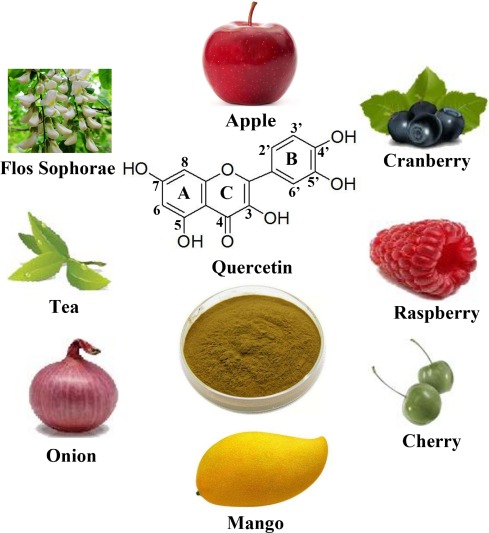
Figure 1: Souce of Quercetin [3]
In recent years, nanotechnology-based drug delivery systems have emerged as innovative strategies to overcome such limitations of hydrophobic bioactives. Among various nanocarrier systems, nanoemulsions have demonstrated remarkable potential for improving the solubility, stability, and controlled release of lipophilic compounds like quercetin. Nanoemulsions are kinetically stable, isotropic colloidal dispersions consisting of oil, surfactant, co-surfactant, and an aqueous phase, typically possessing droplet sizes below 200 nm. Their small droplet size enhances surface area, facilitating efficient absorption through biological membranes and improving oral bioavailability. Furthermore, nanoemulsions can protect encapsulated bioactives from degradation, provide sustained drug release, and enable targeted delivery to specific tissues.[4] Extensive research has focused on formulating quercetin-loaded nanoemulsions for diverse therapeutic applications, including cancer treatment, neuroprotection, cardiovascular therapy, and management of inflammatory disorders. These formulations have shown superior pharmacokinetic profiles and enhanced biological responses compared to conventional quercetin formulations. Consequently, nanoemulsion-based quercetin delivery represents a promising frontier in natural product pharmacotherapy.[5] This review comprehensively summarizes about the quercetin-loaded nanoemulsion systems and emerging trends shaping their future potential.
LITERATURE REVIEW
Prashanth Kumar Yadav et al. (2023) designed a food-grade quercetin nanoemulsion with an average droplet size of around 50 nm using high-pressure homogenization. The formulation was thoroughly characterized using HR-TEM and SAED, revealing uniform spherical morphology and high kinetic stability. This study demonstrated that the nanoemulsion improved quercetin’s bioavailability and bioactivity in both Caenorhabditis elegans models for neuroprotection and human cancer cell lines, including HeLa, A549, and MIA PaCa-2. The results confirmed enhanced antioxidant and anticancer effects due to improved solubilization and cellular uptake. This work emphasizes the potential of nanoemulsion-based systems for nutraceutical and therapeutic applications, especially in managing oxidative stress and cancer-related pathologies.[6]
Rini Dwiastuti, Katarina Noralita Bahar Gumilar, and Hartati Yuliani (2023) optimized a quercetin nanoemulgel using virgin coconut oil as the oil phase, Tween 80 as the surfactant, and Span 80 as the co-surfactant through a factorial design. The optimized nanoemulgel exhibited a particle size of 62.5 nm, a polydispersity index (PDI) of 0.365, and a zeta potential of –26.7 mV, indicating high stability. The antibacterial evaluation revealed significant activity against Staphylococcus aureus, highlighting the system’s potential for topical antimicrobial therapy. The authors suggested that combining nanoemulsion technology with gelling agents can improve the residence time and efficacy of quercetin on skin surfaces.[7]
Manohar Mahadev et al. (2022) applied a Box–Behnken design to optimize a quercetin nanoemulsion by varying Smix ratio, sonication amplitude, and duration. The optimized formulation had a droplet size of 125.5 nm, PDI of 0.215, and encapsulation efficiency of 87%. In vivo studies in diabetic rats demonstrated significant glucose-lowering effects and improved antioxidant parameters compared to plain quercetin suspension. The study confirmed that nanoemulsion-based formulations not only enhance bioavailability but also provide sustained drug release and improved pharmacodynamic response.[8]
Gokhale J.P., Mahajan H.S., and Surana S.J. (2019 [published early 2020]) formulated quercetin oil-in-water nanoemulsions using spontaneous emulsification and evaluated their hypocholesterolemic activity in high-fat diet-fed rats. The nanoemulsions displayed droplet sizes between 207–289 nm with encapsulation efficiencies up to 92%. In vivo, the formulation significantly reduced serum cholesterol and triglyceride levels compared to free quercetin, demonstrating improved lipid metabolism and enhanced oral absorption. The findings emphasized the therapeutic relevance of nanoemulsions in cardiovascular disease management.[9]
Ankit Rana (2020) developed a quercetin-loaded nanoemulsion-based gel for rheumatoid arthritis using a Box–Behnken design. The optimized formulation effectively inhibited lipopolysaccharide-induced TNF-α production in RAW 264.7 macrophages and HIG-82 synovial cells. In vivo evaluation in rats using a Complete Freund’s Adjuvant (CFA)-induced arthritis model revealed pronounced anti-inflammatory activity and enhanced skin permeation over 24 hours compared to free quercetin gel. This highlighted the potential of topical nanoemulsion systems for treating chronic inflammatory disorders.[10]
OVERVIEW OF NANOEMULSION SYSTEMS
Nanoemulsions are thermodynamically unstable but kinetically stable colloidal dispersions consisting of two immiscible liquids typically oil and water stabilized by a surfactant and, often, a co-surfactant. The dispersed phase is present as nanosized droplets, generally ranging between 20–200 nm in diameter. Unlike conventional emulsions, nanoemulsions exhibit remarkable transparency, long-term stability, and improved drug solubilization efficiency due to their small droplet size and large surface area.[11]
Nanoemulsions are broadly categorized into three types based on the composition and direction of dispersion: oil-in-water (O/W), water-in-oil (W/O), and bicontinuous systems (figure 2). In O/W nanoemulsions, oil droplets are dispersed within a continuous aqueous phase, making them suitable for oral and parenteral drug delivery. Conversely, W/O systems contain water droplets dispersed in an oil phase and are often employed for transdermal and topical applications. Bicontinuous nanoemulsions exhibit interconnected domains of oil and water stabilized by surfactant layers, offering high solubilization capacity and flexibility for both hydrophilic and lipophilic drugs.[12]
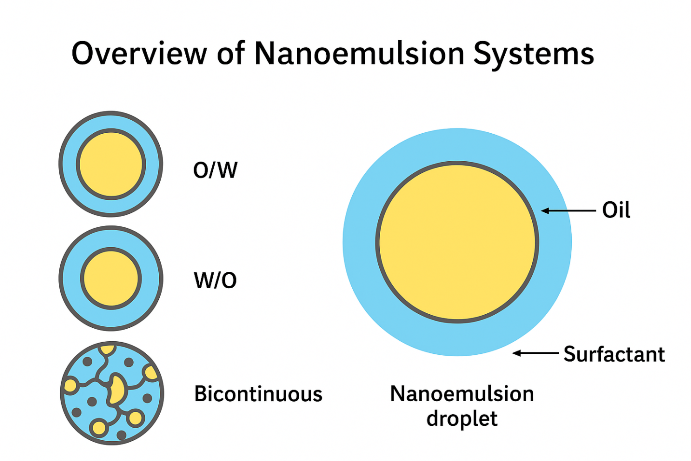
Figure 2: Category of nanoemulsions
The formation of nanoemulsions relies on either high-energy method such as ultrasonication, microfluidization, and high-pressure homogenization or low-energy methods, including spontaneous emulsification and phase inversion temperature techniques. Surfactants like Tween 80, Span 80, and lecithin play crucial roles in reducing interfacial tension and stabilizing droplets, while co-surfactants such as ethanol or propylene glycol enhance fluidity at the interface. Due to their unique structural properties, nanoemulsions provide several advantages over conventional formulations, including enhanced solubility of hydrophobic drugs, improved bioavailability, controlled drug release, and increased stability against oxidation and precipitation. In drug delivery, nanoemulsions facilitate improved absorption through biological membranes, enable lymphatic transport, and reduce first-pass metabolism.[13] Thus, nanoemulsion systems represent a versatile and efficient platform for delivering poorly water-soluble bioactives like quercetin, enabling enhanced therapeutic efficacy and stability across diverse pharmaceutical applications.
PHYSICOCHEMICAL AND PHARMACOKINETIC CHALLENGES OF QUERCETIN
Quercetin, a naturally occurring flavonol widely distributed in onions, apples, tea, and berries, possesses extensive therapeutic potential, including antioxidant, anti-inflammatory, antiviral, anticancer, and cardioprotective properties. However, despite its strong biological activity, quercetin’s clinical translation has been severely hindered due to its unfavorable physicochemical and pharmacokinetic characteristics. Understanding these limitations is crucial to developing advanced delivery systems, such as nanoemulsions, that can enhance its solubility, permeability, and bioavailability.From a physicochemical standpoint, quercetin exhibits poor aqueous solubility, approximately 2.15 µg/mL at 25°C, making it practically insoluble in water. This hydrophobicity results from the presence of multiple hydroxyl groups conjugated with aromatic rings, which promote strong intermolecular hydrogen bonding and crystalline packing, thus reducing solubility. Additionally, quercetin shows pH-dependent solubility, with slightly improved dissolution in alkaline environments due to deprotonation of hydroxyl groups. However, this condition also leads to chemical instability, as quercetin undergoes rapid oxidative degradation and polymerization at higher pH values. These physicochemical barriers limit its dissolution in gastrointestinal fluids, an essential step for oral absorption.[14] Moreover, quercetin demonstrates low permeability across biological membranes due to its poor lipophilicity and strong polarity. The compound’s limited partition coefficient (log P ≈ 1.82) restricts passive diffusion, which is the primary mechanism of absorption through intestinal epithelial cells. Furthermore, quercetin undergoes extensive first-pass metabolism in the liver and intestinal mucosa. It is rapidly conjugated by phase II metabolic enzymes such as uridine diphosphate glucuronosyltransferases (UGTs), sulfotransferases (SULTs), and catechol-O-methyltransferase (COMT), resulting in glucuronide, sulfate, and methylated metabolites with reduced biological activity. Another major challenge is low oral bioavailability, typically less than 2% after ingestion. Studies have shown that free quercetin is poorly absorbed from the gastrointestinal tract, with only trace amounts of the parent compound detected in plasma. Its systemic exposure is limited by poor solubility, enzymatic degradation, and efflux transporters such as P-glycoprotein (P-gp), which actively expel the compound back into the intestinal lumen. Additionally, quercetin’s plasma half-life is relatively short (1–2 hours), necessitating frequent dosing to maintain therapeutic levels, which may not be practical or safe for long-term treatment.[15] Thermal and photochemical instability further complicate formulation development. Quercetin readily undergoes oxidation upon exposure to light, heat, or oxygen, leading to the formation of inactive quinone derivatives. This instability restricts its incorporation into aqueous formulations and limits shelf-life. Moreover, quercetin’s strong tendency to crystallize from solutions poses challenges in achieving homogeneity and consistent drug release in conventional dosage forms.To overcome these barriers, modern nanotechnological approaches such as nanoemulsions, liposomes, polymeric nanoparticles, and solid lipid nanoparticles have been extensively explored. Nanoemulsions, in particular, provide a promising solution by improving solubility through the formation of nanosized oil droplets, protecting quercetin from degradation, and facilitating intestinal lymphatic transport, thereby bypassing first-pass metabolism.
Table 1: Physicochemical and Pharmacokinetic Limitations of Quercetin
|
Parameter |
Observed Property |
Impact on Bioavailability |
|
Aqueous Solubility |
~2.15 µg/mL (poorly soluble) |
Limits dissolution and absorption in GI tract |
|
Partition Coefficient (log P) |
1.82 |
Insufficient lipophilicity for passive membrane diffusion |
|
Stability |
Degrades under light, heat, and alkaline pH |
Reduces shelf-life and potency |
|
First-Pass Metabolism |
Extensive glucuronidation and sulfation |
Decreases systemic availability |
|
Plasma Half-life |
1–2 hours |
Requires frequent dosing for therapeutic effect |
|
Oral Bioavailability |
<2% |
Inefficient systemic absorption |
|
Efflux Transport |
P-gp mediated |
Promotes drug efflux from intestinal cells |
Quercetin’s poor solubility, instability, low permeability, rapid metabolism, and efflux mechanisms collectively result in poor systemic exposure and therapeutic efficacy. Overcoming these physicochemical and pharmacokinetic barriers through nanocarrier systems such as nanoemulsions is therefore a critical step toward realizing quercetin’s full pharmacological potential in clinical applications (table 1).[16]
PHARMACOLOGICAL AND THERAPEUTIC APPLICATIONS OF QUERCETIN NANOEMULSIONS
Quercetin, a natural flavonoid abundantly found in fruits and vegetables, exhibits diverse pharmacological properties, including antioxidant, anti-inflammatory, anticancer, antiviral, cardioprotective, and neuroprotective effects (figure 3, table 2). However, its clinical application is limited due to poor solubility, instability in physiological conditions, and low oral bioavailability. Nanoemulsion-based drug delivery systems have emerged as an effective approach to overcome these barriers, enhancing quercetin’s solubility, permeability, and therapeutic potential.[17]
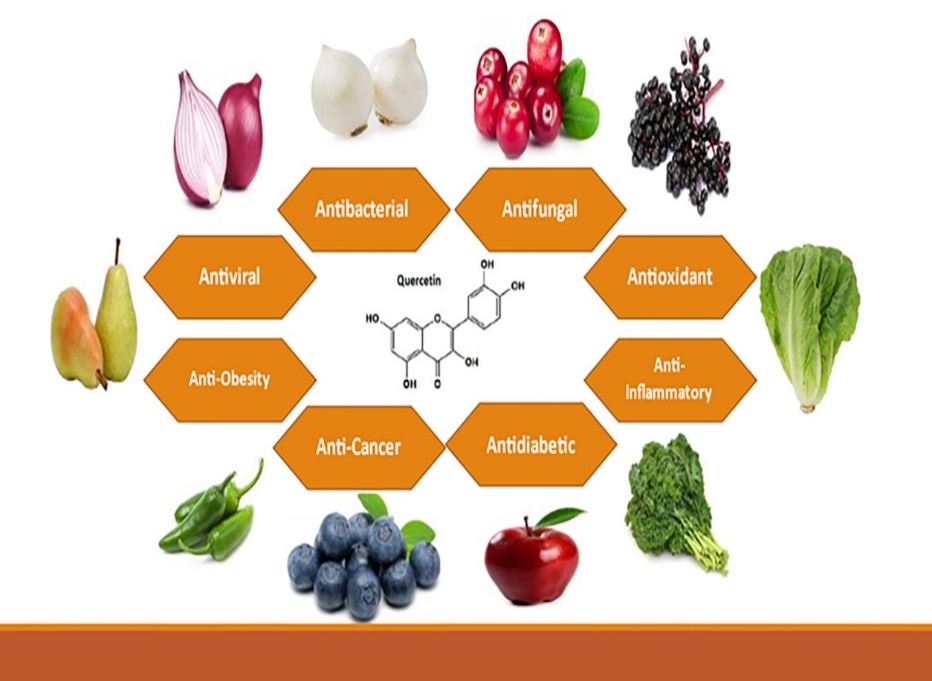
Figure 3: Therapeutic applications of quercetin [18]
Nanoemulsions improve the absorption and bioavailability of quercetin by reducing particle size and providing a large surface area for dissolution and interaction with biological membranes. The encapsulation within oil droplets protects quercetin from oxidative degradation and enzymatic metabolism, thereby extending its systemic circulation time. Moreover, the lipid-based carriers in nanoemulsions facilitate lymphatic transport, bypassing first-pass hepatic metabolism and enhancing plasma concentration levels.Pharmacologically, quercetin nanoemulsions have shown significant anticancer activity, particularly against breast, colon, and prostate cancers, through mechanisms involving apoptosis induction, inhibition of angiogenesis, and modulation of signaling pathways such as PI3K/Akt and NF-κB. In cardiovascular diseases, nanoemulsion formulations of quercetin exhibit enhanced antioxidant and vasodilatory effects, contributing to reduced lipid peroxidation and improved endothelial function. Similarly, neuroprotective benefits have been demonstrated in Alzheimer’s and Parkinson’s models, where nanoemulsion-based delivery improved quercetin’s penetration across the blood-brain barrier.Furthermore, quercetin nanoemulsions have shown anti-inflammatory and antimicrobial potential, making them suitable for topical, oral, and parenteral applications. Their stability, biocompatibility, and controlled-release capabilities render them promising for chronic disease management. [19]
Table 2: Pharmacological and Therapeutic Roles of Quercetin Nanoemulsions
|
Pharmacological Action |
Therapeutic Application |
Mechanism of Action |
|
Anticancer |
Breast, colon, prostate cancers |
Apoptosis induction, inhibition of angiogenesis |
|
Antioxidant |
Cardiovascular disorders |
Reduction of oxidative stress, improved endothelial function |
|
Anti-inflammatory |
Arthritis, dermatitis |
Inhibition of COX and NF-κB pathways |
|
Neuroprotective |
Alzheimer’s, Parkinson’s |
Enhanced BBB permeability, neuronal protection |
|
Antimicrobial |
Skin and oral infections |
Disruption of microbial cell membranes |
MECHANISMS OF IMPROVED ABSORPTION AND BIOAVAILABILITY
Quercetin, a potent flavonoid with diverse pharmacological activities, suffers from poor aqueous solubility, low permeability, and extensive first-pass metabolism, which severely limit its oral bioavailability. Nanoemulsion systems have emerged as a promising strategy to overcome these barriers by enhancing both absorption and systemic availability. The improvement in bioavailability primarily results from their nanoscale droplet size, typically ranging from 20 to 200 nm, which increases the surface area for drug dissolution and facilitates better interaction with the gastrointestinal mucosa.The lipid-based composition of nanoemulsions enables solubilization of lipophilic quercetin within the oil phase, thereby preventing its precipitation under physiological conditions. Moreover, surfactants and co-surfactants stabilize the emulsion and improve membrane permeability by transiently altering lipid packing in epithelial cell membranes, promoting paracellular and transcellular transport. These carriers can also bypass efflux mechanisms such as P-glycoprotein, which often limits quercetin absorption.[20]Another mechanism involves lymphatic transport, where the lipid droplets facilitate quercetin uptake into the intestinal lymphatic system, effectively circumventing hepatic first-pass metabolism (figure 4). Additionally, the nanoemulsion droplets protect quercetin from enzymatic degradation and oxidative stress during transit in the gastrointestinal tract, ensuring more intact molecules reach systemic circulation.
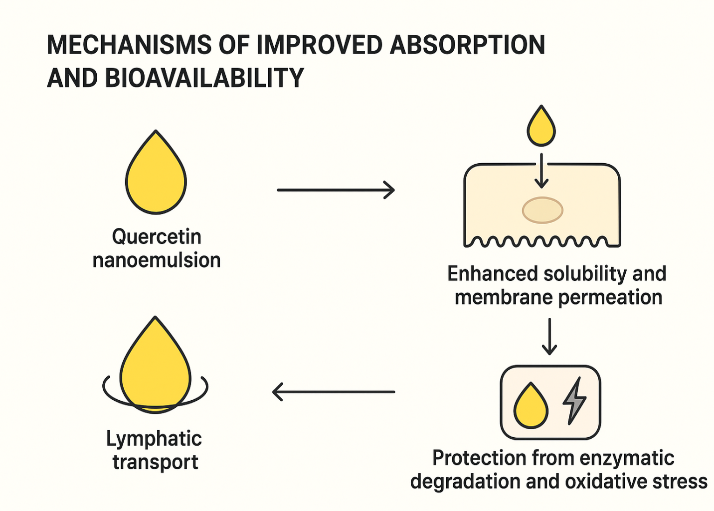
Figure 4: Mechanism involves lymphatic transport of nanoemulsions
Overall, the synergistic interplay of enhanced solubility, membrane permeation, and metabolic protection explains the superior pharmacokinetic performance of quercetin-loaded nanoemulsions compared to conventional formulations. This improved bioavailability directly translates into enhanced therapeutic efficacy and more consistent plasma concentration profiles, making nanoemulsion-based delivery a key advancement in quercetin pharmacotherapy.[21]
CURRENT TRENDS, LIMITATIONS, AND FUTURE PERSPECTIVES
In recent years, the development of quercetin-loaded nanoemulsions has gained immense attention due to their potential to overcome the poor solubility, instability, and limited bioavailability of quercetin. Current research trends focus on using green synthesis approaches, biodegradable surfactants, and natural oils to enhance safety and sustainability. Advanced preparation methods such as ultrasonication, high-pressure homogenization, and spontaneous emulsification are being optimized to achieve stable, uniform, and small droplet-sized nanoemulsions. Additionally, researchers are incorporating targeted delivery mechanisms using ligands or polymers to ensure site-specific release, particularly in cancer, neurodegenerative, and cardiovascular therapies. The integration of in silico modeling and Quality by Design (QbD) principles is also becoming prominent, enabling predictive formulation development and optimization.[22]Despite these advancements, several limitations hinder clinical translation. The stability of nanoemulsions remains a concern, especially under storage and physiological conditions, where phase separation, coalescence, or oxidation may occur. Moreover, the scale-up production and reproducibility of nanoemulsion formulations present technical challenges, as laboratory-scale processes often fail to maintain homogeneity in large batches. The toxicity and long-term safety of surfactants and co-surfactants used in formulations also require thorough evaluation. Regulatory challenges and the lack of standardized characterization protocols further delay commercialization.Looking forward, future perspectives emphasize the need for personalized nanomedicine, where nanoemulsions are tailored to individual therapeutic needs (table 3).
Table 3: Key Emerging Trends and Future Directions in Quercetin Nanoemulsion Research
|
Trend/Future Direction |
Significance |
|
Green synthesis and natural surfactants |
Enhances biocompatibility and reduces toxicity |
|
Targeted and stimuli-responsive delivery |
Improves site-specific action and controlled release |
|
Integration of QbD and AI tools |
Enables efficient formulation optimization |
|
Clinical translation focus |
Promotes regulatory acceptance and patient safety |
The development of smart or stimuli-responsive nanoemulsions, capable of responding to pH, temperature, or enzymatic triggers, holds great promise for controlled drug release. Combining nanoemulsions with other nanocarriers such as liposomes or polymeric nanoparticles may offer synergistic advantages. Ultimately, bridging the gap between preclinical efficacy and clinical applicability through standardized testing and regulatory alignment will be key to establishing quercetin nanoemulsions as next-generation therapeutics. [23]
CONCLUSION
Quercetin, a potent bioflavonoid with remarkable pharmacological potential, faces significant barriers such as poor solubility, instability, and limited oral bioavailability that restrict its therapeutic application. Nanoemulsion-based delivery systems have emerged as a promising strategy to overcome these challenges by enhancing quercetin’s solubility, absorption, and systemic availability. The nanoscale droplet size, lipid composition, and surfactant-assisted stabilization collectively improve intestinal permeability, protect against degradation, and facilitate lymphatic transport. Studies over recent years have consistently demonstrated that quercetin-loaded nanoemulsions exhibit superior pharmacokinetic performance and therapeutic efficacy across various diseases, including cancer, neurodegenerative disorders, cardiovascular conditions, and inflammatory diseases. Despite notable progress, challenges related to large-scale production, stability, and regulatory acceptance remain. Continued research focusing on green synthesis, targeted delivery, and smart nanoemulsion systems will be vital in translating laboratory findings into clinically viable therapies, establishing nanoemulsions as a key platform for quercetin-based drug delivery.
REFERENCES


Deepti Modi, Laxminarayan Patidar , Review Article A Comprehensive Review On Quercetin-Loaded Nanoemulsions, Int. J. of Pharm. Sci., 2026, Vol 4, Issue 1, 2660-2671. https://doi.org/10.5281/zenodo.18351693
 10.5281/zenodo.18351693